Animated films lead China’s cinema boom in 2025

By Liu Yang, People’s Daily

China’s film industry saw animated features deliver exceptional results in 2025, with nationwide box office revenue reached 51.832 billion yuan (about $7.37 billion). Animation alone contributed over 25 billion yuan — nearly half of the market — signaling a major industry shift.

Ne Zha 2, a fantasy adventure film based on the Chinese mythological character Ne Zha, stood out in particular. With a global box office of nearly 15.95 billion yuan, it became the highest-grossing animated film in global cinema history. It also marked the first Asian film ever to enter the global top 10 in box-office rankings, placing fifth on the all-time global box-office list.

Other animated titles also resonated strongly with Chinese audiences. Domestic productions like Nobody and international releases such as Zootopia 2 achieved significant commercial success.

Yu Zhou, president of Light Chaser Animation, a Beijing-based producer of animated films, noted that in China’s domestic animation market in 2025, blockbusters and top-tier titles played an especially pronounced role in driving overall performance. Early in the year, Ne Zha 2 attracted 324 million cinema visits. Many viewers watched the film multiple times, while a significant number were “new audiences” who had not visited movie theaters for years.

“Ne Zha 2 sparked strong audience interest in animated films and helped lift the performance of the entire animation sector throughout 2025,” Yu said.

“Chinese audiences are becoming increasingly interested in animated films,” said Peng Kan, a member of the theoretical and critical committee of the China Film Association.

Statistics illustrate this trend clearly. From 2011 to 2018, animated films accounted for around 10 percent of China’s annual box office. Between 2019 and 2024, the figure rose to roughly 14 percent. By 2025, the share had climbed to nearly 50 percent.

This shift aligns with demographic changes. Moviegoers born in the 1990s and 2000s now dominate cinema attendance. “Unlike earlier generations, they grew up with greater exposure to animation and show stronger acceptance,” Yu explained.

An intellectual property (IP) adaptation strategy continues to fuel market growth. Among the animated films released in 2025, both domestic and international, the vast majority were adaptations of existing IPs.

Ne Zha 2, Zootopia 2, Boonie Bears: Future Reborn, and The Legend of Hei 2 all had earlier installments. Nobody was adapted from the animated anthology series Yao-Chinese Folktales, while Curious Tales of a Temple drew on a classic work of Chinese literature.

“Animation possesses unique advantages for IP development,” Peng observed. “It enables multidimensional expansion through sequels, merchandise, and cross-brand collaborations.”

Recent co-branded products launched during film releases have not only enhanced films’ visibility and influence, but also generated higher box-office returns and ancillary revenue. This, in turn, helps create a stronger cinema-going atmosphere, build user loyalty, and expand consumption scenarios.

Industry insiders widely agree that the growing popularity of domestic animated films ultimately stems from improvements in quality. On the one hand, stories are becoming more diverse. Today’s domestic animated films range from adaptations of traditional Chinese mythology, such as the Ne Zha and White Snake series, to works inspired by classical literature like Chang’an and the Strange Tales from a Chinese Studio series. Others focus on contemporary life, including the I Am What I Am series, the allegorical Nobody, and family-friendly movies such as the Boonie Bears series.

On the other hand, in terms of animation technology, China’s animated film production has now largely aligned with international advanced standards.

From an industrial perspective, investment in domestic animated films has become increasingly clustered. Production entities are more concentrated than before. “The growing concentration of investment means a more complete industrial chain and stronger risk resistance for animation companies,” Peng said. “This is of great significance for the future development of China’s animated film industry.”

At the same time, China became the world’s largest single market for Zootopia 2. This not only underscores China’s strong capacity as the world’s second-largest film market, but also reflects the openness and inclusiveness of China’s film market and industry for high-quality imported films, serving as a microcosm of China’s continued commitment to reform and opening up.

“Animated films possess unique expressive strengths and distinct advantages in cultural communication,” Yu said. “As Chinese animated films continue to draw primarily on Chinese culture, creators need to consider how to explore shared human emotions through storytelling, so that audiences from different cultural backgrounds can understand and appreciate these stories, thereby helping Chinese animation better step onto the global stage.”

China, ROK should cherish positive momentum in development of bilateral relations

By He Yin, People’s Daily

On Jan. 5, Chinese President Xi Jinping held talks with President Lee Jae Myung of the Republic of Korea (ROK), who was on a state visit to China. Within a little over two months, the two heads of state have met twice and exchanged visits, underscoring the importance both sides attach to China-ROK relations. 

International media have widely observed the positive momentum emerging in bilateral ties. Against a backdrop of profound and complex changes in the international and regional landscape, the constructive signals sent through this high-level diplomacy are yielding tangible benefits for peace and development in both countries and across the region..

China and the ROK are permanent neighbors and inseparable cooperation partners. More exchanges, frequent visits and sustained communication are conducive to the sound and steady development of bilateral relations.

Just over two months ago, during Xi’s state visit to the ROK, a four-point proposal were put forward to open up new prospects for China-ROK relations, guiding the reaffirmation of the strategic cooperative partnership between the two countries. 

During their talks in Beijing, Xi emphasized that China has consistently placed relations with the ROK high on its regional diplomatic agenda and maintained continuity and stability in its policy toward the ROK.

Lee’s choice of China as his first overseas destination at the beginning of the new year fully demonstrates the ROK’s commitment to advancing ties with China. Looking ahead, as long as both sides adhere to the principles of valuing peace above all else and advocating harmony without conformity, which have transcended differences in social systems and ideologies, they can achieve mutual success and common development.

Accompanying Lee on his visit was a notable economic delegation of approximately 200 leading ROK business figures. This is widely interpreted by the international community as reflecting the enthusiasm and confidence of the ROK’s business sector in pursuing opportunities in China. 

Economic ties between China and the ROK are close, with deeply integrated industrial and supply chains and mutually beneficial cooperation. While the substance of bilateral economic and trade relations has undergone new changes in recent years, the fundamental reality of the two sides’ deeply intertwined interests has not changed, nor has the win-win nature of China-ROK economic and trade cooperation. 

China has always believed that neighborly success contributes to one’s own prosperity, and remains committed to strengthening development strategy alignment and policy coordination with the ROK to expand our shared interests. 

The fourth plenary session of the 20th Communist Party of China Central Committee deliberated on and adopted recommendations for formulating the 15th Five-Year Plan(2026-2030), laying out a blueprint for China’s development in the coming five years while offering broad opportunities for countries around the world. 

As China advances high-quality development, the space for mutually beneficial cooperation between China and the ROK will continue to expand, with promising prospects in emerging fields such as artificial intelligence, green industries and the silver economy. 

During the visit, the two sides signed 15 cooperation documents in science and technology, ecological environment, transportation, economy and trade, among others. An ROK media outlet noted that the momentum toward the comprehensive resumption and development of bilateral relations is being translated into concrete mechanisms, particularly in economic and trade cooperation. 

Expanded exchanges in areas such as youth, media, sports, think tanks and sub-regional cooperation will help ensure that positive narratives become the mainstream of public opinion.

As the world undergoes accelerated changes unseen in a century, the international landscape has become more turbulent and intertwined. China and the ROK shoulder important responsibilities in safeguarding regional peace and promoting global development, with broad overlapping interests. 

During their talks, both heads of state recalled that China and the ROK once fought side by side against Japanese militarist aggression. During his stay in China, Lee visited the historic site of the Provisional Government of the Republic of Korea in Shanghai. An international media outlet interpreted this visit as a clear signal that historical issues have not been consigned to the past.

As countries that both suffered tremendous national sacrifices during World War II, China and the ROK should work together to uphold the outcomes of the victory in the war and jointly safeguard peace and stability in Northeast Asia. This is essential for upholding historical justice and for building a peaceful future for the region. 

In the face of rising unilateralism and protectionism, closer cooperation between China and the ROK in advancing opening up and upholding multilateralism will not only benefit their respective development, but also help maintain the stability and smooth functioning of regional and global industrial and supply chains, contributing to the advancement of an equal, orderly multipolar world and a universally beneficial, inclusive economic globalization.

The current positive momentum in China-ROK relations has not come easily and deserves to be significantly cherished by both sides. China stands ready to work with the ROK to steer the course of friendly cooperation, promote mutual benefit and win-win results, and bring the China-ROK strategic cooperative partnership forward along the track of sound development, so as to deliver tangible benefits to both peoples and inject positive energy into peace and development of the region and the wider world.

China assists Africa in digital transformation

By Dai Kairan, People’s Daily

Digital transformation stands as a central objective within the African Union’s Agenda 2063. In recent years, cooperation between China and African nations within the digital economy sector has deepened and expanded significantly. This progress has been fostered under frameworks such as high-quality Belt and Road cooperation and the Forum on China–Africa Cooperation.

China has actively supported African countries in bridging the digital divide through various initiatives. These include accelerating the development of digital infrastructure, constructing e-commerce platforms, and cultivating digital talent.

In Gaborone, Botswana’s capital, a distinctively designed modern building within a technology park marks a significant milestone: the Digital Delta Data Center (DDDC). Constructed by China Jiangxi International Economic and Technical Cooperation Co., Ltd, the building is Botswana’s  first national-level data center.

Construction commenced in March 2021, and the facility was officially handed over to the Botswana government in June 2024. The center’s data halls are equipped to host high-performance servers, large-capacity storage systems, and high-speed network equipment. This infrastructure  meets the requirements of both government agencies and commercial users for large-scale data storage, processing, and transmission.

“Weak digital infrastructure has long constrained Botswana’s digital transformation,” said Keabetswe Segole, chief executive officer of Botswana Fibre Networks (BoFiNet), the operator of the DDDC. “The operation of the data center has significantly improved the local information and communications technology ecosystem.”

Segole noted that prior to the DDDC’s completion, a significant portion of Botswana’s government and business data was stored overseas, resulting in low transmission efficiency. With the data center operational, internet users in Botswana can enjoy faster, more cost-effective data exchange, leading to a markedly improved online experience.

At a warehouse operated by Kilimall on the outskirts of Nairobi, Kenya, efficiently manage inventory, scan barcodes, and pack orders, while delivery personnel in distinctive red uniforms prepare for dispatch.

As the first Chinese company to enter Africa’s internet and e-commerce sector, Kilimall has expanded across the continent over the past decade. Its operations span several African countries, including Kenya, Tanzania, and Uganda. The platform hosts over 8,000 sellers and 12,000 online stores, has established over 1,500 community pickup points, and  and experiences approximately 50% annual growth in mobile app downloads.

Liao Zhengrong, Kilimall’s Brand Director, noted that the company has also independently developed its own payment system, offering consumers convenient and diverse online payment options.

Alex Kariuki, a 36-year-old Kenyan entrepreneur selling furniture such as TV cabinets and coffee tables, shared his experience: “The high transportation costs for furniture made me initially hesitant about online selling, especially as many local e-commerce platforms relied on cash payments upon delivery. A friend recommended Kilimall, and learning about integrated online payment system gave me confidence. Customers prepay when ordering, and I receive payment immediately upon their confirmation of receipt.” Since opening his store on Kilimall, Kariuki’s furniture sales have continued to rise, now reaching 300 to 400 items per month. 

Igiraneza Justine, a 22-year-old Rwandan, is a trainee at the Luban Workshop, a Chinese-supported vocational training facility. After two years of specialized study locally, he enrolled in a one-year e-commerce practical training program at Jinhua University of Vocational Technology in east China’s Zhejiang province.

Ge Rui, a faculty member in the university’s e-commerce program, explained that Justine is among the first batch of trainees from the Rwanda Luban Workshop engaged in the program. In early 2025, the first group of 30 trainees, majoring in e-commerce and electrical automation, returned to Rwanda after completing their training. Many e-commerce graduates subsequently found employment in live-stream e-commerce and digital commerce sectors.

“Chinese instructors taught us platform management, data analysis, logistics management, and practical skills such as video shooting and lighting techniques,” Justine said. Noting China’s global leadership in digital technology and business innovation, he added, “I aspire to open my own online store and apply China’s digital economy expertise back home.”

Gert Grobler, former senior South African diplomat and honorary professor at the Institute of African Studies of Zhejiang Normal University, observed that China has long been actively involved in building Africa’s digital infrastructure. 

He highlighted collaborations constructing Africa’s largest optical fiber manufacturing plant to boost local capacity, helping African countries add or upgrade roughly 150,000 kilometers of communications backbone networks (extending services to nearly 700 million uses), supporting the construction of national data centers in multiple countries, and providing digital governance solutions.

Through the development of e-commerce industries and the cultivation of professional talent, China continues to provide sustained momentum for Africa’s digital transformation journey.

Inbound tourism boom highlights more open, accessible China

By He Yin, People’s Daily

During the New Year holiday, China’s inbound tourism market experienced robust growth, with ticket bookings rising by 110 percent year on year and reservations for experiential leisure activities surging more than thirtyfold, according to data from research institutions.

The rapid growth underscores the dynamic interplay between tradition and modernity in China,  offering international visitors a glimpse into the enduring vitality and brilliance of Chinese culture.

New business models and new tourism products are delivering fresh experiences while injecting new momentum into development. 

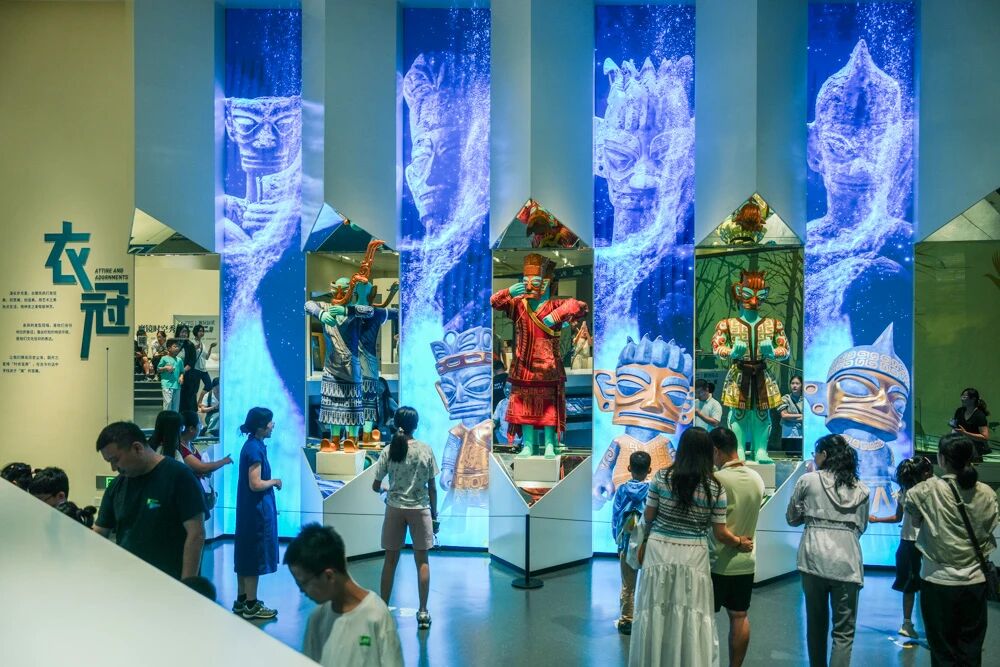
Following the launch of island-wide special customs operations, Hainan has seen a surge in popularity for a tourism model that combines duty-free shopping with seaside vacations. A panda-themed tourist train takes travelers across Sichuan, Chongqing and Guizhou, showcasing cultural landmarks such as the Sanxingdui Ruins and Qianhu Miao Village. In Fujian in southeast China, diverse themed routes offer visitors a chance to experience the legacy of the Maritime Silk Road and the rich traditions of Minnan culture. 

As “China travel” continues to integrate more deeply with culture, sports and agriculture, overseas visitors are moving beyond brief sightseeing toward immersive experiences. Road trips, rural tourism and tours of historical architecture have become standout attractions for them. 

Online travel platforms report that in 2025, bookings by inbound travelers for immersive activities such as intangible cultural heritage workshops, folk performances and urban life explorations jumped by 300 percent year on year. 

China’s abundant cultural and tourism resources are fostering broader and deeper people-to-people exchanges, enabling overseas visitors to experience a more vivid and multifaceted China.

Spontaneous, hassle-free travel to China has become a reality thanks to strong policy support. China has rolled out a series of measures to facilitate inbound travel, including unilateral visa-free entry or mutual visa exemptions for citizens of 76 countries. The 240-hour visa-free transit program now applies to travelers from 55 countries and is available at 65 entry ports. 

These continuously optimized visa measuress, combined with policies such as instant tax refunds and the integration of international bank cards to domestic payment platforms, have created a convenient and appealing environment for visitors.. Shopping and dining in China have become new trends. 

In the first three quarters of 2025, China recorded 20.89 million visa-free inbound visits by foreign nationals, up more than 50 percent year on year. Since China launched the 240-hour visa-free transit program more than a year ago, the number of inbound foreign visitors through ports nationwide reached 40.6 million, a year-on-year increase of 27.2 percent. 

The World Travel & Tourism Council predicted that China’s tourism industry will grow at an average annual rate of 7 percent over the next decade, positioning the country to become the world’s largest tourism market by 2031. 

The U.S.-based Travel and Tour World magazine in the United States noted that China’s tourism industry, supported by well-developed infrastructure, enabling policies and a steadily rising reputation as a top global destination, is poised to reach new heights in the coming years.

Deeper recognition of China’s image among overseas visitors is further fueling the sustained popularity of “China travel.” An article on the UK-based Tourism Review website highlights how foreigners are dispelling long-held stereotypes through their experiences of China’s friendly, convenient and efficient services. 

A safe and harmonious environment, a warm and welcoming atmosphere, vibrant and trend-setting culture, and smart, efficient daily life—many overseas visitors remark that today’s China feels “more modern, more convenient, and easier to connect with.” 

According to the World Tourism Cities Development Report (2024–2025) released by the World Tourism Cities Federation, five Chinese cities rank among the world’s top 20 in tourism safety, while another five place in the global top 10 for smart tourism. Positive travel experiences and  China’s dynamic image are directly contributing to its growing appeal as a destination for inbound tourism.

A more open, higher-quality and more welcoming inbound tourism market is acting as a vital bridge for global travelers to connect with China’s pulse. As the potential of “China travel” continues to be unleashed, people-to-people exchanges will further deepen, enabling people around the world to encounter a China that is real, multidimensional and fully alive.

Huishan in E China accelerates its shift toward new growth drivers

By Yan Bingsong

Recently, Elon Musk, founder of U.S.-based SpaceX, commented several times on social media about Zhuque-3, a reusable rocket independently developed by Chinese aerospace company LandSpace, drawing global attention from the space sector.

At the same time, construction of LandSpace’s future main manufacturing base for the Zhuque-3 rocket has entered its final phase in Huishan High-Tech Zone in Wuxi, east China’s Jiangsu province.

Why did LandSpace choose Huishan High-Tech Zone for its production base? According to a company executive, “After evaluating multiple cities, we found that within a 50-kilometer radius of the zone, all the necessary raw materials and component suppliers are readily available. In particular, local suppliers can provide 90 percent of critical engine production materials.”

Huishan High-Tech Zone has grown out of Luoshe township in Huishan district, Wuxi, a traditional industrial township with a solid manufacturing foundation and a complete range of industries. In 2021, Luoshe was approved to establish Huishan High-Tech Zone. That same year, it set its sights on emerging industries and launched the Wuxi Aerospace Industrial Park.

LandSpace is not the only company here that aspires to space exploration. JTSPACE, a private company in the burgeoning commercial space market, has built a production base in the zone for key components of synthetic aperture radar (SAR) satellites. By adopting integrated, standardized and modular design concepts, the company has made satellite manufacturing as efficient and streamlined as home-appliance production, helping commercial satellite production shift from small-batch, bespoke builds confined to laboratories to standardized, large-scale assembly-line manufacturing.

In orbit, commercial meteorological satellites operated by Tianjin Yunyao Aerospace Technology Co., Ltd. circle the Earth once every hour and a half, monitoring global weather patterns. Li Fenghui, chairman of the company, said the company placed its meteorological satellite R&D, manufacturing and data-application projects in Huishan because of the district’s efficient administrative services and high-standard facilities. “In less than a month, we recruited nearly 20 professionals in meteorology,” he noted.

While the aerospace industry continues to push toward space and near-space frontiers, the low-altitude economy is steadily integrating into everyday work and life. At the Asia-Pacific headquarters showroom of Magnus Aircraft in Huishan High-Tech Zone, a Fusion 212 aircraft stands out. This two-seat light sport aircraft features a lightweight carbon-fiber airframe, with a top speed of 256 kilometers per hour. According to the company, more aircraft models, including the Fusion 212, are expected to produced at he Huishan facility. .

Applications of the low-altitude economy are becoming increasingly diverse in Huishan. A drone-based blood delivery route now links Wuxi Central Blood Station with Wuxi Huishan District People’s Hospital. 

By integrating artificial intelligence and drone technologies, the route, with a blood cold-chain management system and a blood dispatch platform, addresses inefficiencies and traffic-related disruptions in ground transport. 

As a result, emergency blood delivery time has been reduced from around an hour to just over 10 minutes, significantly enhancing medical support capacity and securing patients’ precious “golden rescue time.”

Along this path toward renewal, traditional manufacturing in Huishan is accelerating its transition toward intelligent production. Miracle Automation, once a small mold-making factory, has grown into an internationally-recognized manufacturer of intelligent automotion. In recent years, the company has made embodied intelligent robotics a key strategic focus, reaching cooperation intentions with several leading new-energy vehicle manufacturers on robotics applications. 

Recently, an embodied intelligent robotics industrial data center built by Miracle Automation was put into operation. Covering about 7,000 square meters, the center integrates multiple functions, including real-world application training, simulated environment training, data collection, and multi-modal large-model training. In its initial phase, it can support the simultaneous training of more than 100 robots, providing a strong platform for the next stage of intelligent manufacturing development.

Huishan in E China accelerates its shift toward new growth drivers

By Yan Bingsong

Recently, Elon Musk, founder of U.S.-based SpaceX, commented several times on social media about Zhuque-3, a reusable rocket independently developed by Chinese aerospace company LandSpace, drawing global attention from the space sector.

At the same time, construction of LandSpace’s future main manufacturing base for the Zhuque-3 rocket has entered its final phase in Huishan High-Tech Zone in Wuxi, east China’s Jiangsu province.

Why did LandSpace choose Huishan High-Tech Zone for its production base? According to a company executive, “After evaluating multiple cities, we found that within a 50-kilometer radius of the zone, all the necessary raw materials and component suppliers are readily available. In particular, local suppliers can provide 90 percent of critical engine production materials.”

Huishan High-Tech Zone has grown out of Luoshe township in Huishan district, Wuxi, a traditional industrial township with a solid manufacturing foundation and a complete range of industries. In 2021, Luoshe was approved to establish Huishan High-Tech Zone. That same year, it set its sights on emerging industries and launched the Wuxi Aerospace Industrial Park.

LandSpace is not the only company here that aspires to space exploration. JTSPACE, a private company in the burgeoning commercial space market, has built a production base in the zone for key components of synthetic aperture radar (SAR) satellites. By adopting integrated, standardized and modular design concepts, the company has made satellite manufacturing as efficient and streamlined as home-appliance production, helping commercial satellite production shift from small-batch, bespoke builds confined to laboratories to standardized, large-scale assembly-line manufacturing.

In orbit, commercial meteorological satellites operated by Tianjin Yunyao Aerospace Technology Co., Ltd. circle the Earth once every hour and a half, monitoring global weather patterns. Li Fenghui, chairman of the company, said the company placed its meteorological satellite R&D, manufacturing and data-application projects in Huishan because of the district’s efficient administrative services and high-standard facilities. “In less than a month, we recruited nearly 20 professionals in meteorology,” he noted.

While the aerospace industry continues to push toward space and near-space frontiers, the low-altitude economy is steadily integrating into everyday work and life. At the Asia-Pacific headquarters showroom of Magnus Aircraft in Huishan High-Tech Zone, a Fusion 212 aircraft stands out. This two-seat light sport aircraft features a lightweight carbon-fiber airframe, with a top speed of 256 kilometers per hour. According to the company, more aircraft models, including the Fusion 212, are expected to produced at he Huishan facility. .

Applications of the low-altitude economy are becoming increasingly diverse in Huishan. A drone-based blood delivery route now links Wuxi Central Blood Station with Wuxi Huishan District People’s Hospital. 

By integrating artificial intelligence and drone technologies, the route, with a blood cold-chain management system and a blood dispatch platform, addresses inefficiencies and traffic-related disruptions in ground transport. 

As a result, emergency blood delivery time has been reduced from around an hour to just over 10 minutes, significantly enhancing medical support capacity and securing patients’ precious “golden rescue time.”

Along this path toward renewal, traditional manufacturing in Huishan is accelerating its transition toward intelligent production. Miracle Automation, once a small mold-making factory, has grown into an internationally-recognized manufacturer of intelligent automotion. In recent years, the company has made embodied intelligent robotics a key strategic focus, reaching cooperation intentions with several leading new-energy vehicle manufacturers on robotics applications. 

Recently, an embodied intelligent robotics industrial data center built by Miracle Automation was put into operation. Covering about 7,000 square meters, the center integrates multiple functions, including real-world application training, simulated environment training, data collection, and multi-modal large-model training. In its initial phase, it can support the simultaneous training of more than 100 robots, providing a strong platform for the next stage of intelligent manufacturing development.

Umahi Inspects Lekki Corridor’s 7th Axial Road Project, Expresses Confidence in CHEC

Minister of Works Senator Dave Umahi over the weekend inspected the progress of the 7th Axial Road project in the Lekki Corridor of Lagos.

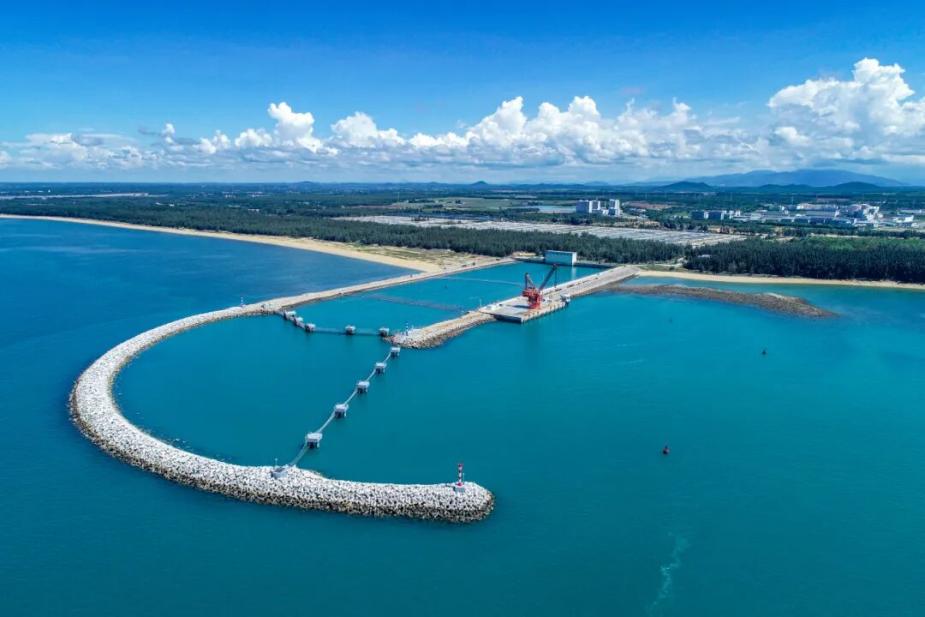
The project, located behind the Dangote Refinery, is a crucial cargo handling route for the Lekki Deepwater Port and connects the Lekki Corridor with the Sagamu route.

The Minister expressed confidence in China Harbour Engineering Company Limited (CHEC), the project’s contractor, citing its successful delivery of the Lekki Deepwater Port and high-quality progress on the Makurdi-Enugu road reconstruction and expansion project. Umahi instructed that the roadbed filling work for Project LOT1 be completed by the end of April and directed the project team to accelerate resource input and tangible works to meet the deadline.

The 7th Axial Highway is expected to synergize with key infrastructure projects like the Coastal Road, Dangote Road, and Lekki Port, creating a comprehensive transportation hub model and boosting Nigeria’s port economy and industrial corridor. Umahi emphasized the need for environmental protection agencies to ensure efficient construction and steady progress while maintaining ecological safety.

A representative of CHEC who spoke during the inspection stated that the company would maintain a high level of resource input, implement the Minister’s directives, and coordinate safety, quality, and environmental protection to ensure the project’s timely and high-quality completion in other to unluck its port relief and regional economic benefits.

APC South-South Says Rivers Assembly Impeachment Plot is Retaliation Against Fubara for Rejecting Fictitious Projects in 2026 Budget

The All Progressives Congress (APC) South-South Group has accused Rivers Assembly lawmakers loyal to FCT Minister Nyesom Wike of instigating impeachment threats against Governor Siminalayi Fubara after he refused to approve fictitious projects in the state’s 2026 budget proposal.

The group made the allegation on Friday in Port Harcourt while responding to claims by members of the Rivers State House of Assembly that Fubara breached the peace agreement brokered by President Bola Ahmed Tinubu to end the protracted political crisis in the state.

Addressing journalists, Comrade Freedom Amadi, coordinator of the APC South-South Group, said the impeachment move was not rooted in any violation of the peace accord but was a calculated retaliation against the governor for resisting pressure to inflate the budget with questionable line items.

“What is unfolding in Rivers State is not a constitutional dispute but a deliberate attempt to punish a sitting governor for refusing to mortgage public finances for private political interests. Governor Siminalayi Fubara did not breach the President’s peace accord; rather, he refused to add fictitious projects to the Rivers State budget, and that refusal is now being weaponised against him,” Amadi said.

Members of the Rivers assembly had accused the governor of acting in bad faith and undermining the Tinubu-brokered deal, arguing that his conduct justified impeachment proceedings. Some lawmakers also claimed that presidential intervention could not stop the legislature from carrying out its planned impeachment of the governor.

The APC South-South rejected that position, warning that such statements amounted to open defiance of presidential authority and posed a threat to democratic stability.

“When legislators publicly declare that not even the President can restrain them, they are not asserting independence; they are advertising institutional insubordination. President Tinubu intervened in Rivers State as the elected President of the Federal Republic of Nigeria, not as a partisan actor, and his peace initiative is not optional or disposable,” Amadi declared.

According to the group, the peace deal was intended to restore stability and allow governance to proceed without coercion, not to subject the governor to political control through the legislature.

“The agreement brokered by Mr President was about restoring calm and respecting constitutional roles, not about handing Rivers State over to political enforcers. Any attempt to twist that agreement into a tool for intimidation or impeachment is a distortion of its spirit and intent,” he announced.

The APC South-South also pointed to the central role of Wike, arguing that lawmakers driving the impeachment process were acting in alignment with the former Rivers governor, now minister of the Federal Capital Territory.

“It is impossible to separate the current impeachment threats from the political influence of Minister Nyesom Wike. The lawmakers pushing this agenda are his loyalists, and their actions reflect a coordinated effort to retain control of Rivers politics through legislative intimidation,” he said.

The group noted that Wike’s continued silence, despite serving in an APC-led federal government, raised serious questions about loyalty to the President who appointed him.

“President Tinubu extended trust and political goodwill by appointing a PDP member into his cabinet in the interest of national unity. That trust is being abused if a serving minister allows his loyalists to openly undermine a presidential peace initiative. You cannot sabotage peace and still claim allegiance to the authority that brokered it,” Amadi noted.

The APC South-South warned that using impeachment to settle political scores would erode public confidence in democratic institutions and weaken legislative credibility.

“Impeachment is a grave constitutional mechanism, not a political cudgel. What we are witnessing in Rivers State is not oversight but vendetta, not accountability but retaliation against a governor who chose fiscal responsibility over political obedience.”

The pro-APC group called on the Rivers State House of Assembly to suspend all impeachment actions and urged the National Assembly to intervene to prevent what it described as legislative excesses.

“Legislative impunity in one state endangers democratic order across the federation. Rivers State does not belong to any individual or faction, and its budget is not a private ledger for political godfathers,” the group maintained.

NIGER EAST 2027: WHY THERE IS NO ALTERNATIVE TO 313

By Mohammed A. Mohammed

In Niger East, a quiet revolution began in 2019 when Senator Mohammed Sani Musa—known across the district as 313—stepped into the Senate with a resolve forged from a deep understanding of his people’s struggles. He had walked those dusty roads himself, seen the dim eyes of children denied education, heard the silent pleas of mothers in ill-equipped clinics, and felt the frustration of youths with talent but no tools.

But 313 did not come to lament; he came to act. With deliberate sacrifice and focus, he channelled his resources, influence, and personal fortune into lifting his people. Boreholes sprang up where water was once a daily battle. Health centres rose where sickness meant long, perilous journeys. Scholarships carried sons and daughters to India and China to become doctors and engineers.

Roads opened markets. Empowerment turned dreams into enterprises. What began as a mandate became a movement—a personal covenant between a leader and his people, delivered not in words, but in enduring works. Today, that covenant stands as the highest standard in Niger East politics.

In the build-up to the 2027 election, it is no surprise that several aspirants are emerging with ambitious permutations and declarations. Yet, for the discerning people of Niger East, the choice of who should represent them boils down to one irrefutable standard: the exceptional record set by Senator 313.

While new names throw their hats into the ring with enthusiasm, none have yet demonstrated the depth of commitment, proven impact, or visionary intentionality that defines his tenure. Senator 313 has consistently delivered verifiable, life-changing results across infrastructure, education, healthcare, agriculture, and human empowerment. He has rehabilitated rural roads, constructed solar-powered motorised boreholes, established state-of-the-art ICT centres, and empowered countless students through comprehensive scholarship programmes.

In healthcare, he facilitated the construction and equipping of two modern 50-bed hospitals in Sarkin Pawa (Munya LGA) and Kuta (Shiroro LGA), bringing quality medical care closer to underserved communities. Women and youths have been prioritised through inclusive empowerment initiatives, with Senator 313 distributing resources such as tricycles, motorcycles, grinding machines, sewing machines, deep freezers, and generators to over 500 beneficiaries, fostering economic independence.

Remarkably, no emerging aspirant has matched this level of competence, capacity, or selfless dedication. Without concrete policy blueprints or comparable track records, it remains difficult to envision any alternative filling Senator 313’s formidable shoes. The people of Niger East are wise and discerning. They are prepared to pose critical questions to all contenders: What specific, actionable policies do you propose to tackle our district’s pressing challenges?

What verifiable achievements can you showcase that prove your ability to deliver? Does your vision truly align with the aspirations and needs of our communities? Until these questions receive substantive, convincing answers, Senator 313 remains the unmatched benchmark for effective representation and sustainable development.

His legacy is one of proven worth—a leader who prioritises education as the bedrock of progress by constructing and renovating classroom blocks, building ICT centres (such as the one in Ija Gwari, Tafa LGA), and sponsoring scholarships at all levels. A passionate grassroots mobiliser, he distributed 4,050 bags of fertiliser (1,000 urea and 3,050 NPK) across the nine local government areas, enhancing agricultural productivity and ensuring food security.

Believing firmly that today’s youths are tomorrow’s pillars of society, Senator 313 has championed youth development through sports and skills acquisition, constructing modern mini stadiums in Minna and Kuta while investing millions in training and equipping young entrepreneurs. Unlike many, he has driven numerous community-led initiatives, promoting unity, democratic growth, and inclusive progress.

In a groundbreaking move, he launched a fully funded international scholarship programme, sending 100 talented indigenous students to study medicine in India and another 100 to pursue engineering, Artificial Intelligence, and robotics in China—investments that will yield doctors, innovators, and leaders for generations. As a compassionate philanthropist, Senator 313 executed a deliberate financial intervention, disbursing N143 million to 2,868 constituents, with each receiving at least N50,000 to alleviate hardships.

His transformative leadership has reshaped Niger East, converting dusty paths into roads of opportunity, vibrant markets into economic hubs, and ordinary lives into stories of empowerment. These indelible legacy projects mobilise communities and stand as proof of his unwavering service. Senator Mohammed Sani Musa embodies the true face of responsive democracy in Niger East—a leader who cannot be replaced. His signature achievements are not mere projects; they are determinants of continuity and a powerful antidote to any alternative.

As 2027 approaches, the people of Niger East will once again look to the man who did not wait for applause to serve, who sacrificed personal comfort for communal progress, who measured success not by titles but by transformed lives. They will remember the leader who personally invested millions to train youths, who funded foreign education for 200 of their children, who built hospitals and stadiums and roads—not for votes, but because it was right.

In Senator 313, they have found not just a representative, but a rare servant-leader whose actions have earned unbreakable trust. When the ballots are cast, that trust will speak louder than any campaign promise. The people know: true leadership is proven, not proclaimed. And in Niger East, only one name has proven it beyond doubt. There is indeed No Alternative to 313.

Mohammed wrote this piece from Suleja.

Energy governance group faults ADC, says Tinubu’s approval of NNPC legacy balance reconciliation restores fiscal transparency, not revenue loss

The Centre for Energy Governance and Public Finance Accountability (CEGPFA) has dismissed claims by the African Democratic Congress (ADC) that President Bola Ahmed Tinubu’s approval of the reconciliation and removal of certain Nigerian National Petroleum Company Limited (NNPC Ltd) legacy balances from the Federation Account was unconstitutional or financially harmful to states and local governments.

Speaking on Friday at a press conference held at the Transcorp Hilton, Abuja, the centre said the allegations ignored the historical, legal and fiscal realities surrounding the disputed balances, describing them as “unfounded” and “misleading”.

Dr Julius Osagie Eromonsele, executive director of the centre, said the balances in question were not fresh revenues generated under the current administration but long-standing legacy entries accumulated over several decades, many of which predated the Petroleum Industry Act (PIA).

“It is crucial to note that the balances in question are not recent revenues generated under the current administration. They are long-standing legacy entries accumulated over decades, many of them arising before the enactment of the Petroleum Industry Act,” Eromonsele said.

He explained that the disputed figures stemmed from unresolved production sharing contract disputes, domestic crude supply obligations under the former fuel subsidy regime, royalty assessment disagreements and reconciliation gaps between NNPC, regulators and revenue agencies.

According to him, these balances had remained on the Federation Account books for years despite repeated audits that questioned their accuracy, legal enforceability and collectability, creating a distorted picture of public finances across all tiers of government.

Countering claims that the balances were arbitrarily written off by presidential fiat, Eromonsele said the approval followed a formal reconciliation process involving relevant fiscal and regulatory institutions, with presentations made to the Federation Account Allocation Committee (FAAC).

“Official records show that approximately $1.42 billion and N5.57 trillion were removed from the Federation Account books after reconciliation established that these figures were either duplicated, overstated, unsupported by verifiable documentation, or no longer legally recoverable,” he said.

He stressed that the directive applied strictly to legacy balances accumulated up to December 31, 2024, adding that reconciliation should not be confused with the cancellation of valid revenue.

“Reconciliation is a recognised public finance practice. It is not the same as cancelling valid revenues. Rather, it is the process of aligning records to reflect economic and legal reality,” Eromonsele said.

He also clarified that no cash was removed from the Federation Account and that no allocations to states or local governments were reversed.

“The funds in question were not sitting as cash in the Federation Account. What occurred was the correction of inherited accounting distortions that had long outlived their practical relevance,” he added.

Addressing constitutional concerns raised by the ADC, the centre said Section 162 of the Constitution applies only to revenues that are lawfully due and payable, not to disputed or extinguished claims.

“Public finance administration requires constant reconciliation to ensure that only valid, auditable and legally enforceable revenues are presented for distribution,” Eromonsele said.

He argued that sustaining false receivables undermines budgeting, fiscal discipline and revenue predictability for subnational governments, noting that credible and realistic revenue flows are more beneficial than inflated figures that never materialise.

The centre said the reconciliation aligns with reforms introduced by the PIA, which repositioned NNPC Ltd as a commercial entity operating under international accounting standards.

Concluding, the centre commended President Tinubu for approving what it described as a difficult but necessary decision.

“Writing off long-standing, unverifiable legacy balances required political will and a commitment to fiscal honesty over convenience. It sends a clear signal that Nigeria is prepared to confront the structural weaknesses of its energy revenue system rather than perpetuate them,” Eromonsele said.

He urged politicians and stakeholders to approach the issue responsibly and support reforms that strengthen transparency and accountability in Nigeria’s public finance system.

Full speech attached

BEING FULL TEXT AT A PRESS CONFERENCE ORGANISED BY THE CENTRE FOR ENERGY GOVERNANCE AND PUBLIC FINANCE ACCOUNTABILITY ON THE RECONCILIATION OF NNPC LTD LEGACY BALANCES AND THE FEDERATION ACCOUNT HELD AT TRANSCORP HILTON, ABUJA, ON FRIDAY, JANUARY 10, 2025

Ladies and gentlemen of the press, distinguished stakeholders, and fellow Nigerians, the Centre for Energy Governance and Public Finance Accountability has convened this important press conference to respond to unfounded claims by the African Democratic Congress (ADC) concerning President Bola Ahmed Tinubu’s approval of the reconciliation and removal of certain legacy balances attributed to the Nigerian National Petroleum Company Limited (NNPC Ltd) from the Federation Account.

The debate has been framed as a constitutional crisis and a deliberate deprivation of revenue due to states and local governments. Given the gravity of such allegations, it is important to ground this conversation in facts, law, and the historical context of Nigeria’s petroleum revenue administration.

BACKGROUND

It is crucial to note that the balances in question are not recent revenues generated under the current administration. They are long-standing legacy entries accumulated over decades, many of them arising before the enactment of the Petroleum Industry Act (PIA). These entries stem from unresolved production sharing contract disputes, domestic crude supply obligations under the fuel subsidy regime, royalty assessment disagreements, and persistent reconciliation gaps between NNPC, regulators, and revenue agencies.

For years, these balances remained on the Federation Account books despite repeated audits and reviews that questioned their accuracy, legal enforceability, and collectability. Treating such disputed figures as assured income created a distorted picture of public finances and fostered unrealistic revenue expectations across all tiers of government.

WHAT THE PRESIDENTIAL APPROVAL ACTUALLY MEANS

Contrary to claims of an arbitrary executive write-off, the President’s approval followed a formal reconciliation process involving relevant fiscal and regulatory institutions, including presentations made to the Federation Account Allocation Committee (FAAC).

Official records show that approximately $1.42 billion and N5.57 trillion were removed from the Federation Account books after reconciliation established that these figures were either duplicated, overstated, unsupported by verifiable documentation, or no longer legally recoverable. The directive applied strictly to legacy balances accumulated up to December 31, 2024.

Reconciliation is a recognised public finance practice. It is not the same as cancelling valid revenues. Rather, it is the process of aligning records to reflect economic and legal reality. Revenues that are not collectible cannot be distributed, and carrying them indefinitely on public accounts does not create wealth—it merely postpones fiscal clarity.

It is also critical to note that the funds in question were not sitting as cash in the Federation Account. No existing allocations to states or local governments were reversed or withdrawn. What occurred was the correction of inherited accounting distortions that had long outlived their practical relevance.

CONSTITUTIONAL AND FISCAL IMPLICATIONS

The ADC has cited Section 162 of the Constitution to argue that the President lacks authority to approve the removal of these balances. However, Section 162 applies to revenues that are lawfully due and payable to the Federation. It does not compel the perpetuation of disputed or legally extinguished claims as revenue.

Public finance administration requires constant reconciliation to ensure that only valid, auditable, and legally enforceable revenues are presented for distribution. Without this, the Federation Account would become a repository for accounting fiction rather than a transparent reflection of national income.

Furthermore, the Federation Account is administered collectively through FAAC, which includes representatives of the federal, state, and local governments. The reconciliation process was not unilateral, secretive, or detached from institutional oversight.

From a fiscal standpoint, sustaining false receivables undermines planning, budgeting, and fiscal discipline. States and local governments are better served by predictable, credible revenue flows than by inflated figures that repeatedly fail verification and never materialise in cash form.

This reconciliation also aligns with the reforms introduced by the Petroleum Industry Act, which repositioned NNPC Ltd as a commercial entity subject to international accounting standards. Legacy balances accumulated under a fundamentally different governance structure cannot be allowed to distort the post-PIA fiscal framework indefinitely.

CONCLUSION

In conclusion, the Centre for Energy Governance and Public Finance Accountability affirms that the reconciliation and removal of NNPC Ltd’s legacy balances from the Federation Account does not constitute a constitutional violation, nor does it deprive states and local governments of legitimate revenue.

Rather, it represents a necessary and responsible step toward restoring transparency, credibility, and realism to Nigeria’s public finance system—particularly in the oil and gas sector, which has long suffered from opaque accounting and inherited distortions.

The Centre acknowledges and commends President Bola Ahmed Tinubu for approving this difficult but necessary decision. Writing off long-standing, unverifiable legacy balances required political will and a commitment to fiscal honesty over convenience. It sends a clear signal that Nigeria is prepared to confront the structural weaknesses of its energy revenue system rather than perpetuate them.

True fiscal federalism cannot be built on numbers that exist only on paper. It must rest on transparent accounts, enforceable obligations, and a shared commitment to accuracy and accountability.

We urge all politicians and stakeholders to approach this issue with responsibility and restraint, and to support reforms that strengthen, not weaken, the integrity of Nigeria’s public finances.

Thank you.

[Questions]

Signed:

Dr Julius Osagie Eromonsele

Executive Director,
Centre for Energy Governance and Public Finance Accountability