Exposing sinister rhetoric behind Japan’s right-wing attempts to rewrite history

By Zhong Sheng, People’s Daily

Recent remarks by Toshio Tamogami, former chief of staff of Japan’s Air Self-Defense Force and a polarizing far-right figure, alleging that the United States had “framed” Japan for the Pearl Harbor attack have gained significant online traction. 

Such assertions are not isolated incidents but reflect persistent efforts by Japan’s right wing to systematically distort and whitewash its history of wartime aggression. 

The various narratives attempting to overturn the historical verdict on Pearl Harbor attack reveal this faction’s enduring reluctance to acknowledge war responsibility and persisting resentment over Japan’s defeat.

Japan’s surprise attack on Pearl Harbor and the subsequent Pacific War remain uncontested historical facts. In 1941, while dispatching so-called “special envoys” to Washington under the pretense of goodwill negotiations, Japan launched an undeclared military assault on Pearl Harbor. This surprise attack destroyed multiple U.S. capital ships and inflicted heavy casualties on American forces. 

Then U.S. Secretary of State Cordell Hull condemned Japan for resorting to every form of deception, openly distorting facts, and never daring to assume responsibility for its actions. In a fireside chat, then U.S. President Franklin D. Roosevelt stated bluntly, “And no honest person, today or a thousand years hence, will be able to suppress a sense of indignation and horror at the treachery committed by the military dictators of Japan, under the very shadow of the flag of peace borne by their special envoys in our midst.”

Following World War II, instead of engaging in sincere reflection, Japan’s right-wing factions sought to whitewash war crimes, shape a collective memory favorable to its own narrative, and undermine the postwar international order.

One common tactic is the reversal of cause and effect. After the attack on Pearl Harbor, Japan issued an imperial rescript declaring war on the United States and the UK, fabricating a false logic that Japan had been forced to “rise up” solely for “self-preservation and self-defense” in response to mounting economic and military pressure from these nations.

Even after Japan’s surrender, Japanese war criminals clung stubbornly to this “self-defense” argument. On Dec. 26, 1947, The New York Times reported that Hideki Tojo indignantly told a tribunal composed of judges from 11 countries that Western countries had carefully plotted to force Japan to fire the first shot in order to “ensure national survival.” 

Over the decades since the war ended, this militarist falsehood has not been eradicated; instead, it has quietly taken root and spread. The Yushukan, a Japanese military and war museum located within Yasukuni Shrine, has long promoted such narratives, claiming that America, Britain, China and the Netherlands formed an “ABCD encirclement” against Japan, leaving it no choice but to take a desperate gamble. Conspiracy theories such as “the Pearl Harbor attack was a trap laid by the United States to drag Japan into war” continue to resonate within Japan’s right-wing circles.

A second tactic is the glorification of atrocities. Even during the war, Japanese militarists concocted justifications to legitimize aggression against the United States, portraying the conflict not only as a struggle for Japan’s “self-preservation and self-defense” but also as a so-called “war of liberation” between Asian peoples and Western colonial powers. 

“I believe I did nothing wrong. I believe what I did was right and true,” Tojo declared in his final statement during interrogation in 1948. More than 80 years after Japan’s defeat, Japanese right wing has never ceased embellishing the war. 

To this day, they remain deeply immersed in the militarist illusion of “glory.” At Yasukuni Shrine, binoculars once used by Isoroku Yamamoto, commander-in-chief of the Imperial Japanese Navy Combined Fleet during the Pearl Harbor attack, along with his letters, are still prominently displayed and venerated by worshippers day after day.

A third tactic is equivocation. A thorough reckoning with Japan’s militarist war crimes is a necessary requirement for upholding justice. Yet Japan’s right wing turns the tables by waving the banner of “reconciliation,” attempting to sever ties with the history of aggression and implying that victimized countries should stop dwelling on historical issues. 

While preaching “peace” on the one hand, they smear neighboring countries and exaggerate a so-called “survival-threatening situation” on the other, thereby building momentum to break away from Japan’s postwar pacifist path. 

They have even donned the disguise of a “loyal ally,” using cooperation with U.S. forces as a pretext to push for lifting restrictions on collective self-defense and to press ahead with military rearmament. 

Beneath this facade lies an extremely dangerous strategic scheme. A right wing that has never accepted defeat and still venerates the architects of the Pearl Harbor attack as heroes can hardly be expected to remain indefinitely subordinate to its so-called allies across the ocean.

Japanese militarism has always been marked by deceit and duplicity. The Japanese right wing’s distortion of history is systematic and indiscriminate, and attempts to overturn the verdict on the Pearl Harbor attack are merely one example. 

From refusing to acknowledge historical responsibility to pursuing dangerous strategic shifts in the present, these actions all stem from efforts by right-wing forces to rehabilitate and resurrect militarism. 

In the face of this, how can the forces of international justice, who paid an enormous price to secure victory in World War II, stand by idly and allow such developments to go unchecked?

(Zhong Sheng is a pen name often used by People’s Daily to express its views on foreign policy and international affairs.)

China makes steady progress in noise pollution control

By Cui Yan, People’s Daily

Recently, a foreign journalist shared a compelling account of his experience with noise control in Beijing on the Financial Times website. During his several-month stay in the capital, the journalist remarked that they no longer had to worry about being disturbed by noise, stating, “I slept better than I had in years.” Their once-necessary collection of high-quality earplugs remained unused, as the overall noise from the streets had noticeably decreased since their first visit in 2016.

This firsthand account highlights the positive outcomes of China’s ongoing efforts in noise pollution control. According to a report released by China’s Ministry of Ecology and Environment, the share of urban areas meeting national daytime noise standards increased from 91.3 percent to 95.8 percent between 2014 and 2024, while nighttime compliance jumped sharply from 71.8 percent to 88.2 percent. These improvements reflect China’s continuous progress in addressing noise pollution and underscore the importance of “strategic resolve” in this endeavor.

Strategic resolve, at its core, involves patience, calmness, and a methodical approach to long-term goals. 

Noise, often referred to as the “breath” of a city, results from various sources, such as construction machinery and street vendors, creating a complex auditory environment. Effective noise control does not seek to silence these activities entirely but aims to adjust the “volume” appropriately. For instance, directional sound systems ensure that public square dancing is only audible within designated areas, while residential communities adopt management practices to maintain a peaceful atmosphere. By avoiding drastic measures and instead fostering collaboration, building effective mechanisms, and encouraging social norms, China has successfully implemented noise control measures without stifling daily life.

This approach, which prioritizes thoughtful coordination and gradual change, is applicable not only to noise management but also to broader environmental governance. Clear skies have not been achieved by halting production, but through targeted measures such as replacing coal with electricity or natural gas. Similarly, the Yellow River has been rejuvenated not by ceasing water use but through improved allocation plans that balance ecological protection with local livelihoods. Strategic resolve entails sustained, long-term effort. It calls for diligence and perseverance, not impatience or restlessness.

Furthermore, strategic resolve also involves proactive measures. 

For example, the introduction of a residential project code has established higher standards for sound insulation in housing construction, setting clear benchmarks for residential tranquility. The implementation of the noise pollution prevention and control law has provided a legal framework for controlling noise levels, showcasing a proactive sense of responsibility that complements steady, step-by-step progress.

China’s broader ecological advancements follow the same principle. From implementing the ecological protection redline system, which establishes a safeguard for critical ecological zones, to firmly advancing the Yangtze River’s 10-year fishing ban, China has made significant strides in environmental restoration. The revival of ecosystems has brought back vibrant scenes of leaping fish, soaring birds, and finless porpoises gliding through the waters. Rivers have become clearer, and previously barren hills have turned greener.

These transformations are the result of pragmatic actions and a consistent, methodical approach to advancing ecological civilization. By combining long-term planning with proactive measures in the present, China is ensuring that visionary blueprints gradually translate into tangible, sustainable outcomes.

Strategic resolve also requires prudent actions that are rational and conform to the law of nature.

A deep understanding and mastery of the underlying principles are foundational to successfully executing any initiative. The 14th five-year action plan for noise pollution prevention and control emphasizes the importance of “following the objective laws governing noise pollution prevention and control” and “advancing noise control in stages and through systematic steps.” This reflects a commitment to ensuring that actions are in harmony with natural laws.

Beyond noise management, this principle of “respecting laws” extends to China’s broader ecological governance. Across the country, integrated protection and restoration efforts have revitalized ecosystems, with over 120 million mu (8 million hectares) of ecosystems restored. Techniques such as grid-based sand stabilization and photovoltaic pumping systems developed in Xinjiang have been successfully applied in Africa, enabling the cultivation of fruit trees even in arid, sandy regions. 

Ultimately, reckless action yields minimal results. By adhering to the “golden key” of objective laws, China has achieved significant environmental progress, demonstrating that careful, law-abiding efforts yield far more impactful outcomes.

China makes significant progress toward commercial application of autonomous driving

By Wang Haonan, Wang Xinyue, People’s Daily

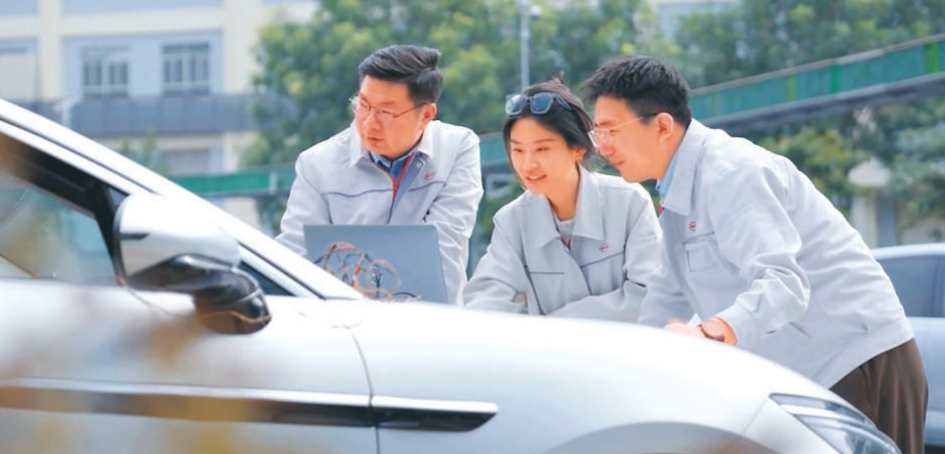
Under the winter sun, a white sedan steadily navigated the Beijing-Taipei Expressway. As Wang Yan, chief engineer of a Level 3 (L3) autonomous driving pilot program at Chinese automaker Beijing Automotive Group Co., Ltd. (BAIC Group), pulled a control stalk, the adaptive cruise control mode was activated, and a blue indicator illuminated on the dashboard of the BAIC Arcfox Alpha S (L3 Edition).

“The vehicle has entered L3 autonomous driving mode,” Wang explained. “The driver can remove their hands from the steering wheel and their feet from the brake pedal.”

Wang noted that the indicator activates only on designated pilot sections, signaling that the vehicle meets the conditions for autonomous driving. “In these sections, the vehicle can steer, accelerate, and decelerate autonomously within a single lane,” he added.

On Dec. 15, 2025, China’s Ministry of Industry and Information Technology granted road approval for two electric sedan models equipped with L-3 autonomous driving capabilities, in the first time it has allowed such vehicles to operate on public roads in Beijing and Chongqing. This marked a critical step toward the commercial application of L3 autonomous driving in China.

According to the standards for automated driving levels set by the Standardization Administration of China, driving automation is classified into six levels, from L0 to L5. While L2 refers to partial automation, L3 denotes conditional autonomous driving. 

“Currently, most vehicles equipped with L2 systems on the market provide partial automation on expressways and urban roads, said Song Chaosheng, a professor at Chongqing University. 

“L2 remains an assisted driving system, whereas L3 represents a higher level of automation,” said Liang Fenghua, deputy general manager of AI fundamentals and applications at Changan Automobile. 

“Under specific scenarios, L3 systems can fully control dynamic driving tasks, although drivers must be prepared to resume control if the system requests a takeover,” Liang added.

L3 systems allow drivers to momentarily take their hands off the wheel and eyes off the road, as the system independently manages driving tasks. However, this is only permitted under the right conditions, such as on designated roads with reliable network and satellite positioning.

The approvals granted for these vehicles are distinct from previous testing permits. “These models are now eligible for official license plates and can legally operate on public roads, a significant departure from vehicles under testing licenses,” said Jia Beibei, director of BAIC’s L3 autonomous driving project.

Ji Jie, associate professor at the College of Engineering and Technology, Southwest University, noted that these approvals represent a shift from technological validation to mass-production readiness. “This marks a transition from laboratory testing to real-world applications, accelerating the commercialization of autonomous driving,” Ji added.

Wang also highlighted the conditional nature of L3 autonomous driving. “The system is designed to operate only on designated pilot road sections and under favorable conditions, such as stable network and satellite positioning.” 

Once activated, drivers are allowed to divert their attention from the road briefly, but they are not permitted to close their eyes for extended periods, leave the driver’s seat, or unfasten their seat belt. If the system detects such behavior, it will issue a takeover request that the driver must respond immediately.

At present, pilot vehicles in Beijing are authorized to operate autonomously at speeds up to 80 kilometers per hour on designated highways and urban expressways. In Chongqing, pilot vehicles can operate autonomously at speeds up to 50 kilometers per hour in traffic-congested areas.

The technical requirements for these pilot vehicles are correspondingly higher. The Arcfox Alpha S (L3 Edition) is equipped with 34 high-performance sensors, including three lidar units, which provide comprehensive environmental perception and data for decision-making. Changan’s model features essential sensing technologies such as 4D imaging, millimeter-wave radar and micro-collision sensors.

“For L3 vehicles, both hardware and software are designed with the principle of ‘no failure allowed,'” Liang said, adding that the vehicles must remain safe and operable even if certain critical systems fail. 

Changan’s approved model employs a seven-level redundant architecture covering perception, control, power supply, communications, braking, steering, and human-machine interaction. In the event of a failure in one of the critical systems, backup systems can take over, ensuring safe deceleration and stopping.

Liang explained that at the current stage, the use of these vehicles is limited to pilot entities, designated road sections, and approved models. “Consumers cannot yet operate these vehicles themselves, but they can book autonomous driving ride services via mobile apps to experience the technology,” he said.

To accelerate the commercialization of L3 conditional autonomous driving, a consortium led by BAIC has been selected for the L3 intelligent connected vehicle road pilot program, launched by four government departments. The consortium plans to launch operations in specific scenarios in the first quarter of 2026 to gather real-world data and experience.

Chongqing’s diverse terrain, characterized by mountainous landscapes, frequent fog, bridges and tunnels, and complex interchanges, serves as a rigorous testing ground for Changan’s L3 models. 

“Chongqing’s road conditions present comprehensive challenges to vehicle perception, positioning, control, and route-planning capabilities,” Song said. “If a vehicle can navigate these conditions successfully, it has the potential to operate effectively in most complex traffic environments.”

Maikaya, Marketing Nasarawa State to the World Through Grassroots Development, Promise of Good Governance

In an era when sub national governments are increasingly competing for global attention, foreign direct investment, and strategic partnerships, development narratives have evolved beyond policy documents, official statistics, and ceremonial commissioning of projects.

Today, states are defined as much by how governance is felt at the grassroots as by how it is articulated in government circles. Investors, development partners, and even tourists are paying closer attention to social stability, community engagement, youth inclusion, and the everyday lived experiences of ordinary citizens.

Within this changing global and national context, Nasarawa State is gradually shaping a development narrative that emphasises peace, inclusion, and grassroots participation. Beyond government-led initiatives, individuals and community-based foundations are playing increasingly visible roles in projecting the state’s image.

One such figure is Alhaji Dr. Muhammed Musa Maikaya, philanthropist, grassroots mobiliser, and founder of the Maikaya Development Foundation, whose sustained humanitarian and community-driven interventions are contributing to how Nasarawa is perceived within and outside Nigeria.

From rural communities in Toto, Awe, Doma, and Karu Akwanga, Wamba, Obi, Kokona Nasarawa to urban centres such as Lafia, Maikaya’s activities reflect a consistent belief that development must begin with the people, align with their realities, and empower them to become stakeholders in progress.

Through sports development, youth empowerment, educational support, health interventions, renewable energy support, and continuous engagement with traditional and community institutions, his initiatives are gradually reinforcing Nasarawa’s image as a peaceful, organised, and people-oriented state.

For Maikaya, grassroots development is not a political catchphrase but a guiding philosophy shaped by lived experience. Speaking during the finals of a grassroots football tournament organised by the Maikaya Development Foundation in Toto Local Government Area, he articulated a principle that has come to define his engagements across the state.

“Development is more encompassing if it reaches the grassroots. When villages, youths, women, and the vulnerable are carried along, development becomes a lot more meaningful, inclusive, and sustainable,” he said.

This philosophy has translated into a steady stream of community-focused initiatives. Football tournaments, skills acquisition programmes, educational support schemes, medical and humanitarian outreaches, and youth engagement forums supported by the foundation have become recurring features across Nasarawa State.

While many of these interventions are modest in scale, their cumulative impact has been significant, building trust between communities, strengthening social cohesion, and projecting Nasarawa as a state where development is people-centred.

Among the various tools deployed by Maikaya, sports, particularly football, has emerged as a powerful platform for grassroots mobilisation and unity. Football competitions organised across local government areas often draw teams from diverse ethnic, religious, and political backgrounds, creating spaces for interaction, dialogue, and mutual respect.

Observers note that these tournaments help reduce youth restiveness, promote discipline and teamwork, and foster a shared sense of identity among young people. Beyond their immediate social benefits, the competitions attract visitors from neighbouring states, thereby subtly expanding Nasarawa’s visibility and reputation.

A community leader in Toto, Alhaji Sani Abdullahi, described the impact as far-reaching. “What Maikaya is doing through sports goes beyond entertainment. He is uniting communities, engaging our youths positively, and showing outsiders that Nasarawa is peaceful and organised. This is the kind of exposure money alone cannot buy,” he said.

Beyond sports and mobilisation, the humanitarian footprint of the Maikaya Development Foundation has expanded steadily in recent years, touching key sectors such as education, health, energy, and community infrastructure. These interventions reflect an understanding that development is multi-dimensional and that social welfare must go hand in hand with economic and physical infrastructure.

In the education sector, the foundation has provided financial support to over 2,000 tertiary students from Nasarawa State over some few years, easing the burden of tuition, accommodation, and learning materials for indigent students. Beneficiaries say the support has helped many of them remain in school at a time when economic pressures are forcing some students to drop out.

The foundation has also demonstrated a strong commitment to inclusion by extending scholarship support and learning materials to students living with disabilities. This intervention has been widely commended by education advocates as a step toward ensuring that vulnerable groups are not excluded from opportunities for personal and professional growth.

In the health sector, Maikaya’s foundation, working in collaboration with relevant state institutions, enrolled more than 700 vulnerable residents across the 13 local government areas of Nasarawa State into the State Health Insurance Scheme. The beneficiaries, largely women, children, and persons living with disabilities, now have access to basic healthcare services that would otherwise be beyond their reach.

Health professionals and community leaders note that such interventions reduce preventable deaths, improve productivity, and contribute to overall social stability, key indicators often assessed by development partners and investors.

Community infrastructure has equally benefited from the foundation’s interventions. In Toto Local Government Area, the donation of a 500KVA transformer significantly improved electricity supply, boosting small-scale businesses, artisanship, and household activities.

Residents say the improved power supply has enhanced commercial activities and reduced reliance on expensive alternatives.

Similarly, in Karu Local Government Area, Maikaya donated high-powered solar energy systems to the building materials market situated in Mararaba to support it’s community facilities. The intervention not only improved access to clean and reliable energy but also highlighted the growing relevance of renewable energy solutions in grassroots development.

Traders at the Mararaba Building Materials Market, including the market chairman, Sir Christopher Ibeh, expressed profound appreciation for the donation of high-powered solar energy systems by Alhaji Dr. Muhammed Maikaya.

Speaking during the commissioning of the project, Sir Ibeh highlighted the dramatic transformation the market has experienced since the installation of the solar-powered lights. According to him, areas that were once shrouded in darkness after sunset, making them unsafe and discouraging for traders and buyers alike, are now brightly illuminated.

“The lights have not only enhanced visibility but have also instilled a renewed sense of confidence and security among the traders and their customers. He said.

Many traders echoed Sir Ibeh’s sentiments, noting that the market, which previously became almost deserted in the evenings, now thrives late into the night.

The improved lighting has enabled vendors to extend their trading hours, attract more buyers, and significantly reduce incidents of theft and other security concerns that were common in the past.

Several traders emphasized that beyond the physical illumination, the gesture represents a broader commitment to community development and grassroots empowerment, explaining how targeted interventions like this can improve livelihoods and foster economic growth at the local level.

Analysts note that such projects, though community-based, contribute to a broader narrative of sustainability and innovation qualities increasingly associated with states seeking global relevance.

Acknowledging Government Efforts on Security and Infrastructure, at several public engagements, Maikaya has been deliberate in acknowledging the role of the state government in creating an enabling environment for grassroots initiatives.

He has openly commended Governor Abdullahi Sule for prioritising security across Nasarawa State, particularly noting the relative peace and improved security situation in the state.

According to him, sustained security efforts by the government have been critical in allowing community programmes, sporting events, and humanitarian outreaches to take place without disruption.

Maikaya has also praised the administration’s infrastructure drive across the three senatorial zones, citing landmark projects such as the Lafia, Akwanga, and Keffi flyovers, as well as ongoing efforts to connect rural communities through road construction and rehabilitation.

“These projects are opening up communities, improving mobility, and strengthening economic activities. When rural and urban areas are equally connected, development becomes more inclusive,” he noted.

One of the most striking elements of Maikaya’s grassroots engagement is his consistent focus on youth empowerment. In a state where young people constitute a significant proportion of the population, initiatives that promote skills development, sports, mentorship, and entrepreneurship are increasingly seen as strategic investments rather than short-term interventions.

Through organised sports, training programmes, mentorship platforms, and community engagement, youths are presented not as liabilities but as partners in development and future leaders.

Importantly, Maikaya has repeatedly emphasised that all interventions carried out through the Maikaya Development Foundation are funded entirely from his personal resources. He has never held any political office, nor occupied any public position of responsibility at the state or federal level.

He has also never executed government contracts or benefited from government patronage in any form. According to him, the Foundation’s activities are driven purely by a sense of civic duty and personal conviction that meaningful development should not wait for public office or political advantage.

“Everything we do is from personal sacrifice and commitment to the people,” he has stated on several occasions, stressing that service to humanity should stand independent of power, privilege, or access to government resources.

A Lafia-based political analyst, Dr. Emmanuel Tsoho, explained the broader implication, “When youths are empowered and meaningfully engaged, it sends a strong signal about the future of a state.

It reflects energy, innovation, and sustainability, qualities that investors and development partners look for.”
Several beneficiaries of Maikaya-supported initiatives have since become informal ambassadors of Nasarawa, sharing their experiences during inter-state competitions and on social media platforms.

A young footballer from Doma captured this shift in perception.“When teams come from other states and see our organisation and support, they respect Nasarawa. It changes how people see us,” he said.

Community elders argue that humanitarian interventions and youth engagement efforts contribute directly to social stability, an essential foundation for development and external engagement.

“Peace and care for the people are the strongest advertisements of any state,” a traditional ruler from Awe observed. “When communities are stable and people feel supported, outsiders feel confident to come, invest, and partner.”
Such sentiments align with Maikaya’s belief that development must be holistic, addressing social welfare alongside infrastructure, governance, and economic growth.

In today’s interconnected world, state branding is no longer the exclusive preserve of government institutions. Foundations, private citizens, and community leaders increasingly play complementary roles in shaping public perception.

Through sustained grassroots engagement, Maikaya has become one of several actors projecting Nasarawa’s story of peace, potential, and people-focused development. Social media posts, news reports, and word-of-mouth accounts of his initiatives are gradually shaping how the state is viewed beyond its borders.

A Lagos-based businessman who attended a football tournament in Toto reflected on this evolving image.
“I used to think Nasarawa was quiet and underdeveloped. What I saw here changed my mind. There is organisation, talent, and a strong sense of community. It made me see the state differently,” he said.

As conversations about development and leadership continue within Nasarawa State, observers note that grassroots-driven initiatives such as those championed by Maikaya complement broader government efforts. They help bridge gaps, strengthen community trust, and reinforce the idea that development is a shared responsibility.

By aligning humanitarian action with community needs and acknowledging existing government structures, such initiatives contribute to continuity rather than division, cooperation rather than competition.

In marketing Nasarawa State through action rather than rhetoric, Maikaya is strengthening community bonds while contributing to a broader narrative of a state steadily positioning itself for relevance on the globe.

Rivers State Under Siege by Wike and His Men, RPAF Cries to President Tinubu

The Rivers Peace Agenda Forum (RPAF) has sent an urgent “Save Our Soul” appeal to President Bola Ahmed Tinubu, warning that Rivers State is under sustained political siege orchestrated by Federal Capital Territory Minister Nyesom Wike and his loyalists.

The forum described today’s fresh impeachment proceedings against Governor Siminalayi Fubara as a direct assault on democratic governance and the collective will of the people of Rivers State.

In a statement released this evening, the RPAF condemned the impeachment notice read on the floor of the Rivers State House of Assembly by lawmakers widely regarded as being under Wike’s control.

“We, the concerned citizens, elders, and stakeholders united under the Rivers Peace Agenda Forum, are raising this SOS to Mr. President and Commander-in-Chief because our dear state is being held hostage by undemocratic forces,” the statement declared.

“The impeachment move initiated today against Governor Siminalayi Fubara is a brazen affront to the institution of democracy in Rivers State. It is a calculated attempt to overthrow the people’s mandate through the backdoor and impose chaos for selfish political interests.

“This latest action is only the most recent chapter in a prolonged campaign to destabilize the administration of Governor Fubara. Since the political disagreement emerged, Minister Wike has remotely directed a faction of the Assembly to act in ways that paralyze governance and deny Rivers people the dividends of democracy.

“The peace agreement personally brokered by President Tinubu in 2023 was meant to restore calm and allow governance to thrive. Regrettably, that accord has been repeatedly violated by Wike’s camp, with lawmakers loyal to him refusing to honour its provisions and instead pursuing actions that deepen division.

“Today’s impeachment notice is proof that the forces opposed to peace and progress will stop at nothing. They have turned the House of Assembly into an instrument of vendetta rather than a platform for lawmaking and oversight in the interest of Rivers people.

“We are particularly pained that this siege continues despite Governor Fubara’s demonstrated commitment to peace, development, and inclusive governance. His administration has focused on delivering projects, paying salaries promptly, and uniting the state, yet it faces relentless attacks from those who cannot accept the reality of a new leadership.

“Mr. President, we appeal to you as father of the nation to intervene decisively. Rivers State cannot continue to bleed because of one man’s unwillingness to let go of power. Rein in those using federal influence to undermine a sitting governor elected by the people.”

The forum called on President Tinubu to enforce strict compliance with the 2023 peace accord, protect democratic institutions in Rivers State, and ensure that no individual is allowed to hold an entire state to ransom.

Tax Reforms Act: Civil Society Groups Name Speaker Tajudeen Abbas as Man of the Year

***Commend House of Reps for Leading Transparency in Governance

Three prominent civil society organizations, led by the Centre for Social Justice, Equity and Transparency (CESJET), have named Rt. Hon. Tajudeen Abbas, Speaker of the House of Representatives, as the Man of the Year 2025 for his exemplary leadership in promoting transparency, particularly in handling the controversial tax reform laws.

The groups praised Abbas for his pivotal role in championing transparency within Nigeria’s governance framework, particularly through the swift and public release of certified tax reform documents amid swirling controversies.

In a joint statement issued here in Jos on Saturday, the organizations highlighted Abbas’ dedication to accountability as a beacon for Nigerian democracy in their annual review of 2025’s key figures and events.

Signed by Dr. Adebayo Lion Ogorri, Executive Director of CESJET, Comrade James Awe and Danladi Danjuma, the statement described Abbas as a “trailblazer in restoring faith in public institutions.”

It emphasized his decisive actions in overseeing the disclosure of four critical tax reform laws, which were signed into effect by President Bola Ahmed Tinubu.

These measures, the groups argued, not only quelled misinformation but also set a new standard for legislative integrity.

“Abbas’ leadership exemplifies why he deserves this honor,” the statement read. “In a year marked by fiscal challenges and public skepticism, he steered the House toward unprecedented openness.

“By mandating the immediate release of verified copies of the tax acts—including the Nigeria Tax Act, the Nigeria Tax Administration Act, the National Revenue Service Establishment Act, and the Joint Revenue Board Establishment Act—he ensured that Nigerians could access authentic records without delay.

“This move directly addressed concerns over discrepancies in circulating versions, proving his commitment to evidence-driven reforms that prioritize fairness and national development.”

The CSOs built a compelling case for Abbas as Man of the Year by pointing to his hands-on guidance throughout the tax reform journey.

From facilitating broad consultations with stakeholders to leading intense committee reviews and plenary discussions, the groups said Abbas insisted on processes that were inclusive and grounded in Nigeria’s economic needs.

They added that his prompt response to a lawmaker’s alert about inconsistent document versions—triggering an internal probe and public dissemination—demonstrated proactive vigilance.

According to them, this not only safeguarded the laws’ authenticity but also reinforced public trust in the National Assembly as a custodian of accurate records.

“In an era where opacity breeds distrust, Abbas has shown that transparency is not just a policy but a principle,” the statement added, urging other leaders to emulate his approach.

Beyond the tax reforms, the organizations lauded Abbas for navigating numerous political and institutional challenges in 2025, maintaining unity in the House despite intense pressures.

The groups pointed to his role in fostering harmony among diverse interests, facilitating progressive legislation, and championing initiatives like open parliament events that enhanced public engagement and earned global acclaim.

Abbas’ efforts in supporting youth and women empowerment through policies and constituency projects, as well as his active parliamentary diplomacy—positioning Nigeria prominently in regional and international forums—were also highlighted as key achievements.

The CSOs described 2025 as a defining year for the 10th House under Abbas, where he emerged as a pillar of stability, service, and accountability.

Professor helps high-altitude communities grow fresh vegetables year-round

By Zhao Yongxin, People’s Daily

For people living in high-altitude pastoral areas, access to fresh vegetables has long been constrained by harsh natural conditions, with limited varieties available throughout the year. For nearly two decades, Wang Zhonghong, a professor at Xizang Agricultural and Animal Husbandry University, has been working to change that. 

Inside a courtyard greenhouse on the Qinghai-Xizang Plateau, Wang climbed up and down a small ladder, pointing out the different crops growing at each level.

“The top layer gets the strongest sunlight and the highest temperatures, so we grow watermelons, eggplants and chili peppers on it,” he said. “The middle layer is cooler and less sunny, which suits radishes, cabbage and cauliflower. The bottom layer has the weakest light and lowest temperature, so it’s ideal for spinach, lettuce and chives.”

This multi-layer planting system is part of Wang’s long-term research on high-altitude courtyard greenhouses, a facility he has spent years refining. His goal is simple but ambitious: to make it possible for farmers and herders in high-altitude regions to enjoy fresh vegetables throughout the year.

Born and raised in northwest China’s Ningxia Hui autonomous region, Wang had no prior connection with Xizang. While pursuing graduate studies at Northwest Agriculture and Forestry University in northwest China’s Shaanxi province, however, he was struck by a comment from his advisor: the Qinghai-Xizang Plateau is rich in wild vegetable resources, yet its vegetable industry remains underdeveloped. 

When universities in Xizang came to recruit faculty members in 2006, Wang made a decisive choice. “If I went to Xizang,” he recalls, “I could teach and conduct vegetable research at the same time.” He gave up a job he had already lined up and headed for the plateau.

Upon his initial arrival, Wang became deeply fascinated with the region. He learned that wild Allium plants — relatives of onions and chives — are especially abundant on the plateau. Of the more than 1,000 species worldwide, over 60 are found in the region, offering significant development potential.

Turning wild plants growing at elevations of 4,000 to 5,000 meters into vegetables suitable for everyday meals, however, was no easy task. Outside the classroom, Wang led his students through years of painstaking work: surveying wild resources, establishing germplasm nurseries on campus farms, and selecting superior strains. 

Eventually, he mastered artificial cultivation techniques for Allium przewalskianum, an Asian species of wild onion in the Amaryllis family, a native wild Allium species. The domesticated plants grew well and had a rich flavor, but providing a wider variety of fresh vegetables for local households remained his larger concern.

That led him to focus on courtyard greenhouses.

“High-altitude areas are cold and windy year-round, especially in winter, which makes conventional large greenhouses impractical,” Wang explained. Most local residential buildings are two-storey, surrounded by courtyard walls one to two meters tall. These enclosed spaces naturally block cold winds and create small, relatively stable microclimates, ideal conditions for a different kind of greenhouse.

In the autumn of 2014, Wang built his first prototype: a small arched greenhouse with three planting layers. It soon proved inadequate — the structure was too low, and sunlight was blocked by courtyard walls.

He experimented with movable designs to improve lighting, but steel-frame structures turned out to be too heavy to move easily. Eventually, he returned to a fixed design, raising the height to five or six meters and creating a double-layer structure with an inner and outer greenhouse.

By 2018, after repeated trials and adjustments, the courtyard greenhouse took its basic form. Wang continued refining it. He optimized the spacing between the inner and outer layers and added thermal insulation blankets to improve heat retention. 

Each layer was fitted with 12 planting boxes: the upper layer for heat- and light-loving vine crops, the middle for vegetables with moderate requirements, and the lower for shade- and cold-tolerant leafy greens.

“The guiding principle is simple,” Wang said. “The greenhouse must be safe, reliable, easy to operate and easy to maintain, something farmers and herders can use well and use for a long time.”

Through continuous improvements, the design has now reached its seventh generation. A 49-square-meter courtyard greenhouse can accommodate up to 36 different vegetable varieties across its three layers, while the space between the inner and outer structures can be used to plant waxy corn or potatoes. 

“Even in the coldest winter, we can still grow more than 10 kinds of cold-resistant leafy vegetables,” Wang told People’s Daily.

“Before I retire,” he said, “I hope to promote these courtyard greenhouses in more places across the Qinghai-Xizang Plateau, so that people living at high altitudes can have fresh vegetables on their tables every day.”

Hubei’s inland shipping industry strives for green, smart development

By Yu Weiliang, Fan Haotian, People’s Daily

At a dedicated dock of shipbuilder China Star Shipping in Yichang, central China’s Hubei province, a bulk carrier named Gezhouba, nearly 130 meters long with a maximum deadweight of 13,740 tons, is undergoing outfitting and is scheduled for delivery in March 2026.

“This 10,000-ton-class all-electric bulk carrier integrates breakthroughs in new-energy propulsion with intelligent navigation and control,” said Yan Xinping, an academician of the Chinese Academy of Engineering and a professor at Wuhan University of Technology. 

According to him, Gezhouba is the first large inland vessel equipped with an intelligent navigation and control system, which enables remote operation, autonomous obstacle avoidance, and automatic berthing and unberthing.

Hubei province leverages its extensive waterways, transportation networks, and industrial expertise to transition inland shipping toward green and intelligent solutions. The province is home to 29 shipbuilding enterprises above designated size, or those with annual main business revenue of 20 million yuan ($2.85 million) or more. Its annual shipbuilding capacity stands at 5.31 million deadweight tons. 

At the China State Shipbuilding Corporation (CSSC) 712 Institute in Wuhan, technicians conduct integrated shore-based testing of battery, motor, and control systems — components that power over half of China’s new energy marine propulsion systems.

“This year, we have released a range of second-generation green and intelligent equipment, including high-safety containerized marine power supplies, actively balanced battery packs, and smart ship bridge systems,” said Li Mingyong, deputy director of CSSC 712 Institute.

Hubei is working to optimize the supply system of its inland shipping industry by prioritizing greener vessel propulsion, making breakthroughs in autonomous navigation technologies, accelerating the development of standardized ship models tailored to ports, waterways, and cargo types, strengthening high-end shipbuilding capabilities, and actively expanding into international markets. Its efforts center on five key directions: green development, intelligence, standardization, high-end development, and internationalization.

A series of demonstration new energy vessels have been launched in the province, including the world’s largest-capacity all-electric cruise ship, China’s first hydrogen fuel-powered vessel, and the country’s first 10,000-ton-class inland bulk carrier powered by a methanol dual-fuel electric propulsion system.

“Behind these achievements is the growing strength of Hubei’s collaborative innovation system that integrates enterprises, research institutions, and universities,” said Li Jinkun, an official with the Hubei provincial office of science, technology and industry for national defense. 

The province has built a high-level innovation ecosystem, which is supported by national key laboratories such as the State Key Laboratory of Maritime Technology and Safety and the Hubei Donghu Laboratory, and joined by Huazhong University of Science and Technology, Wuhan University of Technology, Naval University of Engineering, CSSC 712 Institute and CSSC 719 Institute, as well as the Wuhan branch of the China Classification Society and its Wuhan Rules and Research Institute.

At the Yichang Shipbuilding Industrial Park in Zhijiang, Hubei province, a batch of new energy vessels are under construction. In late November, a 130-type LNG (liquefied natural gas) single-fuel river-sea direct multipurpose vessel was delivered. Benefiting from the Yangtze River shipbuilding supply chain platform, which integrates research and development, design, construction, and finance, the vessel was delivered one month ahead of schedule, with overall costs reduced by 4 percent.

Hubei has encouraged financial institutions to develop innovative green credit, financial leasing, and guarantee products. It has also established specialized supply chain platforms to provide companies with one-stop services covering information sharing, logistics and trade, and technological support.

The province has taken the lead in introducing an administrative filing system for the shipbuilding industry and easing market access requirements. At the same time, it has focused on key sectors such as freight transport and cultural tourism to develop representative application scenarios.

By strengthening coordination among the industrial, innovation, talent, capital, and service chains, Hubei continues to improve the ecosystem for its inland shipping industry.

In the first three quarters of this year, Hubei’s shipbuilding industry generated an output value of 72.71 billion yuan, up 17.3 percent year on year. Newly secured ship repair and construction orders totaled 289 vessels, with green and intelligent ships accounting for 75.8 percent of the total.

Three ’30-million’ milestones in auto sector highlight China’s economic potential

By Ren Ping, People’s Daily

Recent milestones in China’s automotive industry, marked by three significant “30-million” achievements, have garnered widespread attention and offer valuable insights into the nation’s economic potential.

In late October 2025, Chinese-German joint venture FAW-Volkswagen celebrated the production of its 30 millionth car in China. Over the course of 34 years of operation, FAW-Volkswagen has demonstrated resilience by not only adopting advanced technologies but also prioritizing independent innovation. This commitment has led to a transition to high-end, intelligent manufacturing, highlighting the immense potential of China’s open, mutually beneficial market.

On December 10, 2025, Chinese Changan Automobile Group Co., Ltd. saw its 30 millionth vehicle roll off the production line. It took the company 30 years to produce its first 10-million vehicles, another seven years to reach 20 million, and just over four years to reach the 30-millionth milestone. This progress reflects the success of ongoing efforts to enhance product quality, efficiency, and innovation within the Chinese automotive industry.

On December 11, 2025, according to data from the China Association of Automobile Manufacturers, in the first 11 months of 2025, China’s auto output and sales have both exceeded 31 million units. This marks a pivotal moment for China, which has become the world’s largest exporter of complete vehicles, with new energy vehicles accounting for more than half of new car sales. The rapid acceleration of the automobile industry underscores the country’s competitive advantages, particularly its vast domestic market and comprehensive industrial ecosystem.

Transforming traditional and emerging sectors

The transition from traditional internal combustion engine vehicles to new energy vehicles, combined with advancements in electrification and intelligent mobility, has driven remarkable growth in the automotive sector. Companies like Changan Automobile, BYD, and Leapmotor have made significant strides in new energy vehicle technology, with Changan Automobile having established over 200 laboratories, fostering innovation and strengthening industrial independence. The integration of the innovation chain with the industrial chain continues to forge new market advantages, positioning China’s automotive sector for sustained growth.

Beyond the automotive industry, China is witnessing the rise of the low-altitude economy, the application of artificial intelligence, and advancements in pharmaceuticals, all of which contribute to the expanding scope of economic potential.

In the first 11 months of 2025, sales revenues in high-tech industries nationwide increased 14.7 percent year on year, signaling the economy’s continued transformation and the flourishing of new sectors.

By capitalizing on the opportunities presented by a new round of technological revolution and industrial transformation, and coordinating the upgrading of traditional industries, the expansion of emerging industries, and the development of future industries, China is developing new quality productive forces in line with local conditions, unlocking boundless possibilities for its economy.

Urban-rural integration and regional development

A key area of economic growth is the integration of urban and rural development. Over the past five years, sales of new energy vehicles in rural areas have reached approximately 15 million units, while the distribution of goods to villages has soared, with more than 10 billion parcels handled by China Post in the past three years. These figures reflect the significant potential for industrial growth, consumption upgrading, and infrastructure development in lower-tier and rural markets.

Imbalances and inadequacies represent both developmental challenges and untapped potential. By advancing the high-quality development of county-level economies and strengthening coordinated growth among key city clusters, China is promoting urban-rural integration and regional connectivity, thereby expanding market opportunities and driving new sources of economic growth.

Investment in people and infrastructure

Investment in both physical infrastructure and human capital is a crucial element of China’s growth strategy. The country’s ice-and-snow economy, valued at around 1 trillion yuan ($142.03 billion), exemplifies the successful application of such investment. Moreover, the implementation of continuing education programs for migrant workers is equipping industrial workers with the skills necessary for modern economic demands.

By prioritizing people’s expectations, addressing their needs, and promoting their development, China is leveraging the multiplier effect created by the close combination of investments in physical assets and human capital. Improving the quality and efficiency of human capital boosts total factor productivity, stimulates demand, unleashes significant consumption potential, and generates a win-win outcome for both economic growth and improved livelihoods.

Policy support and reform-driven Innovation

Turning economic potential into sustainable growth requires policy support and continuous reform-driven innovation. The Central Economic Work Conference noted that there are still long-standing and new challenges in China’s economic development, and the impact of changes in the external environment has deepened while risks and hidden dangers persist in some key areas. These issues, arising in the course of development and transformation, can be resolved through efforts.

The automobile sector serves as an illustrative example. Intense “rat-race” competition once led to a significant decline in profit margins, with the industry’s overall profit dipping to 3.9 percent in the first quarter of 2025, below the average for manufacturing. However, the timely intervention of the “visible hand” has offered much-needed guidance, helping the industry gradually recover and return to a healthier trajectory. China introduced targeted campaigns to address online disruptions in the automotive sector and implemented regulations to curb destructive price wars. As a result, profits in the automobile industry increased by 4.4 percent year on year in the first 10 months of the year.

In March this year, The Washington Post published an article titled “How China pulled ahead to become the world leader in electric vehicles” on its website, attributing the success of Chinese electric vehicles to industrial planning. The effective application of value-driven policies and strategic guidance by institutions plays a crucial role in unlocking economic potential.

China is advancing reform and the rule of law as “dual engines” by issuing guidelines for building a unified national market, promulgating regulations for fair competition, and implementing laws to promote the private economy. These efforts continue to foster a stable, fair, transparent, and predictable business environment, enabling market vitality to thrive.

By aligning with broader development trends and strengthening confidence, China is  focusing on effective governance to transform its vast economic potential into dynamic momentum for high-quality device

Chinese automakers strengthen capabilities in powertrain development

By Kang Pu, Li Fangyi

The powertrain — comprising the engine, transmission, and electric motor — is the core of any vehicle, directly influencing power output, energy efficiency, and overall reliability. 

Following decades of dedicated research and sustained investment, Chinese automakers have made substantial progress across powertrain technologies, advancing from a phase of catching up to one of leading innovation. This shift is now a driving force behind the continued growth and modernization of China’s automotive industry.

At an engine plant of Chinese carmaker Great Wall Motors (GWM) in Baoding, north China’s Hebei province, robotic arms move with precision while technicians carry out final calibrations on newly assembled engines. Once considered a weak link in China’s automotive sector, engines have become a focal point of domestic innovation.

In the 1980s and 1990s, Chinese automakers primarily relied on imported or reverse-engineered engine models. That began to change in 2000, when GWM established its internal combustion engine division, becoming one of the earliest Chinese companies to develop core powertrain technologies independently. By 2015, GWM had built a comprehensive portfolio of engine platforms ranging from 1.5L to 3.0T, not only powering its own models but also supplying other brands.

The development of large-displacement engines has long been regarded as a hallmark of industrial capability. At Auto Shanghai 2025, GWM debuted its 4.0T V8 engine. “Developing a V8 engine requires far more than adding cylinders. It involves major breakthroughs in hardware design, control systems, manufacturing, and key components,” explained Wang Chao, deputy general manager at GWM’s Research and Development Center.

Some have questioned the relevance of investing in internal combustion engines amid the rapid growth of new energy vehicles (NEVs). Wang, however, sees hybridization as the long-term optimal solution. He argues that varying regulatory environments, infrastructure disparities, and fuel availability across global markets necessitate a diversified powertrain strategy. “A globally competitive brand must meet a wide range of user needs,” he added.

Hybrid technologies, combining combustion engines with electric motors, have become a mainstream solution, offering improved efficiency, reduced emissions, and alleviating range anxiety.

According to an executive of Chinese automotive giant Geely, the Starray hybrid-dedicated engine released in 2024 incorporates advanced features such as a steeply angled ‘duckbill’ intake port, Mask-type airflow guidance, and airflow-profiling piston crowns. These innovations enable precise in-cylinder flow control, optimizing the coordination between battery, motor, and engine. The engine initially achieved a thermal efficiency of 46.5 percent. By 2025, with the application of Geely’s full-stack AI technologies, thermal efficiency in mass production rose to 47.26 percent in 2025, placing it among the most advanced hybrid engines globally.

For new-energy vehicles, the electric motor serves as the core power component, replacing the traditional engine. “In 2010, we were already a ‘hidden champion’ in the global sewing machine motor market, holding around 80 percent of the market share,” said Niu Mingkui, president of the new energy drive division at Zhejiang Founder Motor Co., Ltd. (FDM), a leading motor supplier based in east China’s Zhejiang province. 

“However, with limited growth prospects in that sector, we decided to pivot toward the rapidly expanding market for NEV motors,” Niu added.

During the early stages of its transition to the automotive sector, FDM faced a significant talent gap. “We established a research and development institute in Shanghai, where the automotive industry chain is more mature, and built a specialized research team to close the gap,” Niu recalled.

Since 2020, FDM has become a supplier to major passenger-vehicle manufacturers, delivering 470,000 drive motors for NEVs that year.

Beyond battery capacity, motor efficiency is a key determinant of range in electric vehicles. “We examined every component from electromagnetic design to material applications to drive performance gains,” Niu said. “We raised motor efficiency from 93 percent to 98 percent. That five-percentage-point improvement can save thousands of yuan per vehicle for automakers and deliver a noticeably better experience for consumers.”

China’s NEV industry continues to surge. In October 2025, NEV sales reached nearly 1.72 million units, accounting for 51.6 percent of all new car sales. 

“Technology iterations are moving extremely fast, and research and development must accelerate accordingly,” said Niu. “For automobiles, a major consumer product, quality must be uncompromising to earn lasting consumer trust.”