Over 750,000 SMEs in Guangdong employ cloud systems for higher-efficiency production

By Sun Zhen, Cheng Yuanzhou, People’s Daily

Guangdong province in south China has been accelerating the digital, networked and intelligent development of the manufacturing sector in recent years, leveraging technological transformation to upgrade traditional manufacturing industries such as textile and home appliance.

As a major production base of the textile and garment industry, Guangzhou, capital of Guangdong province has encouraged a number of industrial internet platforms to help small- and medium-sized enterprises (SMEs) transition to cloud-based systems and services, including Guangzhou Zhijing Information Technology Co., Ltd.(GZIT) a Guangzhou based company that uses digital technologies to streamline textile operations.

The company has developed an intelligent platform that assists garment manufacturers find proper fabric suppliers. The platform gathers massive market information and can quickly search for desired items based on actual demands.

Shi Daqing, general manager of a garment company in Dongguan, Guangdong province, is a beneficiary of the platform. “In the past, I had to search in fabric markets for days every time I came to Guangzhou to procure supplies. Now, with online fabric selection, it only takes a few minutes to find the fabrics we want,” said Shi, who has been engaged in the garment business for more than 20 years.

According to Li Yaping, co-founder and senior vice president of GZIT, the company, leveraging big data, Internet of Things and other cutting-edge technologies, has launched multiple smart cloud platforms that cover all sectors of the garment industrial chain, from fabric production to procurement, and from apparel design to sales.

Li told People’s Daily that it generally cost over half a month to design a piece of clothing in the past, which needed multiple procedures such as graphic design, pattern making, cutting and sample making.

However, the cycle has been shortened to just minutes thanks to an intelligent apparel design platform independently developed by GZIT, which can rapidly generate virtual samples based on preset styles and preferences.

In a smart textile park of GZIT in Yibin, southwest China’s Sichuan province, the company employs a real-time intelligent quality-check system.

Many defects of fabrics couldn’t be spotted by manual inspections, and now with the fully automated quality-check system, over 99 percent of the products are qualified, said Li Peifeng, head of the smart textile park.

“Each roll of the fabrics comes with a quality-check report and a QR code, which enable full traceability of production information along the chain,” he told People’s Daily.

Since its establishment in 2014, GZIT has continually expanded its business scope, serving more than 50,000 enterprises in the textile and apparel industry both inside and outside Guangdong province with digital technologies.

“Cloud” services give a big helping hand to SMEs, which is deeply recognized by Chen Kai, general manager of a textile company in Foshan, Guangdong province.

“We all know the benefits of digitalization, but everything about it, from R&D to equipment upgrade, costs money. Cloud services allow us small businesses to achieve significant outcomes with minimal investment,” Chen noted.

Today, Chen’s company can pay to use GZIT’s intelligent systems and enjoy tangible benefits of technological transformation. “The systems monitor equipment operation in real time, reducing abnormal downtime by 35 percent and boosting overall efficiency by 30 percent,” Chen said.

As more and more companies adopted its services in recent years, GZIT built a cloud platform that coordinates upstream and downstream production.

“Downstream apparel manufacturers place orders, the platform assigns them, and upstream textile firms take them,” said Li. “Through cloud-based management, we can rapidly match demands and supplies, thus promoting efficient production.”

Li is quite optimistic about GZIT’s future development. “Apart from servicing upstream and downstream enterprises, we are now integrating them to make the industrial chain more resilient and competitive!”

Zou Yongbing, chief economist of the Department of Industry and Information Technology of Guangdong province, said that in recent years, the province has introduced and cultivated over 400 outstanding industrial internet platform companies and service providers including GZIT. Collectively, they have driven digital transformation for over 30,000 industrial enterprises above designated size and enabled over 750,000 SMEs to adopt cloud solutions.

China, Russia set prime example of new form of international, good-neighborly relations between two major countries

By He Yin, People’s Daily

This year marks the 75th anniversary of the China-Russia diplomatic relations. It is an important milestone year in the history of China-Russia relations.

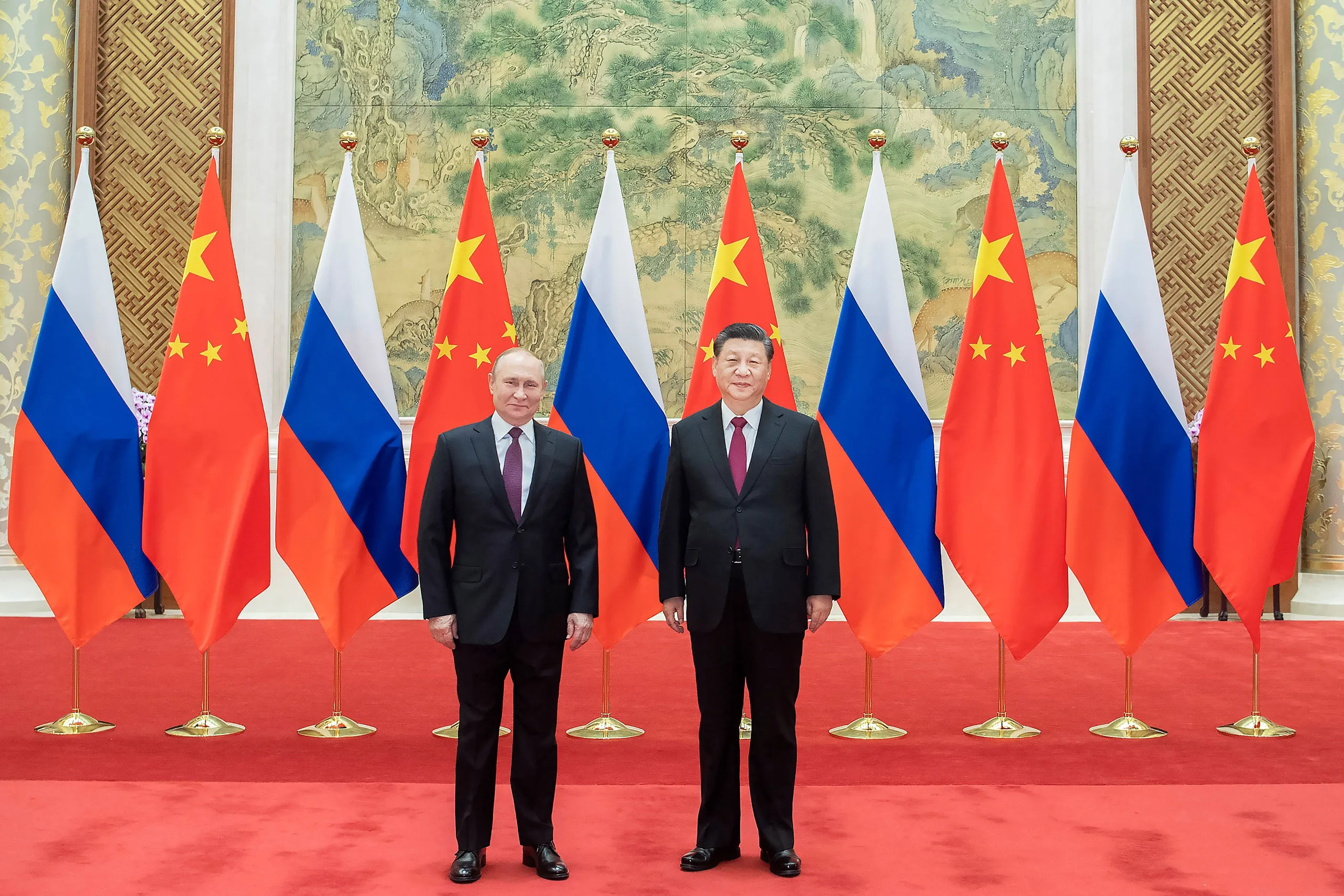
On May 16, Chinese President Xi Jinping held talks with his Russian counterpart Vladimir Putin, who was on a state visit to China, at the Great Hall of the People in Beijing.

The most important conclusion drawn from the 75-year history of China-Russia relations is that two neighboring major countries must always promote the Five Principles of Peaceful Coexistence, respect each other on an equal footing, trust each other, accommodate each other’s concerns, and truly provide mutual assistance for the development and revitalization of both sides, Xi noted.

This is not only the correct way for China and Russia to get along, but also the direction that major-country relations should strive for in the 21st century, Xi said.

His important remarks have charted the course for the future development of China-Russia relations.

Head-of-state diplomacy is leading the all-round development of the China-Russia comprehensive strategic partnership of coordination for the new era.

The two presidents have held over 40 meetings, maintaining close communication and offering strategic guidance on promoting healthy and stable development of bilateral relations between China and Russia.

This time, Xi and Putin had a candid and fruitful discussion. They had a comprehensive review of the successful experience in developing the China-Russia relationship, and had an in-depth exchange of views on the relationship as well as major international and regional issues of mutual interest, charting the course forward for their cooperation across the board.

The two heads of state signed and issued the Joint Statement of the People’s Republic of China and the Russian Federation on Deepening the Comprehensive Strategic Partnership of Coordination for the New Era in the Context of the 75th Anniversary of China-Russia Diplomatic Relations.

They also witnessed the signing of a number of important intergovernmental and interagency cooperation documents, injecting new, strong impetus into the sound development of China-Russia relations.

China and Russia will uphold the principles of non-alliance, non-confrontation and not targeting any third party, continue to deepen two-way political trust, respect each other’s choice of development path, and realize development and revitalization with each other’s firm support.

In the past three quarters of a century, the China-Russia relationship has grown stronger amidst wind and rain. China and Russia together have found a new path for major and neighboring countries to treat each other with respect and pursue amity and mutually beneficial cooperation. The China-Russia relationship has become a prime example of a new form of international relations as well as good-neighborly relations between two major countries.

The notable progress in China-Russia relations is attributable to the two countries’ commitment to five principles.

First, China and Russia are committed to mutual respect as the fundamental principle of relations, and always render support for each other’s core interests.

Second, China and Russia are committed to win-win cooperation as the driving force of relations, and work to foster a new paradigm of mutual benefit.

Third, China and Russia are committed to lasting friendship as the foundation of relations, and carry forward the torch of Sino-Russian friendship.

Fourth, China and Russia are committed to strategic coordination as an underpinning of relations, and steer global governance in the right direction.

Fifth, China and Russia are committed to fairness and justice as the purpose of relations, and dedicated to the political settlement of hotspots.

With the concerted efforts of the two sides, China-Russia relations have been moving forward steadily, with enhanced comprehensive strategic coordination and further cooperation on economy and trade, investment, energy, people-to-people exchanges, at the subnational level and in other fields. This has made positive contributions to maintaining global strategic stability and promoting greater democracy in international relations.

The two sides will take the 75th anniversary of the diplomatic ties as a new starting point, further synergize development strategies, and continue to enrich the bilateral cooperation, to bring greater benefits to the two countries and peoples, and contribute more positive energy to world prosperity and stability.

The two countries need to make further structural improvements to their cooperation, consolidate the good momentum in trade and other traditional areas of cooperation.

Last year, two-way trade exceeded $240 billion, close to 2.7 times of that of a decade ago. This is a good indication of the all-round cooperation of mutual benefit that continues to deepen between the two countries.

The two countries need to look for areas where their interests converge, tap into their comparative strengths, deepen the integration of interests, and enable each other’s success.

They should make further structural improvements to their cooperation, consolidate the good momentum in trade and other traditional areas of cooperation, support the formation of platforms and networks for basic research, continue to unlock cooperation potential in frontier areas, step up cooperation on ports, transportation and logistics, and help keep the global industrial and supply chains stable.

The two sides should create more highlights for people-to-people exchanges, jointly host successful China-Russia Years of Culture, strengthen cooperation at subnational levels, and continuously tighten the bonds between the two peoples.

By focusing on implementing the Roadmap for China-Russia Cooperation on People-to-People and Cultural Exchanges Before 2030, the two countries are expanding people-to-people and cultural ties.

The two presidents have set 2024 and 2025 as China-Russia Years of Culture, proposed a series of cultural activities that are down to earth, close to people’s hearts and popular among them, and encouraged closer interactions between various sectors and at subnational levels, so as to enhance mutual understanding and affinity between the two peoples.

Both sides are willing to continue to strengthen cooperation within the frameworks including the UN, BRICS and Shanghai Cooperation Organization (SCO) as well as communication on major international and regional issues, so as to establish a fair and equitable global governance system.

Both China and Russia are permanent members of the UN Security Council and major emerging markets. It is the shared strategic choice of both countries to deepen strategic coordination, expand mutually beneficial cooperation and follow the general historical trend of multipolarity in the world and economic globalization.

With Russia chairing BRICS this year and China taking over the chairmanship of the SCO later this year, the two sides will support each other’s chairmanship, build a high-quality partnership that is more comprehensive, close, practical and inclusive, and build the unity and strength of the Global South.

As a Chinese saying goes, “A mountain is formed by accumulation of soil and an ocean is formed by accumulation of water.” After 75 years of solid accumulation, lasting friendship and all-round cooperation between China and Russia provide a strong impetus for the two countries to forge ahead despite wind and rain. Having reached a new starting point, China and Russia will always remain committed to their founding purpose and jointly shoulder responsibility to create more benefits for their peoples and make due contribution to global security and stability.

Long-term goals can never be achieved with short-sighted practices

By Zhong Sheng, People’s Daily

On top of existing tariffs under Section 301, the U.S. recently decided to raise additional tariffs on its imports of Chinese products including electric vehicles (EVs), as part of its ongoing abuse of the Section 301 tariff review procedure driven by domestic political concerns.

The U.S. has unilaterally politicized economic and trade issues and used them as a tool, wielding the stick of tariffs to suppress China’s industrial development and normal economic and technological activities. This not only seriously violates the principles of market economy and international trade rules but also poses a grave threat to the healthy development of the global economy.

The imposition of additional tariffs by the U.S. is a typical act of unilateralism and protectionism.

The U.S. claimed that Chinese products had threatened its “national security” and accused China of engaging in “unfair trade practices,” but all these are baseless excuses. The main purpose of the U.S. imposing additional tariffs on Chinese products is to exploit political gains under the guise of protecting relevant industries.

As pointed out by Clark Packard, a research fellow at the Cato Institute, new tariffs on imported EVs and other products from China are driven mostly by domestic political calculations in the run-up to the 2024 presidential election. It’s truly a race to the protectionist bottom.

The high tariff barriers set by the U.S. impede free trade and undermine fair competition. Such approach does not protect U.S. industries but rather makes them increasingly uncompetitive in a comfortable environment.

Stephen Roach, a senior fellow at Yale University, pointed out that the allegations in the U.S.-initiated Section 301 investigation against China lack evidence, and its attempt to curb China’s industrial development through tariffs is short-sighted and cannot achieve the long-term goal of revitalizing U.S. industries.

The imposition of additional tariffs by the U.S. is a typical act of hegemony and bullying.

The previous U.S. administration’s imposition of tariffs on Chinese products under Section 301 has severely disrupted normal economic and trade exchanges between the two countries and was ruled by the World Trade Organization (WTO) as a violation of WTO regulations.

Instead of correcting its actions, the U.S. has once again imposed tariffs, which demonstrates that certain people in the country are suffering from a chronic case of “China anxiety.” Trying to maintain the U.S. hegemony, they perceive China’s development as a threat and resort to all means to suppress China, in an irrational manner.

The development of China’s new energy industry is the result of technological innovation by Chinese companies and their active participation in market competition. It benefits from China’s complete industrial categories, industrial system, and huge domestic market. It is in line with the needs of global economic development and benefits not just China but also the U.S. and the whole world.

The U.S. resorting to all means to unscrupulously suppress China’s new energy sectors does not prove its strength but rather exposes its lack of confidence. It cannot solve the problems within the U.S. but further disrupts the normal operation of international industrial and supply chains. It cannot prevent China’s development and revitalization but instead encourages over 1.4 billion Chinese people to work even harder.

The Section 301 tariffs imposed on China for the past six years have heightened economic burdens for businesses in both countries and U.S. consumers, disrupted international trade order, and impacted global economic stability and security.

Moody’s has estimated that 92 percent of the costs of the tariff hikes will fall on U.S. consumers, while average U.S. household expenditure increases by $1,300 annually.

Instead of reflecting on the serious drawbacks of unilateralism and protectionism, the U.S. has made yet more mistakes, which have significantly raised the cost of imported goods and caused greater losses for American businesses and consumers.

Craig Allen, president of the U.S.-China Business Council, said that maintenance of the prior tariffs – with no reductions – and imposition of additional tariffs ultimately make it harder for American companies to compete in the U.S. and abroad, cost American jobs, and increase prices for U.S. manufacturers and consumers during a time of ongoing inflation.

At a critical moment of global economic recovery, the U.S. further imposing tariffs is causing trouble for the development of the world economy and is not well-received internationally.

German Chancellor Olaf Scholz and Swedish Prime Minister Ulf Kristersson have recently cautioned against the additional tariffs imposed by the U.S. on China, saying that “when it comes to import duties, I think that we (Sweden and Germany) essentially have a consensus that it is a bad idea to start dismantling global trade.”

Gita Gopinath, first deputy managing director of the International Monetary Fund, noted that under the surface, there are increasing signs of fragmentation. “If the trend continues, we could see a broad retreat from global rules of engagement and, with it, a significant reversal of the gains from economic integration.”

Unilateralism and protectionism go against the trend of the times. Faced with the recent years’ new and evolving situation in China-U.S. business ties, the two sides should stay committed to mutual respect, mutual benefit, and equal-footed consultation, follow economic and market rules, expand and deepen mutually beneficial business cooperation, respect each other’s development rights, and work for win-win outcomes for the two countries and the world at large.

(Zhong Sheng is a pen name often used by People’s Daily to express its views on foreign policy and international affairs.)

Chinese company builds floating solar plant in Indonesia, contributes to Indonesia’s green development

By Cao Shiyun, People’s Daily

About two hours’ drive southeast of Jakarta, capital of Indonesia, lies a tranquil mountain range in West Java. As one navigates the winding roads that snake through the mountains, breathtaking vistas gradually unfold. In the distance, under blue skies and white clouds, the Cirata Reservoir emerges, nestled amidst the majestic peaks. What catches the eye, however, are the neatly arranged massive arrays of photovoltaic (PV) panels that float on the surface of the reservoir.

Spanning across the equator, Indonesia is the largest archipelagic country in the world. It boasts mammoth oceanic area and rich solar resources. The Indonesian government has decided to develop solar power generation into the strongest pillar of its clean energy supply by 2060.

As a collaboration project between Indonesia’s state electricity corporation PLN and the United Arab Emirates energy company Masdar, the Cirata floating solar plant was constructed by China’s PowerChina Huadong Engineering Corporation Limited (HDEC) The 192-megawatt-peak capacity power plant was connected to the power grid in November last year.

The Cirata floating solar plant features 13 PV arrays. Each of them measures 430 meters long and 230 meters wide, and includes 48 sub-arrays. Together, they comprise a total of over 28,000 solar panels.

Wang Shaofeng, deputy chief engineer of the project, told People’s Daily that it was the first time for HDEC to build a floating solar farm so huge and challenging that required the company to overcome various problems throughout the designing to construction phases.

According to Wang, the Cirata floating solar plant is the first floating solar farm in the world that floats on a reservoir with depths up to 100 meters.

Due to the complex topography, steep slopes and thick sludge under the water, it was difficult to fix anchor blocks during the construction, Wang noted, adding that the project team specifically developed anchor blocks with higher bearing capacity to make the anchor system stable.

“The Cirata floating solar plant is the first floating PV project in Indonesia and the largest in Southeast Asia. It is a key strategic project of Indonesia at the national level. The smooth implementation and completion of the project have boosted the country’s confidence in energy transition,” said Guo Xiaodan, the representative of PowerChina in Indonesia.

Today, the Cirata floating solar plant accounts for 25 percent of Indonesia’s total new energy generation capacity. It is expected to generate 300,000 megawatt-hours of electricity each year, providing clean energy to about 50,000 Indonesian households.

According to preliminary estimates, the project will save 117,000 tons of standard coal for Indonesia on an annual basis, and reduce the annual emission of carbon dioxide, coal dust, sulfur dioxide and nitrogen oxide by 214,000 tons, 82,000 tons 9,000 tons, and 4,500 tons respectively.

So far, the project has offered over 8,000 jobs for local communities both directly and indirectly. Tang Lijun, on-site manager of the project, told People’s Daily that the most of the project’s employees used to be farmers and fishers, whose incomes were very unstable as they lived at the mercy of the elements.

Their incomes have significantly increased after working on the project, with some experiencing a fourfold surge in monthly earnings, Tang said. After the completion of the project, they can continue to work in operations and maintenance of the project using the skills they have acquired or seek employment in other projects, Tang added.

It is learned that the project has also organized professionals to visit local middle schools to promote PV knowledge, and worked with the local government to recruit interns from Indonesian universities in an effort to cultivate a talent pipeline.

Yoga, a university student in internship on the project, said: “The staff on the project patiently guided and helped us. Here, I learned a lot of knowledge and experience that cannot be gained at university.”

Guo said that the project has always followed a localization strategy, employing local designing, construction and installation teams, and offering multiple safety and skill training sessions for local workers. The project has nurtured a batch of outstanding professionals in the PV industry, Guo added.

The Cirata floating solar plant exemplifies the practical cooperation between China and Indonesia. In recent years, the two countries have achieved significant progress in their collaboration on renewable energy. Notably, PowerChina’s successful river diversion at the Batang Toru Hydropower Station has laid a crucial groundwork for future work. Additionally, Trina Solar, a Chinese PV company, has signed an agreement with Indonesian partners to establish Indonesia’s inaugural production base for PV cells and modules.

“China owns advanced technological expertise in renewable energy. Strengthening cooperation with China will help Indonesia achieve its energy transition goals,” said Agung Pribadi, director of the Center for Mineral, Coal and Geothermal Resources at the Ministry of Energy and Mineral Resources of Indonesia. He emphasized that China will play a crucial role in assisting Indonesia in achieving its carbon neutrality objectives.

“The Cirata floating solar plant has become another iconic project of the Belt and Road cooperation between Indonesia and China after the Jakarta-Bandung High-Speed Railway,” said Veronika S. Saraswati, convener of the China Studies Research Unit at Indonesia’s leading think-tank Center for Strategic and International Studies.

The successful operation of the Cirata floating solar plant once again demonstrates the achievements and potential of cooperation between Indonesia and China in the field of renewable energy, she noted.

She believes that the two countries will continue to deepen their comprehensive strategic partnership for more mutual benefit and win-win cooperation.

China builds world’s largest clean energy corridor

By Wang Hao, People’s Daily

As the longest river in China, the Yangtze River amasses a number of tributaries and winds through many deep gorges, offering rich hydropower resources, abundant shipping routes and huge freshwater reserves.

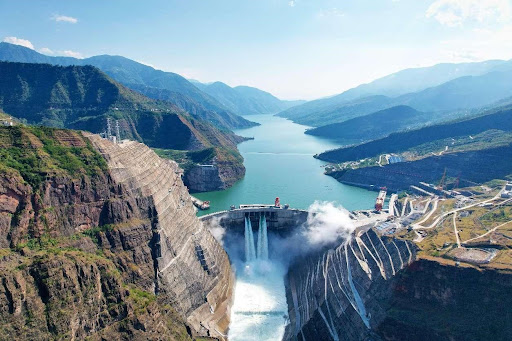
Six mega hydropower stations along the mainstem of the Yangtze River — Wudongde, Baihetan, Xiluodu, Xiangjiaba, Three Gorges Dam, and Gezhouba Dam — form the world’s largest clean energy corridor, which spans over 1,800 kilometers with a water level drop exceeding 900 meters. A total of 110 hydroelectric generators operate in tandem along the corridor, consistently generating green electricity.

Recently, all the six cascade hydropower stations have been connected to an industrial internet platform, which marked the completion of an “industrial brain” of the world’s largest clean energy corridor. This is expected to significantly boost the corridor’s operational efficiency and reliability.

It is reported that these six cascade hydropower stations have generated over 3.5 trillion kilowatt-hours of electricity, equivalent to saving over 1 billion tons of standard coal and reducing carbon dioxide emissions by more than 2.8 billion tons. Besides, the coordination among these cascade reservoirs has also ensured unimpeded shipping, sufficient water supply, and ecological conservation.

The Baihetan hydropower station has 16 hydro-generating units with a total installed capacity of 16 million kilowatts. These units are powered by water plunging over 200 meters from above, with each rotation producing around 150 kilowatt-hours of electricity.

“Our staff work round the clock. With the installation of sensors to collect data in real time, any abnormalities will trigger automatic alerts within the system,” said Wang Bin, deputy director of the operations department of the Baihetan hydropower station run by China Yangtze Power Co., Ltd. (CYPC).

In December 2022, all units of the Baihetan hydropower station went fully operational, which marked the completion of the world’s largest clean energy corridor, a witness to the breakthroughs made by China in hydropower engineering.

For instance, the Gezhouba Dam, completed in the 1980s, has a single-unit capacity of 170 megawatts. Besides, the Three Gorges Dam, the world’s largest hydropower project, is equipped with power-generating units each with a capacity of 700 megawatts.

China’s capability to produce million-kilowatt power-generating units couldn’t have been obtained without new techniques, materials, and industrial upgrades.

Li Haijun, deputy director of the electromechanical technology center of China Three Gorges Corporation (CTG), said that million-kilowatt units undergo significantly higher water pressure impact, rotational speeds and stresses compared to smaller units.

In response to this challenge, CTG has taken the lead in collaborating with major steelmakers to develop 800 MPa high-strength steel plates specifically designed for spiral casings. Such breakthrough has effectively put an end to the long-term reliance on imported steel plates, Li explained.

Scheduling these giant hydropower stations involves multiple aspects across vast spatiotemporal scales, regions, and grids. To handle peak and base loads, higher safety and stability standards are demanded,” explained Tang Zhengyang, deputy director of CYPC’s Water Resources Research Center.

The industrial internet platform enables the hydropower stations to cope with all-business scenarios, including intelligent operations, maintenance, repairs, dispatching, and decision-making, which comprehensively strengthens smart operations and propels digitalization.

Apart from supplying electricity, the clean energy corridor has also formed a 768-kilometer-deep waterway that steadily improves the navigation conditions of the Yangtze River. Previously unnavigable sections have been turned into wide passages, and small ports along the corridor have grown stronger and bigger. For example, along the section in southwest China’s Chongqing municipality, multiple 5,000-ton deep water berths have emerged, which amplify the advantages of water transportation along the Yangtze River, known for its low energy consumption, high capacity and cost-effectiveness.

As a strategic freshwater source of China, the Yangtze River basin commands 995.9 billion cubic meters of water resources annually, accounting for about 36 percent of China’s total. The clean energy corridor alone forms a cascade reservoir cluster with 91.9 billion cubic meters of storage, which serves as a vital strategic freshwater reserve.

Fish populations serve as a crucial indicator of a river’s ecological health. Systematically increasing water discharges from the reservoirs to gradually raise river levels can help create favorable conditions for natural fish spawning and reproduction. Relevant authorities have  conducted multiple ecological scheduling experiments with an increasingly broad scope.

According to an official with the Changjiang Water Resource Commission of the Ministry of Water Resources, current scheduling objectives have expanded beyond facilitating fish propagation. They now encompass layered water withdrawal for temperature regulation, prevention and control of algal blooms, sediment sluicing and silt reduction in reservoirs, and curbing excessive growth of submerged aquatic vegetation.

These efforts are contributing to the conservation and restoration of the aquatic ecosystem across the Yangtze River basin. As a result, the world’s largest clean energy corridor has evolved into a corridor of ecological conservation.

Coalition To Call for Immediate Removal of FFS Boss, Abdulganiyu Over Allegations of Financial Infraction, Abuse of Office


• Says Abdulganiyu Unconscionably using companies linked to staff, cronies to fleece public resources
• Abdulganiyu has rejected several FOI Request- Ogakwu
• Hints on Commencing Mass Protests in Coming Week

A coalition of over 180 civil society groups in Nigeria, Civil Society Groups for Good Governance, has revealed intentions to commence what it termed a massive public protest and rally against the Controller-General of the Federal Fire Service, Jaji Olola Abdulganiyu, over alleged incidences of financial subterfuge and abuse of office.

The coalition also seeking immediate removal of the CG, in a communique signed and made available to newsmen by its President, Comrade Ogakwu Dominic on Tuesday, accused Dr. Abdulganiyu of perpetrating a litany of financial infractions, including siphoning of public funds earmarked for procurement of equipments, vehicles, amongst others via contracts to staffs, cronies and family members and refusing to collect FOIs from concerned organisations, media seeking clarification on the subject matter.

According to the communique, the group expressed utmost displeasure and consternation at the level of corruption and constant abuse of office existing in the agency and is calling on President Bola Ahmed Tinubu to take immediate and constructive action to investigate and serve the necessary disciplinary action.

It read: “We are greatly concerned at the level of financial recklessness, subterfuge and abysmal abuse of office in the Federal Fire Service. The level of corruption existing in the agency is one that has in recent time, sent shivers down our spine. The leadership under Dr. Abdulganiyu has failed the test of transparency and accountability especially in its continuous diversion and retirement of public funds through companies linked to staff, cronies and family members. This sharp practices with evidences, has led and still leading to a decline in the agency’s ability to respond effectively to fire emergencies thereby compromising its mandate of providing safety and security for all Nigerians.

“The Federal Fire Service in years before now, has been mired in numerous corruption scandal, yet fresh allegations and infractions has continued to infringe its effectiveness and capacity to carryout duties. As concerned citizens and watchdog of the society, we cannot sit down and watch leaders that have been appointed to serve, neglect the oat they took before assumption, neither can we allow the malfeasance to continue.

“We have resolved to begin a clarion call for Dr. Abdulganiyu’s immediate sack/removal from office, also in the coming weeks if nothing is done by then, we shall carryout a world press conference and public mass protest to further buttress our point and effect the desired changes we seek. The unconscionable use of companies linked to staff and associates to siphon public funds is in violation of the Public Procurement Act, 2011 & The Code of Conduct Bureau & Tribunal Act. May we also reiterate that this isn’t just any form of unsubstantiated allegation, we have detailed evidences and we are ready to tender all of it in the public domain if need be.” It added.

Chinese scientists succeed in speed rice breeding in desert greenhouses

By Jiang Jianke, People’s Daily

A group of scientists from the Chinese Academy of Agricultural Sciences (CAAS) recently announced the success of a trial planting to halve the growth cycle of a conventional rice variety in a desert greenhouse in Hotan, northwest China’s Xinjiang Uygur autonomous region.

“We started the breeding in February this year. Supported by soilless farming, temperature control and artificial lighting, it took just 60 days for the rice seedlings to harvest,” said Wang Sen, a researcher with the CASS’s Institute of Urban Agriculture (IUA).

China is the first country in the world to cultivate rice. With ordinary farming practices, it usually takes 120 to 150 days on average for rice to mature in China’s major rice-growing areas.

Why can the growth cycle of rice be significantly reduced in desert greenhouses of Hotan?

In 2021, Yang Qichang, chief scientist with the IUA, and his team successfully cut the growth cycle of rice by half in laboratory settings in Chengdu, southwest China’s Sichuan province. They also achieved a technological breakthrough that allows rice to be cultivated throughout the year, without being limited by seasonal factors.

Yang noted that cultivating rice in laboratory settings is costly, adding that he and his team hoped to explore a technical approach that could achieve speed breeding while also significantly reducing costs.

“We found that Hotan is an ideal place for building greenhouses because the land and operating costs are relatively low here with its vast deserts, abundant sunlight and heat resources. Implementing speed breeding here can significantly reduce costs,” Yang explained.

In the greenhouses of Hotan, Yang and his team replaced soil cultivation with nutrient solutions and employed multi-spectrum LED light sources and environmental control technologies to regulate the lighting and temperature conditions. After more than two years of experiments, the team finally achieved speed rice breeding in desert greenhouses.

Later, Yang and his team continued to explore key technologies for the fast breeding of other crops in desert greenhouses, including soybeans, corn, wheat, oilseed crops and cotton.

The successful trial planting demonstrated that speed breeding in desert greenhouses is entirely feasible and provides an effective method to produce more generations of rice each year, Yang said. Besides, the efficacy of low-cost, highly efficient and energy-saving gutter-connected desert greenhouses has also been validated, he added.

“After future integration with new energy and other technologies, construction and operating costs will be greatly reduced, which will make such greenhouses strongly competitive globally,” Yang told People’s Daily.

China ranks first globally in number of AEO mutual recognition arrangements signed

By Luo Shanshan, People’s Daily

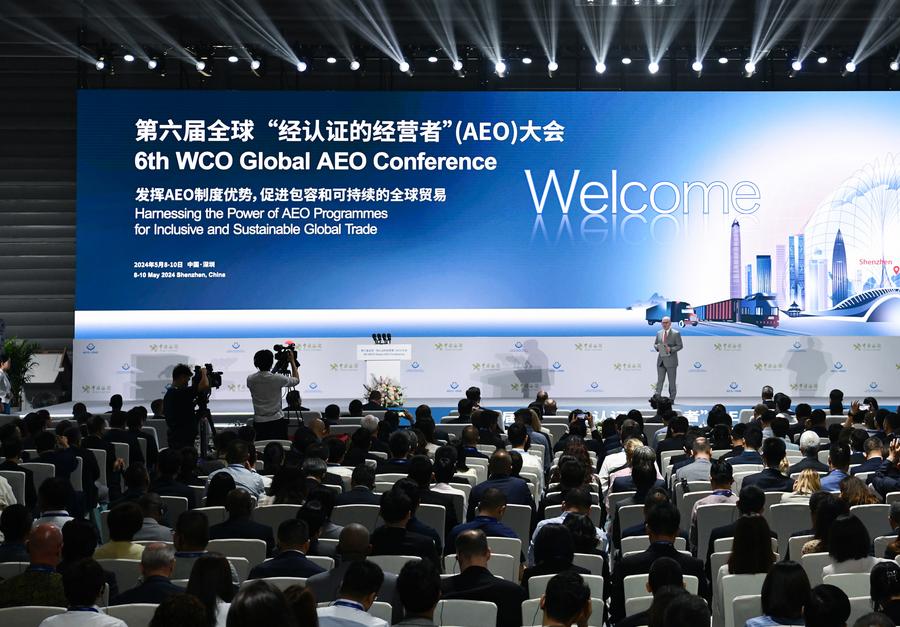
The 6th World Customs Organization (WCO) Global Authorized Economic Operator (AEO) Conference was held in Shenzhen, south China’s Guangdong province from May 8 to 10. It marked the first time for China to host the event.

The conference, hosted by the WCO and co-hosted by the General Administration of Customs (GAC) of China and the municipal government of Shenzhen, was themed “harnessing the power of AEO programmes for inclusive and sustainable global trade.”

More than 1,200 delegates from customs, international organizations, AEO enterprises, governments agencies, academic institutions, and industry associations from over 100 countries and regions gathered at the event, with an aim to advance AEO mutual recognition and promote trade growth.

So far, China has signed AEO mutual recognition agreements with 28 economies including Singapore, the European Union and South Korea, which cover 54 countries and regions. Both numbers rank first globally.

The AEO program is a core system of the WCO Framework of Standards to Secure and Facilitate Global Trade, under which customs authorities certify companies based on the latter’s credit status, compliance records and security standards. As of the end of April this year, China was home to 5,882 AEO enterprises, whose foreign trade volume accounted for 36.3 percent of the national total.

“For enterprises, an AEO certificate not only means convenient customs clearance, but also serves as a prestigious endorsement,” said Sun Yunsong, customs manager of SF Express’ international supply chain business.

“With the assistance of Qianhai Customs under Shenzhen Customs, our company has finally obtained an AEO certificate. Certified enterprises have the highest credit rating from customs, and they can enjoy benefits such as fast customs clearance, low inspection rates, and international mutual recognition. AEO is also hailed as a ‘green pass’ and ‘golden signboard’ in global trade,” Sun said.

Under the guidance of Kunming Customs, Yuxi Walvax Biotechnology Co. Ltd. obtained an AEO certificate in November 2023.

“The frequency of cargo inspections has significantly decreased, and the overall export time has been compressed from nearly a month to a matter of days, greatly enhancing the company’s international market competitiveness,” said Yin Guoqing, head of the company’s international cooperation department.

In recent years, Chinese customs has implemented high-quality AEO facilitation measures to improve regulatory and service efficiency, allowing compliant companies to operate smoothly while reducing costs and increasing productivity.

According to reports, over the past two years, the average inspection rate for AEO enterprises was only 0.33 percent, 1/5 of that for conventionally managed companies, and AEO enterprises enjoyed expedited customs services 1.53 million times.

The AEO program is an important measure for customs to explore credit supervision, and promoting international AEO mutual recognition is an essential aspect of institutional opening up. After signing an AEO mutual recognition agreement, AEO enterprises recognized by one party can enjoy the same customs facilitation treatment as the recognized enterprises of the other party, which significantly reduces trade cooperation barriers and promotes international trade growth.

During the WCO Global AEO Conference, China signed AEO mutual recognition arrangements with Burundi and Iceland. According to the agreements, AEO enterprises from China and these two countries will enjoy four facilitation measures: lower inspection rates, priority inspections, designated customs liaison officer services, and prioritized clearance should trade be disrupted and resume.

Frederic Manirambona, commissioner of Customs Burundi, said that the agreement demonstrated the shared aspiration of the two countries to strengthen ties and promote cooperation on secure customs clearance and trade facilitation. Both sides will work together to create a more secure, efficient and predictable business environment for AEO enterprises, he added.

China is Iceland’s largest trading partner in Asia. The signing of the AEO mutual recognition agreement between the two countries marked a new stage in customs cooperation between them. Snorri Olsen, commissioner of Iceland Revenue and Customs, said that the development of friendly relations between Iceland and China is unstoppable though the two countries are geographically distant.

“In our globalized operations, we have benefited from the efficiency gains and facilitation policies provided by the AEO program. We are beneficiaries of and witnesses to the AEO program,” said Song Yiwen, president of the supply chain management department of technology company Honor, at the conference.

He hopes that customs authorities around the world would expand international AEO mutual recognition, continuously improve trade facilitation, and create a more open and collaborative AEO program, so as to bring benefits to all participants in global trade and achieve win-win outcomes.

Lin Jiantian, director of the GAC’s Department of Enterprise Management and Audit-based Control, said he hopes customs administrations of all WCO members could promote the implementation of the AEO program across a wider scope and in more countries and regions. He also called for facilitating mutual recognition of AEO enterprises among more countries and regions, in order to provide them with greater policy dividends.

Fujian builds diverse food supply system with all-encompassing approach to food

By Jiang Shengyang, Fu Wen, Zhong Ziwei, People’s Daily

Fujian province, located on the southeast coast of China, has a per capita arable land area of only a quarter of the national average. In the 1980s, there was an overall shortage of food, with limited varieties. The types of meat, aquatic products, fruits and vegetables were relatively few, with low yields. Every year, the province had to source large amounts of grain and vegetables from other provinces.

To solve the problem of food scarcity, it’s not enough to focus only on the existing arable land. Instead, an all-encompassing approach to food must be adopted to build a diversified food supply system, and develop food sources in multiple ways.

The all-encompassing approach to food was raised by Chinese President Xi Jinping when he worked in Fujian province. Xi proposed to “attach as much importance to sea areas as to cultivated land, and as much to marine development as to food production, so as to extend the tentacles of speeding up economic development from land to sea.” He proposed the “Fuzhou at Sea” and “Fujian at Sea” initiatives to seek economic development from the sea.

Over the past 30 years, Fujian has earnestly implemented the all-encompassing approach to food, harnessing its abundant natural resources found in mountains and seas to create a diverse food supply system tailored to its unique geographical advantages.

This approach has yielded remarkable results. The province overfulfills grain production tasks assigned by the central government every year. The output of livestock and poultry has seen a significant increase, with the total meat production reaching 3.11 million tons last year, a 250 percent increase compared to early 1990s. In particular, poultry production surged by 13 times.

The per capita share of aquatic food in Fujian province stands at over 200 kilograms, one of the highest across China. The province is also one of the leaders in the total output of commercial edible fungi, cultivating over 30 varieties.

The annual tea production in Fujian has grown from 50,000 tons in late 1980s to 500,000 tons today, with both total output and per unit yield ranking among the highest in the country. Furthermore, Fujian has become a major source of vegetables, playing a significant role in a “south-to-north vegetable transporting” initiative.

In Huanxi township, Jin’an district, Fuzhou, Fujian province, a demonstration base for high-quality specialty products has been established, covering over 1,000 mu (66.7 hectares). The township has constantly improved field facilities, collaborated with the Fuzhou Vegetable Science Research Institute to breed superior varieties, and signed long-term supply agreements with e-commerce platforms under the promotion by relevant state-owned enterprises.

As a result, trucks of online grocery platforms are always seen heading to the fields of the demonstration base, and previously undervalued agricultural products due to logistical challenges and low recognition are now selling well in the market.

In Yaoxia village, Hetian township, Changting county, Longyan of Fujian province, agroforestry is thriving. A prime example is villager Zeng Xianfu, who grows milkwort, a type of medicinal herb, and raises Hetian chickens, a local breed, under broad-leaved forest, and his agritainment business is also flourishing.

By adeptly pairing the milkwort with Hetian chicken – two “treasures from under the forest” – in an herbal chicken dish, he has created a hot-selling product that is in high demand on e-commerce platforms.

In Baiji Bay, Sandu’ao, Jiaocheng district, Ningde of Fujian province, there are over 80 new-type plastic deep-water net cages. “The deep-water net cages have strong resistance to wind and waves, and provide more space. Our company’s annual production of large yellow croaker has increased from 6,500 tons to 8,500 tons,” said Song Xiangguo, head of an offshore aquaculture base of a local food company.

Fujian province is making efforts to cultivate featured advantageous industries and diversify food sources to construct a high-quality agricultural product supply system. Apart from focusing on land and offshore areas, the province is also expanding into the deep sea.

On May 7, the waters around Dinghai Bay in Lianjiang county, Fuzhou, were calm and serene. Stepping onto the “Dinghai Bay No. 2” aquaculture platform felt like walking on solid ground.

“The platform measures 60.9 meters long and 32 meters wide, capable of accommodating 200,000 high-quality adult fish with an annual production capacity exceeding 500 tons,” said Lu Tongfeng, general manager of Fujian Xinmao Fishery Development Co., Ltd.

In the deep-sea waters, there is an abundance of algae and plankton species, providing larger living spaces and enhancing the quality of the fish, Lu added.

In recent years, Fujian province has implemented multiple measures to develop marine ranches and strengthen its distant-water fishing industry. Currently, Fujian owns over 630 distant-water fishing vessels, ranking among the top in comprehensive strength nationwide.

Strengthening the role of enterprises and striving for breakthroughs in core seed sources, Fujian is advancing agricultural modernization with scientific innovation.

One example is Fujian Sunner Group, located in Guangze county, Nanping of Fujian province. The company has implemented advanced technologies in their poultry farming operations, such as an automated water supply system to ensure clean and hygienic water at all times, and an intelligent feeding system that automatically dispenses feed based on the remaining amount in the tray. Sensors placed throughout the chicken houses continuously collect data on temperature, humidity, and air quality, which is displayed in real-time on a large screen in the group’s headquarters.

The system monitors data from 316 farms and 3,688 chicken houses, and if any indicators exceed the set range, an automatic alarm is triggered. Through these methods, 180,000 chicks are being carefully taken care of.

Since 2011, Fujian Sunner Group has invested over 1 billion yuan ($138.17 million) in its white-feathered chicken breeding project. In December 2021, the company’s self-developed white-feathered chicken breed “Shengze 901” obtained full intellectual property rights and was approved by the Ministry of Agriculture and Rural Affairs, breaking China’s dependence on imported white-feathered chickens.

Through continuous breeding efforts, the comprehensive performance of “Shengze 901” has reached international advanced levels, with a domestic market share of over 20 percent.

Fujian province has also actively implemented initiatives to revitalize the seed industry. Since 2021, it has developed 123 new agricultural varieties. Over 98.5 percent of farmlands in the province are grown with fine breeds.

Upholding common interests of humanity calls for joint efforts to oppose protectionism

By Zhong Caiwen

Recently, some American politicians have been unreasonably hyping up the false narrative of “overcapacity” in China’s new energy sector, accusing China of exporting excess capacity to the world.

Such narrative is merely rhetoric fabricated by the U.S. to protect its domestic industries, and to tarnish and suppress the Chinese economy. It is essentially an excuse to justify protectionism, which is detrimental to global trade and division of labor, ultimately harming the well-being of all humanity.

Fundamentally, the United States is protecting its excess low-end capacity.

From a global perspective, free and open international trade and investment can boost competitiveness of industries across the world. Since the Industrial Revolution, the emergence of any new product or the rise of any new industry has followed this pattern. History has repeatedly proven that protectionist “greenhouses” cannot cultivate truly competitive industries and companies.

As Bloomberg recently argued, despite implementing steel protectionist measures over the past decade, Washington has failed to prevent the decline in employment within the U.S. metal manufacturing industry.

The implementation of protectionist policies by the U.S. in industries such as new energy would not just undermine its capabilities to tackle climate change but also severely hinder the growth of industries like automotive and energy.

Protectionism exacerbates global overcapacity and incurs substantial cost losses.

With the end of the Cold War, economic globalization has fully developed, marked by significant reductions in tariffs and non-tariff barriers and notable decline of protectionism.

It has promoted division of labor and cooperation among countries, enabling the free flow of production factors, smooth trade integration, and orderly transfer of capacity, and fostering complete and efficient global industrial and supply chains, which has significantly propelled global economic growth.

However, under the influence of rising geopolitical competition, protectionism has resurfaced in recent years, causing a surge in anti-globalization measures.

For one, measures such as tariffs, trade controls, and technological blockades imposed by the U.S. have caused intensified fragmentation of the global market and economy.

For another, the U.S. has pushed for the restructuring of industrial and supply chains under pretext of national security, leading to redundancy of production capacities within certain sectors in some countries and even the whole world, incurring significant financial losses in their economic and social development.

The WTO has previously estimated a full decoupling of the world into geopolitical blocks could reduce global GDP by 5%.

As the world is undergoing the critical transition from old to new growth drivers, adopting protectionist measures in emerging sectors such as new energy will cause even greater damage.

Protectionist policies of the U.S. have harmed the well-being of both Americans and people worldwide.

Based on the specialized division of labor, free trade allows countries to fully leverage their comparative advantages and maximize the benefits of all trading partners. In contrast, protectionism often leads to high inflation, increased production and living costs, and losses in production efficiency and consumer welfare. It is often domestic consumers that suffer the most.

The Federal Reserve Bank of New York estimated in 2019 that the U.S. tariffs on Chinese imports cost the average American household $831 annually.

For instance, the three major tech-intensive green products of China, or the “new three” — new energy vehicles (NEVs), lithium-ion batteries, and photovoltaic products are highly sought after in the global market. Rising protectionism will hinder the public’s access to these affordable Chinese new energy products.

Protectionism leads to a lose-lose scenario.

Free and open international trade and investment can improve resource allocation globally and enhance global productivity through efficient industrial and supply chains, thereby promoting shared development of all countries involved.

In contrast, protectionism goes against this trend and results in unintended consequences. Politicizing and overstretching the concept of national security on capacity and other economic and trade issues violate economic principles and the general trend of development, inevitably leading to negative outcomes in the medium to long term.

A severe fragmentation of the global economy after decades of increasing economic integration could reduce global economic output by up to 7%, but the losses could reach 8% to 12% in some countries, if technology is also decoupled, the International Monetary Fund (IMF) said in a report last year.

Adopting anti-globalization measures such as decoupling, friendshoring or nearshoring in emerging sectors like new energy and digital economy will ultimately lead to inefficient use of global resources and decreased efficiency, hinder the sustainable growth of the global economy, and narrow or even stifle the room for economic growth.

Countries should join hands to oppose protectionism. In an increasingly interdependent and integrated world, countries form a community of shared interests. The world will never return to isolation, and no one can sever the ties between countries.

It is crucial for countries to firmly stand on the right side of history by championing the overall trend of economic globalization, take a clear-cut stand on free trade and real multilateralism, and oppose unilateralism and protectionism.

Countries should firmly oppose politicizing trade issues, using trade issues as a weapon for ulterior motives, and the abuse of the concept of national security. They should handle differences in accordance with market economy principles and WTO rules, build an open world economy, and work together to make the pie bigger for mutual benefit and win-win results.