Seyi Tinubu: Like Father, Like Son

By Ayuba Ahmad.

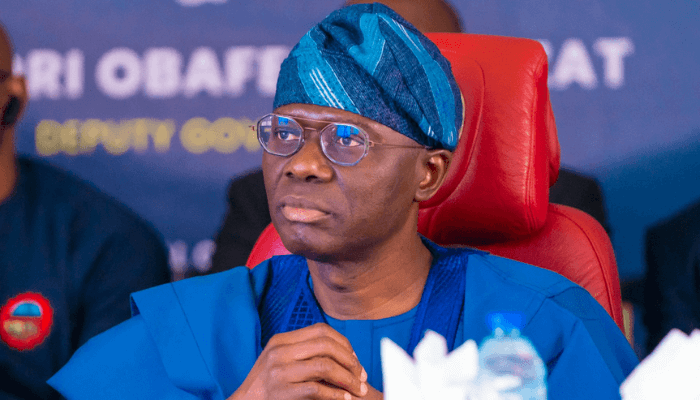
Oluwaseyi Bola Tinubu (simply referred to as Seyi or ST) is son of Nigerian President Bola Ahmed Tinubu. At thirty-eight, he is a very unique personality in several ways: He is a maverick: easy going, independent, liberal, yet meticulous, cautious and calculating, and above all, so matured in the way he carries and conducts himself, both privately and publicly.

Literally born with the proverbial “silver spoon” in his mouth, in spite of his comfort and privileges, Seyi is however, not the typical child of the powerful and affluent. Unlike most youngsters of the circumstances of his birth, majority of those who relate with him generally testify that he is genial, self-effacing and far from being haughty, condescending, loud or brash. He is an energetic young man when it comes to facing tasks before him.

As a result of his being a member of the household of the Asiwaju of Lagos, the Jagaban Borgu, Seyi, like his father, exhibits ebullience and resilience when in pursuit of a given goal. He is especially zestful on missions with bearings on his father’s political projects and interests. In other words, he exhibits that badge of a comported, diligent and an aggressively ambitious and focused personality in his own business ventures and in the political endeavours of his father.

A lawyer with first and postgraduate degrees in other fields from ivy class universities in Britain and the United States of America, Seyi is, expectedly, suave and cosmopolitan as would be expected of one that is roundly educated. Thus, the confidence in his choice to blaze his own trail, to be his own man, chart a course for himself rather than the easy option of a life under the cozy and protective wings of his parents.

“When I finished Law School, I didn’t want to be working under my father, I wanted to get the respect of my parents. I had to become my own man, and it’s all due to how my father and mother raised us,” Seyi asserted.

Surprisingly, as against going into Law practice, or seek for a high profile blue-collar career in the banking or the oil and gas sectors, which he could have had with ease, Seyi, to the amazement of friends and relatives, decided to foray into the world of advertising.

His firm, LOATSAD, an outdoor advertising company, has, within a very short space of time, burgeoned into a major player in the industry to the point of attracting clients from among the nation’s leading blue-chips and multinationals. The phenomenal success was, certainly, the cumulative result of the goal-getter spirit of clear-sighted vision, creativity, drive, single-minded commitment and the other definitive hallmarks of the Tinubu clan.

At barely thirty-eight, Seyi Tinubu has similarly demonstrated the family’s attribute of charity, philanthropy and empathy towards the less privileged. While those in close contact speak of his open-handedness in his everyday life, his Non-Governmental Organizations (NGOs) – TELD and THENOELLA FOUNDATION, have for several years, engaged in activities aimed at, “improving the lives of the under privileged children.” Scholarship awards and “provision of strategic advice and mentoring programs” are focal points of the activities of the NGOs’ in which, Seyi and his supportive wife, Layal, are either the CEOs or Patrons. The Crown Prince of Nigeria, in what appears as his propellant towards philanthropy, Seyi once explained in a newspaper interview: “We are grateful for the privilege we have to be in a position to help and nothing will stop us from doing more. My wife, Layal, and I, do not take the prayers and support of our partners, volunteers and well-wishers for granted. This is because, no one can do it alone,” he stated.

So far, Oluwaseyi Bola Ahmed Tinubu has not come out on the soap box, adorned in the garbs of a partisan politician. But, with all in the household of President Bola Ahmed Tinubu and the matriarch of the clan, Senator Oluremi (Remi) Tinubu and his big sister, the political Amazon, Alhaja Folashade Tinubu-Ojo (Iyaloja-General), politics can be said to be an inescapable, natural way of life in the household. And, Seyi has been very active, in fact, a critical player, albeit from either behind-the-scenes or frontally in the intricate political battles of his father before, during and after the epochal 2023 elections, till date.

For instance, Seyi played decisive roles, before, during and after the 2023 presidential campaign of his father by leveraging on the networks of his vast social platforms to reach out to a broad-spectrum of groups and interests. The strategy translated into an assiduous and aggressive mobilization of a gamut of youths, the intelligentsia, media practitioners, grassroots politicians and clerics of divergent faiths across the country, including women groups like never before seen in the annals of history of a President’s son.

Apart from being the President’s son, Seyi has become very popular, partly due to the fact that he always helps those in need, especially women, the less privileged and the teeming youthful population of the country. Talking about his outdoor activities, Seyi is an “unrepentant Polo enthusiast.”

Presently, Seyi is networking with a prominent Christian leader in Plateau State and another influential Islamic cleric in Niger State in a concerted effort towards promotion of peace, unity, understanding and religious harmony in the region and beyond. In fact, due to his antecedents, Seyi can be ascribed to the dictum: “Like father, like son.”

After the historic triumph of his father in the 2023 presidential election, Seyi shifted focus on the task of building bridges and setting up and fortifying structures of the nascent administration. He was recognized and respected enough to be allowed to make significant inputs in the compositions of the administration and certain strategic decisions. Very pertinently, Seyi is said to be principally instrumental to the unprecedented huge number of young men and women in the government of President Bola Ahmed Tinubu, especially as Ministers and others, as a result of the clarion call and clamour of Nigerians to shift from the old ways of doing things to the new.

In the same vein, he practically involved in strategic engagements and fighting along members of the “Brown Table” a close-knit group of patriots in checkmating the antics and acts of sabotage against the government of his father by disgruntled and ambitious politicians.

As it is so far, not a few keen observers of Seyi Tinubu believe that, while the president’s son has been playing the games of politics from the sidelines on a very serious level, he has, consciously or unconsciously been learning the ropes or testing the waters preparatory to his plunging into the vortex of real politik. The question one may ask is: Has he learned enough and has he garnered the requisite experience to take up the gauntlet?

Be that as it may, Seyi Tinubu has gone far down the road, clearly to the point of no return. In this regard, support for his father’s re-election in 2027 is, the real and critical challenge ahead of him as it is as well, a historic responsibility incumbent on all patriotic Nigerians. This is because, therein lies the way to the deepening and consolidation of the foundation of democracy, integration, economic prosperity and stability of our great nation – Nigeria.

*Ahmad is Kaduna-based Public Analyst and member of Brown Table Group.

Betta Edu/Tunji-Ojo: Tinubu’s Cabinet Under Coordinated Attack

President Bola Tinubu has been cautioned against allowing scheming and coordinated attack by political opponents and antagonists to undermine his administration’s “Renewed Hope Agenda”.
The warning is coming in an Open Letter penned by Public Affairs Analyst, OMOGBOLAHAN L.A BABAWALE following the controversies surrounding the recent suspension of Dr Betta Edu from her position as the Minister of Humanitarian Affairs and Poverty Alleviation, as well as a campaign to implicate the Minister of Interior, Hon. Olubunmi Tunji-Ojo.
The letter warned that President Tinubu must be circumspect, vigilant and carefully review any action against members of his cabinet, noting that there is a coordinated plan to dismantle performing members of Tinubu’s team with trumped-up and corruption allegations.
Babawale warned that the president must not fall to the schemes of unscrupulous elements who would stop at nothing to ensuring Tinubu’s administration crumbles.

The Open Letter reads:

OPEN LETTER TO MR. PRESIDENT
Dear Mr. President,
Watch It! Your First Eleven Under Coordinated Attack

Your Excellency, sir. The above caption refers. My earlier two write ups on both Ministers Betta Edu and Olubunmi Tunji-Ojo further refer.

I am one individual who always preaches circumspect on issues of governance. For whatever reason – either seeking political correctness or otherwise, I do not pander to emotions or social media obstreperous cacophony on emerging issues within the polity especially when one considers the unequivocal fact that human demeanour depends, largely on a myriad of imponderables. I therefore am discerning when I express views on issues within our polity. Perhaps, it is why, on many occasions, such my perspectives had been described by many commentators as perspicacious and sagacity-laced.

The recent ‘discovery’ (if I can adopt that word) is not in any way bizarre or gonzo in the Nigeria’s public sector. What is stupefying or, rather, astounding is why the hoopla on the Humanitarian Affairs and Poverty Alleviation Ministry when in actual fact, this is a norm in all Ministries, Departments and Agencies (MDAs) of government. In my last 2 different opinions on this ‘ugly’ development within our polity, I alluded to the possible fact that no one could rule out an agenda. A carefully orchestrated plot to get some persons the endemic system saw as threats to their continued pillage of our common patrimony out of the way. Lending credence to such innuendo is the recent move by the anti-graft agencies, the EFCC and ICPC to extend the dragnet of investigations to some senior civil servants in the Ministry of Humanitarian Affairs and Poverty Alleviation.

It is not impossible that the embattled Honourable Minister for Humanitarian Affairs and Poverty Alleviation, Dr. Betta Edu may have been naive in the way she handled the transactions. However, the Permanent Secretary, who by law is the Account Officer of the Ministry has a duty to guide the Minister who may have been credulous and not too observant of the environment she found herself on the modus operandi of the Ministry. It is another pointer to the systemic rot in our public sector just like you met it in 1999 as the Lagos State Governor.

As somebody with finance background, and with my certification in forensic investigation, the question I have continued to ask which till this moment remains unanswered by many analysts is who’s this Bridget lady, the one in whose private account the N585m was moved to? Is she a staff of the Ministry or that of the Accountant-General office? Either ways, the infraction (if established) suggests a vicarious liability to every senior officer in Humanitarian Affairs and Poverty Alleviation Ministry as well as the Accountant-General of the Federation office that had interface with the document from the Minister seeking for such payment. The Minister cannot and should not be singled out for punishment.

Your Excellency, sir, as a matter of curiosity, permit me to ask why did they blow the whistle on only the Humanitarian Affairs Ministry when in actual fact, that has been the way ‘we roll’ in our public sector? In year 2022 alone, a whopping sum of N10billion was transferred, across various MDAs in not less than 165 transactions. Alas! These transfers were made into private individual accounts. What does this
suggest? It suggests, in my opinion therefore that, there is a plot to get the Minister out for whatever reason – the obvious of which she may have threatened the ‘how we roll’ anyhowness (sic) in the Ministry. If not, then, such investigation should be extended to other MDAs of government.

Dr. Betta Edu may have been a victim of circumstance, of envy and resentment (from her party folks who felt she was not deserving of such ‘important’ Ministry), of hatred and callousness (from economic predators we have in the civil service whose interests are equally threatened), and of ‘Pull Her Down’ vendetta (by the opposition which saw her ubiquitous movement across the country as a way to get Mr. President more endeared into heart of Nigerians before the 2027 poll).

It is this very reason that these unscrupulous elements hatched a plot on the need to drag the former member, House of Representatives and now Minister of the Federal Republic from Ondo State, Hon. Olubunmi Tunji-Ojo into the miasma. Truth remains the Humanitarian Affairs Ministry and the Interior Ministry are two ministries with interface with a vast majority of Nigerians. Like I opined in my write up on Hon. Tunji-Ojo days back, his record-breaking milestones since becoming the Minister of Interior have had him described the best hand among your ‘recruits’ so far by even your fiercest critics. He has earned himself the moniker of the ‘poster boy’. So, this attempt at denigrating his person by the naysayers, for me, should be discarded as no infraction, whatsoever in my private investigation was committed by the young Hon. Tunji-Ojo. He should therefore not be allowed to be led to political Golgotha by those whose economic interest has been put on ‘crucifixion’ by the shackle-breaker – the poster boy.

Dear President, let me conclude by saying the recent travails of the duo of the Honourable Ministers of Humanitarian Affairs and Poverty Alleviation and Interior, Dr. Betta Edu and Hon. Olubunmi Tunji-Ojo, respectively, have been more of whimsical and impulsive orchestration rather than by reason or unavoidable necessity. Care must therefore be taken so that we do not take hasty decisions that will jeopardise or imperil the #RenewedHope of your administration which has already started yielding the expected results. It is about Edu and Tunji-Ojo today. Who knows whom their next target is?! Alake, Cardoso, Tijjani or who? Baàmi Aṣíwájú, w’ẹ̀yìn wò o. Watch it, sir!

OMOGBOLAHAN L.A BABAWALE (O’CZAR)
Public Affairs Analyst

Fraud allegation: CSO Faults Calls for Suspension of Tunji-Ojo

A Civil Society Organisation, Conference of Civil Society for Peace, Security and National Development (CCSPSND) has faulted the clamour for suspension of the minister of Interior Dr. Olubunmi Tunji-Ojo over the ongoing investigation of fraud allegations against the minister of Humanitarian and poverty alleviation Dr. Betta Edu saying the calls were not in the interest of President Bola Ahmed Tinubu administration and the nation.

Conveners of the Coalition, Dr. Adamu Muhammad and Chief Michael Msuaan, MON made the call in a statement jointly signed and issued in Abuja while reacting to alleged involvement in the N438.1 million consultancy contract between New Planet Project Limited, a company linked to Dr. Tunji-Ojo and the Ministry of Humanitarian Affairs and Poverty Alleviation.

The group maintained that Dr. Tunji-Ojo remains one of the best ministers in the cabinet of President Tinubu. According to the civil society group, within the few months in office, the interior minister has left no one in doubt of his commitment to do things differently. He has been able to marshal the clearance of about 204,000 backlogs of passports within just three weeks in office.

The duo of Dr. Adamu Muhammad and chief Michael Msuaan asserted that enemies of the country who do not want anything good in the country are at it, sponsoring media commentaries aimed at blackmailing the minister. Their aim is to get the minister sacked so that they can continue their business of short changing the country.

“We state emphatically that enemies of the country who were involved in passport racketeering and fraud in the immigration and other services in the ministry and their sponsors are up to heat up the polity with sensational news targeted at criminalizing the minister. President Tinubu must resist the temptation of playing into the hands of these enemies.

“Dr. Tunji-Ojo has introduced an era of efficiency in service delivery, enhancing professionalism and focus. He has come with a vision of enhancing the welfare of paramilitary officers in addition to transforming correctional facilities into centres of rehabilitation. Such a visionary leader needs to be given time to turn around the fortunes of the Ministry.

“Our findings at the Corporate Affairs commission shows that the minister resigned as Director of New Planet Project Limited as far back as 2019, over five years ago and is not involved in the running of the company anymore as such the allegations that he benefited from the 438.1 million Naira consultancy contract awarded the company is baseless and unfounded”.

The CSO further explained that Dr. Tunji-Ojo has not been involved in the day to day running of the said company since 2019 maintains that his resignation from the Directorate of the company was in compliance with public service rules.

“As minister of Interior, Dr. Tunji-Ojo has not awarded any contact to the said company. It must be stated that the company, a public liability company can bid and execute contacts if awarded by any agency”, the statement noted.

The civil society organizations insisted that the partnership the interior minister had with Betta Edu was for the good of Nigerians involving illegal migration, human trafficking, child labour and provision of vocational skills at correctional centres all in line with the renewed hope agenda of the president.

The Conference of Civil Society for Peace, Security and National Development vehemently rejects call for the suspension or sack of Dr. Elijah Olubunmi Tunji-Ojo, the minister of Interior and called on President Bola Ahmed Tinubu not to succumb to the antics of these enemies of the nation.

Unmasking the Abuse of Power: Barrister Ovey Yakubu’s Reign of Injustice in Nasarawa State

By Chike Kummah

The legal profession, designed to champion justice and uphold the rule of law, has been marred by a disheartening case in Nasarawa State. Barrister Ovey Yakubu, an official of the Nigerian Bar Association Lafia, stands accused of abusing his legal prowess to wreak havoc in the lives of his ex-wife, Sarah, and her family.

The saga unfolded when Yakubu allegedly subjected Sarah to domestic abuse and sought to tarnish her professional standing. Matters escalated as he denied her access to their two-year-old child, keeping the innocent toddler in a distant village. Sarah, undeterred by the odds, embarked on a courageous quest to reclaim her son.

Despite successfully retrieving her child, a court judgment favoring Yakubu left Sarah devastated, questioning a judiciary seemingly tilted against her. Beyond the courtroom, Yakubu’s abuse extended to unlawfully detaining and harassing Sarah and her relatives, leveraging his influence to exploit the police force as a tool of intimidation.

The repercussions of Yakubu’s actions reverberate throughout the community, causing emotional trauma, fear, and anxiety for Sarah’s family and sympathizers. Multiple legal battles drained Sarah’s resources, leaving her with limited means to rebuild her life.

As Sarah remains in hiding, Yakubu intensifies his campaign of harassment, filing cases against anyone showing sympathy towards her. This relentless pursuit not only undermines justice but also exposes a complete lack of empathy on Yakubu’s part.

Sarah’s plight raises serious questions about the effectiveness and impartiality of the judiciary system, leaving her in a constant struggle for survival. Urgent action is imperative to prevent further abuse of power and restore public trust in the legal system.

The legal fraternity and authorities in Nasarawa State must swiftly address Barrister Ovey Yakubu’s actions, ensuring accountability within the legal profession. His abuse of power, harassment, and manipulation of the law demand immediate attention to protect the rights of the innocent and restore the honor of the legal system.

Balancing ecological conservation with socioeconomic development

By Jiang Shengyang, Yan Ke, People’s Daily
The tide was rising in the Yundang Lake in Xiamen, southeast China’s Fujian province. As the
floodgate opened, the water flew and fish swam upstream. The egrets descended from the sky and
hovered above the lake, ready to dive and catch their prey.
Peng Zhiwei, who was waiting for this scene, immediately pressed the shutter. “The egrets
hovering to feed is a distinctive sight of Xiamen,” he said.
Peng, who has photographed birds near the Yundang Lake for nearly 30 years, is a witness to the
transformation of the lake.
In the 1970s, when the Yundang Lake was surrounded by embankments, untreated sewage was
discharged directly from the surrounding area, causing a rapid deterioration in water quality and a
near extinction of fish and shrimp.
“Your clothes could even become stinky if you walked around the lake at that time,” Peng
recalled.
Since 1988, Xiamen has carried out law-based governance of the lake. It halted the discharge of
untreated sewage, dredged the lake and built embankments, with an aim to revitalize the water and
beautify the environment.
Relevant authorities have launched a five-phase treatment project on a large scale. After more than
30 years of relentless efforts, everywhere around the lake makes picturesque scenery today.
Zheng Lei, born in the 1990s, graduated from Xiamen University and works near the Yundang
Lake. In August 2020, he became one of the first “citizen lake chiefs” in Xiamen.
The “citizen lake chiefs,” recruited by the Xiamen Yundang Lake Conservation Center, are a group
of people with expertise in water ecological protection and management, as well as other related
professional knowledge. Their main tasks include carrying out routine inspections of the lake area,
and collecting and reflecting citizens’ opinions and suggestions on lake management.
As one who majored in marine ecology at university, Zheng noted that he hopes to leverage his
expertise in this area and help make the Yundang Lake a signature of Xiamen.
In fact, the philosophy of green development runs through all aspects of Xiamen’s economic and
social development, from the 1.6-square-kilometer Yundang Lake to the 1,699-square-kilometer
Xiamen city.
Xiamen follows a principle that restricts access to mountain areas regularly for better
afforestation. It has shut down all sand and gravel plants, and conducted ecological restoration in
multiple mining areas, which resulted in a continuous decline in the rate of soil erosion.
“Pocket parks” and “miniature parks” have been built across the city, ensuring that residents can
reach a park within a 15-minute walk from any location in the urban area.
The city is also building footpaths to expand the green recreational spaces for citizens. It is
estimated that by 2025, the total length of such footpaths in the city will reach 500 kilometers.
Nowadays, Xiamen ranks among the top in China in terms of comprehensive air quality index,
greening coverage of built-up areas, and other environmental indicators. The city has been

accelerating energy conservation in key sectors such as industry, transportation, construction, and
public institutions, with its comprehensive energy consumption per 10,000 yuan GDP surpassing
the national level.
From expediting industrial transformation and upgrading to improving the ecological civilization
system, and from optimizing spatial layout to fortifying ecological barriers, the people of Xiamen
are carefully preserving the city’s appearance and injecting strong momentum into its development
through innovation and entrepreneurship.
Yealink Network Tech is a communications equipment developer based in Xiamen, whose
technologies and novel products are truly eye-openers.
Thanks to sophisticated algorithms the company has developed for sound collection and noise
reduction, a seemingly ordinary video conferencing device manufactured by the company can
offer call audio quality as good as CD players.
The company, established in 2001, holds the global leading market share in the SIP phone market.
“Yealink’s rapid development is attributed to years of continuous innovation in the communication
field,” said an executive of the company.
According to the executive, R&D staff account for over 60 percent of the total employees at
Yealink, and the company spends over 8 percent of its sales revenue on R&D investment each
year.
The Xiamen Torch High-tech Industrial Development Zone, where Yealink Network Tech is
located, is home to more than 10,000 enterprises of various types, including over 1,000 national-
level high-tech companies. With less than 3 percent of Xiamen’s land area, the zone contributes 43
percent of the city’s industrial output value.
By abandoning extensive industries and focusing on high-end manufacturing and modern services,
Xiamen is reshaping its industrial structure during its transition and development.
Accelerating the digitization of industries and digital industrialization, Xiamen has built a new-
generation information technology industry system with a concentration of chips, screens, smart
terminals, software, intelligence, and new-gen networks. The new economy is growing rapidly.
Xiamen has a high-value invention patent ownership of 20.8 per 10,000 people, which is 2.2 times
the national average. In 2022, the digital economy of the city reached 479 billion yuan ($66.97
billion), accounting for 61.5 percent of its GDP. The city also ranked among the top in China in
terms of residents’ satisfaction with digital living.

Greater BRICS cooperation enjoys bright prospects

By He Yin, People’s Daily
The BRICS group officially welcomed Saudi Arabia, Egypt, the United Arab Emirates, Iran, and
Ethiopia as new members on Jan.1 this year, doubling its membership from 5 to 10.
This expansion has added weight to the global influence of BRICS, and the greater BRICS
cooperation is expected to play a more important role in promoting world peace and development,
as well as safeguarding the common interests of emerging markets and developing countries.
The greater BRICS cooperation responds to the strong desire of emerging markets and developing
countries to unite and strive for self-improvement. Since its establishment in 2006, the BRICS
mechanism has continuously strengthened its cohesion, solidified its foundation of cooperation,
expanded its scope of cooperation, and increased its influence. The BRICS countries have become
a positive and stable force for good.
In recent years, the international situation has become increasingly complex and volatile, leading
to a steady rise in the attractiveness and appeal of the BRICS mechanism. More and more
emerging markets and developing countries aspire to join the BRICS family.
China has been actively promoting the expansion of the BRICS membership. Chinese President Xi
Jinping pointed out that BRICS should not become a closed and inward-looking group, instead it
should be an open and inclusive platform to attract new members and pool new forces, which
meets the practical development needs of BRICS and serves the common interests of BRICS
countries.
China hosted the Dialogue of Emerging Market and Developing Countries during its BRICS
presidency in 2017, for the first time expanding the scope of BRICS cooperation partners to a
global level through the “BRICS Plus.” When China assumed the BRICS presidency again in
2022, BRICS countries initiated expansion process upon consensus.
The BRICS mechanism is an important cooperation platform for emerging markets and
developing countries. As the mechanism continues to develop, it can play a greater role in
safeguarding the interests of these countries.
Currently, unilateralism and protectionism are rising, along with the resurgence of the Cold-War
and zero-sum game mentality. Hegemony and power politics pose threats to global peace and
stability. Against this backdrop, emerging markets and developing countries are increasingly eager
to strengthen solidarity and cooperation, and uphold fairness and justice.
The expanded BRICS family will continue to forge stronger BRICS strategic partnership, expand
the “BRICS Plus” model, so as to increase the representation and voice of emerging markets and
developing countries in global affairs.
The new members of the BRICS family are confident in the prospects of greater BRICS
cooperation. Saudi Arabia said it will become even more prosperous after joining the BRICS
mechanism. Egypt, which has always hoped to join the mechanism, hopes to further strengthen its
ties with other BRICS members. The United Arab Emirates noted that its joining the BRICS
cooperation mechanism marked a new chapter in its multilateral economic partnerships. Both Iran
and Ethiopia believe they will benefit from the BRICS mechanism.
The greater BRICS cooperation, in line with the historical trend of building a multi-polar world, is
conducive to addressing a series of major issues and challenges facing the world today. With the
addition of new members, the BRICS family now has broader geographical coverage and greater

scope for cooperation, which will play a greater role in promoting world peace and development,
and upholding international fairness and justice.
Last November, a BRICS extraordinary virtual summit on the Palestinian-Israeli issue was hosted
to coordinate positions and take relevant actions, making a voice of peace and justice. The
meeting has set a positive tone for the greater BRICS cooperation.
Unlike certain countries that are obsessed with forming exclusive, small circles and blocs, BRICS
cooperation does not engage in bloc confrontation. It has always been committed to promoting
greater democracy in international relations and practicing true multilateralism.
Former Assistant Foreign Minister of Egypt Hussein Haridy said in an article recently published
on Egyptian newspaper Al-Ahram that the expanded BRICS group is destined to play an
important role in lessening the negative impact of geopolitics on multilateralism.
The greater BRICS cooperation will further strengthen the forces of world peace and
development, and make global governance fairer and more equitable in a more effective manner.
China is confident in the future of BRICS cooperation and will continue to work with its BRICS
partners to advocate for an equal and orderly multi-polar world and a universally beneficial and
inclusive economic globalization. It will strive to achieve new accomplishments in the greater
BRICS cooperation and contribute even more to the building of a community with a shared future
for mankind.

RCEP creates new opportunities for regional economic development

By Zhang Jinruo, Cao Shiyun, Fan Fan, People’s Daily
Recently, the Regional Comprehensive Economic Partnership (RCEP) celebrated the second
anniversary of its entry into force. As a milestone achievement in the economic integration of the
Asia-Pacific region, the RCEP serves as a vivid example of regional countries sharing
development opportunities.
Over the past two years, regional trade costs have significantly decreased, and the industrial and
supply chains have become more closely linked, benefiting an expanding range of people.
The RCEP has continued to drive the deepening of regional economic and trade cooperation,
injecting strong momentum into the region’s economic integration and development.
The RCEP encompasses various aspects of trade and investment liberalization and facilitation,
with a key focus on tariff reduction and elimination. Over 90 percent of goods traded within the
region will gradually enjoy zero tariffs.
PT Sany Perkasa is a joint venture between China’s leading heavy-equipment manufacturer Sany
Heavy Industry and an Indonesian company. It sells large machinery such as excavators and wheel
loaders in Indonesia.
Zhang Zhaoqiang, general manager of PT Sany Perkasa, noted that after the implementation of the
RCEP, the tariffs on wide-body trucks and dump trucks from China were reduced from 10 percent
to zero.
“With the decrease in costs, our products have gained more competitiveness, allowing us to
provide greater benefits to our customers,” Zhang told People’s Daily.
The total population, sum of gross domestic product and trade in goods of RCEP member
countries all account for about 30 percent of the global share.
Chinese Ambassador to ASEAN Hou Yanqi noted that through unified tariff commitments, rules
of origin, trade and investment liberalization and facilitation, and other trade rules, the RCEP has
maximized the integration of the 27 trade arrangements and 44 investment agreements of its
regional members. This effectively promotes the development of the multilateral trading system
and brings tangible benefits to the participating parties, Hou added.
According to a report issued by the China Council for the Promotion of International Trade in
September, 2023, the RCEP has played a significant role in promoting regional trade cooperation.
As of June 2023, the issuance volume of certificates of origin under the RCEP framework
registered in China increased by over 25 percent year-on-year, significantly higher than the growth
rate of international trade in the same period.
According to a report by Thai newspaper The Universal Daily News, the trade volume between
Thailand and other RCEP members reached $327.28 billion in 2022, accounting for 55.45 percent
of Thailand’s total foreign trade.
Cambodia has also released encouraging data. From January to November 2023, Cambodia’s trade
volume with other RCEP members exceeded $26.5 billion, representing 61 percent of the
country’s total trade. The value of goods exported from Cambodia to other RCEP members
increased by 27.29 percent from a year ago.
Cambodian Prime Minister Hun Manet said that facing uncertainties in global development, the

RCEP holds significant importance in boosting countries’ confidence in the multilateral trading
system, promoting economic recovery, and achieving mutual benefits and win-win outcomes.
China was the first to complete the ratification process and submit its RCEP ratification document.
It has implemented RCEP rules with high quality, fully delivered on its opening commitments and
obligations under the agreement, and continuously pushed for tariff reductions and exemptions.
Upholding the vision of open development, China has promoted the high-quality implementation
of RCEP.
“As the largest economy in the RCEP, China has benefited from its entry into force, and has also
been an important contributor to RCEP cooperation,” said Yuan Bo, director of the Institute of
Asian Studies at the Chinese Academy of International Trade and Economic Cooperation under
the Ministry of Commerce.
“China has played a positive role in promoting regional trade, investment and economic growth,”
she noted.
Since the implementation of the RCEP two years ago, China’s trade in intermediate goods with
other RCEP member countries has remained at a high level of 8 trillion yuan ($1.12 trillion).
Statistics show that in 2022, China’s imports and exports with other RCEP member countries
increased by 7.5 percent year-on-year. In the first 11 months of 2023, China’s trade in intermediate
goods with Cambodia and Laos reached 65.78 billion yuan and 29.55 billion yuan, respectively,
up 2.4 percent and 35.8 percent from a year ago.
Immanuel Lingga, a senior official with Indonesia’s Ministry of Trade, believed that China’s
implementation of the RCEP will enhance the resilience of regional and global value chains, given
China’s crucial position in the global value chain. The official said this will contribute to the
steady progress of the regional economy.
Thanks to the customs clearance facilitation brought by the RCEP, in the first 11 months of 2023,
China’s imports of fresh durians from RCEP member countries such as Thailand and Vietnam
totaled 46.61 billion yuan, which was 1.7 times that of the whole-year figure of 2021 before the
agreement took effect. The continuous growth of China’s trade in agricultural products with
ASEAN is a reflection of the positive effects of tariff reduction and trade facilitation measures
covered by the RCEP.
Over the past two years, China has worked together with relevant parties to comprehensively and
effectively implement the RCEP, promoting the development of trade in goods, ensuring the
effective implementation of preferential rules of origin, implementing customs procedures and
trade facilitation rules with high standards, and improving the level of opening up in service trade,
Hou noted.
She said these efforts have helped propel the regional economy forward against headwinds and
unleash more dividends from the world’s largest free trade area.

China hits fast-forward button for commercialization of autonomous driving

By Han Xin, People’s Daily
In recent years, with the rapid development of new technologies such as artificial intelligence
(AI), 5G, and big data, autonomous driving has been increasingly applied in the transportation
sector in China. From being tested in closed test fields and on designated roads, it is now being
piloted and employed in commercial trial operations.
China’s Ministry of Transport recently issued a trial safety guideline on the use of driverless
vehicles in the public transportation sector. It marked the first time for China to state in a national
policy that intelligent connected vehicles can be used for commercial transportation, and is
believed to accelerate the commercialization of self-driving driving technology across the country.
In recent years, the autonomous driving industry in China has experienced rapid growth, along
with an expanding market. Currently, there are 17 national-level autonomous driving
demonstration zones and 7 national-level pilot zones for intelligent connected vehicles across the
country. These zones have opened up over 22,000 kilometers of roads for testing, accumulating a
total test mileage of over 70 million kilometers.
Beijing, Shanghai, Guangzhou, Shenzhen and some other cities have introduced policies allowing
autonomous vehicles to engage in commercial trial operations in specific areas and during specific
time periods, including urban public transportation, taxi services, and logistics delivery. The scale
of application continues to expand in these cities.
It is reported that in Shunyi district of Beijing, the autonomous delivery vehicles of Meituan, a
Chinese shopping platform for locally found consumer products and retail services, are delivering
thousands of orders per day.
With an Apollo Go mobile application, passengers in Wuhan Economic and Technological
Development Zone, central China’s Hubei province, can hail a fully autonomous vehicle after a
few taps on their phones to set their pick-up and drop-off locations in the app.
Once a destination is confirmed, the vehicle will drive according to the predetermined route.
Equipped with fisheye cameras and laser sensors, the vehicle can accurately avoid obstacles and
automatically adjust its speed based on traffic conditions.
Wuhan has launched 300 unmanned vehicles since it initiated the fully driverless robotaxi service
in August 2022, which serves a population of over 4 million people.
Currently, there are over 200 autonomous city buses, more than 1,500 autonomous taxis, and
approximately 1,000 autonomous trucks operating nationwide. Apollo autonomous driving,
developed by Chinese tech giant Baidu, has accumulated a test mileage of over 78 million
kilometers, providing transportation services in over 10 cities.
Continuously enhancing safety capabilities is the primary goal of transportation services and a
fundamental requirement for the widespread application of autonomous vehicles in the
transportation sector. The concept of safety is consistently emphasized in the measures proposed
by the guideline.
Overall, the guideline has established a safety assurance system from six aspects: safety
production system, transportation safety protection, operational status information management,
vehicle dynamic monitoring, safety notification, and emergency response. This provides
regulatory compliance for autonomous vehicles to engage in road transportation operations safely.
The guideline specifically proposed the concept of “security inspector” – the person responsible

for overseeing the safe operation of an autonomous vehicle in-cabin or remotely.
Li Bin, deputy director of the Research Institute of Highway under China’s Ministry of Transport,
noted that the guideline fully considers the commercial models of autonomous driving in different
forms. While ensuring safety, the guideline sets regulations on the allocation of safety personnel,
skills, and qualifications for different transportation operations.
According to the guideline, the safe operation of fully autonomous taxis can be ensured by remote
security inspectors. The guideline said that with the approval of local governments, fully
autonomous taxis could be operated unmanned over designated areas with one security inspector
overseeing them remotely, and the ratio of remote security inspectors to taxis shall not be lower
than 1:3.
The guideline specifies the application scenarios for autonomous driving vehicles to provide road
transportation services.
For autonomous city buses, relevant passenger transport operations can be carried out in
physically enclosed, relatively enclosed, or fixed routes with simple traffic conditions where
traffic safety is controllable.
Autonomous taxis are allowed to carry out passenger transport operations in scenarios with good
traffic conditions and controllable traffic safety.
Besides, autonomous vehicles are prohibited from engaging in road transportation operations for
dangerous goods.
The guideline also clarifies the responsibilities for the providers of autonomous transport services.
For instance, the operators of autonomous taxis and other passenger vehicles should purchase
carrier’s liability insurance according to laws.
“The increasingly improved environment for industrial development provides possibilities for the
accelerated application of autonomous vehicles in the transportation service sector,” said Wang
Xianjin, vice-president of the China Academy of Transportation Sciences, which is a part of the
Ministry of Transport.
The release of the guideline has laid a solid foundation for the safe application of autonomous
driving vehicles and also leaves ample room for innovative applications, Wang said, adding that
this will further promote the application of autonomous driving technology in the transportation
sector.

Building community with shared future for mankind: A glorious banner leading progress of times

By He Yin, People’s Daily
The Communist Party of China (CPC) has remained true to its original aspiration and mission of
seeking happiness for the Chinese people and rejuvenation for the Chinese nation. It has also contributed to human progress and world harmony.
The Central Conference on Work Relating to Foreign Affairs was recently held. It was pointed out
at the conference that building a community with a shared future for mankind is the core tenet of
Xi Jinping Thought on Diplomacy. It is how China proposes to solve the questions of what kind of
world to build and how to build it based on the deepening understanding of the laws governing the
development of human society.
It reflects the Chinese Communists’ worldview, perception of order, and values, accords with the
common aspiration of people in all countries, and points the direction for the progress of world
civilizations. It is also the noble goal pursued by China in conducting major-country diplomacy
with Chinese characteristics for the new era.
Since the idea of building a community with a shared future for mankind was proposed in 2013,
Chinese President Xi Jinping has systematically expounded on it multiple times.
In summary, in building a community with a shared future for mankind, the goal is to build an
open, inclusive, clean and beautiful world of lasting peace, universal security and shared
prosperity, the pathway is promoting global governance that features extensive consultation and
joint contribution for shared benefit, the guiding principle is to apply the common values of
humanity, the basic underpinning lies in building a new type of international relations, the
strategic guidance comes from the implementation of the Global Development Initiative, the
Global Security Initiative and the Global Civilization Initiative, and the platform for action is
high-quality Belt and Road cooperation.
Since the dawn of this new era, building a community with a shared future for mankind has
developed from a Chinese initiative to an international consensus, from a promising vision to
substantive actions, and from a conceptual proposition to a scientific system. It has served as a
glorious banner leading the progress of the times.
Countries should build a world of lasting peace through dialogue and consultation. It means
beating the swords of war into the plowshares of peace. Upholding peace is the responsibility of
every country. Countries should foster partnerships based on dialogue, non-confrontation and non-
alliance.
Countries should build a world of common security for all through joint efforts. It means turning
absolute security for one into common security for all. All countries should pursue common,
comprehensive, cooperative and sustainable security, and need to take a holistic approach to
traditional and non-traditional security threats.
Countries should build a world of common prosperity through win-win cooperation. It means
bidding farewell to the winner-takes-all mindset and sharing development achievements.
Countries should make economic globalization more open, inclusive, balanced and beneficial to
all, so as to bring greater benefits to all peoples in a fairer manner.
Countries should build an open and inclusive world through exchanges and mutual learning. It
means bidding farewell to the mindset that one civilization is superior to another and starting to
appreciate the strengths of other civilizations. Diverse civilizations should draw on each other to

achieve common progress, and countries should make exchanges among civilizations a source of
inspiration for advancing human society and a bond that keeps the world in peace.
Countries should make the world clean and beautiful by pursuing green and low-carbon
development. It means bidding farewell to the destructive exploitation of resources and preserving
and enjoying the lush mountains and lucid waters. All parties must protect ecosystems as
preciously as they protect their eyes, and cherish them as dearly as they cherish their lives. They
must preserve what gives the planet life and embrace green development.
The vision of building a community with a shared future for mankind responds to the common
pursuit of people in countries around the world for peace, development and cooperation, and
identifies the fundamental path to solve global issues. It has been widely recognized and supported
by the international community.
The vision has been written into resolutions of the UN General Assembly for seven years in a row,
and included in resolutions or declarations of multilateral mechanisms like the Shanghai
Cooperation Organization and BRICS.
China also put forward important initiatives such as building a global community of health for all,
a community with a shared future in cyberspace, and a community of life for humanity and nature,
giving a strong boost to global governance in various sectors.
Great transformation is accelerating across the world. Changes of the world, of the times, and of
historical significance are unfolding like never before, and the world has entered a new period of
turbulence and transformation.
Facing the unstable and uncertain international situation, more and more countries have come to
realize that the world today has become a community with a shared future in which countries all
share a huge stake of survival. The future of the world should be determined and created by all.
What people in various countries long for is an open, inclusive, clean and beautiful world that
enjoys enduring peace, universal security and common prosperity. Such is the logic of historical
advance and the trend of the times. All countries need to uphold the correct views of the world, of
history and of their overall interests, and act to translate the vision of a community with a shared
future for mankind into reality.
China is an advocate and an activist in building a community with a shared future for mankind. It
is always committed to solving hotspot issues peacefully, promotes the strengthening of global
security governance, steadfastly builds an open world economy, advances exchanges and mutual
learning among different civilizations, and leads global ecological progress.
China has established various forms of a community of shared future with dozens of countries and
regions, whether bilateral or multilateral, regional or global. China will continue to uphold global
peace and tranquility, continue to promote common development for all, and continue to promote
mutual enrichment among civilizations. It will work with the international community toward a
bright future of peace, security, prosperity and progress.

BettaGate: Coalition Decry Attempt To Link Minister Tunji-Ojo to Fradulent Allegations

…Urges the public, media to desist from curating opinions and false hot takes on the Minister of Interior

A coalition of over 180 Civil Society Organizations in Nigeria, identified as Civil Society Groups for Good Governance in solidarity, has refuted the incessant public opinion regarding the involvement of the Minister of Interior, Hon. Olubunmi Tunji-Ojo in a N438 million contract with the Ministry of Humanitarian Affairs and Poverty Alleviation.

In a press briefing organised in Abuja on Wednesday, the group amid the recent media campaign, mudslinging seeking for the sack of the minister, stated that he Hon. Tunji-Ojo remains one of the best-performing cabinet ministers of the Federal Republic of Nigeria under the President Bola Ahmed government.

The statement which was read by the President of the Coalition, Comrade Ogakwu Dominic, the coalition emphasized the need to clarify situations, maintain decorum, and discourage biased perceptions.

” Our attention has been drawn to the recent allegations of fraudulent activities besieging the ministry of Humanitarian Affairs and Poverty Alleviation and her minister, our concern however is the baton of judgement it has on other persons who are in no way connected to the allegations, hence the need for this press briefing with the above-mentioned subject matter.

“As watchdogs of the society, we are not partisan to social media judgement, court or condemnation, we do not buy into activities of keypad warriors casting aspersions; therefore, we condemn in all its entirety the discordant public opinion regarding the Minister of Interior, Hon. Olubunmi Tunji-Ojo’ involvement in the N438 million Humanitarian Ministry Contract and we aim to set the record straight for clarity and for the avoidance of public biased perceptions and judgement.

“It is a well-known fact that the Minister of Interior, Olubunmi Tunji-Ojo, has repeatedly exonerated himself, providing evidence, from any involvement in the controversial N438 million contract scandal related to the suspended Minister of Humanitarian Affairs and Poverty Alleviation, Betta Edu.

“Additionally, the Minister, Mr. Tunji-Ojo, presented a certified document from the Corporate Affairs Commission (CAC), confirming his resignation from the company five years ago. He has no business with the said company—absolutely no business—because he’s not involved in the day-to-day running of the company.

“He also does not pursue jobs for the company, does not bid for the company, and is not a signatory to the company’s account. May we reiterate that “HE IS NOT INVOLVED AND SHOULDN’T BE ROPED IN, THOSE INVOLVED SHOULD BEAR THE CONSEQUENCES OF THEIR ACTIONS ALONE.” He added.

Ogakwu noted Tunji-Ojo’s commendable efforts within a short tenure in office, emphasising his commitment to the Interior Ministry’s mandate and national development.

“While social media platforms have been rife with criticism, the Minister has shown exceptional leadership by spearheading significant reforms, bringing about efficiency and progressive change across various agencies under his purview,” Dominic added.

He urged the public to recognize the Minister’s achievements, citing instances such as the swift clearance of a passport backlog at the Nigeria Immigration Service and efforts to secure funds for prison inmates’ fines, which eased congestion in correctional facilities nationwide.

The convener concluded by commending President Bola Ahmed Tinubu for his swift response in suspending those directly involved in the sharp practices exposed by the Economic and Financial Crimes Commission EFCC, according to him, the act goes to show that the recent administration, is committed to nipping corruption in the bud to afford Nigerians and Nigeria the giant strides it deserves as part of its strategy in achieving the Renewed Hope Agenda.