Banditry: CSO Lauds Army chief over coordination of military

A civil society organisation, Conference of Civil Society for Peace, Security and National Development has said the skilled coordination of the military was major reason behind the capture of many informants of terrorists as well as elimination of top BokoHaram and ISWAP commanders in different forests across the country.

Conveners of the Civil Society group, Michael Msuaan and Dr. Adamu Mohammed also commended the Chief of Army Staff, Lieutenant General Taoreed Lagbaja, for working tirelessly since assumption of office, to maintain high tempore and keep the morale of the soldiers high.

While extolling the leadership trait of Lagbaja which they described as leading from the front, they attributed the high morale of the soldiers and their operational efficiency to the Lagbaja who has continued to provide effective leadership and enhanced welfare support for the troops.

Speaking to newsmen on Wednesday in Abuja, the CSO stated that Lagbaja was keeping to his vow on assumption of duty, that the military under his watch would not condone the activities of unknown gunmen who held the people captive and declared a compulsory sit at home in the South East, as their activities reduced a bubbling economic zone into a “grave yard with lives of people who dared to disobey the gun wading men eliminated” and properties destroyed.

They said: “Today, the activities of the unknown gunmen have been crushed and normal life has returned to the south east with no more forceful sit at home. There is a breath of fresh air in the zone.”

The CSO also noted a significant reduction of BokoHaram and bandits activities along the axis of Kaduna, Zamfara and Niger States and attributed it to the intensive military onslaught on the criminals in the area.

“These states which used to be hot heads of criminal activities have witnessed reduced violence with just pockets of cowardly attacks on the soft spot which will soon be nipped in the bud by the superior force of the military under the leadership of Lt Gen. Lagbaja.”

Speaking further, the CSO noted the significant improvement in oil production and reduction in oil bunkering in the country saying, “troops of the Nigerian Army have continued to tackle activities of pipeline vandals and oil thieves in the Niger Delta arresting and destroying several illegal refineries in the oil rich region for enhanced revenue generation for the country.

“Similarly, the activities of herdsmen leading to clashes with the farmers have also reduced significantly in the past months under the watch of Lagbaja and hope rises that such activities which has become a threat to food security will be permanently put to an end.”

While commending the procurement of modern weapons and equipment as well as local construction of some equipment for the Nigerian military in recent times, they called on the government of President Bola Ahmed Tinubu to continue to give support and funding to the Nigerian military.

“The government must not fall for the blackmail of few enemies of the country who are bent on Disuniting the country and by sponsoring insecurity. Nigerians must sustain their prayers and support for the military.”

NAFDAC: Civil Society Groups hold “let the poor live” protest in Abuja over ban on sachet alcohol, beverages

…calls for immediate sack of DG

No fewer than 100 civil society groups, Wednesday, held what it described as a ‘Let The Poor Live’ protest in Abuja to challenge the ban on sachet and PET bottles of alcoholic drinks by the National Agency for Foods and Drugs Administration and Control (NAFDAC).

Led by the Coalition Against Economic Saboteurs, the groups also called for the immediate sack of the NAFDAC DG Prof. Moji Adeyeye for her anti-people policies. 

The groups lamented that the new policy would further pile more problems on the  Nigerian economy as it may lead to the eventual shutdown of the industries producing these products.

They further decried that Adeyeye is being used by multinationals to destroy small businesses in our local production and companies.

“Today, we address a matter of grave concern, the recent decision by the Director General of the National Agency for Food and Drug Administration Control (NAFDAC), Professor Mojo Adeyeye, to ban the sale of beverages in small sachets. We view this policy as a direct assault on the livelihoods of millions of Nigerians, a move that will not only put countless citizens out of work but also exacerbate the existing problems of insecurity and unemployment in our nation,” Comrade Kabir Matazu said on behalf of the groups. 

“We strongly condemn this ill-thought-out policy, which seems disconnected from the realities faced by the ordinary Nigerian citizens. NAFDAC leadership abandoned their core responsibility of focusing on issues that truly threaten the well-being of our people, such as the inflow of fake and substandard drugs, we find the Director General choosing to target a sector that provides employment for many Nigerians and serves the needs of millions of families.

“Professor Mojo Adeyeye’s tenure at NAFDAC has, regrettably, been marked by a series of disappointments and failures to deliver the desired results. Rather than ensuring the safety of our food and drugs, we have witnessed a surge in counterfeit beverages, creating a pervasive doubt about the authenticity of what our citizens consume.

Ben Omale also called on all stakeholders to unite against the leadership of Professor Mojo Adeyeye.

“We demand her immediate suspension from office by the President in order to avert further damage to our economy, job losses, and business closures. It is imperative that NAFDAC should be led by someone who prioritizes the real issues affecting our nation’s health and economic stability.”

Coalition sues for understanding amidst hardship

A coalition of progressive civil society organisations (CSOs) under the aegis of Coalition for Civil Society Groups for Transparency and Accountability has landed the economic reforms of President Bola Ahmed Tinubu, barely one year after assuming office as the President of the Federal Republic of Nigeria.

The group particularly cited the deregulation of the Petroleum Downstream Sector and the floating of the Foreign Exchange among other reforms as very pivotal policies and reforms whose impact will reverse the current economic downturn of the country despite their far reaching and dire consequences on the short term livelihood of the citizenry at the moment.

In a communique released at the end of a 2-day Civil Society Roundtable on the impact of the economic reforms of the Tinubu administration and signed by Comrade Danesi Momoh,
Convener and National Coordinator, Empowerment for Unemployed Youth Initiative (EUYI); Amb. Solomon Adodo,
Co-Convener and Leader, Rising up for a United Nigeria (RUN); Comrade Igwe Ude-Umanta,
Coalition Programme Director and Executive Director, Guardians of Democracy and Development Initiative (GoDDI) and Barr. Ibrahim Ahmed,
Partners for Legislative Agenda in Nigeria (PLAN), the group noted that even though there is an understandable public outcry, frustration and tension in the face of the falling purchase power of the naira, geometric inflation and weak financial capacity of most Nigerian families, all hope is not lost and there’s certainly light at the end of the tunnel.

According to the communique, “whereas the reality of the economic policies of the Tinubu administration is painful, it is necessary and unavoidable to save Nigeria from a total collapse and to have the prospect of a revived working economy. All things being equal, a recovery is imminent and progressive.

“Similarly, the imminent full take-off of the Dangote and Port Harcourt Refineries will mark a bold step in addressing stability in the prices of petroleum prices and also mitigate the forex challenges thereby encouraging more investments.

“On the issue of tax reforms and revenue generation, the reforms are in the right direction. What is needed is full implementation, and ensuring appropriate sanctions where infringements occur, especially for both those bent on perpetuating the crimes of multiple taxation and the tax Invaders”.

The Coalition also chided those who feel the removal of fuel subsidy should automatically bring an end to borrowing, adding that, “what is important is responsible borrowing and good debt management especially as experts are unanimous that under this administration, our debt profile is stable and its management is top notch”.

While calling on Nigerians to remain calm, hopeful and supportive of the present administration despite the excruciating pain for the realization of the full potentials these reforms, the Coalition “urged Nigerians to deliberately guard against being inflamed by actors whose intensions may be unpatriotic or of political extremism”.

It was also the informed position of the Coalition as contained in the communique that for these reforms to be translated to tangible results, “government at all levels must cut waste and re-channel resources to productive ventures. Also, banks that were recently found to have hoarded forex the same way they have been diverting naira cash to POS Operators must be openly sanctioned”.

“That government should work with military dispatch to fix policy glitches and engage citizens more with the right information to curb fake news and twisted narratives. To this end, the Coalition vide its communique, pledged to meet regularly in a bid to support and criticise where necessary, government economic policies as every patriot should do”.

The Civil Society Roundtable which took place in Abuja on the 31st to 1st of February 2024, had in attendance, Comrade Danesi Momoh,
Convener and National Coordinator, Empowerment for Unemployed Youth Initiative (EUYI); Amb. Solomon Adodo,
Co-Convener and Leader, Rising up for a United Nigeria (RUN); Comrade Igwe Ude-Umanta,
Coalition Programme Director and Executive Director, Guardians of democracy and Development Initiative (GoDDI). Others in attendance were, Mallam Suleiman Musa,
Public Accountability Watch (PAW); Comrade Abdulkadir Shuaibu,
Nigeria Youth Advocacy for Good Governance Initiative (NYAGGI); Comrade Segun Olawale
Centre for Social Hygiene; Barr. Ibrahim Ahmed,
Partners for Legislative Agenda in Nigeria (PLAN) with 58 CSOs in active participation.

Chinas PV industry sees accelerated development, expanded overseas market

By Ding Yiting, People’s Daily

In the city of Shannan, located on a plateau at an elevation of 4,994 to 5,100 meters in southwest China’s Xizang autonomous region, nearly 80,000 solar panels were glistening under the sunlight.

This solar farm was connected to the grid and started generating electricity on Dec. 30, 2023. It is the world’s highest solar project and supplies electricity for nearly 4,000 households.

“The project employs our ultra high-power components, and from order placement to delivery completion, it took just over a month,” said Gao Jifan, chairman of TrinaSolar Co., Ltd. (TrinaSolar).

Gao, who came to Xizang 22 years ago, shared his experience of building photovoltaic (PV) power stations in the autonomous region.

“Back then, the equipment had to be carried on horses to construction sites. An average PV power station was only around 20 kilowatts, with a few dozen solar panels, which were imported,” Gao said.

At that time, China’s PV industry was just starting out, with only a handful of companies manufacturing PV products. TrinaSolar, which has a history of only five years, didn’t even have a component factory back then and its annual revenue was just about 100 million yuan ($14.07 million).

However, in the first three quarters of 2023 alone, the company’s revenue exceeded 80 billion yuan, with a year-on-year growth of over 40 percent. It’s profit more than doubled.

China’s PV industry has undergone a remarkable transformation, from a situation where raw materials, equipment, and markets were heavily reliant on foreign sources to becoming a global leader with nearly half of the world’s installed solar power capacity and over 80 percent of major manufacturing output.

According to data released by the China Photovoltaic Industry Association, the manufacturing output of the PV sector exceeded 1.3 trillion yuan in the first ten months of 2023. In the first three quarters of 2023, the export volume of silicon wafers, solar cells, and modules increased by 88.3 percent, 74.3 percent, and 33 percent year on year, respectively.

Behind the steady expansion of the PV industry lie the opportunities brought about by global green and low-carbon transformation and China’s efforts to achieve its “dual carbon” goals – reaching peak carbon emissions by 2030 and carbon neutrality by 2060.

At the same time, the expansion of the industry is also the dividend resulting from companies accelerating technological iteration and driving cost reduction.

In December 2023, Chinese solar technology giant LONGi set a new world record of 27.09 percent for the efficiency of crystalline silicon heterojunction back-contact (HBC) solar cells, breaking the 26.81 percent efficiency record it announced in November 2022.

The secret to these breakthroughs comes from continuous research and development. On one hand, the company explores different promising technological paths and industry sectors; on the other hand, it focuses its efforts on scaling up the production of selected technologies.

Over the past five years, LONGi has invested over 18 billion yuan in research and development.

Since 2014, Chinese companies have shattered records in PV cell conversion efficiency for over 50 times. Cao Renxian, secretary-general of the China Photovoltaic Industry Association and chairman of Sungrow Power Supply Co., Ltd., noted that with the accelerated industrialization of several advanced technologies, the conversion efficiency of perovskite and tandem solar cells made new highs last year, marking China’s global leadership in PV technology.

Guided by the “dual carbon” goals, the PV sector is deeply integrating with industries, construction, transportation, and other fields. Through the innovation in application models, the market continue to expand in depth and breadth.

On Dongyu Island in south China’s Hainan province, where the permanent venue of the Boao Forum for Asia is located, hotels and parking lot shelters have been equipped with building-integrated photovoltaics (BIPV).

Unlike traditional installations where solar panels are mounted on rooftop brackets, the roofs of such buildings on the island are composed of inner panels, insulation cotton, outer panels, and a photovoltaic power generation layer.

BIPV allows solar panels to become a part of buildings, eliminating the need for separate pathways during installation. This means that the same roof area can accommodate larger-capacity components, resulting in an increase in electricity generation of approximately 15 percent.

Building overseas factories has become a prominent trend in the Chinese PV industry over the past two years. TCL Zhonghuan Renewable Energy Technology Co.,Ltd. is actively promoting the investment and construction of a solar crystalline wafer factory in Saudi Arabia. JA Solar plans to invest approximately 2.7 billion yuan to build a 5-gigawatt high-efficiency battery project in Vietnam. Canadian Solar has established a 5-gigawatt PV module production facility in Texas, United States.

Liu Yiyang, deputy secretary-general of the China Photovoltaic Industry Association, noted that currently, PV companies are increasingly establishing factories overseas. The destinations have expanded from Southeast Asia to include markets such as the United States, the Middle East, and Indonesia.

The trend of expanding overseas production capacity has led to more involvement in the entire supply chain. “Moreover, the focus has shifted from solely exporting products to providing production, management, branding, and services, aiming to build a global cooperation and mutually beneficial ecosystem.” Liu added.

“PV products are transitioning from a ‘made in China, sold globally’ model to a ‘made globally, sold globally’ one. Looking ahead, it is necessary to build a high-quality ecosystem for the coordinated development of the PV industry, actively integrate into the global industrial system, and engage in international cooperation in areas such as green energy.” said Gao.

China taps into potential of low-altitude economy

By Yang Junfeng

In the frozen mountains, heavy-duty drones are commissioned to clear the ice off high-voltage lines in the sky.

Across vast stretches of cotton fields, agricultural drones are deployed methodically to gather real-time data on soil and crops, aiding farmers in precision farming.

Amidst the chaos of a fire, firefighting drones spray high-pressure water columns in the air, successfully taming the flames engulfing the upper floors of a building.

On a bustling film set, aerial drones swoop down from above, capturing breathtaking scenes with high-definition cameras.

As drones become increasingly integrated into various industries in China, the concept of the low-altitude economy is gaining traction, empowering countless sectors and giving rise to innovative business forms.

The term “low altitude” generally refers to airspace with a vertical distance of less than 1,000 meters above ground level. Depending on regional characteristics and practical needs, the distance can extend to up to 4,000 meters.

By energizing the market, providing policy support, strengthening technical capabilities, and promoting high-quality development of the industry, China is fully tapping into the potential of the low-altitude economy, enabling the industry to reach new heights.

Taking a “flying taxi” used to seem like a scene from a science fiction movie. It is becoming a reality nowadays that aerial commuting may put an end to traffic congestion during rush hours.

This year, the range of services offered by an “air taxis” business in Shenzhen, south China’s Guangdong province, continues to expand. The commuter route, connecting an international convention and exhibition center in Pingshan district and the central business district of Futian district, has reduced travel time from 60 minutes on the ground to just 13 minutes in the sky.

In Hefei, east China’s Anhui province, the world’s first commercially deployed unmanned aerial vehicle (UAV) has achieved regular flights in Luogang Central Park.

Professionals analyze that the future of the low-altitude economy holds immense potential and the industry can be utilized not only for transportation systems but also for industrial systems. The emergence of more application scenarios will also give rise to new industrial chains. Advanced technologies such as digital technology, intelligent technology, and digital twin technology can all play a significant role in the low-altitude industry.

Chinese companies have already taken the lead in the low-altitude economy.

In terms of global market share and productization capabilities, Chinese civil UAV manufacturers, represented by DJI, are already highly competitive. DJI has established a significant advantage in areas such as flight control, gimbal systems, image transmission, and self-developed imaging systems, with a current global market share exceeding 70 percent.

In 2023, China’s civil UAV industry reported an output of 120 billion yuan ($16.85 billion), ranking first in the world. It is expected that this number will be even higher by 2025.

According to a recent white paper released by the International Digital Economy Academy (IDEA), the comprehensive contribution of the low-altitude economy to China’s national economy will reach 3 trillion to 5 trillion yuan by 2025.

The low-altitude economy is becoming a new track for more and more cities.

In recent years, aiming at the strategic goal of building a “capital of aviation sports,” Anyang, central China’s Henan province, has established a drone industrial park, which can build a complete drone with just a single design drawing.

In Wuhu Aviation Industrial Park in Anhui province, an industry cluster with nearly 140 projects related to complete UAVs, drones, engines, maintenance, and operations has been established.

Hunan province in central China, the first pilot province in the country for all-area, low-altitude flights, has just completed flight verification for 97 low-altitude air routes across the entire province. This can be regarded as a safety flight manual, based on which drones can fly to wherever they want to go.

At the flight service station in Hunan’s Changsha, a large screen displays real-time information about the airspace in the province. The entire low-altitude airspace in Hunan is divided into 179 sections, and the real-time monitoring allows the province to know when and how each section is available. For every approved flight plan, a quick simulation can be conducted to ensure flight safety by determining its flight route.

In recent years, with a focus on developing the low-altitude economy, China has continuously strengthened multiple policy supports such as airspace, economic, and industrial policies. This has promoted synergies between strategic planning and local exploratory initiatives.

On Jan. 1, 2024, an interim regulation on the management of UAVs was implemented, which aims at the development of the low-altitude economy.

He Tianxing, vice president of EHang, the world’s leading autonomous aerial vehicle technology platform company based in Guangzhou, Guangdong province, believes the regulation will standardize the flight and related activities of UAVs, and provide standardized safeguards for the commercial operation of UAVs, laying a solid foundation for advancing commercialization and improving the low-altitude economic ecosystem.

Have confidence in coming year, live better life

By Su Di

Chinese President Xi Jinping visited primary-level officials and residents in Tianjin ahead of the Spring Festival. He said that everyone should have confidence in the coming year and live a better life.

Xi’s sincere words and care inspired hundreds of millions of people to embrace a better tomorrow in the new journey with confidence and vigor.

In the past year, there were both sunny and stormy days. Particularly, some regions in China have been hit by natural disasters such as floods, typhoons, earthquakes, landslides, snow and ice storms, which have adversely affected people’s life and work.

In the face of difficulties, the army quickly arrived for the people, primary-level Party members and officials stayed at their posts day and night, volunteers stepped forward against the odds, and disaster-stricken people actively joined self-rescue efforts. Countless people, hand in hand, have weathered the storm together and achieved significant victories in disaster relief.

Xi, also general secretary of the Communist Party of China (CPC) Central Committee and chairman of the Central Military Commission, noted that a country is prosperous only when its people live in peace, saying that the CPC Central Committee as well as Party committees and governments at all levels are concerned about everyone’s safety and well-being at all times. He also expressed the hope for villagers to rebuild their homes and create a happy life with their own hands.

Party committees and governments at all levels must do an even better job in making meticulous arrangements for people’s life and work in the disaster-affected areas, Xi said.

Officials and the general public should be united as one, and thus achieve major triumphs in their fight against the disasters and create a new life.

The more arduous the journey, the more precious the arrival. Over the past year, China has experienced trials and tribulations, but it also witnessed beautiful scenery and achieved significant accomplishments.

China has seen its economy continuously rebound and improve, as well as a bumper harvest in twenty consecutive years. New breakthroughs in scientific and technological innovation have been achieved, and the formation of new productive forces has accelerated. China’s high-level opening up has been continuously expanded, and the growth of residents’ income has outpaced its economic growth.

China not only developed itself but also actively embraced the world.

The China-Central Asia Summit and the third Belt and Road Forum for International Cooperation were successfully held, and the Chengdu Universiade and the Hangzhou Asian Games presented spectacular moments.

The hard-won achievements were made against the backdrop of increasing unfavorable factors in the international political and economic environment, as well as the overlapping cyclical and structural problems at home. The Chinese people have created new opportunities, won the strategic initiative, and greatly boosted their confidence and determination in overcoming crises, tackling challenges, and responding to changing situations.

In front of difficulties and challenges, confidence is more precious than gold.

As the Spring Festival approaches, Pan Na, who lives in a mountainous village in Tianjin’s Jizhou district has been kept busy. Her B&B hotel has been fully booked, and she can’t rest during the Spring Festival holiday. However, she feels content.

Thanks to low-interest loan policies, improved infrastructure such as nearby scenic spots, ski resorts, and vehicle charging piles, and enhanced transportation due to the coordinated development of Beijing, Tianjin and Hebei, villagers like Pan have benefited from rural tourism. They are filled with confidence and anticipation for the coming new year.

In the new era, China boasts vast opportunities and potential. The future belongs to those who strive and take concrete actions. With unwavering confidence and a determined spirit, the country will continue to overcome obstacles and challenges. The efforts made by the country will converge into a mighty force propelling the nation towards a happier and brighter future.

The goal of advancing the rejuvenation of the Chinese nation on all fronts through a Chinese path to modernization is inspiring and simple. Ultimately, it is about delivering a better life for the people.

This year marks the 75th anniversary of the founding of the People’s Republic of China and is a crucial year for achieving the goals and tasks outlined in the 14th Five-Year Plan. With an untiring spirit, unremitting efforts and joint endeavor, the Chinese people will surely be able to cultivate the flowers of happiness and nurture a vibrant China that is full of hope.

Noticing the coming lunar year is the Year of the Dragon, Xi said that in Chinese culture, the dragon has multiple connotations, such as courage and endeavor, infinite vitality, good luck, etc., and carries people’s good wishes for and visions of the future.

In the new year, the Chinese people are embarking on a journey towards a better future.

China’s Spring Festival becomes international cultural event

By Ye Ban

The 78th UN General Assembly has adopted a resolution by consensus to list the Lunar New Year, known as Spring Festival in China, as a UN floating holiday.

It’s another example of the increasing international appeal of the Spring Festival, showcasing once again the influence of Chinese culture.

The festival, born in China, has become a global cultural event, bringing joy to people around the world.

The Spring Festival is becoming a global holiday. Some rough estimates suggest that the festival is a public holiday in almost 20 countries and is celebrated in various ways by about one-fifth of humanity.

In recent years, a “Spring Festival fever” has been heating up overseas. Every Spring Festival, dignitaries from various countries send greetings to the Chinese people.

Since 2010, a series of activities celebrating the festival have been hosted across the world, from New York in the United States to Tokyo in Japan, from Madrid in Spain to Belgrade in Serbia, and from Moscow in Russia to Auckland in New Zealand.

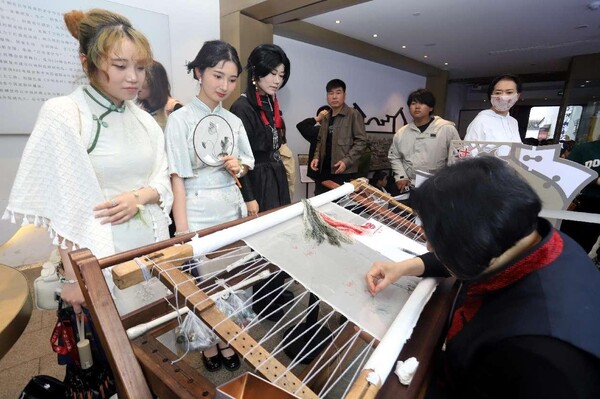
Splendid events such as traditional dragon and lion dances, Chinese New Year painting, dumpling making, and temple fairs have been hosted globally, allowing people of different nationalities and cultural backgrounds to experience traditional Chinese culture immersively and have a great time.

The adoption of the resolution shows that the Spring Festival has been warmly welcomed and supported by UN member states and staff of the UN Secretariat. The festival will become more and more international.

The Spring Festival is a window for the world to better perceive China. As the most ancient and important traditional festival in Chinese culture, the Spring Festival is a time for family reunions and ringing in the new year.

For Chinese people both at home and abroad, no matter where they are or how far they have traveled, going home for the Chinese New Year is a tradition always cherished.

The New Year’s atmosphere comes with the warmth of a family reunion after a long journey, the hustle and bustle of visiting relatives and friends with gifts, the joyous celebrations in streets decorated with lanterns, and the wishes for a better life in the coming new year.

As times change, Chinese people have found more ways to celebrate the Chinese New Year. Digital red envelopes have become a new festive element, and many families are spending the festival on trips. Regardless of the changing forms, what remains unchanged is the deep-rooted family culture ingrained in the Chinese people.

A BBC documentary introducing the Spring Festival focused on the spectacular sight of hundreds of millions of Chinese people traveling home for family reunions. Understanding the Spring Festival means understanding the deep-rooted longing for family reunions and the strong sense of patriotism that binds the Chinese people together.

The Chinese Lunar New Year builds a bridge for exchanges and mutual learning among civilizations. It symbolizes joy, harmony and peace and its Chinese name “Spring Festival” conveys the greetings and warmth of the spring season. The festival embodies the core values of harmony, love and peace in Chinese culture, and carries the common values of humanity including harmonious family, social inclusion and sound relationship between man and nature.

China’s promotion of the festival as a UN floating holiday is a pragmatic step toward implementing its Global Civilizations Initiative and advocating respect for the diversity of the world’s civilizations, conveying the hope for harmonious coexistence, mutual reinforcement, and exchanges and mutual learning among different civilizations. The efforts also represent the aspiration for people from all countries to understand and befriend each other, and to work together hand in hand.

Egyptian Ambassador to China Assem Hanafi saw the similarities between the Egyptian and Chinese people in cherishing family and kinship through traditional Chinese festivals such as the Spring Festival. He said that people from all countries are in greater need of the happiness that festivals bring in the turbulent world today.

Sitting together with family, listening to each other, and sharing laughter are the most comforting times for people. The Spring Festival is exactly a perfect opportunity for Chinese and friends from all over the world to share Chinese culture and enjoy wonderful moments together.

With the adoption of the UN resolution, the cultural significance of the festival will resonate more widely among people from different countries. This will effectively promote the exchanges and mutual learning among civilizations, and showcase the values of diversity and inclusiveness advocated by the UN.

Infrastructure: CSOs Laud NEDC MD, Alkali For Developing North East

…urge public office holders to emulate his giant strides

Civil Society Organizations, CSOs, numbering 300 under the auspices of the Coalition of Civil Society Organizations in Nigeria, COCSON, Tuesday, unanimously passed a vote of confidence on the Managing Director, North East Development Commission, NEDC, Dr. Mohammad Alkali, over his landmark achievements and transparent leadership.

This is just as the coalition called on public office holders across the various agencies of government to emulate the giant strides of the NEDC managing director.

The Coalition made this stance known during a press conference held in Abuja, where they pointed out that the Alkali-led NEDC has been on track and really addressing the socioeconomic issues affecting the North East States, and are all out to support his efforts to change the narrative in the region.

Spokesperson for the coalition, Mr Obiora Bartholomew said: “We, the Coalition of Civil Society Organizations in Nigeria (COCSON), have gathered here today to address important developments regarding the North East Development Commission (NEDC), specifically the leadership of its Managing Director appointed by President Bola Ahmed Tinubu.

“COCSON, as a coalition committed to the promotion and protection of the interests of the Nigerian people, recognizes and appreciates the significant achievements made by the Managing Director since his appointment.

“We have extensively analyzed his performance, engaging closely with stakeholders involved in the North East Development, and we are pleased to announce the passing of a vote of confidence on the Managing Director.

“We commend the Managing Dr. Mohammad Alkali Director for his tireless efforts in addressing the challenges faced by the people of the North East region. Under his leadership, the NEDC has successfully implemented various development projects aimed at improving the socio-economic conditions of the region.

“Notable achievements include; Infrastructure Development: The NEDC, under the guidance of the Managing Director, has constructed and rehabilitated critical infrastructure such as roads, schools, hospitals, and bridges. These projects have enhanced accessibility, connectivity, and essential services for the people of the region.

“Empowerment Programmes: The Managing Director’s leadership has resulted in the successful implementation of numerous empowerment programs, including skills acquisition initiatives, microfinance schemes, and vocational training. These programs have provided opportunities for sustainable livelihoods and economic growth in the region.

“Humanitarian Aid and Reconstruction: The NEDC, under the guidance of the Managing Director, has effectively coordinated humanitarian aid efforts and reconstruction projects in conflict-affected areas in the North East. This has facilitated the safe return and resettlement of internally displaced persons, rejuvenating communities and fostering social cohesion.

“Stakeholder Engagement: The Managing Director Mohammad Alkali has actively engaged with various stakeholders, including local communities, government agencies, and civil society organizations, to ensure the sustainable development of the North East region. This inclusive approach has facilitated collaboration, transparency, and accountability in the implementation of development projects.

“Based on these achievements and the significant progress made under his leadership, COCSON confidently passes a vote of confidence on the Managing Director of the North East Development Commission. We believe that his exemplary commitment to service, dedication, and results-oriented leadership will continue to drive the development agenda in the North East region.”

“Additionally, we urge other public office holders to emulate the good work demonstrated by the managing President and also ensure that the renewed hope agenda of President bola Ahmed Tinubu is sustained for the benefit of all Nigerians.

We call on all relevant stakeholders to recognize and appreciate the accomplishments made thus far, demonstrating their commitment to the development, stability, and prosperity of the North East region”, they stated.

It is recalled that some of the CSOs include, Society for Community Development and Empowerment (SCODE), Progressive Initiative for Sustainable Development (PRISD), Justice and Equality Advocacy Network (JEAN), Civic Engagement and Governance Institute (CEGI), Grassroots Empowerment Network (GEN), Advocates of Social Change and Responsibility (ASCR), Transparency and Accountability Initiative (TAI).

Others are, Generation for Human Rights and Development (GHURID), Sustainable Development and Advocacy Movement (SDAM), Health and Education Research Alliance (HERA), Urban Renewal and Livelihood Enhancement Organization (URLEO), Initiative for Democratic Governance and Economic Development (IDGE), Youth Empowerment and Leadership Foundation (YELF), Women’s Empowerment and Rights Organization (WERO), and Civil Society Alliance for Good Governance (CSAGG).

ORTOM’S SECURITY LEGACY NOW A NATIONAL REFERENCE POINT

By Dennis Ogbaji

On the 4th of August, 2022, the then Benue State Governor, Samuel Ortom inaugurated the first batch of 500 Community Volunteer Guards, a security outfit he initiated to complement the operations of conventional security agencies. And on 15th October of the same year, the Governor inaugurated the 2nd batch of the guards numbering 1,100.

It was the first time that a single state in the country had taken the bold step to own its security organization and confront terrorism as well as other crimes. Ortom no doubt received criticisms from some people who felt that it was unnecessary for a state to launch a security outfit. Some even accused him of planning to use the community volunteer guards for the 2023 elections.

But in his usual style of not letting criticisms distract him or weigh him down, Ortom maintained a calm and composed demeanor and gave the new security organization the life it deserved to commence operations across the 23 local government areas of Benue State.

Last month, it was reported in the media that the Benue State Community Volunteer Guards played a key role in the successful rescue of 9 kidnapped victims in Owukpa forest in Ogbadibo Local Government Area of the state in collaboration with troops of Operation Whirl Stroke. The rescued victims were said to have been abducted in a commercial vehicle along Otukpa/Enugu federal highway on January 11, 2024.

The Operation Whirl Stroke Commander, Major General Sunday Igbinowanhia who confirmed the incident, commended the bravery of the Community Volunteer Guards which he said was key to the operation.

The Ortom pathway in security measures was followed by the Katsina State Government, on 10th October, 2023 when it inaugurated 1,466 community watch corps officers and deployed them to seven frontline local government areas of the state to tackle security challenges along with conventional security operatives. Governor Dikko Radda who performed the ceremony said the state community watch officers were the first batch of the corps being trained to augment the efforts of security operatives in the state.

On Wednesday last week, the Ortom initiative was emulated by the Zamfara State Governor Dauda Lawal when he launched the state’s Community Protection Guards (CPG) made up of 2,969 personnel also given the mandate to complement the efforts of the regular security forces.

The Zamfara launch of the security organization was witnessed by other North West Governors who are also planning to launch similar outfits in their respective states.

This should serve as a wake up call for other states of this country to realize that security is a fundamental right of the people and government has no choice than to prioritize security.

I wish to encourage the present government of Benue State to build on what Ortom did and strengthen the Community Volunteer Guards to support conventional forces to guarantee the safety of the people. Ortom too only inherited the law passed by Governor George Akume in the year 2000 and established the Guards and inaugurated them in 2022. I believe that if the current government of the state strengthens the security organization, the gains of their operations will be unquantifiable. Members of the Guards live and operate in their communities, so they know all persons of questionable character.

There is frightening insecurity in most parts of Benue State at the moment. Children, women and another innocent people are being slaughtered by armed herdsmen in different communities of the state. Just a few days ago, a good number of people were killed in Agatu. I returned from that axis of the state two weeks ago and I can say that not even a quarter of what is happening in Benue State is being reported in the media. We cannot continue to pretend that all is well. All is not well with our people.

And the herders are not done yet. The other day, Miyetti Allah Kautal Hore, a Fulani socio-cultural group, unveiled a vigilante group in Nasarawa State known as “Nomad Vigilante Group”. The launch of that group portends grave danger for neighboring states like Benue. I am happy that Bello Bodejo, the national president of Miyetti Allah has since been arrested. They cited the launch of the Benue State Community Volunteer Guards as an example of what they were doing in Nasarawa State, but what they forgot is that Benue State made a legitimate law which went through due process at the State House of Assembly before the Guards were established. But their Nomad Vigilante is an illegal group which has no place in our laws.

I must commend former Benue State Governor, Samuel Ortom for his tireless efforts in the area of security. He deserves all the respect and commendation he can get for the establishment of the Benue State Community Volunteer Guards and other initiatives he made during his time as governor. He demonstrated visionary leadership and foresight in establishing the Guards.

The initiative to create a local security outfit to complement the efforts of conventional security agencies has set a remarkable precedent and has proven to be a significant step towards enhancing the security and well-being of the people.

By taking the bold step, Ortom showed exceptional courage and determination to proactively tackle terrorism and other crimes that were threatening the safety and stability of his state.

Despite facing criticism and skepticism from some quarters, he remained resolute in his decision and exhibited remarkable composure in the face of adversity. His steadfastness and dedication to the welfare of the people of Benue State are truly commendable and will remain a reference point in many years to come.

The Ortom initiative has not only had a positive impact within Benue State but has also inspired other state governors, as evidenced by the recent replication of the programme in Zamfara State.

Ortom’s commitment to the safety and security of the people of Benue State has left a lasting legacy and has paved the way for a new model of community-based security initiatives.
The Ortom legacy will no doubt continue to inspire others to prioritize the security and welfare of their people.

Lastly, I wish to state that in view of growing concerns and calls from many Nigerians including governors, there is the need for the National Assembly to consider a legislation for the creation of state police to help stem the tide of the recurring security challenges bedevilling the country. The fear that state governments will use police under their control to intimidate political opponents is no longer tenable.

  • Ogbaji writes from Abuja.

Talebearers causing havoc in TCN, misrepresenting information- Bukhar

Nigerians are being misinformed by mischievous Talebearers against the Transmission Company of Nigeria (TCN) for “self-centered goals”, Alhaji Gimba Bukhar, former staff of the company has alleged.

Referring to an article on TCN’s procurement process published mid January on an online blog, he said “there is a grand plan by some individuals to distract the progress being made by TCN”.

“These individuals see nothing good in TCN, they don’t report the achievements being recorded through commissioning of new substations, stringing new lines or upgrading existing substations. And it seems both the writers and the originators of the story do not have or forgot to provide evidence that, all the system collapses being referred to are caused by TCN.

“For avoidance of doubt, there is no single hard evidence that TCN was responsible for system collapse despite its challenges. Yes, there are challenges, yes TCN loses transformers, breaker and other equipment from time to time but most open manage the situation.

The purveyors of disinformation prey on the vulnerability or partisan potential of recipients whom they hope to enlist as amplifiers and multipliers. In this way, they seek to animate us into becoming conduits of their messages by exploiting our propensities to share information for a variety of reasons,” he said in a statement.

“As a former staff of TCN and indeed a stakeholder in the Nigerian Supply industry, I find it duty bound to start responding to the talebearing’s on TCN by these mischief makers. There was no single report by the cartels on TCN that was balance according to the rules of journalism.

“I want to emphasize that TCN has always conducted itself with the highest level of professionalism and integrity and always try to mitigate any behaviour that is inappropriate or unethical, and it committed to upholding these values in all aspects of its operations as we know it.

“There are four major players in Nigerian Energy Supply Industry (NESI) today, namely Generation, Transmission, Distribution and the Regulatory commission as a subset. These segmented fractions constitute whole, known as NESI. The NESI is system, and each fraction of the system is not only important but necessary for the survival and smooth operation of the system. The mystery is that, this complain and the wrong analysis of conjoining loss of transformer with procurement process is not originating from the NESI fractions but from men behind the masks of media cartels of misinformation,” Bukhar added.