Nasarawa Speaker hails victory of two lawmakers, Omadefu, Musa at re-run elections

“… congratulates Hon. Omadefu, Hon. Musa says their victory justify their popularity, trust among the electorates…”

Speaker, Nasarawa State House of Assembly, Rt. Hon. Danladi Jatau, has hailed the victory of two members of the House, Hon. Muhammed Adamu Omadefu and Hon. Musa Abubakar Ibrahim at the just concluded re-run elections in Nasarawa State.

Speaker Jatau while reacting to their victory said it has justified the lawmakers popularity and trust among their people and called on the opponents to join hands with the lawmakers to build their constituencies and the State at large.

The Nasarawa State Number Three Citizen congratulated Hon. Muhammed Adamu Omadefu of APC Keana constituency and Hon. Musa Abubakar Ibrahim of NNPP Doma South constituency for their resounding victories at the re-run elections.

Speaker Jatau commended the Independent National Electoral Commission (INEC) for conducting a hitch free exercise and the security agencies for ensuring a peaceful atmosphere through out the exercise.

Speaker Jatau also commended the electorates for having faith in the lawmakers and re-elected them during the re-run elections while emphasizing that with the completion of the exercise, the Nasarawa State House of Assembly is now fully completed to carry out its responsibilities.

The Nasarawa State Number One Lawmaker re-affirmed the 7th Assembly’s commitment under his watch to leave no stone unturned to deliver on their mandate as well as enhance effective synergy with other arms of government for accelerated development.

DSS advocates for peaceful rerun and bye-elections, denouncing violence.

The Department of State Services (DSS) has called on the electorate and participating political parties in the 3rd February, 2024 re-run and bye-elections to be of good conduct during and after the exercises in the affected States.

The appeal was contained in a statement signed by the Service’s spokesman, Mr. Peter Afunanya, the Service tasks the contending parties to shun all acts capable of causing a breakdown of law and order. Also, politicians and their supporters must strive to adhere to the electoral act and procedure.

He said, “beyond the elections, the DSS enjoins citizens to be patriotic and loyal to the Nigerian nation. Public commentators, social critics and key players in the public space should consider the peace of the country over and above their personal or group interests.

“Similarly, the Media, Civil Society and Community Based Organisations are encouraged to shun divisive tendencies and fake narratives likely to undermine national order. It is unarguable that it is only if there is a livable country that individuals, groups or corporate bodies can pursue and realise their legitimate businesses and ambitions. The Service, therefore, advises those engaging in subversive endeavours or desirous of doing so to desist from such; consequently, it will not hesitate to bring defaulters, no matter how highly placed, to face the full weight of the law”.

He assured that the Service will work with the Independent National Electoral Commission (INEC), other sister security and law enforcement agencies and indeed all stakeholders to ensure a hitch-free election.

He emphasised that the Service will continue to implement proactive measures to achieve the desired stability in the country.

China, France see mutual benefit from bilateral economic, trade cooperation

By Shang Kaiyuan, People’s Daily

This year marks the 60th anniversary of the establishment of diplomatic relations between China and France.

Over the past 60 years, bilateral trade between the two countries has increased by over 800 times. Today, France is China’s third-largest trading partner in the European Union and the third-largest source of actual investment, while China is France’s largest trading partner in Asia and the seventh-largest globally.

The economic cooperation between China and France has not only contributed to the development of both countries’ economies and improved people’s well-being but also injected momentum into the global economic recovery.

In recent years, French delicacies such as Bordeaux wine, Charolais beef, Bonne Maman jam, and President cheese have become increasingly popular in China. Similarly, Chinese home appliances like Midea air fryers, Bear rice cookers, Haier refrigerators, Hisense televisions, and Xgimi projectors are gradually gaining recognition in France.

China and France have strong complementarity in terms of their economies, which creates immense potential for cooperation. China has a competitive advantage in manufacturing, electronic products, and machinery, while France excels in aerospace, nuclear energy, high-end consumer goods, agricultural products, and wines. This provides both countries with vast opportunities for trade and investment.

Soumia Malinbaum, president of the Paris Chamber of Commerce and Industry and vice president of the Paris Île-de-France Chamber of Commerce and Industry, noted that the Chinese consumer market is vast, and China’s economic transformation and upgrading in recent years has brought new opportunities for the French consumer goods and services industry.

The French Pavilion at the previous sessions of the China International Import Expo (CIIE) has garnered immense popularity. France has been invited to serve as the Guest Country of Honor for the 2024 China International Fair for Trade in Service and the 7th CIIE.

“French companies are full of confidence in the Chinese market,” said French Ambassador to China Bertrand Lortholary.

According to statistics, by the end of 2021, over 6,000 French companies had been established in China, with a total investment of over $18 billion.

As China’s economy enters a stage of high-quality development and its industrial transformation and upgrading keeps advancing, the country is providing more development opportunities for French companies. In the past two years, many French enterprises have chosen to increase investment and expand their businesses in China.

In October 2022, international beauty giant L’Oreal officially laid the foundation for the world’s first self-built intelligent fulfillment center in Suzhou, east China’s Jiangsu province. In July 2023, the Chinese-French (Wuxi) Industrial Cooperation Park was inaugurated, with five key projects signed, totaling an investment of over $1 billion. In September 2023, Airbus broke ground on its second final assembly line for the A320 family aircraft in Tianjin municipality. In November 2023, Faurecia under Forvia officially inaugurated its new electronics mega plant in Fengcheng, Jiangxi province.

“Investing in China is investing in the future,” said Jean-Paul Agon, Chairman of L’Oreal.

According to a spring 2023 survey on French companies in China conducted by the Chinese Chamber of Commerce and Industry in France, compared to the previous survey, member companies have shown an increased willingness to expand their businesses in China in the next three years. Forty-seven percent of them are planning to further invest in China, the survey said.

China has been the largest Asian country in terms of investment and job creation in France for three consecutive years. China’s total direct investment in France stands at nearly $4.9 billion. So far, Chinese investors have invested in over 900 French companies, employing over 50,000 local employees in France.

The Dongtai offshore wind power project, jointly invested and constructed by Chinese and French companies, has pioneered the cooperation between Chinese and foreign enterprises in building offshore wind power projects in China.

In recent years, Schneider Electric has continuously increased its research and development investment in the Chinese market and has established five major R&D centers.

Alongside deepening cooperation in traditional fields, China and France have actively explored the potential for cooperation in emerging sectors such as green industries and clean energy. This not only promotes economic development and improves people’s well-being in both countries but also enhances confidence and stability in global economic recovery.

In terms of third-party market, China and France are pioneers in exploring new models of international cooperation. The successful collaboration between China and France in operating the Kribi Deep Seaport in Cameroon serves as a shining example. The growth of port operations has not only significantly promoted the economic development of Cameroon but also benefited landlocked African countries such as the Central African Republic and Chad.

In February 2022, China and France signed a document on the list of the fourth-round demonstration projects of developing third-party market cooperation. The list includes seven projects worth over $1.7 billion, covering infrastructure, environmental protection, new energy and others. These projects are launched in areas including Africa and Central and Eastern Europe.

French international affairs expert Bruno Guigue said the real driving force behind cooperation between the two countries is mutual respect, mutual trust, and the recognition of the other as a true partner.

He noted France and China must continue to strengthen their economic relations by striving to build more efficient supply chains.

“By joining hands and working together, France and China can definitely achieve mutual benefits and win-win outcomes,” the expert added.

Abuse of force only makes bigger crises

By Huan Yuping

Recently, the coalition forces of the United States and Britain launched new strikes on Houthi targets in Yemen. The escalation of the crisis in the Red Sea has triggered widespread concerns in the international community about the further rise in the overall security risks in the region.

The use of force will not help resolve the issue, but only exacerbate tensions.

The waters of the Red Sea are an important international transportation route for goods and energy. It is in the common interest of the international community to ensure unimpeded access to the waterway and the safety of passing vessels. All parties should work together to safeguard the security of the waters.

Major countries should play a constructive and responsible role in keeping the shipping lanes safe in the Red Sea waters. Any action must abide by the norms governing international relations, and respect the sovereignty and territorial integrity of Yemen and other countries bordering the Red Sea.

The military actions taken by the U.S. and Britain have damaged infrastructure and caused casualties of civilians. They couldn’t help to protect the safety of merchant shipping, and even increased the overall security risks in the region. This is something that the international community does not want to see.

The international community has voiced concerns and opposition after the U.S. and Britain launched military strikes.

UN Secretary-General Antonio Guterres called upon all parties involved not to escalate even more the situation in the interest of peace and stability in the Red Sea and the wider region. He called for every effort to be made to ensure that Yemen pursues a path towards peace and that the work undertaken thus far to end the conflict in Yemen should not be lost.

Saudi Arabia stressed in a statement the importance of maintaining the security and stability of the region. It demanded freedom of navigation in the Red Sea and called on all parties involved to exercise restraint and avoid escalation.

Egypt called for unifying international and regional efforts to ease tensions in the region and ensure the safety of navigation in the Red Sea.

Iran believed that arbitrary attacks would only make the Middle East more insecure and unstable.

Iraq said in a statement that expanding the scope of targets does not represent a solution to the problem, rather, it will lead to continued spillover and proliferation of risks.

The international community has a clear understanding of the negative effects brought about by military strikes on the regional situation. It hopes to resolve the crisis with political means that address both the symptoms and root causes.

The escalating tensions in the Red Sea indicate that the abuse of force will only make bigger crises. The world is seeing the spillover effects of the new round of conflict between Palestine and Israel, and as the factors of instability in the region are clearly upswing, the risk of more forces being dragged into the conflict is on the rise. 

It’s obviously contradictory that some countries are actually abusing military force while stressing the importance of preventing the spillover of the conflict. The UN Security Council has never authorized any country to use force against Yemen. The military actions taken against Yemen not only have increased security risks in the Red Sea, but also could possibly impact the political process of Yemen.

Since the 21st century, the abuse of force has only brought turmoil and humanitarian disasters to the Middle East, as evidenced by what has happened in Afghanistan, Iraq, Libya and Syria.

U.S. magazine Foreign Policy said that Washington’s unwavering devotion to its current approach to the Middle East has produced a vicious cycle: By committing itself to the root of regional instability, the U.S. repeatedly finds itself having to confront challenges that are largely the product of its own presence and policies in the region.

The escalating tensions in the Red Sea indicate that an ultimate solution never comes from the ignorance of justice. Conflicts in the Middle East are complex. The participation of extra-regional countries in Middle East affairs should consider the region’s reality, coordinate the interests of all relevant parties and stick to the principle of fairness and justice.

However, some countries have long implemented tactics like “bolster one and bash the other” and “divide and rule” in the Middle East for their own geopolitical interests, which makes it difficult for the region to establish stable security orders.

The current crisis in the Red Sea is a spillover of the conflict in Gaza, and the prolonged failure to resolve the Gaza conflict is attributed to certain countries’ blatant prejudices and repeated obstruction of UN Security Council draft resolutions calling for a ceasefire.

The fundamental problems of the tensions in the Red Sea cannot be solved by “cut-the-knot” military actions with an ignorance of the root cause. As a commentary published on the website of Al Jazeera said, the military strikes “clash with the Biden administration’s stated goals of de-escalation and fail to address the root cause of the soaring tensions in the region.”

The Middle East is on the edge of extreme danger. What’s the most urgent now is to cease fire in Gaza, and major countries must play a constructive role in stopping violence.

Qatari Prime Minister and Foreign Minister Sheikh Mohammed bin Abdulrahman Al-Thani said that the central issue that needed to be addressed lies in Gaza, and only by resolving the Gaza issue can all other issues be resolved.

The ceasefire is the prevailing priority, and humanitarian aid is the imperative moral responsibility. The future arrangement of Gaza must fully respect the Palestinian people’s aspiration, and the two-state solution is the sure path to a just settlement of the Palestinian issue. Justice has already been delayed, but it should never be denied.

Major countries should exert their influence by abandoning geopolitical self-interests, bearing in mind the real interests of the people in the Middle East, solving disputes and conflicts through political means and playing a constructive role in promoting peace in the region.

Only when all parties stand on the side of peace and justice, implement the two-state solution and push for a comprehensive, just and sustainable solution to the question of Palestine at an early date, can the Middle East achieve lasting peace and stability.

China sets example for international human rights development

By He Yin, People’s Daily

On January 26, local time, the 45th session of the UN Human Rights Council’s Universal Periodic Review (UPR) Working Group was held in Geneva, Switzerland, during which China’s report for the fourth UPR was unanimously adopted.

It fully indicated the international community’s recognition of China’s unremitting efforts and historic achievements in promoting and safeguarding human rights.

The UPR serves as a crucial platform for countries to engage in equitable and candid discussions on human rights matters within the framework of the UN, fostering constructive dialogue and collaboration.

China attached great importance to this round of the UPR. The delegation of the Chinese government had a constructive dialogue with representatives of other countries in an open and candid manner.

During the UPR, China has won international acclaim for its achievements in the cause of human rights. More than 120 countries fully acknowledged China’s great achievements in promoting and protecting human rights, highly evaluated the human rights concepts and practices with Chinese characteristics, and appreciated the significant contributions China has made to the global cause of human rights through its development and progress.

China is the only major country that has formulated and implemented four consecutive national human rights action plans. China adheres to a systematic approach to planning for human rights development, and has made historic accomplishments in the cause of human rights.

China applies a people-centered development philosophy, regards the rights to subsistence and development as its primary and basic human rights, ensures and improves people’s livelihoods through development, ensures the fruits of development are shared by the people, and strives for the comprehensive and coordinated development of economic, social and cultural rights as well as civil and political rights. It has significantly improved its capability in ensuring human rights.

Since joining the third round of the UPR in 2018, the country has made tangible achievements in the promotion and protection of human rights.

China has secured a complete victory in the battle against extreme poverty, and explored whole-process people’s democracy that covers all aspects of the democratic process and all sectors of society. It has formulated new laws to safeguard various rights of the people, including the Civil Code, the law on personal information protection, and the law on barrier-free living environment.

During this round of the UPR, many representatives from developing countries said that China’s path to human rights is in line with China’s national conditions and meets the aspirations of its people.

China has found a human rights development path that echoes the trend of the times and suits our national conditions, setting an example for the development of the international cause of human rights, and providing a new choice for other countries, especially those in the Global South, to independently explore the path of human rights development.

For a long time, some Western countries, under the so-called “one-size-fits-all human rights” and “human rights over sovereignty” banners, have been forcibly promoting Western conceptions and systems of democracy and human rights on others, meddling in the internal affairs of other countries. This has led to frequent military conflicts, prolonged social unrest, and the displacement of many from their homes in a number of countries.

There is no one-size-fits-all path or model of human rights development in the world. People of all countries have the right to and should independently explore their own human rights development that is in line with their own realities.

China has advocated respect for the diversity of world civilizations, implemented the Global Civilization Initiative, strengthened exchanges and mutual learning, and encouraged and respected countries in choosing their own path to human rights development, so that people of all countries are ensured of human rights fairly through their own modernization drives.

China has been actively promoting the high-quality development of its own human rights cause while engaging in extensive exchanges and cooperation in the field of human rights, making contributions to global human rights governance.

Since the third round of the UPR, China has joined human rights treaties such as the Marrakesh Treaty and actively participated in the UPR.

As Chinese President Xi Jinping noted, China stands for safeguarding human rights with security, promoting human rights with development, and advancing human rights with cooperation, which has exerted profound influence.

The 53rd session of the UN Human Rights Council adopted again the resolution on “the contribution of development to the enjoyment of all human rights” submitted by China.

In October 2023, a draft resolution on promoting and protecting economic, social and cultural rights within the context of addressing inequalities, of which China is the major initiator, was adopted with consensus for the first time by the UN Human Rights Council. It demonstrated China’s contributions to promoting global human rights progress.

During this round of the UPR, China announced 30 new initiatives to safeguard human rights, which cover such fields as enhancing people’s well-being, strengthening legal safeguards for human rights, promoting international cooperation in human rights and supporting the work of the UN human rights mechanisms.

Representatives from multiple countries expressed their anticipation for China to play a leading role in global human rights governance and uphold international fairness and justice.

While advancing the great rejuvenation of the Chinese nation on all fronts through the Chinese path to modernization, China will always hold high the banner of peaceful development and win-win cooperation, advocate an equal and orderly multipolar world and a universally beneficial and inclusive economic globalization, create new opportunities for the world with its own development, steer global human rights governance toward greater fairness, justice, equity and inclusiveness, and jointly write a new chapter of the world human rights cause with other countries.

China, Africa see broad cooperation prospects in automotive industry

By Zou Song, People’s Daily

More and more Chinese cars are appearing on the streets of South Africa, such as Haval series of Great Wall Motors (GWM), Rubik’s Cube of Beijing Automotive Group Co., Ltd. (BAIC) and Tiggo 5X of Chery.

According to recent statistics released by the National Association of Automobile Manufacturers of South Africa, the cumulative sales of Chinese vehicles in South Africa exceeded 22,000 units in the first three quarters of 2023. Currently, two Chinese car brands rank among the top 10 in the country in terms of sales volume.

South Africa is the largest automotive market in Africa. An insider said that Chinese vehicles offer good value and provide local consumers with more choices.

More Chinese automakers are investing in South Africa, establishing factories, and gradually gaining a foothold, contributing to the overall rapid development of the South African automotive industry.

“Three generations of my family are owners of GWM vehicles, from sedans to pickups and to SUVs. We are loyal fans of Chinese vehicles,” said Thomas Walkford from South Africa.

“The GWM vehicles offer perfect durability and comfort, with a remarkable advancement in technological features. The performance of my recently purchased Haval H6 is beyond all my expectations,” Walkford noted.

“That’s awesome! This car has an interior design inspired by an aircraft cockpit, with hidden door handles and distinctive headlight design that makes it easily recognizable on the streets,” said a young South African named Elvin, who’s a fan of the BAIC Senova X55, which was honored as the Compact Family Car of the Year in South Africa last year.

In 2023, Chinese vehicles have consistently received accolades in the South African Car of the Year Awards and the Johannesburg International Motor Show. During the 15th BRICS Summit held in Johannesburg last year, models of Chinese brands such as GWM, BAIC, and Chery were chosen as official vehicles.

In recent years, the overall quality of Chinese automobiles has significantly improved, leading to increased acceptance among South African consumers.

Andlye Durmanzwini, a South African car dealer, said African consumers value good performance and low fuel consumption, reliability, as well as comprehensive after-sales services and easily accessible spare parts.

“It is rare that most Chinese brands possess all of these characteristics,” he said.

In 2023, an off-road pickup truck of GWM won the “best pickup of the year” award in South Africa. Li Qiang, general manager of GMW South Africa, noted that Chinese automotive brands are increasingly focusing on product quality, emphasizing vehicle features and suitability, which is a key reason for gaining trust from local consumers.

Chinese commercial vehicles are also favored in the South African market. Larry Tao, who drives a medium-sized bus in Johannesburg, bought a vehicle manufactured by BAIC Foton five years ago.

“This Chinese vehicle was reasonably priced, has sufficient power and low fuel consumption, and performs well on uphill and downhill terrains. The passengers are also very satisfied with it,” Tao said, adding that he has recommended Chinese vehicles to fellow drivers.

By the first half of 2023, the Coega assembly plant of Chinese automaker FAW in South Africa had sold over 15,000 trucks, and secured the largest share in the South African truck market in the first quarter.

Hiraaz Kalman, who owns a transportation company that operates freight services between South Africa and Mozambique, said that FAW trucks are covered by special paints so that they can adapt to the humid coastal climate, resulting in durable bodies and higher resale value.

In the facility of BAIC in South Africa’s Coega Special Economic Zone, multiple batches of local employees have become proficient in the production process under the guidance of Chinese workers.

This facility is the first overseas vehicle production plant of BAIC. With a total investment of $226 million, it aims to become a global production and export base focusing on South Africa and radiating Africa, Europe, the Middle East, Latin America, and other regions.

Over the past seven years, it has directly or indirectly created over 3,000 jobs and benefited more than 150 local small- and medium-sized enterprises through subcontracting.

Farhana Paruk, a senior executive at the Gordon Institute of Business Science at the University of Pretoria in South Africa, noted that Chinese automotive investments in South Africa have effectively stimulated local employment. Additionally, Chinese vehicles are better suited to the market, leading to an increase in brand value.

The rapid development of the Chinese automotive industry, particularly in the field of electric vehicles, offers valuable lessons for the South African automotive sector to learn from, she added.

Paul Zilungisele Tembe, a senior researcher with the Thabo Mbeki African Leadership Institute at the University of South Africa, said that South Africa has a relatively well-established foundation and marketing network of the automotive industry, and is actively attracting foreign investments to achieve industrial upgrading.

Chinese automotive brands can leverage the South African market to expand their presence in more regions globally, leading to mutual benefits and win-win outcomes, he noted.

Census: 100 Civil Society Groups Rally Support for NPC Leadership

…commend Chairman for probity in discharge of duties

No fewer than 100 civil society groups have passed a vote of confidence on the leadership of the National Population Commission (NPC) on its preparedness to conduct a credible and acceptable census.

Under the aegis of the Coalition of Civil Society Groups for Transparency and Accountability (CCSGTA), the groups lauded the NPC Chairman Hon. Nasir Isa Kwarra for introducing groundbreaking initiatives and reforms to the Commission. 

Obinna Francis, who spoke on behalf of the Coalition, also hailed the NPC boss for instilling transparency, accountability and probity in the operations of the Commission. 

While urging Nigerians to continue to support the Commission, Francis assured of a credible census that will help in addressing the myriads of challenges in the country.   

“The focus on the National Population Commission is in the right direction because of its mandate to ensure accurate census data, which is critical for developing accurate assessments of the nation’s economic well-being and helping the government with proper economic planning,” he said. 

“The Coalition of Civil Society Groups for Transparency and Accountability is confident that the 2023 population census would go a long way in tackling insecurity in the country, given that it will provide data that can help the government take note of the ratio of security officers proportionate to the nation’s population which can help in improving the security of lives and properties. 

“It also has its benefits in the critical agricultural sector in the sense that the census data generated can help to formulate, evaluate, change, and propose policies and programs that help farmers develop market strategies, create more efficient production and distribution systems, and assist in developing and improving methods that will increase agricultural production and profitability.

“We want to seize the opportunity of this Press Briefing to identify with and commend the leadership of the National Population Commission for the laudable initiatives introduced towards attaining a successful National Population Census.  This is on the heels of its leadership’s display of transparency and accountability in utilizing available resources for this national exercise that is critical to translating our hopes and aspirations into tangible realities. 

“It is also on record that the National Population Commission has reiterated its readiness to conduct a credible and acceptable census through the implementation of comprehensive security measures to safeguard its servers, applications, and IT infrastructure through robust and concrete firewalls, intrusion detection and prevention systems, regular security audits, encryption protocols, and multifactorial authentication for privileged accounts.

“The Coalition of Civil Society Groups for Transparency and Accountability is using this medium to pass a vote of confidence on the leadership of the National Population Commission for rising to the occasion in its preparedness for the forthcoming national population census. 

“We also call on other critical stakeholders in the country to see the success of the national population census as a collective endeavour that does not rest on the shoulders of the National Population Commission alone but require a collective action involving all and sundry. “

RIVERS: Wike Accused of Breaching Peace Accord, Attacking Fubara’s Loyalists

The Coalition of Minority and Indigenous Ethnic Groups in Nigeria has accused immediate-past Rivers State Governor, Nyesom Wike of breaching the peace pact he signed with his successor, Siminalayi Fubara.

The group, which made this known at a press conference on Wednesday, also claimed that the FCT Minister is using the judiciary to intimidate Governor Fubara’s perceived loyalists. 

In his address, convener Okwa Dan raised an alarm over a plot to arraign the former Speaker of the Rivers State House of Assembly, now Chief of Staff to the Governor, Edison Ehie as “unacceptable to the spirit of peace”.

While applauding Governor Fubara for honouring the agreement, Dan urged Wike to give peace a chance in Rivers. 

“The Coalition of Minority and Indigenous Ethnic Groups in Nigeria has closely followed the implementation of this accord and is pleased to note that the Rivers State Governor has implemented every single action point that pertains to him in the Rivers Peace Document,” he said.

“In the spirit of doing to the right side what has been done to the left side, we urge the Wike side of the schism to embrace the peace accord and do so with a human face. Wike’s side should give peace a chance under the circumstances as an appointee and ally of Mr. President Tinubu, who recognises the importance of facilitating internal peace and security in Rivers State.
Wike’s side should shelter their sword.

“We are strongly of the view that the peace agreement must not be seen to be one-sided. Our assertion in this regard arose from the recent development in which the judiciary is being used to undermine the State Governor. This is particularly so in the case of the use of the judiciary by some highly placed individuals to humiliate those who are seen to be loyal to the Governor.

“The recent plot to arraign the former Speaker of the Rivers State House of Assembly who is now Chief of Staff to the State Governor, Edison Ehie is therefore unacceptable to the spirit of peace, which both sides are expected to embrace in the wake of signing the peace accord. Our Coalition is therefore calling on the Federal Government and its agencies to in the spirit of the Peace Accord withdraw all the charges against Edison Ehie and all other Fubara’s loyalists.

“Peace cannot be a one-sided affair. Since Governor Fubara has gone out of his way to give juicy appointments to the loyalists of the FCT, those who are in the Governor’s camp should not be treated differently. Hounding them with the judiciary of federal institutions will only cause fresh provocations that make a mockery of the efforts that President Tinubu has put into restoring peace to that part of the country. It will be most disrespectful to repay Mr President with such behaviour when he has shown the way in how to give peace a chance.

“Our Coalition consequently frowns at attempts to use the judiciary or agencies of the Federal government to witch-hunt officials of the Rivers State Government. Beyond negating the peace accord, it also signposts a threat to the autonomy of the nation’s federating states. We want Mr Wike to take special note that his camp’s stance on remaining belligerent has implications for the relationship between the states and the Federal Government. Today, he enjoys the federal might but tomorrow the shoe may be on the other foot.”

AFTER ACCUSING WIKE OF SPONSORING SHAIBU, EDO DISTABILISATION, OBASEKI MAKES U-TURN SEEKS RECONCILIATION

In a strategic move to secure support for Asue Ighodalo’s gubernatorial bid in the upcoming Peoples Democratic Party (PDP) primary elections in Edo State, Governor Godwin Obaseki has undertaken a series of political maneuvers. On the night of Tuesday, January 30, 2024, Obaseki, seeking endorsement for Ighodalo’s candidacy, approached Governor Ahmadu Fintiri of Adamawa State to facilitate a meeting with Nyesom Wike, the Minister of the FCT, in Abuja, TheCable had reported.

The rendezvous as reported on Tuesday occurred at the Wells Carlton Hotel, with Governor Fintiri accompanying Obaseki and Nyesom Wike.
Meanwhile a source privy to the meeting told this medium that Obaseki had during the meeting claimed that his deputy, Comrade Philip Shaibu was being sponsored by the Chief of Staff to the President, Hon. Gbajabiamila. Obaseki urged against supporting Shaibu, asserting that he should not be trusted.

The source added that before this encounter with Wike, Obaseki had undertaken three secretive visits to Governor Bala Muhammed of Bauchi State, accompanied by former governor Udom Emmanuel. In these meetings, Obaseki reportedly repeated similar unfounded claims, accusing Shaibu of being sponsored by Wike to destabilize the PDP in Edo State.

In a separate meeting with Atiku supporters within the PDP, Obaseki once again targeted Wike, accusing him of supporting Shaibu against him due to Obaseki’s allegiance to Atiku. These actions by Obaseki reflect a divisive strategy aimed at destabilizing the party for the benefit of his preferred candidate, utilizing questionable means.

Obaseki’s pursuit of reconciliation and Wike’s support stems from the formidable opposition posed by the current deputy governor, Philip Shaibu, and Omoregie Ogbeide-Ihama, a former member of the House of Representatives, both preferred candidates of Dan Orbih, a key ally of Wike in Edo State. In a bid to win over Wike, Obaseki proposed a deal to have Ogbeide-Ihama as Ighodalo’s running mate.

However, Wike reportedly declined Obaseki’s overtures, citing a lack of loyalty on Obaseki’s part towards those who have supported him in the past. Wike insisted on a fair and level playing field to ensure the emergence of the most acceptable candidate.

With the race for the PDP gubernatorial ticket in Edo State intensifying, Obaseki’s political maneuvering and reconciliation efforts highlight the fierce competition within the party. The outcome of the primary elections will undoubtedly shape the course of the PDP’s campaign leading up to the general elections, as Obaseki reportedly allocates substantial funds for printing party cards in the state.

China home to 50 10-billion-yuan industrial belts: report

By Li Jie

Different regions in China have developed specialized industrial clusters.

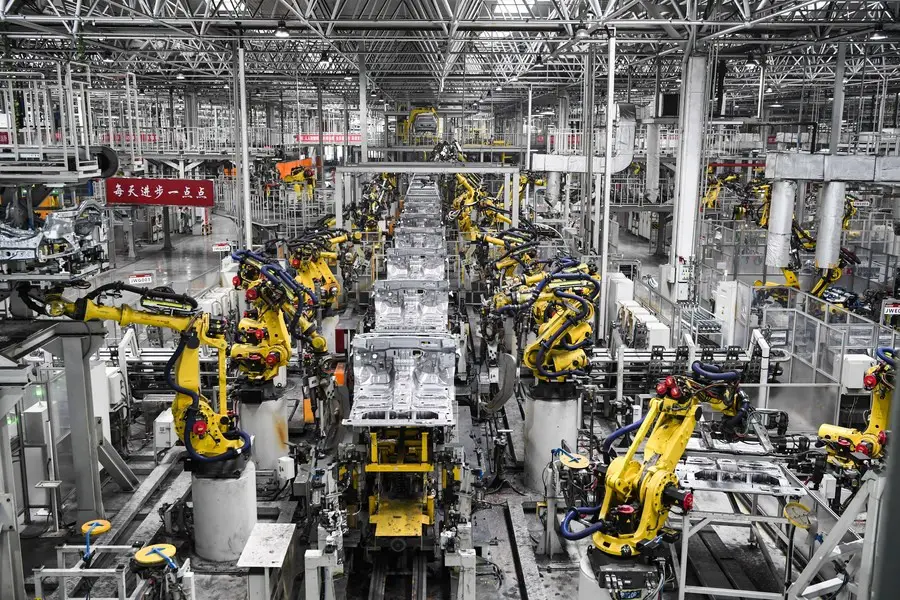
For example, Baoding of Hebei province is known for its wide range of high-quality luggage, and Wenzhou of Zhejiang province is renowned for its women’s shoes. In Guangdong province, Shantou is a hub for toy production, Foshan is famous for its furniture, and Zhongshan is a leading producer of lighting products.

These regional industrial clusters have become the backbone of the supply chain, providing consumers with diverse options and products of excellent quality.

A total of 50 industrial belts with an annual turnover of over 10 billion yuan ($1.41 billion) were recorded across China in 2023, according to a report recently issued by Chinese e-commerce giant Alibaba’s Taobao and Tmall Group.

These 10-billion-yuan industrial belts are located in 21 cities including Jinhua, Guangzhou, Hangzhou, Foshan, Jiaxing and Baoding, and engaged in a variety of businesses such as women’s apparel, furniture, mobile phone, skincare and jewelry.

The report studied cities at the prefectural level or above, and defined 10-billion-yuan industrial belts as those reporting the total annual transaction volume of over 10 billion yuan in certain first-level product categories on Alibaba’s Taobao, Tmall and 1688 platforms.

According to the report, the 50 industrial belts are densely located in the Pearl River Delta and Yangtze River Delta, which are considered the most developed regions for manufacturing and e-commerce economy in China.

Guangdong province, boasting a solid manufacturing foundation and strong advantages in commerce, is home to 21 10-billion-yuan industrial belts, according to the report. Cities in the Pearl River Delta including Guangzhou, Shenzhen, Foshan, and Dongguan have particularly impressive industrial clusters in sectors such as women’s apparel, furniture, mobile phones, and digital accessories.

Jinhua in east China’s Zhejiang province, relying on “the world’s largest small commodity wholesale market” Yiwu, houses eight 10-billion-yuan industrial belts, the highest among all cities across China.

The impressive performance of Jinhua comes from the strengths of multiple well-developed counties. Yiwu, known for its traditional industries in office supplies and sports products, has successfully tapped into the trend of new consumer demands, making it an outstander in the e-commerce era. In Yongkang, which boasts sports and outdoor industrial clusters, thousands of traditional lithium drill enterprises have transformed into producers of fascia guns.

Guangzhou and Shenzhen in Guangdong province have five 10-billion-yuan industrial belts respectively, and Quanzhou in southeast China’s Fujian province has four. Baoding, with its luggage industry, is the most northern city on the list. Ganzhou in east China’s Jiangxi province is also on the list with its residential furniture industry.

Twenty-three of the 10-billion-yuan industrial belts are engaged in the clothing industry, the report says, and nine are in the women’s apparel sector.

The women’s apparel sector in Guangzhou is the first super large industrial belt in China with an annual transaction of over 100 billion yuan, according to Taobao and Tmall data. Dayuan village in the city alone, known for its high sales on Taobao, has reported a transaction scale of over 10 billion yuan.

Besides, the report also nominated growth-oriented industrial belts with an annual transaction volume exceeding 1 billion yuan and a year-on-year growth rate ranking top 30. These industrial belts are located in 24 regions including Zhengzhou, Beihai, Xingtai and Ji’an.

Statistics show that the large industrial belts are mainly concentrated in the consumer goods industry, while many fast-growing ones are from the industrial goods sectors.

According to insiders, with the advancement of e-commerce platforms, production and processing links are increasingly shifting towards third- and fourth-tier cities and county-level areas. Besides, transaction costs are continuously decreasing, enabling different segments within industrial belts to collaborate on a larger scale. This trend is most pronounced in growth-oriented industry belts.

All the industrial belts mentioned in the report are an epitome of the integrated development of e-commerce and industries over the past more than 20 years.

According to statistics released by the National Bureau of Statistics, the total online retail sales in China exceeded 15.42 trillion yuan in 2023, an increase of 11 percent compared to the previous year, accounting for 27.6 percent of the country’s total retail volume. It is believed that more 10-billion-yuan industrial belts will emerge as e-commerce continues to develop.

The emergence and development of industrial belts also signify opportunities for domestic products and brand building. From April to November 2023, Guangdong saw over 12,000 new brands joining Tmall, representing a year-on-year growth of 49.4 percent. Zhejiang had over 7,000 new brands joining the platform in the same period, with a year-on-year growth of 51.7 percent.

Skiing equipment emerged as the hottest sector in brand building in 2023. Domestic skiing brands like Nandn, Awka, and Snowline have seized consumer demand and become the top players in the industry. The market will see more brilliant performance in China’s industrial belts.