China sees fruitful outcomes in international space cooperation

By Liu Yao

Through in-depth space cooperation, China and many countries in the world have jointly built a broad and magnificent “space silk road,” contributing to the development and utilization of space resources and the progress of human civilization.

The constellation of the Beidou Navigation Satellite System (BDS) is working around the clock in the space. Since the system’s commissioning more than three years ago, the application models of the BDS has been enriched, with its fields of application getting wider and wider.

According to statistics, the BDS-3 has provided accelerated positioning and high-precision service to more than 1.5 billion users in more than 230 countries and regions, winning more and more recognition from the international community.

In Xai-Xai, Gaza Province of Mozambique, there is a 20,000-hectare rice farm, the largest rice planting cooperation project in Africa. To plough the fields, and plant, manage and harvest crops on such a huge farmland was once a big challenge for local rice growers.

It was the innovation in agricultural technologies utilizing the BDS that benefited local rice growers. They can now control sprayer drones via mobile applications, thanks to the geographical positioning enabled by the Chinese positioning system.

Obtaining real-time geographical information through the BDS, sprayer drones are able to apply pesticides according to preset flight paths. Compared with traditional spraying methods, which rely on manual effort and can only cover a couple mu (667 square meters) each hour, BDS-enabled sprayer drones can treat over 100 mu of land every hour. Moreover, the drones can operate at night, dramatically improving efficiency.

The Sarez Lake in eastern Tajikistan is the world’s highest quake lake. It houses the highest and biggest natural dam in the world. Monitoring the deformation of the dam situated in a seismically active zone and thus protecting the safety of local residents remains an important issue.

A Chinese research team developed a deformation monitoring service platform for the dam based on the BDS, with a millimeter-level precision. With this platform, researchers can remotely monitor the deformation of the dam and send science-based warnings. The system has also been employed to monitor expressway side slopes in Kyrgyzstan and snow slides in Tajikistan.

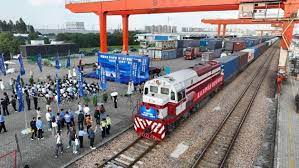
According to Chen Gucang, deputy director of the China Satellite Navigation Office, the BDS is applied in a wide range of fields, and has played a significant role in the construction of the China-Kyrgyzstan-Uzbekistan highway as well as the operation of China-Kazakhstan crude oil pipeline and the China-Europe freight trains.

Two China-funded prototype satellites of the MisrSat II satellite project were delivered to the Egyptian side in June this year, making Egypt the first African country with the capacity to assemble, integrate and test satellites.

In December 2014, China and Egypt signed an agreement to carry out cooperation on the development of remote-sensing satellites. According to the agreement, China would build Egypt’s first satellite assembly, integration and test center.

The two countries signed an agreement for the MisrSat II satellite project in January 2019, based on which China would provide the Egyptian side with a small remote-sensing satellite, a ground measurement and control station and a ground application system. Besides, China would also train Egyptian aerospace experts.

Prior to that, Egypt did not have its own satellite assembly, integration and test center, nor satellite development capabilities. It could only import complete foreign satellites. The completion of the China-funded center has provided Egypt with world-leading aerospace infrastructure.

Egyptian Minister of International Cooperation Rania Al-Mashat noted that these advanced technologies and equipment are important to not only Egypt, but also entire Africa.

China has established cooperation with many countries and regions in jointly developing and launching communication or remote-sensing satellites, as well as constructing satellite ground receiving stations and other space infrastructure. These efforts have played a positive role in the development of local sectors such as communication, agriculture, culture, environmental protection, and meteorology.

The China National Space Administration said that China is committed to promoting global technological progress and the sharing of innovative achievements, with an aim to enhance the capabilities of people around the world to explore and utilize space.

China always follows the principles of “peaceful use, equality, mutual benefit and common development.” It is committed to transforming the Chinese space station into an open platform for international scientific and technological cooperation and exchanges.

Lin Xiqiang, a spokesperson and deputy director of the China Manned Space Agency, stated that the first batch of China’s international cooperation projects in collaboration with the United Nations Office for Outer Space Affairs will soon conduct experiments on the space station. Additionally, the implementation of 10 space application projects in collaboration with the European Space Agency is also progressing in an orderly manner.

China’s lunar exploration program has opened up opportunities for international cooperation on Chang’e-8 to the international society. It welcomes countries and international organizations to join and carry out multilevel collaboration together to achieve more major original scientific discoveries.

Innovation propels Tibetan carpet industry into new prospects

By Sun Yi

When a Tibetan carpet unfolds before one’s eyes, it’s hard to tell whether it is a functional household item or a work of art because of its distinct ethnic patterns and colors, soft and delicate texture and exquisite craftsmanship.

As one of the world’s three famous carpets alongside Persian and Turkish carpets, Tibetan carpets are renowned far and wide for their vibrant colors, strong ethnic styles, and distinct regional characteristics.

The Tibetan carpet weaving skills have been passed down for thousands of years. In the Neolithic Age, ancient residents of the Qinghai-Tibet Plateau already formed a unique weaving culture.

According to historical records, 3,500 years ago, nomadic tribes there were adept at weaving woolen fabrics into clothes and quilts to fend off the cold. These weaving techniques were handed down generation after generation, forming the Tibetan carpet weaving skills still in use today.

Carrying profound Tibetan culture, the Tibetan carpet evolved from a simple household item into a work of art. Tibetan carpet weaving also grew into a featured industry, with the products being sold worldwide.

The development of the Tibetan carpet industry has not always been smooth sailing. Traditional Tibetan carpets were mostly handmade in small workshops, with high labor and time costs. Facing competition from lower-cost machine-made carpets produced in bulk, many Tibetan carpet companies saw shrinking orders and losses.

In recent years, affected by factors like the COVID-19 pandemic, hotel occupancy was on a decline, which decreased the demand for carpet replacement, hence a depressed Tibetan carpet market.

The ever-changing market demands have pressed Tibetan carpet companies to take the initiative through innovation. A number of leading Tibetan carpet companies have blazed a trail of innovation for the industry.

To better incorporate ancient skills into modern life, some Tibetan carpet companies have combined modern carpet weaving techniques with traditional hand-knotting skills.

They use special materials and techniques on Tibetan carpets, turning their products from hand-woven carpets to machine-woven, hand-knotted, and fluorescent ones.

They are gradually moving away from mass production and traditional marketing models in the past days, and start embracing digital production methods.

By adopting advanced weaving techniques and innovating pattern designs, a batch of machine-woven Tibetan carpets with cost advantages, fine workmanship, and exquisite patterns are winning the favor of the market.

Nowadays, Tibetan carpet enterprises design patterns and use materials based on customers’ preferences and home decor styles, and customize the sizes of carpets according to the need of customers.

Some Tibetan companies have shifted production from large-scale manufacturing to personalized customization, in order to meet diverse individualized customer demands. They have even developed antibacterial and flame-retardant Tibetan carpets using new technologies to meet modern requirements for eco-friendly home furnishing.

Tibetan carpets from China are seen in many parts of the world, from the Jumeirah Emirates Towers in Dubai to Marriott hotels, and from Las Vegas to Carnival Cruise ships. With continuous innovation in recent years in functions, designs, craftsmanship and standards, Tibetan carpets are increasingly gaining an “international style,” becoming the first choice for many foreign customers. Tibetan carpets are a treasure of Chinese ethnic traditional crafts. In the interplay between tradition and modernity, in its interaction with the world, the Tibetan carpet industry has undergone an innovative transformation. This not only injects new vitality into the traditional skills passed down over thousands of years, but also provides valuable experience for the industrialization and modernizat

Jiangxi province drives innovation, development in VR Industry

By Zheng Shaozhong, Zhou Huan, People’s Daily

The 2023 World Conference on VR (virtual reality) Industry opened in Nanchang, east China’s Jiangxi province on Oct. 19.

Since its first edition in 2018, the VR industry conference has been held annually in Nanchang. During the past five editions of the conference, 562 projects were signed with a total amount of 336.6 billion yuan ($46.05 billion). A national vocational education virtual simulation demonstration training base and the National Virtual Reality Innovation Center have been set up in Jiangxi.

In recent years, with the continuous convergence of quality resources such as VR projects, technologies, talents, and funds, Jiangxi province has been emerging as a prominent hub for the VR industry.

Now, the province is home to more than 400 VR enterprises, and the revenue of VR and relevant industries surged from 4.2 billion yuan in 2018 to 81.2 billion last year.

Jiangxi-based automobile manufacturer Jiangling Motors Corporation Limited, or JMC, has an intelligent 5G factory that produces special purpose vehicles.

“Through innovative applications such as VR inspections, we have achieved automatic equipment failure warnings and reduced inspection time by approximately 30 percent,” said Yan Zongming, general manager of the company that retrofitted the factory.

According to Yan, China Unicom, one of the largest telecommunications operators in China, landed a VR/AR (augmented reality) base in Jiangxi province in 2020, which attracted over 10 relevant companies to settle in. These enterprises are engaged in various fields including software and hardware development, big data analysis and digital twin.

Thanks to this strong ecosystem, the revenue of Yan’s company jumped from around a million yuan when it just started to 21.54 million yuan in 2022.

Jiangxi takes VR as a key industry. It not only promotes integrated development of the industry’s capital chain, innovation chain, and industrial chain, but also strives to promote complementary development between the VR industry and other advantageous sectors, such as electronic information, the Internet of Things (IoT), and big data.

In a workshop of Pimax Nanchang, mainly engaged in the production and manufacture of VR headsets, three production line were seen working simultaneously.

Li Jie, vice president of the company, said that optical modules needed by the company are supplied by the Nanchang production base of Ofilm Group, and the company’s VR contents come from Nanchang-based Tellhow Creative Technology Group.

According to him, Pimax Nanchang is thriving thanks to the local VR industry cluster and the sound collaboration among relevant enterprises. The revenue of the company stood at 11.31 million yuan in 2022 and is expected to reach 20 million this year.

In Jiangxi province, VR and relevant technologies are now applied in a number of scenarios, boosting the development of various industries. For instance, students can “repair” a vehicle with VR controllers, and with VR equipment, R&D personnel can significantly improve their work performance and efficiency.

“Learning a skill well requires a lot of practice, and simulation training helps us make up for the lack of hands-on experience,” said Zhou Tao, a student majoring in urban rail transit operation and management at Jiangxi Modern Polytechnic College, who joined a half-month training at the national vocational education virtual simulation demonstration training base in Nanchang.

“Through VR technology, we can familiarize ourselves with the structures of vehicle equipment components in the classroom,” he added.

At present, the base provides training for 26 vocational education courses in nine major categories including equipment manufacturing, transportation, and healthcare. Upon full operation, the base will be able to train 100,000 people each year and bring an enormous market of at least 200 million yuan.

A demonstration agriculture base in Jiangxi province has developed a metaverse online shop that allows customers to “pick” fruits and vegetables on their mobile phones. After customers enter a virtual version of the farm on a mobile application and select the fruits and vegetables they want, robots would pick, pack and then mail them to customers.

“The majority of the research, production, and management for the base’s over 300 mu (20 hectares) of agricultural projects now utilize the metaverse technology,” said Meng Fanming, general manager of the base.

“VR is considered an important gateway technology for the metaverse. After years of development, Jiangxi has initially established a complete VR industry chain with a solid industrial ecology foundation,” said Liao Guoqiong, dean of the VR Modern Industrial College of Jiangxi University of Finance and Economics.

He added that multiple key VR R&D platforms including the Jiangxi Research Institute of Beihang University, Huawei Nanchang Institute, and a VR innovation center of China Mobile have settled in Jiangxi, and this will build more new momentums for Jiangxi’s development.

CIIE a public good for whole world

By Liao Ruiling

The sixth China International Import Expo (CIIE) is scheduled to be held at the National Exhibition and Convention Center (Shanghai) from Nov. 5 to 10.

As the world’s first import-themed national-level expo, the CIIE has become a showcase of China’s new development paradigm, a platform for high-standard opening-up, and a public good for the whole world.

The first CIIE was held in Shanghai in November 2018. Since then, the CIIE has been held annually in November, becoming an important platform for promoting exchanges and cooperation among enterprises and various parties.

In the previous five editions, 131 countries and international organizations participated in country exhibitions, with nearly 2,000 new products, technologies, and services making their debuts and a total intended turnover reaching nearly $350 billion.

The sixth CIIE will resume offline country exhibition and invite guest countries of honor. So far, over 60 countries have officially announced their participation in this year’s country exhibition. Notably, prominent international organizations, including the World Trade Organization, the United Nations Industrial Development Organization, and the International Trade Center, have also confirmed their attendance. Approximately 3,000 enterprises will attend the sixth CIIE, too, with total exhibition areas surpassing 360,000 square meters.

According to preliminary statistics, at least dozens of executives from Fortune Global 500 and industry-leading companies will attend the exhibition. Over 330 guests from some 30 countries and regions are expected to join the Hongqiao International Economic Forum.

This year’s CIIE will welcome both new friends that are about to make their debut at the event and old friends that have joined the exhibition before. Among the 3,000 global companies participating this year, approximately 200 companies have been signing up for six consecutive years, and around 400 companies are returning to the expo after a gap of more than two years.

“GE HealthCare is one of the earliest multinational corporations to participate in the CIIE. We’ve joined every year since the first edition,” said Zhong Luyin, chief communications officer of GE HealthCare China.

She noted that the CIIE is a place where cutting edge technologies are showcased, and has become a platform for many healthcare enterprises to debut their new products, frontier technologies and services.

“This year we will launch 10 products and services, in hope to strengthen communication with our partners through this platform,” Zhong added.

Many exhibitors have already booked exhibition booths for the 7th CIIE. At a signing ceremony for exhibitors of the 7th CIIE held on Sept. 15, 25 enterprises including GE HealthCare and Panasonic signed contracts or MoUs concerning the exhibition at the 7th CIIE. So far, contracted exhibition area for the CIIE next year has exceeded 40,000 square meters.

As a member of the delegation of centrally-administered state-owned enterprises to the CIIE, China Construction Second Engineering Bureau Co.,Ltd. will attend the CIIE for a fifth time this year.

“The CIIE provides us with a platform to purchase global products without leaving the country. The elevators, electrical equipment and other imported products we procured at the CIIE were intelligent and environmentally friendly, providing strong support for our efforts in promoting green and smart construction,” said Zhao Guozheng, deputy general manager of East China Branch of China Construction Second Engineering Bureau Co., Ltd.

A range of significant opening-up measures have been introduced for the CIIE, which showcases China’s confidence and determination in opening up.

According to Sun Chenghai, deputy director of the CIIE Bureau, these measures announced during the expo to facilitate the entry of exhibitors and buyers, to provide tax incentives for retained exhibits, and to strengthen intellectual property right protection, have optimized the domestic business environment.

This July, the General Administration of Customs issued 17 measures to facilitate the 6th CIIE. These measures cover the entire process from exhibitor admission to customs clearance and post-exhibition disposal of exhibits.

The 6th CIIE will also expand its scope of exhibition, allowing animal and plant products and food that have not completed inspection and quarantine procedures from countries or regions that are free from animal and plant epidemics to join the exhibition after obtaining special approvals.

Sheng Qiuping, China’s vice minister of commerce, said that in the future, China will work to rationally reduce the negative list of foreign investment in pilot free trade zones, and at the same time, promote the introduction of a negative list for cross-border trade in services, and lead the country to continue to expand opening up.

China-Egypt cooperation zone contributes to Egypt’s industrial modernization

By Zhang Zhiwen, Zhang Mengxu, Shen Xiaoxiao, People’s Daily

The China-Egypt TEDA Suez Economic and Trade Cooperation Zone(SETC-Zone), which sits on the shores of the Red Sea and south of the Suez Canal, and just celebrated its 15th anniversary, has developed into a thriving hub for trade and investment with well-built infrastructure, abundant industrial clusters, advanced logistics and warehousing facilities, and comprehensive amenities.

The cooperation zone, while accelerating strategic upgrading, has become a key platform of investment and cooperation for Chinese and Egyptian companies.

After two phases of construction, the SETC-Zone has grown into an industrial park featuring the best comprehensive environment, the highest density of investment, the highest per-unit output that attracts the most Chinese enterprises in Egypt.

It is now home to more than 140 companies, with actual investment exceeding $1.6 billion, total sales volume of over $3.7 billion and taxations of more than $200 million. The cooperation zone offers nearly 6,000 direct jobs and about 50,000 employment opportunities in related industries.

Egyptian President Abdel-Fattah al-Sisi called the cooperation zone the most successful project of the Suez Canal Corridor.

“I’ve made many visits to the SETC-Zone and each time I had new discoveries. The SETC-Zone is getting better and better, with more and more enterprises settling in,” said Abdul-Majeed Saqr, governor of Egypt’s Suez governorate, adding that the complete supporting facilities and favorable investment policies in the SETC-Zone are hugely attractive. He noted TEDA, the developer of the SETC-Zone, is a reliable partner of Egypt.

Chinese enterprise Jushi, which specializes in the manufacture and sales of fiberglass and its finished articles, has been investing in Egypt since 2012. Its subsidiary company in Egypt named Jushi Egypt Fiberglass Co., Ltd.(Jushi Egypt). It has a gigantic factory in the SETC-Zone, which has over 2,000 workers, as well as some 30 Chinese management personnel and technicians. Most of the jobs in production and management are taken by local Egyptians.

No one would imagine that the bustling factory was still a desert 10 years ago. Wu Ping, general manager of the company, said that Jushi encountered a series of challenges when it first entered Egypt, such as short power supply and water scarcity. However, it rose to these challenges and launched mutually beneficial cooperation with relevant parties in Egypt. In the past decade, Jushi Egypt built four production lines of fiberglass and assisting facilities. The factory, after four phases of construction, boasts an annual capacity of 340,000 tons, and is the largest production base of fiberglass in the African continent.

Jushi Egypt also actively fulfills its social responsibility, working to improve local environment and contributing to community development. It provides assistance for local orphanages and impoverished residents, and donates teaching and living materials to local schools.

Egyptian Prime Minister Mostafa Madbouly said that as China Jushi expands its investment in Egypt, it has created a large number of job opportunities and driven the development of Egypt’s manufacturing industry.

Nurturing talents that align with industrial and societal needs is one of the key objectives of Egypt’s industrial modernization.

Lining the wide roads of the SETC-Zone stand rows of gleaming new workshops, which constitute a dishwasher factory of Midea (Egypt) Kitchen & Water Heater Appliances Co., Ltd. In the factory, local workers are always seen assemble parts along the production line, test equipment, and learn new techniques under the guidance of Chinese technicians.

Chinese companies investing in Egypt are not only creating quality products for local residents, but also helping equip the local workforce for Egypt’s industrial modernization.

General manager Chen Weiwei of Midea (Egypt) Kitchen & Water Heater Appliances Co., Ltd. said that the dishwasher rack production line introduced by Midea has filled a technological gap in Egypt’s dishwasher manufacturing sector. It has not only cultivated a batch of local welders, but also driven the localization of a series of key technologies, reducing the cost and price of dishwashers, and making dishwashers more affordable and accessible for Egyptian consumers.

Kamel, a team leader of the factory, was among the first batch of employees to join the company in December 2022. He received on-the-job training and learned the whole process of dishwasher manufacturing under the guidance of Chinese employees.

After three months of systematic training, Kamel turned into a skillful worker and was recently promoted to a team leader. Batches of new employees have acquired work skills under the instruction of key technicians.

“I’m glad that I can work here. I will keep working hard to create a better life with my own hands,” said Kamel.

Chen noted that the current production capacity of this dishwasher assembly line can meet the market demand in the Middle East, and new assembly lines will be set up in the future to produce more dishwashers. “We will further promote localization in research and development, manufacturing, and employees, and focus on the local market to provide a wider range of home appliances for users in the region,”

Chili pepper industry thrives in China

By Qiu Haifeng

In many regions across China, food is characterized by spicy flavor. According to statistics released by a recent conference on China’s chili pepper industry development, China is the world’s largest producer and consumer of chili peppers, and grows this plant in 28 provinces, autonomous regions and municipalities. The chili pepper industry is constantly expanding in the country.

“Since the introduction of chili peppers to China over 400 years ago when it was originally used for ornamental purposes, people have discovered the diverse values of the plant, including edible and medicinal properties, and the planting scale has expanded accordingly,” said Lin Qiao, associate research fellow at the Agricultural Information Institute of the Chinese Academy of Agricultural Sciences (CAAS).

Chili peppers are nutrient-rich, offer a wide range of flavors and feature a strong growth ability. They can be consumed fresh or processed into chili sauce, dried chili or chili oil. Besides, chili peppers also have significant economic and social value. Compounds like capsaicin and capsanthin found in chilies are utilized in medicine, food, and industry.

Both planting areas and production of chili peppers have been on a steady growth worldwide in recent years, and China’s chili pepper industry has also embraced rapid development.

Statistics from the Food and Agriculture Organization of the United Nations showed that 36.72 percent of the world’s chili peppers were grown in China in 2021.

A significant rise has been observed in both the global and Chinese production of chili peppers in recent years. In particular, the output of chili peppers in China accounts for nearly half of the global total, making the country the world’s largest producer of chili peppers.

The Chinese people’s demand for chili peppers also expanded as the country’s chili pepper production grew. Lin noted that owing to a spicy food craze in recent years, over 500 million people in China eat spicy food, with Jiangxi, Guizhou, Hunan and Sichuan provinces as well as Chongqing municipality as the main consuming regions of chili peppers.

Apart from satisfying domestic demand, Chinese chili peppers are also getting onto the dining tables of consumers around the world. Statistics indicate that China’s chili pepper exports reached $1.7 billion in 2022, a year-on-year increase of 11.6 percent. The United States, Japan and Spain remained the largest three importers of China’s chili peppers, consuming 41.1 percent of the total chili pepper exports from China.

The growing chili pepper industry, while meeting the market demand, has become a pivotal driver for farmer’s income growth in many regions.

“This year our chili pepper harvest was good, with a yield of over 3,000 kilograms per mu (667 square meters),” said chili farmer Tan Baohui in Fuxing village, Yihetala township, Kailu county, Tongliao, north China’s Inner Mongolia autonomous region.

“With the high yield and increased prices, this year I earned 0.2 yuan ($0.03) more per kilogram compared to last year, netting over 5,000 yuan per mu,” Tan noted.

According to an official with the local agricultural and animal husbandry bureau, Kailu county is the county with the largest planting area of red chili peppers in China. The average annual output of red chili peppers in the county is around 1.5 billion kilograms.

More than 60,000 farming households in the county are engaged in chili pepper cultivation, while over 50,000 people work in the chili pepper industry. They generate 360 million yuan in labor income each year.

In Xiaoxian county, Suzhou, east China’s Anhui province, the majority of income of local farmers doesn’t come from the sales of chili peppers, but the seeds of the plant.

“We have a standard greenhouse base for seed breeding, which covers over 300 mu, and we are mainly engaged in the propagation, processing, sales and technological promotion of chili pepper seeds,” said Mu Keli, who heads a demonstration base of scientific research of a seed company in Xiaoxian county.

According to Mu, the standard greenhouse base helps over 100 farming households earn extra income of over 10 million yuan per year through chili pepper seed breeding. This year, the seeds bred at the base were all sold out, and the base is preparing to plant new seedlings, Mu added.

The chili pepper seeds produced in Xiaoxian county are sold throughout China and exported to Japan, South Korea, and Southeast Asia. According to an official with the county’s agricultural and animal husbandry bureau, the county currently produces over 350,000 kilograms of high-quality chili pepper seeds annually, with a revenue close to 1 billion yuan, which directly increases income for over 6,000 farming households.

“From cultivation, seed production, primary processing to advanced processing, the continuous extension of the chili industrial chain has steadily increased the added value of products, further broadening channels for farmers to increase income,” said Lin.

To promote the development the chili pepper industry, regions across China are continuing their efforts.

Guizhou province recently made clear that it will focus on building an “ecological Guizhou chili” brand, and strongly support the applications for local brands, corporate brands and national geographical indication products.

Inner Mongolia autonomous region proposed supports for the development of intensive seed breeding companies, continues to advance large-scale, mechanized development of open cultivation of chili peppers.

Hunan province is integrating cultural resources related to chili pepper, striving to build a new signature for its tourism industry.

ICPC: Constituency Projects Tracking Reducing Avenues Of Corruption


… Commission to investigate alleged missing multi-million naira projects in Lagos

The Independent Corrupt Practices and Other Related Offences Commission says it will investigate reports of missing multi-million-naira school projects in Lagos as the Commission commenced Phase 6 of its constituency and executive projects tracking.
The Commission also revealed that the constituency project tracking initiative has been improving execution nationwide and declining infractions.

ICPC’s Deputy Commissioner, Constituency and Executive Project Tracking, Jimoh Suleiman, made these developments known during an anti-corruption radio programme, PUBLIC CONSCIENCE, produced by the Progressive Impact Organisation for Community Development, PRIMORG, Wednesday in Abuja.

The anti-graft agency began the Phase 6 tracking of the constituency and executive projects on Monday, 16 October 2023, in 25 states and the Federal Capital Territory (FCT). The Commission said projects to be tracked are valued at N500 billion.

Suleiman reacting to an investigation by the Udeme Project, published by TheCable, which exposed that multi-million-naira classroom projects were missing in schools at Ebute Metta, Ajah, Eti-Osa, and Victoria Island areas of Lagos State despite the government releasing funds, however, assured that “the Commission’s projects tracking team will look into the report.”

According to TheCable’s report, N220 million was allocated and released to construct blocks of classrooms for five schools in Lagos Central Senatorial District as part of the 2022 federal government zonal intervention projects (ZIPs). Still, work was only done in one of the schools.

Appraising the impact of tracking constituency and executive projects over the years, Suleiman revealed that the projects tracking initiative of the ICPC continues to yield results as more projects are now being executed while corruption is on a decline. Noting that “as at the last constituency projects tracking (2022), 93 percent of projects tracked were completed”.

“Tracking of constituency projects has been awesome, and execution of the projects has improved following the establishment of our project tracking team. We are making recoveries when there is an infraction.

“ICPC set up the consistency project tracking group with the objective of improving service delivering to the people to ensure our full execution of all government projects and to guarantee value for money in the implementation of projects and to make recoveries of public funds that had been mismanaged, and things are getting better, we are moving on.”

Suleiman identified budgetary constraints as one of the main challenges ICPC faces in project tracking, revealing that the Commission would have loved to track all constituency and executive projects across the 36 federation states but for lack of funds. He added that reluctance by government agencies and politicization of constituency projects were some of the setbacks of the initiative.
He also lamented ICPC’s difficulty in tracking empowerment projects while educating citizens that “Constituency Projects are not donations by legislators, but funded by the government.”

On his part, the State Officer at BudgIT, Garba Abdullahi, lamented that projects are still being abandoned and poorly executed despite efforts of ICPC and the federal government allocating huge funds towards constituency projects.

Abdullahi urged ICPC to work with civil society organizations in tracking more projects while calling on political leaders to ensure citizens are carried along by conducting proper “needs assessment” before nominating projects.

He advised citizens to ask questions, hold their leaders accountable and take ownership of projects brought to their localities.
“Leadership should always come to the community to ask what they want, or they should have somebody in the community that will take their needs to be their representative for them to act on it.
“I think the ICPC is doing a very great job in terms of project tracking of the zonal intervention projects. I want the ICPC and the CSOs to engage more with the people. The ICPC should keep working to provide information to the public for them to know that the projects are for their good and not for the lawmakers,” Abdullahi said.

Public Conscience is a syndicated weekly anti-corruption radio program PRIMORG uses to draw government and citizens’ attention to corruption and integrity issues in Nigeria.
The program has the support of the MacArthur Foundation.

To break new ground of public communication, culture work in new era

By Ren Ping, People’s Daily

A national meeting on the work of public communication and culture was recently held in Beijing. The most important outcome of the meeting was that Xi Jinping Thought on Culture was formally put forward, which is of milestone significance in the history of the Communist Party of China (CPC) in developing public communication and culture.

Xi Jinping, general secretary of the CPC Central Committee, Chinese president and chairman of the Central Military Commission, has maintained an accurate perspective on the trends of collisions taking place worldwide between different ideas and cultures, as well as of the profound changes in Chinese people’s ways of thinking, putting forward a series of new thoughts, new viewpoints, and new assessments on cultural advancement.

On multiple important international occasions, he has expounded on China’s positions and plans on the culture of the world, the development of civilizations and exchanges and mutual learning among civilizations.

Xi Jinping Thought on Culture is summaries of the practical experience of the cultural advancement under the Party’s leadership in the new era. It has enriched and developed Marxist cultural theories. It demonstrates that the CPC has reached a higher level in its understanding of the right way for the development of socialist culture with Chinese characteristics.

The 20th National Congress of the CPC drew an ambitious blueprint for building a modern socialist country in all respects and advancing the great rejuvenation of the Chinese nation on all fronts through a Chinese path to modernization. According to it, China will build itself into a strong country in culture by 2035 with its cultural soft power growing much stronger.

Culture is a country and nation’s soul. Without full confidence in its culture, without a rich and prosperous culture, the Chinese nation will not be able to rejuvenate itself.

Chinese modernization is the modernization of material and cultural-ethical advancement. Cultural development is the fundamental way to satisfy people’s cultural and intellectual needs and to safeguard people’s cultural rights and interests.

Promoting Chinese modernization is a pioneering undertaking unprecedented in history. It requires inspiring the confidence and fortitude of all Chinese people, and encouraging them to work together.

A country will thrive only if its culture thrives, and a nation will be strong only if its culture is strong. The CPC’s innovative theories for the new era have taken deep roots in the hearts of the people. Socialist core values have spread far and wide. The creative transformation and innovative development of fine traditional Chinese culture continues to advance. Cultural undertaking and industries are booming. The online environment keeps improving. Cultural confidence among all Party members, ethnic groups and people across the country has increased markedly. The national spirit is more determined and upbeat. Full of confidence, the Chinese people are writing an impressive new chapter in China’s development in the new era.

30,000 plus Xinjiang-related stories expose how certain Western media fabricate, hype up ‘forced labor’ smear

By Tuersun Aibai

In recent years, anti-China forces in the West have hyped up the so-called forced labor narrative, an accusation to systematically vilify China, as an attempt to tarnish the country’s image on the international stage, weaken its international reputation, and alienate the nation by jeopardizing its friendly and cooperative relations with other countries.

In order to understand the political and economic motives behind their “forced labor” fallacy, as well as the exploration of the narrative’s manipulation strategies, transmission paths, and methods of the fallacy, I conducted a statistical analysis of over 30,000 Xinjiang-related stories from 22 media outlets in 15 countries and regions.

From these, I selected 189 pieces published by 13 media outlets that spread the “forced labor” slander for further analysis and found out that the claim of “forced labor” concocted by anti-China forces in the West is a new discourse pattern and narrative framework, which has gradually evolved from the framework of early public opinion manipulation, into a comprehensive economic blockade and repression of Northwest China’s Xinjiang Uygur Autonomous Region.

How ‘forced labor’ smear grows

Based on the analysis of 189 stories published by 13 overseas media outlets, I found that the evolution process of the “forced labor” smear campaign can be divided into three phases.

The first phase is a “topic brewing period” that spanned from December 2018 to March 2020.

In December 2018, the Associated Press (AP) first claimed that a company in Xinjiang’s Hotan city had cooperated with local education and training program institutions to sell clothes made by the program’s trainees to the US. The story was later quoted by many overseas media outlets and caught the attention of the US government, which in turn required that certain clothing and outdoor recreation product brands such as Adidas inspect their industrial chains, and enforced a prohibition of the importation of so-called forced labor products.

On December 18 that year, Voice of America (VOA) published a story titled US Sportswear Traced to Factory in China’s Internment Camps, in which it alleged that Chinese government was “forcing some detainees to work in manufacturing and food industries.” Two days later, VOA published a second article titled US Reviews Report of Imports from Forced Labor in China Camp, quoting several infamous Xinjiang separatists as stating that there was “forced labor” at Xinjiang’s vocational education and training centers. Other mainstream US media sources such as The New York Times (NYT) also published similar stories with incendiary claims that month.

During that period, claims of “forced labor” were introduced by US media outlets as fodder for a new anti-China topic of focus, and its transmission scope was mainly within the US and its media sources. The claim only served to attack the trainees working at the clothing industry in the region after receiving vocational education.

The second phase of the West’s “forced labor” smear campaign, a “topic fomentation period,” spanned from March 2020 to December 2021.

On March 1, 2020, the Australian Strategic Policy Institute (ASPI), a think tank reliant on US defense funds and is keen to concoct and amplify various anti-China topics, released a “research report” titled Uygurs for sale ‘Re-education’, forced labor, and surveillance beyond Xinjiang. The ridiculous report attacked China’s efforts in accelerating Xinjiang’s development, and slandered the employment placements of trainees from Xinjiang’s vocational education and training program. Western media outlets later widely referenced and quoted the report.

By further fueling the “forced labor” narrative, some so-called “human rights groups” and media outlets called on governments in Western countries such as the US and the UK to investigate the industrial chains and asked local enterprises to cut ties with their Chinese counterparts that use Uygur labor.

In March 2020, Switzerland’s Better Cotton Initiative (BCI) proposed that some major clothing brands ban the use of Xinjiang-sourced cotton using the groundless “forced labor” accusations as a pretext, claiming that the production cotton in Xinjiang “violated labor rights,” and “violated human rights.” Following this call to action, certain US congressmen introduced the so-called “Uyghur Forced Labor Prevention Act (UFLPA),” which required companies to obtain certification from the US government that any product imported from Xinjiang into the US was not produced with the use of “forced labor.” The bill also required the US president to “identify and designate” visa or financial sanctions against any foreign person who “knowingly engages” in the “forced labor” in the Xinjiang region.

The “forced labor” fallacy continued to grow in the European Union (EU). In December 2020, the European Parliament passed a resolution on Xinjiang, falsely alleging the use of “forced labor” in the region. It required EU member countries to impose sanctions on Xinjiang officials and boycott so-called “forced labor” products from Xinjiang.

During this period, the scope of the “forced labor” smear campaign had further expanded, and some Western governments introduced related bills to “legally” base their “forced labor” accusations. The smear campaign targeted not only the employment of surplus rural labor in Xinjiang, but also extended to more industries in this region such as tomato cultivation in the agricultural sector and the photovoltaic and solar energy product manufacturing industries.

Legislatures, judiciaries, border defense, and the commerce departments of some Western countries banded together to form a community of mutual interests in this smear campaign. Western media sources, NGOs, think tanks, and enterprises also followed suit, cooperating closely with governments from the public opinion and “academic” standpoints.

The third phase, which started from January 2022 and is currently ongoing, is the “instrumentalization and politicization period.”

Sample analysis based on media coverage suggested that the focus of media outlets in most countries has shifted to the “force labor” fallacy, while the US and the UK conversely remain focused on actively hyping up the fallacy. Data showed that eight US- and UK-based media outlets published a total of 24 stories attacking Xinjiang between January and April in 2022.

In this phase, the “forced labor” smear campaign entered a new “practice stage,” serving the West’s goals of escalating the economic suppression of China by indiscriminately attacking all the products made in Xinjiang and all the enterprises in the region.

Worse still, with the Xinjiang-related “bills” coming into effect, anti-China forces in the West have completed the transition from public opinion attacks, to the introduction of legislative economic sanctions. Now the public opinion campaign has turned into an economic war waged against China. The “forced labor” fallacy has become an integral part of the Western anti-China forces’ strategic containment of China.

The graphic shows a four-step scheme of US’ malicious slander against China. From govt, think thanks to the media, US’ disinformation machines fabricate lies and pave the way for legislation that aims to contain China. Graphic: Feng Qingyin/GT

The graphic shows a four-step scheme of US’ malicious slander against China. From govt, think thanks to the media, US’ disinformation machines fabricate lies and pave the way for legislation that aims to contain China. Graphic: Feng Qingyin/GT

Tactics of public opinion manipulation

The “forced labor” fallacy did not emerge accidentally. Thanks to a long-term planned process and a clear manipulation strategy of public opinion by Western anti-China forces, who, prey on different countries’ perceptions of the human rights concept to create and hype up lies under the guise of “protecting human rights,” the fallacy gained momentum.

The concept of human rights is regarded as a value deeply influenced by the historical and cultural traditions of different countries. There are both commonalities and differences in the understanding of human rights among countries. Therefore, the UN’s Universal Declaration of Human Rights, as well as the European Declaration of Human Rights, do not specifically give a universal definition of the standards of human rights.

Since the founding of the People’s Republic of China, the Chinese government has regarded the rights to subsistence and development as fundamental human rights, fully protected the political, economic, social, and cultural rights of the people of all ethnic groups, and continuously promoted and elevated the development of human rights work in practice. China has written human rights protection into the country’s Constitution and the Constitution of the ruling Communist Party of China (CPC), and further promoted the systematization and legalization of human rights protection. China has also held human rights forums and issued a white paper to comprehensively elaborate its concept of human rights.

However, the anti-China forces in the West, who ignore the differences in human rights concepts between China and the West and China’s achievements in the protection and promotion of human rights, politicize, weaponize, and instrumentalize the concept of human rights by employing the “forced labor” fabrications and hype.

Some biased western media sources, by citing misleading quotes, wantonly attack the human rights situation in China, so as to promote the spread of the “forced labor” accusation by employing several tactics.

Tactic one: “Criminalize” Chinese government

The “forced labor” accusation falsely alleges that the purpose of the transfer of the employment policy in Xinjiang region is to “strip” Uygurs of their cultural identity and “assimilate” them. Western anti-China forces have further fabricated lies claiming that China committed so-called “crimes against humanity” and “crimes of genocide” in the region.

For instance, on March 2, 2020, an Australian Broadcasting Corporation (ABC) article quoted an ASPI researcher as saying that the goal of the labor transfers was “political,” with an aim toward the “stripping of their unique culture and identity.” On November 25, The Global and Mail cited some infamous anti-China “human rights groups” that “Uygurs and other Turkic minorities have been subject to forced labor as part of China’s plan to control the Uygur population in the region.” On August 23, 2021, the Washington Post quoted an anti-China group’s statement as saying that “no American corporation should be doing business in a region that is the focal point of a campaign of genocide targeting a religious and ethnic minority.”

The reality is that, the Uygur population has increased from 3.61 million in 1953 to 11.62 million in 2020, an increase of over three-fold, while the Chinese national population growth rate over the same period only grew two-fold. The growth rate of the Uygur population has been higher than the national average.

Tactic two: Demonizing China’s poverty alleviation policies

For instance, on June 24, the Washington Post groundlessly claimed that a Chinese company “recruits and employs Uygurs and other minorities via state labor programs that aim to place them in factories.” On March 7, CNN quoted a British scholar as saying that the job programs in Xinjiang “are often non-consensual, and people who refuse can be punished with internment.”

Contrary to the lies and rumors they fabricated, the fact is that workers of all ethnic groups in Xinjiang region, including those who were transferred for employment and those who had completed their studies in learning institutions and training centers, have the agency to choose their preferred jobs and regions of placement. They sign labor contracts and receive remuneration in accordance with the law, and enjoy various social insurance benefits.

The total number of rural migrant workers in China reached 30.7 million in 2021, of which 3.2 million were from Xinjiang. With an increase in the number of stable employment, the economic income of the people of all ethnic groups in Xinjiang has continued to increase, and the regional per capita gross domestic product (GDP) had increased from 45,476 yuan ($6,225.9) in 2017 to 53,593 yuan in 2020.

Tactic three: Stigmatizing assistance measures for transfer employment

The “forced labor” smear campaign claims that the Chinese government assigns staff to “monitor” Uygur employees, and even defames the existence of administrators of ethnic and religious affairs for Uygur employees at local companies, terming it as “monitoring.”

On April 27, 2021, The Guardian quoted a member of an Australian anti-China group as saying that Uygurs were “held in secure compounds, working extremely long hours and under constant surveillance, and with political indoctrination as part of their daily routine.” On March 9, 2020, a Washington Post article even ridiculously described the psychological counseling rooms as having been set for the purpose of thought policing Uygur employees.

Such psychological rooms, far from solely being found in Xinjiang, are part and parcel of many Chinese and foreign enterprises to help relieve psychological pressure experienced by employees. This is a common international practice. In November 2019, Chinese authorities issued the Specification of Healthy Enterprise Construction (trial), which requires employers to attach importance to their employees’ physical and mental health, and encourages enterprises to set up mental health counseling rooms.

Tactic four: Distorting service work for labor transfer employment

On March 2, 2020, ABC quoted an ASPI researcher and separatist as saying that Uygur workers “are often transported across China in special segregated trains,” and “authorities and factory bosses continue to closely monitor them.” On April 27, 2021, The Guardian claimed that Uygurs employees “have limited or no communications with their families; mothers have been separated from their babies and families have been torn apart,” citing the words of an anti-China separatist.

China fully protects the legitimate rights and interests of workers of all ethnic groups in law, policy, and practices, which advocate equal pay for equal work without discrimination against any ethnic groups. Chinese laws expressly stipulate that Uygur people enjoy the same rights as other ethnic groups, and Chinese enterprises have no right to and nor should they restrict their freedom.

Chinese citizens enjoy freedom of religious belief, and the state guarantees normal religious activities. Uygur employees participate in religious activities on the premise that they abide by China’s laws and regulations, the enterprise’s rules, and normal work routines.

Tactic five: Attacking China by citing misleading, tendentious claims

Based on my analysis of 189 stories from 13 media outlets, I found that when hyping up the “forced labor” smear, overseas anti-China media sources mainly cited “research report” published by the ASPI and anti-China scholar Laura Murphy, and the remarks of the separatist organization “World Uyghur Congress” along with its affiliated bodies.

A considerable number of their Xinjiang-related stories cited anti-China politicians and scholars to support their narratives, lack field research and first-hand information. The stories did not provide any reliable information, let alone contain actual interviews conducted with Uygur employees.

For example, in the article Canadian watchdog asked to probe allegations that imports made with forced labor in China published on April 11, 2022, The Globe and Mail quoted an “executive director” of a so-called “Uygur rights advocacy project” based in Ottawa as saying that he hopes a probe will drive Canada to take greater action against imports made using “forced labor.”

Obviously, some Western media outlets achieve their goals of misleading their audiences and spreading fallacies by unilaterally quoting false statements made by some anonymous and anti-China sources, and using sensational and biased headlines. Their stories and quotes, without investigating the actual situation on the ground in Xinjiang region, lack verifiability. The information they convey in their stories is full of malicious speculation and lies.

Western anti-China forces concocted the “forced labor” fallacy as a means to serve their goal of suppressing China’s economic development. To clarify the lies and show the world a real Xinjiang, China should make more efforts in several aspects, such as focusing on the international communication with the Arab world and developing countries, strengthen the public dissemination of accurate information, while also paying close attention to the slanderous tactics employed by anti-China forces to defame China.

(The auther is an expert from the School of Journalism and Communication at Xinjiang University)

China to make greater contributions to healthy development of international human rights

By He Yin, People’s Daily

China was recently re-elected as a member of the Human Rights Council at the 78th session of the United Nations(UN) General Assembly for the term 2024 to 2026.

This is the sixth time that China has been elected to the Human Rights Council since its establishment in 2006, which fully demonstrates the international community’s full recognition of China’s achievements in the field of human rights and its active participation in international human rights cooperation.

As a founding member of the UN and a permanent member of the UN Security Council, China has always participated in UN human rights affairs with a responsible attitude, actively integrating into the global human rights governance system, and striving to promote the healthy development of international human rights undertakings.

China upholds the purposes and principles of the UN Charter and abides by the Universal Declaration of Human Rights, earnestly fulfills its obligations to international human rights conventions and has ratified or joined 29 international human rights instruments, including six core UN human rights treaties. China has successfully participated in three rounds of Universal Periodic Review of the UN Human Rights Council, becoming a role model of compliance.

Besides, the country also actively expands cooperation with the UN High Commissioner for Human Rights and the High Commissioner’s office, as well as the special procedures of the Human Rights Council, demonstrating the image of a responsible major country.

China holds a people-centered human rights philosophy and believes that a happy life for the people is the most important human right. It has found a path towards better human rights that follows the trend of the times and fits its national realities. It has made historic progress in its human rights cause.

China aims at increasing people’s benefits, ensuring the people are their own masters and supporting development in an all-round way, and ensures that people enjoy a full range of human rights that are genuine, specific, effective, and functional.

China has built a moderately prosperous society in all respects, and established the world’s largest education, social security, and medical and health care systems. It has made continuous efforts to develop whole-process people’s democracy, and enhanced protection for the rights and interests of specific groups such as ethnic groups, women, children, older people, and those with disabilities. It has made the sky bluer, the mountains greener and the waters more lucid, increasing people’s sense of fulfillment, happiness and security.

A European journalist said that each country can follow a human rights path that suits its national conditions, realizing the people’s aspirations for a better life and instilling confidence in future development. “China has set a very good example in this regard,” the journalist noted.

China has always attached importance to participating in the reform of the global human rights governance system, advocating for bigger voice and rights of developing countries, and steering global human rights governance toward greater fairness, equity and inclusiveness.

China is a vigorous proponent of reform of the UN special mechanisms for protecting human rights; it played a significant role in the negotiations and final vote on establishing the UN Human Rights Council. Its proposals were recognized by most countries.

China supports the establishment of specialized mechanisms within the UN Human Rights Council, such as those addressing the right to development, the right to food, and unilateral coercive measures.

China advocates for special conferences on food security and global financial crisis, actively promotes international mechanisms for protecting human rights.

China has facilitated the adoption of Human Rights Council resolutions on “the contribution of development to the enjoyment of all human rights,” “promoting mutually beneficial cooperation in the field of human rights” and “promoting and protecting economic, social and cultural rights within the context of addressing inequalities.”

China practices true multilateralism, holds dear humanity’s common values of peace, development, fairness, justice, democracy, and freedom, and works to build a global community of shared future, providing new ideas for global governance, including human rights governance.

China’s proposal to build a global community of shared future has been incorporated into more than 10 resolutions of the UN Human Rights Council, becoming an important part of the international discourse on human rights. Foreign scholars said this vision has brought hope to global human rights governance in challenging times.

China has put forward the Global Development Initiative, Global Security Initiative, and Global Civilization Initiative, promoting human rights with development, safeguarding human rights with security, advancing human rights with cooperation, and contributing wisdom and solutions to building a world featuring “human rights for all.”

Human rights are a symbol of human progress. Mankind shares a common goal to enjoy human rights. China views the re-election as a good opportunity to continue its active participation in global human rights governance, and extensive exchanges and cooperation with other countries to contribute even more to the sound advancement of the international human rights cause and the building of a global community of shared future.