History Will be Favourable to Akpabio, CSO

Rising up for a United Nigeria (RUN) on Tuesday dismissed allegations of disharmony on the floor of the Senate and insinuations that the Senate President, Senator Godswill Akpabio is unilaterally passing Bills without a two third majority as required in the constitution and Senate bye laws.

In a statement released to journalists on Tuesday in Abuja, Amb. Solomon Adodo, the National Convener of RUN hailed Senator Godswill Akpabio for his patriotic zeal and his impeccable ability to manage the Senate even when most Senators have abandoned their legislative duties.

Hear him, “what played out today is clearly an indictment to those Senators that have absconded and probably only show up when there is something of direct benefit to them. It has also served to present Senator Akpabio as a patriot who is determined to keep the Senate going regardless of the number that attend sittings. The issue of two third majority can only arise when Senators all come for sittings. Those who claim not to know when Bills are passed should tell their constituents their whereabouts rather than resorting to blame games”

RUN also praised the Senate under Akpabio for working tirelessly with Mr. President to give average Nigerians laws that will galvanise the country and create an enabling environment for government to deliver the needed services especially in the area of job creation, poverty reduction and a stable economy, remarking further that, this a positive development and history will definitely be kind to Akpabio who is unwavering in his dedication to the country. The swift passage of Bills is very much required at this time to give the Executive the required filip to address the present and emerging challenges facing Nigeria at the moment.

“It is false to misconstrue the amiable relationship between the legislature especially the Senate and the Executive arm of government under President Bola Ahmed Tinubu as rubber stamping. The legislature must not be at cross-purposes with the legislature. The harmonious relationship currently being enjoyed by the two arms of government is simply a product of shared vision and mission. Those expecting a fight to break out so they can exploit it should hide their faces in shame because that will not happen”, he added.

Amb. Solomon Adodo also dismissed as baseless, utterances from certain quarters that Senator Godswill Akpabio will be impeached as the Senate President. He insisted that, “instead of coming for Akpabio’s head, Nigerians should call on Senators to take their responsibilities seriously and desist from blaming their principal officers for decisions taken in the open for the good of all Nigerians when some Senators are absent from Senate sittings and proceedings. We are aware that some individuals in the Senate feel uncomfortable with the cordial working relationship between the Senate and President Bola Ahmed Tinubu. Others are aggrieved at thier losses at the Court and are seeking ways of building negative narratives against the Senate President. However, empirical checks indicate that a vast majority of Senators are very comfortable with the leadership of Senator Godswill Akpabio and also believe in the policy direction of President Tinubu. We are therefore sure that stability will prevail in the Senate for the good of all Nigerians.”

To raise extensive consultation, joint contribution, shared benefits to new heights

By He Yin, People’s Daily

The State Council Information Office of China on Oct. 10 issued a white paper titled “The Belt and Road Initiative: A Key Pillar of the Global Community of Shared Future.”

The white paper was released ahead of the third Belt and Road Forum for International Cooperation to introduce the achievements of the Belt and Road Initiative (BRI) in the past 10 years. This will help enhance the international community’s understanding of the initiative, facilitate high-quality development of Belt and Road cooperation, and bring the benefits of the initiative to more countries and peoples.

Only by placing the BRI under the grand coordinates of history can its significance for the times and the world be better understood.

In today’s world, as technological revolution and productive forces develop, economic globalization has become a historical trend. However, the economic globalization dominated by a few countries failed to achieve inclusive and shared development.

The world is moving ever closer towards greater multipolarity, economic globalization, and cultural diversity, and becoming increasingly information-orientated in the process. It is increasingly clear that humanity is a global community of shared future in which everyone’s interests are inseparably entwined.

However, the deficits in peace, development, security and governance continue to grow rather than shrink. At the critical crossroads of history, building a global community of shared future is where the hope lies for the progress of human society.

The BRI takes the building of a global community of shared future as its overarching goal, creating a platform for action and offering approaches to realizing this goal. It turns visions into reality, and is an important public good for improving global governance.

In the 10 years that have passed since the launch of the BRI, cooperation under the BRI framework has brought remarkable and profound change to the world and become a major milestone in the history of humanity. The BRI has boosted China’s development and benefited the rest of the world.

The initiative boosts development and builds poverty reduction capacity in participating countries. It delivers notable results in projects that improve people’s lives, bringing tangible benefits to participating countries.

The BRI boosts the momentum for global development, encourages deeper regional economic cooperation, promotes global trade, and maintains the stability of global supply chains, thus adding vitality to economic globalization.

It follows the principles of extensive consultation, joint contribution, and shared benefits, promotes and activates authentic multilateralism, and strengthens the position and role of developing countries and emerging economies in the world market system. It marks a significant improvement in global governance.

The BRI boosts people-to-people exchanges and mutual learning among civilizations, garnering strength for the progress of human civilization. Facts have proven that BRI cooperation responds to the call of the times and benefits the peoples in participating countries. It thus enjoys popular support. It is a path for all participating countries to achieve modernization and a path of hope leading to a bright future. It is resilient and vigorous, and offers broad prospects.

The reason for the BRI to have gathered world-changing strength in the past decade is that it always adheres to the principles of extensive consultation, joint contribution, and shared benefits, and advocates win-win cooperation in pursuit of the greater good and shared interests. It emphasizes that all countries are equal participants, contributors and beneficiaries, and encourages economic integration, interconnected development, and the sharing of achievements.

The principle of extensive consultation signifies that the BRI is not a solo endeavor by China, but a collaborative effort involving all stakeholders. From the making of blueprints to specific project design and implementation, the BRI emphasizes equal participation, effective communication, collective wisdom, and freedom from any political or economic preconditions.

The principle of joint contribution highlights that the BRI is not one of China’s international aid programs or geopolitical tool, but a collaborative effort for shared development. It aims to align with existing regional mechanisms rather than becoming their substitute and leverage complementary strengths.

China has signed more than 200 BRI cooperation agreements with more than 150 countries and 30 international organizations across five continents, to strengthen strategic synergy and promote interconnected development.

The principle of shared benefits underscores the importance of win-win cooperation. It aims to identify common interests and grounds for cooperation, meet the development needs of all parties, and address the real concerns of the people. This principle emphasizes sharing development opportunities and outcomes among all participating countries, ensuring that none of them is left behind.

Most participants are developing countries, all seeking to leverage collective strengths to address challenges such as inadequate infrastructure, lagging industrial development, limited industrialization, insufficient capital and technology, and a shortage of skilled workers, to promote their own economic and social development.

It is based on the principles of extensive consultation, joint contribution, and shared benefits that the BRI has achieved authentic win-win cooperation.

In a world full of uncertainties and instabilities, all countries should urgently bridge differences through dialogue, oppose rifts with unity, and promote development through cooperation. Against this backdrop, the BRI becomes more meaningful and is an initiative to be welcomed.

China is willing to work with all other parties to take the third Belt and Road Forum for International Cooperation to strengthen confidence, maintain resolve, raise extensive consultation, joint contribution, and shared benefits to new heights. Cooperation will thrive, and the BRI can look forward to an even brighter future.

Publishing cooperation promotes mutual learning between China, Arab countries

By Zhang Zhiwen, People’s Daily

The Riyadh International Book Fair 2023 recently concluded in Riyadh, capital of Saudi Arabia. As one of the largest book exhibitions in the Arab world, the event was attended by over 1,800 publishing houses from some 30 countries and regions, and received over 1 million visits.

During the book fair, Chinese publishing companies gathered to showcase a collection of excellent China-themed books to Arab readers. Various cultural exchange activities between China and Saudi Arabia, as well as China and other Arab countries, were held to inject new vitality into promoting China-Saudi Arabia publishing cooperation and enhancing mutual understanding and exchange between civilizations.

An exhibition booth in the exhibition hall No. 3 with an eye-catching red color caught the attention of many visitors. Neatly arranged on several rows of shelves were China-themed books in Chinese, Arabic, English, and other languages. Among them were notable titles such as “Xi Jinping: The Governance of China” and various books on Chinese history, philosophy, and tourism.

Bayt Al-Hekma Cultural Group, a publishing house mainly devoted to the Arabic translation of Chinese books as well as Chinese language learning books and courses, is the sales agent of “Xi Jinping: The Governance of China” in Arab countries. Ahmed al-Saeed, CEO of the group, told People’s Daily that the fourth volume of the book in Arabic is popular among readers in Arab countries.

“Many readers hope to gain a comprehensive, multi-dimensional, and vivid understanding of China’s achievements today through this work,” he added.

As this year marks the 10th anniversary of the Belt and Road Initiative (BRI), many books on Belt and Road cooperation in Arabic were displayed at the book fair, such as “The Belt and Road Comparative Studies on Regional and National Economic Development” and a picture encyclopedia of the Silk Road history. They served as valuable references for readers to gain a deeper understanding of the achievements of the BRI.

Dr. Hamad A. Altowaijri, assistant professor of Economics at the College of Business Administration, Saudi Arabia’s King Saud University, told People’s Daily that the deep synergy between the BRI and Saudi Arabia’s Vision 2030 formed in recent years has forcefully driven the development of the relations between Saudi Arabia and China.

“It is believed that the publishing cooperation between the two countries will inject more wisdom to the steady and long-term development of Saudi Arabia-China ties,” he noted.

“Do you have any books related to ancient Chinese history?” A 14-year-old boy from Saudi Arabia named Rakan, who was attending the book fair, said that he had been studying Chinese for 10 months, and an increasing number of his friends were beginning to learn the language as well.

“I hope to have the chance to delve into Chinese history, which will allow me to gain a deeper understanding of Chinese culture,” he added.

As China-Saudi Arabia relations continue to develop, there has been a surge of interest in learning the Chinese language in Saudi Arabia.

Since 2019, the Saudi Arabian government has incorporated the Chinese language into the country’s national educational system, and launched a series of measures to stimulate students’ enthusiasm for learning the language.

Relevant enterprises have also released Chinese language textbooks and supplementary materials tailored to the specific conditions of Arab countries and catering for learners at different proficiency levels.

At the book fair, there was a constant flow of Saudi Arabian readers seeking to purchase Chinese language textbooks.

During this book exhibition, China and Saudi Arabia signed an implementation plan for projects in the fields of literature, publishing, and translation, which was a high on the agenda of the event. It marked the beginning of a new chapter of publishing exchange and cooperation between the two countries.

Yahya Mahmoud Bin Junaid, Chairman of Saudi Arabia’s Center for Research and Intercommunication Knowledge, pointed out that China has a long history and a splendid culture, and in recent years, more and more international readers are eager to understand China as the country constantly increases its global influence.

“Arab countries attach great importance to the Arabic-Chinese translation and publishing industry, aiming to help more Arab readers gain a deeper understanding of China through these efforts,” he noted.

In recent years, the copyright trade between China and Arab countries has shown a positive trend of increasing quantity, improving quality, and stable momentum. The annual volume of copyright trade between China and Arab countries has reached 2,000 items for consecutive years, accounting for 10 percent of China’s total copyright trade with countries worldwide.

In response to the new trend of digitalization around the world, publishing institutions in China and Arab countries have collaborated to develop Arabic e-book websites, Arabic digital reading platforms, and China-Arab copyright trade platforms, successfully bringing high-quality books from China and Arab countries into the digital realm.

According to Guan Hong, the Deputy General Manager of China Intercontinental Press, the downloads of the digital reading mobile application launched by the company have exceeded 8.8 million, with users from 175 countries and regions. The application currently ranks second among the digital reading platforms of local publishers in the Arab region, Guan added.

Abdullah Kaabi, Chairman of the Emirates Publishers Association, stated that Arab countries and China make an exemplary model for cross-cultural exchange and dialogue.

In recent years, the book copyright trade between China and the Arab countries has flourished, with Chinese writers gaining popularity among Arab readers, he noted, adding that the experiences of China also provide valuable insights for the development of the publishing industry in Arab countries.

It is hoped that the two sides can continue to strengthen cooperation and exchange in the publishing field, and play a greater role in promoting mutual learning and exchange between the two great civilizations, he remarked.

BRI always pursues open, green, clean cooperation

By He Yin, People’s Daily

To pursue open, green and clean cooperation is the vital code to the fruitful achievements of the Belt and Road Initiative (BRI), and is absolutely necessary for achieving high-quality Belt and Road cooperation.

As Chinese President Xi Jinping said in his keynote speech at the opening ceremony of the Second Belt and Road Forum for International Cooperation, “We need to pursue open, green and clean cooperation. The Belt and Road is not an exclusive club; it aims to promote green development. We may launch green infrastructure projects, make green investment and provide green financing to protect the Earth which we all call home. In pursuing Belt and Road cooperation, everything should be done in a transparent way, and we should have zero tolerance for corruption.”

The BRI is committed to open cooperation. It represents an open and inclusive collaborative process that transcends national borders, ideological differences, developmental disparities, social system variations, and geopolitical conflicts. Facilitating policy coordination, infrastructure connectivity, unimpeded trade, financial integration, and closer people-to-people ties, the initiative aims to promote interconnected development through expanding opening up.

The rising unilateralism and protectionism in recent years have posed a risk of dividing the global economy, therefore safeguarding an open world economy has become even more important.

A high-level forum on connectivity is expected to be held during the third Belt and Road Forum for International Cooperation, which will further promote connectivity and enhance the complementarity and synergy between the Belt and Road cooperation and the development strategies and agenda at national, regional and international levels, thus making the pie of common interests even bigger. This is of great significance for promoting world economic recovery and development.

The BRI is committed to green cooperation. The initiative emphasizes respecting and protecting nature and following its laws, and respects the right of all parties to pursue sustainable and eco-friendly growth. It responds to the demand of all relevant parties for sustainable development and builds a consensus for a green Belt and Road.

China has formed the BRI International Green Development Coalition with more than 150 partners from 40-plus countries, and launched the Initiative for Belt and Road Partnership on Green Development together with 31 countries.

The Zhanatas wind farm in Kazakhstan has turned desert into a frontier of development; the Cauchari Solar Park in Argentina has become the photovoltaic power station project with the largest installed capacity and highest altitude in South America; the Karot Hydropower Plant in Pakistan has helped alleviate Pakistan’s energy shortage…

Leveraging its expertise in renewable energy, energy conservation, environmental protection and clean production, and employing Chinese technology, products and experience, China actively promotes BRI cooperation in green development.

A high-level forum on green development will be hosted during the third Belt and Road Forum for International Cooperation. It will build further consensus and a closer partnership for green development, so as to contribute to the sustainable development of the world.

The BRI is committed to clean cooperation. Clean governance is considered an intrinsic and necessary condition for the steady and sustained development of the BRI, with a commitment to transparency in cooperation.

All participants joined to combat corruption, strengthening their legal systems and mechanisms, harmonizing their laws and regulations, and fostering international cooperation. Together with relevant countries, international organizations, and representatives from the business and academic communities, China launched the Beijing Initiative for the Clean Silk Road. This initiative calls for a clean Silk Road characterized by extensive consultation, joint contribution, and shared benefits.

Chinese companies expanding globally are committed to compliance and lawful operations, adhering to the laws of both China and the host countries and to international norms. They have particularly heightened their capacity to mitigate overseas operational risks, strengthening project supervision and management to ensure the delivery of clean, cost-efficient and high-quality projects.

A thematic forum on clean Silk Road will be held during the third Belt and Road Forum for International Cooperation. Relevant parties will jointly build an even closer partnership of clean governance, enabling capital and projects to operate efficiently with cleanness, better implementing various cooperation projects, and making the Belt and Road a path of integrity with a clean and righteous environment.

The BRI has become a popular international public good and international cooperation platform, which fully demonstrates the vitality and appeal of open, green and clean cooperation. China will work with all relevant parties to pursue openness and inclusiveness, promote green development, build a clean Silk Road, and pursue steady progress of high-quality BRI cooperation.

Belt and Road Initiative contributes to global connectivity

By He Yin, People’s Daily

Trains loaded with Southeast Asian agricultural products such as durians and mangosteens are now frequently entering China through the Mohan railway port in southwest China’s Yunnan province, along the China-Laos Railway.

Since the beginning of this year, the China-Laos Railway has transported over 14 million tons of goods to and from Laos, Thailand, Vietnam, Myanmar and other countries. The logistics vitality of the China-Laos Railway continues to rise, serving as a vivid example of the Belt and Road Initiative (BRI) promoting connectivity and fostering interconnected development.

Over the past 10 years, the BRI has taken “hard connectivity” of infrastructure as an important direction, “soft connectivity” of rules and standards as an important support, and “people-to-people connectivity” among partner countries as an important foundation. It has vitalized global connectivity and common development, improving global economic governance and promoting the healthy development of economic globalization.

The essence of the BRI is to promote infrastructure development and connectivity, enhance coordination of economic policies and synergy of development strategies, foster synergetic and interconnected development, and achieve shared prosperity.

Over the past 10 years, the “hard connectivity” of infrastructure has been constantly enhanced.

Connectivity is about connecting physical structures. China’s cooperation should extend to wherever roads, railways, air routes and the Internet take it.

The construction of six major international economic cooperation corridors and the development of surrounding infrastructure have been steadily advancing. Iconic projects such as the Jakarta-Bandung High-Speed Railway, the Mombasa-Nairobi Railway, the Addis Ababa-Djibouti Railway, and the Piraeus Port have been successfully completed. The China-Europe freight service now operates on 84 routes, connecting 211 cities in 25 European countries. The New International Land-Sea Trade Corridor reaches 465 ports in 120 countries and regions worldwide.

Thanks to Belt and Road cooperation, many countries have tackled long-standing infrastructure bottlenecks and integrated into the global supply, industrial and value chains.

American futurists the Nesbitts remarked that never before in history has anyone attempted to connect so many countries and continents in the economic realm by implementing a series of policies.

Over the past 10 years, the “soft connectivity” of rules and standards has been significantly strengthened.

Connectivity is about connecting rules and regulations. When coordination and cooperation are enhanced and regulatory obstacles are reduced, logistics will become smoother and exchanges more convenient.

In the past decade, China and other Belt and Road countries have made positive progress in areas such as aligning work systems, coordinating technical standards, mutually recognizing inspection results, and networking electronic certificates. The benefits of the Regional Comprehensive Economic Partnership have started to emerge, and China ranks first in the world in terms of the number of Authorized Economic Operator agreements.

From 2013 to 2022, China’s trade in goods and non-financial direct investment with other Belt and Road countries grown 8.6 percent and 5.8 percent each year on average, respectively, and their cumulative two-way investment exceeded $270 billion.

According to Belt and Road Economics, a report released by the World Bank, the BRI, when fully implemented, will increase intra-BRI trade by 4.1 percent.

Over the past 10 years, the “people-to-people connectivity” among partner countries has become increasingly splendid.

Connectivity is about connecting the hearts of people. With enhanced mutual understanding, countries can achieve better communication and be more successful in their endeavors.

The 600 wells drilled by a Chinese company in Malawi have become “wells of happiness” benefiting 150,000 local people. The Luban Workshop has imparted vocational skills to young people in Tajikistan and other countries. China’s Juncao technology has taken root in over 100 countries, becoming a “grass of prosperity” for local people…

The BRI adheres to a people-centered development philosophy, and focuses on eliminating poverty, increasing employment and improving livelihood, so as to ensure that the fruits of cooperation benefit the people of all countries involved.

The BRI promotes sharing of development experiences, thus reinforcing many countries’ confidence in pursuing development paths suited to their national conditions.

The BRI also fosters a stronger people-to-people bond, building mutual appreciation, understanding and respect among the peoples of participating countries.

“We need to promote a global partnership of connectivity to achieve common development and prosperity. I am confident that as we work closely together, we will transcend geographical distance and embark on a path of win-win cooperation,” said Chinese President Xi Jinping.

Currently, economic globalization is facing headwinds, and global trade remains sluggish. The importance of strengthening connectivity has become even more prominent.

At the upcoming third Belt and Road Forum for International Cooperation, China will collaborate with all relevant parties to outline a new blueprint for connectivity, promote coordinated and interconnected development and inject new impetus into the recovery of the world economy.

Poll: Plot To Upturned PDP Victories at the tribunal Uncovered 

**as CJN meets, SGF Akume, Ganduje 

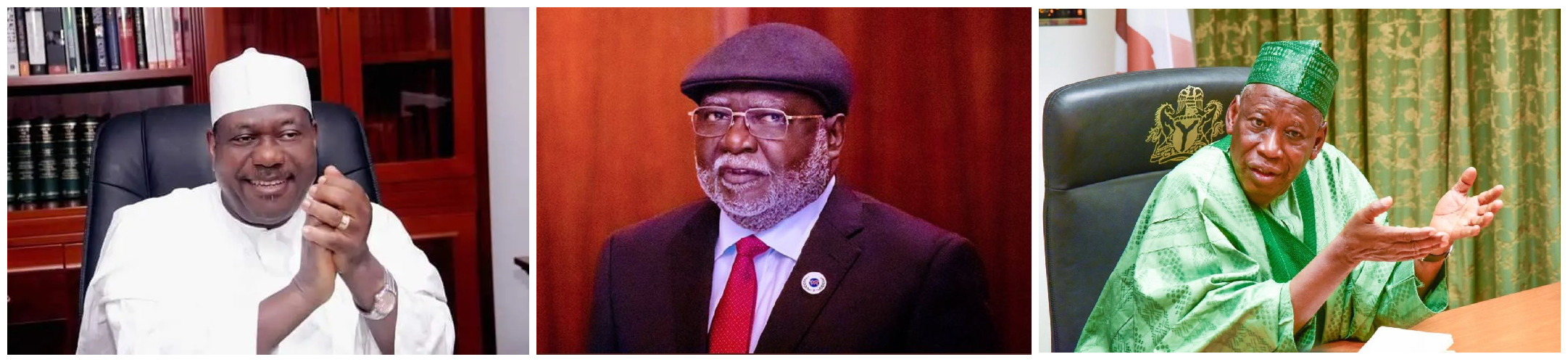
Indication emerged at the weekend that the Chief Justice of Nigeria, CJN Justice Olukayode Ariwoola, the National Chairman of the ruling All Progressives Congress, APC Dr. Abdullahi Ganduje, alongside secretary to the government of the Federation, Senator George Akume, met in his Asokoro residence in Abuja, on how to Upturned the victory of the PDP at the tribunal. 

Our correspondent gathered that the meeting was allegedly called at the instance of the National Chairman of the ruling Party, Ganduje, after the pronouncement of the gubernatorial election petition tribunal sitting in Nasarawa State, declaring Orbumgadu David as the winner of the election.

The crux of the agenda from the source is that most of the victories recorded particularly, the National Assembly Election must be nullified by the appellate court.

To this end, the SGF had allegedly, blackmailed the CJN that he was acting on behalf of president Bola Ahmed Tinubu, who instructed him to convey the meeting.

A very highly placed source has confirmed to our correspondent that the CJN was allegedly invite and forced to the meeting to instruct particularly, the president of the court Justice Dangban Messen, to intimate all judge’s handling various appeal arising from the tribunal to rule in favour of the APC. 

According to the source, the CJN is to secretly meet the president of the Appellate court within the week to finalise the plot.

Recall that the National Chairman of the ruling All Progressives Congress (APC), Dr. Abdullahi Umar Ganduje, has vowed to protect the mandate of the party in Nasarawa state, stressing that the party won the 2023 gubernatorial election in the state.

 Speaking in Lafia at the grand reception organized in honour of the Nasarawa State Chairman of the APC, Hon. Aliyu Bello. 

According to the APC National Chairman, who was represented at the event by Alhaji Muazu Rijau, National Vice Chairman (North Central), the party would protect its mandate in Nasarawa State. 

“We have won the election, and we shall protect our mandate. There is no doubt about it. Nasarawa State belongs to APC, and APC belongs to Nasarawa State. We are in charge, and we will continue to be in charge by the grace of God,” Ganduje stated.

Governor Abdullahi Sule at the occasion, said the APC state chairman stands out as a politician that is capable of providing the necessary leadership for the APC to facilitate for his administration to translate its vision into reality for the state. 

According to the Governor, Nasarawa State only began to witness genuine development in 2011 after the coming of the defunct Congress Progressives Change (CPC), which later metamorphosed into the APC.

He said that part of the meeting agenda also, was to discussed the Atiku and Peter Obi appeal panel at the apex court and the justices that will hear the matter.

The source further added that the full details of what transpired in the meeting between the CJN, Ganduje and the SGF will soon be revealed to the Nigerian public in the next few days.

“The real development that started in Nasarawa State did not start until 2011. It was at the time we started to see resemblance to some kind of development.  Development in education, development in health, development in infrastructure, development in roads. Development in the way forward.” 

“In APC we have vision, in APC we have the experience, in APC we have the commitment, in APC we have the love for our state and its people. More importantly, believe it or not, we have the fear of the Almighty Allah in us”

“And that is the reason why since we started, we have seen the development of Nasarawa not only in education, infrastructure, and the rest but we are now having a state in the northern part of the country that has oil in Obi Local Government Area”

 “We worked hard to ensure that that oil is drilled. We worked to ensure that more exploration was carried out to discover more oil reserves. We now believe that in the entire northern part of the country, there is no reserve as big as the one in Keana, Obi and Assakio

SNM Lauds Umahi’s Reforms in Ministry of Works

….. Urges stakeholders to embrace reforms for better economy

A pro- democracy group, Save Nigeria Movement (SNM), has thrown it’s weight behind the Minister of Works Engr. Dave Umahi following his pragmatic and courageous reforms in the Ministry aimed at addressing road infrastructural deficit in Nigeria using locally sourced materials such as cement for road construction.

The CSO, dedicated to building a culture of transparency and due process in Nigeria
in a press release made available to journalists in Abuja by its convener Rev Solomon Semaka over the weekend expressed optimism that with the current reforms spearheaded by the Minister of Works, Engr Dave Umahi, Nigeria’s prospect in building sustainable and cost efficient and effective roads will soon become a reality as roads built with cement concrete are less expensive and more durable than those built with asphalt in our part of the world.

According to the statement, “the group maintained that it solidly commends Engr. Dave Umahi for his unwavering stance in promoting the use of cement concrete for road construction in Nigeria” This initiative will empower local cement manufacturers, drastically reduce capital flight, stabilise the dollar and address balance of payment deficit as the shift from importing asphalt to utilising locally produced cement will reduce the high demand for foreign exchange especially the dollar. This will also eliminate excessive variations caused by fluctuations in dollar rates, providing a more stable economic environment especially for the naira to regain strength against the dollar”.

As a country plagued by crippling unemployment, SNM equally anticipates a boost in employment opportunities for Nigerian youth as a direct consequence of increased demand for cement and other locally sourced materials which will invariably lead to the establishment of more cement production plants across the country and the expansion of already existing plants to meet up with the local demand bearing in mind Nigeria’s vast limestone deposits.

“Engr. Dave Umahi has won our trust and confidence as an Engr., politician and great administrator per excellence. He is not afraid of any cabal as they want to be called. His patriotic decision to end the exploitation of the Nigerian government in the area of road construction and stimulate the local economy is highly commendable. We stand shoulder to shoulder with him as he stives to confronts attacks from some dubious contractors and corrupt civil servants within the ministry who are bent on undermining the reform efforts especially those who prefer the use of asphalt in order to continue to fleece the country of scarce resources . Our position is clear, Nigeria is bigger than any individual and whatever will benefit Nigeria and the general public is what we will support”, the statement noted.

Expressing their unalloyed support for President Tinubu’s renewed hope agenda, the group insisted on monitoring the implementation of directives as driven by the Honorable Minister to ensure compliance with Mr President directive, stressing that while the administration of President Bola Ahmed Tinubu aims to inherit and complete ongoing projects unlike what used to happen before, it will not tolerate corruption and sabotage in the process. “The renewed hope agenda of Mr President has no room for saboteurs.

“Mr. President deserves to be appreciated by Nigerians for his ingenuity in appointing a credible hand in the Ministry of Works and also securing funding for ongoing road projects, amounting to over 5 trillion Naira. ” Mr President ingenuity must be encouraged”

“It is important for us as a frontline civil society organisation to urge Nigerians to disregard the actions of contractors with self-serving interests who are opposed to this laudable initiative and encourage local contractors to express interest to minimize the monopoly held by so called big contractors who are mostly foreigners”. With more local contractors, the multiplier effect of local content in the road construction sub-sector on unemployment and the economy at large will be huge “, the statement added.

While suing for unity of purpose, SNM also issued a stern warning to civil servants who are being used by contractors to destabilise the reform agenda of the Hon. Minister, adding that, “any civil servant found distorting the system will face dire consequences and that contractors who are uncomfortable with the country’s progress under President Tinubu should step aside immediately to pave way for patriotic firms to come in and drive Nigeria’s new infrastructural blueprint and roadmap aimed at boosting local production, stabilizing the Naira as well as creating millions of jobs for Nigerians”.

Toto Without Electricity For Almost 10-Years Of APC Rule -Walid Jibrin


“l am an elder over 70-years and I am very worried about what is going on in our country today. At my age I went round the whole of Nasarawa State during the last campaign. It was very clear everywhere we went that the people were no longer with the incumbent Governor, Engineer Audu Sule of the APC. From the 1st APC campaign outing in Toto Local Government the Governor was greeted by women and youths with street protest. They told him clearly that they were tired of his lack of performances and empty promises.

“In fact, Toto had been without electricity for almost ten-years of APC governorship in our state. Everywhere the Governor and his team went the reception was cold and scanty which was a very clear signal that Governor Sule was out of touch with the needs and aspirations of the people of Nasarawa State.

“I’m aware that after two years in office the Governor dismissed the advice from leaders and members of his party to fulfill his campaign promises. Instead of listening to his party’s in-house advice to roll up his sleeves and work for the people, he flared up at them and publicly swore that he would do only one term and relocate abroad to live his life in peace! I was therefore not surprised by the cold and in many places the hostile reception Engineer Sule campaign witnessed across Nasarawa State.” -Senator Walid Jibrin, Elder Statesman

CIIE’s spillover effect highly anticipated

By Liao Ruiling

The sixth China International Import Expo (CIIE) is scheduled to be held in Shanghai from Nov. 5 to 10 this year, signifying the first complete return to in-person exhibitions for the event since COVID-19.

Attending trade fairs and showcasing products is one of the channels for many companies to explore new markets and boost their sales. As a major international exhibition platform for China’s opening up, the CIIE is widely recognized by businesses as a crucial channel for expanding their market presence.

Many enterprises said they were looking forward to the event, emphasizing their hope to leverage this opportunity to deepen their foothold in the Chinese market.

Hou Mingjuan, vice-president of Qualcomm, said that Qualcomm was among the first group of American companies to participate in the inaugural CIIE back in 2018. Over the following years, Qualcomm has become a regular participant in the expo, and this year it has already begun preparations for the event, she added.

“Honeywell will focus on showcasing our innovative technologies and solutions at this year’s CIIE, and we will also unveil our flagship product. Through this global platform, we hope to leverage our company’s strengths in aviation, energy transformation, digitalization, and automation to explore more mutually beneficial opportunities with Chinese enterprises,” said Yu Feng, President of Honeywell China.

Why do companies regard the CIIE as a “major event” of the year? Many attribute it to the significant spillover effects of the exhibition.

“The CIIE is an important platform for companies to showcase new technologies and products, as well as a vital channel for staying updated on the latest industry trends and information. Through major exhibitions, we have the opportunity to connect with potential customers and partners. In fact, we met the Ambassador of Mongolia to China at the CIIE, which led to the application of our electrochemical air management products in Mongolia’s National Center for Maternal and Child Health,” said Chen Zhihua, chairman and general manager of Chinese high-tech enterprise Qingyue Technology.

“It can be said that the CIIE injects more momentum into the development of small- and medium-sized enterprises like us,” he added.

“The CIIE has become a significant platform for China to promote high-level opening-up and a crucial bridge connecting foreign enterprises with the Chinese market,” remarked Yan Zhijun, marketing director of Theland, a dairy farm group from New Zealand.

As a staunch supporter of the CIIE, Theland has been showcasing its latest products at the expo for five consecutive years, Yan noted.

He said that the growing demand of Chinese consumers for high-quality products has provided new business opportunities for global companies.

With the support of the CIIE, Theland has experienced rapid development in the Chinese market. According Yan, one of every three cans of milk powder exported from New Zealand to China is manufactured by Theland.

At the same time, China’s trade facilitation has been continuously improving. Yan said that when Theland first entered the Chinese market, China’s tariff on milk from New Zealand was 15 percent. Thanks to China’s efforts in recent years to implement preferential policies, the tariff on liquid milk from New Zealand, for example, has now been fully exempted, Yan added.

In line with the trend of China’s high-quality economic development, exhibits to the CIIE from around the world are becoming more and more tech-savvy in recent years, with a stronger emphasis on their green and low-carbon performance.

“Driven by the goal of high-quality development, China is vigorously promoting the deep integration of digital technology and the real economy, while continuously pushing for a green transformation of its development model,” Yu said.

According to him, Honeywell, pursuing sustainable development, designs around 60 percent of its new products with an aim of improving customers’ environmental performance and social benefits.

The company’s core business aligns with the demands and development trends of the Chinese market, he said, adding that the trend of high-quality development of the Chinese economy also creates development opportunities for Honeywell and other companies.

As many multinational companies continue to expand their presence in the Chinese market, they are also increasing their investment in China.

Recently, Schneider Shanghai Power Distribution Electrical Apparatus Co. Ltd. had its third-phase construction completed, erecting a brand-new digital and automated “zero-carbon factory.”

With an operational area of 6,500 square meters, the factory is expected to increase its overall production capacity by 30 percent. In the future, more low-voltage circuit breakers for energy management will be produced in this factory, contributing to the safe and stable operation of China’s power system and accelerating the green and low-carbon transformation of the energy system.

According to statistics, the number of newly established foreign-invested enterprises in China reached 24,000 in the first half of this year, representing a year-on-year increase of 35.7 percent. The quality of foreign investment continued to improve. Foreign investment in high-tech industries grew 7.9 percent year-over-year, accounting for 39.4 percent of total foreign investment, up 3.9 percentage points. Of this, foreign investment in high-tech manufacturing increased 28.8 percent.

Belt and Road Initiative leads to China’s development, global wellbeing

By Qiang Wei, People’s Daily

China’s State Council Information Office on Oct. 10 issued a white paper titled “The Belt and Road Initiative: A Key Pillar of the Global Community of Shared Future.”

The white paper will give the international community a better understanding of the value of the Belt and Road Initiative (BRI), facilitate high-quality cooperation under it, and ultimately deliver benefits to more countries and peoples.

The white paper says to promote greater connectivity through BRI cooperation, China has continued to facilitate policy coordination, infrastructure connectivity, unimpeded trade, financial integration, and closer people-to-people ties, by orienting towards “hard connectivity” in infrastructure, bolstering “soft connectivity” through harmonized rules and standards, and strengthening people-to-people bonds.

As its scope expands, the BRI has become the world’s largest platform for international cooperation, with the broadest coverage.

Over the past decade, BRI cooperation has witnessed remarkable results. It has opened up new space for world economic growth, built a new platform for international trade and investment, reinforced the development capacity of relevant countries and improved people’s lives, sought ways to improve the global governance system, and brought greater certainty and stability to a world fraught with turbulence and change. The initiative has contributed to addressing global development imbalance and advancing modernization in all countries.

The BRI has brought tangible benefits to participating countries. A large number of infrastructure projects have been built, with significant progress for participating countries in the construction of railways, highways, pipelines, shipping, energy, communications and other basic public service facilities. This has improved local living and working conditions and the development environment, and boosted these countries’ capacity for independent economic development.

The World Bank has estimated that by 2030, BRI-related investments could lift 7.6 million out of extreme poverty and 32 million out of moderate poverty.

The BRI has added vitality to economic globalization. World Bank study – “Belt and Road Economics: Opportunities and Risks of Transport Corridors” – noted that transport infrastructure projects under the BRI would reduce trade costs for the world by 1.8 percent, and reduce trade costs along the China-Central Asia-West Asia economic corridor by 10 percent. This has greatly facilitated global trade and boosted economic growth. The study projects that trade growth would range between 2.8 and 9.7 percent for corridor economies and between 1.7 and 6.2 percent worldwide, and global real income is expected to increase by 0.7 to 2.9 percent.

The BRI has provided new solutions for improving global governance. According to the China’s National Image Global Survey released by the Academy of Contemporary China and World Studies in 2020, the BRI is the Chinese proposal with the highest level of acceptance overseas, with more than 70 percent of respondents recognizing the positive impact of the BRI on individuals, states and global governance.

European think tank Bruegel released a paper titled “Global Trends in Countries’ Perceptions of the Belt and Road Initiative” in April 2023, which noted that the BRI is generally positively received in the world, and Central Asia and sub-Saharan Africa, in particular, exhibit strongly positive sentiment towards the BRI.

The BRI has garnered strength for the progress of human civilization. The global influence of various multilateral and bilateral political party exchange mechanisms has increased with the creation of mechanisms such as the CPC and World Political Parties Summit, and the CPC in Dialogue with World Political Parties High-level Meeting.

Various BRI cooperation mechanisms have emerged, including the Silk Road Think Tank Association, the Belt and Road Initiative Tax Administration Cooperation Mechanism, the Alliance of International Science Organizations, the Belt and Road Health Professionals Development Alliance, the Silk Road International League of Theaters, and the Silk Road International Museum Alliance. The emergence of such mechanisms has facilitated people-to-people exchanges in diverse forms, promoting mutual understanding, mutual respect, and mutual appreciation among the peoples of all countries.