China to promote construction of Giant Panda National Park 

By Jin Xin, People’s Daily

Through collaborative legislation, southwest China’s Sichuan province and the northwestern Chinese provinces of Shaanxi and Gansu recently made joint commitments to multiple matters, in an effort to unify criteria and standards for promoting construction of the country’s Giant Panda National Park, which spans the three provinces.

China’s Giant Panda National Park, with a total area of about 22,000 square kilometers, was officially set up in October 2021. Before the establishment of the national park, relevant regions protected wildlife, giant pandas in particular, by designating scattered nature reserves and protected areas.

A good number of infrared cameras have been installed across the Giant Panda National Park, facilitating wildlife conservation efforts by recording wild animal activities.

For instance, an infrared camera caught on film activities of a wild giant panda in Tangjiahe National Nature Reserve, a part of the Giant Panda National Park, in Qingchuan county, Guangyuan city, Sichuan province. As the video footage shows, the giant panda first scratched its belly with one of its front paws, then slowly rolled over and got up off the ground, and turned its round and chubby head to glance around.

In a giant panda Fertilization and Reintroduction Base in Daxiangling Nature Reserve that straddles the border between Yingjing county and Hanyuan county in Ya’an city, Sichuan province, few signs of human activity can be seen beyond a few buildings for scientific research and management and a metal fence enclosing a zone where giant pandas can gradually adapt to the wild after rewilding training.

“This rewilding zone covers an area of about 200 hectares. It has almost no difference from the natural habitats of giant pandas except necessary protections. After receiving the initial rewilding training, giant pandas learn to adapt to the wild here,” said Song Xinqiang, a ranger at the base, pointing to a forested area.

“Only by returning giant pandas to nature can we truly protect them,” said Gong Xiaoyan, director of the working committee on environment and resource protection under the Standing Committee of the Shaanxi Provincial People’s Congress.

Inhabits of giant pandas in the Daxiangling Nature Reserve used to be rather fragmented, due to severe vegetation damage along the No. 108 national highway, which cut through the mountain area of the nature reserve, as well as long-term impacts of human activities, such as bamboo shoot digging and livestock grazing.

By setting up quadrats to monitor staple bamboo regeneration, biodiversity, and other factors of the local ecosystem, the administration of the Giant Panda National Park has actively carried out habitat restoration in ecological corridors, and strengthened protection and management of the ecological corridors.

In addition to constructing ecological corridors and restoring habitats, the administration has also made efforts to enhance connectivity between isolated patches of habitat to strengthen the protection of wild giant pandas.

“During a patrol inspection in the national park’s core protected area in May this year, we found traces of rare wild animal species like takin, golden snub-nosed monkeys and tufted deer, as well as rare orchid plants like Calanthe discolor and Cypripedium calceolus. The protected area has a large variety of animal and plant species and a sound ecological environment,” said a member of the national park’s patrol team.

The endeavor to establish the Giant Panda National Park goes beyond the mere protection of giant pandas. It represents China’s pioneering effort to safeguard biodiversity with giant pandas as an umbrella species.

If protecting giant pandas is likened to holding up an “umbrella” in nature, numerous rare animals and plants can gain better shelter under the “umbrella” of the Giant Panda National Park. Surveys showed that since 2020, the number of wild vertebrate species in the Shaanxi section of the park have increased from 258 to 342.

Relevant authorities in the country have also made provisions on protecting the overall ecological system of the Giant Panda National Park through legislation. According to the provisions, the main protected objects in the park include giant pandas and their habitats, as well as other sympatric wildlife; natural ecosystems like forests, grasslands, wetlands, rivers and glaciers; unique natural landscapes, geology, landforms, as well as historical and cultural sites.

The establishment of the Giant Panda National Park has also brought about gratifying changes to local villages. In Longcanggou township, which is located near the entrance of the Yingjing county area of the Giant Panda National Park, local farmers used to rely heavily on resources in mountains for their livelihood. That’s why unsustainable practices like logging and excessive bamboo shoot digging that damaged giant panda habitats were once common in the locality.  

After the Giant Panda National Park was set up, Longcanggou township has successfully undergone a green transformation by developing tourism featuring giant pandas. As a result, environmentally destructive behaviors have virtually disappeared.

In Fazhan village of Longcanggou township, a multitude of B&B hotels are adorned with captivating giant panda elements.

Today, an increasing number of regions within the Giant Panda National Park have implemented industrial policies aligned with the park’s conservation objectives. By providing guidance and supporting local communities near the park in the development of green industries, such as ecotourism, ecosystem-based experiences and featured agricultural products, relevant regions have achieved harmonious coexistence between man and nature.

Accusation: Tinubu, Ribadu Alleged to Have Exploited Positions for Personal Agenda, Resulting in Neglect of North East

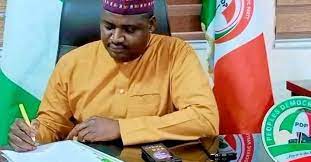
An APC group, identified as Nigerian Proactive Group for Asiwaju, has accused the National Security Adviser (NSA) Nuhu Ribadu of using his office to pursue personal vendetta, saying the new administration is yet to constitute a security agenda.

While accusing the President Bola Tinubu-led administration of lopsidedness in the appointment heads of Nigerian security, the group in a release signed by the National Coordinator, Wasiu Oyebode Olakunle, wondered why most heads of security chiefs are from North West geopolitical zone.

According to Olakunle, apart from the Chief of Defence Staff, General Christopher Gwabin Musa who hails Zango Kataf, Kaduna State, Chief of Air Staff, Air Vice Marshal Hassan Bala Abubakar is also from North West, as well as the Director General DSS, Yusuf Magaji Bichi who hails from Bichi, Kano State, another North West region.

Continuing, he further noted that the Director General NIA, Ahmed Rufai Abubakar also hails from Katsina North West Nigeria, Minister of Defence, Mohammed Badaru Abubakar, Jigawa, North West Nigeria and the Minister of State for Defence, Bello Muhammad Mattawale, who hails from Zamfara North West Nigeria.

Listing Ribadu’s perceived offences, the group said, “Putting in place his political structure ahead of 2027 poll amidst insecurity in the country.

“Turned to a journalist as well as a photo-journalist in the presidential villa most especially, when the president has visitors.

“Hosting and posting pictures with political groups and Kannywood stars in his office.”

The group expressed concern that the Nigerian military is increasingly becoming demoralised, saying the bandits are now emboldened.

It called on the NSA and heads of defence, security, and intelligence agencies to be more proactive to secure every swathe of the Nigerian territory.

Resilience of Chinese economy bolsters confidence in global growth

By He Yin, People’s Daily

“In recent days, a growing number of global financial institutions have increased or planned to increase their holdings of Chinese assets, indicating confidence in the recovery of the world’s second largest economy with solid supportive measures in place,” said a recent article on the website of Brazil’s Forum magazine, fully affirming the slew of measures China has introduced to stabilize economic performance.

Many international observers have also pointed out that with macro-policy support, factors for the overall improvement of the Chinese economy have continued to accumulate, which is expected to further unleash the potential and continuously advance the high-quality development of the economy.

Amidst a complex and grim external environment, the Chinese economy has shown remarkable resilience with a growth rate significantly outpacing that of major developed economies.

In the first half of this year, China’s gross domestic product (GDP) expanded 5.5 percent year-on-year, markedly faster than the annual growth rate of 3 percent in 2022 and the average annual growth rate of 4.5 percent during the country’s three-year battle against the COVID-19 pandemic.

In its latest World Economic Outlook Update released last month, the International Monetary Fund (IMF) projected that China’s economy will grow 5.2 percent in 2023, ranking among the fastest-growing major economies.

A series of targeted measures rolled out by China recently, including earnestly optimizing the development environment for private enterprises, are believed to help consolidate the country’s economic growth momentum and further boost international confidence in the Chinese economy’s high-quality development.

Despite subdued cross-border investments globally, foreign institutions are increasing investment in China and actively exploring high-end industries and emerging sectors, demonstrating the strong and enduring appeal of the Chinese market.

In the past five years, the rate of return on foreign investment in China has reached 9.1 percent, far higher than the roughly 3 percent in the U.S. and Europe, according to China’s State Administration of Foreign Exchange.

In the first half of this year, foreign direct investment (FDI) from many developed countries into China registered growth, with investments from France, the UK, and Germany increasing by 173.3 percent, 135.3 percent, and 14.2 percent, respectively. Meanwhile, the number of newly established foreign enterprises in China rose 35.7 percent.

A mid-year report released this month by the American Chamber of Commerce in South China found that nearly 60 percent of U.S. companies remain optimistic about the Chinese market, and about 30 percent of the surveyed companies plan to expand their investments in China.

With tremendous market opportunities presented by the stable performance and growth momentum of the Chinese economy, constantly improving business climate, and mature and complete supply-chain system holding great appeal to foreign capital, China is expected to continue winning favor with foreign investors.

After a smooth transition in COVID-19 response, China has experienced a wave-like and zigzag process of economic recovery. At a crucial stage of stabilization and recovery as well as industrial upgrading, the Chinese economy is faced with obstacles in the process of development and issues in the course of progress. The country has taken active steps to address these problems, with relevant efforts already paying off.

Although China’s overall price level is temporarily low, considering indicators of economic growth, money supply, as well as other aspects of the economy, the country’s economy does not meet the criteria for deflation.

As the Chinese economy recovers steadily, the country will see gradual expansion of market demand, smooth economic circulation, improvement in supply-demand relationship, and slight and moderate fluctuations of overall price level within a reasonable range throughout the year.

Facing difficulties and challenges, China’s economy has sustained continuous recovery and overall growth, remaining an important engine for global economic growth.

Some Western politicians and media outlets view China’s post-pandemic recovery through tinted glasses, intentionally exaggerating problems facing the Chinese economy in this special stage and sensationalizing narratives like economic deflation, setbacks in recovery, and inadequate policies in China.

These clichéd arguments contradict facts and diverge from observations by many international institutions and individuals.

As some media pointed out, although Western media outlets relish dramatizing China’s economic slowdown, many international institutions remain optimistic about the Chinese market.

As China continues unswervingly advancing high-quality development, the Chinese economy’s overall upward trajectory will not be affected by external noises.

The Chinese economy has tremendous resilience and potential for development, and its fundamentals sustaining long-term growth remain unchanged.

China has the confidence, conditions and capabilities to continuously optimize its economic structure, enhance growth drivers, boost momentum of sound development, accelerate the formation of a new development pattern, comprehensively promote high-quality development, and contribute more positive energy to global economic recovery.

E China’s Hangzhou gears up for first carbon-neutral Asian Games

By Li Zhongwen, Liu Junguo, People’s Daily

Hangzhou city, capital of east China’s Zhejiang province, is gearing up to make the 19th Asian Games, which is slated to run from Sept. 23 to Oct. 8 in the city, the first carbon-neutral Asian Games in history.

Determined to host a “Green, Smart, Economical and Ethical” Asian Games, Hangzhou has arranged for all 65 venues and office facilities for the event to run fully on green electricity from March through December this year.

The city has already completed transactions for 621 million kilowatt-hours (kWh) of green electricity for the event, bringing electricity produced from renewable energy sources thousands miles away to venues for the Hangzhou 2022 Asian Games through ultra-high voltage (UHV) grids.

Photovoltaic (PV) power generation projects in areas along the ancient Silk Road, such as the Qaidam Basin in northwest China’s Qinghai province, Jiayuguan city in northwest China’s Gansu province, and the Loess Plateau in northern China, as well as wind power projects in places including Hami city in northwest China’s Xinjiang Uygur autonomous region, have all contributed green power to the event.   

In addition, green electricity produced by projects in Zhejiang province, including distributed PV power projects and offshore wind power projects, has also converged in the national grid, lighting up facilities of the upcoming Hangzhou Asian Games together with wind and solar power from regions along the ancient Silk Road.

It’s worth noting that a single crystal double-sided PV module of a PV power generation project located in Hainan Tibetan autonomous prefecture, Qinghai province, can generate 2.2 kWh of electricity daily.

After being transmitted to Hangzhou through China’s west-to-east power transmission program, this 2.2 kWh of green electricity can power a single energy-efficient light bulb at the gymnasium of Hangzhou Olympic Sports Center cluster, the main venue for the 19th Asian Games, for 220 hours.

Electric vehicles are expected to contribute to the formation of a new trend toward green travel during the Hangzhou Asian Games.

According to credible sources, the State Grid Hangzhou Power Supply Company is pressing ahead with the full coverage of charging piles at venues for the Hangzhou Asian Games, and is building a green travel service system in key areas related to the event, including Hangzhou’s Xiaoshan district and Binjiang district, as well as their surrounding areas.

The company also endeavors to build a one-kilometer radius charging circle in areas related to the Hangzhou Asian Games by equipping the Hangzhou Asian Games village in Xiaoshan district with China’s first high-power wireless charging station for new energy vehicles (NEVs) and building charging station at the Hangzhou Xiaoshan International Airport.

The company has built a cumulative total of 102 charging stations and 2,024 charging piles in the city, striving to provide all-round services for green travels during the Hangzhou Asian Games.

The concept of green and low-carbon development has been ingeniously integrated into the design and operations of competition venues for the Hangzhou Asian Games. Among the venues of the Hangzhou Olympic Sports Center cluster, a butterfly-shaped venue that incorporates a natatorium and a gymnasium has drawn great attention because of its novel appearance and eco-friendly design. 

The venue is equipped with 210 light tubes, which diffuse natural light from the outdoors to the indoors through top skylight covers. Compared to fluorescent lights, these light tubes are flicker-free, environmentally friendly and energy-saving. They have a lifespan of up to 25 years, and can be turned on and off. More importantly, they can save approximately 100,000 kWh of electricity annually.

The roof of the Fuyang Water Sports Center, a venue for the Hangzhou 2022 Asian Games, has an area of approximately 24,000 square meters covered with soil. It is planted with green plants including Carthusian pink, common zinnia, and Chinese rose, blending in with the surrounding natural landscape.

These plants have not only increased the greening rate of the entire venue to 45 percent, but also benefited people by helping with carbon fixation and oxygen release, heat insulation, and stormwater runoff reduction.

Yangshan Sport Climbing Center, located in Keqiao district, Shaoxing city, Zhejiang province, is a venue for the Hangzhou Asian Games that has been transformed from an abandoned mine into an international competition venue and a youth rock climbing base.

The venue has adopted a semi-open design, allowing athletes and spectators to enjoy the natural scenery of the original quarry during competitions.

With a total construction area of 850,000 square meters, the Hangzhou International Expo Center in Xiaoshan district will serve as the main media center, the venue for squash competitions and training, as well as the official reception hotel for the Hangzhou Asian Games.

In order to reduce waste generation at the point of origin, the center, which used to generate 4,000 tonnes of various types of waste annually, has introduced an intelligent waste sorting system. The system provides real-time statistical analysis of the waste generated in the venue and hotel areas, and timely carries out harmless treatment, significantly minimizing the production of waste.

“Green” is one of the fundamental principles guiding the organization of the Hangzhou Asian Games, and “zero waste” is considered an important aspect of the “Green” Asian Games. By “zero waste”, the organizers do not simply mean not generating solid waste, but aim to continuously promote waste reduction at the source and waste recycling, thus minimizing the impact of solid waste on the environment.

The concept of “zero waste” runs through every aspect of the preparation for the 19th Asian Games. Only 12 of the 56 venues for the event are newly built, and the remaining 44, which are transformed or temporarily constructed competition venues, have widely utilized prefabricated buildings and recyclable and renewable materials during construction.

The glass walls and spectator stands, among other facilities of the Squash Court of the Hangzhou Asian Games, for example, can be removed and transported as a whole after the competitions, and donated to relevant industries for the promotion and popularization of squash.

In many other aspects of the event, such as accommodation and catering, the Hangzhou Asian Games also endeavors to reduce solid waste generation at the source and boost recycling, maximizing utilization of resources.

Nasarawa ALGON unveils its first edition of 2023 Compendium to LG Commissioner.

“… as commissioner, hails initiative, quality of document, recommends for public use…”

Association of Local Government of Nigeria ( ALGON), Nasarawa State, today presented its first edition of 2023 Compendium to the State Commissioner for Local Government, Community Development and Chieftaincy Affairs, Hon. Ahmed Aliyu Tijani

Hon Aminu Mu’azu Maifata, the ALGON Chairman, who is also the Chairman of Lafia Local Government presented the Compendium to the commissioner today in Lafia, the State Capital.

Maifata said that the Compendium contained the activities of the local government since the creation of the State 1996.

” Sir, the 290 page document contained in it among other thing, brief history of Nasarawa State, the origin, composition, aims and objectives of the Association of Local Government of Nigeria (ALGON)

” The Compendium also contained names and pictures of elected and appointed chairmen of the 13 LGAs in the State since creation, origin, history, economic potentials, natural deposits and set light areas in each of the 13 LGAs of the State.

“It also has names and pictures of Speakers of LG legislative arms, names and pictures of traditional rulers in the State both first class, second class and third class respectively.

The ALGON Chairman further said that the Compendium also contained in it names and pictures of Chairmen of LGAs that were collapsed into Development Areas in 2002 as well as names and pictures of Overseers of Development Areas in the State.

” in it are names, pictures and LGAs of Hon.Commissioners that served in the State from creation to date, Chairmen of NASIEC, Secretaries to the State Government, Chief Judges, Speakers of the State Assembly and Hon. Members, Executive Governors, their Deputies and LGAs from inception to date.

” In it are ALGON Excos in the State from inception to date, Commissioners/Permanent Secretaries Ministry for Local Government and Chieftaincy Affairs and Chairmen of the State House of Assembly Committee on Local Government as well as Chairmen of L.G Traditional Council of Chiefs.

The ALGON Chairman further said that the Compendium equally has in it the 147 electoral wards in the state and how the were sprayed across the 13 LGAs, the 24 State Assembly constituencies and how the 3 senatorial zones shared the 24 state assembly seats as well as the 13 L.G.As and the 18 Development Areas and their headquarters.

” It also has names and pictures of Nigeria Leaders from 1960 to date, the Six Geo-political zones in the country and their states as well as the 774 LGAs in Nigeria.

” The 527 major languages spoken across the 774 L.G.As in Nigeria and other vital pieces of information are captured in the Nasarawa State ALGON Compendium 2023,” he added

Maifata assured the Commissioner of their readiness to support and collaborate with him for the development of their respective local government areas.

Responding, Hon Ahmed Aliyu Tijani, Commissioner for Local Government, Community Development and Chiefaincy Affairs appreciated ALGON for the initiative, adding that it was first of its kind since the creation of the state.

Hon Tijani said that the document would serve as a historical book for the people of the state and beyond, both the present and future generations.

“On behalf of my self and the ministry, I will like to thank the ALGON Chairman and his members for ensuring the reality of this document. I appreciate the efforts of ALGON and the state government

” I want to assure you that this book will be of great benefit to the state, to us and those yet on born, it will serve as historical background and documents for the state, I recommends his mass production for the general public usage, the book is rich, very rich, for humanity and fields of endeavors.

The commissioner recommended the compendium for public use.

” I recommend this compendium to all and sundry to read and digest to know where we have started and where we are,” he said.

The Commissioner assured of effective synergy with the local government chairmen for effective grassroot development.

Peter Obi at Senator Barau’s Son’s Wedding: Sign of a United Nigeria – Akpabio

The President of the Senate, Godswill Akpabio, has described the presence of the Presidential Candidate of the Labour Party, Mr Peter Obi, at the wedding Fatiha of Amir, the son of Deputy President of the Senate, Barau Jibrin, as a sign of a united Nigeria.

Akpabio, who was speaking after the event in Kano on Friday, noted that the presence of many high-profile personalities at the wedding ceremony attests to the fact that Senator Barau is a peaceful man of the people.

“You can see that even Labour Party Pesidential Candidate Peter Obi and his people are here; this tells you that Nigeria will remain united as one entity,” he said.

The wedding Fatiha, graced by Vice President Kashim Shettima, was between Amir and Bilkisu Aliyu Sani Madaki, the daughter of the Deputy Minority Leader of the House of Representatives, Aliyu Sani Madaki.

The event was held at the Isyaka Rabiu Juma’at Mosque, Goron Dutse, Kano State.

Commenting of the array of personalities at the occasion, convener, Rising Up for a United Nigeria, Amb. Solomon Adodo hinted that the duo of Senate President, Godswill Akpabio and Deputy Senate President Barau Jubrin symbolises unity and progress of the nation.

“The Akpabio, Barau era is an era that symbolises unity and progress of Nigeria. This is a team that considers the peace and development of Nigeria as a priority above personal, religious and parochial sentiments”.

He urged Nigerians to rally round the new leadership of the country in its quest to surmount the economic hardship been experience as a result of the removal of fuel subsidy.

Niger Delta Women praise Akpabio for his involvement in the labor unions’ dispute with the Federal Government

Women group in the Niger Delta region has commended the President of the Senate, Godswill Akpabio and the Senate on its role in trade disputes between the Federal Government and the Labour Unions, which led to the suspension of the strike by the Resident Doctors and the planned protests by the Nigeria Labour Congress (NLC) and the Trade Union Congress (TUC).

The commendation was contained in a press statement by Mothers and Female Stakeholders in the Niger Delta Region under the aegis of Niger Delta Women League in support of the President of the Senate, Godswill Akpabio.

According to the release signed by Hon. Sheila Abiye Tamuno, National President, Madam Eureal Allagoa, Bayelsa State Co-ordinator and Elizabeth Moses Bassey, Cross Rivers State. Co-ordinator as well as coordinators in other states of the region and the FCT, the women expressed confidence in the ability the Senate President to partner with the Executive to deliver good governance.

“We the leaders and members of the above nonpartisan and non-government association hereby state that we are impressed with the current leadership of the 10th Senate under the transparent leadership of Senator Godswill Akpabio.

“We also call on the generality of Nigerians particularly our women to rally round the current leadership in their avowed commitment to making life meaningful and bearable to Nigerians through human faced legislation.

“Our women and children are very impressed with the intervention of the Senate Leadership in the NLC, TUC and NARD crises which led to the resolution of the crises. Not forgetting their stoppage of the planned increase in electricity tariff by DISCOS.

“We condemn plans by some sponsored groups in the south or any part of the country to call for the resignation of the President of the Senate on a matter that the Senate bureaucracy led by the Clerk of the National Assembly has come out to state that the money was the running cost of the Senators and appropriated for in 2023 budget.

“We call on members of the public to disregard such sponsored calls and give their support for the Akpabio-led Senate to deliver on their plans for Nigerian through the Renewed Hope Agenda of President Bola Tinubu”.

THE DECEPTIVE TACTICS OF IPOB

By Emeka Jerome

All warfare is based on deception. Hence, when able to attack, we must seem unable; when using our forces, we must seem inactive; when we are near, we must make the enemy believe we are far away; when far away, we must make him believe we are near –Sun Tzu

In the words of the revered war strategist Sun Tzu, deception is a critical component of war execution. Echoing Sun Tzu’s teachings, the proscribed Indigenous People of Biafra (IPOB) has refined the craft of deception, using a tapestry of falsehoods to advance and achieve their objectives. This treatise will highlight how the group has continually employed deception as a weapon of war to deceive gullible members, keep the public attracted to them and deepen its presence in the south east. No doubt, IPOB’s ascent to prominence was founded upon a bedrock of deception right from its inception. Spearheaded by Nnamdi Kanu, the emergence of IPOB was an outgrowth of the supposedly reformed Movement for the Actualization of the Sovereign State of Biafra (MASSOB), a pro-secessionist group that had already seen its power wane and was known for its cunning activities and propensity for violence. Although IPOB came into being in 2012, Kanu had already garnered a significant following due to his inflammatory broadcasts on Radio Biafra, a responsibility he had taken on as a member of MASSOB. Recognising that the decline of MASSOB could spell the end of his influence, Kanu, aiming to secure both relevance and financial gain, intensified his facade of advocating for Biafra’s freedom. He accomplished this by spreading propaganda against the Nigerian Government and fostering optimism among the susceptible members of the public. By rebranding and emerging as a new entity, IPOB projected an image of a fresh movement seeking self-determination while carefully avoiding associations with MASSOB’s past activities. His strategy worked because in no time, Kanu assumed command over the sphere of IPOB’s operations, rapidly ascending to its helm.

When IPOB started its brand of agitation, it was cheered on. Nnamdi Kanu became an overnight messiah. The poor vulnerable uneducated market apprentices became his ardent followers. He exploited them. Kanu adequately deployed his expertise of Radio Biafra to deceive. By broadcasting incendiary messages and misinformation, he manipulated emotions and perceptions of the public to IPOB’s advantage. The false narratives he propagated about the Nigerian Government’s actions and intentions fuelled anger and frustration among his followers. The use of hate speech and derogatory language against Government, portraying them as oppressors and enemies of the people painted a one-sided narrative of victimhood which generated sympathy for their cause, making it difficult for their followers to critically assess the situation. By leveraging international media attention, IPOB amplified their narrative on a global scale. Sensationalized headlines and stories about their activities played into their strategy, allowing them to maintain the façade of a legitimate movement fighting for self-determination while downplaying or omitting their more radical actions. The group while orchestrating actions that provoked responses from the Nigerian Government, created martyrs and gained international sympathy. Most of their tactics aimed to paint IPOB as a peaceful movement unjustly oppressed by a hostile government, thus diverting attention from their own aggressive activities. Ironical!

Unsurprisingly, Igbo diaspora across Europe and America began to join IPOB. Politicians back home were consulting its leader, Kanu. His house became a Mecca of sorts. Kanu got emboldened and then, combative. He became proud and dictatorial. His words were feared. He aspired by every means to be like Ojukwu, famed for his lionic roars. Kanu had disciples. Within this newfound position, Kanu artfully manipulated the collective sentiment, leveraging deception to foment hostility towards the government under the guise of championing the elusive cause of Biafran freedom. His financial resources began to significantly swell in different hard currencies. He skillfully garnered financial support from both the rich and the poor under the ploy of rallying donations to fuel the secessionist agenda. Simultaneously, as his personal coffers grew richer, he persistently peddled false hope to his followers, deceitfully and heartlessly portraying himself as their champion in the struggle. Kanu became bolder and went ahead to establish a military Wing, the Eastern Security Network (ESN). Operating ostensibly to counter Fulani herdsmen in the South East or so we were told, the ESN initiated a series of assaults designed to stoke the flames of ethnic conflict and destabilise the nation. Paradoxically, the reported activities of Fulani herdsmen have notably diminished, however IPOB’s actions in the region has remained persistent.

In what initially appeared to be a child’s play in the beginning, soon transformed the South East into a breeding ground for violence, marked by a surge in assassinations, bloodshed, intimidation and various forms of mayhem. Security agencies sent to the zone to restore order became targets for annihilation. The group’s orchestrations have, indeed, in the spirit of Sun Tzu’s teachings, harnessed deception’s formidable power to its advantage. Recognising that Kanu, a Nigerian based in London and his group held the potential to plunge the country into anarchy if left unchecked, the Nigerian government took proactive steps. It proscribed the group and went a step further by extraditing Kanu back to Nigeria. This was to ensure he faced charges for the chaos and destabilization he allegedly caused in the Southeastern region. In response, the group members protested and began issuing out senseless sit-at-home orders every Monday. Doom awaited whoever dared to come out on days meant for the so called sit-at home. Even school children were not spared. The young and old met same fate. For each day sit at home order was enforced, millions of naira was lost. Trading, economic, educational activities were halted. The sick does not dare to go to the hospital. Regardless of the protests voiced by the local inhabitants, IPOB ruthlessly dealt with anyone who dared to defy their directives, ironically targeting the very individuals they professed to champion and liberate. Deception at the highest core! For the people, the snake they nurtured in their bosom has now turned around to bite them.

With Kanu now in custody and facing legal proceedings, his disciple Simon Ekpa, in faraway Finland, capitalized on his mentor’s influence to achieve his own rise to prominence. Recognising the opportune moment for him to also cash out, Ekpa launched a deadlier faction called the Autopilot and afterwards the Biafra Government in Exile. He continues to give false sense of hope to liberate Biafrans while using them to swim in millions. Same as his mentor, it has now become unmistakably clear that IPOB’s motivations are primarily driven by financial gain. Under the pretext of calling for the release of Kanu, he dishes out orders to for sit-at-home, organises fundraising frequently with the false and deceptive narrative of using the money to fund ESN. How laughable. Ekpa became more vicious. The South East is currently in a mess. Sit-at-home orders stretches for weeks with zero considerations of how it negatively affects the poor residents. Meanwhile the person issuing out the directive is doing so from the comfort of his home abroad.

IPOB’s skillful use of deception as a strategic weapon of war becomes even more apparent when considering recent developments. They are now attempting to distance themselves from the autopilot faction of IPOB led by Simon Ekpa. IPOB is doing double speak. At one instance, it wants to distance itself from Sit-at home. At the other, it states that though it started it, Simon Ekpa is not implementing it its own way. But at least, it was Kanu and IPOB that started it. They are in agreement. While they vehemently deny that the Eastern Security Network (ESN) engages in combative and violent activities, this assertion contradicts the evidence provided by the numerous arrests made and the ongoing campaigns carried out by the military and other security agencies. As the number of arrests increases, IPOB intensifies its efforts to disassociate itself from these individuals, seemingly attempting to detach their image from these actions. Yet, in ironic twist, they continue to advocate for the release of these very individuals they claim not to be affiliated with. The contradictory stance of denying membership while concurrently issuing press releases about the detention of their members raises questions about the veracity of their claims. It is as if they are performing a delicate balancing act, trying to maintain an image of innocence while supporting those apprehended.

Furthermore, Simon Ekpa’s frequent calls for a sit-at-home protest have created a conundrum for the group. In light of the public’s skepticism and widespread condemnation, they appear to be shifting blame onto Ekpa’s faction, using this as an opportunity to once again deceive the public into believing that they are the virtuous side. But it is evident as daylight that in a larger context, IPOB’s insistence on non-violence stands in stark contrast to past actions. During the EndSARS protests, Nnamdi Kanu’s directive to his followers to burn down Lagos demonstrated their potential for incitement. The ensuing chaos and destruction following this directive were widely observed. Their claims of nonviolence also clash with their association with the Ambazonian secessionist group in Cameroon, an entity known for its aggressive tactics. The inconsistency is further highlighted by their clashes with the Army and Police in the South East. These confrontations raise questions about their true intentions and undermine their assertions of nonviolence. In the face of these complex and often contradictory actions, IPOB’s manipulation of information and narratives emerges as a deliberate and sophisticated strategy to shape public perception, rally support and maintain a facade of innocence even as evidence points to a different reality.

Another strategy being deployed by IPOB is the sustained misleading narrative that all rival factions other than its own are sponsored by the Federal Government or its agencies. This claim is distorted and contradicts the evident struggle for supremacy between Kanu and Ekpa. It is important to note that Kanu broke away from MASSOB. Ekpa is only traversing a similar path. Why then is Kanu angry and propagating falsehood for the purpose of deception? At the moment, the times are not good for the IPOB. It is in dire straits and fight of its life. It is in a big struggle as its days are numbered. Sooner than later, like its predecessor Biafra-Republic-agitation-associations, will become extinct and go into oblivion. This is not a false prophesy. It is a matter of time. Again, like the South East elite and governments, IPOB has got a wild cat for a pet and it turned to feed on it. All is not well with Kanu and IPOB. They have both crumbled and crawling. There is fire on the mountain and IPOB is in disarray. It is struggling. Kanu is in detention. His IPOB is in shatters. Disorganised. Only vultures have surrounded him. Everything is wrong. There is leadership tussle. IPOB has broken into factions. There is Simon Ekpa autopilot. There is Chika Edozien Directorate of State (DOS). IPOB is in a big fight over its finances. Kanu’ s younger brothers want to control it. In Germany, Italy, London, France among others IPOB huge funds is at the heart of a fight. Some accounts have been blocked. Others are objects of litigation. Kanu is worried. He is losing control. There is a bigger fight among Kanu’s legal team. No cohesion. Some feel entitled. There’s contest over who is the lead counsel. Some lawyers who never had addresses or any profitable ventures have found rest in IPOB. Some who couldn’t have won the simplest civil cases in a customary court are cashing out on IPOB and fleecing Kanu. Poor him.

While IPOB burns, Southeast also burns. Eastern Security Network, unknown gunmen, kidnappers, hostage takers, warlords, combatants, killers, marauders, blood suckers, violent vigilantes have taken over the region. Only a reign of terror is visible. IPOB is helpless. Simon Ekpa, from far away Finland is fueling the crisis. Violently forced sit-at-home order is enforced by those IPOB struggles to deny are not its members. In the absence of Kanu, Ekpa has tried to mimic him in voice, attitude and carriage. The kill-them-order, has accentuated. Ekpa tries to outdo Kanu. Ironically, Kanu is in denial. He and IPOB are desperately denying that Ekpa isn’t their member or working for them.

A time was when Kanu publicly called for attacks on Nigerian Soldiers and other law enforcement agents including the police. Kanu called for violent attack of fulani herdsmen. He called many Igbo politicians names. He called them Efulefu. What has Ekpa done differently? IPOB is just intelligent by half. Now, the organisation and Kanu want Monday sit-at-home cancelled but used for Economic Empowerment Day (EED) and call/march for his unconditional release. Any difference? Whether as sit-at-home or EED or call for Kanu’s release, is it not the same? Double speak! The new plan is even more dangerous. It will bring Kanu’s faction of IPOB into confrontation with Ekpa’s. Then blood will flow. A bird that leaves the ground and perches on the anthill is still on the ground. This is an Igbo adage. Kanu claims IPOB is not responsible for the dastardly acts in the South East. But he has not denied tasking ESN to be bloody. Even now, he tries to deploy the ESN for certain accomplishments. Initially, we were told ESN was fighting Fulani herdsmen. But is that still true? We were told it was about Buhari. Is he still there?

There is another angle we are ignoring. Kanu has never denied not to have committed most of the things he is accused of. His very dull infantile defence is that he did that in the UK, a jurisdiction not covered by Nigeria. Fact is that Kanu and his cohorts have injured the South East, Ndigbo and humanity. History will not judge him right. He may pontificate and grandstand. He may look for scapegoats and point accusing fingers to “innocent” persons and places. He has destroyed his homeland. He has destroyed Igbo culture, value and ethical discipline. Igboland is in ruins, the type never suffered during the civil war. While IPOB thinks or believes that its tactics are superb and impregnable, they are rather self-destructive. The tactics have not only impeded peace in the South East but inhibited the resolution of the crisis and perhaps, encouraged the continued incarceration of Kanu.

At the end, Ndigbo will understand the essence of the current agitation. They will understand that it is a complete ruse. It is a manipulative deception; a heist organised by some negatively ambitious young men who, in their desire to be rich, started a variant of 419/Yahoo Yahoo. It worked for them. They got the money and attention of the vulnerable. They used intimidation, harassment and fear mongering to actualise their aim. The bone of contention among IPOB leaders is about how to keep and share the booty. The one behind the bars wants to maintain a control from detention. The money is so huge to be left in the hands of others. Kanu is voracious for money. IPOB is rich and the funds cannot just be left like that. The agitation is no longer about Biafra or Ndigbo. It is about Money, Women and Power. It is an ego fight among select narcissists. The IPOB leaders do not want the Igbo followers to know this. It will not be good for their narrative and end goal. It will deflate the deceptive tactics. Keeping the propaganda and fake news alive is the best they can do. The deceptions work, at least, for now. But the lies will definitely die someday. There is a short span of life for lies and deceit. Sooner than later, light and knowledge will come upon Ndigbo. May that day come. And quickly too.

Emeka Jerome, writes in from Umuahia, Abia State.

Containment, suppression cannot halt China’s development

By Zhong Sheng, People’s Daily

In the early morning of August 10, Beijing time, the White House issued an executive order on addressing investment, restricting U.S. entities from investing in China’s semiconductor, microelectronic, quantum information technology and artificial intelligence sectors.

The executive order, which has long been in the making, has been widely questioned, criticized and opposed for its negative consequences.

Due to its wrong China policy, the U.S. has failed to restrain its impulse for economic coercion and technological hegemony. This once again shows that the U.S., obsessed with maintaining hegemony for selfish interests, has become a saboteur of international economic and trade order and the stability of global industrial and supply chains.

The U.S. has introduced the executive order to maintain its hegemonic status by tripping up China.

In recent years, China-U.S. economic ties have faced serious obstacles. The root cause lies in the U.S. attempt to deprive China of its right to develop, handle economic issues with a zero-sum mentality, and undermine normal economic and trade exchanges with political manipulation.

The current U.S. administration has not only continued imposing tariffs on Chinese exports, but also intensified the blockade and containment of China, repeatedly upgrading export controls and stirring up investment reviews against China. The U.S. attempts of “decoupling and breaking the chain,” building “exclusive yards with high walls” and “de-risking” seriously violate the principles of market economy and fair competition.

Ironically, while introducing the investment review, the U.S. has claimed it will maintain a long-term commitment to open investment. Such self-contradictory rhetoric only exposes its hypocrisy, and can by no means cover up its attempt to hinder open cooperation or appease U.S. companies suffering losses due to the executive order.

In whitewashing the investment review, the U.S. once again brought up the excuse of “protecting national security.” But facts in recent years have made it clear that the so-called “national security threats” referred to by the U.S. are a catch-all excuse with blurred boundaries.

Under U.S. political manipulation, a globally popular video-sharing app, cargo handling equipment operating at ports, U.S. companies exploring the Chinese market, or Chinese enterprises investing in the U.S., have all been labeled as “national security threats.”

Even Chinese companies sharing technologies with U.S. partners have been depicted as causing U.S. “reliance” on Chinese technologies, and thus seen as threats. The U.S.’ pan-securitization and pan-politicization essentially amounts to deglobalization and “de-sinicization.”

By constantly politicizing, instrumentalizing and weaponizing tech and trade issues in China-U.S. economic relations, the U.S. has not only damaged the interests of both countries, but also seriously disrupted international economic and trade order and destabilized global industrial and supply chains, harming the interests of the whole world.

Currently, the global economic recovery faces formidable difficulties. The U.S. has obstructed global economic and trade exchanges and cooperation, and coerced its allies to join its technology blockade against China. Its rampant black hand of hegemony has aroused strong concerns and high alert in the international community.

The International Monetary Fund (IMF) has warned that “a fragmented global economy is likely to be a poorer one.”

The U.S. believes that by restricting high-tech investment in China, it can hinder China’s sci-tech innovation and impede the latter’s development and progress. Such thinking is too naive.

In today’s world of close global economic and technological connections, no country can monopolize sci-tech innovation and development advantages.

China has become a global highland of sci-tech innovation, and its confidence in accelerating self-reliance in high-level science and technology remains firm. The more sanctions the U.S. imposes on China, the harder China will strive to accelerate its own technological progress.

With the advantage of the super-sized market, China adheres to expanding high-level opening up, and constantly optimizes the business environment, making it more attractive than ever to foreign investors.

According to a report by the United Nations Conference on Trade and Development (UNCTAD), foreign direct investment (FDI) flows to China hit a record $189.1 billion in 2022.

Against the continued downward pressure on global FDI this year, the overall scale of China’s actual use of foreign investment has remained stable in the first half, with improved quality of investment.

The U.S. restriction on its own entities’ investment in China is forcing them to give up opportunities in China, a move that is doomed to be unpopular.

Containment and suppression cannot halt China’s development. Disrupting normal international economic and trade cooperation will only exacerbate its own problems and challenges facing the world.

To find the right approach to handling China-U.S. economic ties, the U.S. must break mental shackles and abandon the distorted mentality of viewing China’s development as a threat. It should earnestly fulfill its commitment of no intention to “decouple” from or impede China’s economic development, and stop politicizing, instrumentalizing and weaponizing economic, trade and technology issues. Only in this way can a sound environment be created for China-U.S. economic and trade cooperation. (Zhong Sheng is a pen name often used by People’s Daily to express its views on foreign policy and international affairs.)

China sees rapid offshore wind power development

Ding Yiting, People’s Daily

In the sea area of northern Fujian province of China, rows of hundred-meter-high white wind turbines spin steadily, delivering green energy to thousands upon thousands of households.

Recently, the world’s first 16-megawatt offshore wind turbine was successfully connected to the grid here, taking China’s offshore wind power development, manufacturing and operating capabilities to new heights.

By the end of 2022, China’s cumulative installed capacity of offshore wind power exceeded 30 million kilowatts, ranking first globally for two consecutive years. This figure accounted for around half of the world’s total.

The cumulative capacity was around 390,000 kilowatts at the end of 2012, and by the end of 2017, that figure surged to around 2.79 million kilowatts. This shows that despite a late start, China’s offshore wind power has developed rapidly and entered a large-scale development phase.

There are several key features of the 16-megawatt offshore wind turbine. Its single blade is 123 meters long and the total sweep area of the blades is equivalent to the area of seven football fields. The turbine’s hub is 152 meters in height, equivalent to the height of a 50-story building.

It can generate over 66 million kilowatt-hours of green electricity annually, which can meet the electricity consumption of 36,000 three-member households for a year.

The wind turbine has made important technological breakthroughs in the R&D and manufacturing of key core components such as ultra-long lightweight blades, large shaft bearings and miniaturization of ultra-large capacity generators.

From the 1.5-megawatt offshore wind turbine built in China’s Bohai Sea in 2007 with blades shorter than 40 meters, to today’s 16-megawatt offshore wind turbine, China’s offshore wind power growth has been marked by a progression toward larger units.

According to Yu Chenguang, general manager of the offshore business unit of Goldwind, a global leader in clean energy, energy conservation, and environmental protection, 125 wind turbines each with a power generation capacity of 8 megawatts are needed to sustain the operation of a one-million-kilowatt offshore wind project.

Only 63 wind turbines each with a power generation capacity of 16 megawatts are needed to support the same project, Yu added, saying that this reduces the area of sea demanded by over 35 percent and foundation costs by over 40 percent.

Besides, the 16-megawatt wind turbine increases energy capture efficiency, generating over 6 percent more electricity than two 8-megawatt turbines combined, Yu said. Overall, the cost of electricity generation can be reduced by about 12.5 percent.

This is just an epitome of China’s rapid development of the offshore wind industry.

Qin Haiyan, secretary general of the Chinese Wind Energy Association, said China now has independent capabilities in offshore wind turbine design, R&D, manufacturing, installation, commissioning and operation.

China’s production of generators, wheel hubs, and towers, along with key components such as blades, gearboxes and bearings, accounts for over 70 percent of the global market.

In September 2022, Baihetan, an independently built offshore wind power installation platform with a lifting capacity of 2,000 tons, was delivered and put into operation, greatly enhancing offshore wind turbine construction and installation capabilities.

Relying on large-scale development and technological progress, the economic efficiency of offshore wind power has been greatly improved.

Qin said from 2010 to 2021, the cost of generating electricity with offshore wind farms dropped by nearly 56 percent, adding that the average kWh cost of offshore wind power projects has been lowered to about 0.33 yuan (about $0.05) at present, and the cost will be as low as other sources of electricity by 2025.

China’s offshore wind power enjoys broad development prospects.

There are abundant resources for its development. China has around 18,000 kilometers of mainland coastline, with rich offshore wind energy resources.

“Around 2.78 billion kilowatts of wind resources can be exploited. They exist in waters up to 200 km from shore, in ocean depths less than 100 meters deep, and up to 150 meters above the sea surface. The resources span both nearshore waters along the coast and distant waters farther offshore,” Qin remarked.

“At present, the cumulative installed capacity of offshore wind turbines is only more than 30 million kilowatts, and the utilization rate is less than 1.1 percent. The future development potential is huge,” Qin added.

China’s eastern and coastal areas lead the country in power consumption, but other energy resources are mainly concentrated in the western and northern regions. Developing offshore wind power projects off the coast enables the coordinated use of various energy resources.