Plateau county in NW China finds strength in basketball

By Gong Shijian, Qiao Dong, People’s Daily

As dusk settled over Chahandusi township in Salar autonomous county of Xunhua, Haidong, northwest China’s Qinghai province, the sound of cheering rose from a township-level basketball game. Spectators packed several rows deep around the court, their applause and shouts echoing into the night.

On the court, local player Han Weiming leapt to seize a defensive rebound. With a quick crossover, he dribbled past his opponent, drove straight to the basket, and finished with a smooth layup. By the final whistle, the Chahandusi team had claimed victory.

Han is something of a local basketball star. Known not only for his skills but also for his dedication and leadership, he is often the first to arrive for practice and the last to leave after games. Thanks in part to his motivation, Chahandusi has remained one of the county’s most competitive teams.

Though home to fewer than 200,000 residents, Xunhua county boasts a deep-rooted basketball tradition. The sport first took root in the 1950s as a leisure activity during the farming off-season and grew into a countywide passion by the 1980s. Today, basketball is played year-round, with grassroots matches held in villages across the county. Men and women, young and old, all flock to cheer on their teams. “When someone in the family takes the court, the whole household is thrilled,” said a villager.

This May, the final of Xunhua’s rural men’s basketball tournament, popularly known as the “Xunhua Basketball Association (XBA),” drew record crowds. Hotels in the county seat were fully booked, and tickets were impossible to find. A large screen outside the venue streamed the game live, where strangers and friends alike gathered, shouting and cheering in unison. 

The excitement reached far beyond the court. This year’s tournament opened nine live-streaming channels, attracting more than 30,000 viewers at peak and generating over 100,000 total views. 

“During finals week, basketball becomes the country’s biggest event. The 5,000-seat arena was filled to capacity, and fans even brought steamed buns and water so they wouldn’t miss a single play,” said Shen Tao, deputy head of the county’s bureau of culture, sports, and tourism.

The XBA is the culmination of a long, competitive journey. Each winter, qualifying matches begin at the village level, with more than 500 games played, followed by over 300 township matches. Only the strongest squads advance to the county-level stage. According to county mayor Han Mingfu, Xunhua now has over 100 amateur men’s and women’s teams, with basketball courts built in all nine townships and 154 villages.

In Xunhua, basketball is more than a pastime – it is part of community life. In schools across the country, basketball clubs are among the most popular extracurricular activities. Many not only provide professional training but also emphasize teamwork and physical fitness. “We’ve created boys’ and girls’ teams, and even grade-specific squads in primary schools,” said Shan Haiyun, head of the county’s community sports guidance center. 

The sport also builds friendships across communities. Tashi, a Tibetan player on the county team, often spends weekends with Han. 

“Our county team brings together athletes from different ethnic groups. In the XBA, we may compete against each other, but outside the county, we play as one. These days, Han can even understand some Tibetan,” Tashi said with a smile. Over time, training and competing together have forged close bonds between them.

Xunhua is home to Salar, Tibetan, Hui, and Han communities, with the Salar people accounting for over 60 percent of the population. On the basketball court, players from all ethnic groups come together to compete, sweat, and support each other. Beyond fitness, the games have strengthened neighborly ties and fostered ethnic harmony.

In one case, two villages had long quarreled over water resources. Despite repeated mediation, tensions lingered. Then a suggestion arose: settle the dispute with a few basketball games. The results were remarkable: after several friendlies, players became friends, and the dispute that had troubled generations was peacefully resolved.

The atmosphere off the court is just as lively as the games themselves. This year’s XBA finals coincided with the launch of a countywide cultural and tourism festival, which highlighted local intangible cultural heritage. “During breaks, we promoted Xunhua’s scenic attractions and cuisine on large screens and mobile platforms, attracting more visitors,” said county official Cao Liantai.

In total, Xunhua staged 200 basketball games at village, township, and county levels this year, attracting 300,000 spectators on site and 1.2 million online viewers. The surge in tourism brought by basketball generated a combined revenue of 82 million yuan ($11.5 million).

Building a modern Antarctica research hub: Chinese team behind Qinling Station

By Li Xinping, People’s Daily

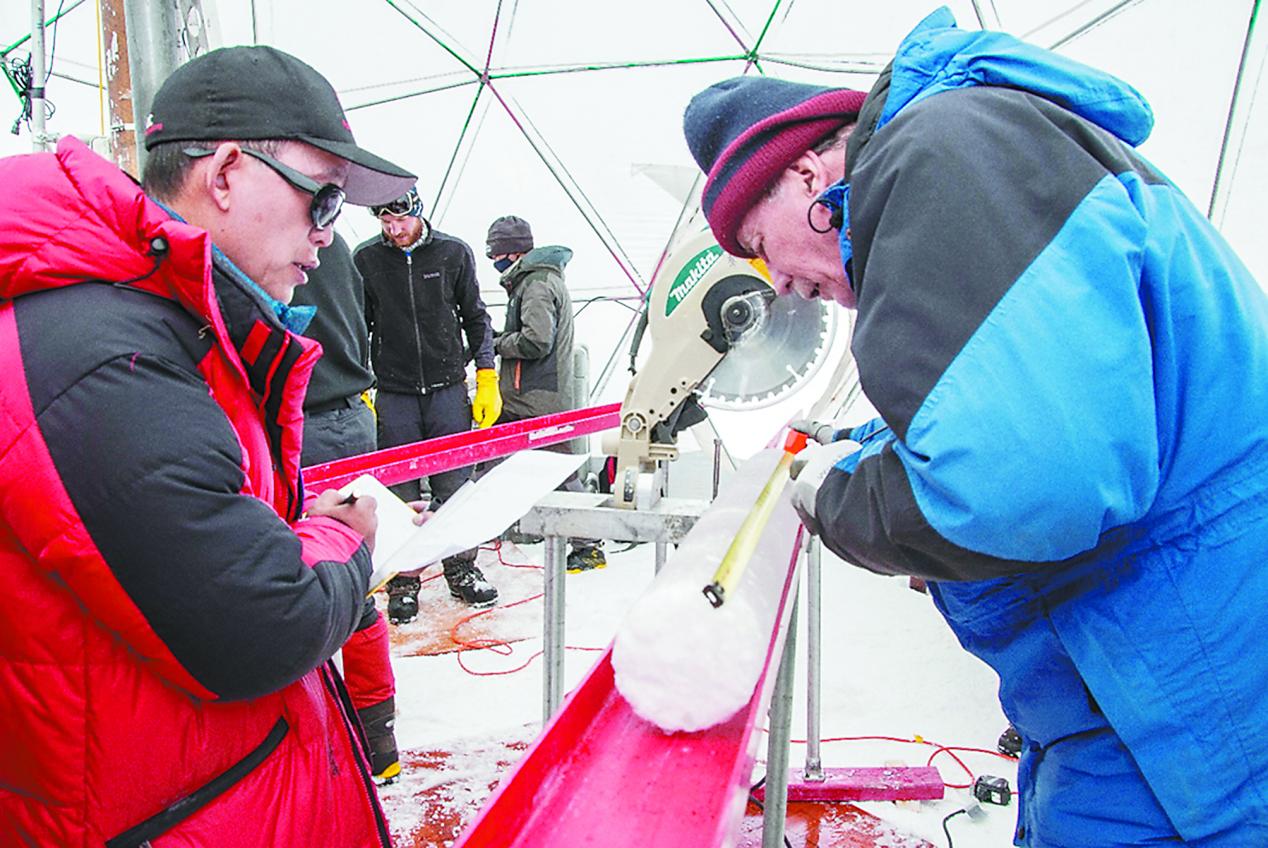
As the last glimmers of sunlight faded across the Ross Ice Shelf, Antarctica entered its long polar winter. Against this stark backdrop of ice and snow, China’s Qinling Station stood firm like a sturdy gray ark, already equipped with a microgrid system, hydrogen energy facilities, and a communications network.

Qinling Station is China’s fifth research station on the continent, filling the gap in the country’s scientific presence in the Ross Sea region. At present, 32 construction personnel remain on site through the winter, carrying out interior outfitting and electromechanical installation while ensuring the station’s operation and maintenance.

China’s polar construction efforts date back to the early 1990s, when teams from China Railway Group, China Construction Technology Consulting Group, and other companies began making regular journeys south. Over the past three decades, they have traveled to Antarctica more than 20 times, steadily advancing China’s scientific footprint at the Earth’s southernmost frontier.

Qinling Station is located on Inexpressible Island, where the average temperature hovers around minus 20 degrees Celsius and can plunge to minus 45 degrees. Fierce gales lash the island on more than 100 days each year. To meet these extreme conditions, the station adopted an innovative prefabricated, modular construction approach from the outset: steel structures and functional modules were manufactured in China, shipped south, and assembled on-site like building blocks, ready for immediate use upon assembly.

Since welding is impossible in Antarctica, all steel structures had to be bolted together. “Even turning a screw here is a battle,” recalled Xie Shuaishuai, a young assembler born after 2000. Wearing gloves to stave off frostbite, he found they quickly became damp with sweat, froze stiff in the wind, and stuck to his tools. “You have to warm your gloves, put them back on, and repeat the process again and again,” he said. In the end, he tightened 11,000 screws in this way.

The construction of Qinling Station officially began on December 16, 2023, during China’s 40th Antarctic expedition. In less than 30 days, the steel structure of the main building was completed. Within 60 days, the main construction was in place. The project set five records in Antarctic station construction: the largest workforce deployed, the greatest volume of materials handled, the largest single building erected, the harshest conditions endured, and the fastest construction achieved.

When the 41st Antarctic expedition departed on November 1, 2024, more than 100 builders from China Railway Group and China Construction Technology Consulting Group joined the mission. “Most had already taken part in the 40th expedition, and some had worked on more than 10 Antarctic projects,” said team leader Luo Huangxun.

Luo himself joined China’s polar construction team in 2007. Over the past 18 years, he has completed 13 Antarctic projects, at times spending up to 17 consecutive months on the continent.

After a grueling 29-day, 7,570-nautical-mile voyage through equatorial heat and the turbulent westerlies, the expedition reached Chinese research base Zhongshan Station on Nov. 30, 2024. There, a massive unloading operation began: cranes worked continuously as crew members formed human chains to transfer materials piece by piece. In less than five days, nearly 6,000 tons of cargo were brought ashore.

Construction then moved into full swing. “This time, we introduced the most advanced building methods to Antarctica, integrating design, manufacturing, transportation, and on-site assembly,” Luo said.

A key innovation was the extensive use of digital simulation.

“Antarctica is too remote, and transport capacity too limited. Any unexpected problem could derail the schedule,” explained project manager Zheng Di of China Railway Construction Engineering Group. To address this problem, the team used building information modeling (BIM) to refine designs and simulate optimized construction plans.

One example was the station’s electromechanical system, which required more than 100,000 meters of pipelines. By breaking the system into modular units through digital simulation, the team reduced complexity and boosted efficiency by 72 percent.

The energy system is now largely complete, comprising wind turbines, solar panels, battery storage, hydrogen production and storage, and hydrogen fuel power generation. “These renewable systems will provide Qinling Station with a sustainable and reliable energy supply,” Zheng noted. Even during the long polar night, they can supply at least 14 days of continuous power at 30 kilowatts.

When the summer construction season ended, more than 30 crew members remained behind to keep the station running through the Antarctic winter. “Spending the winter here is far more challenging than working during the summer season,” said Luo, who has already endured two Antarctic winters. “We face 58 days of unbroken darkness. But whenever I see the station gradually taking shape through our efforts, I feel nothing but pride and accomplishment.”

Now 59, Luo is often asked whether he plans to return again. His answer remains firm: “As long as I’m needed, and as long as I’m fit, I’ll be right here with the team in Antarctica.”

Chinese automakers move up the value chain

By Xu Peiyu

What defines a “luxury car”? Is it the price tag and brand prestige, or the advanced technologies and driving experience it delivers?

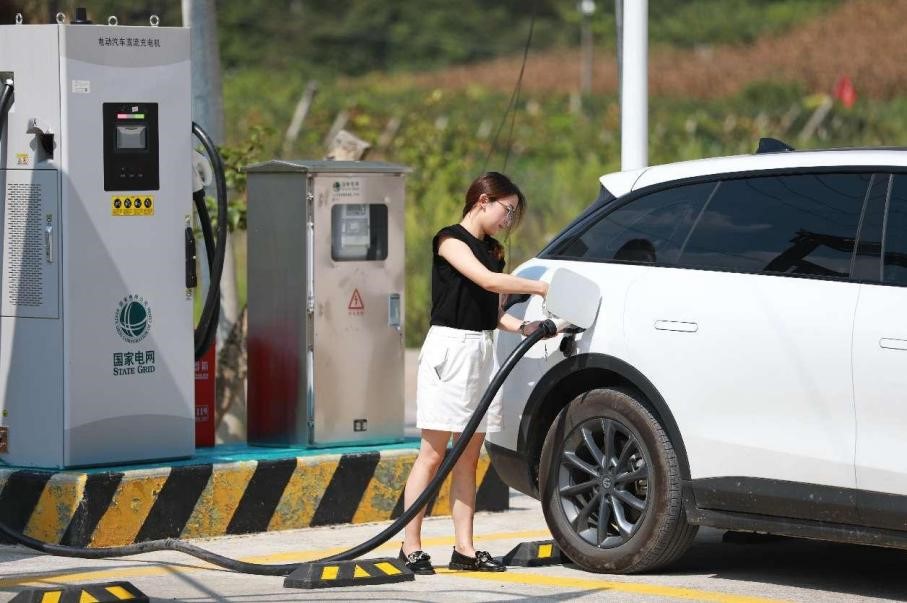
In China today, more and more consumers are embracing the new possibilities brought by electrification and smart technologies. Many now associate luxury less with logos and leather, and more with intelligent functions and comfort-oriented design. With continuous technological upgrades and rapid innovation, Chinese auto brands are steadily moving up the value chain and reshaping the meaning of “luxury vehicles.”

Not long ago, features such as air suspension were the exclusive preserve of imported high-end cars. Today, they are standard on many Chinese models.

“When I was considering an upgrade, I first looked at traditional fuel-powered models. Then I test-drove the Voyah FREE 318 and was immediately impressed by the smoothness and acceleration of the electric vehicle (EV),” said Mr. Zhang from east China’s Shandong province.

“What really stood out was its air suspension with a height adjustment range of 100 millimeters, which comes in four modes. It can lower the ground clearance to 113 millimeters to make entry easier for children and the elderly, or raise it to 213 millimeters to handle rough terrain.”

Air suspension is just one example. Once-premium features such as zero-gravity seats, multi-screen interaction, and automatic parking have become widely available in Chinese vehicles. As a result, even models priced under 300,000 yuan ($42,071) now deliver experiences once associated only with luxury cars.

Beijing resident Mr. Liu said that he once viewed price as the only criterion for a luxury car. “For me, the definition of ‘luxury’ has changed. A car that offers intelligent driving, a comfortable ride, and richer entertainment functions can be considered luxurious, even if it costs less than 300,000 yuan.”

For young consumers, technology matters most. Ms. Lin, a Gen-Zer consumer, recently purchased a G6 SUV from Chinese EV maker Xpeng. “This car feels cutting-edge. Its voice interaction works across all driving scenarios, while many traditional luxury models still rely on wired connections just to use CarPlay,” she said.

The redefinition of luxury cars has been driven by technological breakthroughs in China’s auto industry. Take air suspension: in the past, overseas suppliers charged steep prices, but Chinese automakers partnered with local component makers to develop air springs and electronic control systems independently. The localization of these technologies has driven costs down, lowering the entry price for vehicles equipped with air suspension from around 500,000 yuan to just 200,000 yuan.

As Chinese new energy vehicle brands expand their focus on intelligent functions and high-end configurations, the traditional markers of luxury – price and brand heritage – are giving way to new standards based on functionality and user experience.

While sub-300,000 yuan models offer more premium features than ever before, Chinese brands are also strengthening their presence in the upper tiers of the market.

Chinese EV manufacturer NIO has built a loyal customer base with refined design, attentive service, and innovative battery-swapping system. Li Auto has resonated with families by positioning its vehicles as “mobile homes,” capturing the hearts of high-end users who prioritize family-oriented experiences. 

AITO, an electric vehicle marque of Chinese vehicle manufacturer Seres Group, has carved out a niche with its “tech-driven luxury” brand identity, with its M9 model alone surpassing 200,000 units in sales. Meanwhile, Chinese auto giant BYD’s Yangwang brand emphasizes “extreme performance,” with its U8, capable of maneuvers such as “tank turns” and emergency floating, remaining a top seller among million-yuan luxury vehicles since its launch in September 2023.

Industry analysts noted that Chinese automakers are seizing opportunities in what were once bastions of traditional luxury brands. Some emphasize premium services, others appeal to family-oriented scenarios, while still others differentiate through advanced technologies, creating a dynamic and diversified competitive landscape.

According to the China Association of Automobile Manufacturers, in the first half of this year, Chinese passenger vehicle sales reached 9.27 million units, up 25 percent year on year, accounting for 68.5 percent of total passenger vehicle sales – an increase of 6.6 percentage points from the same period last year. 

Chinese new energy brands have demonstrated a clear advantage in the high-end market. According to vehicle insurance registration data for the first half of 2025, Chinese brands already made up over 80 percent of the market for new energy passenger vehicles priced above 300,000 yuan.

At the same time, Chinese brands such as Voyah have begun sharing their core technologies, including electric drive systems and hybrid solutions, with joint-venture partners. Traditional international luxury automakers like BMW, Audi, and Mercedes-Benz are also exploring cooperation with Chinese companies such as Huawei and Momenta on intelligent driving systems.

Experts emphasized that the rise of Chinese automakers up the value chain has not only reshaped consumer perceptions, but also accelerated the global transformation of the auto industry toward electrification and intelligent mobility.

How close are humanoid robots to everyday life?

By Wang Haonan, People’s Daily

The 2025 World Robot Conference opened in Beijing on August 18, bringing together more than 200 global robotics companies and unveiling over 100 new products. Just days later, the city hosted another event: the 2025 World Humanoid Robot Games, the first of its kind globally, which kicked off on August 14, drawing 280 teams from 16 countries and regions.

At the games, Chinese tech firm Unitree Robotics’s G1 humanoid robot completed the 100-meter obstacle race in 33.71 seconds, while its H1 robot won the 1,500-meter race in 394.40 seconds. Although these results fall short of professional human athletes, Unitree founder Wang Xingxing expressed confidence in the trajectory of progress: “Robots will soon outperform humans.”

Today, humanoid robots extend beyond racing tracks to precision factory tasks. Yet a pressing question persists: how close are they to seamless integration into everyday life?

According to Jia Baoxiong, a researcher at the embodied robotics center of the Beijing Institute for General Artificial Intelligence, humanoid robots have already demonstrated remarkable abilities in specialized tasks such as sprinting and dancing. 

But to transition into everyday life, breakthroughs are required in several areas: enhanced autonomy in open environments, greater precision and stability in movement and manipulation, and above all, safe and reliable interaction with humans, Jia added.

“We are seeing continuous breakthroughs in hardware performance, leaps in AI-driven decision-making, and stronger foundations in datasets and virtual simulation,” said Xu Xiaolan, president of the Chinese Institute of Electronics, at the World Robot Conference. Humanoid robots are now at a critical stage, moving from laboratory experimentation toward industrial application, Xu added.

Still, obstacles remain. Why do some robots stray from their lanes in a race or misfire in a boxing match? The explanation often lies in human involvement: many robots are still remotely controlled by humans, making performance dependent on operator skill and vulnerable to electromagnetic interference.

To encourage intelligence and autonomy, the 2025 World Humanoid Robot Games introduced innovative scoring. Few spectators realized that Tiangong Ultra, developed by the Beijing Humanoid Robot Innovation Center, and crowned champion of the 100-meter dash, was not actually the first to cross the finish line. But as the only competitor to complete the race using a fully autonomous navigation system without human control, its recorded time was multiplied by a 0.8 coefficient, giving it the highest overall ranking.

Smarter robots will gradually emerge through incremental breakthroughs, said Xiong Youjun, general manager of the Beijing Humanoid Robot Innovation Center. “Step by step, they will grow in capability until they can truly serve and assist us,” he added.

For now, hardware refinement remains essential, but according to Wang, the larger bottleneck lies in embodied intelligence itself, which has yet to reach maturity. This, he argued, is the key factor holding back large-scale adoption of humanoid robots in daily life.

In Jia’s view, humanoid robots are already delivering value in performance and entertainment, and when combined with wheeled platforms, they can be deployed for sorting and logistics in warehouses, supermarkets, and pharmacies. But moving them into households will require not just technical breakthroughs, but also solutions to ethical and cost concerns.

Price remains a critical challenge. Training embodied AI models requires vast amounts of real-world trajectory data. “High-quality data is scarce and expensive, driving up development expenses,” noted Xiong.

Ethical considerations are equally pressing. “How can we protect our privacy once humanoid robots enter homes? How should we coexist with them?” Such questions sparked vigorous debate at the 2025 World Robot Conference.

Despite challenges, the industry’s outlook is robust. According to the International Federation of Robotics, the global humanoid robot market is projected to grow at a compound annual rate of 71 percent from 2021 to 2030. The Chinese Institute of Electronics predicts that the nation’s humanoid robot market will reach 870 billion yuan (about $122 billion) by 2030.

Humanoid robots continue to evolve at a remarkable speed. The day they “run” into households and integrate into everyday life may not be as far away as it seems.

Technology breathes new life into intangible cultural heritage

By Zheng Hai’ou, People’s Daily

At a recent exhibition on intangible cultural heritage in northwest China’s Xinjiang Uygur autonomous region, technology transformed time-honored traditions into captivating new experiences. Ancient customs took on new vitality, leaving visitors marveling at displays they described as “magical” and “unbelievable.”

Stepping inside transported guests to ancient streets. Sparks from molten-iron fireworks illuminated the space, reviving the festive grandeur of traditional celebrations. A single drumbeat set digital folk dancers in motion on a screen, their movements shifting with the rhythm. With a shadow puppet rod in hand, spectators themselves became performers, staging their own shadow plays.

The combination of technology and intangible cultural heritage is steadily becoming an integral part of everyday life. Online, creative videos powered by AI generation, motion capture, and other technologies are giving heritage a cool, futuristic look. Viewers can now watch porcelain kilns transform, witness the hidden intricacies of double-sided embroidery, or observe how shadow puppeteers bring their characters to life. Cultural ideas, craftsmanship, and aesthetic values once hidden from view are now made visible and accessible. 

China’s wealth of intangible cultural heritage reflects the accumulated skills, wisdom, and artistry handed down through generations. Today, new technologies like 3D modeling, holographic projection, AI, and augmented reality are breathing fresh vitality into these traditions.

On one hand, they present culture in visually striking, dreamlike forms that particularly resonate with younger audiences. On the other hand, they illuminate the historical depth and humanistic values embedded in traditional practices, offering insights into Chinese perspectives on the universe, society, and morality.

Intangible cultural heritage techniques are often intricate and highly specialized. Technology helps to distill their essence, lowering the barrier for appreciation and participation.

“In the past, I could only admire silk patterns on finished products. Now, after experimenting with an AI weaving model, I can design my own patterns and discover the scientific principles and artistic meanings embedded in our ancestors’ motifs,” said a young visitor at the Xinjiang exhibition. 

With a simple hand-drawn sketch, the model instantly generated digital silk patterns. Traditional motifs such as cloud-and-thunder patterns or lotus scrolls shifted on screen, transformed by gradients, overlays, and other modern effects, brought to life by digital technology.

Interactive, game-like experiences allow audiences to both enjoy and learn, turning participation into an act of discovery. More importantly, the combination of technology and intangible cultural heritage lowers entry barriers, inviting ordinary people, especially the younger generation, into the “garden” of traditional Chinese culture to experience its richness.

Folk literature, traditional music, dance, fine arts, drama, and craftsmanship hold vast reservoirs of information, making intangible cultural heritage a valuable resource for scientific and technological innovation. China is home to nearly 870,000 intangible cultural heritage items, over 100,000 representative projects at all levels, and more than 90,000 recognized inheritors. Preserving these treasures through digitization and innovative applications not only ensures their transmission but also provides powerful momentum for technological advancement.

By creatively integrating technology with intangible cultural heritage, ancient traditions are given new brilliance, while channels of preservation and communication expand. This synergy is mutually enriching: culture gains vitality, and technology draws inspiration from the deep well of tradition.

SCO countries join hands to build a bright digital future

By Huang Fahong, Hu Renba, Yin Xiaoyu

In recent years, the Shanghai Cooperation Organization (SCO) has made significant strides in advancing digital cooperation under the framework of the “Digital Silk Road.” From cross-border 5G coverage to interconnected e-commerce platforms, from digital payment to the growing use of AI, member states are deepening collaboration through innovative practices that are reshaping the regional digital landscape.

In northwest China’s Xinjiang Uygur autonomous region, for instance, animal health workers can record vaccinations and file reports directly through a mobile app. When livestock are ready for sale, entering a phone number instantly retrieves immunization records from the past three years. 

Behind these user-friendly functions lies a paperless animal disease prevention system and an electronic quarantine certification system, developed by a local information technology company based in a cloud computing industrial park in Karamay.

Karamay is home to the Xinjiang branch of the China-SCO Big Data Cooperation Center. As of June this year, the branch had hosted nine training sessions for over 20 government departments, research institutes, think tanks, telecom operators, enterprises, and universities from SCO member states, attracting more than 300 participants. It has become an important platform driving digital transformation across the SCO.

Digital transformation is increasingly recognized as a driver of global, inclusive, and sustainable growth. Under the SCO framework, China has taken active steps to promote cross-border connectivity. Projects such as the China-Kyrgyzstan-Uzbekistan fiber-optic cable have reduced regional network latency by 40 percent, significantly enhancing data transmission efficiency. 

At the industrial park along Egypt’s Suez Canal, China’s BeiDou navigation system and an integrated digital service platform are providing businesses with smart solutions. In Uzbekistan, AI-enabled “virtual classrooms” are expanding access to vocational training. By building a comprehensive network of “hard connectivity plus soft services,” the SCO is laying the groundwork for smoother trade flows and accelerated industrial upgrading.

Launched in March, the MeetSOHO Silk Road e-commerce platform has become an important component of the China-Central Asia trade facilitation mechanism. Nearly 30 buyers from Central Asia are already engaging with more than 500 suppliers from east China’s Jiangsu province, underscoring the vitality of digital trade.

Global digital trade is emerging as a powerful engine of international commerce. In 2024, China’s cross-border e-commerce imports from other SCO member states increased by 34 percent year on year. The China-SCO Local Economic and Trade Cooperation Demonstration Area has established a Silk Road e-commerce service hub to address practical challenges such as cross-border settlement. Meanwhile, the Shanghai Electronic Certification Authority is enabling digital signatures, encryption, and seals for cross-border contracts, serving more than 100 clients in both China and Russia.

“Developing the digital economy is a shared aspiration of all countries,” said Ahmed Darwish, former minister of state for administrative development in Egypt. “The SCO provides a technology-driven, innovation-led, and fair platform that is beneficial to all.”

On the fast track of digital technology, China has provided systematic solutions to support SCO partners in pursuing technological and industrial transformation, making important contributions to bridging the digital divide.

At a Luban Workshop in Kazakhstan, for example, students use tablets to control miniature self-driving vehicle simulations that respond to traffic lights and road conditions. With Chinese-provided technology and equipment, D. Serikbayev East Kazakhstan Technical University became the first in the country to offer a smart transportation course to address urban congestion.

So far, China has established 10 Luban Workshops in other SCO countries, providing training in digital technologies such as AI, big data, blockchain, cloud computing, and 5G.

SCO digital cooperation now extends to frontier technologies including AI, internet of things, and blockchain. By sharing innovations and practical applications, member states have strengthened their collective digital capabilities and expanded technology adoption across industry, transport, agriculture, healthcare, education, and energy.

From fiber-optic networks spanning the Tianshan Mountains to cross-border e-commerce platforms connecting Eurasia, and from remote medical services to data-sharing mechanisms, digital technology is becoming a bridge linking peoples and fostering shared prosperity. Looking ahead, the SCO will continue advancing innovative projects, working together to build a brighter digital future.

SCO upholds the Shanghai Spirit and stays true to its founding mission

By Guo Jiping, People’s Daily

The Shanghai Cooperation Organization (SCO) is the first intergovernmental organization initiated by China and named after a Chinese city. Since its founding in 2001, the SCO has followed the guidance of the Shanghai Spirit, forging a distinctive path of peaceful development and presenting a compelling model for building a new type of international relations.

The Shanghai Spirit, often described as the “root” and “soul” of the SCO, embodies the principles of mutual trust, mutual benefit, equality, consultation, respect for diversity of civilizations and pursuit of common development.

China, as the initiator of the Shanghai Spirit, has consistently integrated these principles in its actions. At the SCO Summit 2025 in Tianjin, member states once again held high this banner, reaffirming their commitment to the organization’s original aspirations and advancing steadily toward building a community with a shared future for humanity.

Mutual trust and mutual benefit: the foundation of cooperation

The SCO traces its roots to the “Shanghai Five” mechanism, which was established upon two important agreements on confidence-building and mutual reduction of military forces in border areas.

Since its founding, the SCO has further consolidated this foundation by adopting two cornerstone documents – the SCO Charter and the Treaty on Long-Term Good-Neighborliness, Friendship and Cooperation – codifying into law a firm commitment to political trust and good-neighborly friendship.

At each SCO summit, leaders have deepened policy dialogue and coordination, respected each other’s core interests and legitimate concerns, addressed issues proactively, and provided steadfast strategic direction, setting a commendable example for bridging the global trust deficit.

Equality and consultation: the principle of engagement

From carrying forward the historical wisdom of the Five Principles of Peaceful Coexistence to promoting the vision of building a community with a shared future for humanity, the emphasis on equality and consultation embedded in the Shanghai Spirit has distinguished the SCO as a pioneering model of international organization.

It rejects the hegemonic logic that “might makes right,” transcends outdated zero-sum thinking and the rhetoric of civilizational clashes, and upholds equal consultation, blazing a new path for the development of international organizations.

As former SCO Secretary-General Rashid Alimov observed, what sets the SCO apart is that the voice of each member state is heard equally, and all members strive to sit around a “round table without sharp corners,” seeking maximum common ground for shared development while safeguarding their national interests.

Respect for diversity of civilizations: a path of harmony and inclusiveness

Central to the Shanghai Spirit is a commitment to equality, dialogue, and inclusiveness among civilizations. It fosters peaceful coexistence and mutual enrichment, regarding mutual learning as the most solid foundation of SCO’s development and people-to-people connectivity as its strongest driving force.

By embracing openness, inclusiveness, and mutual learning, regional countries have advanced the Global Civilizations Initiative and expanded cooperation in science and technology, education, arts, health, and tourism. These efforts respond to the aspirations of people for a more fulfilling cultural life and deeper connections.

Common development: a path to shared prosperity

The Shanghai Spirit resonates with the Silk Road spirit of peace and cooperation, openness and inclusiveness, mutual learning and mutual benefit, injecting fresh momentum into SCO’s development.

The organization’s share in the global economy continues to grow, and its contribution to world economic growth is steadily increasing. The Belt and Road Initiative is also aligning more closely with the development strategies and cooperation initiatives of regional countries, while connectivity projects are unleashing robust momentum for cooperation and creating pathways for high-quality, sustainable development.

Today, as changes unseen in a century accelerate across the world, the international landscape is undergoing profound transformations, with regional conflicts flaring up one after another. Deficits in peace, development, security, and governance are growing even more pronounced.

By upholding the Shanghai Spirit, SCO countries stand firmly on the right side of history and on the side of human progress, practice true multilateralism, and advocate an equal and orderly multipolar world and a universally beneficial and inclusive economic globalization.

As an important platform for solidarity and self-strengthening among the Global South, the SCO brings together tremendous strength to improve global governance and advance a community with a shared future for humanity.

Taking the SCO Tianjin Summit as a new starting point, the SCO will continue to carry forward the Shanghai Spirit, illuminating the path toward an SCO community with a shared future and contributing greater stability and hope for development and progress to a world in turbulence and transformation.

Forging growth together: China-SCO economic and trade partnership gains momentum

By Li Yingqi, Huan Xiang, People’s Daily

According to statistics recently released by China’s General Administration of Customs, in the first seven months of this year, China’s total imports and exports with other Shanghai Cooperation Organization (SCO) members reached 2.11 trillion yuan ($295.04 billion), marking a 3 percent increase year on year, a record high for the period.

As cooperation deepens across trade, investment, connectivity, and other fields, the SCO is charting a path of mutual benefit and shared prosperity, injecting strong momentum into regional development.

On the shores of Jiaozhou Bay in Qingdao, east China’s Shandong province, the China-SCO Local Economic and Trade Cooperation Demonstration Area (SCODA) bustles with activity. Recent examples include a truck laden with fresh fruits and vegetables departing Qingdao’s international road transport assembly center for Moscow (reaching its destination in under a week), and 388 new energy vehicles clearing customs at the SCO International Hub Port Automobile Trading Center before shipment to Dubai. 

Such scenes vividly illustrate the SCODA’s role as a dynamic hub where people, goods, and commerce converge.

The demonstration area traces its origins to Chinese President Xi Jinping’s address at the 2018 SCO Qingdao Summit, where announced that the Chinese government supports building a demonstration area in Qingdao for China-SCO local economic and trade cooperation. Since its inception, the area has been exploring innovative models of local cooperation.

For Li Zhenye, deputy general manager of Qingdao Hongzhu Agricultural Machinery Co., Ltd., the platform has delivered tangible results. “We have participated in the SCO International Investment and Trade Expo for four consecutive years. It has helped us build lasting connections with customers from many SCO countries. In 2024, we hosted nearly 50 business delegations from SCO members, and exports to other SCO and Belt and Road partner countries now account for more than 80 percent of our total,” Li said.

According to Irfan Shahzad Takalvi, founder of the Eurasian Century Institute, a think tank in Islamabad, Pakistan, China has launched a series of cooperation platforms in recent years, facilitating the movement of goods, technology, and talent. These platforms have enabled SCO countries to share development experience, adopt mature technologies, and train professionals, promoting economic growth across the region,” he noted.

A recent demonstration of enhanced connectivity occurred on May 20, when a China-Central Asia freight train departed Tianjin Port for Xinjiang’s Horgo crossing. Carrying 50 containers from South Korea, it completed the journey in two weeks, reducing transit distance by 800 kilometers compared to traditional route.

Today, Tianjin Port connects with over 500 ports in more than 180 countries and regions and has also expanded rail cooperation with SCO member states such as Russia, Kazakhstan, Uzbekistan, and Belarus, making it a vital bridge between the SCO and global markets.

By opening more efficient regional logistics corridors, strengthening resilient industrial and supply chains, and enhancing trade and investment cooperation, China and other SCO countries are steadily reaching new heights of practical economic engagement. In 2024, trade between China and SCO member states, observer states, and dialogue partners reached a record high of $890 billion, underscoring the dynamism and promising outlook of regional commerce.

The vibrancy of SCO economic and trade cooperation is equally evident at the Horgos International Border Cooperation Center on the China-Kazakhstan border. From Kazakh camel milk and Kyrgyz honey to Uzbek cherries and Tajik dried fruit, thousands of products from more than 40 countries fill the stalls of over 5,000 shops and 1,200 merchants. As the largest cross-border tourism and shopping zone in northwest China, it offers a vivid window into the flourishing economic cooperation between China and its SCO partners.

In the first seven months of this year, Horgos customs supervised 35,500 tons of goods with a total value of 3.65 billion yuan, representing year-on-year increases of 50.1 percent and 37.7 percent year on year, respectively. The center also handled 5.69 million cross-border travelers, a 66 percent increase over the same period last year.

Behind this vitality are streamlined and efficient customs services. At the road port of Horgos, 24-hour customs clearance ensures the daily departure of over 1,000 trucks bound for Central Asia and Europe. Simplified procedures have reduced clearance steps by 60 percent, boosted vehicle throughput by 80 percent, and cut overall business costs by 50 percent. The city of Horgos is accelerating the development of a national land port logistics hub, continuously improving port functionality and clearance efficiency.

“The one-stop inspection model and round-the-clock appointment-based clearance have further enhanced cross-border trade efficiency, creating a fast track for deeper economic cooperation between China and other SCO countries,” said Guo Ying, head of customs at the Horgos International Border Cooperation Center.

Political dialogue is the only way to break the Middle East security deadlock

By Pei Guangjiang, Huan Xiang, People’s Daily

Israel’s recent decision to authorize a military takeover of Gaza City under the banner of “defeating Hamas” has once again pushed the Middle East toward the brink. With Israeli forces already encircling the northern Gaza Strip in preparation for the takeover, the situation in the Middle East is moving in an increasingly dangerous direction.

In recent weeks, the Middle East, situated at the crossroads of the Mediterranean, Black, Caspian, Red, and Arabian Seas, and bridging Asia, Africa, and Europe, has faced mounting security alarms, sparking deep concern across the international community. Waves of escalating conflicts, unrelenting airstrikes, and direct confrontations threaten to drive the situation further out of control, with the risk of igniting a broader regional war. 

The international community must soberly recognize that military intervention only deepens insecurity, and reliance on force only compounds instability. Genuine peace in the Middle East can only be achieved through political solutions, not battlefield victories.

Some media outlets have described today’s Middle East as an arena where “might makes right.” This view, which glorifies “peace through strength,” is grounded entirely in the logic of power politics. Elevating coercive deterrence above international rules and norms is tantamount to pouring oil on fire, serving only to heighten the risk of war. Strength alone cannot deliver lasting peace; when power becomes the sole yardstick of right and wrong, international order and justice will be inevitably swept away.

Instability in the Middle East threatens global stability. The region cannot remain forever under the shadow of conflict; its people deserve a future free from fear. To restore peace and stability, political dialogue is the only path forward.

At the heart of regional tensions lies the Palestinian question. The humanitarian catastrophe in Gaza must not be allowed to worsen, the legitimate aspirations of the Arab people must be addressed without delay, and the voices of justice across the Islamic world cannot be ignored. The two-state solution remains the only realistic way forward. The establishment of an independent state of Palestine that enjoys full sovereignty on the basis of the 1967 borders and with east Jerusalem as its capital is the only path to peaceful coexistence between Palestine and Israel and to eliminating the root causes of regional tension.

The Iranian nuclear issue provides another reminder of the necessity of dialogue. Once a potential example of resolving disputes through negotiation, it was derailed by the unilateral withdrawal of a major country from the nuclear agreement and the subsequent policy of maximum pressure. That strategy closed the door to compromise and revived confrontation. 

While Israel and Iran have reached a ceasefire arrangement, the underlying tensions remain unresolved. Persistent reliance on sanctions and threats by some Western countries has only aggravated the situation, highlighting the shortcomings of their approach to security governance.

The Israel-Iran ceasefire must be fully and effectively implemented. All parties to the conflict should act with the highest sense of responsibility, creating conditions for further dialogue and an outcome acceptable to all. Iran’s commitment not to pursue nuclear weapons should be taken seriously, and its right under the Treaty on the Non-Proliferation of Nuclear Weapons to the peaceful use of nuclear energy should be respected. The international community should work together to foster an environment conducive to negotiation.

Protecting civilian lives must remain the foremost priority. The conflict in Gaza has dragged on for 21 months, pushing humanitarian conditions to unprecedented levels of deterioration. All parties must strictly comply with international law, prioritize civilian welfare, end attacks on civilian targets, and facilitate the evacuation of third-country nationals. The international community, through UN humanitarian agencies, should increase assistance to conflict-affected areas in the region, while countries with significant influence over the parties should adopt an impartial and responsible stance, playing a genuinely constructive role rather than pursuing narrow agendas.

Dialogue and communication remain the only viable path to lasting peace. Standing at the crossroads of peace and conflict, the future direction of the Middle East tests the conscience and responsibility of all parties. China’s position on Middle East issues has been consistent: upholding fairness and justice, and advocating common security. The international community, especially major countries with significant influence, should abandon geopolitical calculations, take concrete actions, support the UN in playing a coordinating role, and work together to build a balanced and orderly regional security framework conducive to peace.

(Pei Guangjiang and Huan Xiang are senior editor and international affairs commentator of the International News Department of People’s Daily, respectively.)

Strengthening cooperation on poverty reduction for shared prosperity and development

By Qiang Wei, People’s Daily

The year 2025 marks the “Shanghai Cooperation Organization (SCO) Year of Sustainable Development.” Poverty reduction and development is a shared aspiration of SCO member states and remains a central priority for bilateral and multilateral cooperation under the SCO framework.

In recent years, China has actively implemented the Global Development Initiative, aligning high-quality Belt and Road cooperation with regional mechanisms and the development strategies of SCO member states. By promoting agricultural technologies, cultivating new talent, and building exchange platforms, China has contributed its wisdom and strength to agriculture-driven poverty alleviation and economic growth in other SCO member states.

This year, apple orchards in Kyrgyzstan enjoyed a bumper harvest, filling local farmers with optimism. The apples, renowned for their diverse varieties, bright colors, and juicy flavor, not only meet domestic demand but are also exported in significant volumes to Russia, Kazakhstan, and beyond. This success stems from sustained agricultural technology exchanges and cooperation between China and Kyrgyzstan.

While Kyrgyzstan’s Chuy Region offers favorable conditions for apple cultivation, its cold winters demand frost-resistant varieties. Chinese experts have responded by breeding and selecting high-yield varieties suited to the local climate. Last year, 60,000 rootstocks were planted in a demonstration orchard, while Chinese experts traveled frequently between the two countries to share expertise in breeding and orchard management, helping local farmers raise yields and incomes.

China has likewise deepened agricultural technology cooperation with other SCO countries to advance poverty reduction. In a demonstration farm in North Kazakhstan Region, Chinese experts have continued wheat introduction trials and promoted wide-row sowing techniques, boosting yields by 20 to 30 percent compared with local varieties. 

In Uzbekistan’s Sirdaryo Region, a China-Uzbekistan agricultural demonstration park has introduced Chinese-developed solar-powered irrigation and smart water-fertilizer systems, reducing water consumption while sharply increasing cotton output. 

In Belarus, the China-Belarus Agricultural Science and Technology Demonstration Park has deployed co-developed drought-resistant seeders, planting high-quality, high-yield, and resilient wheat varieties bred in China.

Capacity building has also been a priority. On July 17 this year, the first group of 292 Pakistani trainees completed a three-month training program in Yangling, northwest China’s Shaanxi province, under the Prime Minister’s Initiative for Capacity Building of 1,000 Agricultural Graduates in China, a government-to-government program launched last year.

As a concrete outcome of the consensus reached by the leaders of both countries on strengthening agricultural cooperation, this project will bring 1,000 young Pakistani students in agricultural sciences to China in groups for training.

China regularly hosts thematic workshops and invites SCO technical experts to exchange experiences in agricultural modernization and rural revitalization. By June this year, the SCO Demonstration Base for Agricultural Technology Exchange and Training in Yangling had organized over 120 training programs, including agricultural aid and specialized sessions, training more than 2,400 agricultural officials and technicians from SCO and other developing countries. More than 300 officials have joined poverty reduction workshops, while over 42,000 participants have benefited from online courses.

Last year, during a poverty reduction and development workshop for SCO countries in Qingdao, east China’s Shandong province, a business matchmaking session enabled participants to showcase unique agricultural industries and resources. The event led to more than 20 cooperation agreements in areas such as agricultural trade and technology exchanges. 

Poverty eradication and rural revitalization remain fundamental SCO objectives. Since assuming the rotating presidency of the SCO, China has worked with all parties under the theme of the “SCO Year of Sustainable Development” to enhance policy dialogue, share its poverty reduction experience, expand practical cooperation, and help more countries explore development paths suited to their national conditions.

In May 2023, China and Uzbekistan established a sub-committee on poverty reduction cooperation under their intergovernmental cooperation committee, the first sub-committee on poverty reduction that China established with other countries at the governmental level. In May 2025, the SCO Forum on Poverty Reduction and Sustainable Development was held in Xi’an, Shaanxi province, providing another vivid example of China and other SCO member states joining hands to advance poverty reduction and common development.

“The SCO will continue to strengthen its platforms for joint poverty alleviation and sustainable development, working together to build a future for our peoples that is sustainable, fair, and secure,” said SCO Deputy Secretary-General Janesh Kane.