Alkali, NEDC and the footprints of a patriotic servant

By Murtala Abubakar

The Boko Haram crisis in North-East Nigeria has indeed set the economy of the region several years back. The North East region of Nigeria, comprising of Borno, Adamawa, Yobe, Bauchi, Gombe and Taraba States, has been ravaged by the Boko Haram insurgency since 2009. Estimates of the negative impacts of the crisis include approximately 14.8 Million people adversely affected, about 2.3 Million Internally Displaced Persons (IDPs), including over 100,000 Nigerian Refugees in neighbouring countries, over 20,000 deaths and even more people severely injured or missing.
Many of the region’s residents now live in IDP camps, with host families away from their original homes and in host communities. Many host communities are severely stressed, having to cater for the massive influx of displaced people from places directly hit by Boko Haram.
The Boko Haram crisis has also resulted in extensive damage to social, economic, health and market infrastructure. Numerous homes have been destroyed. Many schools, hospitals, markets and places of worship have been destroyed or closed. Many communities have been completely abandoned, especially in Borno and Yobe. There are limited numbers of teachers, doctors and other health workers, with over 500 teachers killed and many fleeing the region. While there is still a semblance of economic activity in some parts of the region, the economy of the region has virtually collapsed, with many parts of Borno, Yobe and Adamawa, having lost key markets and other market-related infrastructure.
Returning the region to normalcy is one of the highest priorities of the Muhammadu Buhari led administration which has high on its priority list, bringing an end to the war, effectively handling the humanitarian crisis and implementation of an effective rehabilitation and resettlement programme, as well as the implementation of a solid peace-building, reconciliation and de-radicalization framework; as well as the effective reconstruction of social and physical infrastructure.
The above stated indeed necessitated the establishment of the North-East Development Commission (NEDC). The objective of the NEDC is to lead the reconstruction and development of the region by consolidating and replacing other initiatives such as the Victims Support Fund (VSF), Presidential Initiative on the North East (PINE), and Presidential Committee on the North-East Initiative (PCNI).
We must admit that the task before NEDC is indeed a gargantuan one owing to the undeniable fact that North-East Nigeria has been robbed of its glory and the need to begin the reconstruction of the region cannot be overemphasized. I recall when the establishment of the NEDC was given the all-clear to commence operations, there came the question of who would lead the organization to achieve its mandate to the people of the region most proactively and efficiently and within a time frame.
Consequently, Mohammed Alkali was nominated by President Muhammadu Buhari as the substantive managing director and his nomination was subsequently confirmed by the National Assembly and then came the burden of expectations. The name Mohammed Alkali didn’t particularly ring a bell, and in some quarters questions were raised on his capacity to deliver on the mandate of the NEDC.

Mohammed Alkali might not be the darling of the newspapers, and this is understandable because of the responsibilities on his shoulders and the expectations from the president and other critical stakeholders who are desirous of a return to normalcy in North-East Nigeria.
As a start, before his appointment, Mohammed Alkali was the Executive Director, operations of the Bank of Industry (BoI), he has a first-class honours degree in Accountancy from Bayero University, Kano. He also holds a Master of Science degree in Accounting and Finance from London School of Economics at the University of London, United Kingdom. He is also an alumnus of the prestigious Harvard Business School, Harvard University; the Booth School of Business at the University of Chicago; and the Columbia Business School at the Columbia University. These are indeed very intimidating credentials if we must admit. However, the interesting aspect of Mohammed Alkali is the fact that he has been a silent achiever all of his work life. It is no news that he has kept a low profile as the managing director of the NEDC.
This silent attribute of him would not have come to the fore but for the activities of some mischief makers that attempted to drag him to the murky water of politics by making some wild allegations with regards his stewardship at the NEDC.
This I must confess indeed motivated me to write about this unassuming individual that has hit the ground running since his appointment as the managing director of the NEDC. Please permit me to reel out some of the modest achievements of the NEDC under the leadership of Mohammed Alkali.
The NEDC had been implementing impactful and incremental interventions designed to address most of the immediate challenges bedevilling the North-east states. For instance, the NEDC established a six billion naira Education Endowment Fund to resuscitate the regions devastated education sector and rebuild the human capital to provide an avenue for the engagement of over 20,000 beneficiaries annually to enable them access to academic and professional capacity development opportunities in various fields.
The NEDC is also implementing the rehabilitation of drinking water and sanitation facilities in states in North-East Nigeria. This project is part of the Multisectoral Crisis Recovery Project (MCRP) with the support of the World Bank.
The NEDC is also implementing about 1, 310 Rapid Response Intervention in Projects in all the 112 local governments of the North East Region. This is in addition to the implementation of an Integrated Agriculture Programme involving the provision of agricultural machinery and equipment, seeds, fertilizers, agrochemicals and extension service logistics vehicles to enhance the production capacity of smallholder farmers in North East and enable them to regain their lost livelihoods.
The list is indeed endless, and for some of us from the North East, we are impressed with the level of interventions of the NEDC in rebuilding North-East Nigeria. It is indeed understandable if some individuals and groups attempt to rubbish the leadership strides of the managing director because their position is hinged on either mischief or ignorance. But whatever be the case it doesn’t change the fact that the NEDC under Mohammed Alkali has lived up to expectation in ways too numerous to mention.
I must state that the managing director of the NEDC is an exceptional breed and one that understands the need for the sincerity of heart and purpose in the administration of the affairs of the agency from the perspective that it is first an interventionist agency and secondly the fact that the people of North-East Nigeria have suffered indeed enough of the atrocities of the Boko Haram terrorist group.
I am not sure that those that made futile attempts at assassinating the character of the managing director were probably sad that for once that an individual heading such a sensitive interventionist agency would stand on the side of the people and not a select few. No doubt, the NEDC looks like a cash cow, but the man at the helm of affairs is not the everyday politician that would embark on grandstanding activities at the detriment of the core job for which he was so appointed.
I am glad that the mischief-makers who wanted to pull him down only succeeded in bringing his tangible achievements into the public space. This is indeed a blessing in disguise, and a reason why Mohammed Alkali must not lose focus because the hawks waiting to devour him are innumerable.
Mohammed Alkali must match his words with action in ensuring that the reconstruction of communities in North-East Nigeria receives the much-needed attention in fulfilment of the mandate of the NEDC. I am sure his consciousness must be awakened to the fact that all eyes are on him. There would be no hiding place for him in the event of a deviation from the full implementation of the mandate of the NEDC.
I am glad that so far, his stewardship in the NEDC is that of an unalloyed commitment to setting the foundation for the implementation of an effective rehabilitation and resettlement programme for the North East region in Nigeria. Credit must also be given to other members of the management of the NEDC for their commitment to teamwork towards the full implementation of the objectives of the NEDC.
Mohammed Alkali is indeed a patriotic servant and one that is more than committed to the restoration of normalcy in North-East Nigeria in fulfilment of the strategic objective of the current administration in establishing the NEDC. The case of Mohammed Alkali is indeed the footprints of a patriotic servant.

Abubakar is a humanitarian coordinator and activist based in Abuja.

Scorecard: What Sadiya Farooq Has Done in One Year

By Best Agbese

I recall when the president announced the creation of a new ministry known as the Humanitarian Affairs, Disaster Management and Social Development, there was a bit of scepticism in the polity. It was argued in some quarters that the president in creating the new Ministry was duplicating portfolios by creating jobs for the “boys.”

One year down the line, those postulations have indeed been punctured by the superlative performance of the honourable minister, Hajia Sadiya Farouq. This indeed reminds me of the popular saying what a man can do a woman can do better. Hajia Sadiya Farouq did not only surprised many of us with her one-year scorecard, she indeed proved her mettle and justified the confidence reposed in her by President Muhammadu Buhari to head such a sensitive ministry whose activities revolves around the implementation of the social intervention programmes of the government that would have a direct impact on the lives of the ordinary citizens in the country.

I am not just a fan of Hajia Sadiya Faroug; I would call myself an adherent of her infectious mien that speaks volume of a woman on a mission for the betterment of the lives of the ordinary citizens in the country.

She comes across as someone that is very self-aware of herself and others around her. She knows who she is and what she wants, and this much she has exhibited in her duties as the honourable minister of humanitarian affairs, disaster management and social development in Nigeria.

In one year in the saddle, Hajia Sadiya Farouq rose to the occasion in the implementation of various social invention programmes in the country, so much so to the envy and consternation of some individuals and organizations that thought it would be business as usual in running the affairs of the Ministry. But she proved all of them wrong and has continued to forge ahead not mind the scathing attacks on her personality and efforts in the past year.

I make bold to say that she has indeed raised the bar for political appointees in the country. She has displayed uncommon courage in the face of stiff attempts to blackmail her into submitting to the whims and caprices of those groupings that do not wish the country well.

Make no mistakes; this piece is not about her personality alone, but also the lofty heights she attained within one year. It can thus be only imagined what the story would be after four years. Your guess is as good as mine.

I would start with the N-Power initiative, which has generated quite some uproar in the country. What people do not know is that the minister took a very bold step in repositioning the scheme through the introduction of the Batch C stream to accommodate more youths. This is sufficing to state that within 24 hours of the introduction of the Batch C stream, over one million youths made applications. And at the close of the application process, a total of 5,042,001 applications were received from Nigerians. This fact implies that indeed the minister understood the need to expand the net to accommodate more Nigerians in dire need of some form of engagements.

This, in my opinion, is thinking outside the box, which is a necessary skill in governance in modern times that entails questioning the status quo regularly. Make nonconformity the regular conversation, take a broader perspective and oscillate between uncommon content, draw a picture as a team and draw a picture of your challenge and possible ways to solve it.

The above listed are some of the attributes the minister has brought to bear in the discharge of her duties in the past one year in the saddle as the honourable minister of the ministry of humanitarian affairs, disaster management and social development.

Under the National Social Investment Programme N-SIP, cutting across the National Home Grown School Feeding Programme, (NHGSF, Government Enterprise and Empowerment Programme, (GEEP), N-Power and the National Cash Transfer Programme, over 6.1 million Nigerians have been captured in the database of the national social intervention register. It is also estimated to have impacted the lives of over twelve million Nigerians, including several millions of indirect beneficiaries.

It is indeed a one year of service to humanity for Hajia Sadiya Farouq through numerous initiatives that have had far-reaching benefits to the generality of Nigerians directly and indirectly. The intervention of the Ministry during the COVID 19 pandemic is another point of reference. The efforts of the Ministry and Agencies under it have been outstanding. They have been involved in the distribution of different kinds of palliatives to the most vulnerable in the society, which includes refugees and IDP’s, People Living with Disabilities, Older Persons, Trafficked Persons, Orphans, the Poorest of the Poor in Communities, Petty Traders and other Persons of Concern.

The palliatives include foodstuffs like rice, maize millet, sorghum, vegetable oil, tomato paste, milk, sugar and spaghetti. Also, Four months of stipends paid at once to those benefiting from the Conditional Cash Transfer to cushion the effect of COVID 19, Loans and moratorium to trader and market moni beneficiaries, take-home food rations for Households of Children enrolled in the National Home -Grown School Feeding Programme and others too numerous to mention.

Under the supervision of Hajia Sadiya Farouq, the Ministry held the first-ever Civil Security Cooperation Workshop (CISEC) which birthed the Civil Security Coordination Framework out of which the National Humanitarian Coordination Forum was created and inaugurated earlier this year to ensure the smooth conduct of all humanitarian activities in the country.
Other structures include the Humanitarian Policy Dialogue Forum which was established to provide a forum in which the Ministry will interact with all CSO’s and NGOs to give room to interact and review all government policies and humanitarian activities. This is indeed, brilliant.

I dare to say that if all political office holders take a cue from Hajia Sadiya Farouq, Nigeria would indeed be a better place for all because, in this critical point of our existence, there is the urgent need for proactive actions towards addressing the myriads of challenges confronting the country.

I can go on non-stop on the exploits of Hajia Sadiya Farouq in the past one year without abate because her dedication and grasp of issues are indeed commendable and worthy of emulation. I can guess that President Muhammadu Buhari would be most pleased with the conduct of Hajia Sadiya Farouq, which has translated to the successes recorded in the implementation of the social intervention programmes of the government.

Some might want to argue that one year is too short to make an assessment, but I dare say that with the way and manner the minister has carried on, it is evident that Nigerians would see more of proactive measures in governance aimed towards delivering the dividends of democracy for all and sundry. This is my charge to Hajia Sadiya Farouq: she should stay focused and refused to be distracted by the activities of mischief makers that are bent on blackmailing her into submission to their whims and caprices.

It is indeed a statement of the fact that Hajia Sadiya Farouq is the star performer in the cabinet of President Muhammadu Buhari despite the avalanche of attacks on her personality by refusing to play ball and maintain the statuesque where a select group feasted on our commonwealth recklessly.

If not for anything the actions and inactions of Hajia Sadiya Farouq at the helm of affairs of the sensitive Ministry of humanitarian affairs, disaster management and social development give hope to Nigeria that some individuals are passionate about sustainable growth and development in the country.

Hajia Sadiya Farouq leads this pack of dedicated Nigerians that are burning alive with passion for Nigeria. I must not also fail to appreciate President Muhammadu Buhari for the choice of Hajia Sadiya Farouq in the implementation of the social intervention programmes of the government.

It is not yet Uhuru as there a lot that still needs to be done. However, this cannot take away the fact the in the past one year, the scorecard of Hajia Sadiya Farouq has been most brilliant, coupled with the transparent way she has carried on as a minister of the federal republic of Nigeria evident in passion, kindness, creativity and innovation. Indeed the past one year in the activities of the Ministry of humanitarian affairs, disaster management and social development has been phenomenal and worthy of emulation as she remains one of the performing ministers of the federal republic of Nigeria.

Agbese is a researcher at Dundee University, United Kingdom.

Senate never asked our management staff to step aside – NTA

The Nigerian Television Authority has denied reports that its management staff have been asked to step aside by the Senate Committee on Finance.

The government-owned broadcast network made this known in a statement signed by its Deputy Director Corporate Affairs, M.C. Moses, on Wednesday.

There were reports that the Senate had recommended the dismissal of the NTA hierarchy over alleged non-profitability of the venture with StarTimes which had been since 2008.

However, in reaction, the NTA expressed concerns over the “inaccurate and fallacious story being circulated”, describing it as “untrue and thrives only in the reign of malice and mischief”.

The statement added that the NTA as a corporate body and public broadcaster is not under the radar of the Senate.

“What is being looked at is the NTA/Star Joint Venture – a limited liability cable television company formed in 2009 and jointly owned by NTA and StarTimes,” Moses said.

“The company has its own management, which is independent of, and entirely different from, the management of the NTA. This management has appeared before the Committee on invitation and presented documents as requested”.

The NTA, however, assured that its management headed by the Director-General, Yakubu Ibn Mohammed, is intact and has not been asked to step aside.

UK Parliamentary group report targeted at creating ethnoreligious divisions in Nigeria, Yoruba group warn

The Concerned Yoruba Elders and Patriots (CYEP) has expressed shock over a report by the United Kingdom’s parliament, adding that such is targeted at creating ethnoreligious divisions in the country. 

CYEP at a press conference on Tuesday said allegations of genocide against Christians in Nigeria are not only false but capable of provoking crisis among religions. 

Speaking on behalf of the group, converner Arokoyo Sunday warned that the implication of such claim could have a devastating effect on the peace and unity among Nigerians. 

While admitting pockets of violence in some parts, CYEP said it has no religious colouration as Christians are targeted just like Muslims and other religious groups.

” We were shocked to read the statement credited to some foreign organizations accusing the Nigerian government of supporting genocide against Christians. Firstly the accusation of genocide in Nigeria is false, secondly, the notion that the Nigerian government is in support of such heinous crime can only be regarded as a joke and nothing more,” Mr Sunday said. 

” There is no genocidal killing of Christians in Nigeria, it is a hoax. There are definitely some security challenges in Nigeria where Christians are murdered and we admit that just as Muslims are equally killed in some conflicts but these murders are not carried out because either of the parties involved is Christians or Muslims. In most cases, there are several deep-seated underlying community issues involved in these conflicts.

” With the continuous increase in population and massive desert encroachment ongoing along the Sahel of the Sahara, the contention for arable land for farming activities, grazing and other economic activities become more intense. This has led to an escalation of hostilities between herders and farmers. Which sometimes results in violent clashes.

” For those who are ignorant of these facts they may quickly buy into the one-sided narration of Christians only being murdered or the genocide hoax. There are also the second group of people who know the truth but choose to be mischievous for whatever parochial reasons. These second group of mischief-makers are actually the fuel for the false narrative and propaganda of genocide against Christians, currently ongoing.

” Whilst they may or may not know the implications of their actions, we are however clear and very much aware of the implications of such evil propaganda. The impact of such fake news on the current harmonious peace we are enjoying amongst the different faiths and religions in the country can be very devastating.

‘ As a nation, we have to remain united as a people and avoid playing into the hands of the enemies of the country, we have to be careful not to aid those who are after the complete disintegration of the country. We must remain eternally vigilant otherwise we fall prey to the enemies of the state.” 

The Concerned Yoruba Elders and Patriots, however, urged the United States, UK and international community at large to take notice of organizations and institutions that weaponize fake news to twist the Nigerian reality to suit their wishes and caprices.

It assured that “President Muhammadu Buhari since coming into power has always made his intentions clear. His determination to fix the security challenges in the north and in fact all of Nigeria. What the government needs now is support from all of us. This is a very wrong time to begin to stir up or whip religious conflicts across the country. The devastation of the effect of such may consume everyone”.

The group further urged religious leaders across the country to continue to preach unity and tolerance amongst their followers.

Why Nigerians Deserve An Apology Over APPG Report

By Sarah Adetokunbo

I am not one of those that are quick to jump into the fray to comment on issues of national concern. But, the recent report by the UK All-Party Parliamentary Group (APPG) got me thinking as a Nigerian, and what the future holds for Nigeria.

After reading the about 56-page report, it was clear in my head that indeed we are in big trouble if there is no rebuttal to the report which was lacking in objectivity. To make matters worse, there was nowhere, it was stated in the report the method of data collection and if the data collated were indeed subjected to verifications before putting the report out in the public space.

The title of the report NIGERIA: UNFOLDING GENOCIDE? Is the most uncharitable thing I have read about Nigeria in recent history. I could not place a finger on the overall objective of the report other than the fact that there is an attempt to pitch the Christians and the Muslims communities against each other in Nigeria.

There was also an ethnic slant ascribing the activities of bandits to the Fulani group. I should have thought that such anomaly should not come from supposed enlightened members of the APPG. But I was wrong. I think it would be too hasty to say the report was a sponsored one and targeted at the government. But I won’t be wrong if the overarching objective is aimed towards the fulfilment of the doomsday postulation that Nigeria would disintegrate.

The word genocide is such a strong word to use in my opinion and that the APPG elected to make that insinuation leave a lot to the imagination and why the Nigerian authorities must do all necessary to ensure that the objectives of the APPG is nipped in the bud as soon as possible.

Taking the time to read through the 56-page report was emotionally drenching to me, and I imagined if Nigeria in reference was the same Nigeria we live in or there is another country called Nigeria. The postulations in the report were imaginary and very puerile. The choice of words was also uncouth and inciting. Paramount the report was filled with half-truths and illogical conclusions.

One of the highlights of the report was where it alluded that “the APPG received numerous reports that Christian pastors and community heads are specifically targeted. During many of the attacks, herders are reported by survivors to have shouted ‘Allah u Akbar’, ‘destroy the infidels’ and ‘wipe out the infidels.’ Hundreds of churches have been destroyed, including over 500 churches in Benue State.”

This is indeed an uncharitable statement not because the statement is false; it is also worse than a situation where a bomb is detonated in a busy motor park and the resultant mass casualties on innocent people. It is instructive to state that the victims of terrorist and militant activities have been Christians as well as Muslims. Churches, as well as mosques, have been attacked on numerous occasions across the country. Probably the APPG elected to rely on one side of the story and not bothering to balance their argument because that is not the overarching objective.

Let me take another point raised in the report as regards the response of the government. The APPG stated that “the inability of the Nigerian Federal and State Governments to protect Christian farmers, and the lack of political will to respond adequately to warnings or to bring perpetrators of violence to justice, has fostered feelings of victimization and persecution.

The blunt categorization of Christians as farmers is ignorant and laced with mischief because the farmer-herder conflict in Nigeria is a function of the struggle over grazing land and scarce resources which have over the years resulted in perennial and growing violent conflicts in terms of frequency, intensity and geographic scope.

Nigeria is a confluence of environmental and demographic forces, especially desertification caused by climate change and population explosion. There is no role of religion in the farmer-herder conflict and this much the report by the APPG erroneously failed to capture for self-evident reasons. I must add that with the depletion of arable land for subsistence farming largely as a result of increasing urbanization, the adverse effect of climate change intensified the struggle between herdsmen and farmers – leading to violent confrontations and conflicts, deaths and forced displacement, as well as the destruction of agriculture and livestock.

Another area where the APPG goofed in their report is the assumption that the government has not done enough to address the farmers-herders conflict in Nigeria. This again buttresses the point that the report was not well-researched before making it public.

The inaccuracies in the report are too numerous to mention. It is indeed baffling how some group of persons that probably have not visited Nigeria or the areas where these conflicts have happened would sound authoritative in making wide accusations and blind suppositions. At best, they relied on some disjointed news reports, and lazy researchers skilled in the art of desk research to arrive at their rambling conclusion that Christians in Nigeria are targets of genocidal actions.

I dare to say that there is every possibility that the report by the APPG was indeed written by some vested interests in Nigeria and given to the APPG to make public using their medium to provide it with some form of credibility in the desire to heat the polity and ignite a sectarian crisis in the country. It is indeed unfortunate that what the APPG didn’t realize is that Nigerians have indeed taken note of this despicable plot to cause mayhem in the country because there is no iota of truth in the report and all the issues canvased are figments of the imagination of the writers. Sadly, it must also be noted that the APPG by this action has elected to stand the truth on its head by taking sides with those individuals and organizations that are bent on destabilizing Nigeria at all cost.

Hear this: “The Institute for Economics and Peace published figures in their Global Terrorism Index that so-called “Fulani extremists” are responsible for more deaths than Boko Haram since 2015” This was also contained in the report as unbelievable as it sounds. I guess the APPG was not referring to the same Boko Haram terrorist group that we know in Nigeria whose activities has led to the death of thousands of Nigerians and displaced millions across states in North-East Nigeria. This should indeed tell us that there is more than meet the eyes as regards the motives behind the report by the APPG.

However, there is a revelation and Nigerians need not look too far to understand those behind the APPG. “As sponsorship for a trip to Pakistan and Azad Jammu and Kashmir” between February 18 and 22, the APPG on Kashmir (APPGK), chaired by Labour MP Debbie Abrahams, received a “benefit in kind” of amounting £31,501 (Rs 29.7 lakh) and £33,000 (Rs 31.2 lakh) on February 18, 2020, from the Government of Pakistan.” Only God knows how much they must have received to publish this report on Nigeria. Maybe some millions of pounds of blood money.

In a report published by the Guardian newspaper of UK in 2017 titled “Are APPGs a ‘dark space’ for covert lobbying? The report stated thus: “Campaigners say that despite greater scrutiny by the parliamentary authorities, APPGs are still being used by big businesses and groups to reach lawmakers and influence policy.”
“Tamasin Cave, from the Alliance for Lobbying Transparency, said APPGs could still provide “a dark space” for covert lobbying. “Like other ‘third party’ lobbyists, APPGs should be required to make public their accounts, minutes of meetings, and details of their lobbying activity. Are they flying MPs around the world, providing private dinners with industry, or freebie tickets? It’s in the public interest to know” https://www.theguardian.com/politics/2017/jan/06/are-appgs-a-dark-space-for-covert-lobbying.
I agree in totality with this position because their report on Nigeria indeed buttresses the fact that some powerful and vested interests in Nigeria must have doled out some hefty amounts of monies in return for whatever it is what.
I think at this point, Nigerians deserve an unreserved apology from the APPG for attempting to insult our intelligence in a report that could best be described as toxic, unprofessional, inciting, and despicable and the height of mischief.
I also strongly advise the Nigerian authorities to ignite all known international diplomacy to unravel those behind the APPG report and the subsequent classification of it as a threat to the unity and sovereignty of Nigeria. The implication of a non-action by the relevant authorities in Nigeria is that the promoters of violence would ultimately have their way, and Nigeria and Nigerians would indeed bear the brunt.

Adetokunbo is a UN trained peace and conflict manager based in Lagos.

C/Rivers APC: Buni inaugurates Senator Mbu as State chairman

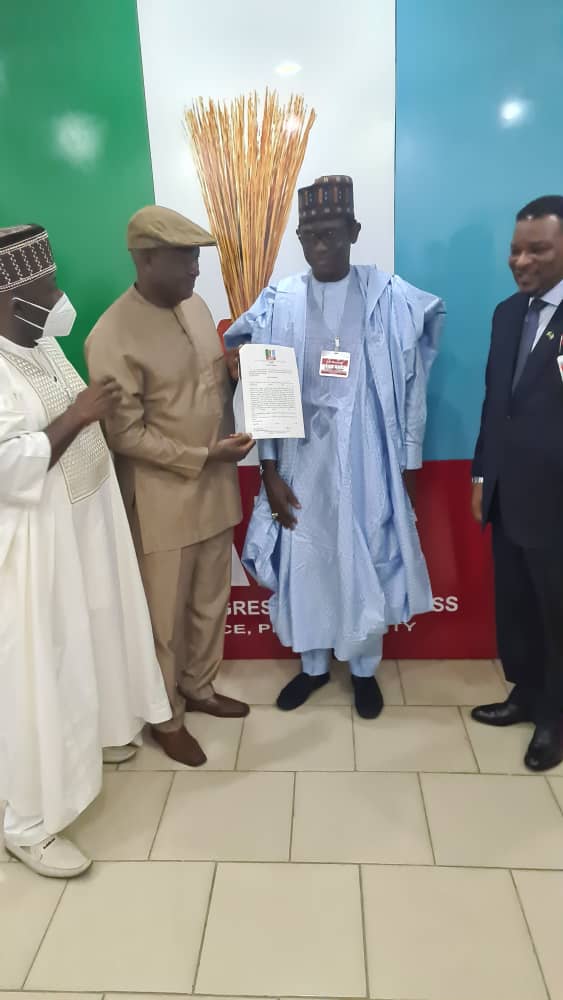
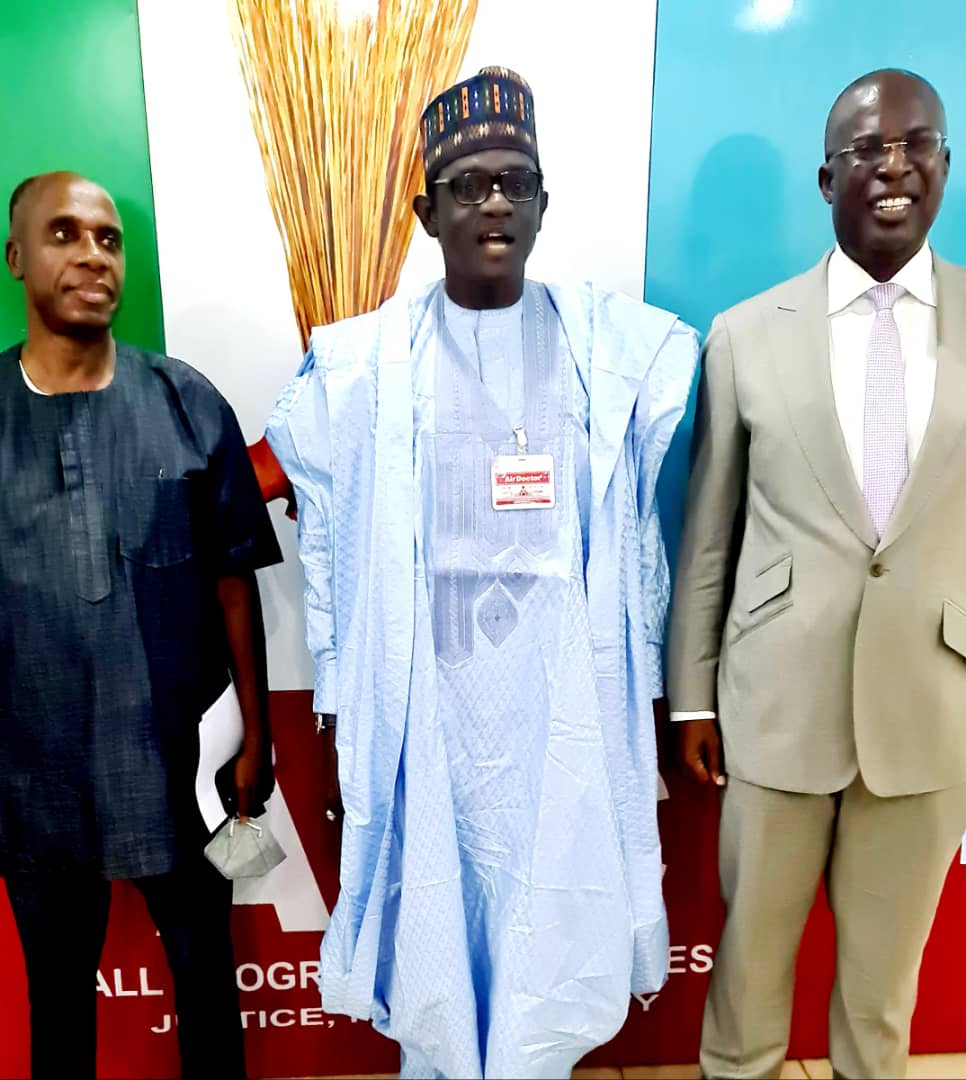
The Chairman of the All Progressives Congress (APC) Caretaker/Extra Ordinary National Convention Planning Committee, governor Mai Mala Buni has inaugurated Senator Matthew T. Mbu as the new chairman of the Cross River state chapter of the party.

In a statement signed by the party’s spokesman Yekini Nabena, said governor Mai Mala Buni conducted the inauguration ceremony at the party’s national secretariat.

The statement said the Secretary of the APC caretaker committee, Senator John James Akpanudoedehe and Minister of State for Power, Goddy Jedy Agba, were also in attendance.

Yekini said Buni admonished the newly-inaugurated chairman to be guided by the new, cordial and peaceful outlook of the state chapter in conducting his official affairs by carrying along all supporters, members and stakeholders in the state.

Governor Buni also stated that the immediate task before the new acting chairman is to further unify party members in the state so as to strengthen the party’s chances for victory ahead of the forthcoming legislative by-elections in the state.

Recall that the Secretary of the Committee, Senator John James Akpanudoedehe met with Cross River State APC stakeholders over the prior factional and long-standing political disputes in the state chapter.

“Following the reconciliation achieved at the meeting, Senator Matthew T. Mbu was unanimously mandated to assume the office of the Cross River State Chairman of the Party.”

APC set to screen aspirants for legislative bye-elections

Ahead of the October 31 concurrent legislative by-elections scheduled by the Independent National Electoral Commission (INEC), the All Progressives Congress (APC) will tomorrow, Wednesday August 26th, 2020 begin screening of party aspirants for the elections.

Legislative by-elections will be conducted across eight (8) States of the federation which includes Bayelsa Central Senatorial District Election, Bayelsa State, Bayelsa West Senatorial District Election, Bayelsa State, Nganzai State Constituency Borno, Borno State, Bayo State Constituency, Borno State, Cross River North Senatorial District, Cross River State, Obudu State Constituency, Cross River State, Imo North Senatorial District, Imo State, Lagos East Senatorial District, Lagos State, Kosofe II State Constituency, Lagos State, Plateau South Senatorial District, Plateau State, Bakura State Constituency, Zamfara State and Ibaji State Constituency, Kogi State

In a statement issued Tuesday in Abuja by the Deputy National Publicity Secretary of APC, Yekini Nabena, the party will begin screening of aspirants Wednesday August 26th, 2020 – Thursday August 27th, 2020 while the publication of claims and objections will take place on Friday 28th August, 2020

The statement noted that the APC screening appeal committee will seat on Tuesday 1st, September, 2020 while primary electionand election appeal are scheduled to take place on Thursday 3rd, September, 2020 and Saturday 5th, September, 2020 respectively.

Meanwhile the party has released the list of screening and appeal committees to include the following:

For Imo North senatorial district screening panel, Dr. Lawrence Chukwu is to serve as Chairman, Engr. Uduakobong Okpoho as Secretary, Jonathan Modi as Member, Hon. Zakari Angulu Dobi as Member, Michael Jegede as Member, Isioma Theodara Ndah as Member and Barr. Ibrahim Bello as Member

The Appeal Committee for Imo North senatorial district comprises of Prof. Etok Ekanem as Chairman, Barr. Femi Victor Motojesi as Secretary, Hon. Garba Usman Funtua as Member, Bolaji Omonori Victor as Member and Alhaji Adams Yakubu as Member

The screening committee for Borno state Nganzai state constituency includes Alh. Abubakar Mallam as Chairman, Hon. Ahmed Mohammed as Secretary, Hon. Ibrahim Umar Dawakiji as Member, Omobolaji Motunrayo – Member, Musa Shelleng as Member, Nasir Umar Garba as Member and Prince (Engr.) Dare Joseph as Member.

The Appeal Committee for Borno state Nganzai state constituency includes: Engr. Suleiman Rabiu Bichi as Chairman, Barr. Yakubu Bashir as Secretary, Barr. Yakubu A. H. Ruba as member, Barr. Dallas Ebeli as Member, Muhammed Hassan Jigirya as member.

Other states by-elections screening and appeal committees are as follow:

LAGOS STATE
LAGOS EAST SENATORIAL DISTRICT AND
KOSOFE II STATE CONSTITUENCY
(Screening Committee)

  1. Hon. Adamu Usman – Chairman
  2. Alh. Sule Alao – Secretary
  3. Dr. Zakeri Muhammad – Member
  4. Amb. Fidel M. Anyegu – Member
  5. Chief Samuel Ogbuku – Member
  6. Dr. Kamel Isa Olu – Member
  7. Husseini Momoh – Member

(Screening Appeal Committee)

  1. Solomon Nyaze – Chairman
  2. Hon. Adelowo Adebiyi – Secretary
  3. Alh. Abdulmunaf Muhammed – Member
  4. Hon. Sunday J. Chukwu – Member
  5. Safiya Bala – Member

PLATEAU SOUTH SENATORIAL DISTRICT, PLATEAU STATE
(Screening Committee)

  1. Salisu Muktari – Chairman
  2. Obianuju Brenda Oji – Secretary
  3. Adie Ferdinard Aisu – Member
  4. Dada Olusegun – Member
  5. Bolaji Afeez Repete – Member
  6. Rt. (Hon.) Eugene Odo – Member
  7. Auwalu Abdulmalik – Member

(Screening Appeal Committee)

  1. Trever Aginde – Chairman
  2. Abdullahi Haruna – Secretary
  3. Fatima Zarah Umar – Member
  4. Barr. Iliyasu Runka – Member
  5. Opaluwa Omera – Member

BAKURA STATE CONSTITUENCY, ZAMFARA STATE
(Screening Committee)

  1. Dr. Ibrahim Mara – Chairman
  2. Amb. Ahmed Malam Madori – Secretary
  3. Barr. Bashir Maidugu – Member
  4. Mrs. Helen Bendega – Member
  5. Danlami Zuru – Member
  6. Aliyu Bature – Member
  7. Kunle Busari – Member

(Screening Appeal Committee)

  1. Bala Mohammed Gwagwarwa – Chairman
  2. Abdulrahman Baffa Yola – Secretary
  3. Idris Bah Madu – Member
  4. Zuwaira S. Bakori – Member
  5. Mamman Isa Azare – Member

IBAJI STATE CONSTITUENCY, KOGI STATE
(Screening Committee)

  1. Ohikere Gogo Asmail – Chairman
  2. Sen. John Danboyi – Secretary
  3. Okomoda Raphael – Member
  4. Hajiya Fatima Audu – Member
  5. Shettima Abaji – Member
  6. Kiyenna J. Mizim – Member
  7. Hon. Maikudi Bature – Member

(Screening Appeal Committee)

  1. Hon. Ibrahim Umar Dawakiji – Chairman
  2. Nasiha Hassan – Secretary
  3. Febian Ekpo – Member
  4. Yahaya Suleiman – Member
  5. Barr. Hassan Abubakar II – Member

BAYELSA STATE
BAYELSA WEST SENATORIAL DISTRICT AND BAYELSA CENTRAL SENATORIAL DISTRICT
(Screening Committee)

  1. Prof. Steven Oseni – Chairman
  2. Engr. R.S. Bichi – Secretary
  3. Barr. Kunle Sulaiman – Member
  4. Chief Cosmas Maduba – Member
  5. Ife Adebayo – Member
  6. Kolade Lawal – Member
  7. Hajiya Yahanasu Buba – Member

(Screening Appeal Committee)

  1. Mall. Ahmed Sajoh – Chairman
  2. Hon. Engr. Garba M. Gulma – Secretary
  3. Chief (Mrs.) Betty Efekoda – Member
  4. David ThankGod – Member
  5. Hon. Motunrayo Akintomide – Member

CROSS RIVER STATE
CROSS RIVER NORTH SENATORIAL DISTRICT AND OBUDU STATE CONSTITUENCY
(Screening Committee)

  1. Asipa Kaoli Olusanya – Chairman
  2. Nike Omoworare – Secretary
  3. Hon. Maduka N. Anun – Member
  4. Afolabi Aseyomi O. – Member
  5. Hon. Musa B. Kamale – Member
  6. Muhammed Ali Mashi – Member
  7. Dr. (Mrs.) Rachael Akpabio – Member

(Screening Appeal Committee)

  1. Abubakar Isa Funtua – Chairman
  2. Chief Ben Eche – Secretary
  3. Chief Funsho O. – Member
  4. Muhammed Sani Ibrahim – Member
  5. Alh. Attah M. Rangem – Member

Amnesty International’s campaign against peace in Nigeria

By Sylvanus Ochojila

International human rights organization, Amnesty International just overdid itself in its campaign to undermine peace in Nigeria. With its latest hatchet job, a report titled “NIGERIA: Government failings leave rural communities at the mercy of gunmen”, the organization has erased the last doubt as to whether it will put up the pretext of being impartial. Amnesty International is incapable of being impartial and its partiality is in favour of terrorism.

“NIGERIA: Government failings leave rural communities at the mercy of gunmen” is a report in which Amnesty International practically oozed and drooled over the sheer scale of human misery that its terrorist clients have visited on families, communities and entire swathes of geo-political regions in Nigeria. Nothing in the report suggested that the intent was to raise help by drawing attention to the suffering of victims of terrorism and banditry. What is obvious instead is the deployment of a mishmash of news reports, with all the sensationalism of the original stories still intact, to deliver the crudest shock and awe possible. The objective is to terrorize the citizens.

This organization will rehash its tired script. Pseudo analysts will be dragged from their beds into television and radio studios to justify and validate the fiction that has been packaged as a report. Then other reports will spin of it and so on and so forth until a lie takes on the appearance of the truth. The circus to be unleashed in promoting the report will distort fact to an extent that people will become fearful and be forced to doubt what the government is doing to keep the country safe. Like other reports before it, this is basically what the latest “bestseller” is meant to achieve.

It was essentially Amnesty International picking up from where the terrorists left off. The organization showed its entrenched incapacity to be empathic by twisting the knives that terrorists and attackers left in the gaping wound of victims. From the accounts it attributed to interviews with survivors and relations of victims, it is apparent that the NGO squeezed the last drop of misery out of the pains of people that are possibly still too traumatized to coherently express what they experienced. Which raises questions as to whether its staffers and researchers actually conducted the claimed interviews or that they simply got actors and actresses, Amnesty International’s fashion, and created scripts for them to cause the drama that the compromised organization wants.
How convenient is it that the organization could quote and interviewee, who said “the soldiers did not waste time and they came but when they came and saw the type of ammunitions the attackers had they left,” it did not add even a footnote to question the source of the weapons that the attackers came with? There has been allusions that Amnesty International and the terrorists are in reality joined at the hips and nothing proves it like the manner in which it is quick to shop for indictment against government forces while glossing over the atrocities of terrorists and bandits and would even go out on a limb to canvass for the rights of any of their fighters apprehended or arrested by law enforcement agencies.
In running its errand for terrorists, the folks behind the questionable report gave the impression that the government has failed, which they could then interpreted to mean just anything about their arch nemesis, the military. The military has been at the forefront of frustrating repeated attempts by the terrorists to establish themselves in communities from where they are regularly dislodged from. It is increasingly being established that the objective of making Nigeria into a failed state, as the NGO desires, will never be realized for as long as the government of the day refuses to cave in to blackmail and the military resist harassment.

But even in Amnesty International’s deviousness there is a warning for Nigeria. The alarm bells should go off for our policy maker with the rider to the organization’s headline that “Attacks pose threats to food security in rural areas” is something that should genuinely worry them. It should worry them because this is a clear indication that the organization is on the verge of weaponizing hunger and would do anything to precipitate a food shortage or food crisis just so it can point to its report and brag that it warned about an impending catastrophe.

One thing it will not own up to however is how it used the instrumentality of reports, similar to the fictitious one it just issued, to cripple the ability of government troops to respond appropriately to the threats constituted by the Boko Haram terrorists operating at its behest, or at the very least at the behest of its associates.
Only the false sense of comfort will make the Director of Amnesty International Nigeria, Osai Ojigho, to descend into the unprofessional behaviour of pouring insult and his undiluted venom on the government and military institutions without acknowledging that they had been pivotal in preventing the cataclysm that his organization wants for Nigeria. Ojigho will also never admit that Amnesty International and her cohorts are responsible for the killings in Nigeria.
The remedy to this treasonable behaviour is as clear as day. The government of Nigeria must call the errant NGO to order and demand that it ceases and desists from further backing terrorists against the state. This step is in the interest of the Nigerians that are being killed by Boko Haram and bandits as well as it is in the interest of the staffers of Amnesty International. It was not long ago that some citizens resorted to self-help to protest against its subversive activities in Nigeria and there is all the likelihood that a similar protest to send this organization packing is again brewing.

Ochojila is a diplomat and wrote from New York.

Gov Buni mediates Ameachi, Sylva reconciliation

The Chairman of the All Progressives Congress (APC) Caretaker/Extra-Ordinary National Convention Planning Committee, governor Mai Mala Buni, has reconciled the Minister of Transportation, Rotimi Amaechi and Minister of State for Petroleum Resources, Timipre Sylva at the party’s national secretariat.

Both former governors, though in the ruling party together were divided by political interest.

However, the Governor Buni led caretaker committee met with the duo behind closed door on Monday.

A statement signed by the party’s spokesman Yekini Nabena, after the meeting said at the meeting, Governor Mai Mala Buni charged the ministers to work together and lead the party’s efforts to reconcile aggrieved party members and reposition the party, particularly in the South-south region.

Ahead of the Governorship elections in Niger Delta states of Edo and Ondo as well as legislative bye-elections in Bayelsa and Cross River states, Governor Mai Mala Buni charged the Ministers to play lead roles in bringing together party members and stakeholders to ensure that the APC is victorious.

“We have agreed that both of us will work together”, the Minister of Transportation, Rotimi Amaechi told journalists while accompanied by the Minister of State for Petroleum Resources, Timipre Sylva after the meeting with Governor Mai Mala Buni.

The statement described the move as “This indeed is another solid milestone in the achievement of the mandate given to the Governor Buni-led Caretaker/Extra-Ordinary National Convention Planning Committee to reconcile party members and reposition the party.”

The Truth About APPG’s Christian Genocide in Nigeria

By Philip Agbese
 
The June 2020 launch of a report entitled “Nigeria – Unfolding Genocide?” by the All-Party Parliamentary Group (APPG) for International Freedom of Religion or Belief in the Parliament of the United Kingdom should be of concern to Nigerians and of course the Federal Government. The report concluded that there is an ongoing genocide against Christians and minority ethnic groups in Nigeria with lines like “The APPG’s inquiry found that Nigerian Christians are experiencing devastating violence, with attacks by armed groups of Islamist Fulani herders resulting in the killing, maiming, dispossession and eviction of thousands.”
 
Our worry here should not be about the alarm of genocide, which is false. We should rather be concerned that the descendants of people, who once raped the African continent through slavery, forced conversions, exploitation of human and material resources, are back trying to continue in the steps of their forefathers by defining for us what we should accept as our reality. If they succeed in doing this, then they will again succeed in turning us against each other for their own advantage.
 
To be clear, the All-Party Parliamentary Group (APPG) is a grouping in the Parliament of the United Kingdom that is composed of members of parliament from all political parties. The APPG for International Freedom of Religion or Belief is therefore across political divides so the views they expressed cannot be dismissed as being that of narrow interest. Its members are not riff-raffs being the representatives of the people, which means they speak for their country and it is, therefore, safe to attribute the views expressed in their report to their country.
 
That report is tragic because of its implied intention; a desire to add sectarian strife to the foreign-backed horror show we are already subjected to on a daily basis. The APPG report practically trivialized the killings by Boko Haram, Islamic State West African Province (ISWAP), bandits, transhumance related violence manifesting as a farmers-herders crisis, communal clashes and even street gangs related violence as being directed at exterminating Christians.
 
I am a Christian and an activist with a human rights background, which makes the views expressed by these parliamentarians repulsive to me. Everyone should feel bad that anyone would be killed in their own country, people should be safe anywhere and no one’s life should be cut short for any reason. This much was captured by John Donne when he said, “Any man’s death diminishes me because I am involved in mankind, and therefore never send to know for whom the bell tolls; it tolls for thee.”
 
The current reality is that Nigerians are being killed by the aforementioned criminal elements. It is not only Christians or Muslims that have been murdered in our country; animists, agnostics, atheists and persons of diverse creeds have met violent ends at the hands of people running errands of dark forces. APPG’s attempt to weaponize or justify any kind of killings on religious biases is, however, a disservice to God and humanity and will in no way advance religion or belief.
 
Most of the input into the APPG report derived from compromised reports authored by organizations that have not been able to conceal their vested interests while its interviews were with a persona pursuing blends of sectarian and ethnic agenda. This is a recipe for distortion and the report was promptly contorted beyond comprehension, which perhaps tallied with what the APPG wants in the first place as could be seen from the additional spin-offs that have been made from that document.
 
Had the group made the efforts to get at the facts or were it less jaundiced by its desired outcome, it would have been able to report the details that are known to the victims of these attacks and survivors. There have been instances when attacks seemed to have been targeted at Christians only for the contrary to emerge upon further interrogation or investigation of the matter. For instance, when gunmen killed 13 worshipers at a mass on Sunday, August 6, 2017, at Amakwa Ozubulu, in Ekwusogo Local Government Area of Anambra State, the initial belief was that the attackers were Boko Haram terrorists.
 
It took weeks after misdirected anger and dangerous ethnoreligious tension to discover that what people thought was not the case. Great Chinedu Akpunonu (44), Vincent Ike (57), Chukwudi Ugwu (30) and Onyebuchi Mbanefo (46) were arraigned for that heinous crime in the house of God; they were neither members of the Boko Haram terror group neither are they Fulani; they are mercenaries sent to kill their own kinsmen as part of a drug war that spilt over from South Africa.
 
In May 2018, in two separate incidents, the police arrested suspected gunrunners for the murderous elements killing people in Benue-Taraba axis. The first suspect was 36 years old Morris Ashwe from Mbajima Village in Katsina-Ala Local Government Area of Benue State, who confessed and admitted supplying firearms and ammunition to the notorious and most wanted vicious and notorious gang leader of the militia, murderers and kidnappers Terwase Akwaza aka Gana. Similarly, Kabiru Idris, Miracle Emmanuel and Husseini Safiyanu were arrested in Taraba State with five AK47 rifles, 13 AK47 Magazines, 83 Rounds of AK47. They confessed to have supplied other firearms and ammunition to Militia groups, armed bandits and other criminals that have been attacking and killing innocent people in villages in Taraba and Benue States. Note should be made of the identity and names of the arrested suspects.
 
In the northwest, where bandits have attacked communities, killed people and plunder their resources, the victims are across religious divides, too, even though a larger number of them were Muslims. It will be interesting to see how the APPG report reflected on that since it is not impossible for these killings to have been classified as the mass murder of Christians.
 
However, the above scenarios are not meant to distract from the fact that Boko Haram, bandits and other criminal elements violently deprive others of their lives. Rather, it is to point out the risk of misleading people to cultivate hatred for others along sectarian and ethnic lines because some foreigners decided to frame conversations in manners that turn Nigerians against each other.
 
The other fallacy in the APPG report is the claim that President Muhammadu Buhari’s administration is permitting genocide against Christians in Nigeria. This is not true and it is a false claim that should be condemned by all. First, on the basis of the foregoing, Nigerians are being killed and it is not about the creed of the victim but about the unwarranted loss of human lives. Secondly, there is no record that security was ever prioritized for Muslim enclaves to the detriment of Christian areas. The efforts to address the challenge of insecurity in the country has been wide-sweeping.
 
Thirdly, there continue to be efforts to curtail the activities of the criminal elements killing people in different parts of the country. Only a few days ago, the Joint Military Troops of Operation Whirl Stroke arrested seven persons in connection with the massacre of over 13 persons in Apa Local Government Area of Benue State. The army had in the preceding week arrested informants for bandits, gunrunners and also killed some of them in operations to rid the country of these criminals. The war against terrorism is also on course with Boko Haram members being pushed continually into the desert.
 
The APPG is right that there is a genocide, but it is not along a religious line. It is a pogrom targeted at Nigerians irrespective of their ethnicity or religion, a pogrom that no APPG has attempted to call a halt on. At the helm of that genocide unfolding in Nigeria are the very members of the APPG.
 
They are part of decisions that promote instability in the Middle East and North Africa, the source of some of the weapons and fighters that flood into the Lake Chad Basin and have kept Boko Haram’s campaign of terror going. Had President Buhari been indifferent, like members of that group want to believe, more Nigerians would have been killed. So, it is fair to ask that the APPG at the very least acknowledge that the President and the Nigerian military have against all odds prevented the kind of catastrophe that analysts had projected for the country as a result of the activities of certain countries that directly and indirectly impact Nigeria.
 
Still, one will not ask the APPG not to meddle in Nigeria’s affairs since it will, anyways. The fair demand to make on the group is for it to leverage its clout for mobilizing and galvanizing support for Nigeria’s capacity to respond to the hydra security challenges being compounded by external and other factors. It should, for instance, prevail on the United Kingdom to review its foreign policy in a way that prevents terrorists from getting support, which includes addressing the chaos that resulted from meddling in the Middle East and North Africa. It should also canvass for Nigeria to get support in terms of military equipment and hardware to fight those that are depriving citizens of their lives.
 
The greatest support that the All-Party Parliamentary Group (APPG) for International Freedom of Religion or Belief in the parliament of the United Kingdom, can lend, however, is to desist from contributing to the propaganda efforts of terrorists through the publication of reports that distort reality. Every Nigerian life matters. APPG should not put lives at risk by provoking sectarian strife.

Agbese is a human rights activist and law graduate of the Middlesex University London.