Understanding the history of World War II to build a peaceful future

By Zhu Chengshan

“Dead To Rights,” a film about the Nanjing Massacre during World War II, recently premiered in China to significant acclaim, sparking a surge of interest in domestically-produced war films this summer.

Historical truth transcends time, possessing both revelatory power and enduring impact. The film portrays 15-year-old Luo Jin, an apprentice at Nanjing’s Huadong Photo Studio, who uncovered harrowing evidence while developing photographs for Japanese officers during the city’s occupation. The images captured scenes of mass killings, rape, and other atrocities committed against Chinese civilians by Japanese aggressors.

At great personal risk, Luo secretly duplicated dozens of the images and compiled them into an album. These materials were later safeguarded by Wu Xuan, a patriotic student, ultimately serving as pivotal evidence at the trial of Hisao Tani, the principal perpetrator of the Nanjing Massacre.

The true history cannot be erased. No matter how relentlessly Japanese right-wing forces or historical revisionists attempt to rewrite the past, their efforts are ultimately futile.

Does that painful chapter of history still carry meaning in our time? The answer is unquestionably yes. Patriotic education remains a lasting theme.

Chinese President Xi Jinping pointed out that the responsibility for war crimes lies with a few militarists, but not the people. However, people cannot at any time forget the severe crimes committed by aggressors. The Nanjing Massacre, committed by Japanese aggressors, was an atrocious anti-human crime and a dark page in the history of humanity.

This blood-soaked memory serves as a solemn reminder: when a nation is poor and weak, its people become vulnerable to the gravest violations of fundamental rights. We must never forget these historical lessons nor allow such tragedies to recur.

History serves both as the best textbook and dose of sobriety. The Nanjing Massacre remains one of the darkest and most harrowing chapters in the Chinese People’s War of Resistance Against Japanese Aggression. This is a historical truth universally acknowledged by the international community.

Throughout the war, more than 35 million Chinese soldiers and civilians were killed or wounded. China suffered direct economic losses of over $100 billion and indirect losses exceeding $500 billion, calculated in terms of 1937 levels.

As China commemorates the 80th anniversary of the victory in the Chinese People’s War of Resistance Against Japanese Aggression and the World Anti-Fascist War, we recognize this conflict as modern China’s longest and largest struggle against foreign aggression..Despite paying the heaviest national price, it culminated in the Chinese people’s first complete victory in their fight for liberation – a triumph that belonged not only to China but to all peace-loving people worldwide.

A truthful understanding of World War II history is fundamental to building lasting peace for the present and the future. China’s prolonged resistance tied down vast numbers of Japanese troops, shattering the scheme of Japan joining forces with fascist Germany and Italy to launch a two-front assault and dominate the world.

As the main Eastern battlefield of the anti-fascist war, China’s war of resistance made a critical contribution to its worldwide victory and the cause of justice and freedom for humanity. Franklin D. Roosevelt, then U.S. President, once commented that without China, or if China had been defeated, many more Japanese divisions would have been deployed to other areas.

Today’s world is undergoing profound changes unseen in a century, and these changes are accelerating. Hegemonism, power politics and Cold War mentalities alongside growing economic coercion is on the rise. In the face of these challenges, the Chinese people feel more deeply than ever the importance of patriotism, unity, and self-strengthening.

This makes it all the more vital to confidently share the great significance of the victory in the Chinese People’s War of Resistance Against Japanese Aggression, and to highlight the decisive role of the main Eastern battlefield in the global fight against fascism.

To promote enduring peace and stability across the world, we must engage with history in a spirit of sincerity and humility – drawing wisdom from its experiences, and learning from its lessons, so that the true history can guide the way forward for all humanity.

(Zhu Chengshan is a Professor at Changzhou University, former vice president of the Chinese Society for the History of the War of Resistance Against Japanese Aggression, and former curator of the Memorial Hall of the Victims in Nanjing Massacre by Japanese Invaders)

Chinese products bring coolness to European consumers

By Li Gang, People’s Daily

With heat waves sweeping across Europe this summer, demand for Chinese-made air conditioners (AC) is rising, signaling a shift in the region which is long accustomed to getting through the season without cooling systems.

Customs data reveals China’s air conditioner exports to EU countries reached $3.76 billion during the first half of 2025, representing a 43.2% year-on-year increase and setting a new record for the period. This growth continues the robust export momentum established in 2024.

Air conditioning is not as widely used in Europe as in many other parts of the world, due to high rental rates, deeply rooted awareness of environmental protection, and the high cost of installation and operation. Drilling into walls is often banned in historic buildings, and landlords generally won’t approve outdoor AC units. Installation must be carried out by certified professionals, often costing several hundred euros, with regular maintenance required.

To cope with the situation, Chinese air conditioner brand Midea has rolled out a portable split-type air conditioner for the European market. Portable, quiet, and comfortable, the product meets the needs of local consumers and is popular in Germany, France, Italy, the Netherlands, and beyond.

“This model has indoor and outdoor units, but unlike traditional split-type AC units, it’s easy to install and can be moved around. Its cooling performance is excellent,” said Zhu Zhou, sales director of Midea Residential Air Conditioners in Europe.

In Northern Europe, buying and installing an AC can cost around 3,000 euros. It’s a bit cheaper in Western and Southern Europe. The portable split-type AC is priced at 1,199 euros, users can save a lot by installing it themselves, Zhu said.

The spike in demand has ramped up production. At Midea’s smart factory in Nansha district of Guangzhou, south China’s Guangdong province, assembly of the portable split-type AC units is running in an orderly manner.

“We’ve shipped over 80,000 units so far, with another 20,000 scheduled for production,” said Sun Qi, head of production planning at the factory.

Midea has established dedicated production lines to ensure quality and output. The AC products are shipped to Europe via sea and the China-Europe freight trains. The sea freight route begins at Nansha Port in Guangzhou, passes through the Strait of Malacca, rounds South Africa, and arrives at the Port of Rotterdam, the Netherlands.

The rail freight route begins in Guangzhou, exits China via Horgos Port, and travels through Kazakhstan, Russia, Belarus, Poland and other countries before arriving in Germany. In the first half of the year, Midea’s AC sales in Europe rose 35 percent.

Multiple Chinese brands are gaining traction. The portable AC products of TCL DeLonghi, a joint venture between home appliances groups TCL and DeLonghi, are also selling well in Europe.

“Our sales are up 25 percent this year in the European market,” said Du Quanbin, head of market management at the overseas marketing center of TCL DeLonghi Home Appliances (Zhongshan) Co., Ltd., located in Nantou town of Zhongshan, Guangdong.

Production lines at the company’s production workshop are running at full capacity. According to Du, orders for Europe have already been shipped, and the products being made will be sent to countries such as Australia, New Zealand, South Africa, and Argentina, stocking up in advance for summer in the Southern Hemisphere.

Beyond air conditioners, Chinese-made cooling products are becoming common in German homes. German consumers report these offerings combine affordability with innovative features.

Stephen, a Berlin plumber who frequently works in uncooled environments, recently purchased a Chinese-made cooling uniform from a department store. The garment features breathable, heat-resistant fabric with UV protection and specialized cooling technology that maintains body temperatures up to 15°C below ambient conditions – a practical solution for extreme heat.

Shenzhen-based appliance supplier Weikenxiong observed a March surge in European orders for compact electric fans, now selling approximately 200,000 units monthly at over 100 euros each.

“This product was once a hit across Southeast Asia,” said Yu Yuewu, head of Yuecheng Plastic Products Factory in Longdu town, Chenghai district, Shantou of Guangdong. Holding one of the fans, Yu explained that it features an energy-efficient motor for powerful airflow, semiconductor cooling, and a built-in power bank, providing a steady stream of cool air.

The European market places strict demands on energy efficiency and environmental sustainability. “To maintain long-term market growth, the industry chain must push technological boundaries by adhering to high standards,” Yu added, expressing optimism about future prospects.

SW China’s Xizang makes remarkable economic, social achievements over 60 years

By Liu Botong, People’s Daily

This year marks the 60th anniversary of the establishment of southwest China’s Xizang autonomous region. Wang Junzheng, secretary of the Communist Party of China (CPC) Xizang Autonomous Regional Committee, and Gama Cedain, deputy secretary of the CPC Xizang Autonomous Regional Committee and chairman of the People’s Government of the region, introduced the region’s remarkable economic and social development achievements at a press conference held by the State Council Information Office on Aug. 5.

In 2024, the region’s gross domestic product (GDP) reached 276.5 billion yuan ($38.52 billion), 155 times that of 1965 in constant prices. While it took the region 50 years to achieve its first 100 billion yuan in GDP, the second 100 billion yuan milestone was reached in just six years, Wang said.

Since 2021, sustained efforts have further expanded Xizang’s economy while improving the quality and efficiency of growth. Modern industries, including clean energy, cultural tourism and plateau light industry, are laying the foundation for a modern industrial system. The region’s key economic indicators have ranked among the highest growth rates in the country for several consecutive years, with its regional GDP projected to surpass 300 billion yuan this year, reaching the third 100 billion yuan milestone.

Xizang’s infrastructure has also significantly improved. By the end of 2024, the total operational road length and the railway length in the region had reached 124,900 kilometers and 1,359 kilometers, respectively, and its domestic and international air routes reached 183. Four major power grids had been put into use, with the main grid now covering all counties, districts, and cities in the region.

These developments have substantially resolved historical infrastructure constraints, providing significant momentum for high-quality regional development, Wang noted.

Xizang boasts a long history and a splendid culture, alongside unique natural landscapes and rich cultural resources. It is an important center for preserving the distinctive culture of the Chinese nation and a major global tourism destination, enjoying exceptional advantages in developing the cultural tourism industry, which has experienced robust growth in recent years.

In 2024, the total output value of Xizang’s cultural industry increased by 23.8 percent, according to Gama Cedain. The region received 63.89 million domestic and international visitors, marking a 15.8 percent year-on-year increase. Notably, the number of inbound tourists skyrocketed by 188.2 percent. In the first half of this year, Xizang welcomed over 32.18 million visitors, representing an 11.7 percent increase year on year.

Meanwhile, living standards have improved dramatically. In 2024, the per capita disposable income of urban residents in Xizang reached 55,444 yuan, 121 times that of 1965. The per capita disposable income of rural residents hit 21,578 yuan, 199 times that of 1965.

Xizang has achieved a comprehensive victory over poverty and eliminated absolute poverty. Education has been made a top priority, with the region leading the nation in providing a 15-year publicly funded education program from kindergarten to senior high school.

A comprehensive public healthcare system offers free health checkups for all farmers and herders, contributing to a regional life expectancy of 72.5 years. Accelerated urbanization has transformed settlements into modern towns.

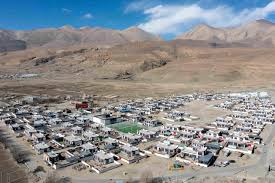
Over the 60 years since the establishment of the autonomous region – particularly in the past five years – Xizang has vigorously advanced various livelihood projects and programs. People of all ethnic groups have witnessed transformative changes in their daily lives, such as shifting from carrying water in buckets to enjoying running water, from oil lamps to electric lighting, from dirt roads to paved highways, and from yurts to modern housing, according to Gama Cedain.

During the 14th Five-Year Plan period (2021-2025), the state and the autonomous region plan to allocate 24.65 billion yuan to support 28 categories of regional social development projects. As of now, 23.678 billion yuan has already been invested in these projects.

A wide range of livelihood initiatives have been effectively implemented, including centralized heating and oxygen supply in high-altitude areas, the resolution of seasonal water shortages in agricultural and pastoral zones, enhanced reliability of power supply, and comprehensive coverage of fiber-optic broadband and 4G networks.

Located on the Qinghai-Xizang Plateau, known as the “roof of the world” and “Asia’s water tower,” Xizang serves as a vital ecological security barrier for China. How can the region safeguard the plateau’s unique ecological environment while preserving its biodiversity and natural wonders?

Xizang has adopted the strictest ecological protection system in accordance with law. It has firmly upheld a policy of rejecting the approval or introduction of projects and enterprises that are high in energy consumption and emissions but low in efficiency, strictly prohibiting any pollution-prone projects on the plateau. The region has actively promoted national park construction and advanced the afforestation project in the northern and southern mountains of Lhasa, the regional capital. Ecological conservation red line zones have been drawn for more than 50 percent of the region’s land area, with protected areas of all types and levels now accounting for 37.95 percent of its land area.

Low-carbon development has also been vigorously pursued. In 2024, over 99 percent of electricity in Xizang was generated from clean energy, the highest of all regions in China. Non-fossil energy consumption in the region exceeded 55 percent of total energy use, placing it among the top in the country in green energy.

Today, Xizang’s natural environment is among the best preserved in the world. “We will firmly uphold the principle that ‘lucid waters and lush mountains are invaluable assets and so are ice and snow,’ persistently serving as guardians to make the Qinghai-Xizang Plateau an ecological treasure shared by mankind and contributing more to building a shared future for all life on Earth,” Wang said.

Rebuilding global trust: an urgent imperative

By Huan Yuping, People’s Daily

Trust serves as the cornerstone of international cooperation, demanding sustained stewardship from the international community. Decades of mutual trust and cooperation among nations propelled unprecedented economic globalization and robust global growth. Yet today, trust erosion among major countries has engendered fragility in international relations and protracted sluggishness in economic recovery. This trust deficit now critically undermines world peace and development.

The collapse of confidence among major countries is fracturing the foundation of global trust, creating widespread uncertainty and deepening distrust. Certain countries, driven by hegemonic ambitions, have embraced extreme populism, strategic adventurism, and coercive unilateralism, attempting to reshape the international order through maximum pressure tactics. 

By capriciously abandoning international institutions and treaties, they compromise the sanctity of the rules-based governance. They impose arbitrary tariffs and unilateral sanctions, and exert long-arm jurisdiction, leading to global trade fragmentation. Their regressive decoupling policies disrupt supply chains, building exclusionary “small yards with high fences.”

As Foreign Affairs notes, great-power competition demands persuasion, not coercion. When dominant powers instrumentalize international commitments as bargaining chips and treat global markets as their exclusive domain, they destabilize the international order, heighten market volatility, and deepen security anxieties.

Amid profound changes in the international landscape, the very concept of security has been weaponized by certain nations as a tool for geopolitical rivalry. Pursuing illusory “absolute security,” these countries have become overly defensive. Anxious about losing their dominance over the global order, they distort their risk awareness, misinterpreting interdependence as vulnerability.

Traditional security frameworks have been improperly expanded to encompass economic, trade and cultural, and scientific and technological spheres – areas historically governed by cooperation, not confrontation. By rebranding routine exchanges as “national security threats,” these nations subordinate vital global interactions to political objectives.

This abuse of the security concept triggers destabilizing cycles: strategic distrust deepens, geopolitical rivalries intensify, supply chains become tactical weapons, and military spending escalates unsustainably. Normal international engagement suffers, yielding universal losses.

As the world evolves from a single-civilization hegemony toward a multipolar order, some countries remain entrenched in the Cold War mentality. Obsessed with maintaining dominance, they stoke hostility and escalate development competition into all-out systemic confrontation. Through the relentless promotion of “threat theories” and “trap narratives,” they worsen divisions and inflame confrontations.

By building exclusive, small circles and so-called “sanctions coalitions,” these countries seek to suppress other nations’ development while propping up declining alliance systems. This deliberate creation of “civilizational superiority” and “clash of civilizations,” which weaponizes ideology to fracture the moral values of humanity, not only reveals their anxiety in the face of historical trends but also undermines the very foundation of trust that holds human society together.

Chinese President Xi Jinping insightfully noted that trust is the best adhesive in international relations. Transformation of a scale not seen in a century is accelerating across the world, and human society has once again come to a critical crossroads. The imperative now is to engage in mutual consultation, demonstrate mutual understanding, resolve the trust deficit, and rebuild global trust. The international community should coordinate efforts across four dimensions:

First, restoring trust among major countries. Major countries should lead by example, honor commitments, uphold principles, and place justice above narrow self-interest. They must acknowledge and respect the other’s core interests and major concerns, avoid crossing red lines, prevent strategic misjudgments, and ensure that competition remains manageable and does not escalate into conflict.

Second, promoting shared development. Humanity’s common interests should be recognized as the bedrock of global trust. The outdated zero-sum mentality must be completely discarded in favor of high-standard and mutually beneficial cooperation. By expanding shared interests, the international community can create an open, more inclusive global economy, where development outcomes serve as the most solid foundation for mutual trust.

Third, empowering multilateralism. The purposes and principles of the United Nations Charter must be upheld. At the same time, multilateral institutions must be reformed to enhance their representation, transparency, and effectiveness. Priority should be placed on delivering quantifiable and verifiable early gains in urgent areas such as climate change, public health, and artificial intelligence. Concrete, verifiable achievements in these domains will help reinforce the credibility and relevance of multilateralism.

Fourth, encouraging mutual learning among civilizations. Trust should be nurtured through cultural understanding and people-to-people connections. Exchanges in education, science and technology, culture, and youth should be deepened to transcend ideological divides, which will lay the most resilient foundation for enhancing global trust.

China has always been a consistent advocate and practitioner in fostering solidarity and mutual trust within the international community. Guided by the vision of building a community with a shared future for mankind, China has championed true multilateralism and proposed the Global Development Initiative, Global Security Initiative and Global Civilization Initiative, offering concrete solutions to addressing the global trust deficit.

China continues to pursue high-quality development and high-level opening up, champion universally beneficial and inclusive economic globalization, and work to build an open world economy.

Through the green Belt and Road Initiative, China has provided and mobilized more than 177 billion yuan ($24.65 billion) of financial support to bolster climate initiatives in other developing countries. By October 2024, China had signed 53 MoUs on South-South cooperation addressing climate change with 42 developing countries.

China has introduced unilateral visa-free entry and mutual visa exemption agreements with 75 countries and brought the number of countries eligible for visa-free transit to 55, which is expected to facilitate over 10 million person-times of people-to-people exchanges annually.

These actions demonstrate that China’s commitment to global trust is not limited to rhetoric. It actively delivers tangible benefits, embodying a philosophy of mutual success: helping others to succeed is the surest path to achieving success oneself.

No one should be a bystander in rebuilding global trust. Governments, international organizations, civil society, and individual citizens share the obligation to replace prejudice with reason and dissolve suspicion with goodwill. Through sincere cooperation and shared resolve, humanity can overcome turbulence and guide our common future toward peace, stability, and sustainable prosperity.

People-to-people, cultural exchanges propel development of SCO family

By Qiang Xiaoyun

Since its founding in 2001, the Shanghai Cooperation Organization (SCO) has evolved into a comprehensive regional organization with the world’s largest population, the broadest geographical coverage, and enormous potential, playing an increasingly constructive role in international affairs.

Since taking over the rotating presidency of the SCO in July 2024, China has hosted more than 100 events in multiple fields as SCO chair, promoting unity, mutual trust, mutual learning, and win-win cooperation among member states.

The SCO has long prioritized women’s development as a key area of cooperation. Through a range of practical steps, the organization has promoted gender equality, safeguarded women’s rights, and empowered women’s contributions to national and social progress. These efforts have significantly enhanced women’s participation in the development of SCO countries.

During the SCO summit in Astana, Kazakhstan, in June 2017, Chinese President Xi Jinping announced China would host the SCO Forum on Women. Since 2018, five sessions of the forum have been successfully held, creating a vital platform for dialogue and cooperation.

Recent initiatives such as the SCO Women Leaders Forum and the “Women’s Perspective on the SCO” academic conference have showcased fresh highlights in women-centered people-to-people and cultural exchanges within the SCO framework. These efforts continue to inject greater women’s strength into building a closer SCO community with a shared future.

An increasing number of female experts and scholars are engaged in SCO-related research, contributing valuable insights with a pragmatic and inclusive approach. Amid rising regional and global uncertainties, women across the SCO family are actively promoting cooperation and working to find common ground among member states. As the SCO family continues to expand, female scholars and professionals have consistently advocated openness and inclusiveness, contributing wisdom to the organization’s evolution.

People-to-people exchanges remain foundational to strengthening public support for the SCO. As a founding member, China has always placed great importance on such exchanges and supported a wide range of activities, especially those involving women and youth.

In recent years, China has successfully hosted events such as the SCO Art Festival, the SCO Media and Think Tank Summit, and the SCO Countries Vocational Skills Contest, remaining committed to deepening people-to-people and cultural ties among member states.

As the current rotating chair, China is taking pragmatic and efficient steps to promote infrastructure development (“hard connectivity”) and policy/cultural alignment (“soft connectivity”) while deepening mutual understanding among member states. Recent events such as the SCO Political Parties Forum and the Media Cooperation Forum of SCO Countries have further built consensus for deeper regional cooperation, delivering concrete benefits across the SCO region and beyond.

Going forward, the SCO should continue enhancing communication and mutual learning, strengthening people-to-people ties, and expanding cooperation in areas such as education, women’s development, culture, think tanks, media, and tourism. By working together, member states can inject strong momentum into building a closer SCO community with a shared future and a brighter future for Eurasia.

(Qiang Xiaoyun is a research fellow at the Shanghai Institutes for International Studies under the Research Center for Xi Jinping Thought on Socialism with Chinese Characteristics for a New Era in Shanghai)

Upholding correct view of WWII history, firmly defending historical justice

By Liu Jun

Safeguarding the hard-won victory of World War II (WWII), upholding accurate historical understanding, and preserving the post-war international order constitute essential pillars of historical justice. 

Amid contemporary attempts to deny the WWII outcomes and distort historical facts, adhering to a correct historical perspective carries both immediate and long-term significance.

As an unprecedented catastrophe in human history, WWII’s legacy requires vigilant protection of its hard-won achievements. For China, these achievements are manifested in several key areas. First, China triumphed over Japanese aggression, securing national independence and sovereignty. Taiwan and the Penghu Islands, once seized by Japan, were rightfully restored to China. Second, China played a key role in the founding of the United Nations, shaping the post-war international order and ushering in a new era of peace. Third, China actively supported national liberation movements, contributing to the dismantling of colonial systems and the transformation of the global political landscape.

Upholding historical justice means honoring WWII legacy and preserving the shared human memory. A correct understanding of the war is inseparable from its outcomes; it requires recognition of both the victory itself and the universal values it represents. 

A historically accurate view of World War II rests on several fundamental acknowledgments. First, China and the Soviet Union served as the principal pillars of resistance in Asia and Europe respectively, making decisive contributions to the global victory over fascism. Second, the Chinese People’s War of Resistance Against Japanese Aggression began the earliest, lasted the longest and was fought under the harshest conditions, at immense sacrifices, making it an indispensable part of the World Anti-Fascist War. Third, the Communist Party of China (CPC) was the first to raise the banner of armed resistance against Japanese aggression. Under its strong leadership, the Chinese people fought with extraordinary courage and ultimately prevailed. Fourth, the Nuremberg Trial and the Tokyo War Crimes Trials forever condemned the perpetrators of aggression – their legal and moral judgments serving as permanent benchmarks for historical justice.

The Allied victory represented the triumph of justice over evil, light over darkness. It brought hope for peace and development to the world. Upholding a correct view of history and preserving collective memory are of profound historical importance. 

Regrettably, even 80 years after the victory in the Chinese People’s War of Resistance Against Japanese Aggression and the World Anti-Fascism War, small individuals continue to ignore incontrovertible historical facts and the loss of tens of millions of innocent lives, seeking instead to deny or even glorify acts of aggression. Such distortions have drawn strong condemnation from peace-loving people around the world, including in China.

Within the Asian theater, China bore the sole burden of resisting Japanese aggression from 1931 to 1941. This prolonged resistance, which cost over 35 million Chinese military and civilian lives, pinned down significant Japanese forces on the Asian mainland. Their heroic resistance sustained Allied operations in other theaters and helped prevent Japan from opening a second front against the Soviet Union. 

Throughout this resistance, the leadership of the CPC and its call for a united national front against aggression played a decisive role. After the September 18 Incident, the CPC was the first to launch armed resistance and led efforts to forge national unity, ultimately defeating Japanese militarism and making a major contribution to the final victory.

The post-war international order remains a symbol of global fairness and justice. The victory of WWII was made possible by the unity of the anti-fascist alliance, which overcame ideological and national differences to confront aggression. 

Today, some countries, driven by hegemonic ambitions, seek to revise the outcomes of WWII and undermine the principles of the post-war order. Such moves disregard hard-won historical lessons and threaten international justice. Our world needs justice, not hegemony. The experience of WWII demonstrates that only through safeguarding fairness and justice can humanity build a solid foundation for lasting peace.

The legacy of victory is enshrined in the multilateral system, with the United Nations at its core. This system underpins modern international relations. In today’s complex and uncertain global environment, maintaining an accurate understanding of WWII history and drawing wisdom and strength from it are crucial to preserving peace and defending international fairness and justice.

We firmly believe that the people of all nations will ultimately stand on the right side of history, uphold justice, and join hands in working toward a brighter future for all humankind.

(Liu Jun is a professor at the School of Politics and International Relations, East China Normal University.)

China’s high-quality development brings vast opportunities to world

By He Yin, People’s Daily 

The “Su Super League,” grassroots tournament Jiangsu Football City League, and the Village Super League, also known as Cun Chao, have gone viral, injecting fresh vitality into the integrated development of culture, commerce, tourism and sports.

Labubu toys, elf-like dolls produced by Chinese toy maker Pop Mart, have become global sensations, showcasing the cross-cultural appeal of Chinese designer toys.

China’s visa-free policies continue to pay dividends, fueling the rise of trends like “China Travel” and “Shop in China.”

These developments reflect China’s accelerating economic innovation, the highlights of high-quality development, reinforcing a sustained and steady growth trajectory.

Since the beginning of this year, China’s economy has demonstrated stable and steady progress. Major economic indicators have performed well, new quality productive forces have developed steadily, and reform and opening up has continued to deepen, demonstrating remarkable vitality and resilience.

Recently, international financial institutions and investment banks, including the International Monetary Fund, Morgan Stanley, and Goldman Sachs, have raised their forecasts concerning China’s economic growth in 2025.

A United Nations report identifies China as one of few major economies achieving substantially upgraded growth expectations amid global economic adjustments. The report emphasized that, China’s increasingly prominent role in navigating complex global challenges through its economic strategies.

Recent international media analysis highlights an emerging “cool factor” – a dynamic appeal rooted in innovation, cooperation, and youth culture – driving more balanced economic growth in China. This momentum is poised to propel China’s next growth cycle, potentially reshaping its global economic identity through open collaboration.

This innovative dynamism permeates China’s economic landscape. The country continues to harness scientific and technological innovation to develop new quality productive forces, accelerate the cultivation of emerging pillar industries with international competitiveness, and promote the integrated development of technological and industrial innovation, injecting strong impetus into economic development.

According to China’s National Bureau of Statistics, in 2024, the added value of new industries, new business formats, and new business models accounted for 18.01 percent of China’s GDP, up 0.43 percentage points from a year earlier.

China now hosts the world’s largest R&D workforce, leads globally in top-tier science and technology innovation clusters, and counts over 460,000 high-tech enterprises. Breakthroughs in open-source AI models and novel therapeutics continue to emerge, while cutting-edge sectors like intelligent drone manufacturing and smart automotive equipment thrive.

In the first half of this year, the added value of China’s high-tech manufacturing industry grew by 9.5 percent. Foreign investment in high-tech sectors rose significantly, with notable increases in the actual use of foreign capital in the e-commerce service sector, chemical pharmaceuticals manufacturing sector, and aerospace equipment manufacturing sector.

Recently, a delegation from U.S.-China Business Council’s board delegation – comprising senior executives from leading American firms – visited China. They noted that China has sent a clear signal of further expanding high-level opening up, which is crucial for foreign companies, including U.S. enterprises, seeking to invest and expand in China.

At a time when the rise of unilateralism and protectionism has added significant uncertainty to the global economy, China’s policy stability and long-term planning of high-level opening up are particularly valuable.

From 24 pro-foreign investment measures to 20 specific measures aimed at stabilizing foreign capital, from “negative lists” to “zero-tariff treatment,” China continues to foster a market-oriented, law-based and world-class business environment.

China is also expanding trials to open sectors such as telecommunications, medical services, and education, promoting the opening of biomedicine, while encouraging foreign companies to make equity investments, making itself a favored destination for foreign investment. China remains committed to widening its opening to the global economy.

At a time when the world economy faces numerous challenges, China injects greater certainty into the global economy through its stable development and generates new opportunities for various countries by continuously expanding opening up.

As the 14th Five-Year Plan (2021-2025) nears conclusion and the 15th Five-Year Plan (2026-2030) approaches, China will respond to an uncertain external environment with strong and effective policies, make good use of development opportunities, potential and advantages, and consolidate and expand the positive momentum of economic recovery and improvement to keep the ship of the Chinese economy sailing ahead.

As a country pursuing high-quality development, China will bring broader market opportunities, investment opportunities, and growth opportunities to the world, and pursue common development with various countries.

Cultural courtyards preserve and showcase traditional heritage in Lijiang ancient town

By Yang Wenming, People’s Daily

At Tiandi Courtyard, or Courtyard of Heaven and Earth, in Lijiang ancient town, southwest China’s Yunnan province, He Xueguang was busy attending to his daily affairs. “There are now around 30 cultural courtyards like this throughout the ancient town,” he said. 

With a history spanning more than 170 years, Tiandi Courtyard exemplifies well-preserved traditional Naxi architecture. Despite numerous commercial lease offers, He has consistently prioritized cultural preservation over commercialization.

Since Lijiang ancient town was inscribed as a UNESCO World Heritage Site in 1997, protection measures have become increasingly stringent. To preserve the town’s historical integrity, modern renovations are strictly limited. As tourism has grown, many residents have relocated, leading to a shift in the town’s demographic landscape.

In Lijiang, traditional residential architectures, local lifestyles, and cultural heritage form an inseparable whole – a cultural ecosystem sustained by local stewardship.

“Cultural heritage is more than just physical structures. It carries invaluable cultural significance,” said He. To further explore, safeguard, and pass on this heritage, he transformed the Tiandi Courtyard into a venue for traditional Naxi song and dance performances. In 1999, he established a Naxi culture inheritance center in the courtyard, inviting local residents to perform traditional music and dance, exhibit Dongba culture, and offer cultural workshops and training.

Beginning in 2007, the Lijiang ancient town protection and management bureau, together with the Lijiang ancient town management company, began designating portions of public housing annually to develop cultural courtyards. In 2016, Tiandi Courtyard was officially recognized as the 18th cultural courtyard in Lijiang.

“We receive discounted rent and annual financial support,” He explained. Tiandi Courtyard is not an isolated case. Every year, the town invests millions of yuan into the development and operation of cultural courtyards and other heritage preservation projects.

Today, Tiandi Courtyard hosts three daily Dongba music and dance performances, attracting large audiences. Building on its early success, it has developed original Naxi music and dance performances, curated two themed exhibition halls, and incorporated interactive experiences such as Naxi script instruction and traditional dance workshops, offering visitors immersive access to the town’s vibrant heritage.

Beyond Tiandi Courtyard, a wide range of cultural spaces has emerged, including independent bookstores, poetry clubs, pictographic character experience halls, and traditional craft studios. The town’s 30 cultural courtyards cover diverse topics such as notable residences, historical and cultural protection, traditional craftsmanship, and Naxi folklore. Visitors can not only enjoy the exhibits but also engage in in-depth learning experiences. “The story of Lijiang ancient town is told through these cultural courtyards,” He remarked.

Because of their dispersed locations, these cultural courtyards can be difficult for tourists to locate. In response, Lijiang ancient town has enhanced signage throughout the area to direct visitors more clearly. “The most prominent signs now guide visitors directly to these cultural spaces,” said He.

In 2019, Lijiang ancient town introduced stricter regulations on commercial activities, including business entry thresholds and an exit mechanism to manage overall business density. It also reorganized its commercial landscape through categorized management, restricting operations incompatible with the preservation of the town’s historical character and cultural heritage, while encouraging businesses that contribute to the safeguarding and promotion of traditional culture. 

“Internet cafes have disappeared, bars have significantly decreased, and the ancient town’s cultural atmosphere has become much more pronounced,” said He. “We hope more young people will come to Lijiang and develop a deep appreciation for cultural heritage.”

I’m Ready to Give DJ Cuppy True African Love, If Her Father Signs This One Condition – Aigbegbele

The race to win DJ Cuppy’s heart just got a dramatic twist, and it comes with a legal caveat!

Omoba Kenneth Aigbegbele, a foremost promoter of traditional rulers, veteran journalist, human rights activist, and former media adviser to ex-First Lady Dame Patience Jonathan, has thrown his hat into the ring as the man ready to end the billionaire heiress’s search for love.

Aigbegbele, who sits atop the Silverdoors Communication Group and leads multiple advocacy organisations including Citizens Watch Advocacy Initiative (CWAI) and the Guild of Civil Societies and Media Executives for Equity, Justice and Transparency in Nigeria (GOCMEJ), declared that he is “very prepared” to marry the 31-year-old DJ, but on one non-negotiable condition, she and her billionaire father, Femi Otedola, must sign a “submissiveness” agreement.

Beyond his public roles, Aigbegbele is also a mass communication scholar, a fellow of the Nigerian Institution of Public Relations (NIPR), with master’s degrees in Mass Communication and International Relations, and is presently pursuing his Doctorate. A seasoned media consultant to topnotch politicians, business bigwigs and military top brass.

“As a true African man, I believe in mutual respect in marriage. I will love, protect, and comfort her at all times, but she must also accept me as the head of the family. That is why I am requesting her father’s formal consent to this agreement,” Aigbegbele told newsmen with a confident smile.

He further revealed that his decision to seek Cuppy’s hand was not made lightly.

“I have watched her all these years and considered so many things, especially knowing fully well that she was brought up well by Chief Otedola. After critical thinking and discussion with my immediate family, I have decided to marry her to show her that genuine love still exists,” he stated.

Describing himself as a man who has experienced life and is ready for a lifelong commitment, the public affairs advocate stressed that his interest in DJ Cuppy is genuine and not influenced by her fame or fortune.

“I am not married currently, though I have children. But I am ready, not just to marry her, but to give her the true African love she says she’s been searching for,” he said.

In recent weeks, Florence “DJ Cuppy” Otedola has been vocal about her readiness to settle down, hinting that she is open to finding “real love” away from the glitz and glamour. Aigbegbele insists he is the perfect match to provide that stability, if she embraces his traditional values.

With the challenge now thrown at Cuppy and her father, social media is already buzzing: will the billionaire DJ trade her independent streak for “true African love”? Or will this be one proposal that remains a headline fantasy?

Ambode Declares Total Support for President Tinubu’s 2027 Re-Election Bid

• Dismisses claims of gubernatorial ambition under ADC.

Former Lagos State Governor, Mr. Akinwunmi Ambode, has publicly reaffirmed his unwavering loyalty to the All Progressives Congress (APC) and President Bola Ahmed Tinubu, pledging full commitment to the President’s 2027 re-election campaign.

In a strongly worded statement, Ambode dismissed recent speculations linking him to a governorship ambition under the African Democratic Congress (ADC), describing the reports as “false publications” aimed at causing distractions.

“I wish to publicly reaffirm my absolute and unshakable loyalty to the APC, the party under which I had the privilege of serving Lagos State as governor in 2015, and to President Bola Ahmed Tinubu, my leader, mentor, and a tireless champion for Nigeria’s progress,” Ambode said.

The former governor praised President Tinubu’s leadership style, describing him as a “proven achiever and result-oriented leader” whose administration has delivered significant reforms in pensions, student loan accessibility, youth empowerment, and national economic growth.

Highlighting key achievements of the Tinubu administration, Ambode pointed to the elimination of fuel scarcity, improved security measures, and policies designed to improve the lives of ordinary Nigerians.

“His focus, determination, and inclusive governance style are restoring hope and delivering tangible results. I am convinced that, given another four years, Nigerians will have even greater reason to celebrate,” Ambode stated.

He urged party faithful and Nigerians at large to ignore political distractions, pledging to work tirelessly to strengthen the APC and ensure President Tinubu’s victory in 2027.

“Let it be clear: I stand solidly with President Bola Ahmed Tinubu and the All Progressives Congress. We will work together to ensure victory in 2027 to continue delivering the dividends of democracy to all Nigerians,” Ambode concluded.

Ambode’s declaration comes amid growing political realignments ahead of the 2027 general elections, with the former governor making it clear that his political loyalty remains firmly with the APC and its leader.