SINOAFRIK to produce report on China Africa media experience

The Sino-Afrik Media Documentation and Development Network a non-governmental organisation (NGO), has unveiled plans to publish its first yearly report on China Africa media experience this year, noting that it would further boost cooperation and mutual understanding between Chinese and African media practitioners, while at the same time taming the monster of fake news and misinformation about China Africa relations

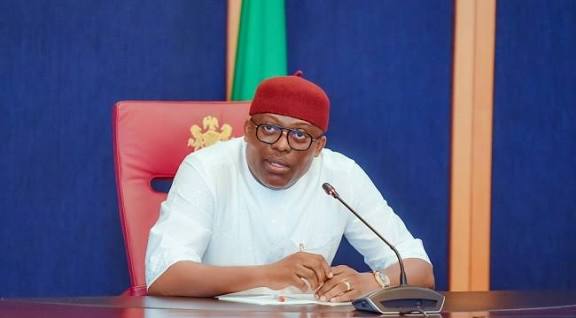
This is contained in a press released signed by the Executive Director of the Centre, Dr. Austin Maho, and made available to the press today in Abuja

Dr. Maho stressed that the initiative seeks to enhance media consciousness in the digital media age and to educate media practitioners on the nuances of reporting China and African issues in the face of global media propaganda fake news and misinformation

” Our goal is to provide authentic news about China Africa. As we all know the global information flow is skewed in favour of the global north and the only way to be able to correct this news imbalance is through collaboration and providing the platforms and network for verification of news to enhance objective, balanced and truthful journalism that serves the interests of our peoples”

*To achieve this Sino-Afrik, starting from 2025 plans to carry out a yearly research to document and assess media experience about China African relations., with emphasis on news accuracy, objectivity, fairness and balance. This enables the center to make make appropriate recommendations to address, cases of negative media propaganda, fake news and mis- information”.

Dr. Maho also commended the board of directors of the center for their support and efforts in ensuring that the Sino-Afrik is able to carry out its mandate assuring that once the report is ready it would be made public

Hainan FTP gains momentum, underscoring China’s commitment to opening up

By He Yin, People’s Daily

China’s Hainan Free Trade Port (FTP) will officially launch an island-wide independent customs operations on December 18, 2025. This milestone in the development of the Hainan FTP sends a clear and unequivocal message to the world: China remains steadfast in its commitment to expanding high-level opening up, even amid rising protectionist headwinds.

The establishment of the Hainan FTP is a major reform and opening up initiative personally planned and advanced by Chinese President Xi Jinping. Over the past seven years, the FTP has steadily taken shape, leveraging the advantages of China’s vast domestic market while aligning with high-standard international trade rules. It has increasingly become a focal point for both domestic and global investors. 

As a hallmark of China’s reform and opening up in the new era, the Hainan FTP is emerging as a pioneering platform of institutional innovation, a hub for regional cooperation, and a new engine for global economic integration. It embodies China’s readiness to share its development opportunities and work in partnership with the rest of the world.

The launch of independent customs operations does not imply isolation; rather, it marks a deeper level of opening up. The number of tariff items eligible for zero-tariff treatment will expand to around 6,600 – about 74 percent of all tariff items – representing a sharp increase of nearly 53 percentage points. A targeted, low-intervention regulatory model will be adopted, featuring streamlined supervision for zero-tariff goods and goods under relaxed management. 

Two distinct customs “lines” will facilitate these operations. The “first line” will connect the Hainan FTP with economies outside China’s customs territory, enabling the smooth flow of zero-tariff goods through simplified policies. The “second line” will link the FTP with the Chinese mainland, where tailored oversight will help safeguard the broader domestic market. Within the FTP, zero-tariff goods and processed products can be stored without time restrictions, offering businesses greater operational flexibility.

The Hainan FTP will also introduce more favorable tariff policies, simplified trade measures, improved travel and logistics procedures, and targeted regulatory oversight. With both institutional “software” and physical “hardware” in place, Hainan is set to become a modern, globally connected hub of vitality and openness, injecting strong momentum into China’s high-quality development and setting a benchmark for higher-level opening up.

Unlike traditional opening-up models that primarily focus on the flow of goods and production factors, institutional opening up – centered on rules, regulations, management, and standards – represents a higher standard of openness. The Hainan FTP is designed to align with the most advanced open economies in the world, providing a more stable and predictable regulatory environment and broader opportunities for businesses worldwide. 

The results are already evident. In 2024, despite global economic uncertainties, the number of newly registered foreign-invested firms in Hainan exceeded 2,000, representing a year-on-year increase of approximately 20 percent. At the 2025 Global Industrial Investment Promotion Conference for the Hainan Free Trade Port held in April, 265 projects were signed with a combined contract value of roughly 233.6 billion yuan ($32.44 billion). To date, investors from 176 countries and regions have entered the Hainan market, and the province’s economic openness has reached 35 percent. This continued inflow of global capital underscores the international business community’s confidence in China’s high-level opening up.

At a time when unilateralism and protectionism are on the rise and economic globalization is encountering severe challenges, China’s determination to remain open is particularly significant. 

Since the launch of its first pilot free trade zone (FTZ) in Shanghai in 2013, China has leveraged FTZs and the Hainan FTP to dismantle institutional barriers, reduce trade costs, and enhance the free flow of resources. Institutional opening up has thus become increasingly substantive, providing fresh momentum for global economic growth and creating new opportunities for win-win cooperation. 

China continues to shorten its negative list for foreign investment and expand its global network of high-standard free trade agreements. As the breadth, depth, and quality of its opening up increase, the benefits of reform and opening up are being shared more widely with the world. 

Time and again, facts have demonstrated that China’s pursuit of high-level opening up is not a short-term tactic, but a strategic choice aligned with global development trends and the country’s long-term development goals. China was, is, and will remain an attractive, safe, and promising destination for global investors.

The rise of the Hainan FTP offers a vivid testament to China’s evolving model of opening up. Looking ahead, China will continue to pursue high-level opening up as a driver of high-quality growth and will contribute even more actively to building an open world economy and a community with a shared future for mankind.

Gov Ododo Appoints Odaudu District Head of Abejukolo-Ife

Kogi State Governor, Ahmed Usman Ododo has approved the appointment of Mr Jonathan Kadiri Odaudu as the new District Head of Abejukolo, Omala Local Government Area.


In a letter signed on his behalf by the Commissioner for Local Government and Chieftaincy Affairs, Barrister Salami Momodu Ozigi Deedat, Governor Ododo said the appointment was based on the unblemished track records, heritage and community outreach of Mr Jonathan Kadiri Odaudu.


He further said that the appointment which is with effect from May 21st, 2025, was in the exercise of his powers derived from Section 29 of the Kogi State Chiefs (Appointment, Deposition and Establishment of Traditional Councils) Law, 2006.


Conveying the letter to the new District Head, the Onu Ife (Ojogba) and Chairman of Omala Local Government Traditional Council, Chief Boniface Musa congratulated him on his appointment and charged him to be fair and firm in the discharge of his duties.


Speaking after at the event, Odaudu thanked His Excellency, Governor Ahmed Usman Ododo, the Chairman of Omala Local Government Council, and the Omala Local Government Traditional Council for the confidence reposed in him and promised to uphold the moral of official standards required by the position of District Head.


The new District Head is a bona-fide indigene of Abejukolo, being the son of Odaudu Attah, the son of Atumeyi, the son of Ameh who is the son of Ochala Om’Echi, the founder of Abejukolo and the Ada-Anaga Onu Ife.


He holds the Nigeria Certificate of Education (NCE), a Bachelor of Education (B.Ed), and a Master of Business Administration (MBA) academic qualifications.


He retired from the service of the Kogi State Government as a Director of Education, having served meritoriously without blemish,

‎CHIEF AONDOAKAA BAGS AWARD FOR AGRICULTURAL DEVELOPMENT


‎Former Minister of Justice and Attorney General of the Federation, Chief Michael Kaase Aondoakaa SAN has again bagged an award in recognition of his role towards Agricultural development.

‎The award was presented to Chief Aondoakaa by Teryima & Msurshima Foundation on Thursday in Makurdi, Benue State during the flag-off ceremony of free seeds distribution to farmers in the state

‎Ter Ushongo, HRH. Augustine Kuma who presented the award to the former Attorney General of the Federation on behalf of Teryima & Msurshima Foundation, highlighted the great role played by Chief Aondoakaa especially in the area of Agricultural and called on Benue sons to emulate what the legal Icon is doing.

‎Recieving the award, Chief Aondoakaa appreciated the foundation for the special recognition saying, it will spur him to do more.

‎While calling on Government to intensify efforts towards securing the rural areas to enable farmers go back to their farm, Chief Aondoakaa appreciated the passion Teryima & Msurshima has for farmers in the state calling on Benue peoples to support the foundation to do more.

‎Highlights of the events was distribution of free seeds to Benue farmers.

170 European enterprises thrive in Wuxi National Hi-tech District

By Yao Xueqing, People’s Daily

Wuxi National Hi-tech District (WND), located in east China’s Jiangsu province, has become a magnet for foreign investment and a key hub for European enterprises. The district is now home to 170 European-invested enterprises from countries including Germany, France, Poland, the Netherlands, and Sweden, with total European investment reaching approximately 15 billion euros ($17.35 billion). 

A recent visit by People’s Daily offered a window into the thriving development of these enterprises and the drivers behind their successful cooperation with China.

“Twenty years ago, when senior executives and clients from our German headquarters came to China, the country’s auto industry was still in its early stages,” recalled Erich J. Koch, general manager of Gaudlitz Precision Technology (Wuxi) Co., Ltd. (Gaudlitz Precision). 

“What drew us in was China’s enormous market potential. In 2004, our headquarters made a strategic decision to invest in China, establishing our very first overseas production base,” Koch said.

Since then, China’s auto industry has grown rapidly, with the number of vehicles on the road surging year after year,” Koch noted. “Our judgment was spot on. The decision to invest in China is absolutely the right one.” 

The transformation of China’s auto industry from big to strong has strengthened Gaudlitz Precision’s confidence in deepening its presence in the Chinese market. The company has seen consistent annual revenue growth of 5 to 15 percent, cementing its position as a leader in its niche segment.

WND’s ongoing efforts to enhance its business environment have also offered strong practical support and solutions to help enterprises expand with confidence.

Bucher Hydraulics (Wuxi) Co., Ltd., a subsidiary of Switzerland-based Bucher Industries, chose to settle in Wuxi in 2018, drawn by China’s expansive market demand in construction machinery, automotive aftermarket, and materials handling.

“Some of the pro-business measures here are remarkably efficient. For example, updating business registration details can be done entirely online with just a passport photo. There’s no need for repeated trips, which saves a great deal of time and energy,” said Reinhold Frank Muehlon, an executive of Bucher Hydraulics.

Zhang Xiaojun, general manager of Hunting Energy Services (Wuxi) Co., Ltd., a subsidiary of a UK-based technology firm, highlighted Wuxi’s robust legal and innovation environment. “Wuxi boasts a market-oriented and globally competitive business ecosystem underpinned by a sound legal framework. We feel our intellectual property is genuinely respected and protected here. That’s the fertile ground where innovation can truly flourish.”

French company TLD Group, a global leader in airport ground support equipment, established its Wuxi manufacturing base in 2008. Today, it serves as the company’s major manufacturing hub in the Asia-Pacific region. Chief operating officer Wu Jianqiang credited the district’s well-developed industrial ecosystem for the company’s success.

“China is the world’s largest manufacturing country, with the most complete industrial system globally. The Yangtze River Delta region, in particular, boasts one of the most comprehensive manufacturing landscapes in the world,” Wu said. 

Take a cargo loader, for instance, he explained. It contains thousands of components including the frame, cab, covers, and brackets, sourced from over 100 first-tier suppliers. All of them are located in China, and 95 percent are within a one-hour drive from Wuxi.

Today, WND features a complete industrial chain and a thriving innovation ecosystem, attracting an increasing number of multinational corporations to scale up their presence. Many are building flagship factories and headquarters here, accelerating the development of world-class industrial clusters.

In March 2023, Schneider Electric inaugurated its fifth research and development (R&D) center in China – located in Wuxi. Later that year in November, the company broke ground on a green smart industrial park in the city. Covering 68,000 square meters, the first phase is expected to be operational by the end of 2025.

“Wuxi is promoting industrial transformation through technological innovation, with a strategic focus on frontier sectors such as artificial intelligence and emerging industries,” said Hu Xiao, senior vice president of Schneider Electric. “It is striving to become a globally influential hub for high-tech innovation. This gives us great confidence in the future of our operations here.”

WND’s strategic industries – including the Internet of Things, integrated circuits, biomedicine, and intelligent equipment – have each surpassed 100 billion yuan ($13.93 billion) in output. Today, high-tech products account for over 80 percent of total industrial output among enterprises above the designated size.

Over the past three years, WND has rolled out a comprehensive suite of talent support policies benefiting 35 European enterprises and nearly 2,000 employees. It has also helped high-level professionals resolve personal and family-related concerns such as children’s education, enabling them to put down roots and focus on innovation. 

With its strong industrial foundation, dynamic innovation environment, and abundant talent resources, WND is rapidly emerging as a new engine of global high-tech development.

Hangzhou fosters business-friendly environment to unleash innovation potential

By Dou Hanyang, People’s Daily

From humanoid robots to brain-computer interface devices and large AI models, a wave of cutting-edge technological innovations from Hangzhou, east China’s Zhejiang province, has been making headlines this year. Behind this surge in sci-tech breakthroughs lies a key driver: a robust, innovation-friendly business environment.

“Humanoid robots can replace nurses during ward rounds and monitor patients’ respiration and heart rate – all enabled by a chip embedded with the right algorithms,” said Wang Chao, CEO of Megaway Technology, a tech firm based in Hangzhou.

The company relocated to Hangzhou High-tech Zone (Binjiang) in 2023, settling in the local AIGC (Artificial Intelligence Generated Content) Industrial Innovation Center. “The industrial chains prioritized by Binjiang district are closely aligned with our development strategy,” Wang explained.

Hangzhou Qianzhen Digital Technology is another company drawn to the district. “There are many leading AI companies here. The innovation center often invites corporate executives to share insights on industry trends and policy updates,” said Wang Jinping, founder of the company. “These AI firms also provide our company with abundant resources and potential clients.”

For a new industry to take root and flourish, it must rest on a solid foundation. According to Gao Chong, deputy head of Binjiang district, Hangzhou has been designated as a pilot zone for next-generation AI innovation and application. Binjiang, at the core of this initiative, began cultivating its digital economy as early as 2003. Today, the district’s high-end software and AI industrial chain contributes 40 percent of the city’s total revenue in this sector.

“Many organizations are reaching out to us for collaboration,” said Wang You, associate professor at Zhejiang University’s College of Control Science and Engineering and founder of tech firm Rotunbot. 

A video of police officers patrolling the streets with a large black, ball-shaped robot in Wenzhou, Zhejiang, recently went viral online. The amphibious robot, capable of coordinating movement with other units, was developed by Wang and his team at a robotics innovation base in Hangzhou’s Xihu district. The base, co-established with Zhejiang University’s College of Control Science and Engineering, houses 12 innovation workshops, most of which are led by university faculty.

“I enjoy walking around the base to see what others are tinkering with,” Wang said. “The laser radars used in our robot came from a bionic leg robotics lab just down the hall.”

Zooming out to the broader Xihu district, there are four innovation ecosystems centered on Zhejiang University. Each ecosystem revolves around academic institutions, with Xihu authorities actively promoting inter-cluster collaboration, enabling the sharing of resources and the amplification of innovation capacity.

Hangzhou has also built an extensive innovation platform matrix comprising one national laboratory, two national scientific research facilities, 33 national key laboratories, and seven provincial-level labs – together fostering a dynamic environment that supports technological research and commercialization.

RoboCT, a company based in the Future Science and Technology City in Yuhang district, Hangzhou, specializes in developing exoskeleton robots that help individuals with disabilities stand and walk again through rehabilitation.

In 2021, just as the company was preparing for mass production, it faced a major challenge: finding a new manufacturing space. Co-founder Zhang Jiyu reported the issue to the management committee of the Future Science and Technology City and the local neighborhood committee. The next day, a government representative arrived with a list of available factory locations – two full pages of options. Zhang was deeply impressed.

When Hangzhou hosted the 4th Asian Para Games in 2023, Zhang and his team saw an opportunity to showcase their products and submitted a request to exhibit at the Games Village. “We didn’t expect much. We just thought we’d give it a shot,” Zhang recalled. To their surprise, the application was approved.

“Our exoskeleton robots were successfully exhibited at the 4th Asian Para Games Village. After international athletes tried them and shared their experiences online, the products quickly went viral overseas,” Zhang said. Since then, the company has expanded into international markets, with exports now reaching over 30 countries and regions.

To provide responsive and targeted support, Hangzhou has rolled out a range of initiatives, including a “chain chief system” with dedicated task forces, tailored policies for key enterprises, and a “sci-tech envoy program” to help companies overcome technical challenges.

Built on a strong digital economy foundation, driven by a thriving innovation ecosystem, and supported by proactive public services, Hangzhou continues to improve its business environment, releasing new momentum for innovation and entrepreneurship.

Building mutual trust, deepening dialogue, and striving for win-win outcomes

By Zhong Sheng, People’s Daily

From July 28 to 29 local time, China and the United States held a new round of economic and trade talks in Stockholm, Sweden. The two sides held candid, in-depth and constructive exchanges on China-U.S. economic and trade relations, macroeconomic policies, and other topics of mutual concern.

Both sides reviewed and acknowledged the consensus reached in Geneva and implementation of the framework established in London. Based on the consensus reached during the Stockholm talks, both sides will continue to push for extending the suspension of 24 percent of the U.S. reciprocal tariffs, along with China’s corresponding countermeasures, for an additional 90 days.

This round of talks played a positive role in consolidating consensus and deepening mutual trust, reinforcing confidence in the ability of both sides to resolve economic and trade disputes through equal dialogue and consultation.

China-U.S. economic and trade relations are extensive in scope and of great significance to the well-being of businesses and people in both countries. The positive signals sent from the Stockholm talks – particularly the decision to extend the suspension of 24 percent of the U.S. reciprocal tariffs, along with China’s corresponding countermeasures, for an additional 90 days – have been broadly welcomed.

The fewer the tariffs, the broader the space for cooperation. These pragmatic arrangements reflect the shared interests of both countries. They not only help build trust and facilitate the negotiation process, but also reaffirm the principle that resolving economic and trade disputes through dialogue and consultation is more efficient and less costly than confrontation.

This meeting continued the positive momentum generated by the China-U.S. economic and trade teams under the guidance of the important consensus reached by the two heads of state during their phone conversation. The previous economic and trade talks in Geneva and London reached the Geneva consensus and London framework respectively, effectively helping to cool down and defuse bilateral economic and trade frictions. 

It is a shared expectation within both countries and among the international community that China and the U.S. should resolve economic and trade disputes through equal dialogue and consultation while adhering to the principles of mutual respect, peaceful coexistence, and win-win cooperation.

Through sustained communication and dialogue, both sides are developing a clearer understanding of each other’s concerns. Common ground is expanding, as is the willingness to narrow differences and explore further avenues for cooperation. 

During the Stockholm meeting, China expressed that a stable, healthy and sustainable China-U.S. economic and trade relationship serves not only the development goals of both countries, but also contributes to global economic growth and stability. 

The U.S. side acknowledged that a stable China-U.S. economic and trade relationship is of great significance to the economies of both countries and the world at large. It expressed willingness to work with China to continue resolving economic and trade differences through the China-U.S. economic and trade consultation mechanism, deliver more substantive outcomes, and further stabilize China-U.S. economic and trade relations.

Since the new round of China-U.S. economic and trade frictions began, the U.S. side has consistently hyped the so-called “China rebalancing” rhetoric. While resolutely defending its own interests, China has consistently advocated an open, constructive approach to advancing bilateral cooperation through equal dialogue and consultation. As both economies continue to evolve, the nature of their economic and trade relationship must also adapt. The crucial question is: in which direction?

Will the two countries steer the relationship toward achieving greater mutual benefit and win-win outcomes, or allow it to spiral into confrontation and mutual harm? The answer should be self-evident. What’s required now is the wisdom and courage to seize opportunities.

China and the U.S. share broad common interests and enjoy vast potential for economic and trade cooperation. China’s pursuit of high-quality development and high-level opening up continues to create opportunities for mutually beneficial China-U.S. cooperation. 

Take manufacturing, for example. With its comprehensive industrial support systems, mature ecosystems, and strong growth momentum, China remains an attractive destination for American companies seeking to leverage the strengths of both economies and enhance their global competitiveness. 

In the consumer sector, China is prioritizing the expansion of domestic demand as a strategic focus and has adopted multiple measures to boost imports, benefiting American exporters. China welcomes efforts by companies from both sides to explore complementary advantages and achieve mutual benefit based on market demand. 

If the U.S. side values expanding exports to China, it should match its words with actions by removing unwarranted restrictions on bilateral business exchanges and creating a more enabling environment for cooperation.

Words must be backed by deeds. The journey of China-U.S. economic and trade talks has come this far, and the path ahead requires continued commitment and coordination. 

Both sides should continue to fully leverage the China-U.S. economic and trade consultation mechanism in accordance with the important consensus reached by the two heads of state during their phone conversation. By building on existing achievements, enhancing mutual understanding, strengthening cooperation, and deepening dialogue and consultation, China and the U.S. can work together to deliver more win-win outcomes, injecting more positive energy into the stable development of both countries and the global economy.

(Zhong Sheng is a pen name often used by People’s Daily to express its views on foreign policy and international affairs.) 

Coalition celebrates reported removal of Ojulari as NNPCL GCEO, demands arrest

A coalition of Civil Society Organizations (CSOs), including OilWatch Nigeria (OWN), Workers’ Rights Alliance (WRA), and Concerned Citizens, has voiced strong support for President Bola Tinubu regarding the reported removal of Bayo Ojulari as Group Chief Executive Officer of the Nigerian National Petroleum Corporation Limited (NNPCL).

During a press briefing held near the headquarters of the Economic and Financial Crimes Commission (EFCC) in Abuja on Thursday, the coalition accused Ojulari of causing significant harm to Nigeria’s economy and eroding public trust in governance.

Emmanuel Ekpeyong of OilWatch Nigeria, Danladi Usman of Workers’ Rights Alliance, and Babatunde Anifowoshe of Nigeria Concerned Citizens spoke on behalf of the coalition.

They stated, “We demand the immediate arrest and prosecution of Ojulari to ensure accountability for his egregious actions, which have robbed Nigerians of their collective wealth and future.”

Describing the alleged dismissal as timely and necessary, the group commended Tinubu for what they described as a decisive action against corruption.

“This bold decision demonstrates the President’s commitment to rooting out corruption and restoring integrity to Nigeria’s vital oil sector. By acting swiftly, President Tinubu has sent a clear message that his administration will not tolerate economic sabotage or a betrayal of public trust. This action aligns with the Renewed Hope Agenda, which promises transparency, accountability, and prosperity for all Nigerians. We applaud the President for prioritizing the interests of the nation over those of a corrupt few and urge him to maintain this momentum by ensuring justice is fully served,” the CSOs said.

The organizations also praised the EFCC and other security agencies for their prompt actions, which reportedly included preventing Ojulari from fleeing the country by confiscating his passports and issuing a red alert at airports.

“These actions ensure that Ojulari cannot escape accountability for his alleged crimes, including the ₦34.65 billion scandal. We commend the professionalism of our security forces and encourage them to continue their resolve as they pursue a thorough investigation and prosecution of Ojulari and his accomplices,” the coalition stated.

They also expressed plans to engage the international community regarding this issue.

“To further safeguard justice, OilWatch Nigeria, Workers’ Rights Alliance, and Concerned Citizens will submit formal letters to the US Embassy, EU Delegation, and UK High Commission in Nigeria by Friday, August 8, 2025, urging them to impose a travel ban on Bayo Ojulari and his known associates,” they added.

Additionally, the group urged President Tinubu to go beyond the reported dismissal by ordering the immediate reopening of the Port Harcourt Refinery, which they consider vital to the country’s economic future.

“We call on our dear President Tinubu, whose love for Nigeria has been demonstrated through this action, to take further steps by ordering the immediate reopening of the Port Harcourt Refinery. Reviving this critical asset will restore Nigeria’s energy self-sufficiency, create jobs, and benefit millions of Nigerians. It is the height of economic sabotage to keep this refinery closed due to one man’s desire to sell it to his allies as scrap and divert its crude oil allocation to cronies for personal gain.”

The coalition also demanded that the EFCC expedite Ojulari’s prosecution for the alleged ₦34.65 billion scandal, crude oil diversion, and other corrupt practices. “Justice must be swift and transparent to deter future economic sabotage,” they concluded.

Bavaria achieves fruitful results in 50 years of economic, trade cooperation with China

By Liu Zhonghua, People’s Daily

Located in southern Germany, Bavaria is the country’s largest federal state in terms of area and one of its most economically developed regions. Over the past several decades, Bavaria has achieved remarkable progress in economic and trade cooperation with China.

China is Bavaria’s largest trading partner worldwide and one of its most important overseas markets. It has ranked as the state’s top Asian investor for consecutive years, with approximately 500 Chinese companies now operating in Bavaria. Meanwhile, more than 2,000 Bavarian enterprises maintain business relations with China.

Bavaria is home to the headquarters of many German multinational corporations and a major center for the automotive, electronics, chemical, and pharmaceutical industries in Germany and Europe at large.

In January 1975, Franz Josef Strauss, then chairman of the Christian Social Union of Germany and former Bavarian Minister-President, visited China at invitation. He made several subsequent visits to China, laying crucial groundwork for exchanges and cooperation between Bavaria and China across political, economic, and social spheres.

“Strauss’ visit 50 years ago was truly groundbreaking. He recognized China’s potential and future importance, establishing the foundation for the sustained development of Bavaria-China relations,” said Bavarian Minister-President Markus Soder.

“Looking back at history, the most important lesson is that differences in systems, ideologies, and levels of economic and social development are not grounds to reject cooperation,” remarked Qiu Xuejun, consul-general of China in Munich. 

Since Strauss’ first visit to China in 1975, China and Bavaria have maintained close exchanges based on mutual benefit, win-win cooperation, and strong people-to-people connections. Their collaboration has yielded fruitful outcomes, serving as a model and a pillar of China-Germany relations.

On the eastern outskirts of Munich in Parsdorf, a state-of-the-art manufacturing facility gleams in the sunlight. Its clean, bright offices and expansive rooftop solar photovoltaic panels make it a showcase for modern industry. This is the new headquarters of the KraussMaffei Group, a 187-year-old manufacturer of plastic and rubber machinery employing approximately 5,000 people worldwide.

“Our new headquarters addresses the limitations of space and aging equipment at our former site. Intelligent scheduling, unmanned logistics, and energy-efficient building systems have significantly improved production efficiency while reducing carbon emissions by 62 percent and waste by 85 percent, setting a benchmark for the green industry,” said Zhang Chi, CEO of KraussMaffei Group.

In 2016, China National Chemical Corporation (ChemChina) acquired KraussMaffei. According to reports, since the acquisition, the company has undergone extensive structural transformations, from strategic planning to research and development (R&D) investment, from production line upgrades to global market expansion. Particularly notable progress has been made in green manufacturing, digital operations, and additive manufacturing.

Zhang noted that ChemChina’s support in clarifying development strategies, increasing R&D investment, upgrading production facilities, advancing technologies and expanding markets has accelerated KraussMaffei’s transformation and development. These initiatives have not only promoted corporate growth but also generated tangible benefits for local economic and social development, including increased investment, job security, technology enhancement, market diversification, and tax revenue.

Bavaria serves as both an important industrial manufacturing base in Europe and a frontier for China-Germany practical cooperation. In recent years, an increasing number of Chinese companies have established a presence in Bavaria in emerging industries such as smart manufacturing, green mobility, and new energy. Meanwhile, German companies are leveraging the scale and technological momentum of the Chinese market to upgrade and globalize their operations.

Recently, China’s NIO, a leading global smart electric vehicle (EV) company, officially opened its 20th battery-swapping station in Germany, five of which are located in Bavaria. This innovative green mobility model has drawn considerable interest from Bavarian policymakers and businesses. As one of the earliest Chinese EV companies to enter Bavaria, NIO established its global design center in Munich in 2015 and now employs more than 350 people there.

“Over the past five years, direct investment from Chinese companies in Bavaria has continued to increase. Around 500 Chinese companies currently operate here, covering multiple sectors including mobility, digitalization, energy, life sciences, and new materials,” said Ulrike Hoffmann, director of invest in Bavaria. 

Chinese companies value the high-quality workforce, robust network of small and medium-sized enterprises, and excellent transport and business environment here, making Bavaria a hotspot for Chinese companies seeking to expand globally, Hoffmann explained.

Bavaria also maintains sister-state or sister-province relationships with three Chinese provinces – Shandong, Guangdong, and Sichuan – more than any other German federal state. These partnerships have fostered cooperation in science and technology, education, environmental protection, culture, and other fields. 

Hoffmann stated, “Bavaria hosts annual business dialogues with China to provide platforms for communication between enterprises and governments. We look forward to welcoming more Chinese partners to invest in Bavaria.”

Building global solidarity to advance AI for good

By He Yin, People’s Daily

The 2025 World AI Conference (WAIC) and High-Level Meeting on Global AI Governance were held from July 26 to 28 in Shanghai, marking a major step in advancing the Global AI Governance Initiative proposed by Chinese President Xi Jinping. The event sought to bring together global wisdom and innovation to steer AI development toward the common good.

Under the theme “Global Solidarity in the AI Era,” the 2025 WAIC spotlighted ten priority areas, including scientific AI development and AI-driven industrial modernization. The conference served as a global platform to showcase cutting-edge technologies, emerging industry trends, and forward-looking approaches to AI governance. 

A highlight of the event was the release of an action plan for global AI governance, calling on all parties to take coordinated steps in 13 key areas, such as empowering industries with AI, accelerating the construction of digital infrastructure, fostering a diverse and open innovation ecosystem, and strengthening international cooperation in AI capacity building. The plan represents a growing international consensus on promoting global AI development and governance through joint efforts.

As Turing Award laureate Yoshua Bengio observed, AI products should be treated as global public goods. A defining challenge of the times is how to transform breakthroughs in algorithms into tangible benefits that are widely shared and accessible. 

Achieving this requires steadfast commitment to openness and inclusiveness, ensuring that more countries and communities can access and leverage AI technologies. Only through this approach can AI’s potential be fully realized to drive global economic and social development and to address shared challenges.

At the conference, the China Meteorological Administration officially launched its national early warning solution “MAZU” and donated the “MAZU-Urban,” an AI-powered early warning system for multi-hazard disaster prevention, to Djibouti and Mongolia. 

Other innovations on display included intelligent aquaculture solutions that improve productivity and livelihoods, AI-powered platforms that enhance railway safety, and open-source large models designed to advance inclusive AI technology. Chinese AI technologies contributing to sustainable development in Asia, Africa, South America, and Europe drew widespread attention.

As China promotes its “AI+” initiative, its development experience and technological solutions are increasingly benefiting the world, injecting fresh impetus into the global effort to harness AI for good.

The sustained advancement of AI technologies worldwide depends on an open and inclusive environment for innovation and cooperation. The 2025 WAIC unveiled over 3,000 AI innovations, including over 100 global and China-first debuts, showcasing a dynamic vision for global AI cooperation. Besides, 240 projects competed for the Super AI Leader Award, with international entries accounting for 17 percent. The event serves as a platform for dialogue and collaboration around new breakthroughs and applications. 

It also saw the launch of the International Open Source AI Cooperation Initiative and the establishment of the Center for Global AI Innovation Governance, both aimed at leveraging open-source innovation to strengthen global AI ecosystems. 

When innovation flows freely and integrates deeply across borders, AI technologies can evolve more rapidly and deliver more effective solutions that serve all humanity. Upholding the spirit of openness and cooperation, China stands ready to join other countries in advancing joint research and development, expanding open-source collaboration, and driving AI development to new heights.

While AI brings unprecedented opportunities, it also entails new and complex risks. Balancing development and security requires a broader consensus and more practical solutions. At the conference, China proposed the creation of a global AI cooperation organization, an initiative that responds to the aspirations of the Global South and seeks to bridge the digital and intelligent divide. 

China has consistently worked to strengthen global AI governance. It has facilitated consensus at the UN General Assembly on a resolution to enhance international cooperation in AI capacity building, co-hosted the Group of Friends for International Cooperation on AI Capacity-building, and partnered with the UN to organize AI training workshops. 

China is actively fulfilling its commitments under the UN’s Pact for the Future and the Global Digital Compact, contributing both ideas and concrete actions to the improvement of the global AI governance system.

By coordinating development and security and deepening alignment with other countries, China will work with all parties to accelerate the establishment of a broadly accepted global framework and set of rules for global AI governance.

In this era of intelligence, only through global solidarity and cooperation can the world seize opportunities and confront challenges effectively. China will remain committed to a people-centered approach, promoting AI for good, equity and inclusiveness, and fostering collaborative governance. It will work with all parties to strengthen international cooperation and improve global AI governance, building an inclusive, open, sustainable, fair, secure, and trustworthy digital and intelligent future for all.