IADI, Others Set to Protest Against Customs Boss Over Smuggling Allegations, Promotion Scandal

• Calls on Tinubu to Reverse Tenure Extension

• As Groups Decry Nepotism, Favoritism, and Disregard for Due Process

Amid rising concerns over governance failures within the Nigeria Customs Service (NCS), a coalition of civil society organizations led by the Integrity Advocacy for Development Initiative (IADI) has announced plans to stage a nationwide protest and press conference against the leadership of the agency, particularly the Comptroller-General, Bashir Adewale Adeniyi.

According to reports, the planned civic action stems from a series of unresolved allegations, including collusion with rice smugglers, promotion irregularities, nepotism, and a growing culture of impunity and administrative silence within the Service.
In a statement released on Wednesday, signed by IADI’s Executive Director, Comrade Christopher Ofomhi, the group disclosed that the protest is officially scheduled for Friday, 15th August 2025. The procession will begin at Unity Fountain, Abuja, and proceed to the Customs Headquarters, where demonstrators will demand accountability and comprehensive reform.

The group also revealed that a formal petition dated 6th August 2025 has been submitted to the Commissioner of Police, FCT Command, requesting approval and security coverage for the protest. IADI emphasized that the protest will be peaceful, lawful, and focused on drawing national attention to deep-rooted issues in the Customs Service that have long been ignored.
Of particular concern according to the group, are fresh allegations that officers collect ₦250,000 per boat to facilitate rice smuggling through the Badagry waterways. These illegal activities, reportedly carried out in full view of Customs patrol boats, raise grave concerns about complicity at the highest levels.

The coalition also decried alleged favoritism in special promotions, opaque examination procedures, and violations of seniority protocols, all of which they say are eroding morale within the Service and undermining public trust.

Comrade Ofomhi lamented that despite repeated petitions and public outcries, the Comptroller-General’s office has remained silent. “We can no longer be quiet while due process is consistently trampled upon. It is our constitutional responsibility to demand accountability where there is silence and to challenge abuse where negligence thrives,” he declared.

Ofomhi also disclosed that the protest will be an avenue to call on President Bola Ahmed Tinubu to reconsider and reverse the recent tenure extension granted to CG Bashir Adewale Adeniyi, which he insists was not based on merit or transparency.

“The extension appears to be a product of favoritism, not competence,” the group alleged, warning that such practices must not be tolerated under an administration committed to the Renewed Hope Agenda.

They further stressed that bad leadership must be confronted, not rewarded, and vowed to escalate civic pressure if the authorities fail to act. While expressing openness to dialogue, the civil society groups made it clear that continued inaction would prompt a broader nationwide campaign to restore accountability and integrity across Nigeria’s security and revenue-generating institutions.

Dickson to Launch National Cake: Nigeria’s Civic Board Game

At a time when Nigeria is battling not just corruption or insecurity but an identity crisis and generational disconnection, renowned coach and Human Capital Engineer Victor Prince Dickson is leading a civic renaissance with a board game.

National Cake, the One-oasis board experience is not just a game. It is a movement, a metaphor made real. A classroom without walls and a mirror of our national soul. Set to launch officially on September 25, 2025, National Cake dares to do what no civic education textbook or policy reform has done: reconnect Nigerians to Nigeria, one story, one spin, one revelation at a time with about 200 events and policies that shaped Nigerians.

This is not about play, it is about healing,” Dickson says.“We have criticized Nigeria long enough. National Cake is the tool to rekindle belonging, confront our shared pain, and reimagine our collective promise. The truth is that if we do not teach ourselves who we are, the world will tell us who we are not. If we do not guide the children through the crossroads, they may lose the road entirely.”

Built on a foundation of neuroscience, storytelling, and patriotism, National Cake takes players on a journey through Nigerian history, 1914 to 2025, and even goes further to 2075. Blending memory, strategy and emotion.

The game uncovers hidden truths, provokes personal reflection and invites every player, young or old, to ask: What role will I play in rebuilding this nation?

It is civic education reborn. Culture reformed. Patriotism gamified.

In a country where youth often feel excluded and leaders are vilified, National Cake offers a rare and refreshing handshake across generations, a chance for elders to share wisdom, and for youth to reclaim identity and voice.

Victor’s larger mission is clear: to shift the national cake metaphor of “eating the cake” from unending consumption to unending responsibility, using history, culture, experiences, Emotions, and play craft as tools for civic rebirth.

In his own words, ‘If you know your History, the Future will not be a mystery…”With the National Cake launch, Dickson is not selling a product; he is offering a tool of reconciliation, a mechanism of remembrance and a playable prophecy of Nigeria’s possible future.

Victor invites you to join the movement. One box. One player. One nation reborn.Victor Prince Dickson to Launch National Cake: Nigeria’s Civic Board Game designed to Heal the Nation

Abuja, Nigeria.
At a time when Nigeria is battling not just corruption or insecurity but an identity crisis and generational disconnection, renowned coach and Human Capital Engineer Victor Prince Dickson is leading a civic renaissance with a board game.

National Cake, the One-oasis board experience is not just a game. It is a movement, a metaphor made real. A classroom without walls and a mirror of our national soul. Set to launch officially on September 25, 2025, National Cake dares to do what no civic education textbook or policy reform has done: reconnect Nigerians to Nigeria, one story, one spin, one revelation at a time with about 200 events and policies that shaped Nigerians.

This is not about play, it is about healing,” Dickson says.“We have criticized Nigeria long enough. National Cake is the tool to rekindle belonging, confront our shared pain, and reimagine our collective promise. The truth is that if we do not teach ourselves who we are, the world will tell us who we are not. If we do not guide the children through the crossroads, they may lose the road entirely.”

Built on a foundation of neuroscience, storytelling, and patriotism, National Cake takes players on a journey through Nigerian history, 1914 to 2025, and even goes further to 2075. Blending memory, strategy and emotion.

The game uncovers hidden truths, provokes personal reflection and invites every player, young or old, to ask: What role will I play in rebuilding this nation?

It is civic education reborn. Culture reformed. Patriotism gamified.

In a country where youth often feel excluded and leaders are vilified, National Cake offers a rare and refreshing handshake across generations, a chance for elders to share wisdom, and for youth to reclaim identity and voice.

Victor’s larger mission is clear: to shift the national cake metaphor of “eating the cake” from unending consumption to unending responsibility, using history, culture, experiences, Emotions, and play craft as tools for civic rebirth.

In his own words, ‘If you know your History, the Future will not be a mystery…”With the National Cake launch, Dickson is not selling a product; he is offering a tool of reconciliation, a mechanism of remembrance and a playable prophecy of Nigeria’s possible future.
Victor invites you to join the movement. One box. One player. One nation reborn.


With Thisday Newspaper

China’s smart farms bring innovation to life

By Yu Jingxian, People’s Daily

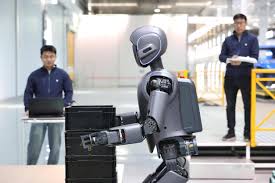
Under the midsummer sun, late-season rice shimmers in paddies at Fuxi Farm in Xinlin village, Fanchang district, Wuhu, east China’s Anhui province. Agricultural robots methodically traverse fields, monitoring crop conditions while embedded sensors collect real-time data on soil moisture, weather conditions, and pest prevalence – all transmitted to the farm’s central command hub.

“This facility functions as the brain of the entire farm,” explained Hou Guangyu, a Gen-Z agricultural manager, remotely operating robots via tablet. “Integrated smart systems allow comprehensive field management from the office.”

China’s agricultural landscape is undergoing a technological transformation as artificial intelligence, big data analytics, and low-altitude aerial systems expand their operational footprint.

Fuxi Farm is one of the smart agriculture pilot projects launched by the Chinese Academy of Sciences (CAS). Its successful model has now been replicated across Inner Mongolia, Chongqing, Anhui, and Hubei, moving steadily toward commercialization and large-scale application.

“Conventional farming involves significant unpredictability. Yet big data enables simulation and predicts analysis for every step – from planting schedules to irrigation protocols and pest control – so we can choose the best approach,” said Zhang Yucheng, a senior engineer at the CAS Institute of Computing Technology. 

At Fuxi Farm, tailored models and algorithms for moisture regulation, weather adaptation, and pest forecasting are being developed and refined to enhance precision agriculture, supporting both yield stability and productivity gains.

According to an official with China’s Ministry of Agriculture and Rural Affairs, smart farming systems are being deployed across crop cultivation, livestock breeding, and aquaculture sectors. These integrated platforms enable intelligent sensing, resource decision-making, and process control, significantly elevating labor productivity, resource utilization efficiency, and per-unit land output.

Illustrating this trend, an autonomous inspection robot developed by Muyuan Foods Co., Ltd. serves as a digital veterinarian at a smart livestock farm in Dahualing village, Neixiang county, central China’s Henan province. Equipped with multiple sensors, it continuously monitors animal biometrics and alerts technicians to abnormalities.

 “Infrared thermography and smart thermometers detect abnormal temperature fluctuations,” explained Hu Yiyong, head of intelligent diagnostics at the company.

Meanwhile, in Laizhou, east China’s Shandong province, industrial aquaculture facilities are using intelligent feeding systems that factor in fish behavior and growth patterns to deliver precise amounts of food. “The system learns from observational data to refine behavioral modeling and algorithmic precision,” said Li Wensheng, deputy general manager of a local aquaculture company.

In October 2024, China’s Ministry of Agriculture and Rural Affairs released a national smart agriculture action plan for the period of 2024-2028. According to the plan, by the end of 2026, public service capacity for smart agriculture should be initially established, with over 30 percent of agricultural production processes becoming information-driven. By the end of 2028, informatization coverage is expected to exceed 32 percent, with smart technologies becoming primary drivers of cost reduction and yield enhancement for key crops and livestock.

“Effective drought response or pest containment demands both speed and precision, which requires complex backend systems,” said Ren Ni, head of the Institute of Agricultural Information at the Jiangsu Academy of Agricultural Sciences. She identified validated data streams, robust algorithmic frameworks, and resilient equipment as foundational elements of functional smart agriculture.

China has established 34 national-level smart agriculture innovation centers and sub-centers, and 35 agricultural information technology laboratories, achieving breakthroughs in high-throughput crop phenotyping, on-site soil analysis, and large-scale robotic platforms.

Nevertheless, experts also acknowledge the challenges of large-scale deployment. The country’s diverse geography, climate zones, and crop-livestock heterogeneity complicate standardized algorithm development and equipment design, requiring integrated systems that balance scalability with cost efficiency.

While developed countries enable single operators to manage over 5,000 mu of farmland (approximately 333.33 hectares) through advanced agricultural technology, China’s smart farm initiatives aim for operational capacities exceeding 10,000 mu per manager, aligning productivity benchmarks with global competitiveness.

Upholding sincerity, principles to advance China-U.S. economic, trade relations

By Zhong Sheng, People’s Daily

A new round of economic and trade talks between China and the United States is currently underway in Sweden. This follows the significant consensus reached during the Geneva talks and the establishment of the London Framework during the London meeting. Once again, the two sides are holding face-to-face consultations on economic and trade issues. 

At a time when the global economy is facing uncertainties, the international community expects both China and the U.S. to make good use of existing consultation mechanisms, take concrete actions to implement the important consensus reached by the two heads of state, and jointly steer bilateral economic and trade relations toward the right path, which is essential for resolving differences through equal dialogue and consultation.

The Chinese delegation came to Sweden with sincerity. Despite vicissitudes in China-U.S. economic and trade relations in recent years, China has consistently maintained a constructive approach and remained committed to resolving issues through equal dialogue and consultation.

Amid the current round of economic and trade frictions, China has never closed the door to negotiation while firmly safeguarding its legitimate rights and interests. From Geneva to London, China has demonstrated sincerity, advancing the talks with tangible efforts and implementing the consensus with concrete actions. These moves have bolstered confidence that differences can be resolved through equal dialogue.

During the current talks in Sweden, China remains committed to working with the U.S. toward tangible outcomes. This commitment stems from a deep understanding of the mutually beneficial nature of China-U.S. economic and trade relations, as well as a clear recognition of the unique global responsibilities shared by both countries. 

Differences between countries are inevitable; the key lies in how they are addressed. Dialogue and consultation provide not only a more efficient path forward, but also serve to forestall unnecessary costs. China’s development interests must not be compromised. The two sides should explore possible solutions through dialogue based on mutual respect. Upholding the principles of mutual respect, peaceful coexistence, and win-win cooperation in economic and trade consultations aligns with the expectations of both peoples and the wider international community.

Sincerity, however, does not imply compromising on principles. Consultations have bottom lines, and cooperation must be grounded in clear principles. Any dialogue must be conducted based on mutual respect, equality, and mutual benefit.

What China seeks to safeguard is not only its own legitimate rights and interests, but also international fairness and justice. China’s development achievements are the result of the hard work of the Chinese people, not bestowed by others, nor achieved at the expense of other countries. These achievements must not be undermined, and China’s right to development cannot be denied. 

In the face of U.S. tariff blackmail, investment restrictions, and technological blockades, China’s determination to defend its legitimate rights and interests remains unwavering, and its capabilities are evident to all. 

The recently released mid-year economic data for 2025 demonstrate that, despite sharp changes in the international landscape and growing external pressure, the Chinese economy has maintained strong resilience and vitality. In the first half of the year, China’s GDP grew 5.3 percent year on year, an increase of 0.3 percentage points over both the same period last year and the full-year growth rate for 2024. Total goods imports and exports in yuan-denominated terms reached 21.79 trillion yuan ($3.03 trillion), up 2.9 percent year on year. These figures underscore China’s ability to withstand pressure and sustain stable growth. 

Looking ahead, regardless of how the external environment evolves, China has full confidence in its capacity to maintain steady and positive economic momentum, advance high-quality development, and continue contributing stability and certainty to the world economy.

China is keenly aware of the long-term and complex nature of these negotiations. It recognizes that the trade frictions unilaterally initiated by the U.S. are not merely about short-term interests, but fundamentally challenge the rules that underpin the international economic and trade order. 

China firmly opposes any acts of unilateralism and protectionism, which threaten to undermine the multilateral trading system. This position is taken not only to protect its own interests, but also to uphold the institutional foundation for global development. 

An increasing number of insightful voices in the international community have observed that no country can remain unscathed in the face of economic coercion. Only by firmly upholding principled positions can countries truly protect their legitimate interests in negotiations. Should foundational principles be breached, coercion will invariably escalate and ultimately imperil all countries.

Turbulent seas demand steady and united navigation. All parties should work together to safeguard the rules-based multilateral trading system and foster an open, inclusive, and non-discriminatory global trade environment. Both history and reality have repeatedly proven that dialogue and cooperation are the only viable way to resolve economic and trade disputes, while threats and coercion lead nowhere.

With utmost sincerity and firm adherence to principles, China stands ready to work with the U.S., leveraging this round of economic and trade talks in Sweden as an opportunity to build more consensus, enhance mutual trust, reduce misjudgments, and deepen cooperation. Together, the two sides can inject stronger positive momentum into their respective development and the stability and prosperity of the global economy.

(Zhong Sheng is a pen name often used by People’s Daily to express its views on foreign policy and international affairs.)

Building mutual trust, deepening dialogue, striving for win-win outcomes

By Zhong Sheng, People’s Daily

From July 28 to 29, China and the United States held a new round of economic and trade talks in Stockholm, Sweden. The two sides held candid, in-depth and constructive exchanges on economic and trade issues of mutual concern, including China-U.S. economic relations and macroeconomic policies. 

They reviewed and affirmed the implementation of the consensus reached in Geneva and the framework agreed on in London talks. Based on the meeting consensus, both sides will continue pushing for the continued extension by 90 days of the pause on 24 percent of reciprocal tariffs of the U.S. side, as well as counter measures of the Chinese side.

The talks this time played a positive role in consolidating consensus and deepening mutual trust, further boosting confidence for both parties to resolve economic and trade disputes through equal dialogue and consultation.

China-U.S. economic and trade relations are vast in scale and broad in scope, profoundly affecting the welfare of businesses and people in both countries. 

Through joint efforts by both sides, the Stockholm talks sent positive signals. The continued extension of pause on 24 percent of reciprocal tariffs of the U.S. side, as well as counter measures of the Chinese side represents a consensus welcomed by all parties. 

The fewer the tariffs, the greater the cooperation. Such pragmatic arrangements developed through China-U.S. dialogue not only help build mutual trust and advance negotiations, but reaffirm that resolving trade disputes through and consultation proves more efficient and less costly than alternatives.

This round of talks continued the positive momentum formed by the China-U.S. economic and trade teams under the guidance of the important consensus reached by the two heads of state during their phone conversation. The previous economic and trade talks in Geneva and London reached a consensus in Geneva and a framework in London, respectively, effectively helping to cool down and defuse bilateral economic and trade frictions. 

This round maintained positive momentum established by both economic teams under their leaders’ strategic guidance. Previous Geneva talks yielded substantive agreements, while London negotiations produced a framework—collectively easing bilateral trade tensions.

There exists broad consensus across both countries and the international community that China and the United States should resolve trade disputes through equal dialogue, guided by the principles of mutual respect, peaceful coexistence, and win-win cooperation.

Through sustained engagement, both sides have deepened their understanding of respective concerns, with growing alignment on resolving differences and expanding cooperation. 

At the Stockholm meeting, China expressed that a stable, healthy and sustainable China-U.S. economic and trade relationship serves not only the two countries’ respective development goals, but also contributes to global economic growth and stability. 

At the Stockholm meeting, China emphasized that a stable, healthy, and sustainable bilateral economic relationship serves not only both countries’ development objectives but also contributes to global economic growth and stability.

The U.S. side also acknowledged that a stable U.S.-China economic and trade relationship is of great significance to the economies of both countries and the world at large. It expressed willingness to work with the Chinese side to continue to resolve differences in the economic and trade field through the consultation mechanism, promote more outcomes from the talks, and further stabilize bilateral economic and trade relations.

Since the onset of recent China-U.S. trade tensions, the U.S. narratives have frequently emphasized a so-called “China rebalancing” rhetoric. While firmly safeguarding its interests, China remains committed to resolving differences through equal dialogue and consultation, seeking to unlock bilateral economic potential. 

The trajectory of China-U.S. economic relations must evolve with both nations’ development. The key question remains: Will both sides steer toward mutual benefit and shared success, or descend into confrontation? The optimal path is evident – what’s needed is the wisdom and courage to seize opportunities.

Shared interests and vast cooperation potential define the China-U.S. economic relationship. China’s ongoing high-quality development and expanding market openness generate significant opportunities for mutually beneficial collaboration.

In manufacturing, China’s integrated supply chains, robust industrial ecosystems, and dynamic growth are attracting increasing numbers of U.S. firms. These companies expand operations in China to leverage complementary resources from both nations, thereby strengthening their global competitiveness.

Within the consumer sector, China is treating the expansion of domestic demand as a strategic initiative, taking multiple measures to actively expand imports, with American companies being important beneficiaries. 

China welcomes enterprises from both sides achieve greater complementary advantages and mutual benefit based on each other’s needs. Given the U.S. objective of expanding exports to China, reducing bilateral trade barriers and fostering a conducive business environment would serve this shared interest. Words require credibility, and actions must yield results. Progress in China-U.S. economic talks has been hard-won, and sustained advancement demands continued alignment from both sides.

Both sides should continue to fully leverage the role of the China-U.S. economic and trade consultation mechanism in accordance with the important consensus reached by the two heads of state during their phone conversation, continue to implement the consensus and results that have already been formed, constantly enhance consensus, reduce misunderstandings, strengthen cooperation, further deepen dialogue and consultations, and strive for more win-win outcomes, thus injecting more positive energy into the stable development of both countries and the global economy.

(Zhong Sheng is a pen name often used by People’s Daily to express its views on foreign policy and international affairs.) 

Cultural inspirations from three-hare symbol

By Shi Ling, People’s Daily

The three-hare symbol – depicting three hares chasing each other in an eternal circle, each sharing an ear with the next to create a tripartite symmetry – has captivated the imagination of historians and artists across civilizations.

This visually striking symbol appears not only in the ancient murals of the Mogao Grottoes in Dunhuang, northwest China’s Gansu province, but also on metalwork in Afghanistan, ceramics in Egypt, and tile paintings in the United Kingdom. 

Its recent prominence at the fourth Dialogue on Exchanges and Mutual Learning Among Civilizations sparked strong resonance among international participants.

Born in ancient Dunhuang, the three hares silently witness the vibrant cultural and commercial exchanges that flourished along the Silk Road. Today, the symbol continues to inspire new narratives of cross-cultural dialogue. 

From the Digital Dunhuang platform to international art exhibitions, from exported conservation techniques to the expanding field of Dunhuang studies worldwide, more and more people contribute to preserving this cultural treasure. These efforts continuously revitalize Dunhuang’s heritage in the modern era.

The three-hare symbol,exemplifies Dunhuang’s role in historical cultural integration. Greco-Roman Ionic columns alongside Gandhara/Gupta influenced murals in the Mogao Grottoes demonstrate China’s historical openness. Manuscripts recording Persia, Sogdiana, India, and other distant regions provide tangible evidence of peaceful Silk Road exchange.

As a crossroads of civilizations, Dunhuang embodies Chinese culture’s inclusive spirit. From the bustling caravans of the past to today’s expanding cultural exchanges, the long-running Dunhuang story continues, illuminating the enduring spirit of Chinese civilization.

As the ancient paths give way to modern corridors, this legacy gains renewed vitality. The soft jingle of camel bells has given way to the rumble of high-speed trains; sailing ships have been replaced by container vessels; and an aerial Silk Road now connects distant lands through trade and cooperation. China has joined hands with over 150 Belt and Road partner countries, breathing new life into the ancient trade route.

China’s diplomatic philosophy, grounded in the belief that “unity brings strength, while isolation leads to weakness,” advocates for mutual benefit, trust, harmony, and good neighborliness. It reflects a commitment to common development and shared prosperity.

True cultural prosperity emerges through exchanges and mutual appreciation. While the three-hare symbol appears in different countries with a common structure, each version presents its own artistic interpretation. On the ceiling of Cave 407 of Mogao Grottoes, the hares are surrounded by flying apsaras and lotus flowers, brimming with vitality and elegance. In the stained-glass windows of Germany’s Paderborn Cathedral, they take on the distinctive forms of Gothic art. These cultural variations highlight how exchanges foster both preservation and reinvention.

As humanity faces shared challenges and aspirations, culture understanding plays a crucial role in guiding development and sustaining peace. Dialogue among civilizations is more essential than ever.

And the three-hare symbol is not alone. Over 2,000 years ago, following the groundbreaking westward journey of royal emissary Zhang Qian in China’s Han Dynasty (202BC-220AD), the pomegranate was introduced to China. Today, six pomegranate trees flourish in the China-Central Asia Friendship Forest in Xi’an, northwest China’s Shaanxi province, a living symbol of solidarity and mutual growth. 

History brings hearts closer, and cultural inheritance strengthens cooperation. May the music of the Silk Road continue to echo across generations, the tree of friendship remain evergreen, the flowers of civilization bloom in harmony, and the fruits of shared progress be enjoyed by all.

170 European enterprises thrive in Wuxi National Hi-tech District

By Yao Xueqing, People’s Daily

Wuxi National Hi-tech District (WND) ranks among Jiangsu province’s hubs for foreign-invested enterprises in Eastern China. It hosts 170 European enterprises from Germany, France, Poland, the Netherlands, and Sweden, with cumulative European investment exceeding 15 billion euros ($17.14 billion). 

Recent insights gathered by People’s Daily reporters reveal key factors behind European companies’ successful partnerships in WND.

“Twenty years ago, when executives from our German headquarters visited China, the country’s auto industry was still in its infancy,” said Erich J. Koch, general manager of Gaudlitz Precision Technology (Wuxi) Co., Ltd. (Gaudlitz Precision). 

“What attracted us was the immense potential of the Chinese market, and in 2004, our headquarters made the strategic decision to invest in China – our very first overseas production base,” Koch said. 

“China’s auto industry has since experienced rapid growth, with the number of vehicles on the road rising sharply,” Koch noted. “Our judgment was spot on. The decision to invest in China has proven to be absolutely right.” 

China’s transition from automotive scale to strength has reinforced Gaudlitz Precision’s commitment to the market. Since its establishment, this automotive parts manufacturing company’s annual revenue has grown by 5 to 15 percent, making it a leader in its niche segment.

At the same time, WND has continuously improved its business environment, offering strong support and practical solutions to help enterprises grow with confidence.

Bucher Hydraulics (Wuxi) Co., Ltd., a subsidiary of Switzerland-based Bucher Industries, settled in Wuxi in 2018, drawn by China’s vast market potential in sectors such as construction machinery, automotive aftermarket, and materials handling.

“Some of the pro-business policies in Wuxi are incredibly convenient. For example, to update business registration details, requires only a photo of the passport holder – a fully digital process eliminating the need for multiple visits. The entire process can be done online, saving us the hassle of multiple trips,” said Reinhold Frank Muehlon, an executive of Bucher Hydraulics.

Zhang Xiaojun, general manager of Hunting Energy Services (Wuxi) Co., Ltd., a subsidiary of a UK-based technology firm, emphasized the importance of intellectual property protection for tech companies. “Wuxi boasts a market-oriented and world-class business environment governed by a sound legal framework. We’ve received strong legal protection and the confidence to innovate,” he said. “We can truly feel that intellectual property is respected and protected here. That’s the fertile ground where companies can thrive.”

French company TLD Group, a global leader in airport ground support equipment, established its Wuxi manufacturing base in 2008. The facility now serves as TLD Group’s primary Asia-Pacific production hub. Chief operating officer Wu Jianqiang of the company believes the district’s sound industrial ecosystem is a key factor in the company’s growth.

“China is the world’s largest manufacturing powerhouse, with the most complete industrial system globally. The Yangtze River Delta region, in particular, has one of the most comprehensive manufacturing landscapes,” Wu said. 

Take a cargo loader for instance, he explained, it consists of thousands of components including the frame, cab, covers, and brackets, supplied by over 100 first-tier suppliers. All of these key suppliers can be found in China, and 95% are located within Wuxi and its surrounding one-hour radius.

Today, WND boasts a comprehensive range of industries and a robust industrial ecosystem, attracting an increasing number of multinational corporations to scale up their presence. Many are building flagship factories and headquarters here, accelerating the formation of world-class industrial clusters.

In March 2023, Schneider Electric launched its China research and development (R&D) center in Wuxi, the company’s fifth R&D center in China. In November the same year, it broke ground on a green smart industrial park in Wuxi. The first phase will cover 68,000 square meters and is scheduled to put into operation by the end of 2025.

“Wuxi is driving industrial growth through technological innovation, with a strategic focus on frontier technologies such as artificial intelligence and emerging industries,” said Hu Xiao, senior vice president of Schneider Electric. “It is working to build a globally influential high-tech hub. This gives us a great opportunity to innovate and reinforces our confidence in the Chinese market.”

WND has seen its pillar industries including the Internet of Things, integrated circuits, biomedicine, and intelligent equipment each surpass the 100-billion-yuan ($13.93 billion) mark. High-tech output now accounts for over 80% of the total industrial output of enterprises above the designated size in the district.

Over three years, WND has provided comprehensive talent support policies and incentives to 35 European enterprises, benefiting nearly 2,000 employees. It has also helped high-level talent resolve issues such as children’s education, enabling them to settle down. With its strong industrial foundation, vibrant innovation ecosystem, and abundant talent pool, WND is fast becoming a powerhouse of innovation.

NNPCL: CSOs insists on arrest, prosecution of Ojulari over corruption allegations

A coalition of civil society groups, including OilWatch Nigeria and Workers’ Rights Alliance, held a press conference at the Economic and Financial Crime Commission, EFCC, Headquarters in Abuja on Thursday, July 31, 2025, demanding the immediate arrest and prosecution of Bayo Ojulari, Group Chief Executive Officer of the Nigerian National Petroleum Corporation Limited (NNPCL).

The coalition alleged that Ojulari was implicated in a massive corruption scandal involving ₦34.65 billion, equivalent to $21 million. According to the group, the Economic and Financial Crimes Commission (EFCC) has already detained Abdullahi Bashir Haske, a close associate of Ojulari, who confessed to holding the $21 million on Ojulari’s behalf.

The press conference was jointly signed by the trio of Emmanuel Ekpeyong representing OilWatch Nigeria; Danladi Usman from Workers’ Right Alliance and Babatunde Anifowoshe of Nigeria Concerned Citizens. The coalition also announced a three-day peaceful protest starting August 1, 2025, at the National Assembly, NNPCL Headquarters, and the EFCC office in Abuja.

“We will not stand idly by while one individual’s greed tarnishes our collective future,” said Emmanuel Ekpeyong of OilWatch Nigeria. “The evidence against Ojulari is damning, and the EFCC must act swiftly to bring him to justice.”

The coalition also accused Ojulari of living an extravagant lifestyle, residing in the lavish Presidential Suite of the Wells Carlton Hotel, and using shell companies to siphon funds through inflated contracts and kickbacks.

The group is urging President Bola Ahmed Tinubu to demonstrate zero tolerance for corruption by supporting the EFCC’s efforts to arrest and prosecute Ojulari and removing him from his position as NNPCL CEO.

As the nation waits with bated breath for accountability, one thing is clear: the fight against corruption has reached a critical juncture. Will justice be served, or will the powerful once again escape accountability? Only time will tell,” the coalition stressed.

The statement reads in full:

We, the coalition of OilWatch Nigeria, Workers’ Rights Alliance, and concerned citizens, stand united today to confront a grave injustice that threatens the soul of our nation and undermines the credibility of President Bola Ahmed Tinubu’s administration. We are here to demand the immediate arrest and prosecution of Mr. Bayo Ojulari, Group Chief Executive Officer of the Nigerian National Petroleum Corporation Limited (NNPCL), who has been directly implicated in a massive corruption scandal. His actions have plunged Nigeria into a crisis of trust and economic sabotage, and we will not stand idly by while one individual’s greed tarnishes our collective future. The evidence against Ojulari is damning, and the EFCC must act swiftly to bring him to justice.

Bayo Ojulari’s Implication in a $21 Million Scandal
The recent detention of Abdullahi Bashir Haske by the Economic and Financial Crimes Commission (EFCC) for three days has exposed a staggering corruption scandal at the heart of NNPCL. Haske, a close associate of Ojulari, confessed to the EFCC that the $21 million found in his account—equivalent to approximately ₦34.65 billion at the current exchange rate of ₦1,650 to $1—belongs to Bayo Ojulari. Let us be clear: this is not a trivial sum. Thirty-four billion, six hundred and fifty million naira is an obscene amount of money, enough to fund critical infrastructure, healthcare, or education for millions of Nigerians. Yet, this fortune was allegedly stashed in an account that previously held a mere $5,000 (₦8.25 million). This revelation alone demands the immediate arrest and prosecution of Bayo Ojulari to uncover the full extent of his illicit dealings and ensure justice for the Nigerian people.

Further Allegations Against Bayo Ojulari
Extravagant Lifestyle at Wells Carlton: While Nigerians struggle to afford basic necessities, Ojulari resides in the lavish Presidential Suite of the Wells Carlton Hotel alongside Haske. This ostentatious lifestyle, funded by questionable means, is a gross betrayal of public trust and a clear indication of ill-gotten wealth.

Damage to Tinubu’s Administration: Ojulari’s actions are inflicting irreparable harm on President Tinubu’s reputation. His leadership at NNPCL has fostered a culture of corruption, eroding public confidence in the government’s commitment to transparency. Allowing him to remain free sends a dangerous signal that corruption is tolerated at the highest levels.

Shell Companies and Contract Fraud: Ojulari is accused of orchestrating the use of shell companies to siphon funds through inflated contracts and kickbacks. Haske’s testimony allegedly exposes a network of illicit transactions tied to NNPCL’s operations, with ₦34.65 billion being just the tip of the iceberg.

Cronyism and Abuse of Power: Ojulari has filled key NNPCL positions with unqualified loyalists, sidelining competent professionals and prioritizing personal gain over national interest. This cronyism has crippled NNPCL’s efficiency and deepened public distrust, particularly among oil workers.

Obstruction of Justice: Credible reports suggest Ojulari has actively interfered with EFCC investigations to shield his allies, delaying justice and allowing corrupt practices to flourish. Such actions are an affront to the rule of law and demand his immediate arrest.

Our Demands
We call on the EFCC to immediately arrest and prosecute Bayo Ojulari for his alleged role in the ₦34.65 billion scandal and other corrupt practices. The evidence provided by Haske’s confession is sufficient to warrant his detention and a thorough investigation into his financial dealings, including the source of the $21 million and his involvement in NNPCL’s questionable contracts. We also demand that President Tinubu sack Ojulari from his position as NNPCL Group Chief Executive Officer to demonstrate zero tolerance for corruption and restore public confidence in his administration.
The magnitude of this scandal—₦34.65 billion stolen from the Nigerian people—cannot be overstated. This is money that could have built hospitals, schools, or roads, or ensured fair wages and safety for oil workers, yet it was allegedly funneled into private hands under Ojulari’s watch. Justice must be swift, transparent, and uncompromising.

Call to Action: Three Days of Protest
To press home our demands, we announce a three-day peaceful protest starting tomorrow, August 1, 2025, at the National Assembly, NNPCL Headquarters, and the EFCC office in Abuja. These protests, led by OilWatch Nigeria and Workers’ Rights Alliance, will send a clear message to the authorities: Nigerians, especially those in the oil sector and workers across the nation, will not tolerate corruption on this scale. We will march until Bayo Ojulari is arrested, prosecuted, and removed from office.

A Message to President Tinubu
Mr. President, your administration promised renewed hope for Nigerians. Allowing Bayo Ojulari to evade justice undermines that promise and risks further economic sabotage and public unrest. We urge you to act decisively by supporting the EFCC’s efforts to arrest and prosecute Ojulari and by removing him from NNPCL immediately. Your legacy depends on your commitment to rooting out corruption, starting with this case.

Conclusion
The fight for a corrupt-free Nigeria, where our oil wealth benefits all and workers’ rights are protected, is a collective responsibility. We call on all Nigerians—youth, women, oil workers, and patriots—to join OilWatch Nigeria and Workers’ Rights Alliance in these protests and demand justice. Together, we can hold our leaders accountable and build a nation where integrity and fairness prevail. We thank the press for amplifying our voice and the Nigerian people for standing with us. Bayo Ojulari must be arrested, prosecuted, and sacked, and we will not rest until justice is served for the ₦34.65 billion scandal and beyond.

Ex- AGF AONDOAKAA, SAN CONGRATULATES NEW IDOMA SANS

Former Attorney General of the Federation and Minister of Justice Chief Michael Kaase Aondoakaa, SAN heartily congratulates four senior lawyers of Benue State origin who have just been elevated to the rank of Senior Advocate of Nigeria (SAN).

The newly elevated silks are Godwin Sunday Ogboji, Esq, Adakole Edwin Inegedu, Esq, David Ogenyi Ogebe, Esq, and Augustine Enenche Audu, Esq.

This feat, amongst a select list of only 57 nominees from across the country, is an unprecedented achievement that bears true testimony to the culture of hardwork , commitment, dedication, perseverance and resilience which defines the Benue people as a nation.

According to Chief Aondoakaa, SAN the elevation,was announced by the Legal Practitioners Privileges Committee (LPPC), which says the rank of the Senior Advocate of Nigeria is conferred as a mark of professional excellence upon legal practitioners who have demonstrated exceptional distinction either as advocates in the courts or as academics contributing significantly to the development of legal scholarship.

The former number one, Chief law officer of the Federation says their elevation is a befitting reward for hard work, consistency, integrity, and profound contributions to the Nigerian legal advocacies over the years.

He wishes the newest Senior Advocates many years of continuous excellence as legal giants and exemplars for younger generations.

Chief Michael Kaase Aondoakaa, SAN maintained.

Lhasa’s mountain landscapes flourish in green

By Xu Yuyao, He Jiahao, People’s Daily

This year has witnessed a significant transformation in the vegetation coverage encircling Lhasa, the capital of southwest China’s Xizang autonomous region, located at an average altitude of 3,650 meters.

From the vantage point of the iconic Potala Palace, the hills flanking the Lhasa River are now adorned with vibrant greenery. During summer months, the southern and northern mountains of Lhasa are clothed in lush vegetation, attracting numerous visitors who like to stroll through the verdant scenery, frequently pausing to capture photographic moments.

Mejor, a forest maintenance worker in the ecological restoration area of the Lhalu Wetland on the northern mountain of Lhasa, still remembers the first tree he planted: a Chinese scholar tree. However, initial confidence was scarce among the workers.

In his memory, the southern and northern mountains presented a persistently barren visage. “Can trees even survive up there?” he and his colleagues frequently questioned in those early stages of the project.

Ensuring sapling survival rates required scientifically selecting appropriate species. Following extensive field researc, the project team identified 12 native species renowned for cold and drought resistance. Today, those carefully selected varieties now blanket the once-barren slopes.

“In recent years, vegetation coverage on the mountainous areas surrounding Lhasa has markedly increased, paralleled by a resurgence in wildlife,” said Kelsang Norbu, head of Lhasa’s forestry and grassland bureau. 

Since the official launch of a greening project for the southern and northern mountains, over 1.079 million mu (about 71,93 hectares) of forests have been planted, with more than 120 million seedlings taking root. Norbu further indicated that the overall survival rate of these seedlings exceeds 85 percent.

Notable wildlife such as red deer, bharal, foxes, wolves, and macaques have returned to the area. The project has not only improved the ecological environment but also enhanced biodiversity, creating a more livable natural space for both residents and tourists.

“The first tree I planted has grown over seven meters tall,” Mejor said. “I often wonder how big it’ll be when our children come to see it one day.”

Beyond cultivating trees, the project has yielded significant expertise. Gesturing toward freshly planted saplings on a nearby slope, Norbu explained that over the past three years, the team has developed a comprehensive system of techniques encompassing seedling selection, cultivation, planting and maintenance. “We’re now working with universities to standardize and replicate these practices in other regions,” he said.

Maintaining this burgeoning green cover presents considerable challenges. Workers navigate narrow mountain footpaths, and steeper sections require scrambling on all fours. Tsering Baxi, part of the maintenance team for the No. 2 restoration zone of the southern and northern mountains greening project in Nyangrain Valley, Chengguan district of Lhasa, has traversed such paths for four years.

Workers excavate tree pits in rocky slopes – where shovel’s often strikes solid bedrock, and carry soil uphill in baskets. During initial phases, watering even required manually hauling hoses up mountainsides.

Technological advancements, however, have recently alleviated the burden. “Now, a drone can deliver soil directly to the hillside in one minute,” Tsering Baxi said. “This method is not only substantially faster but also significantly safer.”

The project also employs smart water-saving irrigation systems, improving water efficiency and protecting soil structure from saturation-related degradation.

So far, the project has created more than 9 million job opportunities, contributing to income growth exceeding 2.9 billion yuan ($404.12 million). This confluence of ecological enhancement and socioeconomic support epitomizes a dual-win situation: promoting environmental restoration while bolstering livelihoods, expanding green coverage while boosting sustainable development.

Nearly 40 tree species have been planted in the Lhasa Liangdao Ecological Park, where landscaping workers nurture young trees with meticulous care, akin to tending children, ensuring their robust growth in the challenging high-altitude climate of the Qinghai-Xizang plateau.

Southern Mountain Park, located on the southern bank of the Lhasa River, has become a popular urban destination. With its dense forest cover and year-round scenic beauty, the park now receives 3,000 to 5,000 visitors daily, and as many as 18,000 during public holidays. It has become a multifunctional space integrating recreation, tourism, and fitness.

Today, Lhasa’s residents now inhabit an environment characterized by expanding verdure. The city administers 13 nature reserves, covering a total area of 818,900 hectares. This year, plans are underway to build 19 new ecological corridors and upgrade six pocket parks.

“Ecological improvement elevates quality of life,” said Donqa, a senior citizen in Lhasa. “We’ve all become more mindful of the plants around us, wanting this greenery to stay and brighten our lives for years to come.”

The project’s long-term ecological benefits are becoming increasingly evident. Upon completion, the project is expected to significantly enhance regional ecosystem. Preliminary estimates suggest that it will increase annual water retention capacity by about 49.8 million tons, capture 229,100 tons of carbon dioxide, release 193,000 tons of oxygen, preserve 27,100 tons of soil nutrients, and generate an estimated annual ecological value of 1.485 billion yuan.