Take responsibility for killings in Omala, indigenes tell Kogi governor

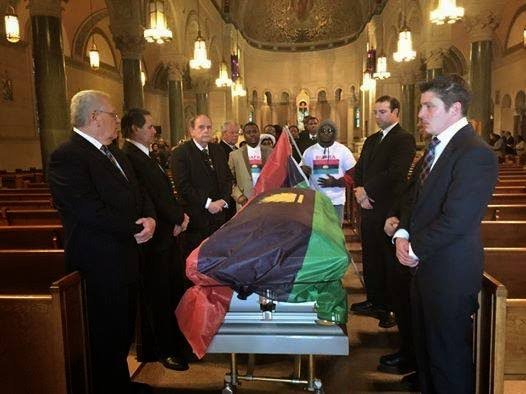
The people of Omala Local Government Area of kogi state both at home and  in the diaspora  have called on the governor, Alhaji Yahaya Bello and the Security Agencies to unravel those behind the incessant killings of the people across Omala  LG by ‘unknown’ gunmen.

They noted that in recent times some villages in Omala have become epicentre for senseless killings by alleged gunmen believed to be herdsmen which had resulted to  death of scores  of the people and burning down of some villages in the Local Government Area.

They particularly asked Governor Bello to work his talk on protecting lives and property of the people across the state by deploying crack detectives to the area to permanently uncover and bring them to book those behind the dastardly acts.

Meanwhile, this  call was sequel to the recent killing of a 50-year-old woman, Mrs Mary Jekeli Edibo ( Mama Dorcas)  by unknown persons in Omala Local government area of Kogi State,

The woman who hailed from Agbenema-Ife , a surbub of Abejukolo, headquarters of the Council  was mowed down by her assailants while returning home from a neighboring Agabifo village.

The deceased, a petty trader, who was said to have returned from a local market earlier in the day, went to see her customers in the neighbouring village and was returning when she met her death.

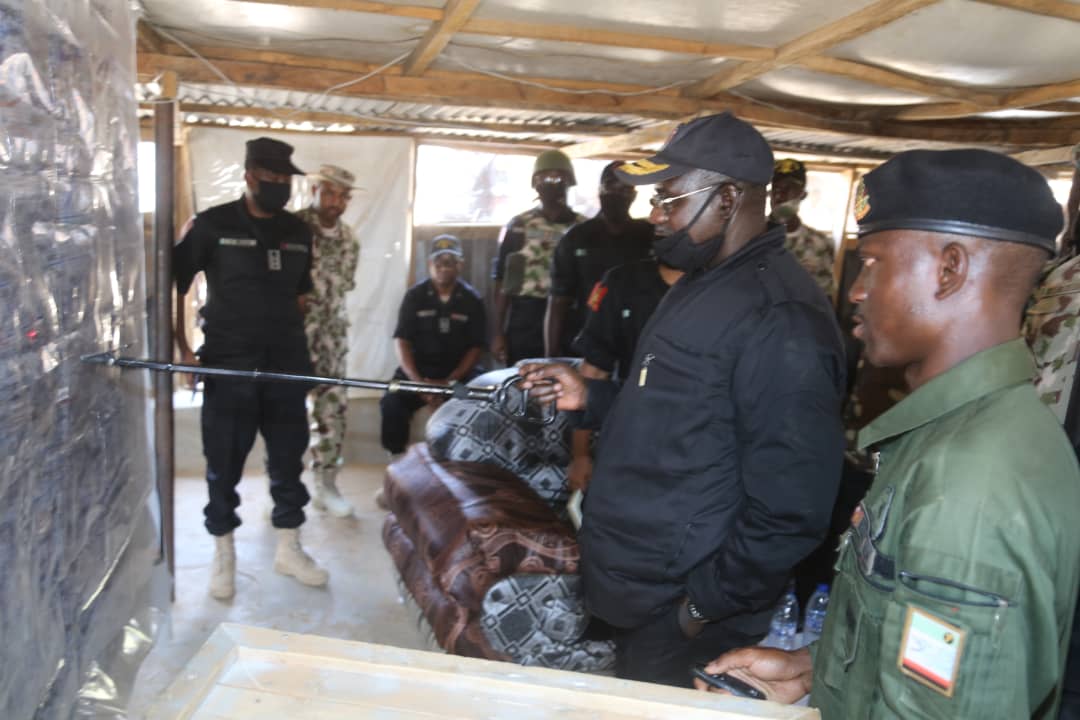
Inspector-General of Police, Mohammed Adamu

According to State Police Command’s Public Relations Officer, DSP William Ayah, the deceased brother, one Mr Abdul of Agbenema community reported the matter the following day of the incident  at Abejukolo, the Divisional headquarters of Omala LGA.

Aya said when the police team went to the scene of the incident, they discovered that she sustained deep cuts on her head and part of the face. “Our men took the photograph of the scene and were to take the remains for a post mortem examination but the family declined,” he explained.

He, however, said the police has commenced  investigation into the matter  and has mounted intensive surveillance around the communities and called on the people not to panic as his men are on  top of the situation.

The incident was coming barely four days after a middle-aged man was similarly murdered in a nearby community. The victim, Malam Amodu Oma Ucha of Ajodoma village, was also macheted on his way to the farm.

Similarly, another man, Ochala Adama narrowly escaped death after he was shot while working on his farm at Abejukolo about three weeks ago by those he described as herdsmen who had brought their cattle to graze on his crops. He barely managed to escape with gunshot wounds.

Investigations by SunriseNigeria has revealed that the recent displacement of herdsmen from some states in the Southern parts of the country has led them to relocate to the middlebelt states, particularly the eastern flanks of Kogi State and Benue States.

However, rather than grazing peacefully on uncultivated lands, the heavily armed herdsmen not only destroy the farms of their unwilling hosts, but they also attack the locals without provocation. The women too are not spared by these marauders, as there have been several cases of them being raped and then killed.

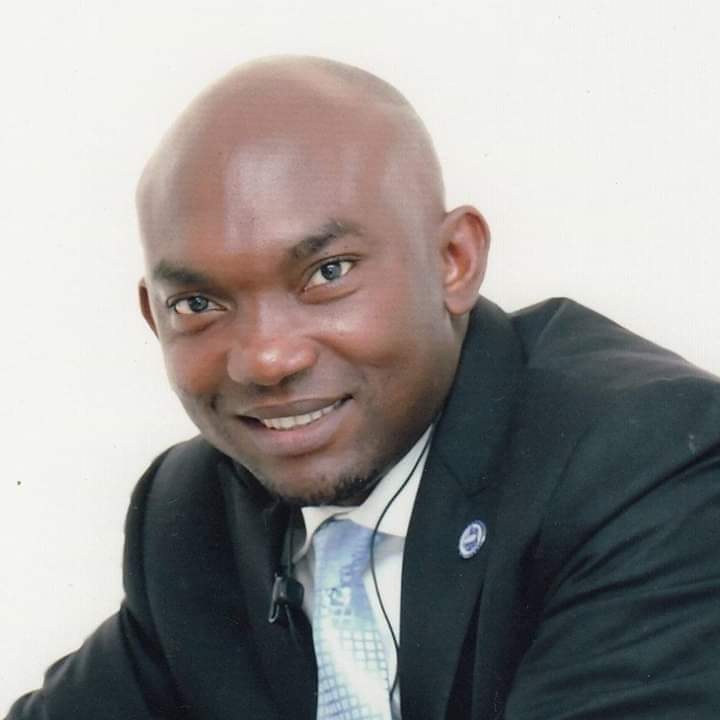
Speaking to SunriseNigeria on the issue, an indigene of the local government, Dr James Odaudu said the recent resurgence of attacks in the local government, and the seeming lack of concern by the Kogi State government have become increasingly worrisome.

According to him, the current crop of herdsmen were not the usual ones known to the local communities. “We grew up in these communities interfacing with fulani herdsmen and even assimilating them as part of us. Our fathers would lovingly give them lands to settle and graze their flocks”.

“Unfortunately, it is not the case now as people can no longer pursue their means of livelihood, which is mainly farming. Today, they come, heavily armed with sophisticated weapons to attack, kill and destroy farms. This cannot, and should not, be allowed to continue”.

Odaudu charged both the Omala local government and the Kogi state government to rise up to their primary responsibilities of protecting the people, noting that Omala people would refuse to be made refugees in their own homelands.

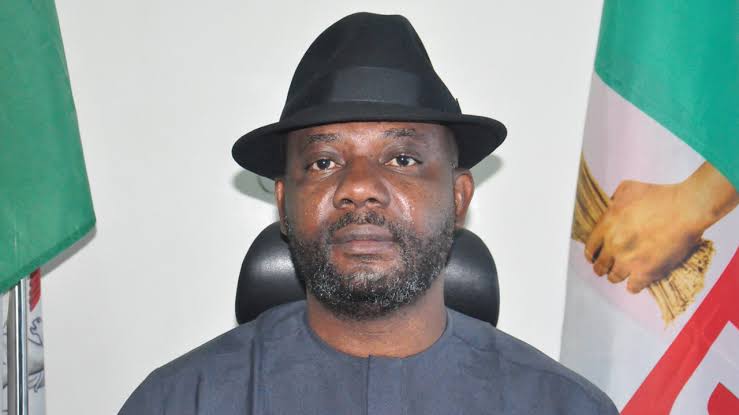
Meanwhile, the Senior Special Assistant to the Governor on Security , Omala Local Government Area, Hon. Ibrahim Aboh has vowed to do everything within his powers to ensure peaceful coexistence in the LGA.

He warned miscreants to leave the Omala Soil or they should be ready to meet their waterloo, while appealing to the people to remain calm assuring them that the law enforcement officers are   working round the clock to safeguard their lives and properties.

Covid 19 Palliatives: Agbese donates foodstuffs,cash to Benue communities

The Philip Agbese Foundation,PAF  has provided succour to the sons and daughters of Agila land in Benue state to enable them pull through during the covid 19 pandemic.

The Assistant Coordinator( General Services)of the PAF, Engineer Gideon Unazi in a statement issued titled,” Covid 19 pandemic and our stand”, said following the outbreak of the pandemic, this is not the best time for rhetorics but genuine actions that will ease off the socio-economic pains on families directly or indirectly affected most especially the Agilaland.

He said, “We at the Philip Agbese Foundation  strongly believe that government alone, in this traumatizing period  cannot do everything for the citizens and the more reason why in our own little ways must support the people either back in the village or those residing in towns and cities to make ends meet for themselves and families.

“It is part of this effort that we make this humble donation of just 100bags of rice and very laughable number of cartons of “Turkey Oil”  to those in Apa- London, Agboge- Ogbilolo and the New Jerusalem City making  Agila District to support whatever the Federal, State, LG,  elected, appointed stakeholders and well spirited individuals will be doing to help those at home. 

“We have also  raised the sum of One Million Naira Only  and will be sending N10, 000 each to Agila sons and daughters in parts of Lagos, Abuja and Ogun State that might have fallen on hard times during this period of the Lockdown to help them push to the next level. 

“It is to be noted that this fund is not for lazy individuals or known  cultists with deviant behaviour in any of these cities as it is against our cherished tradition in Agila. 

“Those genuinely interested should  drop their account details with Hon. Williams Ochonu and will be alerted accordingly. 

“Please give a helping hand to someone around you, no matter how small and the Almighty God will reward you abundantly”he said.

Boko Haram and why no one has monopoly of knowledge

By Oluwole Adesina

It is undebatable that some of our southern journalists are the one causing problems in the country with their misinformation. They are Lazy, egotist, arrogant, selfish, unprofessional and overrated.

They think they know it all once they qualify as journalist. They caused the fall of Buhari/Idiagbon regime and they would have succeeded in denying Buhari the presidency due to their selfishness if it wasn’t for social media.

Babajide Kolade Otitoju wasn’t the first journalist that would be exposed for who they are. Some of them are ready to rubbish their homeland for whoever pay to dictate their tune.

What stopped Him doing a research before he uttered that gibberish last night?

I was highly informed that Jide didn’t rubbished the entire military perse but the Army. He has been picked up by our boys on few occasions but left off the hook by CAS.

There is a dirty politics going on in the Northeast between the Army and the Air force. The Army is being frustrated by the uncooperative attitude of the Air force in the fight against Boko boys and it was the frustration that made the theatre Commander to say that the Army need their own fighter helicopters to station with them at battalion or Brigade headquarters.

Who stopped the Air Wing of the Army in NASS? Why is CAS using selected journalists to rubbish the Army and their Chief?

Is Babajide Otitoju among the journalists? Why is always in the company of CAS? Is it part of their assigned job to rubbish the Army in favour of Idriss Deby Army?

Why are they misinforming the unsuspecting public? If the Army is ill equipped like Jide opined then who provided him cover to visit the frontline? Has Jide tour the Nigerian army formations throughout the country to know that we’re inferior to Chadian Army? What does Jide know about Chadian military to warrant his lies on social media? Is Idriss Deby genuinely fighting Boko Haram in his country like Jide and their propaganda machine in the South?

Well, friends.

On the right in this picture was Mahammad Idriss Deby. A Major General in Chadian Army and Second in Command in entire military.

On the left was Zakari Idriss Deby. He is Chadian ambassador to United Arab Emirates until his recall back home 2 weeks ago.

The question now is:

What are the two brothers together with their Father doing in the frontline?

Genuinely fighting Boko Haram like Babajide Otitoju and his likes made the unsuspecting public believe? Never.

The truth is that the presidency of Idriss Deby is threatening by the internal rebels trying to dislodge him from power. The rogue family have been in power for 30 solid years and some of his country men and women are tired of his dictatorship.

The rebels have infiltrated the Boko Haram boys to cause maximum damage to his miilitary base by killing some of his best fighters. The family honey pot is at stake hence the whole family joined hands to protect it.

Idriss Deby is hiding behind Boko Haram to kill his rivals at home. Without the internal uprising he wouldn’t have touch the Boko boys operating from his country to destabilise Nigeria.

Those who use Idris Deby picture as their DP have been victims of Babajide Otitoju misinformation. Deby and his entire military are moin-moin to Nigerian Army in combat.

Please guys. Don’t be carried away by the likes of Jide bragadaccio. He made attempts to bully me last night with their usual tactics, “do you know me”, but I stood my ground.

Please my friends. Google is your friend. Research any information you are not sure of.

May the departed peace return to the Northeast and entire country.
Happy Easter to all my homies.

Adesina is a Nigerian Army veteran and wrote from Lagos

Re: Chad’s Idris Derby as Odogo’s Wife, the Incriminator

By Philip Agbese

I respect Festus Adedayo as writer, public affairs commentator, analyst and author. Consummating his articles anytime fills the void in knowledge and information. But I read the article captioned, “Chad’s Idris Derby As Odogo’s Wife, The Incriminator,” (published in Sahara reporters dated, April 11, 2020), and was staggered by its unpardonable gaffes.

Definitely, I want to believe it was not intentional. I sighted the writer’s dilemma in the hanker to speak the truth on the counter-terrorism battles of Nigeria from 2009 between former President Goodluck Jonathan and incumbent President Muhammadu Buhari.

I perceived his desperation to spin the truth he knows on Nigeria’s battles with terrorism these years, but was hamstringed by the deficiency of facts and accuracy. It is understandable because the dreary terrain of terrorism battlegrounds makes access to precise and trustworthy information on the war extremely difficult.

Nonetheless, Adedayo cannot be permitted to escape with some inappropriate representations, which I have reasons to believe it is not deliberate. It even includes the wrong insinuations which reeks throughout the otherwise nice piece. I concur with the writer religiously that Chad’s President Idriss Deby is one heck of an adulterated and debased military cum civilian dictator on the Chadian political corridors.

The public commentator upbraided him rightly as treacherous, tyrannical, an excited betrayer and worse enemy of humanity by his overt romance with Boko Haram/ISWAP terrorists. I prefer to call them armed criminals anyway.

An African adage says, “When the wind blows, the fowl’s anus is exposed.” President Deby preposterously exposed himself by hyping “yesterday’s” battles with terrorists in the Chadian enclave of Kelkoua, on banks of Lake Chad in her sovereignty, April 4, 2020.

Let’s pardon Deby’s empty boasts. But I am yet to understand Adedayo’s wisdom, which figured Deby’s action as heroic or an act of valour! If I properly discerned Deby’s history, he is a rebel himself, as leader of the Patriotic Salvation Movement and ardent student of the Moummar Gaddafi’s tutelage of armed revolutionary radicalism.

What has baffled me is the writer’s tenders on Deby’s hoax or ruse on fighting terrorism. Adedayo wrote; “it must be said that his rout of Boko Haram has revealed that Nigeria under Buhari is nothing more than a pusillanimous military leadership. The fact must be stated that fighting this insurgency seems to be, for the military Generals in the war theatre, a mercantile activity that must be prolonged for the sake of the belly.”

This is absolute gibberish! It reconfirms my earlier position about the writer’s desolation in knowledge of whatever terrorism entails in Nigeria and the unrelenting battles which clipped the wings of Boko Haram/ISWAP terrorists under President Buhari. Its much of bad blood for him to ingeniously infuse the known and politicized campaigns on stampeding President Buhari to sack his Service Chiefs.

Adedayo finally came in his flawed damaging self. He wrote; “So while Derby may have fought his Boko Haram allies as comeuppance for their “betrayal” of their alliance, the Nigerian government, devoid of cronyism and fired by the leadership and determination of the Derby hue, would have made far greater marks than it is making in the war against the terrorists. The first move in this regard would be for Buhari to sack his expired security chiefs.”

In whatever disguised manner the commentator has sprouted this issue, we know, it is this overriding interest that has triggered the piece. President Buhari has repeatedly said he is satisfied with the performance of his Service Chiefs and it is needless to over-flog the issue. And I have reason to believe him.

Very often, Nigerians assume a simplistic understanding of terrorism wars. It is the writer’s first blunder. I believe that is also the conviction of the writer when he submitted that “Nigeria slipped from a country known, before now, for her military prowess, into a hub of global jokes, a sissy if you like. Strategic experts have located a troubling metastasis of the cancer.”

But the security experts he relied upon for this conclusion have no slightest idea about terrorism and its tempo in Nigeria before the Buhari Presidency. I know, terrorism wars are not easy to crack anywhere in the world because of its asymmetrical nature.

America with all its sophistry has been in the Middle East fighting terrorism, since 2002, but no end in sight yet. The war has engulfed over a trillion dollars of America’s funds. That Nigeria has been able to decimate and defeat Boko Haram terrorists in four years is enviable and commendable.

Nigeria has curbed the rage of terrorists to the extent that they are unable to trouble Abuja again; their plots to make ingress into Southern Nigeria has also been guillotined and the push-back of insurgents has confined their operations to the Lake Chad area. How else could Nigeria or efficiency of the Service Chiefs be expressed?

And so, because of certain partisan motivations, we prefer to condemn the impressive efforts of President Buhari and his Service Chiefs in combating Boko Haram terrorism. Adedayo like some other Nigerians are under the false illusion that President Idriss Deby has done a wonderful job by leading Chadian troops to the battlefield to battle Boko Haram and destroy their armoury bunkers. Nigeria through Gen. Buratai has performed similar feats and posted better streaks of victories against terrorists.

But terrorists have an amazing resilience. When the battle gets tough, they recoil into sleeper cells, recuperate, replenish and stage greater onslaughts at targets. Deby and anyone else should not be deluded that the “Operation Anger of Boma,” has erased all vestiges of Boko Haram in Chad or the region.

It is this indefinite character of terrorism that Nigeria is still under the spell of remnants of Boko Haram and with their dislodgment from Sambisa forest. Chadian territories offered them conducive recuperation abodes when they chased out of Nigeria. Deby and his praise singers just have to look further afield.

So, it is a fluke for Adedayo to say, “The Chadian Army also said with confidence that the terrorists had been driven “out of all the islands of the lake… Chadian soldiers are currently stationed deep on the islands of Niger and Nigeria, waiting for these friendly countries’ soldiers to take over.” No nation has the power to station his army in the territory of another country without a permission. Chadian Army are not stationed anywhere in Nigerian territory. The writer must not swallow hook and sinker or jump at every propaganda reeled by Chad.

The insinuation that President Buhari should have also personally led Nigerian troops to the frontlines to confront terrorists because he is a retired Army General is misplaced. President Buhari and Deby cannot operate on the same template. Buhari is far older than Deby, no reasonable person would expect that both should have the same physical stamina now.

It is false conclusion to claim that “Billions of dollars are voted for hardware, software and military welfare yearly which allegedly slip into the bottomless pockets of the Generals and their collaborators in government. Moles within are also alleged to collect fat dividends from the insurgents for revealing tracks of proposed attacks.”

I cannot refute the problem of moles in the military who frustrate Nigeria’s counter-terrorism operations. It is real! But the problem is bigger and has more more tentacles than envisaged by Adedayo. Former President Jonathan once bemoaned that there are Boko Haram spies everywhere including Aso Rock. Politicians, religious and traditional rulers, and other arms of security agencies have spies who work for Boko Haram. But Gen. Buratai has considerably reduced the influence of moles on counter-insurgency operations and it explains the impact Nigeria has recorded on counter-terrorism.

But it is blatant falsehood to mouth that billions of dollars voted for hardware, software and military welfare annually are embezzled under the Buhari Presidency. The statement is too generalized and fluid. Military or security budgets are not opaque. It is open to public scrutiny.

Nigerians are under the mistaken notion that weapons purchased in 2015 for counter-insurgency operations are never exhausted in warfare, but should remain in military armory. Counter-terrorism is a battle which expends and deflates military armoury every day on the battlefield and requires constant replenishment.

Adedayo claims that Military welfare is ignored is also inaccurate. My understanding of the situation is that the Nigerian Government and the National Assembly have not voted enough funds for military welfare. It is not an issue of embezzlement. In the 2020 budget for instance, just one percent of the national budget is provided for all the arms of Nigeria’s security agencies. And 90 percent of it is for recurrent expenditure, comprising salaries and allowances of security personnel.

This is grossly inadequate. And parliamentarians never harkened to pleas to increase the budget for security agencies in the age of insurgencies. So, where does anybody get “billions of dollars” to embezzle? And when we talk about welfare, Gen. Buratai has kept faith with soldiers. He pays their approved salaries and allowances promptly. And by his personal initiatives he has launched various economic empowerment schemes for the Nigerian Army, aside the partnership with corporate organizations for the construction of post-retirement housing scheme for the Army.

It is my honest view that Adedayo overrated and amplified the prowess of President Deby and the Chadian Army. The battle at Kelkoua is nothing spectacular, but the country’s rebellion against its own rebels it has sustained in its territory for years.

Agbese, an author and human rights activist contributed this piece from the United Kingdom.

Lake Chad Basin: Group commends Nigeria’s leadership in counter-terrorism campaign

A special report by the Lake Chad Counter-Terrorism Crusade Network (LCCTCN) has applauded Nigeria for spearheading counter-terrorism campaign in the Lake Chad Basin region.

The group’s commendation followed a research and analysis of the dynamics involved in the counter-insurgency operations of the member countries.

In the report signed by the President, McCarthy Ronald, the group harked back to the genesis of the Boko Haram/ ISWAP menace, reawakening of the Multinational Joint Task Force (MNJTF) and how each nation has fared afterwards.

According to the Lake Chad Counter-Terrorism Crusade Network, aside Nigeria, other countries have not displayed a substantial commitment to the regional efforts towards ending terrorism.

While the Nigerian troops constantly led onslaught against the radical Islamic sect , neighbouring nations held back, especially Chad, with the terrorists finding refuge in their shores.

To put a lasting end to the Boko Haram/ISWAP fighters, the Lake Chad group, however, recommended that other countries must emulate the efforts of the Nigerian authorities.

Read full report below:

Preamble:

The Boko Haram Insurgency in North-East Nigeria has spiralled into the Lake Chad Basin Region comprising of Nigeria, Chad, Niger, and Cameroon. The impact of the insurgency has been felt in these countries, and that necessitated the formation of a Multinational Joint Task Force intending to bring to an end the Boko Haram insurgency.

The Lake Chad Counter-Terrorism Crusade Network, an organization devoted to appraising the effectiveness of the counterinsurgency efforts of the countries under the Lake Chad Basin Region, subsequently researched the effectiveness of the counterinsurgency efforts of the various countries towards bringing to an end the Boko Haram Insurgency.

The research dwelled on military strategies, the commitment of the political authorities of the various countries, as well as the successes recorded in the war against terrorism as well as the sets backs recorded by the different countries.

Introduction:

The Lake Chad Basin is the largest endorheic drainage basin in Africa, centered on Lake Chad. It has no outlet to the sea and contains large areas of desert or semi-arid savanna. The drainage basin is roughly coterminous with the sedimentary basin of the same name. However, it extends further to the northeast and east. The basin spans seven countries, including most of Chad and a large part of Niger. It has an ethnically diverse population of about 30 million people as of 2011, growing rapidly. However, the geographical area that is of concern is the four countries bordering Lake Chad: Cameroon, Chad, Niger, and Nigeria.

The Lake Chad Basin region is the setting of a violent campaign by Jama’atu Ahlis Sunnah Lidda’awati w’al Jihad (People Committed to the Propagation of the Prophet’s Teachings and Jihad), commonly known as Boko Haram. The violence perpetrated by Boko Haram has resulted in the deaths of nearly 30,000 people since 2009, with extensive physical destruction, the displacement of over 2 million people and economic activity has effectively ground to a halt.

From the outset, nationals from Niger, Chad, and Cameroon traveled to northern Nigeria, attracted by Mohammed Yusuf’s charismatic sermons and by the small loans offered to his followers. This thus provided the foundation for a multinational sect.

Given Boko Haram’s pre-2014 focus on north-east Nigeria, neighboring governments initially responded to the threat mainly by keeping the sect under surveillance, and in some cases, reportedly agreeing non-aggression pacts. Governments were reluctant to launch a major crackdown in border regions, possibly for fear of retaliation and, more concretely, owing to their limited capabilities. As Boko Haram’s territorial control expanded across north-east Nigeria and the threat the group posed spread across the borders of Cameroon, Chad, and Niger, regional concerns increased, pushing governments towards military cooperation.

The Multinational Joint Task Force (MNJTF) – created by the Lake Chad Basin Region (LCBC) in 1998 to address cross-border security issues in the Lake Chad region – was reactivated in 2012 with an expanded mandate to encompass counter-terrorism operations. It was given a more specific strategy against Boko Haram at the Extraordinary Summit of LCBC member states and Benin in October 2014. Unlike its previous iteration, the task force included Cameroon among its troop-contributing countries. It was provided with pledges of financial support from international actors, including the African Union (AU).

The mandate included conducting military operations to prevent the expansion of Boko Haram activities; conducting patrols; preventing transfers of weapons or logistics to the group; actively searching for and freeing abductees, including the girls kidnapped from Chibok in April 2014; and carrying out psychological operations to encourage defections within Boko Haram ranks.

Each country agreed to deploy a battalion of up to 700 troops within its national boundaries, in addition to the deployment of soldiers to the MNJTF headquarters.

Nigeria:

Nigeria is a highly complex and ethnically diverse country, with over 400 ethnic groups.

This diversity is played out in the way the country is bifurcated along the lines of religion, language, culture, ethnicity, and regional identity.

Nigeria’s significant response to the insurgency since 2010 has been the deployment of its Joint Task Force (JTF), consisting of the Army, Air Force, Navy, State Security Services, and Police under unified command structures. It encouraged increased intelligence-sharing, force coordination and unity of direction, which are considered essential for any counterinsurgency operation, although this has been limited.

The Nigerian parliament passed anti-terrorism legislation, initially introduced in 2011, in 2013. The law was designed, in part, to facilitate greater counter-terrorism coordination. However, interagency cooperation and information sharing remain limited by Nigeria’s federal structure, which has caused confusion between chief state security officers and federally-controlled security forces.

On his inauguration in May 2015, President Muhammadu Buhari immediately began strengthening cooperation with neighbouring governments and took on the leadership of the Multinational Joint Task Force for the entire duration of its mission.

Counterinsurgency operations by the Nigerian Military increased in scale and power throughout 2015 and 2016. Except for its stronghold in the Sambisa forest and Gwoza Hills in north-eastern Borno state, Boko Haram became confined mainly to Abadam, Mobbar, Guzamala, Kukawa, Gubio and Nganzai local government areas (LGAs) by late 2016. However, continued insecurity prevented the reestablishment of civilian administration in areas ‘liberated’ by the Nigerian Military.

In adjacent border regions, the massive military bombardment of Boko Haram by the Nigerian Military pushed them further into the far northern region of Cameroon, the Lac region in Chad, and the south-eastern Diffa region in Niger. Many militants were killed or apprehended, forcing Boko Haram to resort to coerced recruitment in these areas increasingly.

After a peak in Boko Haram–related violence in 2014 and 2015, the number of casualties attributed to the group fell dramatically. The Nigerian Military pushed Boko Haram out of several provinces in north-eastern Nigeria. However, the group retains control over some villages and pockets of territory. It continues to launch deadly suicide attacks and abduct civilians, mostly women, and children.

The conflict has been primarily contained in the north-east, particularly in Borno state. However, it has displaced millions of people in the region. In June 2018, the Nigerian Army announced that thousands of internally displaced people were to return home.

The Nigerian Military had been the most active amongst the countries in operation in the Multinational Joint Task Force through the renewed concept of Operation YANCIN TAFKI, under Sector 3.

Cameroon:

Cameroon is an example of an increasing number of countries confronting both separatist rebellions and jihadist-armed groups. Two characteristics are nevertheless remarkable in the Cameroonian case. First, the fact that unlike some countries facing similar crises, no confusion is possible between the two insurgent fronts (in terms of territory, social base, resources mobilization channels, tactical interests, and even repertoire of violent action). One deploys under the Boko Haram flag and is located in the northern margins of the country, where hostilities began in 2014. The other, raging since 2017, is linked to secessionist demands within the Anglophone minority in the western regions.

In May 2014, Cameroon declared war on Boko Haram at the Paris Summit. Since then, Boko Haram has intensified its activities in the Far North Region of the country, making Cameroon the second most targeted country, in terms of attacks, by the sect.

The penetration of Boko Haram in Cameroon took place gradually and in several phases. At each period, the group has been able to change its modus operandi and adapt to the response of Cameroonian defense forces. While the first frontal attack of Boko Haram against Cameroon dates back to March 2014, the presence of members of the sect in the Far North was signaled as far back as 2009.

Boko Haram’s interest in Cameroon grew between 2011 and 2013. It was during this period that Boko Haram started spreading its religious ideology, mainly in the Logone and Chari and Mayo Sava divisions of the Far North, recruiting Cameroonians as fighters and using this part of the territory as a rear base or haven.

Specifically, from 2011, in addition to seeking refuge on Cameroonian territory after attacks in Nigeria, members of Boko Haram regularly bought foodstuffs on different markets in the far North. They also infiltrated former networks involved in trafficking, smuggling of motorbikes, adulterated fuel (zoua-zoua), and Tramadol (drug) in the far North.

Boko Haram started launching a frontal attack on Cameroon because the Government strengthened the security apparatus in the Far North and dismantled about ten arms caches of the sect, as well as corridors for the transit of weapons. Cameroonian authorities were in an increasingly untenable situation at the beginning of 2014.

Despite the head-in-the-sand policy adopted at the beginning, which consisted of turning a blind eye on the presence of Boko Haram members in the Far North in the hope that they would not take on Cameroon, the sect continued to abduct foreigners and Cameroonians. Moreover, the Nigerian Government and press accused Cameroon of serving as a rear base and support for Boko Haram. Faced with such pressures and following the abduction of ten Chinese nationals at Waza, the only rational option for Cameroon was to declare war on the sect. Of course, once the war was reported in May 2014, Boko Haram, in turn, increased its attacks in Cameroon to the extent that the country became the second primary target of the Islamist group.

To combat Boko Haram, Cameroon has deployed two military operations, namely Operation EMERGENCE 4 made up of units of the regular army and Operation ALPHA comprising of units of the Rapid Intervention Battalion (BIR), the elite corps of the Cameroonian Military. In addition to these operations, we have the multinational joint task force whose first military sector is based in Mora and comprises of 2450 Cameroonian troops. On the whole, about 7000 men have been deployed by Cameroonian defense forces in both operations they and the Multinational Joint Task Force have efficiently warded off conventional attacks by Boko Haram.

Niger:

Niger has been at war with Boko Haram. The conflict has disrupted the country’s development, especially public finances, and destabilized the southeast, the main scene of armed clashes. In this region, located some 1,350km from the capital and faced with an economic collapse, the battle against Boko Haram has stoked up local intercommunal tensions and exacerbated violence over access to resources.

Nigerien forces have been unable to put a stop to attacks by insurgents, some of whom have links to the Islamic State (IS). The military option has produced results but has also shown its limits. Nigerien authorities initially responded to the Boko Haram threat by keeping the movement under surveillance. They believed that it was mainly a Nigerian problem.

This attitude changed in 2014 when the threat became more pressing. Boko Haram’s territorial expansion toward the Niger border was accompanied by a new push to recruit hundreds of young Nigeriens. Persuaded by its regional and international partners to become more actively involved, Niger joined the military efforts of the Multinational Joint Task Force (MNJTF).

The Diffa region is suffering from both Boko Haram attacks and counterinsurgency measures taken by the Nigerien authorities, such as the extension of the state of emergency introduced in February 2015 that includes a ban on some commercial activities. On the shores of Lake Chad, in the extreme east of the Diffa region, Boko Haram’s presence has aggravated intercommunal tensions, which have degenerated into deadly conflicts since May 2016.

Chad:

Since early 2015, attacks in Chad by Boko Haram have killed hundreds, displaced more than 100,000, and damaged the regional economy of the Lake Chad Basin. Violence peaked in 2015 with suicide bombings in the capital and the Lake region. Chad’s military engagements and its role in the fight against terrorism – around Lake Chad and elsewhere in the region – have mainly been lackadaisical.

To counter the ongoing threat while responding to the immediate and longer-term needs of the population, Chadian authorities need to build on the relatively successful regional security cooperation, start to move away from their highly militarized response to include a more significant civilian component, elaborate a more coherent economic development plan and deal more effectively with Boko Haram.

Boko Haram’s presence in Chad has been most strongly felt around Lake Chad, which lies primarily within Chadian territory. The area combines rich agriculture, pastoralism, and fishing. It is a magnet for migrants from all over the Sahel, leading to tensions over control of resources. Boko Haram has taken advantage of the geography of the lake seeking refuge on its many islands.

The violence Boko Haram unleashed has led to over 100,000 displaced and 7,000 refugees on Chadian territory by the beginning of 2017. In 2015, this heightened longstanding antagonisms between communities and made community-level conflict management more challenging.

Boko Haram’s success in establishing itself on the lake and its recruitment of youths with few prospects despite the area’s economic dynamism cast a harsh light on the commitment of the Chadian authorities.

At present, the profoundly flawed Chadian judicial system fails to deal with the Boko Haram issue: since the start of the conflict, only one – much-criticized – trial has been organized, resulting in the imposition of death sentences on ten suspected members of the group.

Today, between 500 and 1,000 suspected Boko Haram members are reportedly detained at Koro Toro, a prison located in the desert, near Faya Largeau, and dubbed the “Chadian Guantanamo.” The prisoners, drawn from various ethnic groups and nationalities, have one thing in common. In essence, they have all been locked up without prior judgment and for indefinite periods. Some might be active members of Boko Haram, but others are business people. This situation carries risks.

Conclusion:

This report drew lessons from the various countries reviewed. It concluded that, but for Nigeria, the other countries, mainly Chad, have not displayed a substantial commitment to the regional efforts towards ending the Boko Haram menace.

Chad:

Chad is a weak state with a military, known for its brutal treatment of combatants and civilians. In late July, without notifying the U.N., the Chadian Army ordered an evacuation of all islands in the southern basin, warning that anyone who was still there in a week would be considered a member of Boko Haram.

Chadian authorities are ill-prepared to deal with suspected Boko Haram members who have surrendered or been captured.

Chadian authorities should propose clear political options for the future of the lake. They should elaborate on a medium and longer-term plan for the development of the Lake Chad region, together with the development donors and in consultation with the local population. It should be sensitive to the needs of a highly mobile population.

The Chadian Rebels have turned a large swathe of the area in the Northern part of the Lake Chad Basin region into abode from where they launch offensives against the Government of Idriss Deby. The presence of these rebel groups has, in numerous ways, buoyed the operations of the ISWAP faction of the Boko Haram sect, which has continued to leverage on the platform to carry out attacks in Nigeria and retreat to regroup when they come under heavy bombardment from Nigerian troops.

The Government of Idriss Deby has not shown enough commitment to the regional efforts in place by the various countries under the Lake Chad Basin Region. This is mainly because his 30-year rule has been met with stiff resistance from a segment of the population that desires a change in Government.

The Chadian Government has been more involved in fighting the threats posed by rebels seeking to overthrow the Idriss Deby led Government to the detriment of the regional security of the Lake Chad Basin region.

The recent exploits of the Chadian army in operation in the North of Lake Chad was a retaliatory operation in the aftermath of the attack by rebel groups that led to the death of 92 Chadian soldiers.

The operation was haphazardly done in such a way that it has threatened the efforts of countries like Nigeria, Cameroon, and Niger.

Nigeria:

The Nigerian political authorities have displayed a commitment towards ending menace posed by the Boko Haram sect by strengthening ties with countries under the Lake Chad Basin Region.

The Nigerian Military has been fully involved in the fight against terrorism. However, their efforts have been mainly hampered by the uncooperative attitude of the Chadian authorities’ that have done very little to curb the activities of rebel groups that have teamed up with the ISWAP faction of Boko Haram to launch offensives in Nigeria.

The Nigerian authorities’ have also been confronted with the challenge of insider collaborations in thwarting the operational effectiveness of its Military. Such a disposition has seen the efforts of the Nigerian Military go unnoticed.

The various stakeholders must join hands with the administration of President Muhammdu Buhari in its final push towards ending the Boko Haram insurgency, given the fact that the francophone countries in the Lake Chad Basin Region have not shown enough commitment in the success of the Multinational Joint Task Force.

The Nigerian authorities’ must develop a strategy that would elicit the much-needed cooperation from Chad since it has been established that the Boko Haram sect has found a haven in Chadian soil from where they regroup and launch attacks in Nigeria.

Cameroon:

The authorities in Cameroon have acted only in times when the Boko Haram threats directly affect them. Their level of commitment to the operations of the Multinational Joint Task Force is below average.

Their lacklustre disposition to Nigeria is somewhat enforced by the fact that Nigeria is not a francophone country. This has seen in the fact that Boko Haram fighters use the route from the North of Cameroon to bring in logistic supplies for their operations.

The Mandara Mountains in Cameroon has also been used as recruitment and training ground by the Boko Haram sect.

The Cameroonian authorities must join hands with Nigeria by ensuring that the Northern part of Cameroon is secured and made uninhabitable for the Boko Haram sect and must also carry out joint operations with the Nigerian troops when the need arises.

Niger:

Niger is challenged economically to face squarely the threat posed by the Boko Haram sect. However, there is a need for unalloyed cooperation with member countries in the Lake Chad Basin Region, especially Nigeria.

The Government in Niger must, as a first, prevent the further recruitment of young Nigeriens into the ranks of the Boko Haram sect as many pieces of evidence suggests that the Boko Haram sect has seen a large pool of willing recruits from Niger due to the economic challenges faced in the country.

The Government in Niger must show commitment to the Multinational Joint Task Force by ensuring that it passes Intel to the command in areas it is handicapped and incapable of dealing with.

Recommendation:

The Lake Chad Counter-Terrorism Crusade Network, having extensively studied the dynamics involved in the Counter-Insurgency operations of the member countries, herby states that the solution to the Boko Haram menace lies in urgent need for all countries to emulate the efforts of the Nigerian authorities.

It has also been established that regional efforts would prove to be the magic wand in the final defeat of the Boko Haram insurgent group. Even though the Nigerian authorities have not relented in its onslaught against the Boko Haram sect, all of these efforts would not yield the desired result as some of these countries have not been forthcoming in carrying out their roles in line with the mandate of the Multinational Joint Task Force.

The threat posed by the Boko Haram sect has assumed a regional dimension. It is expedient that the member countries under the umbrella of the Lake Chad Basin Region put their interests’ aside and work towards attaining a common goal.

The Lake Chad Counter-Terrorism Crusade Network commends the Nigerian authorities for its commitment this far and also encourages Cameroon, Chad, and Niger to join forces with Nigeria in defeating the Boko Haram sect.

Frank wants AU Anti-Corruption Champion Award withdrawn from Buhari

A Political Activist and former Deputy National Publicity Secretary of the All Progressives Congress (APC), Comrade Timi Frank, has urged the leadership of the African Union (AU) to immediately withdraw the African Union”s Anti-corruption Champion Award it conferred on President Muhammadu Buhari in 2018.

The activist threatened to lead a protest in the next AU meeting in Addis Ababa if the said award is not withdrawn.

Frank in a statement on Monday in Abuja said the call become necessary in view of Buhari’s manifest lack of integrity, credibility and honour in administering the affairs of the country since May 2015.

He wondered why Buhari was selected for the continental award in the first place if not for high level compromise while other African leaders with solid integrity, untainted credibility and unwavering commitment to the fight against corruption like Paul Kagame of Rwanda and John Joseph Magufuli of Tanzania were not chosen instead.

He said that Kagame and Magufuli remain shining examples of integrity in the continent rather the pretentious integrity of Buhari.

The Bayelsa-born political activist insisted that Buhari is least deserving of the as all facets of the Nigerian nation has become infested with excruciating and growing corruption under the present regime.

He noted that corrupt has continued to spread through sensitive National institutions like the military, including the ongoing fight against COVID-19.

Frank said: “Recall that the African Union (AU) at its 30th Summit held in Addis Ababa, Ethiopia, in 2018, presented to the President of Nigeria, Major General Muhammadu Buhari (Rtd), a continental award as the AFRICAN UNION’S ANTI-CORRUPTION CHAMPION.

“Further recall that the award among others was meant to spur leaders of the continent not just to fight corruption in their respective countries but to engage in impactful projects which were hitherto unfortunately hampered by corruption in the echelons of national governments across the continent.

“I sincerely believe that the choice of Buhari to receive the award was fueled by the regime’s propagandists and lobbyists whose only intention was to commit the AU to supporting a supposed anti-corruption crusade by Buhari in Nigeria.

“Let me inform you that the choice of Buhari for the Award was not only a misplaced venture but an unpardonable aberration as events back in Nigeria have since shown that rather than fight corruption in which basis he was elected in 2015, the regime has turned out to be an Enabler-In-Chief for wanton corruption.

“Be further informed that the propaganda anti-corruption edifice build around Buhari has since unraveled to reveal a cesspit of monumental corruption being perpetuated by officials of the regime against the people of Nigeria.

“The credentials of Buhari as a man without integrity and honour are well known both within Nigeria and the international arena. For instance, Nigeria has been on the downward slide in the Corruption Perception Index (CPI) published yearly by the Transparency International (TI) since Buhari took over the affairs of the country in May 2015 till date. The evidence for this is just a click away on any of the internet search engines.

“Besides a plethora of regime officials indicted for corruption in the country, TI’s annual reports from 2015 to 2019 and a recent letter by the Chairman, Finance Committee of the United States of America (USA) Senate, Mr. Charles Grassley, would bring to fore any evidence required by Your Excellency in this regard.

“In addition to the above, it is self evident that some top officials of the regime have since been sacked for corruption related atrocities – when the regime could no longer bear or cover up their financial improprieties – while many still exist that are sleaze personified.

“In view of the forgoing, the AU will be doing the continental organization of eminent and respected African leaders a great service by retracing your steps (which you were led into by error), redeem the global image of the
AU and strengthen its resolve to eliminate governmental corruption from the African continent, by relieving Buhari of the unmerited award.”

He called on the leadership of the AU not only to withdraw the award it wrongly bestowed on Buhari but to apologize to Africa for their poor and unwarranted action.

“However, note that if this award is not withdrawn from Buhari as soon as practicable, I will be left with no other option than to personally mobilize and lead a massive protest against the underserved award at the next summit of the AU in Addis Ababa,” Frank said.

Unnecessary hoax about Chad’s fight against terrorism

By Nkechi Odoma

After an exciting display of photoshopped actions by President Idriss Deby, in a manner which glaringly spited our troops, the Chadian leader is surely having blissful nights. He feels accomplished not because he is fighting terrorists, but for the simple reason that his plots of mockery has been successfully executed.

Deby was extremely elated because he sold a hoax to a docile gullible population and it flowed with him excitedly. A few disgruntled elements patronized his counterfeit ‘triumph’ and heaped accolades on him. Deby knows deep down his soul that he has duped a complacent continent.

In Africa, there is the resentful tendency of leaders to use every opportunity in exploiting the peoples consciousness in their favour to gain political mileage. On the political chessboard, all is fair insofar as it confers victory or shores up the popularity rating of the schemer.

Boko Haram insurgency has been a problem in West Africa since 2009, particularly around the axis of Lake Chad Basin. The infiltration of Islamic State West Africa Province (ISWAP) terrorists in the region is also concentrated in the area over a year now. President Deby and his satanic comrades romanced the havoc terrorists have wrought for the region noiselessly and unperturbed.

Deby suddenly woke up one day to stage a movie scene claiming to be fighting Boko Haram. What a repentant heart. Christianity and the season of Easter especially, preaches about repentance and salvation. From this prism, one is tempted to pardon President Deby’s hocus-pocus. But outside the periphery, Deby is a loathsome character, revoltingly satanic and a trickster in the fame of Ghanaian fables.

But who cares in Nigeria about his antics or the demonic inner contraption of his wretched and evil heart? Certainly, nobody gives a damn about him, after all, not many Chadians cherish him any longer . It’s their exclusive burden. The people have acquiesced to his wickedness and that’s why they still tolerate him as their leader. He is free to hatch any evil against them.

But Deby’s attempt to pollute Nigeria and instigate Nigerians against our military is provocative. It violates international conventions. Even Africans do say, a man who sleeps in his house and puts his legs in another man’s house is gunning for trouble. President Deby is standing on this keg of gun powder, which might finally explode on him.

In 2016, when the Nigerian Army demystified the dreaded Sambisa forest, Boko Haram’s most fortified fortress, President Buhari did not rush to Chad to celebrate photo fair of this victory over insurgents. President Buhari didn’t photoshop and released the pictures to the media.

It is inexplicable and inexcusable for President Deby to throw mud into the faces of Nigerians this boldly. He has nicely derided Nigerians with his pretentious confrontation with Boko Haram insurgents in Chadian territory.

It even pains more infinitely to realize that President Deby is a symbol of deceit and leadership degeneration in Africa. For the clear- minded, what is incontrovertible in Deby’s latest actions is that he is not fighting terrorism. If he pretentiously and cowardly flinched before terrorists yesterday, he cannot make such loud noise today as fighter of terrorists.

The world should understand clearly that Chad under Deby is not fighting terrorism. President Deby is fighting for his own political survival, but has found the plank of terrorism a necessary tool to nourish his ambition.” This is made manifest in the open secret about to be ratified alliance between the terrorists group (Boko haram/ISWAP) and a tribal opposition group in Chad attempting to take over his job.

Real warriors do not brag; they do not boast. The real victory in any war is not the ephemeral type, but the permanence of victory. Nigeria has recorded more victories against Boko Haram and ISWAP terrorists in the last four years under the Buhari Presidency than Chad and every other interest put together in all tinges. Nigeria has conquered the terrorists several times, but did not make a carnival out of it, like Deby because it has not reached the terminal point.

In President Buhari’s time, Nigeria has retrieved all the 18 local government areas in the Northeast coercively annexed and occupied by Boko Haram insurgents. Nigeria has destroyed countless Boko Haram armoury bunkers in the country, including Sambisa forest. Nigeria has regained the freedom of tens of thousands of Nigerians held in Boko Haram’s secret gulags.

Nigeria has restored religious and traditional rulers forcefully deposed by insurgents in the Northeast. Nigeria has forced terrorists to confine their operations to the Lake Chad area. Nigeria’s counter-terrorism combats have more success narratives than Chad can ever approximate. But it is silent because the battle is in its final stages.

So, the disgruntled elements celebrating Deby’s circuit show should reflect deeper. The intense noise about Idris Deby of Chad fighting Boko Haram better than Nigeria is baseless and vexatious. It is hollow and outlandish. It is another fake news by fake activists and their league of idle congregants.

That President Deby is leading Chadian troops to clear Boko Haram /ISWAP terrorists from the Lake Chad Islands is far from the truth. In all ramifications, this sort of news can only be peddled by idlers and people who have medals in falsity. The propagandists are devoid of any idea about what Nigeria’s Chief of Army Staff (COAS) and ombudsman of the counter-insurgency operations, Lt. Gen. TY Buratai and Nigerian troops are doing in the Northeast.

Gen. Buratai is a terror to terrorists. He is a thorn in the flesh of terrorists. That’s why they attempted to kill him several times, but he defended himself and rather sent the insurgents who ambushed his path to their early graves.

However, what is indisputable is that Chad is not fighting Boko Haram in the Lake Chad. Even what President Deby did and garnished it with photo carnival had no nexus with terrorism. Deby and Chadian troops only summoned effeminate courage to confront Chadian rebels at Kelkoua, a tiny portion on the bank of the Lake Chad. Chad has the disreputable record of being a breeding ground for rebels.

The operation led by President Deby of Chad only cleared a mere 2% of the camps of Chadian rebels in the Lake Chad Islands. The whole world knows that 80% of Boko Haram/ISWAP terrorists are Chadian rebels. Virtually all of them are found in Lake Chad Islands within the Chadian territory.

Criminals have neither strict morals or bounds, so they stray into Nigeria from Chad to commit atrocities. Therefore, Idris Deby is fighting his own rebels which they have romanced and petted over time, but have gone berserk. The rebels have grown in strength and have become monstrous hence the Nigerian military is not allowing them the liberty to freely operate in Nigeria.

So, Chad has discovered it’s foolery of courting and dinning with rebels and terrorists and now fighting for its existential survival; while President Deby is exploiting it for his survival in power. Without mincing words, Chad should face its consuming quagmire and never to contemplate dragging Nigeria into its morass.

Odoma is President, Africa Arise for Change Network and wrote from Abuja.

Investigate Deji Adeyanju, Concerned Nigerians now, group tells security agencies

The Citizens Against Fake Activists (CAFA) have called on security agencies in the country to investigate activist, Deji Adeyanju and his cohorts in Concerned Nigerians.

CAFA said Adeyanju has developed a penchant for spreading falsehood to jeopardize the nation’s fight against the dreaded coronavirus.

In a statement signed by Director of Communications, Comrade Ibrahim Kabiru Dallah, on Sunday, the group alleged that Adeyanju is on a mission to discredit President Muhammadu Buhari.

The Kogi-born critic recently alleged that the security operatives have killed more Nigerians in the course of enforcing the stay-at-home directive than the virus itself.

Such misleading information, according to CAFA, will encourage gullible Nigerians to flout the lockdown directive and thereby enhance spread of the disease.

Although CAFA admitted that “Adeyanju’s devilish alliance with mischief-makers such as the Islamic Movement in Nigeria isn’t new, it, however, added that he reached a new low since the COVID-19 outbreak owing to the severity of the pandemic.”

CAFA, therefore, called on the security agencies to thoroughly investigate Adeyanju and his fellow activists working against the nation’s progress.

Read full statement below:

Citizens Against Fake Activists (CAFA) is appalled by the tenuous lies being peddled by one troll factory under the auspices of Concerned Nigerians (CN) and its convener, Deji Adeyanju, who has now been proven to be working with interests that want to jeopardize Nigeria’s ability to contain the spread of the COVID-19 pandemic in the country. It is important that the relevant security agencies immediately investigate him.

In a pattern that has become synonymous with him, Adeyanju again deployed fake news to the effect that law enforcement agents have killed more Nigerians in the course of enforcing the stay at home directive than the virus has killed. CAFA is concerned that this kind of irresponsible behaviour will encourage gullible people to flout the lockdown directive and thereby encourage the spread of the disease.

The impression created by Adeyanju in his misleading statement was that a few people that chose to disregard the stay at home order are entitled to compromise the safety of others by engaging in acts that will speed up the spread of the killer virus. There is ample science backed data to show that countries that took social isolation seriously recorded comparatively lower cases while those whose citizens misconstrued the concept of civil liberties to disregard government-imposed lockdown are today paying the price by way of a disproportionately high human toll.

CAFA therefore categorically dismisses Adeyanju’s allegations against the security and military agencies as patent falsehood intended to blackmail the military, the police and President Muhammadu Buhari’s administration like he has been paid to do and consistent with his obsession with demonizing the aforementioned. The only verified instance of killing, which took place in Delta state, is being investigated by the appropriate authorities while the other instances mentioned by the paid activist have been investigated and discarded.

Nigerians should recall that CAFA had raised the alarm over an increase in the deliberate attempts by crisis entrepreneurs and political merchants of war masquerading as activists to cause discontent in the country. Their sole aim is to discredit the Buhari led administration and it is now apparent that they do not care if they expose millions of Nigerians to the deadly COVID-19 with their irresponsible acts.

Adeyanju, like his fellow paid activists, has the right to make a living off paid activism as he did in the past including openly supporting the Islamic Movement in Nigeria (IMN), a group that a competent court properly designated as a terrorist organization. He perfected the act of creating phantom casualties for when his clients protest, including the protests in which he arranged thugs to attack himself so that he can blame the government for deploying excessive force against him. But Adeyanju should have by now realize that COVID-19 is a threat to humanity and it is not his call to encourage people to disregard the government ordered lockdown and social distancing necessary for dealing with the pandemic.

CAFA calls on the security agencies to thoroughly investigate Adeyanju over the inciteful nature of the lies he is telling to make people flout the stay at home order. It is important to address the trouble being fomented by Adeyanju and nip it in the bud. He should not be allowed to create the impression that the government, military and security agencies are the enemies when in reality COVID-19 is the enemy. Authorities must also note that Adeyanju’s attempt at incitement is like a pilot or testing the waters for his circuit of paid activists to know how the government will respond to such criminality. Where they sense a tepid response to Adeyanju’s lies they will then escalate the incitement until it leads to social unrest that they are hoping will bring the government down.

Meanwhile, since Adeyanju’s statement is based, in part, on the lie that people “could no longer bear the brunt of the stay-at-home order by the government,” CAFA is appealing to Nigerians to take advantage of the various palliatives being provided by the government, organizations, religious bodies and well spirited individuals. There is a place for being positively proud but there is also the time for the humility to accept help as people the world over have been compelled to do since this virus shut down economies and unleash hardship on populations.

Boko Haram: Between Deby’s Political Survival and Our Fake Activists

By Terrence Kuanum

There has been an upsurge of praises for the Chadian President, Idriss Deby, for the seemingly fantastic exploits in the war against Boko Haram terrorist operating in the Lake Chad Basin Region. I have read commentaries and epistles with regards to this feat by some supposed enlightened minds that dot the nook and crannies of the country.

At the initial stages, I almost joined the bandwagon in giving legitimacy to the Idriss Deby abracadabra. However, with the benefit of hindsight, I restrained and instead chose to understand the issues at stake. And I was glad I towed this line because the revelations afterward typified the height of insincerity of heart and purpose.

I say this for two reasons; one is the fact that Idris Deby of Chad was not fighting terrorism but fighting for his political survival, having held unto power for over 30 years that brought about some form of resentment from Chadian rebels on the Lake Chad islands. Secondly is the fact that some mischief-makers in Nigeria that have either by commission or omission refused to acknowledge the efforts of the Nigerian Military in the fight against terrorism in North-East Nigeria and consequently went to town with disparaging remarks aimed at promoting heroism on the part of the Chadian President and futilely attempting to rub mud on the faces of the Nigerian authorities.

As a start, I am convinced the Idris Deby war escapades have been politicized and hijacked by those whose stock in trade is to propagate fake news in Nigeria, all in a bid to discredit the government and sell their business in return for a plate of porridge. But they got the plot wrong this time around with the revelations as regards to what transpired in Chad.

It is thus pertinent to state that what transpired in Chad was the incursion of Chadian Rebels in the North East region of Chad that led to the death of over 90 Chadian soldiers. This was on the heels that there was an initial attempt in 2019 by the rebel group, Union of Resistance Forces (Union des forces de la résistance – UFR), to reach the capital N’Djamena to overthrow President Idriss Déby and “set up a transitional government uniting all of the country’s forces.” This incursion was aborted following the French intervention.

Accordingly, the Chadian Army stated on 9 February 2019, that “more than 250 terrorists, including four leaders,” were captured, and over forty of their vehicles destroyed. However instructive is the fact that by asking France’s military forces to intervene on his territory for the first time since 2008, President Idriss Déby showed that he took the risk very seriously which was due to a domestic situation marked by growing social upheaval, and also to burgeoning dissent within his ethnic community, which the rebels hope to exploit.

The events that led to the death of 92 Chadian soldiers happened in the Lac province, on the Boma peninsula, which borders Niger, Nigeria, Chad, and Cameroon in March. Idriss Deby, the Chadian President, saw this as a threat to his continued hold on power, and he consequently went on a clearance mission that now dots the social media spaces.

It must be indeed stated the Idriss Deby of Chad didn’t lead his army to clear out Boko Haram terrorists in Nigeria as speculated. Credible information indicates that the Chadian President lead a clearance operation of some rebel groups on the Lake Chad Islands plotting to overthrow his government. This is also on the heels that over 80% of the Boko Haram faction of Islamic State of West African Province are Chadian rebels with operational headquarters in the Lake Chad Islands.

If we recall, Boko Haram’s split occurred in 2016. At the time, due to the counter-offensive launched by the Nigerian Military. Boko Haram – which in 2015 had become a branch of ISIS known as the Islamic State in West Africa Province (ISWAP) – split in two. One group led by Abu Musab al-Barnawi and Mamman Nur left Boko Haram’s headquarters in the Sambisa forest and reached Lake Chad. There, they successfully rallied the bulk of the rebel fighters in Chad and obtained recognition from ISIS, thereby keeping the name ISWAP.

So the activities of ISWAP have constituted tremendous security challenges for Idriss Deby in his quest to hold onto power, and these series of confrontation led to the death of over 90 Chadian soldiers. It must also be noted that ISWAP is undoubtedly the most dangerous because of its links to ISIS. ISWAP also has ties in the Lake Chad region with the group formerly known as the Islamic State in the Greater Sahara (ISGS), an affiliate of the Islamic State, operating in Mali, Niger, and Burkina Faso. The group formed as a splinter from Al Mourabitoun, an Al Qaeda-affiliated militant organization, when Adnan Abu Walid al Sahrawi swore allegiance to the Islamic State (IS) and its emir, Abu Bakr al Baghdadi.

Credible intelligence sources had indicated that ISIS had placed ISGS under the banner of ISWAP with operational headquarters in the Islands on Chadian territories in the Lake Chad Basin Region from where they teamed up with other Chadian rebel groups to launch offensives against the Idriss Deby led government and other countries within the triangle.

For starters, it would make no sense that the Chadian government would carry out an operation in another country without express clearance or participation from that country given the existence of the Multinational Joint Taskforce, a combined multinational formation, comprising units, mostly military, from Benin, Cameroon, Chad, Niger, and Nigeria and headquartered in N’Djamena.

So what this tells us is that whatever exploits that have been credited to Idris Deby with regards to that operation was strictly a Chadian affair and on Chadian soil. This much was corroborated when Idriss Déby stated that he had pushed jihadist troops out of Chadian territory, taken back command posts on the lake from Boko Haram factions, and deployed his men into Niger and Nigeria to hunt down fighters who had fled and to “clean up” the border areas with those countries. On 3 April, he also announced that operations would continue in neighboring countries and called on them to provide troops to prevent rebels from regaining lost ground on the border areas of Niger and Nigeria.

This is the actual situation in Chad and not what a segment of the population wants us to believe all in the despicable attempt to discredit whatever gains that have been recorded by the Nigerian Military so far.

I am not concerned with how Idriss Deby is fighting for his political survival. However, I am with the way and manner some of us have elected to turn the truth on its head with regards to national issues, especially the efforts of the government in the fight against terrorism and other militant groups in Nigeria.

Like I mentioned earlier, this is the era of fake news, and in Nigeria, fake news is propagated by fake activists to the detriment of our collective interest. They don’t care about whatever implication their actions and inactions might have on the psyche of the generality of Nigerians. For them, it’s about their interest and their interest is the money.

Still using the Chadian example, it suffices to mention that all that praises heaped on Idriss Deby for exploits in the fight against Boko Haram terrorist was deliberate. It was designed to cast aspersion on the efforts of the government. Little wonder why some of these fake activists had the effrontery to ask President Muhammadu Buhari to demonstrate leadership like his Chadian counterpart by physically leading the war against Boko Haram terrorists in North-East Nigeria.

That was quite a low one, which indeed exposed the mischief behind the news. For whatever it is worth, Idris Deby is fighting for his political survival. The French troops under the code name Operation Barkhane have been on the ground providing him with that military support it needs to keep the rebels at bay.

I am therefore of the considered opinion that Nigerians must as a matter of necessity disregard the mischievous information been bandied around by these group of people all in a bid to cause disaffection in the polity, which on the one hand might be a ploy to heighten tension in the nation so that their paymasters can take advantage of the accompanying crisis to take over government through the back door.

We must also admit that indeed these are trying times, and those against the interest of Nigeria are amongst us. They wine and dine with us, and they also sing the national anthem when the need arises. But in their closets, they are hawks that have sold their souls to the devil in return for a plate of porridge. Yes, this is the starkness of reality facing us. It behooves on all well-meaning Nigerians to rise to the occasion and join hands with the government to preserve our country not just for us, but for the generations unborn who would have nowhere to call home.

For the records, the military expertise of Chad cannot be compared to that of Nigeria. There is no way; it can be said that Chad, under Idriss Deby, is more committed to the fight against terrorism than Nigeria. That is indeed an anomaly. It is fake news, and fake activists propagate it. This is the actual situation of things as it stands.

Kuanum is
Field Researcher,
Global Amnesty Watch

X-raying Nigeria Army’s unmatched record in counter-terrorism

By Richard Murphy

In August 2015, UN Secretary General, Ban Ki Moon, had cause to commend Nigeria’s effort towards counter terrorism in the West African sub region.

He said while speaking at a Dialogue on extreme violence and other issues bedeviling Africa that though no country can tackle the threat of terrorism on its own, Nigeria’s increased cooperation with countries of the region is welcomed.

It came as a little pat on the back for Nigeria given that it had only recently then experienced a regime change and the new administration of President Muhammadu Buhari was putting structures to confront the challenges.

But three years down the line, Nigeria qualified for more than a pat on the back from world leaders.

United States president, Donald Trump, while speaking about Nigeria’s fight against terrorism at a joint press conference with President Buhari at the White House, in April 2018, had more to say about Nigeria in that regard.

While thanking President Muhammadu Buhari for Nigeria’s partnership and leadership role in the fight against terrorism, Trump said, “Nigeria was one of the first African nations to join the coalition to defeat ISIS, and Nigerian forces are currently leading regional efforts against ISIS in West Africa, and doing very well.”

He said, “Nigeria is also leading African nations in the fight against Boko Haram, and — another ruthless jihadist terrorist group.”

Terrorism, defined as the unlawful use of violence and intimidation, especially against civilians, in the pursuit of political aims; and insurgency, a rebellion against a constituted authority when those taking part in the rebellion are not recognized as belligerents has been recorded in many parts of the globe for centuries.

The Nigerian army even when it was part of a West African Frontier Force, is not new to both as it has been involved in counter terrorism and anti-insurgency operations mostly outside Nigeria since the 60s and has given good accounts of itself wherever it is involved.

Nigeria according to verifiable documents, has contributed more than 20,000 troops to various UN missions since 1960.

What is worthy of note in all these exercises is that Nigerian troops have come out with higher reputation as disciplined and well trained force after each assignment and has been the leader in many tough military assignments.

It has been sent on UN and ECOWAS missions as far as in the former Yugoslavia, Guinea-Bissau, Sierra Leone and other places .

When UN forces in Somalia were trapped and humiliated by rebel forces at the beginning of the war in Somalia, Nigerian troops led in the operation that later restored sanity, albeit temporarily to the war torn country.

The troops for that particular operation were drawn from Nigerian Army’s 231 battalion in Biu and were trained at the Nigerian Armed Forces Simulation Center in Jaji.

Nigeria through its troops has also played a prominent role in the West African sub-region through the commitment of substantial military capacity to peace keeping missions.

The reputation of the Nigerian army in counter insurgency operations was so high at a time that its expertise was being sought in all troubled spots across the globe.

This had seen the Nigerian army leading the Economic Community of West African States (ECOWAS) force to Mali and contributing 900 of its troops to that country.

The role Nigeria played in restoring democracy to countries like Sierra Leone and Liberia has remained green in the memory of the citizens of these countries who never fail to applaud Nigeria’s role in saving their countries from unending wars and bloodshed.

In October 2004, Nigerian troops again were deployed into Darfur, Sudan to spearhead an African Union force to stop the genocide in Darfur.

Nigeria’s role as a big brother was constantly accentuated by the success of its military in every given mission.

But as the Nigerian army fought for other countries, the time came for its capacity to be tested at home.

The first was in the late 60s when the civil war broke out and the second was the taking up of arms against the Nigerian state by the Boko Haram terrorists in 2009. On both occasions, Nigerian army showed it has the capacity to reenact the feat it has achieved abroad at home.

As the largest component of the Nigerian Armed Forces responsible for land warfare operations, the NA bears the brunt of the nation’s security challenges.

It did not disappoint even with asymmetric warfare introduced by the Boko Haram and later the ISWAP terrorists. It is well known how the army was called in to intervene when the insurgency of the Boko Haram got out of hand in its early days and how the army discharged its duties effectively and arrested the sect’s leader and handed him over to another agency.

It took several years after that before the insurgents again regrouped and took up arms against the Nigerian state. But even after that, the Nigerian army has been relentless in proving its capacity to safeguard the country.

This much came to the fore with the coming of Lt. Gen. Tukur Yusuf Buratai as the Chief of Army Staff.

This time the focus shifted from launching counter attacks to leading offensives against the insurgents and in their turf. The operations became so successful that the terrorists could no longer launch attacks on communities as any attempt they make are preempted and dispelled.

In 2015, the Nigerian army repelled an attack by suspected Boko Haram militants in the town of Biu in the north-eastern state of Borno where the militants had entered the town firing guns very early in the morning causing many residents to flee. The army had engaged the militants in intense battle and the insurgents were killed and driven back and calm was restored to the town. There have been several other instances after that but mentioning a few remarkable ones would suffice.

In June 2019, Nigerian troops again thwarted an ISWAP attack on a military formation in the Northeast where the Boko Haram came in seven gun trucks and motorcycles and stormed the base at Goniri, Yobe State. The ambush did not succeed as dozens of the terrorists were annihilated while many of them fled with injuries.

In that encounter, five gun trucks, weapons and rounds of ammunition were recovered from the militants, while their motorcycles were destroyed. Again in December 2019, Nigerian troops fought back Boko Haram insurgents at Gonar Bukar settlement on Gashua Road on the outskirts of Damaturu, the Yobe capital. They had attempted to infiltrate Damaturu metropolis in the evening and troops engaged the insurgents and sent them fleeing.

Then in January this year there was massive shooting in Monguno, a major town in northern Borno State, as the Nigerian military repelled an attack by the terrorists.

Suspected members of the ISWAP faction of Boko Haram attempted to invade the community that now serves as a mega camp for internally displaced persons and soldiers battled for several hours to repel the attack. In March 2020 Nigerian troops also devastated Boko Haram militants in Damboa, a town 85 kilometers away from Maiduguri.

Governor of Borno State, Babagana Zulum, who is slow in commendation was so overwhelmed that he was full of praises for the Nigerian troops. He said the troops demonstrated unprecedented gallantry when they tackled the insurgents saying 19 gun trucks were recovered from the insurgents while an unspecified large number of them were killed. “‎I find it compelling to salute our gallant soldiers of the Nigerian Army and Air Force, under operation Lafiya Dole for a decisive blow against Boko Haram insurgents on Wednesday morning in Damboa town,” he said.

In all, the Nigerian army has shown that it is unrivalled in the fight against insurgency and terrorism.

Murphy is a security expert and wrote this piece from Calabar