Beijing advances high-standard conservation of Great Wall

By Shi Fang, Pan Junqiang, People’s Daily

As early summer unfolds, the Badaling section of the Great Wall is in full verdure. By nightfall, illuminated by soft lights, the ancient fortification glows like a luminous dragon, creating a stunning and powerful scene.

This renewed vitality of the centuries-old landmarkreflects Beijing’s sustained and high-level commitment to its conservation. By transforming the Great Wall’s profound cultural and historical legacy into a driver of development, the city is ensuring broader public engagement with — and benefit from — this national treasure.

The Great Wall stands as a defining symbol of the Chinese nation and a testament to its ancient civilization. In recent years, Beijing has intensified efforts to protect, preserve, and repurpose this irreplaceable cultural heritage, balancing rigorous safeguards with efforts to let its legacy resonate in the present day.

On a recent afternoon near Tower 120 of the Jiankou section, restoration work was in full swing. Technicians used drones and other advanced equipment to collect data on the wall and its surrounding environment. From the contours of the terrain and nearby vegetation to tiny cracks in the towers, continuously updated 3D digital models are capturing every detail.

Leveraging 3D imaging and virtual reality technologies, Beijing has enhanced digital preservation and presentation, ensuring comprehensive documentation for future restoration and exhibitions.

Over time, more than 110 conservation projects have been completed. The city has also established a practical restoration training base and launched research-based restoration programs. Technological innovations — such as the “Beijing Great Wall e-Patrol” platform — have enabled a shift from emergency repairs to preventive conservation.

In Gubeikou township located in Beijing’s Miyun district, four themed study-tour routes centered around the Great Wall have drawn increasing numbers of visitors. These routes offer both photogenic stops and immersive lessons on Great Wall history and culture. Local cultural and tourism authorities are leveraging cultural landmarks — such as the Simatai section, the 24-Eye Tower, and the general tower — to deepen public understanding and appreciation of the site’s heritage.

Beijing is also pushing forward the creative transformation and innovative development of Great Wall culture. Major initiatives include building the Beijing section of the Great Wall national cultural park, upgrading the China Great Wall Museum, and staging public events such as a Beijing Great Wall cultural festival and a concert. Enhanced signage at key sites — Jiankou, Gubeikou, and Badaling sections — and immersive musical stage performances are further enriching the visitor experience, helping to invigorate this ancient heritage.

In Shixia village nestled along the Great Wall, time-worn stone paths, crenel replicas, and traditional courtyards evoke the site’s historic charm. Tourists come in a steady stream.

“During the May Day holiday, our guesthouses were fully booked,” said He Yuling, founder of a homestay business themed around the Great Wall. Over the years, the village has developed multiple homestays along with a distillery, an oil press, a coffee shop, and a Great Wall library — together forming an integrated chain of agriculture, culture, and tourism that is bringing prosperity to local residents.

These villages owe their existence — and enduring vitality — to the Great Wall. By leveraging this cultural heritage, Beijing is exploring new models of integrated cultural and tourism development. The city has introduced a range of Great Wall-themed cultural and creative brands, launched specialty products such as themed ice creams, and expandedexperiential tourism offerings like study tours. These efforts are creating new momentum for comprehensive rural vitalization.

While preserving the Great Wall, Beijing is working to enhance the global profile of this world-class cultural heritage.

China remains committed to high-level opening up

By Zhong Sheng, People’s Daily

The recently concluded 137th China Import and Export Fair, also known as Canton Fair, saw the participation of 288,000 overseas buyers from 219 countries and regions. On-site intended export deals reached $25.44 billion, a year-on-year increase of 3 percent. Multiple indicators hit record highs, underscoring China’s determination to share its development opportunities with the world through high-level opening up.

At a time when globalization is facing headwinds and unilateralism and protectionism are on the rise, China is opening its door wider to the world, providing much-needed stability and certainty to the global economy.

Opening up to the world is the fundamental national policy of China that has endured throughout more than four decades of reform and opening up. This long-standing commitment remains a vital pathway for China to pursue its own development while contributing to global prosperity. By promoting development through opening up, China has been widely recognized as an oasis of certainty and a hot spot for investment and entrepreneurship.

China’s high-level opening up is a continuous effort rather than a completed mission. Actively expanding imports is also a key part of this strategy. China does not deliberately pursue a trade surplus. It is working to foster more balanced trade by actively increasing imports.

In 2024, the total value of China’simports reached 18.4 trillion yuan ($2.55 trillion), up 2.3 percent year on year, setting a new record. The country has maintained its position as the world’s second-largest importer for 16consecutive years.

The China International Import Expo (CIIE) is the globe’s first national-level exposition dedicated to imports, demonstrating China’s commitment to opening its market and advancing trade liberalization and economic globalization.

From hosting international cooperation platforms such as the CIIE, Canton Fair, China International Fair for Trade in Services, China International Consumer Products Expo, and China International Supply Chain Expo, to promoting the brand of “Invest in China” and launching the “Shopping in China” series, China is providing broad development opportunities for global companies with a spirit of openness. Meanwhile,it has given all the least developed countries with which it has diplomatic relations zero-tariff treatment for 100 percent tariff lines. With these ongoing efforts, the enormous Chinese market is turning into a shared global market, demonstrating China’ssense of responsibility as a major country.

China’s determination to expand high-level opening up remains unwavering. This is not only a clear position but also evident in concrete actions.

In the first quarter of this year, 12,603 new foreign-invested enterpriseswere established in China, representing a year-on-yeargrowth of 4.3 percent. Meanwhile, China has removed all market access restrictions for foreign investors in the manufacturing sector. The items on its negative list, which specifies fields that are off-limits to foreign investors, have been further slashed to 29 in the national version and 27 for pilot free trade zones (FTZs).

China has also released a guideline for improving its FTZs and approveda plan that aims to expand comprehensive pilot programs to accelerate the services industry’s opening-up.

These efforts reflect China’s steady drive to expand institutional opening up, such as that of rules, regulations, management, and standards, and its commitment to deepening and broadening opening up.

As Rebeca Grynspan, secretary-general of the United Nations Conference on Trade and Development, noted, China has a spirit of openness where businesses worldwide can connect, forge partnerships and contribute to a more prosperous and interconnected global economy.

China’s pursuit of high-level opening up has expanded the space for mutually beneficial China-U.S. economic and trade cooperation.In 2023, the U.S. set up 1,920 new enterprises in China, with an actual investment of $3.36 billion, up 52 percent from the previous year.

At the same time, China-U.S. economic and trade cooperation has generated substantial business opportunities and profits for American companies. For example, Tesla’s electric vehicle sales in the Chinese mainlandhave hit a record high of 657,000 units in 2024, up 8.8 percent year on year.

China’s voluntary opening policies have benefited financial institutions from all countries including the United States. More than 10 American insurance companies have subsidiaries in China. American financial institutions, such as Goldman Sachs, American Express, Bank of America, and MetLife, have achieved substantial investment returns as strategic investors in Chinese financial institutions. Meanwhile, BlackRock, Fidelity, Neuberger Berman, JPMorgan, Morgan Stanley, and AllianceBernstein have been allowed to establish wholly foreign-owned fund management companies in China.

Some U.S. politicians have called for greater opening up of China to American business for the good of both China and the United States. The fact, however, is that China has repeatedly affirmed its welcome to companies from all countries, including the U.S., to invest and thrive in China. China has developed sound regulations, policies and procedures for foreign investment, promoted trade and investment liberalization and facilitation, and made active efforts to foster a first-class business environment that is market-oriented, law-based, and internationalized. It has been and will remain an ideal, safe, and promising destination for foreign investors.

It is hoped that the U.S. will refrain from creating obstacles for American companies seeking to invest in China, and stop using national security and America First as catch-all pretexts for demanding openness from others while tightening its own trade restrictions. Such protectionist moves risk disrupting global industrial and supply chains and weakening the multilateral trading system.

Only through mutually beneficial cooperation can China and the U.S.realize their respective development goals. This not only serves the common interests of both countries but also meets the expectations of the international community.

(Zhong Sheng is a pen name often used by People’s Daily to express its views on foreign policy and international affairs.)

On frontlines of Hainan Free Trade Port development

By Zhou Yajun, Wang Yunshan, People’s Daily

China’s Hainan Free Trade Port (FTP) is expected to achieve independent customs operations before the end of this year. In recent years, Hainan province has steadily improved its FTP policy and institutional framework, achieving an average annual growth of over 20 percent in both goods and services trade through high-level opening up. The actual use of foreign capital has also shown steady expansion.

“A 21% tariff exemption is a huge boost for sales,” said Zhou Shuo, managing director of gN Pearl, a Hainan-based company specialized in pearl farming, research and development, production, and sales.

One of the signature policies of the Hainan FTP is the tariff exemption for domestically sold goods that have undergone value-added processing. According to this policy, for companies in encouraged industries,products whose added value exceeds 30 percent after the domestic processing of imported intermediary products, are exempt from taxes when entering the rest of China.

As a local company specializingin pearl products, gN Pearl has already imported three batches totaling over 2,000 golden and white South Sea pearls in the first quarter of this year. The company expects to increase imports to 30,000 pearls by year-end. With a procurement cost of 12 million yuan ($1.67 million), the tariff exemption policy is estimated to save the company over 2.5 million yuan.

According to customs of Haikou, capital of Hainan province, as of the end of this March,  domestic sales of value-added processing industries in Hainan had reached 7.54 billion yuan, resulting in approximately 601 million yuan in tariff exemptions. Benefiting from such policies, a number of modern processing enterprises targeting both domestic and international markets are thriving in Hainan.

Following Hainan FTP’s independent customs operations, the FTP will further ease market access and implement negative lists for cross-border services trade and foreign investment. These steps are expected to attract more foreign enterprises and international talent to invest and do business in Hainan.

From investing 220 million yuan in a new coffee processing line and upgrading a coffee culture park, to investing 540 million yuan in building a coffee-themed resort, Thailand’s CP Group has been increasing its investment in Hainan year after year.

Investing in China is investing in the future. The vast scale of the Chinese market reinforcesour confidence,” said Wang Mengjun, senior vice president of Chia Tai (Hainan) Xinglong Coffee Industry Development Co., Ltd., a subsidiary of CP Group.

Since 2021, CP Group’s business in Hainan has doubled annually. In March, its Xinglong Coffee Culture Park was successfully accredited as a national AAA-rated tourist attraction, receiving over 400,000 visits so far.

Hainan is actively creating an internationalized business environment. In recent years, it has explored fully digitized processes for foreign-funded enterprises through an e-registration system, launched a one-stop investment service platform, and introduced 8 service packages for foreign enterprises and foreign nationals, including customs clearance and residence permits.

“Hainan’s favorable business environment and efficient services allow us to focus fully on doing business,” Wang said.

In 2024, despite challenges posed by globalizationheadwinds, Hainan saw the establishment of over 2,000 new foreign-invested enterprises, a year-on-year increase of around 20%.

At 5 pm Beijing time, a livestream kicked off at a studio of a media company located in the Hainan Cross-Border Digital Information Industrial Park. A host, speaking fluent English, introduced Chinese herbal teas to fitness enthusiasts in the USduring their early morning hours.

“Despite changes in the external environment, our revenue has sustained rapid growth,” said Chen Jifeng, general manager of the media company. “This studio’s daily sales have jumped from 10,000 yuan last year to 130,000 yuan now. Our revenue in April was five times that of February.”

According to him, the company’s best-selling product right now is Chinese herbal tea, which is popular among overseas consumers seeking a healthy lifestyle.

In 2023, Chen made the decision to pivot to cross-border e-commerce exports. “We chose Hainan because the FTP’s policies support the secure and orderly flow of data,” he explained.

Starting in 2023, China has supported Hainan in accelerating the implementation of data flow governance policies. A Haikou international communications gateway administration was approved, and China Unicom’s Hainan branch and HNINFORNET, a Hainan based company specializing in information and communications,jointly began developing a cross-border information industry service platform.

“A single terminal now enables users to access the global internet through a compliant, secure cross-border data channel,” said Gan Quan, deputy general manager of China Unicom’s Hainan branch. “This completely solves the issue of unstable internet connections in cross-border e-commerce and enables seamless global network connectivity.”

Dun & Bradstreet, an American company that provides commercial data, analytics, and insights for businesses, established a presence in Hainan in 2022 and became the first enterprise in the province to pass the Cyberspace Administration of China’s outbound data security assessment in 2023.

“In Hainan, both foreign and state-owned enterprises are treated equally with an open and inclusive environment,” said Wu Guangyu, president of Dun & Bradstreet China. “We see Hainan as a key hub bridging domestic and international markets and aggregating data resources. We eagerly anticipate the launch of independent customs operations in Hainan FTP.”

A sweet road to prosperity: how China and Chile built a cherry pipeline to the world

By Chen Yiming, People’s Daily

Under the cloudless skies of Chile’s Maule Region, rows of grapevines and fruit trees stretch across the valley floor. About 20minutes from the Talca-Chillán section of Chile’s highway Route 5 lies the Rodriguez family orchard in the Chilean Central Valley — a quintessential Chilean family farm.

“Welcome!” greeted Pablo Rodriguez, the farm’s general manager, clad in jeans and a straw hat.

“Our land once produced corn and tomatoes,” he explained. “In 2012, we shifted to higher-value crops like cherries, grapes, and watermelons. In 2014, we began exporting cherries to China. Today, all the cherries we grow go to China. So does much of our wine.”

During the harvest season, the orchard buzzes with activity, employing up to 500 seasonal workers. “It feels like a festival,”Rodriguez said with pride.

Yet behind the celebration lies a meticulously timed operation. “We move cherries from tree to cold storage within three hours to keep them fresh for Chinese consumers,”he noted.The cherries must arrive at the port precisely at the final moment before the vessel departs. Ensuring such timely delivery requires a fast, highly efficient logistics system.

For producers like Rodriguez, the transformation of Route 5 has been a game changer.”Since Chinese companies upgraded the highway, our cherries reach China faster and safer. Everyone here says our Chinese friends built us a sweet road to prosperity.”

Route 5 is the main artery connecting Chile’s northern and southernregions. The section, a 195-kilometer stretch of the route, traverses Maule, the country’s primary cherry-producing region, earning it the nickname “Cherry Highway.” As part of the Pan-American highway, it is one of Chile’s busiest corridors.

Route 5 is invested, constructed and operated by China Railway Construction Corporation (International) Limited (CRCCI), which acquired the concession in 2021. Since then,the company has implemented a comprehensive upgrades and smart management system, including the widening of 30 kilometers of road, construction of 54 kilometers of bypass, and installation of 13 electronic toll collection systems.

In 2022, the project introduced radio frequency identification technology for automated toll deductions in Chile. The following year, the Chillán-Collipulli section — the southern extension of the Talca-Chillán section — was launched, encompassing the renovation of 166 kilometers of existing roadway and the construction of 6.6 kilometers of new branch lines, for a total of 172.6 kilometers.

Once completed, the project will alleviate congestion in southern urban centers, strengthen north-south transportation links, and stimulate growth across regional industries.

Ivan Marambio, president of the Chilean Fruit Exporters Association, noted that the Talca-Chillán section links farmers, logistics providers, ports, and global markets, calling it a vital artery for Chilean produce to reach Asia. The upgrades have significantly shortened delivery time, boosted export profits for farmers, and generated employment across the region, he added.

Juan Alvarez, a truck driver shuttling between Talca and Collipulli, said, “Thanks to CRCCI’s automated toll system, the traffic has eased. Now, a round trip takes just over two hours. I can make two round trips a day, and my income has grown accordingly.”

Besides, improved infrastructure has catalyzed growth in delivery services, e-commerce, and regional supply chains — further lifting local livelihoods.

Fernando Reyes Matta, director of the Center for Latin American Studies on China at Chile’sAndres Bello University, highlighted that Chile, the first Latin American country to sign a free trade agreement with China, has seen a dramatic rise in agricultural exports to China in recent years. Chilean cherries, she said,have become a “winter staple” on Chinese tables.

Behind this burgeoning trade lies a deeper story of infrastructure-led development. Projects like Route 5 reflect China’s growing engagement with Latin American and Caribbean (LAC) countries, where roads, bridges, schools, ports, and power plants are not only improving trade flows but also fueling broader economic progress.

Like the sun-drenched orchards at the foot of the Andes, the fruits of China-LAC cooperation continue to ripen — a promising harvest of shared prosperity for years to come.

China-U.S. economic, trade meeting in Geneva: an important step towards resolving differences through equal dialogue and consultation

By Zhong Sheng, People’s Daily

On May 10 and 11, China and the U.S. had a high-level meeting on economic and trade affairs in Geneva, Switzerland. Through joint efforts of both sides, the talks were candid, in-depth, and constructive.

The two sides have reached a series of major consensuses and made substantial progress during the meeting. They also agreed to establish an economic and trade consultation mechanism, marking an important step towards resolving differences through equal dialogue and consultation, and laying the foundation and creating conditions for further bridging differences and deepening cooperation.

The meeting has received positive responses from international observers, reaffirming that maintaining the sound, steady, and sustainable development of China-U.S. economic and trade relations serves the fundamental interest of both nations and peoples, which is also conducive to global economic growth.

The stability of China-U.S. economic and trade relations bears heavily on the trajectory of the global economy.

According to the Joint Statement on China-U.S. Economic and Trade Meeting in Geneva, both sides recognize the importance of their bilateral economic and trade relationship to both countries and the global economy, and the importance of a sustainable, long-term, and mutually beneficial economic and trade relationship.

The high-level meeting achieved substantial progress by significantly reducing bilateral tariff levels. The U.S. will remove a total of 91-percent additional tariffs on Chinese products and China will accordingly cut 91-percent countermeasure additional tariffs against U.S. imports. The U.S. will suspend a 24-percent “reciprocal tariff” and China likewise will suspend a 24-percent countermeasure tariff.

The positive responses from global markets indicate that these steps are in line with the expectations of producers and consumers in both countries, serving the interests of both nations and the world at large.

As two major countries at different stages of development with distinct economic systems, it is natural for China and the U.S. to have differences and frictions in their economic and trade cooperation. The key lies in following the strategic guidance of the two heads of state, upholding the principles of mutual respect, peaceful coexistence, and win-win cooperation, and resolving differences through equal dialogue and consultation.

Over the past decades, China and the U.S. have developed deeply intertwined supply chains, industrial chains, and value chains. Their economic and trade relations are mutually beneficial and win-win in nature, whileconfrontation, conflict and trade wars serve neither side’sinterests.

Trade tensions have had far-reaching negative spillover effects, ranging from restricting U.S. agricultural exports and disrupting global supply chains to driving up business costs and consumer prices.

International observers have repeatedly warned that “nobody wins in a trade war,””tariff policies lead to a lose-lose scenario,” and “protectionism offers no way out — cooperation and mutual benefit are what people truly seek.”

The outcomes of the latest talks reaffirm that equal dialogue and consultation is the right path for resolving differences, aligning with the need to explore the right way for the two major countries to get along well with each other.

The meeting has laid a foundation, clarified preconditions, and set parameters for follow-up negotiations. While it marks a promising start, a fundamental resolution requires the U.S. to fully reverse its unilateral tariff measures, continue to strengthen mutually beneficial cooperation, and work with China to actively implement the consensus reached by the two heads of state during the phone call on January 17. The two countries should move forward in the spirit of mutual opening, continued communication, cooperation, and mutual respect.

China remains firmly committed to high-quality development, high-standard opening up, and continuously improving the business environment. The U.S. should work with China in the same direction to accomplish more substantial, practical and mutually beneficial outcomes for both countries and the world.

The significance of the China-U.S.economic and trade meeting in Geneva extends beyond the specific outcomes. More importantly, the two sides reaffirmed their shared commitment to resolving differences through equal dialogue and consultation.

The road ahead may not be without challenges, but China is ready to work with the U.S. to build on the positive momentum of this meeting. With a practical attitude for solving problems, China will continue carrying out candid dialogues and equal consultations, exploring cooperation potential, extending the list of cooperation list, and making the pie of cooperation bigger, so as to promote the sound and stable development of China-U.S. economic and trade relations, benefiting the peoples of both countries and the world.

(Zhong Sheng is a pen name often used by People’s Daily to express its views on foreign policy and international affairs.)

A Glimpse of “Tomorrowland” in China

By Li Hongxing, People’s Daily

If you were visiting Shanghai and had to choose between Shanghai Disneyland and Huawei’s Lianqiu Lake R&D Center, which would you pick?

Not long ago, Thomas Friedman, a New York Times columnist, faced preciselythis dilemma. He described both destinations as symbols of a “Tomorrowland,” but ultimately concluded that Huawei’s R&D facility represented the real one. So, he went to Lianqiu Lake.

What makes this R&D center so compelling?

Located in the start-up area of the demonstration zone for intergratedecological and green development ,in the Yangtze River Delta region, the facility comes with an investment of over 10 billion yuan ($1.38 billion) and is designed to house tens of thousands of researchers.

For Friedman, it’s the superior environment—”designed to attract the best Chinese and foreign technologists”—that stands out. At a time when the global economy is grappling with uncertainty, the vibrancy and creativity of this research hub are especially significant.

It’s not just Huawei. Across China, more companies are embracing innovation and moving steadily toward becoming more high-end, intelligent, and green.

Chinese new energy vehicle giant BYD, for example, had poured over 180 billion yuan into R&D by the end of 2024. That same year, China’s total R&D spending exceeded 3.6 trillion yuan, remaining the world’s second largest.

In an era of fierce technological competition, industries across the board are doubling down on innovation, demonstrating both a commitment to upgrading and confidence in the future.

This momentum—China’s transformation from the “world’s factory” to a global innovation powerhouse—has highlighted the country’s growing significance in the global innovation ecosystem. It’s no surprise that Friedman described Huawei’s Lianqiu Lake R&D center as a direct response of the Chinese tech firm to the “U.S. attempt to choke it to death.”

Through proactive innovation, openness to fresh ideas, and bold creativity, China is focusing its energy on breakthrough technologies and industrial upgrading, enhancing its ability to attract high-quality global resources. This not only boosts China’s own development potential and competitiveness but also makes the country increasingly appealing to international capital and talent.

Confidence in China’s market isn’t limited to the Chinese themselves. Foreign businesses are actively seeking opportunities too. Harley Seyedin, president of the American Chamber of Commerce in South China, noted that foreign companies expanding their presence in China are demonstrating their confidence in achieving long-term growth within one of the world’s largest and most dynamic markets.

For example, the rapid construction of Carlsberg’s production facility in Foshan, south China’s Guangdong province, gave the company a crucial first-mover advantage. Negotiations to contract signing took just six months, while groundbreaking to completion of construction took only a year and a half.

With stable market expectations, a sound business environment, and a strong industrial foundation, both Chinese and foreign enterprises are gaining the confidence in increasing investment and expanding operations.

The market remains vast—and in the face of rising barriers and protectionism, what truly matters is capability and determination. China is turning pressure into motivation by embracing greater openness, deepening cooperation, and renewed determination.

Yiwu in Zhejiang Province offers a valuable case in point. Conversations with local entrepreneurs therereveal a striking absence of complaints, instead, the focus is on solutions.

Some manufacturers are facing severe challenges. What’s the response? One exporter said local businesses are sharing their client networks, many of which are in developing countries. Cooperation in commerce and production to weather the storm together has become both a consensus and a common practice. Recently, industry associations, leading retailers, and e-commerce platforms have joined forces to promote the integration of domestic and foreign trade—a clear proof of this trend. With resilient industries and strong domestic demand, China  retains significant flexibility.

Both Shanghai Disneyland and Huawei’s Lianqiu Lake R&D Center have small trains that connect different parts of their respective sites. In today’s global village, economies are linked by countless such “small trains”—interconnected, mutually enabling. China is not only a connector in global industrial and supply chains but also a stabilizer of global business confidence. By navigating turbulent times and seizing new opportunities, China is growing stronger through adversity. The next China is still China.

Chinese e-commerce platforms help exporters tap into domestic market

By Wang Ke, Liu Shiyao, People’s Daily

In response to the challenges posed by changes in the external market environment, a number of Chinese e-commerce platforms have introduced a range of initiatives, including direct procurement, dedicated sales zones, traffic support, and supplier-buyer matchmaking, to help export-oriented enterprises expand into China’s domestic market. These efforts have yielded encouraging results.

“Our shop on WeChat recorded over one million yuan ($138,560.77) in single-day sales for the first time,” said Li Xiongfei, head of a kitchenware manufacturing company based in east China’s Zhejiang province. The company’s products are primarily exported to North America, Europe, and the Middle East markets.

Recently, Tencent, the tech giant that operates the social media app WeChat, rolled out 10 support measures, including fast-track onboarding, incentives for new merchants, traffic support, and commission discounts, to help foreign trade enterprises broaden their access to both domestic and international markets.

In 2023, the kitchenware manufacturerventured into an online shop on WeChat, but due to limited operational experience, the results were modest. With the new support policies in place, Tencent’s business solutions team began providing “one-on-one” coaching on livestream planning and visual design, gradually improving the company’s performance.

“For example, during our livestreams, the platform advised us to highlight the cookware’s light weight and ease of cleaning — features domestic consumers’priorities. As a result, viewership jumped from a few hundred to tens of thousands,” Li said.

Wang Zhuo, head of the business solutions team for WeChat online stores, noted that many export-oriented enterprises have highly competitive products, with strong fundamentals in materials, design, and quality control. By optimizing their sales strategies to better align with domestic consumer preferences, such companies can gradually build brand recognition and connect with broader customer bases.

According to a Ministry of Commerce official, in line with the overarching plan for an initiative aiming at promoting premium export-oriented products in the domestic market, efforts are underway to leverage e-commerce’s distribution advantages and China’s position as the global leader in online retail market to facilitate export companies in shifting to domestic sales.

15leading e-commerce platforms have responded actively, implementing8 categories of measures including direct order procurement and supplier-buyer matchmaking.

As of April 23, 9 platforms had opened fast-track onboarding channels, while6 had established domestic sales zones, facilitating over 6,000 connections with foreign trade enterprises, more than 600 of which have already opened online shops.

Ma Hong, general manager of Zhuhai K·SKIN Co,. Ltd. (K·SKIN), a manufacturer specializing in electronic beauty devices and haircare products, told People’s Daily that within just half a day, Chinese e-commerce giant JD.com helped the company identify over 10,000 shelf-readyproducts for immediate listing.

K·SKIN has long focused on overseas markets, selling products such as hair straighteners, facial steamers, and beauty devices. After learning of the company’s needs, JD.com’s personal care appliances team responded quickly. The head of the beauty appliance division led a team to Zhuhai, south China’s Guangdong province for in-depth discussions. Together, they swiftly selected products for immediate domestic sale, with additional support to follow, such as adding Chinese-language manuals to facilitate the products’ entry into the domestic market.

Recently, JD.com announced its plan to purchase no less than 200 billion yuan worth of export-oriented products for domestic sales over the coming year. Leveraging its self-operated model and robust supply chain, JD.com will directly source high-quality products from foreign trade enterprises and launch a dedicated online zone for premium export-oriented goods to accelerate market entry. The platform will also provide intensive training programs for onboarded merchants.

In the coming months, Chinese retailer Suning.com will hold offline consultation events across Guangdong, Jiangsu, Zhejiang, and Shandong provinces, offering operational training and support services. It will leverage its online platform, over 1,000 self-operated stores, and more than 10,000 county- and township-level retail outlets to help foreign trade enterprises expand sales channels.

A common challenge for export-oriented firms lies in their limited experience in domestic e-commerce operation. In response, e-commerceplatforms are rolling out targeted initiatives to help these businesses establish online sales capabilities as quickly as possible.

Taobao and Tmall, platforms under Chinese e-commerce giant Alibaba, recently launched an initiative to support at least 10,000 foreign trade merchants and 100,000 product listings. Through six specific measuresincluding rapid onboarding, semi-managed services, localized merchant support, and direct procurement from Tmall Supermarket, merchants can get onboard within a day and start selling the next.

Meituan, a Chinese shopping platform for hyperlocal commerce, has also introduced green channels for merchant onboarding, operational support, and brand building to help foreign trade goods launch across its ecosystem.

For example, Meituan’s front-end warehouse service Xiaoxiang Supermarket will establish a dedicated zone for high-quality export products and offer customized marketing strategies. Meituan’s private-label brands are partnering with foreign trade firms that have strong supply chains and manufacturing capabilities to jointly develop cost-effective, high-quality products tailored for domestic markets. Since Meituan officially launched its green channel, more than 200 enterprises have entered the domestic sales matchmaking process.

“We will sustain efforts to fostercollaboration among platforms, industries and local governments, to help exporters shift to the domestic market, thus stabilizing foreign trade and expanding consumption,” said a Ministry of Commerce official.

Civil Society Groups Condemn Oil Merchants for Orchestrated Protests Against Mele Kyari

…Urge Ojulari to Resist Pressure from Monopolistic Interests

The Amalgamated Civil Society Organizations of Nigeria (ACN) vehemently condemns the ongoing smear campaigns targeting the immediate past Group Managing Director of the Nigerian National Petroleum Company Limited (NNPCL), Malam Mele Kolo Kyari. These attacks stem from his principled resistance against monopolistic practices by powerful actors in the oil sector seeking to undermine Nigeria’s economic interests for personal gain.

The Amalgamated civil society organizations of Nigeria (ACN) is a coalition of NGOs advocating for good governance reforms, economic justice, and anti- corruption measures across key sectors, including energy.

In a statement signed by its leadership, ACN reiterated Kyari’s commitment to transparency and competition during his tenure , which reportedly clashed with entrenched monopolistic practices. The group criticized the Oil cabal and unnamed entities for allegedly sponsoring protests and misinformation to destabilize progress in Nigeria’s energy sector.

ACN urged the public and Media to scrutinize narratives targeting public servants advocating for sectoral reforms. The group reaffirmed it’s commitment to supporting policies that promote transparency, competition, and economic equity.

Consequently, the recent protests in Nigeria and abroad, allegedly funded by oil merchants, aim to tarnish Kyari’s legacy and pressure his successor, Mr. Ojulari, into surrendering the sector to vested interests. We urge all patriotic Nigerians to reject these malicious tactics—including blackmail, misinformation, and character assassination and stand firm against forces prioritizing self-enrichment over national progress.

We call for fair competition and transparency in all sectors.
Nigeria’s economy cannot thrive without a level playing field in the oil sector. The current campaigns against Kyari and former NNPCL management reflect a desperate bid to revive monopolistic control, stifle competition, and reverse gains in transparency and efficiency. Under Kyari’s leadership, the NNPCL achieved unprecedented milestones, including refinery revitalization, reduced fuel prices, and international recognition from OPEC, the IMF, and the World Bank. These reforms align with President Tinubu’s Renewed Hope Agenda and the Buhari administration’s legacy. Accordingly, the CSO said that” the progress achieved under Kyari’s leadership must not be eroded. We call for accountability and fairness to ensure Nigeria’s energy sector thrives” according to the release.

Nevertheless, the threat of economic sabotage is real.
For decades, Nigeria’s oil sector has been plagued by greed, incompetence, and lack of competition. The same actors now orchestrating protests in London and Abuja are responsible for sabotaging refineries, promoting fuel import dependency, and obstructing local productivity. Kyari’s management broke this cycle, delivering functional refineries and operational stability including achievements these groups seek to erase. The statement emphasized that ” Eternal vigilance is needed to safeguard Nigeria’s Oil sector from bad- faith actors. We urge stakeholders to prioritize national interest over personal gain”.

We stand against tyranny,
we warn against tolerating these tactics. The so-called “protests” are nothing but rented crowds deployed to intimidate Kyari’s successor and destabilize the sector. We call on the public and government to; safeguard reforms protecting Nigeria’s refineries and economic sovereignty;
investigate and prosecute individuals behind these smear campaigns;
support ethical leadership resisting pressure from monopolistic cartels.

The ACN reaffirms its commitment to defending Nigeria’s economic interests. Eternal vigilance is the price of preserving the gains made under Kyari’s tenure. We stand with leaders who prioritize national progress over private profiteering.

ACN condemned the use of unsubstantiated allegations, character attacks, and protests in Nigeria and abroad targeting Kyari and his former management team. We condemned all their antics in its entirety and call on Nigerians to open their eyes to the truth for democracy to thrive.

Signed:
Comrade Wale Adegoke
National Coordinator, Amalgamated CSOs of Nigeria (ACN)

Comrade Musa Abdullahi
General Secretary, Amalgamated CSOs of Nigeria (ACN

Civil Society Groups Condemn Oil Merchants for Orchestrated Protests Against Mele Kyari

…Urge Ojulari to Resist Pressure from Monopolistic Interests

The Amalgamated Civil Society Organizations of Nigeria (ACN) vehemently condemns the ongoing smear campaigns targeting the immediate past Group Managing Director of the Nigerian National Petroleum Company Limited (NNPCL), Malam Mele Kolo Kyari. These attacks stem from his principled resistance against monopolistic practices by powerful actors in the oil sector seeking to undermine Nigeria’s economic interests for personal gain.

The Amalgamated civil society organizations of Nigeria (ACN) is a coalition of NGOs advocating for good governance reforms, economic justice, and anti- corruption measures across key sectors, including energy.

In a statement signed by its leadership, ACN reiterated Kyari’s commitment to transparency and competition during his tenure , which reportedly clashed with entrenched monopolistic practices. The group criticized the Oil cabal and unnamed entities for allegedly sponsoring protests and misinformation to destabilize progress in Nigeria’s energy sector.

ACN urged the public and Media to scrutinize narratives targeting public servants advocating for sectoral reforms. The group reaffirmed it’s commitment to supporting policies that promote transparency, competition, and economic equity.

Consequently, the recent protests in Nigeria and abroad, allegedly funded by oil merchants, aim to tarnish Kyari’s legacy and pressure his successor, Mr. Ojulari, into surrendering the sector to vested interests. We urge all patriotic Nigerians to reject these malicious tactics—including blackmail, misinformation, and character assassination and stand firm against forces prioritizing self-enrichment over national progress.

We call for fair competition and transparency in all sectors.
Nigeria’s economy cannot thrive without a level playing field in the oil sector. The current campaigns against Kyari and former NNPCL management reflect a desperate bid to revive monopolistic control, stifle competition, and reverse gains in transparency and efficiency. Under Kyari’s leadership, the NNPCL achieved unprecedented milestones, including refinery revitalization, reduced fuel prices, and international recognition from OPEC, the IMF, and the World Bank. These reforms align with President Tinubu’s Renewed Hope Agenda and the Buhari administration’s legacy. Accordingly, the CSO said that” the progress achieved under Kyari’s leadership must not be eroded. We call for accountability and fairness to ensure Nigeria’s energy sector thrives” according to the release.

Nevertheless, the threat of economic sabotage is real.
For decades, Nigeria’s oil sector has been plagued by greed, incompetence, and lack of competition. The same actors now orchestrating protests in London and Abuja are responsible for sabotaging refineries, promoting fuel import dependency, and obstructing local productivity. Kyari’s management broke this cycle, delivering functional refineries and operational stability including achievements these groups seek to erase. The statement emphasized that ” Eternal vigilance is needed to safeguard Nigeria’s Oil sector from bad- faith actors. We urge stakeholders to prioritize national interest over personal gain”.

We stand against tyranny,
we warn against tolerating these tactics. The so-called “protests” are nothing but rented crowds deployed to intimidate Kyari’s successor and destabilize the sector. We call on the public and government to; safeguard reforms protecting Nigeria’s refineries and economic sovereignty;
investigate and prosecute individuals behind these smear campaigns;
support ethical leadership resisting pressure from monopolistic cartels.

The ACN reaffirms its commitment to defending Nigeria’s economic interests. Eternal vigilance is the price of preserving the gains made under Kyari’s tenure. We stand with leaders who prioritize national progress over private profiteering.

ACN condemned the use of unsubstantiated allegations, character attacks, and protests in Nigeria and abroad targeting Kyari and his former management team. We condemned all their antics in its entirety and call on Nigerians to open their eyes to the truth for democracy to thrive.

Signed:
Comrade Wale Adegoke
National Coordinator, Amalgamated CSOs of Nigeria (ACN)

Comrade Musa Abdullahi
General Secretary, Amalgamated CSOs of Nigeria (ACN)

In China’s lighter capital, a glow of resilience amid global uncertainty

By Wang Ke, Yan Ke, People’s Daily

In central China’s Hunan province, the city of Shaodong, known as China’s “lighter capital,” hums with precision and automation. Here, more than 15 billion lighters roll off the production lines each year — roughly 70 percent of the global supply.

As the international landscape grows increasingly unpredictable, this manufacturing hub is adapting with a mix of agility, innovation, and diversification.

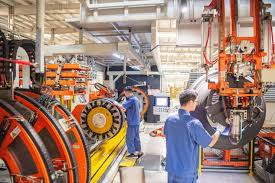
Inside the production workshop of Hunan Dongyi Electric Co., Ltd., robotic arms move in synchronized motion acrosssix automated lines, assembling lighter components at remarkable speed. The company ships more than a million lighters each day to buyers around the world.

“Our orderbooks are full through October,” said Bai Jiabao, deputy general manager of Dongyi Electric. The company exports more than 99 percent of its products, andin 2023, it recorded nearly $300 million in overseas sales — a 5 percent year-on-year increase. That momentum has continued into the first quarter of this year.

Facing mounting global uncertainty, Shaodong’s lighter manufacturers are hedging risk by expanding into new markets.

“Our clients are from more than 100 countries and regions,” Bai said. “That diversity gives us a buffer and strong resilience.” He noted that emerging markets such as the Middle East and Southeast Asia have seen increasing demand in recent years.

“No country can stop the momentum of globalization,” said Lyu Shenghua, chairman of Huanxing Lighter Manufacturing Co., Ltd., another company based in Shaodong, which exports to over 80 countries and regions and maintains a network of hundreds of stable buyers. According to Lyu, Shaodong’s lighter companies have actively pursued new markets, achieving remarkable results and maintaining robust growth.

Bairecently returned from the 137th China Import and Export Fair, also known as the Canton Fair. “Buyer turnout exceeded previous sessions,” he said.”We’re very optimistic.”

According to statistics, in the first quarter of this year, Shaoyang exported 480 million yuan ($66.32 million) worth of lighters and related parts to Belt and Road partner countries, up 48.5 percent year on year. Exports to the least developed countries also climbed by 13.3 percent, reaching 60 million yuan.

Inside Huanxing’s product showroom, eight major series and more than 200 types of lighters line the shelves.Among them, a new model of torch lighter has emerged as a breakout success.

“This torch lighter has become one of our fastest-growing products,” Lyu explained. In 2023, after conducting extensive market research in its key export destinations, the company identified a surge in demand for outdoor torch lighters, driven by the global boom in camping and recreational activities. Huanxing swiftly ramped up R&D investment and increased manpower towardthe design of a lighter tailored for these trends.

“We offered a few samples to a select group of long-term clients for testing. The feedback was overwhelmingly positive, and orders quickly followed,” said Lyu. The product soon gained traction at major international trade fairs, becoming one of the company’s standout products. Last year, this single innovation delivered double-digit growth in the company’s total sales.

“Innovation is our driving force. If a product is good enough, it will find its market,” Lyu said. Mid- to high-end models, he noted, now make up a growing share of the company’s exports.

Dongyi Electric has taken a similar approach. Since 2016, the company has allocated 20 million yuan annually to R&D. After four years, it achieved full automation across every stage of production — significantly cutting costs and improving product quality.

“A workshop that once needed 200 workers now requires only 40,”Bai said.”And production capacity has increased ninefold.”

Shaodong’s success in scaling up innovation owes much to its robust and highly localized supply chain. The city is home to 114 lighter-related manufacturers, including over 80 suppliers. This creates a tightly-knit industrial cluster. More than 200 types of lighter components can be sourced locally — all within a 20-kilometer radius.

As the global trade environment grows more complex, Shaodong companies are also looking inward. Many are developing integrated sales strategies to tap into China’svast domestic market.

“Our domestic business now accounts for about 70 percent of total sales,” said Liu Hanjiang, general manager of Hunan Haopai Electric Co., Ltd., which specializes in mid-end lighters priced between two and five yuan. The company releases four to five new models each year and produced over 100 million lighters last year.

With a blend of innovation, market diversification, and domestic market expansion, Shaodong’s lighter industry is establishing new strategic positions within global supply chains. This transformation is driving the sector toward higher-quality development and laying the groundwork for a more resilient future.