Auto Shanghai showcases China’s fast-track transformation in auto industry

By Wang Zheng, People’s Daily

From April 23 to May 2, the 21st Shanghai International Automobile Industry Exhibition (Auto Shanghai 2025) was held at the National Exhibition and Convention Center (Shanghai). Featuring nearly 1,000 exhibitors from 26 countries and regions, the event showcased over 100 new vehicle models and cutting-edge technologies.

At the exhibition, a new energy SUV capable of crab-walking, tank turns, and running on flat tires was displayed. This model is able to “sail” through water up to 80 centimeters deep for two hours.

There was an advanced assisted driving system that can autonomously navigate multi-floor underground parking garages and charge itself. A power battery with a volumetric energy density exceeding 1,000 Wh/L also caught great attention.

These are just a few of the highlights from the Auto Shanghai 2025, where Chinese electric vehicle makers and suppliers astonished visitors with their latest innovations in electrification and intelligence technologies.

“China’s leadership in electrification and intelligent technologies is leading the global auto industry transformation,” said Stephen Ma, chairman of Nissan China Management Committee and president of Chinese carmaker Dongfeng Motor.

“Nissan is leveraging China’s advantages in technology and resources to collaborativelydevelop innovative and competitive products,” he added.

A range of forward-looking driver-assist technologies were unveiled by mainstream automakers at the exhibition.

Chinese new energy vehicle manufacturer GAC Aion partnered with ride-hailing platform DiDi to debut Robotaxi, a Level-4 autonomous model, which is scheduled for rollout by the end of this year and pilot operation in 2026.

Meanwhile, Chinese tech giant Huawei launched its Qiankun ADS 4 system, which reduces end-to-end latency by 50%, improves traffic efficiency by 20%, and cuts hard braking incidents by 30%.

“Huawei has already completed 600 million kilometers of Level-3 expressway self-driving simulations and validations via our cloud-based World Engine. We’re now ready for commercial mass production of Level-3 autonomous driving,” said Jin Yuzhi, CEO of Huawei’s Intelligent Automotive Solution.

The “China speed” of innovation is also evident in the chip sector.

Chinese technology company Horizon Robotics unveiled its Journey 6P chip – currently the most powerful domestically produced intelligent driving chip with 560 TOPS of computing power – and launched China’s first full-stack Level-2 urban driver-assist system integrating both software and hardware. The system will debut in mass production on EXEED brand of Chinese carmaker Chery this September.

Auto Shanghai 2025 also marked a new chapter in joint ventures, as multinational automakers unveiled collaborative projects developed primarily in China. SAIC Volkswagen took the lead in developing Volkswagen’s first full-size extended-range electric vehicle SUV concept. Dongfeng Nissan spearheaded the creation of the pure-electric N7 sedan. Chinese automobile manufacturer Changan Automobile and Mazda co-developed the EZ-60, a new energy model under the Changan Mazda brand.

From “made in China for China” to “made in China for the world,” multinational carmakers are shifting their role in China from a manufacturing hub to global contributors of technological innovation.

Two years ago, Ola Kaellenius, chairman of the board of management of Mercedes-Benz, said that China’s pace of innovation is astonishing, particularly in electrification and digitalization, which is far ahead of the rest of the world. This remark has now been fully validated by the company’s latest progress in China.

At the Auto Shanghai 2025, Mercedes-Benz debuted its long-wheelbase, all-electric model CLA globally. The development of this model’s all-scenario driver-assist system was led by the carmaker’s Chinese R&D team, which took just 18 months. That speed would not have been possible without the support of the company’s two major R&D centers in Beijing and Shanghai and a local team of over 2,000 engineers.

Artificial intelligence (AI) was ubiquitous at the Auto Shanghai 2025. From smart cabins redefining human-vehicle interaction, to integrated driver-assist systems breaking through application boundaries, and to large models powering end-to-end business innovation, a new vision with AI-driven intelligent vehicles serving as the neural hub is becoming clear in the wave of auto industry’s transformation.

BMW, following a strategic partnership with Alibaba on large language models and the launch of an AI agent developed by its China-based R&D team, announced further integration with DeepSeek to strengthen its AI ecosystem in China.

Dongfeng Motor exhibited an enterprise-grade large model. With AI-powered design assistants, coding copilots, and simulation tools, the model cuts new vehicle development cycles by over 35% and reduces collaboration costs by 30%.

Gan Jiayue, CEO of Chinese automobile giant Geely Auto Group, said that the company has integrated AI across its entire smart vehicle ecosystem, from architecture and powertrain to chassis, cabin, and driver assistance.

It has also deeply embedded AI into the entire value chain from product development and manufacturing to after-sales service, to deliver a truly intelligent, all-scenario user experience, he added.

Li Xianjun, director of the automotive development research center at Tsinghua University’s School of Vehicle and Mobility, noted that AI-powered electrification and intelligent technologies are accelerating disruptive innovation in the auto sector.

He urged automakers to rapidly formulate AI-driven strategies and build new organizational systems with innovative mechanisms, processes, talent, and culture to speed up their transformation.

China-EU economic, trade cooperation brings greater stability to global economy

By Guo Ziyun, Yu Limin, Niu Ruifei, People’s Daily

This year 2025 marks the 50th anniversary of the establishment of diplomatic relations between China and the European Union (EU). As the world’s second and third largest economies, China and the EU collectively account for over one third of the global economy and more than a quarter of global trade. Both sides are advocates of economic globalization and trade liberalization, and firm defenders and supporters of the World Trade Organization.

Over the past five decades, the two sides have continued to deepen their economic and trade cooperation, benefiting the two peoples and the world at large. As the global economy faces mounting instability and uncertainty, closer communication and cooperation between China and the EU can contribute to open and free trade and investment, ensure stable and unimpededglobal industrial and supply chains, and inject greater stability and certainty into the world economy.

In the western Polish city of Slubice, the rhythmic hum of conveyor belts fills a warehouse run by MBB Logistics, where workersmethodically sort and dispatch packages destined for consumers across Poland and Germany — usually within 24 hours.

This warehouse is part of a growing logistics footprint made possible by the China-Europe freight service. Over the past several years, MBB Logistics has expanded into eight warehouses in the region, covering 160,000 square meters and handling a wide range of goods including electronics, mechanical parts, household supplies, and hardware. Sourced from nearly 300 Chinese e-commerce partners, these goods form a bridge between thousands of Chinese manufacturers and the vast European market.

Julio Rios, a Spanish expert on China, observed that the China-Europe freight service addresses the needs of both China and Europe in a complementary and innovative way. He views the freight service as a catalyst for unleashing the economic and trade cooperation potential of countries along the route.

As morning light pierced the mist and spread across the vast Hungarian plains, rows of sand martin nests dotted the rocky embankment near the tracks of the Budapest-Belgrade railway– home to hundreds of the birds.During the railway’s construction, Chinese builders went to great lengths to protect the birds’ habitat, which has since become a cherished story in the local community.

The Hungary-Serbia railway is a vivid example of China and the EU jointly building green Belt and Road.

In Greece, Chinese enterprises are actively promoting green and digital transformation at the Piraeus port, striving to transform it into a sustainable, efficient, and intelligent port.

In Malta, the Delimara 3 power station, upgraded by a Chinese company, now emits significantly less pollution and carbon than EU environmental standards require, shifting from a heavy polluter to a model of green innovation.

In Serbia, the Chinese-built Kostolac Power Plant is converting ash and slag into exportable concrete materials, reducing dust emissions while generating revenue.

These green projects and technologies are propelling Europe’s green transition and injecting new momentum into regional economic development.

Fabian Zuleeg, chief economist at the European Policy Center, sees vast potential in China-EU trade and investment cooperation, especially in tackling climate change. With shared goals and a growing alignment on green priorities, he noted, both sides recognize the scale of business opportunities ahead.

European companies express growing confidence in the Chinese market through tangible investments. France-based cosmetic giantL’Oreal has launched two new investment funds in China. German industrial giant Siemens opened its first industrial ecosystem hub in western China in Chengdu, Sichuan province. Danfoss, a global refrigeration industry giant headquartered in Danmark, inaugurated its first carbon-neutral factory in China, located in Nanjing, Jiangsu province. According to China’s Ministry of Commerce, actual investment from the EU to China rose by 11.7 percent in the first quarter of this year.

China-EU investment cooperation continues to expand, particularly in areas such as new energy, green technology, and smart manufacturing.

Greece’sPiraeus Port Authority S.A., operated by a Chinese company, posted record-high revenues and profits in 2024. In the first quarter, Chinese electric vehicle battery giant CATL saw strong year-on-year growth in power battery sales in the European market, with its factory in Thuringia, Germany achieving profitability. Meanwhile, Chinese automaker Chery Automobileand Spain’s Ebro-EV Motors signed a pact to develop new electric vehicles through a joint venture, breathing new life into a cherished local brand.

Bernard Dewit, chairman of the Belgian-Chinese Chamber of Commerce, noted that Chinese and European companies continue to demonstrate innovation and resilience. In anincreasingly complex international environment, he said, they are forging win-win partnerships and opening up broad development prospects.

Traditional Chinese medicine bridges hearts between China, Russia

By Xiao Xinxin, People’s Daily

“The new building of Moscow State University, perched on Lenin Hills, is being adorned with masterpieces by Soviet sculptors, painters, and decorative artists… Among them are exquisite portraits of the great Chinese scientist Zu Chongzhi and herbalist Li Shizhen,” read the front page of Pravda on March 28, 1953.

“This reflects the profound respect of the Soviet people for the great and friendly Chinese people, whose ancient civilization boasts a brilliant cultural heritage,” the article continued.

Founded in 1755, Moscow State University completed its iconic main building in September 1953. Today, visitors entering the main auditorium pass through a corridor where a decorative frieze beneath the ceiling displays mosaic portraits of some of the world’s most renowned scientists, rendered in vibrant marble. Among them are Zu Chongzhi, the mathematician, astronomer, and scientist of China’sSouthern and Northern Dynasties (420-589), and Li Shizhen, the acclaimed pharmacologist in China’sMing Dynasty (1368-1644).

While decades have passed, the traditional Chinese medicine (TCM) and TCM culture that Li represents continue to flourish. In today’s Russia, TCM is steadily gaining ground, with a growing number of people turning to its treatments.

At the St. Petersburg TCM Center established by Beijing University of Chinese Medicine, Svetlana, a local resident,was receiving therapy. She has long suffered from dizziness, headaches, fatigue, and persistent pain in her shoulders and arms. On her family’s recommendation, she visited the center, where doctors applied cupping therapy, acupuncture, and moxibustion.

“The results were remarkable! My symptoms have eased significantly, and I feel much more at ease,” she said. “I now truly understand the value of TCM.”

Opened in July 2016, the St. Petersburg TCM Center was the first TCM hospital in Russia to receive legal accreditation under local medical regulations. According to Liu Qingguo, head of the center, it has treated over 4,000 patients and provided more than 10,000 treatment sessions. Treatments such as scalp acupuncture, fire needling, heat-sensitive moxibustion, and therapeutic massage have offered relief to many suffering from chronic ailments.

The center has also forged partnerships with Russian medical research institutions and regularly hosts free consultations, public lectures, and joint clinics to broaden understanding of TCM within the local community.

“With growing interest in TCM among Russians, we are expanding training programs for practitioners,” said Huang Guorong, president of the Russian Association of Specialists of Traditional Chinese Medicine. Founded in 2018, the association has played an increasingly active role in TCM education. In 2024 alone, its international school of oriental medicine in Moscow conducted nearly 100 specialized training sessions, teaching over 7,000 trainees from Russia and neighboring countries. Many graduates have since entered the TCM field professionally.

In recent years, medical tourism centered on TCM has flourished along the China-Russia border. A increasing number of Russian tourists are traveling to northeast China in search of TCM treatments. In cities like Heihe and Suifenhe, both in northeast China’s Heilongjiang province, Russian “medical tour groups” have become a familiar presence. Meanwhile, the Wudalianchi scenic area in Heihe, renowned for its volcanic landscape and mineral-rich cold springs, welcomes nearly 10,000 Russian visitors annually for therapeutic retreats.

Fedot Tumusov, first deputy chairman of the State Duma Committee on Health Protection of the Federal Assembly of the Russian Federation, noted that China and Russia are deepening heathcare cooperation, and both doctors and patients in Russia are showing greater openness toward TCM.

“We look forward to continued collaboration that fosters mutual learning and promotes the deeper integration of TCM into Russia’s healthcare system to benefit more people,” he added.

To work toward even brighter future for China-EU relations

By He Yin, People’s Daily

On May 6, Chinese President Xi Jinping exchanged congratulations with European CouncilPresident Antonio Costa and European Commission President Ursula von der Leyen over the 50th anniversary of diplomatic relations between China and the European Union (EU).

Xi noted that since the establishment of their diplomatic ties 50 years ago, China and the EU have maintained close exchanges across various levels and sectors, saying that the accomplishments of their dialogue and cooperation are fruitful, cultural and people-to-people exchanges vibrant, and multilateral coordination productive.

He added that China-EU relations have become one of the most influential bilateral relations in the world, contributing greatly to enhancing the well-being of their people, and promoting world peace and development.

In this half-century-long relationship between China and the EU, the most valuable asset is mutual respect, the most powerful impetus is mutual benefit, the greatest unifying consensus is multilateralism, and the most accurate characterization is partnership.

China always views its relations with the EU from a strategic and long-term perspective, and regards Europe as an important dimension in its major-country diplomacy with Chinese characteristics and an important partner on its path toward Chinese modernization.

In March 2014, Xi paid a historic visit to the EU headquarters and proposed that the two sides should jointly forge China-EU partnerships for peace, growth, reform and civilization, enriching the strategic substance of the China-EU comprehensive strategic partnership.

Since the beginning of this year, China and the EU have maintained frequenthigh-level interactions, sending a strong signal to the international community that they are both committed to multilateralism and free trade. Amid mounting global uncertainty, the two sides continue to serve as anchors of stability and constructive forces.

China and the EU enjoy complementary strengths and mutual benefits in economic and trade cooperation, forming a robust relationship of economic symbiosis.

In the past five decades, China-EU trade has expanded from $2.4 billion to $785.8 billion in 2024. Investment has increased from almost zero to close to $260 billion. China-Europe Railway Express has run more than 100,000 cargo trips and become a golden passage connecting Asia and Europe.

According to China’s General Administration of Customs, in the first quarter of this year, trade between the two sides reached 1.3 trillion yuan ($179.29), which translates to over 10 million yuan in trade every minute.

China’s pursuit of high-quality development and high-level opening up is creating new opportunities for bilateral cooperation.

Recently, European political and business leaders have actively visited China to attend events such as the China Development Forum and the Boao Forum for Asia Annual Conference. European multinationals have launched new products at Chinese expos and deepened their engagement with the Chinese market.

At the same time, Chinese business delegations have also held trade and investment matchmaking events in several European countries. The sustained two-way economic and trade engagement reflects the strong internal momentum and bright prospects of China-EU relations.

As China and the EU continue to act as partners for mutual success, their cooperation will not only support each other’s development but also provide stronger momentum for the stability of global industrial and supply chains as well as global development.

A healthy and stable China-EU relationship not only promotes mutual achievements, but also illuminates the world. From jointly promoting the conclusion of the Paris Agreement, to enhancing cooperation on biodiversity conservation, and advancing collaboration on global AI governance, China and the EU have engaged in effective multilateral coordination and cooperation in many fields, laying a solid foundation for their partnership in global governance.

Today, as unilateralism, protectionism, hegemonism, and power politics pose severe threats to international rules and order, deepening China-EU cooperation takes on even greater practical significance. Together, China and the EU account for over one third of the global economy and more than a quarter of global trade. As long as the two sides choose dialogue and cooperation, camps of confrontation will not emerge, and as long as they opt for openness and mutual benefits, the trend of economic globalization will not experience a fundamental reversal.

As two major forces promotingmulti-polarization, two major markets supporting globalization, and two major civilizations advocating diversity, China and the EU should remain committed to multilateralism, uphold fairness and justice, oppose unilateralism and bullying, join forces in addressing global challenges, and jointly build an equitable and orderly multipolar world and an inclusive economic globalization, so as to make greater contributions to world peace, stability, development and prosperity.

The history of China-EU relations demonstrates that as long as both sides uphold mutual respect, treat each other as equals, and engage in candid dialogue, they can advance cooperation and make significant achievements.

China is willing to work with the EU to uphold the comprehensive strategic partnership, make bilateral relations more stable, constructive, reciprocal and global, better benefit the two peoples and the international community, and work toward an even brighter future for China-EU relations.

At Moscow Zoo, a panda family charms crowds and symbolizes China-Russia friendship

By Xiao Xinxin, People’s Daily

“She’s as beautiful as her name — just like the song!” exclaimed eight-year-old Darya from Moscow, beaming as she watched giant panda Katyusha gnawing contentedly on bamboo shoot while lounging on a climbing frame. “My friends and I love her. We often come here to take cute photos.”

The panda house of the over-150-year-old Moscow Zoo is infused with Chinese aesthetics — red gateways, lush bamboo groves, and traditional Chinese landscape paintings. It has become a popular destination for visitors and selfie-takers alike. Inside, Katyusha and her parents, Ruyi and Dingding, have won over a loyal following in Russia.

On June 5, 2019, Chinese President Xi Jinping and Russian President Vladimir Putin attended the inauguration ceremony of the panda house in Moscow Zoo. That day marked the debut of Ruyi and Dingding in front of an enthusiastic public.

Four years later, on August 24, 2023, Dingding gave birth to her first cub — a female — bringing joy and excitement to the Russian public. Over 380,000 people participated in an online poll to choose a name for the cub. The result, announced in January 2024, was “Katyusha,”named after the beloved classic song widely cherished in both China and Russia.

“Though she’s not yet two years old, Katyusha has already become an internet sensation, just like her parents,” said Svetlana Akulova, head of the zoo. Thanks to attentive care from all sides, the panda family is thriving. Ruyi is energetic and often interacts with visitors through the glass. Dingding, more reserved, has impressed caretakers with her intelligence. Katyusha, now weighing about 65 kilograms, began living independently at the end of April this year and is still adjusting to her new routine.

To help the panda family adapt well to their new environment, the panda house was upgraded based on the guidance and technical standards provided by Chinese experts. Every aspect — from their diet to housing — is overseen with precision. In response to the high public interest, the zoo has installed eight livestream cameras, offering daily broadcastsof the giant pandas’ routines from 9 a.m. to 9 p.m.

Akulova regularly shares updates via social media, chronicling Katyusha’s journey from the moment she first opened her eyes and lifted her head, crawling, standing, and now venturing into independent life. Each milestone, she says, brings a deep sense of pride.

“The giant pandas are shared treasure of our two peoples and a symbol of China-Russia friendship,” she said. “We will continue to care for them with love and dedication, preserving this living bond and bringing our peoples ever closer together,” she said.

Saraki committee: PDP on the path to resurgence- Utaan

*…Congratulates Ex- Gov Ortom on BOT Inauguration

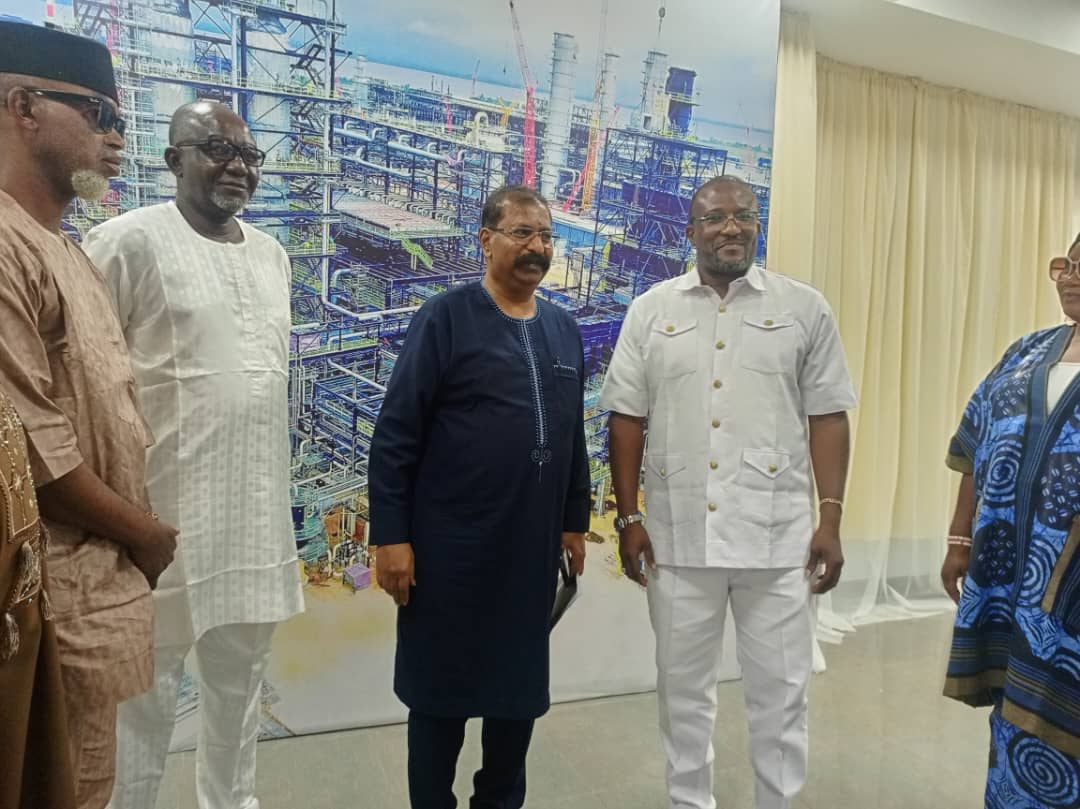
A National Chairmanship hopeful of the Peoples Democratic Party, PDP Engr. Utaan Terhide Conrad, FNSE, MNIEEE, yesterday, congratulated immediate past governor of Benue State, Chief Samuel Ortom, the Leader of the Peoples Democratic Party (PDP) in Benue State on his inauguration as a distinguished member of the Board of Trustees (BOT) of our great party.

In a statement signed by Engr. Conrad Utaan, he described Chief Ortom’s membership of the PDP BOT attests to his commitment, visionary leadership, and invaluable contributions to the PDP. I am confident that he will bring his wealth of experience to bear, and his presence on the BOT will serve as a catalyst for the continued growth, stability, and unity of the PDP across the country.

“I also commend the leadership of the PDP for taking a bold and commendable step towards reconciliation and renewal by establishing a 7-member Reconciliation Committee, headed by the former Senate President, *Dr. Bukola Saraki”

“This initiative demonstrates the party’s sincere commitment to healing internal divisions, fostering unity among members, and laying a solid foundation for a robust and resilient PDP. I believe that such proactive measures will invigorate our party’s structures, rekindle the enthusiasm of our members, and position the PDP for greater success in the near future”

He declared that ” as a dedicated member of the party, I remain hopeful that these strategic steps will usher in a new era of cohesion, purpose, and renewed vigour. I am confident that, with unity of purpose, inclusive dialogue, and steadfast commitment, the PDP will continue to be a formidable force for democracy, good governance, and Nigeria’s socio-economic development.

“I wish to reaffirm my unalloyed loyalty and commitment to our party’s ideals and objectives. I encourage other party members in the 36 states and the FCT to remain resilient, ready to sacrifice, and willing to make concessions towards repositioning the PDP as the preferred platform for Nigeria’s progress and prosperity” He maintained .

Okpella’s Quest for a Legitimate King: An Appeal to Edo State Governor.

The Okpella Traditional Clan Head Tussle has lingered on for about six years now, and it is true to say that the current government has mustered the will and courage to address the impasse by directing that a transparent process be followed, rooted in the extant laws that govern chieftaincy matters in Edo State. However, to the shock and dismay of every well-meaning sons and daughters of the land, the governor and the entire State are being taken for a ride by a select few. What they hide from His Excellency, Senator Monday Okpebholo, the Executive Governor of Edo State, is now in the open.

As few individuals in Okpella are about to make the same mistake in their attempts to legitimize the illegitimate and shambolic election that was conducted for only one candidate on the 10th May, 2025.

It is very clear in the eyes of the law, as instructed by our ancestors, the ruling house, whose turn it is to produce a King for Okpella, are the ones to select a candidate, an adult male, and present to the Kingmakers. When Ukhomuyio, whose turn it is to select a king for Okpella, has more than one candidate, the law mandates them to conduct an election so that one person can emerge. It is only the winner, one male individual, that should be presented by Ukhomuyio to the 24 kingmakers for approval as the Okuokpellagbe of Okpella.

The concerned sons and daughters of Okpella stand before you today in unity because they were among the thousands of your supporters who voted for you. They are not in defiance because they are your supporters, but in defense of our tradition, our rights, and the rule of law, which is being trampled upon.

They urgently demand the immediate suspension of the illegal and purported election of the Okuokpellagbe of Okpella, which took place on the 10th of May 2025. Your Excellency, the concern of Okpella is based not on hearsay, but on the clear provisions of the law. Section 4 of the Traditional Rulers and Chiefs Edict, 1979, provides that:

“When a vacancy occurs, the village head or, in his absence, the senior daudu of the appropriate component branch of the appropriate ruling house shall summon and preside over a meeting of the adult males of the said component branch to nominate a suitable candidate. The candidate selected…is presented to the kingmakers…for formal approval.”

This provision is not a suggestion—it is the law. At this moment, the Ukhomunyio component branch of the ruling house, whose turn it is to produce the next Okuokpellagbe, has not met, nor nominated anyone, and has not decided on any candidate for that position.

It is clear, therefore, that Mike Sado was the only candidate who was in that meeting erroneously referred to as “election” conducted by a few individuals who are not from Ukhomuyio, whose turn it is to produce the Okuokpellagbe. The Ukhomuyio scheduled a meeting on the 11th of May, 2025, where the entire Ukhomunyio kindreds were to discuss the way forward in respect of the process of selecting the Okuokpellagbe of Okpella as spelt out in the extant law.

Therefore, any move by the kingmakers to proceed with an election, selection, or approval process is fundamentally illegal, premature, and void of legitimacy. The election is not known by Ukhomuyio and is not lawful.

Your Excellency, the kingmakers cannot and must not vote when the rightful branch has not yet exercised its lawful and customary duty to choose its nominee. To do so is to trample upon the very process that safeguards fairness and peace in our community. This is not just about tradition. This is about justice, law, and respect for the voice of the people of Ukhomunyio and the entire Okpella Kingdom.

We appeal to your good conscience and your respect for due process to ignore the outcome of that so-called election of 10th May, 2025. We ask you to ensure that:

1. The Ukhomunyio component branch is allowed to meet, discuss, and nominate their candidate in line with the law and send it to the Kingmakers for ceremonial approval as stipulated by the law.

2. No action is taken by the kingmakers until that nomination is lawfully presented to them.

Your Excellency, Governor Monday Okpebholo, this is your moment to uphold justice and protect peace in Okpella. Let your administration be remembered for fairness, for dialogue, not division. We say no to imposition. We want due process, justice, and peace, which are the reflections of your administration.

Thank you, and may Edo State continue to thrive under your leadership.

Mr. Adophus Omokhafe Barry writes from Ukhomuyio, Oteku Sub-Ruling House, Okpella, Edo State.

Okpella Kingship: Ukhomuyio Disowns Mike Sado, Set-Up Fresh Executive

The Ukhomuyio community of Okpella in Edo State has rejected what it describes as the shambolic process that took place on 10 May, 2025 that saw to the selection of Mike Sado.

This was contained in a Communique jointly signed by the President of the Community, Sam Afemikhe, High Chief Julius Ederefo of the Ukhomunyio Council of Village Heads and Comrade Merrv Omoalu President, Ukhomunyio Youth Association.

It said Mr Sado was the only candidate in that meeting erroneously referred to as “election” conducted by a few individuals who are not from Ukhomuyio, whose turn it is to produce the Okuokpellagbe.

He said regarding the appointment of Okuokpellagbe, Ukhomunyio feels disenfranchised because Government has not given the Ukhomunyio Sub-Ruling Area the opportunity to carry out the process to choose an acceptable Okuokpellagbe in line with the directives of Government and the extant laws for the appointment of Okuokpellagbe.

In a related development, Ukhomuyio has therefore in its originally scheduled meeting decided to set up a new executive group in order to resolve the impasse and engender growth and development in the community.

The sons and daughters of the community who gathered on Sunday at the Afokpella Secondary School for the landmark strategy meeting had their focus on unifying and repositioning the community.

According to a statement by the Public Relations Officer of the community, Dr Samson Omosotomhe, the meeting marked a significant turning point as new executive leadership was established, along with a bold vision for the future.

According to him, with a mission of Rescue and Recovery and a vision to make Ukhomuyio socially and economically developed, the newly elected executive is tasked with steering the community towards unity, justice, and progress.

” The agenda includes: unite the entire Ukhomuyio community to heal the wounds of the past seven years.
“Foster integration between Ukhomuyio and the wider Okpella community.
“Engage with government stakeholders to resolve the Okhuokpellagbe impasse equitably.
“Partner with operating companies to ensure Ukhomuyio benefits from local economic resources.
“Launch aggressive development initiatives to make up for lost time.
“Collaborate with the government to enhance security, enabling safe farming and peaceful living,” he said .

He emphasized that this renewed leadership is a call to all Ukhomuyio sons and daughters to rise in unity, filled with hope and purpose, towards a brighter future.

He listed the executive members to include Samuel Sunday Onoshioagbe Afemikhe as president, Dr. Henry Idogun Vice President, Charles Ikumesomi Chairperson, Roland Ediawe Secretary, Mathew Okun Assistant Secretary, Okhale Labeshi Financial Secretary, Eshio Omokhagbo Assistant Financial Secretary, Mark Adogah Treasurer, Philip Odion Magnus Assistant Treasurer, Dr Samson Omosotomhe Public and Osaru Usman Relations Officers, Bar(s) Philip Thomas Ilukholo, Benjamin Onekpe, and Mutairu Hope Aliu as Legal Advisers, Jonathan Abu, and Lucky Afiabor as Security Officers and Engr. Sunday, Iremia; Dr. William Odiwo; Barr. Nicholas Aliu; Barnabas Eshiobho; Hon. Philip Akemokue; Hon. Ekhis Uduafemeh; Jerome Francisca as Ex Officio Members.

It was also agreed that the Community empowers the President, working with other stakeholders, to create a robust and all-Inclusive team of well-meaning Ukhomunyio sons and daughters that will henceforth pilot the affairs of the community In collaboration with the Village Heads.

Okpella’s Quest for a Legitimate King: An Appeal to Edo State Governor.

The Okpella Traditional Clan Head Tussle has lingered on for about six years now, and it is true to say that the current government has mustered the will and courage to address the impasse by directing that a transparent process be followed, rooted in the extant laws that govern chieftaincy matters in Edo State. However, to the shock and dismay of every well-meaning sons and daughters of the land, the governor and the entire State are being taken for a ride by a select few. What they hide from His Excellency, Senator Monday Okpebholo, the Executive Governor of Edo State, is now in the open.

As few individuals in Okpella are about to make the same mistake in their attempts to legitimize the illegitimate and shambolic election that was conducted for only one candidate on the 10th May, 2025.

It is very clear in the eyes of the law, as instructed by our ancestors, the ruling house, whose turn it is to produce a King for Okpella, are the ones to select a candidate, an adult male, and present to the Kingmakers. When Ukhomuyio, whose turn it is to select a king for Okpella, has more than one candidate, the law mandates them to conduct an election so that one person can emerge. It is only the winner, one male individual, that should be presented by Ukhomuyio to the 24 kingmakers for approval as the Okuokpellagbe of Okpella.

The concerned sons and daughters of Okpella stand before you today in unity because they were among the thousands of your supporters who voted for you. They are not in defiance because they are your supporters, but in defense of our tradition, our rights, and the rule of law, which is being trampled upon.

They urgently demand the immediate suspension of the illegal and purported election of the Okuokpellagbe of Okpella, which took place on the 10th of May 2025. Your Excellency, the concern of Okpella is based not on hearsay, but on the clear provisions of the law. Section 4 of the Traditional Rulers and Chiefs Edict, 1979, provides that:

“When a vacancy occurs, the village head or, in his absence, the senior daudu of the appropriate component branch of the appropriate ruling house shall summon and preside over a meeting of the adult males of the said component branch to nominate a suitable candidate. The candidate selected…is presented to the kingmakers…for formal approval.”

This provision is not a suggestion—it is the law. At this moment, the Ukhomunyio component branch of the ruling house, whose turn it is to produce the next Okuokpellagbe, has not met, nor nominated anyone, and has not decided on any candidate for that position.

It is clear, therefore, that Mike Sado was the only candidate who was in that meeting erroneously referred to as “election” conducted by a few individuals who are not from Ukhomuyio, whose turn it is to produce the Okuokpellagbe. The Ukhomuyio scheduled a meeting on the 11th of May, 2025, where the entire Ukhomunyio kindreds were to discuss the way forward in respect of the process of selecting the Okuokpellagbe of Okpella as spelt out in the extant law.

Therefore, any move by the kingmakers to proceed with an election, selection, or approval process is fundamentally illegal, premature, and void of legitimacy. The election is not known by Ukhomuyio and is not lawful.

Your Excellency, the kingmakers cannot and must not vote when the rightful branch has not yet exercised its lawful and customary duty to choose its nominee. To do so is to trample upon the very process that safeguards fairness and peace in our community. This is not just about tradition. This is about justice, law, and respect for the voice of the people of Ukhomunyio and the entire Okpella Kingdom.

We appeal to your good conscience and your respect for due process to ignore the outcome of that so-called election of 10th May, 2025. We ask you to ensure that:

  1. The Ukhomunyio component branch is allowed to meet, discuss, and nominate their candidate in line with the law and send it to the Kingmakers for ceremonial approval as stipulated by the law.
  2. No action is taken by the kingmakers until that nomination is lawfully presented to them.

Your Excellency, Governor Monday Okpebholo, this is your moment to uphold justice and protect peace in Okpella. Let your administration be remembered for fairness, for dialogue, not division. We say no to imposition. We want due process, justice, and peace, which are the reflections of your administration.

Thank you, and may Edo State continue to thrive under your leadership.

Mr. Adophus Omokhafe Barry writes from Ukhomuyio, Oteku Sub-Ruling House, Okpella, Edo State.

Wuhan startup rides e-commerce boom to reach global markets

By Wu Jun, People’s Daily

As more Chinese enterprises set their sights on international expansion, Hu Baoming is positioning his firm to seize the moment.

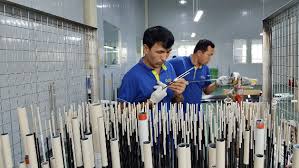
Hu heads Wuhan Gani Technology Co., Ltd., a professional window film manufacturer based in Wuhan, central China’s Hubei province. Following a recent trip to Saudi Arabia – where he finalized brand registration and compliance procedures for the company – Hu returned to China without pause. Within days, he was back to work, focused on establishing international logistics networks and overseas warehousing channels to connect Hubei with the Middle East.

As the company has scaled up production and enhanced product quality, Hu has become more determined to ride the wave of cross-border e-commerce into global markets.

“Summer is coming, and the Middle East will only get hotter,” he said, “There’s going to be strong demand for our products, especially the films that block UV rays and reduce heat.”

Among the company’s offerings, one heat-insulating film has already found a foothold overseas. This year, Hu plans to ramp up efforts in the region, doubling down on what he sees as a promising and fast-growing market.

For Chinese companies, particularly small and medium-sized enterprises (SMEs), cracking global markets has not always been easy. Establishing a physical presence, running marketing campaigns, navigating logistics and warehousing, handling cross-border payments, and staying compliant with local tax regulations can quickly overwhelm smaller players with limited international experience.

“For us, it really was starting from scratch,” Hu recalled.

Support came from the Yangtze International Trade Cross-Border E-commerce Industrial Park in Wuhan. The park connected Hu with a wide range of cross-border service providers and offered a comprehensive suite of professional solutions for going global. In the first half of 2024, Gani launched its first overseas online storefront.

Wuhan, a key foreign trade city in China, has seen its international commerce surge. According to Wuhan customs, the city recorded total imports and exports of 94.97 billion yuan ($13.01 billion) in the first quarter of 2024, up 17.8 percent year on year, driven in part by new growth in emerging markets.

To capitalize on this momentum, local authorities launched the Wuhan International Trade Digital Platform in 2024. Run by Wuhan Yangtze Trading Group Co., Ltd. under Wuhan Financial Holdings (Group), the platform aims to streamline the internationalization process for local businesses.

“We’ve rolled out over 80 trade services so far, serving more than 1,500 foreign trade companies and incubating over 140 new exporters,” said Li Shangsong, head of the platform’s project team.

The shift from offline to online services has made global expansion far more accessible for companies like Gani. “The platform offers a one-click store setup,” Hu said. “Once we fill out the required information online, we’re immediately connected with official onboarding teams from Amazon, eBay, and other leading international e-commerce platforms.”

But choosing the right market remains a critical question for many exporters. “We’ve integrated global trade data so that companies can access real-time sales trends and risk alerts across 98 major product categories before entering a new market,” Li said.

The platform now houses 2 billion trade records, covering 200 countries and regions and 600 ports. With this trove of information, businesses can fine-tune their strategies on the fly and quickly identify high-potential markets.

Once the market is selected and the stores are active, the next hurdle is getting products into customers’ hands – which means coordinating logistics and managing overseas warehousing.

According to Li, to streamline the process, the platform now works with a range of logistics service providers, allowing businesses to place shipping orders directly through the system. For sea freight, it collaborates with China COSCO Shipping Corporation Limited, giving users access to shipment tracking, schedules, and a one-stop international logistics system with real-time updates on order status.

Armed with these tools, Gani is moving forward with renewed confidence. “We’ve already launched our businesses on 12 major international e-commerce platforms and operate more than 30 online stores,” said Hu.

Still, new markets bring new challenges. “Even a great product won’t sell if nobody knows about it,” Hu admitted. While he initially considered purchasing overseas advertisements, the high costs and uncertain returns gave him pause.

To bridge the gap, the platform introduced an AI-powered marketing tool, said Li. By entering a product name and a few keywords, businesses can automatically generate multilingual marketing emails, social media copy, and product listings tailored for e-commerce platforms – all with a single click. The technology has dramatically lowered the cost of reaching international consumers.

With more targeted outreach and sharper messaging, Gani has steadily built its visibility abroad. Last year, the company reported $8 million in its sales – a number Hu hopes will continue to rise as Gani deepens its international footprint.