NYCN, Others Comdemn Media Trial, Misinformation against Akpabio

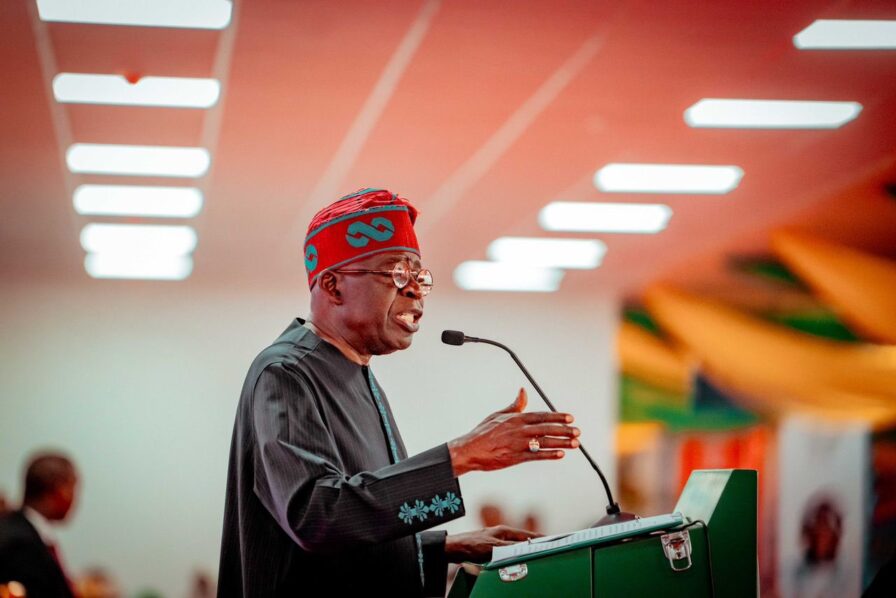
The National Youth Council of Nigeria and all youth groups in the country have condemned in strong terms what the described as media trials and the desperation to tarnish the image and reputation of Senator Godswill Akpabio, President of the Nigerian Senate.

In a statement signed by the NYCN President, Amb. Solomon Adodo and made available to journalist in Abuja, the group underscored the importance of information in a democratic and developing society and frowned at those whose stock in trade is misinformation for political and selfish reasons.

According to the statement, “information is key, especially in a democratic society like ours. Accurate and reliable information about national issues and events is the cornerstone of objective journalism. However, some mischief makers have mastered the act of misinformation through twisted logic and deliberate falsehood to sway public sentiments and blackmail their adversaries.

“The recent controversy surrounding the conviction off Professor Peter Ogban and the deliberate attempt to link his criminal record with the impeccable personality of Senate Godswill Akpabio, the President of the Nigerian Senate is one of the dangerous manifestations of falsehood deliberately targeted at the character and personality of an innocent man.

“To those who feel Senator Godswill Akpabio is a threat to them, nothing is too inglorious for them to do in order to paint him bad light. First, it was Senator Natasha Akpoti-Uduaghan who was pushed forward to contest supremacy with the Senate President on the floor of the Senate over an issue clearly sorted out in the Senate Standing Orders.

“When she was slapped a suspension which she rightly merited, she resorted to lies and blackmail. This was simply a script to discredit the Senate President but again she failed as even the courts found no merit in her fabrications and desperation.

“Another script from the Natasha Akpoti-Uduaghan camp which was designed to implicate the Senate President in an organ harvesting scandal, similar to what happened to Senator Ike Ikweremadu was also uncovered. A certain Dr. Sandra did not just refuse to be involved into an unethical conduct but went ahead and exposed those who were behind it. This falsehood and negativity also failed and with a perpetual hatred for the Senate President, the vultures are out to score cheap points over the recent conviction of Professor Peter Ogban.

“The misinformation that the Senate President benefitted from or committed electoral fraud following the conviction of Prof. Peter Ogban, a former INEC Returning Officer, is highly misleading and just one of the many sinister plots aimed at undermining the current administration.

“If not deliberate mischief, how can any right thinking individual conclude that Ogban rigged the election in favour of Akpabio when in reality, he announced Akpabio’s opponent as the winner and it was at the tribunal that Akpabio regained his mandate?

“This is nothing but deliberate, sponsored and calculated falsehood and misinformation intended to harm the towering political image of the Senate President who has been seen by many lovers of democracy as an ideal candidate for President after Tinubu’s 8 years.

“It is a dangerous enterprise for anybody to willfully distort very obvious facts like these just because they want to score cheap political points. To even think that very highly placed Nigerians believed this twisted falsehood and even propagated it on notable media channels is disheartening.

“As Nigerians, the exposition of this deviously orchestrated misinformation charade should awaken us to be more critical of whatever we see in the media especially against persons with distinguished track records. We must put aside our biases, political differences as well as personal interests and unite towards fighting our common enemies.

The text ended by urging the Senate President, Senator Godswill Akpabio “to remain steadfast and committed in his duties”, adding further that, as a youth group, we shall continue to give him the needed support to carry out his duties. Our doors are open to partner and collaborate with the Nigerian Senate since we have confidence in the Senate leadership and the good work they’re doing”

International community must jointly safeguard right course of science-based origins tracing

By Zhong Sheng, People’s Daily

On April 30, China’s State Council Information Office issued a white paper titled “Covid-19 Prevention, Control and Origins Tracing: China’s Actions and Stance.”

The document provides a comprehensive account of China’s contributions to virus origins tracing and global cooperation in fighting COVID-19, supported by detailed data and scientific evidence.

It also demonstrates China’s consistent position as a responsible major country in advocating science-based origins tracing and international cooperation, and firmly opposes the erroneous practice of politicizing public health issues.

The COVID-19 pandemic stands as the fastest-spreading and most extensive global health crisis that humanity has faced in a century. Its containment requires the concerted efforts of all countries.

From the onset of the pandemic, the collective effort of the whole Chinese nation enabled China to emerge victorious from the crisis – a historic feat for a populous nation like China.While unrelenting in its domestic efforts to contain the virus, China has unreservedly shared its experience to facilitate global pandemic control, done all it could for international anti-epidemic cooperation, fulfilled its international responsibilities, and demonstrated its ethical commitment as a major country.

Tracing the origins of the virus is a serious scientific issue. China has always applied a science-based approach to the task of tracing the virus origins, actively engaging with the World Health Organization (WHO) in communication and cooperation.

At the invitation of China, the WHO sent two international expert missions to the country to carry out a joint study into the origins of the virus in 2020 and 2021 respectively. Their findings were compiled into a joint study report that was released globally. With its rigorous and scientifically sound conclusions, the report earned endorsements from both the international community and the scientific community.

China has actively participated in global virus origins-tracing efforts with the greatest sincerity. Through systematic epidemiological investigations, molecular tracing, animal host screening, and studies on cold-chain transmission, the possibility of Wuhan being the natural origin of SARS-CoV-2 was scientifically ruled out. These efforts have provided the global scientific community with critical empirical evidence and established a research paradigm for future studies.

To date, no findings have contradicted the conclusions of the “WHO-convened Global Study of Origins of SARS-CoV-2: China Part – Joint WHO-China Study.”

The international community widely acknowledges that the Chinese side has fully, timely and effectively fulfilled the obligations prescribed by the International Health Regulations through prompt and extensive actions rarely seen anywhere in the world.

Addressing the global COVID-19 pandemic is a serious scientific issue that bears on the health and wellbeing of all humanity.

Numerous studies have shown that SARS-CoV-2 originated outside China. Research and analysis conducted by the U.S.Centers for Disease Control and Prevention(CDC) and the U.S. National Institutes of Health (NIH) indicate that prior to the outbreak in Wuhan, multiple regions in the U.S. recorded positive SARS-CoV-2 test results and other evidence of the virus. A thorough and in-depth investigation into the origins of the virus should be conducted in the U.S.

However, instead of addressing its own inadequate pandemic response, the U.S. government has deliberately suppressed and concealed its findings and evidence, making China the primary scapegoat for its own mismanaged COVID-19 response. This selective blindness and politicization of a scientific issue have seriously impeded efforts to trace the virus origins and undermined the global public health system.

Infectious diseases are the common enemy of humanity. The international community must jointly safeguard the right course of science-based origins tracing. To prevent new infectious diseases in the future, the U.S., as a major country, cannot continue to turn a deaf ear to the numerous questions over its conduct. It must promptly respond to the legitimate concerns of the international community, proactively share with the WHO data on its early suspected cases, and provide a responsible account to the global public.

(Zhong Sheng is a pen name often used by People’s Daily to express its views on foreign policy and international affairs.)

This innovation team in China’s Qingdao sets 12 world records in automated port operations

By Li Rui, People’s Daily

At a fully automated container terminal of Qingdao Port operated by Shandong Port Group in Qingdao, east China’s Shandong province, the average operational efficiency of a single quay crane has once again brokenthe world record, reaching 60.9 TEUs (twenty-foot equivalent units) per hour.

This marks the twelfth time that Qingdao Port’s “Liangang Innovation Team” has set a new world record in automated container terminal operations.

While China accounted for seven of the world’s top ten container ports in 2013, there was a notable shortcoming — not a single automated terminal among them.

To address this, Qingdao Port launched its automated terminal project the same year. Zhang Liangang, who had led multiple scientific and technological projects, took the lead in forming the “Liangang Innovation Team,” shouldering the responsibility of building China’s first automated container terminal.

Zhang recalled their early struggles: foreign terminal operators barred them from even gettingoff cars to take a single photograph, which makes studying abroad meaningless. As for purchasing the technology, the prices demanded were sky-high.

He was determined that core technologies could neither be bought nor begged for, self-reliance was the only path.

When the project began, Zhang was still recovering from lung cancer surgery. “Even giving it everything we have might not guarantee success. But half-hearted effortsinevitably guarantee failure,” he said. Under his leadership, the team worked around the clock, pushing themselves to the limit.

On May 11, 2017, the Qingdao Port automated container terminal officially commenced operations. As thousands of containers started moving at a command, everyone’s heartbeat quickened.

Data flashed across the screen: “Single crane efficiency: 26.1 TEUs per hour” – setting a new world record for the first commercial operation at an automated container terminal. At that moment, many team members were moved to tears.

During the construction of the second phase, the team set a higher goal: surpassing the achievements of the Phase I and establish global leadership. They implemented bold innovations such as hydrogen-powered equipment and 5G technology.

For the third phase, they launched the fully domestically developed Automated Terminal Operating System (A-TOS), achieving full autonomy in both core hardware and software technologies – from the bottom layer to application-level systems.

The AGV (Automated Guided Vehicle) path planning algorithm, known as the “soul” of the automated terminal control system, was one of the team’s most significant breakthroughs.

To simulate real-world working conditions, the team conducted a 48-hourendurance trial in sub-zero temperatures, enduring countless failures and errors before successfully launching a brand-new, high-efficiency AGV path planning algorithm.

“Only by constantly learning new knowledge and mastering new technologies can we keep pace with the times,” said Zhang Changjiang, a team member born in the 1980s. He once dedicated three consecutive days and nights to resolving the AGV charging bottleneck, successfully reducing equipment weight by 12 tons and extending battery lifespan to over 12 years.

Transitioning from a follower to a pioneer, the “Liangang Innovation Team” has maintained unwavering momentum in technological advancement.

Zhang Liangang’s phone is filled with blueprints for future port projects. “We are currently planning multiple technological innovations,” he explained. “First, we aim to accelerate the implementation of new quality productive forces such as artificial intelligence. Second, we are focusing on original, fundamental innovations for the next-generation intelligent, efficient, green, and lightweight port handling equipment. Third, we are committed to building the next generation of smart and green ports.”

China is a steadfast actor in promoting global green development

By He Yin, People’s Daily

On April 23, Chinese President Xi Jinping delivered a speech via video link at the Leaders Meeting on Climate and the Just Transition. He called on countries to adhere to multilateralism, deepen international cooperation, accelerate the just transition, and strengthen results-oriented actions – chartingthe course for enhancing solidarity and cooperation in global endeavors for climate governance.

This year marks the 10th anniversary of the Paris Agreement and the 80th anniversary of the founding of the United Nations(UN). In today’s world, global climate governance is facing multiple challenges. Some major country’s persistent pursuit of unilateralism and protectionism has seriously impacted global climate governance.

According to the World Meteorological Organization, 2024 was the warmest year on record, accompanied by devastating and extreme weather. The UN has repeatedly warned that global warming is accelerating, leaving no room for setbacks in climate governance, and meeting long-term temperature targets will require urgent and intensified efforts.

Multilateralism remains the most effective solution to the global challenge of climate change, with solidarity and cooperation the only viable path forward.

As the international situation becomes more volatile and turbulent, there is an even greater need for all countries to firmly safeguard the UN-centered international system and the international order underpinned by international law, and firmly safeguard international fairness and justice.

The United Nations Framework Convention on Climate Change (UNFCCC) and the Paris Agreement are the fundamental legal basis for international cooperation on addressing climate change. Although unilateralism and protectionism has seriously impacted international rules and the international order, history will, as always, move forward through twists and turns.

It is essential for all countries to uphold the spirit of solidarity and cooperation. They should rise above estrangement and conflict with openness and inclusiveness, boost technological innovation and industrial transformation through cooperation, and facilitate the free flow of quality green technologies and products, so that they can be accessible, affordable and beneficial for all countries, especially the developing ones.

China will continue to support other developing countries, particularly Small Island Developing States, least developed countries, and African nations, through South-South cooperation on climate change, contributing positive energy and creatingfavorable conditions for multilateral climate governance.

Effective climate action must be rooted in the realities of each country. Respect for different starting points, development stages, and national conditions and capacities is critical to ensuring a just transition – one that unfolds within the framework of sustainable development and poverty reduction.

Green transformation is not only an essential response to climate change, but a new engine for economic and social development. Such transformation must be people-centered and pursued in a way that advances the well-being of people and climate governance in tandem, and strike a balance between multiple goals including environmental protection, economic growth, job creation, and poverty alleviation.

All parties should earnestly honor the principle of common but differentiated responsibilities. Developed countries are obliged to extend assistance and support to developing countries, help drive the global shift toward green and low-carbon development, and contribute to the common and long-term well-being of people of all countries.

Harmony between man and nature is a defining feature of Chinese modernization, and China is a steadfast actor and major contributor in promoting global green development.

China is one of the initial parties to the UNFCCC and among the first signatories and ratifiers of the Paris Agreement. It is home to 70 percent of the photovoltaic components and 60 percent of wind power equipment worldwide, and contributes a quarter of the world’s newly-added area of afforestation.

The country has ramped upits green and low-carbon transition, leading the world in the speed and scale of “greening.” It has built the world’s largest and most complete new energy industrial chain, providing strong momentum forinternational cooperation on climate change and driving the implementation of the Paris Agreement.

China will announce its 2035 nationally determined contributions covering all economic sectors and all greenhouse gases before the UN Climate Change Conference in Belem, Brazil. UN Secretary-General Antonio Guterres said that this newly announced commitment to cutting emissions goals is “extremely important” for global climate action.

Climate change is a common challenge of all humanity, and addressing it demands a collective response.However the world may change, China will not slow down its climate actions, will not reduce its support for international cooperation, and will not cease its efforts to build a community with a shared future for mankind.

China is ready to work with all parties, keeping in mind the progress of humanity and the well-being of all people, to earnestly honor the principle of common but differentiated responsibilities, do the utmost respectively and collectively, and build a clean, beautiful, and sustainable world together.

Okura State: A Just and Compelling Case

By Dr. James Aduku Odaudu


The agitation for the creation of new states and local government areas in Nigeria is deeply rooted in the quest for equity, growth, political and economic inclusiveness. The faulty federal system in place has ensured that no matter the number of states in existence, the agitations will not end as long as there are cases of marginalisation, inequity and fear of domination. I dare say, however, that some of the demands are not only just, but also timely.


Nigeria’s democracy must be built on fairness, inclusion, and responsiveness to the aspirations of its people. One of the clearest expressions of these ideals is the call for the creation of Okura State—an idea whose time has surely come.


Situated in the eastern flank of Kogi State, the proposed Okura State is home to over 2.5 million people, predominantly of Igala descent. This ethnic nationality boasts a proud history dating back centuries, marked by an organized kingdom and deep cultural heritage. Yet, despite their numbers and contributions to national development, the Igalas have seen their influence diminish under the current configuration of Kogi State—a situation that has bred deep political and developmental frustrations.


But the call for Okura State is not just about correcting past wrongs. It is a forward-looking proposition that promises administrative efficiency, economic vitality, and national cohesion. With a landmass of over 13,000 square kilometers, Okura is not only viable—it is strategic.


Resource Abundance Meets Strategic Location
Rich in petroleum deposits, solid minerals, and fertile agricultural land, the region holds immense untapped potential. The oil-rich Ibaji axis, the iron ore and petroleum deposits in Omala, the vast coal deposits in Omala and Ankpa areas, and the vast arable lands across Dekina, and Olamaboro can support industries ranging from petrochemicals to agro-processing. Add to this a network of rivers and streams ideal for irrigation, aquaculture and tourism, and you have a blueprint for a self-sustaining, growth-driven economy.

A Region of Remarkable Human Capital
Okura’s strongest argument may well be its people.
The region has consistently produced some of Nigeria’s most accomplished personalities across sectors. These include former Governors Abubakar Audu (late), Ibrahim Idris and Idris Wada, former Deputy Governors like Isa Odoma (late), Sule Iyaji, Simon Achuba, and the incumbent Comrade Joel Oyibo.
In the political sphere, the area has also produced stalwarts like the late Dr Steven Achema, Senator Dr Ahmadu Ali who has also served as Minister and National Chairman of the then ruling party, PDP, Senators Jibrin Isah (Echocho) Andrew Abogede, Dangana Ocheja, Attai Aidoko Ali, Isaac Alfa, Abdul Abubakar and numerous members of the House of Representatives, including the current Deputy Leader of the House, Rt. Hon. Abdullahi Ibrahim Ali (Halims). They also include former and serving Ministers like the current Minister of Steel Development, Prince Shuaibu Aubakar Audu, Abdullahi Ibrahim (SAN), Abubakar Usman, Barrister Humphrey Abah, James Ocholi (SAN) and Professor Stephen Ocheni.
The area also boasts of top guns in various spheres of life, including the late former Chief of Defence Staff, Admiral Ibrahim Ogohi, former Chief of Naval Staff, Vice Admiral Usman Jibrin, former Chief of the Air Staff, Isaac Alfa. The list is endless in the Federal and state bureaucracies where it has produced a cream of retired and serving Permanent Secretaries and Directors, the academia with a plethora of serving and Emeritus Professors like Gabriel Oyibo of a GAGUT fame, the legal profession with uncountable Senior Advocates, the medical profession, the organised private sector with the likes of Thomas Etuh, chairman of 9Mobile, etc.
This list is not representative enough of the volume of human resources available in the proposed state but serves not only as a testament to the region’s human capital but also a ready resource for state-building and economic advancement.
State creation remains a strategic instrument for promoting equitable development, national integration, and responsive governance in Nigeria’s federal system. As the demand for Okura State continues to gather momentum, it is essential to outline the multifaceted benefits of state creation and present a compelling case for the establishment of Okura State from the present Kogi East Senatorial District.

Benefits of State Creation
 Enhanced Grassroots Participation: State creation brings governance closer to the people, encouraging more civic engagement, accountability, and responsiveness from local leaders.
 Improved Infrastructure Development: New states typically invest in administrative infrastructure (e.g., secretariats, roads, schools, hospitals), which can accelerate regional development.
 Balanced Federal Character: In multi-ethnic societies, state creation can help promote inclusiveness and reduce feelings of domination by larger ethnic groups or regions.
 Reduction in Urban Overcrowding: By developing new capitals and administrative hubs, state creation can reduce pressure on major cities and promote decongestion.
 Promotion of Local Enterprise and Investment: New state governments often incentivize investment in order to build a viable economy, which encourages private sector growth.
 Cultural Renaissance: It may spur efforts to preserve, promote, and institutionalize indigenous languages, traditions, and cultural practices through festivals, media, and education.
 Revenue Generation Autonomy: States may explore local revenue sources (e.g., taxes, natural resources, tourism), reducing overdependence on federal allocations over time.
 Symbolic Empowerment: For many communities, having a state named after them or governed by their own people serves as a source of pride and collective identity.


The Case for Okura State

  1. Ethno-Cultural Identity and Heritage Okura State, predominantly inhabited by the Igala ethnic group, has a rich historical and cultural heritage. Creating a state that aligns with the socio-cultural homogeneity of the region would reinforce identity, pride, and cohesion.
  2. Historical Justification The Igala Kingdom is one of the oldest and most organized pre-colonial entities in Nigeria. The demand for Okura State dates back to the 1980s and has remained consistent through various constitutional conferences, indicating deep-rooted aspirations for self-determination.
  3. Correcting Political Marginalization Since the creation of Kogi State in 1991, the Igala have experienced diminishing political influence, especially at the federal level. This is despite their population size and contributions to state and national development. Okura State would restore equitable representation and empower the region politically.
  4. Addressing Developmental Neglect Kogi East has suffered from underinvestment in roads, healthcare, education, and infrastructure. A new state government would prioritize the region’s development needs, ensuring that resources are directed where they are most needed.
  5. Administrative Convenience Carving out Okura State would ease the administrative burden of managing a large, diverse state like Kogi. It would allow for more tailored and efficient governance.
  6. Peace and Stability By creating Okura State, long-standing ethnic tensions within Kogi could be diffused, promoting peace and stability in the region.
  7. Economic Viability Okura State is rich in agricultural resources and human capital. With appropriate investment, it has the potential to develop into a thriving economy through agro-industrialization, education, tourism, and commerce.
  8. Grassroots Support and Legitimacy The call for Okura State has wide support among local traditional institutions, political stakeholders, civil society, and the general populace, underscoring its legitimacy and urgency.

  9. A Just and Forward-Looking Demand
    Opponents may argue about cost or political complexity. But history has shown that new states, when well-managed, do not become burdens—they become engines of local development and national balance. The creation of Bayelsa, Ekiti, and Gombe States proves that smaller administrative units can unlock economic and political inclusion in ways larger states often fail to do.
    Okura State represents a legitimate aspiration rooted in historical consistency, economic promise, and democratic ideals. It offers a peaceful solution to regional tensions and a practical means to spread development to previously underserved areas.

  10. Conclusion: A Call for Action
    The National Assembly, federal authorities and, indeed, everyone that has a role, must rise to this moment. The creation of Okura State is not merely a regional plea—it is a national opportunity to deepen federalism, promote equity, and empower millions of Nigerians with the tools to shape their own destiny.
    Let justice be done, and let Nigeria move forward.

About the Author

Dr. James Aduku Odaudu, a retired Aviation Director, is a development administrator, communication consultant, and Convener of the Kogi Professionals Network. He can be reached on jamesaduku@gmail.com

U.S.abuse of tariffs hurts global economy

By Zhong Sheng, People’s Daily

Washington’s pursuit of unilateralism and protectionism – wielding tariffs as blunt instruments and provoking trade frictions – is taking a mounting toll on the global economy. In its latest World Economic Outlook(WEO), the International Monetary Fund (IMF) downgraded global growth forecasts for this year and next, citing U.S. tariff hikes as a key factor of the downturn.

Under the reference forecast that incorporates information as of April 4, global growth is projected to drop to 2.8 percent in 2025 and 3 percent in 2026 – down from 3.3 percent for both years in January’s WEO Update, according to the WEO.

Regarding the impact of U.S. tariffs, the report explicitly said that a series of new tariff measures by the U.S. and countermeasures by trading partners have been announced and implemented, ending up in near-universal U.S. tariffs on April 2 and bringing effective tariff rates to levels not seen in a century. Noting that the tariffs aloneare a “major negative shock,”the “unpredictability” with which these measures have unfolded negatively impacts economic activity and the outlook, the report said.

By trampling on multilateral trade rules and attempting to reshape the global economic order through coercive means, the U.S. is essentially forcing the rest of the world to pay the price for its own interest.

“The world economic order is breaking down,”one analyst warned, as U.S. tariff policies reverberate far beyond its borders. The reckless escalation is like hurling a boulder into the heart of the global economy, sending disruptive waves through supply chains, markets, and livelihoods around the world.

Beyond the immediate drag on global growth, these tariff shocks threaten deeper, more enduring structural damage -stifling global innovation, increasing trade barriers to green technologies, and slowing momentum toward sustainable development.

By undermining the multilateral trading system in favor of unilateral and protectionist moves, the U.S. is dismantling the institutional framework that has enabled decades of shared growth. Developing countries and emerging markets are bearing the brunt of this fallout.

The United Nations Industrial Development Organization has warned that the imposition of tariffs presents significant challenges to global economic development and industrial growth, particularly for developing and least developed countries since tariffs undermine their potential to fully participate in global trade and hamper their efforts to diversify and modernize their industrial sectors.

The economic coercion of the U.S. is stripping Global South nations of their legitimate right to development, exposing the hypocrisy behind its so-called “fair trade.”

American economic history has already shown the consequences of protectionism. Scott Reynolds Nelson, a history professor at the University of Georgia, noted that since the beginning of the 19th century, the U.S. has suffered six economic depressions. All but one were either directly caused or significantly worsened by tariffs and trade embargoes. The infamous Smoot-Hawley Tariff Act, which raised tariffs on more than 20,000 imported goods to record levels, exacerbated the U.S. economic depression and contributed largely to the Great Depression of the 1930s.

More recently, the trade war unilaterally and wantonly initiated by the U.S. proved to be an expensive policy experiment. The lessons of history are clear: Washington must avoid repeating past mistakes.

Over 970 people, including dozens of the world’s top economists have recently signed an “Anti-Tariff Declaration” launched by American economists and policy experts. The declaration criticizes the tariff policy adopted by the U.S. as “misguided” while warning of a potential “self-inflicted recession.”

The concerns voiced by economists are quickly becoming a reality. In the U.S., egg prices have skyrocketed to unprecedented levels, babyproducts are in short supply, small business owners are lamenting their inability to survive, and farmers are complaining that they are losing not just markets but also their future.

The New York Times noted that tariff uncertainty paralyzes American businesses. The IMF’sWEO said that growth in the U.S. is expected to slow to 1.8 percent, 0.9 percentage points lower relative to the projection in January’s forecast due to greater policy uncertainty, trade tensions, and softer demand momentum – marking the steepest downgrade among advanced economies.

History offers a clear warning: beggar-thy-neighbor economic bullying will inevitably backfire, and the only sustainable path for countries to move forward is openness and cooperation.The U.S. must step back from the brink and work with all parties to build an open world economy, so as to inject stability and positive energy into the world.

(Zhong Sheng is a pen name often used by People’s Daily to express its views on foreign policy and international affairs.)

Shanghai deepens high-level reform and opening up in Pudong New Area

By Liu Shi’an, Tian Hong, Ji Juesu, People’s Daily

On March 18, the Shanghai East Railway Station began its main construction, marking a significant milestone in developing the one-stop integrated transportation hub, the Shanghai Eastern Hub. Currently under development, the Shanghai eastern hub international business cooperation zone is set to become one of the world’s most open and globally connected regions.

Just days later, on March 27, the provisions to promote the development of free trade accounts at Shanghai’s Pudong New Area were adopted, signaling another step forward in improving the city’s financial services. Then, Auto Shanghai 2025 kicked off on April 23, attracting nearly 1,000 noted enterprises from 26 countries and regions. With more than 100 new models debuting, the event underscored the continued global confidence in China’s vast market and open development.

In recent years, Shanghai has progressively advanced a series of high-level reforms aimed at increasing openness and encouraging foreign investment. The Pudong New Area, in particular, has become a testing ground for innovative policy experiments that are later replicated nationwide.

A striking example of this transformation can be seen in the retail sector. Previously, it took over 20 days to open a new store. Today, the process has been streamlined significantly.”We can now launch right after renovations are complete, saving almost a month’s rent,” said an executive of a coffee chainin Pudong. The changes allowed the company to open 130 new outlets in just a year.

The overhaul of industry access approval procedures in Pudong has been particularly notable. In the past, a convenience store had to secure five separate licenses – covering food safety, tobacco retail, pharmaceuticals, and medical devices – a process that took around 95 working days.

Now, under the new “single license for entry” and “market access with commitment” systems, creditworthy businesses can obtain licenses on the spot by submitting necessary documents and signing a written commitment. With just one comprehensive license, businesses now face significantly reduced processing times, fewer documentation requirements, and a streamlined application process, making it far easier to enter the market.

The reform momentum extends beyond retail to high-tech industries as well. A groundbreaking example of this is the recent application of CAR-T cell therapy, a cutting-edge cancer treatment, in the Hong Kong Special Administrative Region, facilitated by a new regulatory model for the transport of biomedical products.

CAR-T cell therapy demands precise temperature control and timely transport for both blood samples and the therapy product itself. The logistic chain for CAR-T cell therapyinvolves 15 different authorities, including health and drug regulatory agencies, ensuring stringent oversight at every stage.

In March 2022, Shanghai became the first in China to pilot a joint regulatory mechanism for biomedical products. This innovative system incorporates risk assessment, pre-approval and full-process traceability, creating a more efficient framework for the transport and use of specialized medical treatments.

Fosun Kairos,one of the pioneering enterprises in the program, received a request for CAR-T therapy from a Hong Kong patient earlier this year. Thanks to the streamlined procedures, Shanghai Customs completed the entire approval process in just two working days. The patient’s apheresis sample was then transported from Hong Kong to Shanghai, with the entire process – from landing to customs clearance – taking only four hours.

Today, nearly a third of China’s clinical R&D pipelines in the cell and gene therapy sector are based in Pudong, and three of the nine CAR-T therapies approved globally are developed there.

“This rapid clearance has not only set a model for future medical exports but opened up new possibilities for international medical services,” said an official with the Science and Technology Commission of Shanghai Municipality.

As Shanghai deepens its reform and opening up efforts, the need for strong legal protections has become increasingly critical. To this end, Shanghai has enacted 23 local regulations for Pudong, covering areas such as market entity registration and innovation-driven development. Additionally, the city has introduced 34 administrative measures on streamlining business registration and enhancing mechanisms for resolving foreign-related commercial disputes. Together, these initiatives are steadily fostering a rules-based, predictable, and business-friendly environment both in Pudong and across Shanghai.

Shanghai accelerates high-quality development of its artificial intelligenceindustry

By Xie Weiqun, Shen Wenmin, People’s Daily

Standing 1.85 meters tall with a strong, upright posture and 43 rotational joints, the humanoid robot Qinglong can walk briskly, avoid obstacles with agility, navigate slopes steadily, and resist impact interference.

This full-size general-purpose humanoid robot, developed at the National and Local Co-Built Humanoid Robotics Innovation Center in Zhangjiang, Shanghai, has drawn widespread attention.

So far, Shanghai has successfully unveiledmultiple prototype models of general-purpose humanoid robots.

In recent years, Shanghai has intensified efforts to pool critical AI resources and build itself into a key hub for artificial intelligence innovation.

In October 2022, the city implemented municipal regulations to accelerate the development of the artificial intelligence industry. It was soon followed by a series of coordinatedpolicy measures focused on unified computing power scheduling, next-generation infrastructure development, and large model innovation. Key initiatives include a model innovation support plan, an intelligent computing acceleration plan, and a demonstration application promotion plan.

The city is also working to build a large model testing and collaborative innovation center, a data corpus alliance, an intelligent computing scheduling platform, a software-hardware compatibility evaluation center, and an open-source community and collaboration platform for large models.

Shanghai has established a citywide coordination framework enabling various districts to leverage their respective strengths. Pudong New Area is advancing hardware breakthroughs in smart computing chips and humanoid robots. Xuhui district is fostering an innovation environment for large-model algorithm developers.

A city-level intelligent computing cluster has been built, with key deployments in Songjiang and Lingang, providing robust support for training large models.

Shanghai has now formed a “4+X” cluster layout comprising Zhangjiang Artificial Intelligence Island in Pudong, West Bund Artificial Intelligence Tower in Xuhui, Dishui Lake Artificial Intelligence Innovation Hub in Lingang, and the Maqiao Artificial Intelligence Innovation Pilot Zone in Minhang.

As a specialized incubator and accelerator for generative artificial intelligence, the Shanghai Foundation Model Innovation Center officially opened in September 2023. The West Bund area,the area where the hub locates, has since attracted 255 foundation model enterprises, 34 registered foundation models, and more than 100 investment institutions. A saying has become popular there: “Going up or down a floor means moving up or down the supply chain.”

One of the resident companies, Infinigence AI, specializes in developing artificial intelligence infrastructure. It has enabled domestic large-model algorithms to operate efficiently across a variety of Chinese-made chips, strengthening the resilience and competitiveness of the industrial and supply chains of China’s computing power industry.

“Our goal is to build a positive synergisticcycle between domestically developed hardware and algorithms,” said Xia Lixue, co-founder and CEO of the company.

With a forward-looking and innovation-driven approach, Shanghai is accelerating the creation of an open, secure, and dynamic artificial intelligence ecosystem. It is building systems for software-hardware compatibility and testing, supporting the Shanghai Artificial Intelligence Laboratory in developing integrated compatibility solutions.

Additionally, the city has established a manufacturing innovation center for humanoid robots, speeding up integration along the industrial chain and creating a dedicated industrial base. These efforts aim to lower the cost of algorithm innovation and promote standardization of key components.

Meanwhile, a multi-level talent system is being developed alongside a strategic advisory committee for artificial intelligence to ensure strong intellectual and human capital support for the industry.

In 2024, Shanghai’s artificial intelligence industry achieved 400 billion yuan ($55.02 billion) in total output, a year-on-year increase of over 7 percent. In the first quarter of 2025, the city’s artificial intelligence output grew by 13.2 percent, demonstrating strong and sustained momentum.

Shanghai deepens high-level reform and opening up in Pudong New Area

By Liu Shi’an, Tian Hong, Ji Juesu, People’s Daily

On March 18, the Shanghai East Railway Station began its main construction, marking a significant milestone in developing the one-stop integrated transportation hub, the Shanghai Eastern Hub. Currently under development, the Shanghai eastern hub international business cooperation zone is set to become one of the world’s most open and globally connected regions.

Just days later, on March 27, the provisions to promote the development of free trade accounts at Shanghai’s Pudong New Area were adopted, signaling another step forward in improving the city’s financial services. Then, Auto Shanghai 2025 kicked off on April 23, attracting nearly 1,000 noted enterprises from 26 countries and regions. With more than 100 new models debuting, the event underscored the continued global confidence in China’s vast market and open development.

In recent years, Shanghai has progressively advanced a series of high-level reforms aimed at increasing openness and encouraging foreign investment. The Pudong New Area, in particular, has become a testing ground for innovative policy experiments that are later replicated nationwide.

A striking example of this transformation can be seen in the retail sector. Previously, it took over 20 days to open a new store. Today, the process has been streamlined significantly.”We can now launch right after renovations are complete, saving almost a month’s rent,” said an executive of a coffee chainin Pudong. The changes allowed the company to open 130 new outlets in just a year.

The overhaul of industry access approval procedures in Pudong has been particularly notable. In the past, a convenience store had to secure five separate licenses – covering food safety, tobacco retail, pharmaceuticals, and medical devices – a process that took around 95 working days.

Now, under the new “single license for entry” and “market access with commitment” systems, creditworthy businesses can obtain licenses on the spot by submitting necessary documents and signing a written commitment. With just one comprehensive license, businesses now face significantly reduced processing times, fewer documentation requirements, and a streamlined application process, making it far easier to enter the market.

The reform momentum extends beyond retail to high-tech industries as well. A groundbreaking example of this is the recent application of CAR-T cell therapy, a cutting-edge cancer treatment, in the Hong Kong Special Administrative Region, facilitated by a new regulatory model for the transport of biomedical products.

CAR-T cell therapy demands precise temperature control and timely transport for both blood samples and the therapy product itself. The logistic chain for CAR-T cell therapyinvolves 15 different authorities, including health and drug regulatory agencies, ensuring stringent oversight at every stage.

In March 2022, Shanghai became the first in China to pilot a joint regulatory mechanism for biomedical products. This innovative system incorporates risk assessment, pre-approval and full-process traceability, creating a more efficient framework for the transport and use of specialized medical treatments.

Fosun Kairos,one of the pioneering enterprises in the program, received a request for CAR-T therapy from a Hong Kong patient earlier this year. Thanks to the streamlined procedures, Shanghai Customs completed the entire approval process in just two working days. The patient’s apheresis sample was then transported from Hong Kong to Shanghai, with the entire process – from landing to customs clearance – taking only four hours.

Today, nearly a third of China’s clinical R&D pipelines in the cell and gene therapy sector are based in Pudong, and three of the nine CAR-T therapies approved globally are developed there.

“This rapid clearance has not only set a model for future medical exports but opened up new possibilities for international medical services,” said an official with the Science and Technology Commission of Shanghai Municipality.

As Shanghai deepens its reform and opening up efforts, the need for strong legal protections has become increasingly critical. To this end, Shanghai has enacted 23 local regulations for Pudong, covering areas such as market entity registration and innovation-driven development. Additionally, the city has introduced 34 administrative measures on streamlining business registration and enhancing mechanisms for resolving foreign-related commercial disputes. Together, these initiatives are steadily fostering a rules-based, predictable, and business-friendly environment both in Pudong and across Shanghai.

Shanghai accelerates high-quality development of its artificial intelligenceindustry

By Xie Weiqun, Shen Wenmin, People’s Daily

Standing 1.85 meters tall with a strong, upright posture and 43 rotational joints, the humanoid robot Qinglong can walk briskly, avoid obstacles with agility, navigate slopes steadily, and resist impact interference.

This full-size general-purpose humanoid robot, developed at the National and Local Co-Built Humanoid Robotics Innovation Center in Zhangjiang, Shanghai, has drawn widespread attention.

So far, Shanghai has successfully unveiledmultiple prototype models of general-purpose humanoid robots.

In recent years, Shanghai has intensified efforts to pool critical AI resources and build itself into a key hub for artificial intelligence innovation.

In October 2022, the city implemented municipal regulations to accelerate the development of the artificial intelligence industry. It was soon followed by a series of coordinatedpolicy measures focused on unified computing power scheduling, next-generation infrastructure development, and large model innovation. Key initiatives include a model innovation support plan, an intelligent computing acceleration plan, and a demonstration application promotion plan.

The city is also working to build a large model testing and collaborative innovation center, a data corpus alliance, an intelligent computing scheduling platform, a software-hardware compatibility evaluation center, and an open-source community and collaboration platform for large models.

Shanghai has established a citywide coordination framework enabling various districts to leverage their respective strengths. Pudong New Area is advancing hardware breakthroughs in smart computing chips and humanoid robots. Xuhui district is fostering an innovation environment for large-model algorithm developers.

A city-level intelligent computing cluster has been built, with key deployments in Songjiang and Lingang, providing robust support for training large models.

Shanghai has now formed a “4+X” cluster layout comprising Zhangjiang Artificial Intelligence Island in Pudong, West Bund Artificial Intelligence Tower in Xuhui, Dishui Lake Artificial Intelligence Innovation Hub in Lingang, and the Maqiao Artificial Intelligence Innovation Pilot Zone in Minhang.

As a specialized incubator and accelerator for generative artificial intelligence, the Shanghai Foundation Model Innovation Center officially opened in September 2023. The West Bund area,the area where the hub locates, has since attracted 255 foundation model enterprises, 34 registered foundation models, and more than 100 investment institutions. A saying has become popular there: “Going up or down a floor means moving up or down the supply chain.”

One of the resident companies, Infinigence AI, specializes in developing artificial intelligence infrastructure. It has enabled domestic large-model algorithms to operate efficiently across a variety of Chinese-made chips, strengthening the resilience and competitiveness of the industrial and supply chains of China’s computing power industry.

“Our goal is to build a positive synergisticcycle between domestically developed hardware and algorithms,” said Xia Lixue, co-founder and CEO of the company.

With a forward-looking and innovation-driven approach, Shanghai is accelerating the creation of an open, secure, and dynamic artificial intelligence ecosystem. It is building systems for software-hardware compatibility and testing, supporting the Shanghai Artificial Intelligence Laboratory in developing integrated compatibility solutions.

Additionally, the city has established a manufacturing innovation center for humanoid robots, speeding up integration along the industrial chain and creating a dedicated industrial base. These efforts aim to lower the cost of algorithm innovation and promote standardization of key components.

Meanwhile, a multi-level talent system is being developed alongside a strategic advisory committee for artificial intelligence to ensure strong intellectual and human capital support for the industry.

In 2024, Shanghai’s artificial intelligence industry achieved 400 billion yuan ($55.02 billion) in total output, a year-on-year increase of over 7 percent. In the first quarter of 2025, the city’s artificial intelligence output grew by 13.2 percent, demonstrating strong and sustained momentum.