Large-scale scientific facilities contribute to technological progress

By Gu Yekai, People’s Daily

Modern scientific research increasingly depends on advanced research tools. In particular, large-scale scientific facilities play a crucial role in exploring the unknown, uncovering natural laws, and propelling technological progress.

In recent times, notable scientific breakthroughs have been made in connection with large-scale scientific facilities. For instance, Chinese researchers, during the Large Hadron Collider beauty experiment at the European Organization for Nuclear Research, have attained the most precise measurement of the parity violation parameter to date. This parameter, also referred to as the “Lee-Yang” parameter, was originally proposed by physicists Tsung-Dao Lee and Yang Chen-Ning in 1956.

The construction of large-scale scientific facilities is advancing at a rapid pace in China. The Experimental Advanced Superconducting Tokamak (EAST), known as China’s “artificial sun” in Hefei, east China’s Anhui province, has recently made significant strides in research. Scientists have successfully conducted experiments utilizing a newly constructed large-scale superconducting magnet dynamic performance test system. This achievement has established a solid foundation for the future development of fusion reactor components.

Besides, the Advanced Attosecond Laser Infrastructure is under construction in Dongguan, south China’s Guangdong province. By utilizing attosecond laser pulses, scientists can track, measure, and manipulate the motion of electrons, akin to capturing the “dynamic images” of electrons using a “high-speed camera.” An attosecond is the shortest time scale currently mastered by humans, with one attosecond being only one quintillionth of a second. It is truly the epitome of a “fleeting moment.”

In addition to pushing the boundaries of science, many technological challenges crucial for economic and social development are being addressed with the help of large-scale scientific facilities.

A recent example is the utilization of the China Spallation Neutron Source, often referred to as a “super microscope,” in the testing of large-caliber high-grade oil and gas pipelines. This advanced facility has played a key role in enabling precise evaluation of the reliability of circumferential weld joints, optimizing welding processes, and enhancing the safety of oil and gas operations.

When discussing “scientific tools,” it is impossible to overlook the current buzz surrounding AI. In recent years, scientists have been exploring the simulation of life systems through innovative approaches like synthetic biology. Recently, a Japanese company introduced a cutting-edge technology that leverages visual language-based models to autonomously search for and identify novel artificial life forms. This groundbreaking technology eliminates the need for laborious manual design processes, thereby expanding the potential for uncovering previously unknown life forms.

Scientific discovery is a multifaceted journey that can be propelled by cutting-edge technologies and methodologies, as well as the tireless efforts of dedicated scientists. Recently, a collaborative research effort between the China University of Geosciences (Beijing) and the China Geological Survey led to a remarkable find in Changdu, Xizang autonomous region: the world’s smallest sauropod footprints. Measuring a mere 8.8 centimeters, these miniature footprints have significantly contributed to people’s knowledge of dinosaurs.

The recently held 2025 Consumer Electronics Show has become a hub for cutting-edge technological innovations, with a particular focus on the widespread integration of AI.

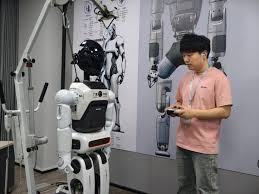
Chinese companies have notably showcased their advancements in AI technology, elevating the quality and sophistication of products under the “Made in China” label. One standout example was the modular AI companion robot presented by Chinese tech firm TCL, which has garnered significant attention for its charming design and its capacity to engage in seamless, natural interactions with humans across various modes while offering emotional support and companionship.

The emergence of robots capable of providing emotional support raises intriguing questions about their possession of emotional intelligence, a subject currently under scientific investigation. Emotional intelligence represents a promising technological frontier that enables digital beings and robots to recognize emotions, express emotions, and form emotional bonds. This capability holds great potential for diverse applications in sectors like healthcare and education.

However, the advancement of emotional intelligence in AI must place a strong emphasis on establishing clear boundaries, as concerns surrounding privacy, safety, and ethical implications are set to become pivotal within the industry. It is imperative for legal regulations and policy frameworks to adapt to these developments. While the prospect of more empathetic “cyber friends” is exciting, it is crucial to recognize that the decisions made today will shape the future of humanity.

China actively integrates into global biopharmaceutical innovation system

By Gao Qiao

In recent years, China’s groundbreaking advancements in biomedicine have garnered significant global attention.

Experts highlight China’s robust innovation prowess in biotechnology, which is enticing greater investment from multinational biopharmaceutical firms. Simultaneously, the expansive international pharmaceutical market is propelling Chinese biopharmaceutical companies towards global expansion. China is actively immersing itself in the global biopharmaceutical innovation system.

According to a 2024 report on the development of life sciences and biotechnology in China released by the China National Center for Biotechnology Development, China published 222,964 life science papers in 2023, with a 10-year compound annual growth rate of 11.38 percent, significantly higher than the international average.

In the same year, the number of patent applications in life sciences and biotechnology in China surged by 30.59 percent compared to the previous year, with an 11.39 percent increase in granted patents. China’s share of global patent applications and granted patents stood at 39.38 percent and 41.33 percent, respectively.

Data from the China’s National Medical Products Administration indicated that in 2023, China green-lighted 36 domestically developed innovative drugs for market entry, alongside 6,151 Class III medical devices, 2,079 of which were first-time registrations..

The significant growth across various metrics indicates that China’s innovation capabilities, market size, and international competitiveness in biotechnology have been rapidly advancing in recent years.

A recent 20-month investigation by the Information Technology and Innovation Foundation (ITIF), a Washington-based think tank, examined the innovation performance of 44 Chinese companies in key technology sectors like nuclear power, semiconductors, artificial intelligence, and electric vehicles.

The findings revealed that in the biopharmaceutical sector, although China still trails behind the U.S. and other Western leaders, it is making swift progress in catching up. Notably, from 2002 to 2019, China’s share of added value in the global biopharmaceutical industry has experienced a significant increase.

A recent article in the Saudi Arabian newspaper Makkah highlighted China’s biotechnology industry as a prime example of transforming challenges into growth opportunities. With a focus on international cooperation, regulatory reforms, and innovation, China is poised to emerge as a key player in the global healthcare sector in the future. Despite encountering obstacles, the biotechnology sector in China has shown remarkable resilience and creativity, positioning it as one of the most promising industries for development in the years ahead.

Life sciences are at the forefront of modern research, and the biotechnology industry is a typical technology-intensive sector. Experts attributed China’s rapid progress in biotechnology innovation to the country’s solid support for human resource, technological reserves, and capital investment.

According to the Makkah article, in recent years, Chinese biotechnology startups have signed over 20 significant agreements with Western companies. These agreements not only involve financial investments but also demonstrate the increasing global recognition of the capabilities of Chinese biotechnology startups in drug research and development.

These collaborations span a wide range of areas, including the development of innovative drugs and advanced therapies such as immunotherapy and protein technology innovation. For China, this progress signifies a turning point, as local startups are increasingly becoming trusted partners for global enterprises.

Gao Fu, chairman of the Chinese Society of Biotechnology, said the rapid development of biotechnology in China is a result of the collaborative efforts of the Chinese government, research institutions, and businesses.

The government has played a crucial role by formulating policies that specifically target the strengthening and expansion of strategic emerging industries like biotechnology, as well as by improving research mechanisms in the field.

Additionally, a number of research institutions and companies have aligned their research objectives with societal demands, focusing on addressing practical issues. By leveraging technological advancements such as gene editing, genetic recombination, and mRNA technologies, they are propelling the industrial application of biotechnology.

In recent years, China has made significant adjustments to its policies in the field of biology, actively promoting industrial development.

On one hand, the country has bolstered its intellectual property protection system to create a robust “protective barrier” for innovative accomplishments. This enables research institutions to commercialize their intellectual property rights, derive profits from innovative breakthroughs, and further support scientific research.

On the other hand, China has become a member of the International Council for Harmonisation of Technical Requirements for Pharmaceuticals for Human Use, progressively integrating into the global pharmaceutical regulatory framework. This move is aimed at elevating domestic drug regulatory standards and enhancing the credibility of Chinese medical data within the international pharmaceutical sector.

Besides, Chinese technology-driven enterprises are utilizing various methods to expand internationally, and multinational pharmaceutical companies are intensifying their localization strategies through partnerships with Chinese domestic enterprises and institutions. China is steadily progressing in its integration into the global biotechnology innovation trend.

Blue skies and clean water: China’s commitment to green development

By Zhou Shanshan, People’s Daily

“It’s been getting better and better year by year,”said Mr. Song, a taxi driver in Beijing.

What Song referred to is not only the better experience brought by the switch to electric vehicles from petrol-powered vehicles in Beijing’s taxi business, but also noticeable improvements in the city’s air quality.

Song was among the first taxi drivers in Beijing to switch to an electric cab. In just 100 seconds, he can recharge his battery without getting out of his car.”With more electric vehicles on the road, exhaust emissions have dropped significantly. I often roll down the window to get some fresh air,”Song said.

Behind these noticeable changes are the collective efforts of the whole city. Across the streets and alleys, more taxis and buses are now powered by renewable energy. In winter, natural gas has become the primary energy source for heating.

Statistics show that in 2024, Beijing set two historic records in air quality: the highest number of days with good air quality and the lowest number with heavy pollution.

On a chilly winterday at Taihu Lake in east China’s Jiangsu province, distant mountains appeared misty blue, and the lake stretched endlessly in emerald waves. After nearly 20 years, cross-regional water tours on Taihu Lake have been resumed recently.

“Feeling the breeze from the lake, there’s no trace of blue-green algae odor,” said local residents aboard a cruise, expressing their heartfelt amazement after taking a deep breath.

The confidence to restart water tours on Taihu Lake stems from the substantial improvement in the water quality. In 2024, for the first time in three decades, the average water quality of the lake reached Grade III on China’s five-tier water quality system, meaning it was classed as “fairly good.”

From the north to the south, China’s tenacious efforts in ecological conservation have brought the country bluer skies, greener lands, cleaner waters, and a more colorful landscape, demonstrating the vigor and vitality of Chinese modernization.

Today, a sound ecological environment, the most basic public good, is benefiting everyone in China. The greater “visibility” of blue skies and clean waters and the rising “green quotient” in China’s social and economic development demonstrate the wider recognition of China’s new development philosophy.

Patrick Nijs, former Belgian ambassador to China often affectionately called a Chinese “foreign farmer,” decided to retire early and stay in China with his wife after completing his tenure in 2013. He is running an organic farm in southwest China’s Yunnan province.

Why did Nijs choose to pursue his ecological dream in China?

“China is paving the way for a greener, more prosperous world with unwavering determination and resilience,” Nijs said. He believes that China aligns perfectly with his aspirations, and he has witnessed the country’s progress in high-quality ecological development.

Today, China is laying a greener foundation for high-quality development, with more and more people expressing their recognition through concrete actions.

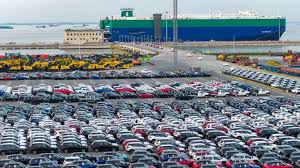
Take new energy vehicles (NEVs) as an example. In 2024, China’s NEV production and sales reached more than 12 million units, topping the global list for ten consecutive years. The country’sNEV exports rose 6.7 percent to 1.284 million units, maintaining global leadership. This achievement is not only a milestone in China’s auto sector but also contributes significantly to global emission reduction efforts.

In many countries, Chinese NEVs have become a common sight on city streets. “It’s good for the environment.””This eco-friendly mode of transportation is highly favored by Egyptian people as it helps reduce carbon emissions and pollution.” These comments by overseas consumers represent their shared commitment to green and low-carbon development.

China’s concrete actions has demonstratedthat green and low-carbon development is the fundamental solution to ecological and environmental issues.

As China accelerates the formationof green production modes and lifestyles, and supports high-quality development with a high-quality ecological environment, it will not only gain a competitive edge but also pave the way for a brighter future.

Liaoning achieves industrial upgrades through independent innovation

By Jiang Yun, Cao Shulin, Hu Jingyi, People’s Daily

In the Tiexi Plant of BMW Brilliance Automotive (BBA), a joint venture of Germany’s BMW Group and Brilliance China Automotive Holdings, in Shenyang, northeast China’s Liaoning province, advanced manufacturing is on full display.

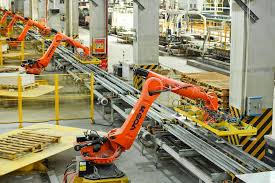
An automatic lifting platform adjusted its height, while a C-shaped hoist rotated precisely to position car bodies at optimal angles for assembly. Besides, a large central control screen provided real-time updates on every production line and workflow stage.

As one of BMW Group’s largest production bases globally, the Tiexi Plant has 138 local suppliers in Liaoning province. In 2023, 60 percent of BBA’s component procurement in China came from Liaoning.

Liaoning is an important industrial base in China, with a solid foundation and comprehensive systems. The province is home to 40 out of the 41 major industrial sectors in the country’s national economy. It boasts a series of industries that crucial to national security and economic vitality.

“Transforming and upgrading traditional industries can spur the growth of emerging sectors,” said Cheng Nan, director of the technology and standards institute at the China Center for Information Industry Development.

The old industrial base in Liaoning once thrived because of real economy, and its new round of development will also rely on real economy. Based on its industrial foundation, the province will cultivate and develop new drivers for new quality productive forces.

After digital and intelligent upgrades, AnsteelGroup Corp Ltd, a major Chinese steelmaker based in Liaoning province, has achieved fully automated smart production at an ore dressing production line and a color-coating plant.

“Compared to that prior to the upgrades, our production efficiency has improved by about 20 percent,” said Zheng Hao, head of the color-coating plant.

Changxing Island is the sixth largest island in China, located in the Liaoning province along the east coast of the Bohai Bay, north of the city Dalian. Once barren land over 10 years ago, the island has evolved into a modern petrochemical hub. Last year, the first phase of a new material technology industrial park, with a total investment of 50 billion yuan, commenced operations on the island.

Xu Jin, general manager of a petrochemical company, told People’s Daily, “Basic chemical products produced in the park will be further processed into high-end chemicals and new materials.”

The sheer scale and scope of Liaoning’s traditional industries mean that even a one-percent increase in production efficiency or an extension of a supply chain delivers substantial gains.

“Liaoning’s revitalization hinges on real economy, technological innovation and industrial upgrades,” said Zhai Dehuai, deputy director of the Liaoning provincial department of industry and information technology.

Efforts are underway to strengthen the equipment manufacturing sector, extend the petrochemical and fine chemicals industries, further advancements in metallurgy and new materials, and specialize in high-quality consumer goods.

In recent years, Liaoning has built four trillion-yuan industrial bases and 22 industrial clusters, in an effort to transform itself into a major digital manufacturer, and elevate industrial efficiency and quality.

To sustain long-term growth, Liaoning is constructing high-level innovation platforms to foster future breakthroughs. It is speeding up the construction of the Shenyang Hunnan Science and Technology City, Yinggeshi Science Cityin Dalian, and Shenyang-Fushun Scientific and TechnologicalInnovation Park, alongside the development of 97 national-level innovation platforms.

Today, the land of Liaoning is brimming with innovation and vitality.

An intelligent robot developed by Liaoning-based Siasun Robot and Automation Co Ltd, which is connected to AI large models, can perform complex tasks based on voice prompts.

Neusoft Medical Systems Co, a prominent CT machine manufacturer in China, has made a significant breakthrough with its self-developed photon-counting CT technology. This cutting-edge innovation has successfully captured its first human image, showcasing remarkable advancements in both lower radiation exposure and superior image quality.

Dalian Rongke Power Co., Ltd.has made continuous advancements in core technologies, achieving full technological and supply chain independence in the vanadium redox flow battery sector.

In 2024, Liaoning’s high-tech manufacturing sector saw an 11.3 percent increase in added value. The province’s R&D investment intensity reached its highest level in a decade, while the value of technology contract transactions grew by 17.8 percent.

Through continuous reforms, such as promoting market-based allocation of resources, advancing state-owned enterprise reforms, and fostering innovation in science, technology, fiscal, and financial systems, Liaoning has successfully dismantled institutional barriers.

This has facilitated the convergence of various production factors towards new quality productive forces. The revitalization of this traditional industrial base is gaining momentum, injecting new vitality into Liaoning as it hastens the development of a modern industrial system.

China’s view of international order reflected in stories of two “apples”

By Huan Yuping, People’s Daily

How does China handle its relationship with the world, and how does it view the current international order? The stories of two “apples” offer an insightful perspective.

Huaniu apple, a specialty fruit of Tianshui, northwest China’s Gansu province,has made its way to international markets. It has been exported to over 30 countries and regions, including Indonesia, Malaysia, and the Maldives.

As the first Chinese apple brand that has obtained a trademark on the international market, it hastransformed into an internationally recognizedapple variety with the establishment of overseas warehouses, allowing consumers in more and more countries to enjoy the sweetness of Chinese apples.

China is the world’s largest apple grower and exporter. It has launched the world’s first apple futures contracts. The increasing presence of Chinese apples in the international market can be attributed to the trade facilitation enabled by free trade agreements such as the Regional Comprehensive Economic Partnership (RCEP) and the innovative “internet plus foreign trade”approach adopted by Chinese enterprises.

Meanwhile, the development story of U.S. tech giant Apple in China reflects the deep integration between China and the world. The company joined the second China International Supply Chain Expo with its four Chinese suppliers. Over the past three decades, Apple has greatly benefited from China’s advantages in manufacturing. Out of Apple’s 200 major suppliers worldwide, over 80 percent have opened factories in China. When asked about his Chinese partners, Apple CEO Tim Cook said, “We would not do what we do without them.”

At the same time, many Chinese companies have advanced their technology and competitiveness through long-term cooperation with Apple.

For instance, GoerTek, an electronics supplier based in Weifang, east China’s Shandong province, has been cooperating with Apple in the field of acoustic sensors, developing cutting-edge automation technologies and improving manufacturing processes.

Lingyi iTECH, which started as a small die-cutting company, has developed into a major manufacturer providing thousands of modules and components for Apple products. Today, it has set up factories inmany countries,including India, Vietnam, and Brazil.

From Chinese apples going global to Apple’s success in China, such stories of cooperation highlight China’s active role in economic globalization and its unwavering commitment to a mutually beneficial strategy of opening up. This approach has fostered a deeply interconnected paradigm where China’s interests are closely linked with those of other countries – a dynamic underpinned by a stable international order.

As a public good, the international order concerns the interests of all countries worldwide. A stable international order creates the necessary environment for world peace, development, and prosperity. It provides the foundation for the sound development of economic globalization and enables countries to pursue mutually beneficial cooperation.

Economic globalization serves as the ballast of the international order, bringing closer trade and economic exchanges that provide countries with opportunities for growth and prosperity. This interconnected paradigm, in turn, fosters a mighty force for upholding the international order worldwide.

China has benefited from a generally stable international order and has made significant contributions to maintaining thestability of international order.

China firmly believes that in the world, there is only one international system, i.e. the international system with the United Nations at its core. There is only one international order, i.e. the international order underpinned by international law. And there is only one set of rules, i.e. the basic norms governing international relations underpinned by the purposes and principles of the UN Charter.

While the current international order faces challenges, it is clear that China is not the one challenging it.From proposing visions to taking actions, China remains committed to acting as an international orderdefender – a right choice that serves the shared interests of both China and the broader international community.

Industrial legacy boosts tourism development in Shenyang

By Hao Yingcan, People’s Daily

“Every visit brought us new surprises,” said Han Zheng and his wife, who work in Beijing and have traveled to Shenyang, northeast China’s Liaoning province four times in a year.

“For the first trip, we visited the Shenyang Imperial Palace and Zhongjie Street. The second time, we explored the vibrant food scene at Caita Night Market and watched a basketball game. On the third trip, we came to experience the festive atmosphere of the Chinese New Year. And for the fourth, we visited Tiexi district to immerse ourselves in industrial culture,” Han told People’s Daily.

In recent years, with the improvement of the transportation infrastructure network, spontaneous trips to Shenyang have become a popular choice for many. In 2024, Shenyang welcomed over 200 million tourists for the first time, marking a historic breakthrough in tourism revenue.

Once a renowned industrial powerhouse in China, Shenyang has now evolved into a “cultural tourism hotspot” by implementing innovative strategies to develop new cultural tourism experiences and foster a seamless integration of culture and tourism.

In Tiexi district, there is a striking 26-meter-tall sculpture weighing 400 tons that depicts two workers holding a steel rod. It stands prominently on a square, with an old factory building featuring a sawtooth roof behind it. Despite its age, the building exudes a unique artistic vibe.

“This site was once a metal workshop of Shenyang Heavy Machinery Factory. After renovations, it became the 1905 Cultural and Creative Park, where visitors can watch plays, visit exhibitions, and browse creative markets,” said Wang Hui, head of the culture, tourism, broadcasting and televisionbureau of Tiexi district.

Rich industrial heritage is a defining cultural feature of Shenyang. “We have revitalized 700,000 square meters of industrial heritage areas, combining industrial history with cultural and lifestyle needs to create new cultural landmarks,” said Liu Kebin, head of the culture, tourism, broadcasting and televisionbureau of Shenyang.

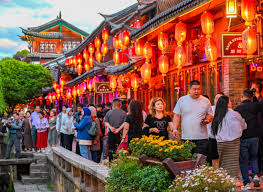
A few kilometers from the 1905 Cultural and Creative Park is the original site of the Shenyang Hongmei MSG Factory. Young people are always seen lining up outside the factory’s raw materials warehouse, now a venue for music performances. The fermentation workshop has been converted into an art center, the union activity room into a taste museum, and the entire factory complex into the vibrant Hongmei Cultural and Creative Park.

In Shenyang, there’s more than the blend of “industrial charm” and “artistic flair.” Major cultural and sports events also add to the city’s appeal. From the 2023–2024 Chinese Basketball Association Finals to the inaugural China (Shenyang) Comedy Film Week, and to the 12th China Acrobatic Exhibition and the 2024 Shenyang Arts Festival, a series of high-profile events took place in the city in 2024.

“We actively cultivate signature events, continuously innovate tourism scenarios, enrich product offerings, and promote the integration of culture, sports, and tourism,” Liu said.

In the afternoon, young people would often flock to a “coffee alley” in Nanshichang sub-district, Heping district, a renowned photogenic spot for social media. At dusk, they head to a market by the Hunhe River to enjoy sunset and night views. After dark, they visit Laobeishi, a cultural landmark of Shenyang, to watch drone performance and experience traditional folk activities like ring toss game and sugar figurine blowing.

The warm, human-centered atmosphere adds to Shenyang’s charm. At 7 a.m., a long queue would form at a famous lyudagun (“donkey rolls”, which are glutinous rice rolls with sweet bean paste)stall in the Xiaoheyan morning market in Shenhe district. Known for affordable goods and friendly shopping environment, Shenyang’s morning markets have become a sensation on social media.

“We aim to embrace new tourism trends by integrating urban renewal projects, such as old neighborhood renovations and street upgrades, to create more youth-friendly blocks that combine scenery, culture, and modern flair,” said Wang Xinwei, secretary of the CPC Shenyang municipal committee.

To further enhance the tourist experience, Shenyang’s culture and tourism departments continuously refine services based on feedback from visitors and online users. From January to November 2024, the city saw a 38.2 percent year-on-year increase in the number of domestic tourists and a 46.0 percent rise in domestic tourism spending, achieving both acclaim and economic benefits.

China builds world’s highest UHVDCtransmission project

By Ding Yiting, People’s Daily

Celebrated as one of China’s “power highways,” the ±800 kV ultra-high-voltage direct current (UHVDC) transmission project from upper reaches of the Jinsha River to central China’s Hubei province is the highest UHVDC transmission project in the world.

With a total length of 1,901 kilometers, the transmission project passes through northwest China’s Xizang autonomous region, southwest China’s Sichuan province, southwest China’s Chongqing municipality, and Hubei.

Upon completion, it will transmit hydropower, wind power, and solar power from the upper reachesof the Jinsha River to China’s central regions, delivering approximately 40 billion kWh of clean energy annually. It is expected to reduce coal consumption by over 17 million tons and cut carbon dioxide emissions by around 34 million tons.

An altitudeof 4797.9 meters

In October 2024, the construction of power transmission towers for the project was completed in Batang county, Ganzi Tibet autonomous prefecture, Sichuan province. The towers of 65 meters high and weighing 85 tons were located on the snow-covered Setongma mountain in the county, breaking the world’s record for UHVDC construction with an altitudeof 4797.9 meters.

“This is the highest section of the entire project, with the altitude ranging from 3,700 meters to 4,800 meters. Some parts were even covered with ice that could be as thick as 60 millimeters. The harsh natural environment not only makes our workers prone to oxygen shortages, but also affects the performance of some machinery,” said Shi Mingqing, project manager of Section 4.

Shi said thatto facilitate the construction, they adopted a specialized high-altitude machinery. Portable oxygen and medications were also available on site.

Overcoming challenges in harsh natural environment

As the first UHVDC project reaching the hinterland of the Qinghai-Xizang Plateau, reputed as the “roof of the world,”the project has overcome multiple challenges.

The first major challenge lies in transportation. For example, Section 10 of the project in Sichuan province involved the construction of 113 towers on a mountain ridge with a maximum slope of 65 degrees. One of the primary difficulties for the construction team was to transport nearly 75,000 tons of materials necessary for tower construction into the deep mountains and up to the ridge.

To address the challenge, the construction team built six roads with a total length of 36 kilometers, said Zou Zhongxuan, project manager of Section 10. Besides, to protect the ecological environment, they adopted cable transportation at every location and built 82 cableways spanning over 60 kilometers, except for the areas that required temporary roads.

“The route from Luding county in Sichuan province to the construction site has over 100 S-shaped or U-shaped bends. Each cablewaycan carry less than 5 tons of tower materials on average every day. It would take a month to transport the materials for building a 143-ton towerunder ideal conditions, not to mention our heaviest tower weighing nearly 400 tons,” Zou said.

Another major challenge is the risks brought about by the complex geographical environment. In the Chongqing section, mountainous terrain accounts for over 60 percent, with a total of nine crossings over high-speed railways and expressways, six over navigable rivers, and 30 over important power lines. In Hubei, the power transmission towers pass through the Yangtze River twice, with 60 percent of tower bases threading throughthe karst landform in the Enshi section.

The construction team has been strengthening independent innovation, making continuous breakthroughs in high-voltage transmission technologies, upgrading equipment, and enhancing construction capabilities, all in an effort to tackle the challenges.

Intelligent tension-stringing system

At a construction site in Yingjing county, Ya’an city of Sichuan, a steel wire rope was connected with a traction walking plate to lift two wires into the air, each with a diameter of 4.3centimeters.

“The visibility is about only 100 meters. Don’t pull too fast,”said a technician, who was communicating with a tension machine operator kilometers away via a walkie-talkie, while observing the progress of the traction walking plate and wires.

Unliketraditional operations, the constructionteam adopted an intelligent tension-stringing system that can simulate the stringing process in advance, monitor the working status of key equipment in realtime, and integrate data into a control command center at the construction site. The construction efficiency has increased by around 25 percent, making the construction process more safe and reliable.

But how to inspect the stringing effect and maintain the system?

A power company in Chongqing has developed a self-propelled robot for post-stringing inspection, which can be quickly hoisted and installed on the wires with the help of a drone, and then “walk” along the wires for quality inspection.

According to an employee of the company, with the help of technologies such as rapid positioning and laser scanning, the robot can collect and identify data related to the appearance and quality of power lines, wire curvature, and obstacles in the clearance zone. It can operate in different conditions including rain, fog, and nighttime, thereby boosting inspectionefficiency.

In recent years, China has been continuously improving the layout of power transmission. By the end of 2024, the country had completed and put into operation 42 UHV AC/DC projects, including 38 by State Grid Corporation of China and 4 by China Southern Power Grid, with cross-provincial and cross-regional power transmission capacity exceeding 300 million kW.

Supported by these UHV projects, China’s installed capacity for renewable energy has increased from over 300 million kW in 2012 to over 1.5 billion kW in 2023.

Chinese, Russian heads of statecontinue guiding bilateral relations toward new height

By He Yin, People’s Daily

Chinese President Xi Jinping had a video meeting with Russian President Vladimir Putin on January 21, 2025, ahead of the Chinese Lunar New Year.

During the virtual meeting, the two heads of state reviewed the significant progress made in China-Russia relations in 2024, and looked ahead to key moments in the development of bilateral ties in 2025.

They engaged in in-depth discussions on international andregional issues of common concern, and agreed to maintain strategic communication in the new year.

Continuing guiding China-Russia relations toward a new height, the two leaders sent a positive signal of the two countries’ determination to cope with uncertainties of the external environmentwiththe stability and resilience of their bilateral ties during the video meeting.

This stable, resilient China-Russia relationship is expected to help promote the development and revitalization of the two countries, and uphold international fairness and justice.

The leadership of the heads of state of both countries represents the greatest political advantage and fundamental guarantee for the robust development of China-Russia relations.

In 2024, the two heads of state of China and Russia met three times, which led to a range of important common understandings.

Both countries held grand celebrations for the 75th anniversary of the China-Russia diplomatic relations.Featuring permanent good-neighborly friendship, comprehensive strategic coordination and mutually beneficial cooperation, the relations havebecome increasingly dynamic.

Over the past year, the two heads of state held candid, in-depth exchanges of views on bilateral relations, international and regional situations, and global governance, among other major issues of common concern,and achieved a series of important consensuses, jointlyguiding the development of bilateral relations and the reform of the global governance system.

Pragmatic cooperation is the most important endogenous driving force for the continuous development of China-Russia relations.

The two countries have made steady progress while maintaining stability in their pragmatic cooperation, with bilateral trade continuing to grow.

In recent years, China and Russia have strengthened alignment of their development strategies, and achieved rich fruits in bilateral cooperation under the Belt and Road Initiative (BRI).

A good number of large-scale projects have driven economic and trade cooperation between the two countries, benefiting their peoples with tangible results.

Automobiles and smartphones produced by Chinese brands are increasingly popular among Russian consumers, while high-quality Russian agricultural products and foods are finding their way into millions of Chinese households.

China is ready to work with Russia to accelerate the implementation of important consensuses reached by the two heads of state, further strengthen mutually beneficial cooperation in various fields, and ensure that the outcomes of their cooperation better benefit both countries and their peoples.

Through a long and challenging journey, China and Russia have foundtheright way for neighboring major countries to get along with each other, which features non-alliance, non-confrontation and not targeting any third party.

In the face of rapidly evolving global changes unseen in a century and an increasingly volatile international landscape, both countries have remained at the forefront of the times.

Staying true to their original aspirations of establishing diplomatic ties, the two countries have strengthened strategic coordination, advanced pragmatic cooperation, and jointly pioneered a new path of mutual respect, peaceful coexistence, and win-win cooperation, setting an example for a new type of international relations and relations between neighboring major countries.

The two countries’ unswerving commitment to everlasting friendship, fulfillment of their responsibilities as major countries, and mutually beneficial cooperation has not only benefited the development of their bilateral relations and the well-being of their peoples, but also contributed to global peace and stability.

This year marks the 80th anniversary of the victories of the Chinese People’s War of Resistance against Japanese Aggression, the Soviet Union’s Great Patriotic War and the World Anti-Fascist War, as well as the 80th anniversary of the founding of the United Nations (UN).

China and Russia will take this as an opportunity to jointly defend the UN-centered international system and the outcomes of victory in World War II, promote all countries’ adherence to the purposes and principles of the UN Charter, uphold the universally recognized basic norms governing international relations, and practice true multilateralism.

Given that China and Russia are bothpermanent members of the UN Security Council and major countries in the world, and China serves as the rotating chair of the Shanghai Cooperation Organization (SCO), the close coordination between the two countries on multilateral platforms such as the UN, the SCO, and BRICS is bound to provide more positive energy for the reform and development of the global governance system.

As the Chinese people are about to bid farewell to the old lunar year and usher in the new, a new journey will soon begin.

Under the leadership of the heads of state of both countries, China and Russia will continue deepening strategic coordination, firming up mutual support, and safeguarding the legitimate interests of the two countries.

By continuously deepening and expanding their comprehensive strategic coordination and pragmatic cooperation in various fields, the two countries will bring more benefits to their peoples and make greater contributions to human progress.

World needs multilateralism

By He Yin, People’s Daily

The World Economic Forum Annual Meeting 2025, themed “Collaboration for the Intelligent Age,” is held from 20th to 24thJanuary in Davos, Switzerland, bringing together nearly 3,000 representatives from various regions and industries worldwide, who aim to carry forward the spirit of cooperation for sustainable and inclusive solutions.

The Global Cooperation Barometer 2025 was released prior to the meeting, which highlights the rising challenges against the stable global cooperation in the post-Cold War era. The Global Risks Report 2025 was also issued, stressing that multilateral solutions are the only way to address future global risks.

This indicates the World Economic Forum has placed multilateral cooperation in a more important position.

This year marks the 80th anniversary of the end of World War II and of the founding of the United Nations, the most universal, representative, and authoritative intergovernmental organization.

However, rising unilateralism and protectionism, along with growing divisions and fragmentation, are reshaping geopolitical and economic landscapes, putting immense pressure on multilateralism. In the face of increasing instability and uncertainty, it is crucial for all parties to uphold and practice multilateralism, so as to tackle common challenges through effective global cooperation.

The problems facing the world are intricate and complex. The way out of them is through upholding multilateralism and building a community with a shared future for mankind,” Chinese President Xi Jinping said in his special address at the World Economic Forum Virtual Event of the Davos Agenda in January 2021.

China advocates that all countries should jointly shape the future of the world, write international rules, manage global affairs and ensure that development outcomes are shared by all. It hopes that all parties can embrace the vision of a community with a shared future, safeguard and practice multilateralism, and promote world peace and development with the spirit of global solidarity.

World peace is contingent upon the preservation of multilateralism, a fundamental product of the evolution of the international system.

The harsh lessons of the two world wars have shown that zero-sum games and power politics lead to disaster, while multilateralism and the pursuit of fairness and justice pave the way for lasting peace.

The post-war international order, centered on the United Nations and rooted in multilateralism, has played a vital role in preventing the recurrence of wars and promoting the prosperity of nations.

To pursue multilateralism, countries must protect the United Nations-centered international system, the international order based on international law, and the basic norms of international relations based on the purposes and principles of the United Nations Charter.

China remains a staunch defender of the United Nations’ authority and stature, being recognized as a key pillar of multilateralism.

Global development relies on the support of multilateralism. Upholding and practicing multilateralism, and fostering win-win cooperation is the sure way to success in launching major initiatives that benefit all.

Countries taking the lead in economic development should give a hand to their partners who are yet to catch up, so as to transform global development disparities into shared prosperity.

The multilateral trading system, with the World Trade Organization at its core, has significantly advanced global trade and investment liberalization and facilitation, driving world economic growth. Protectionism and unilateralism ultimately harm everyone involved.

The international community must strengthen multilateral cooperation and openness to mitigate the risks of trade fragmentation. China’s commitment to expanding high-level opening up, building an open world economy, defending the multilateral trading system, and enhancing global trade and investment liberalization and facilitation has injected positive energy into global economic recovery.

United Nations Secretary-General Antonio Guterres recently highlighted at the Handover Ceremony of the Chairmanship of the Group of 77 and China that the successful adoption of the Pact for the Future at the United Nations Summit of the Future last year, largely due to the unwavering efforts of the Group of 77 and China, demonstrates that nations can unite to reshape a multilateral system that serves all.

China stands ready to work with all parties to revisit the original aspirations of the United Nations’ founding, firmly uphold the United Nations’ authority and stature, advocate for an equal and orderly multipolar world and a universally beneficial and inclusive economic globalization, and solidify the foundations of world peace and development through multilateralism, so as to steer human progress toward a brighter future.

Niger Delta Youth Turn down Calls for Protest against NDDC Management

The Niger Delta Youth Council (NDYC) Worldwide has rejected in strong terms, calls by the Coalition of Niger Delta Civil Society Organisations in conjunction with Ex-millitant Forum for a nationwide protest against leadership of Dr. Samuel Ubuku and Mr. Chiedu Ebie; Managing Director and Board Chairman of the Niger Delta Development Commission (NDDC) respectively.

The group in a letter addressed to President Bola Ahmed Tinubu accused the Managing Director of mismanagement, lopsided projects and contracts while calling for the sack of the Chairman of the Board whose appointment they claimed contravened the NDDC Act.

But the NDYC in a strongly worded rebuttal, signed by the trio of Engr.Jator Abido, Comr Collins Achakpekri and Engr. Beke Apere; National Coordinator, Director of International Relations, and Chairman Board of Trustees respectively, copies of which were made available to journalists in Abuja, debunking the allegations made against the NDDC management by persons they described as enemies of the region who want to slow the wheels of progress under the current NDDC leadership.

“It is utterly callous and blatant falsehood to cast the administration of Dr. Samuel Ubuku and Mr Chiedu Ebie in bad light simply because your selfish and parochial interests are not accommodated in the grand scheme of affairs at the Commission.

“For the records, those parading themselves as members of civil society organisations in the region and ex-agitators are ignorant of the challenges of the region and do not represent the true spirit of the Niger Delta. They’re an obscure bunch who are out to profit from the resources of the region without a genuine concern for its people.

“As true representatives of our people, we make bold to say that Dr. Samuel Ubuku remains the best NDDC Managing Director to have emerged since the creation of the Commission. He has carried everybody along in appointments and the distribution of projects. Anybody who feels otherwise is a saboteur and shouldn’t be taken seriously.

“It is also laughable that someone in their right thinking will question the appointment of a bona fide Niger Deltan into a Commision set up for the development of the region simply because the appointee does not come from a community that produces crude oil.

“This warped thinking doesn’t belong to the human specie and should be disregarded. Those who only seek to divide using parochial yardsticks and sentiments should not be dignified with a response. We, therefore, distance ourselves from such persons and want Nigerians to pay deaf ears to their rants”, the release stated.

The youth group finally vowed to resist attempt by sponsored goons to throw the region into needless crisis and pledged to mobilise their members across all the states that make up the region to stage a solidarity match for the NDDC management on the same day those opposed to the development of the region are planning their protest.

“As patriots and law abiding citizens who are desirous to see mass development in the Niger Delta region, we cannot fold our arms and watch a faceless few throw our region into crisis. We shall therefore mobilise in en masse to stage a solidarity match on the 27th of February to counter our enemies and tell the world the truth about our region”, the release concluded.