Robust Spring Festival consumption mirrors China’s economic vitality

By He Yin, People’s Daily

During the 2025 Spring Festival holiday, more than 2.3 billion passenger trips were made in China, and the total box office revenue surpassed 11 billion yuan ($1.51 billion), leading to increased consumption spending in catering and shopping.

The livelySpring Festival celebrations have mirrored China’s economic vitality. The Chinese economy has demonstrated stronger growth momentum and more open-market advantages, propellingthe consumer market toward innovation and high-quality development. International observers believe that the travel and spending boom during the Spring Festival holiday has sent a positive signal to the world, showing the resilience and vitality of China’s economy.

Thevibrant holiday market reflects the strong momentum of China’s high-quality economic growth.

Expanding domestic demand remains a top priority for China’s economic agenda in 2025 and beyond. According to the latest value-added taxinvoice data released by China’s State Taxation Administration, the eight-day Spring Festival holiday saw the average daily sales revenuesof consumer-related industries increase 10.8 percent yearonyear, with goods consumption up 9.9 percent and services consumption rising 12.3 percent.

Thanks to China’s policy-backed consumer goods trade-in program, the sales of home appliances and furniture have skyrocketed in the country, making them new highlights of the Spring Festival shopping season. Sales revenues from household audiovisual equipment, such as televisions, soared by 226.8 percent compared to the same period last year.

“China had a solid start to the Year of the Snake,”said Citi Research analysts. Many global financial institutions have recognizedthe tangible progress of China’s high-quality developmentin their 2025 economic outlooks. They believe that the green economy, digital economy, and high-tech manufacturing are emerging as new growth drivers, andservice consumption will continue to account for a larger share of the Chinese economy.

The creative economic activities during the Spring Festival holiday this year highlight the innovation-driven development of the Chinese economy.

This year’s Spring Festival is the first since its inscription on the UNESCO intangible cultural heritage list. A number of traditional cultural activities have been held across China, providing foreign visitors with an immersive festival experience.

Meanwhile, winter sports have become a popular option for Chinese people during the holiday. A range of ice and snow activities have drawn travelers to explore snow-covered landscapes, ice and snow sports, and winter-themed cultural experiences.

Digital technologieshave injected new impetus into Chinese cultural exhibitions and brought AI-powered Spring Festival temple fairs to the public, blending technology and traditional culture through interactive and immersive experiences.

The booming holiday spending echoes China’s economic vitality, with cultural prosperity and economic growthmutually reinforcing each other. The unique appeal of Chinese culture has sparked a “China travel” boom, which is expected to further expand the country’s services trade.

The benefits brought by China’s vibrant holiday market to the world demonstrate the positive impact of the country’s efforts to expand high-level opening up.

According to statistics released by China’s National Immigration Administration, 14.37 million cross-border trips were made during this year’s Spring Festival holiday, 6.3 percentmore than a year earlier. Chinese travel platforms reported that Chinese tourists visited over 2,100 overseas cities during this period, reflecting China’s recovering outbound travel demand.

Chinese New Year goods have gained rising popularity in the global market, indicating the growing global appeal of Chinese products. For instance, spring couplets, dumplings, and “blind boxes” inspired by the Chinese zodiac flew off the shelves in overseas supermarkets and e-commerce platforms. Smart home appliance sets from China became trendy gifts among foreign youth.

Besides, China’s increasingly diversified consumer demand has boosted imports, with New Zealand kiwis and Chilean cherries becoming highly sought-after holiday goods.

As China continues to advance high-level openingup, the Chinese market will welcome morehigh-quality products from around the world.

The economic boom during the Spring Festival holiday indicates a positive beginning for the Chinese economy in 2025, significantly boosting confidence in the country’s development prospects throughout the year. With policies taking hold, China will continue to invigorate its consumer market,expand high-level openingup, strengthen momentum for steady economic growth, and remain the biggest engine of world economic growth.

Giant pandas a golden signboard of Sichuan’s ecotourism

By Wang Yongzhan, People’s Daily

What can you discover when you come to southwest China’s Sichuan province in search of giant pandas?

In Sichuan, one can explore the Giant Panda National Park to observe these adorable creatures in their natural habitat. Additionally, the research bases dedicated to giant panda breeding are the perfect place for gaining insights into panda behaviors and conservation efforts.

In addition to the pandas, Sichuan offers opportunities to discover newly identified plant species, diverse companion plants and animals, and engaging natural education activities.

Since the beginning of 2024, Sichuan has launched new eco-tourism routes that connect several key points, including the Chengdu Research Base of Giant Panda Breeding, the WolongNational Nature Reserveand the Wanglang National Nature Reserve of the Giant Panda National Park, offering visitors a unique experience.

The Chengdu Research Base of Giant Panda Breeding is always crowded. In front of a panda-themed exhibition board on the first floor of the office building, visitors are often seen reading and learning about pandas’ living habits.

The Giant Panda National Park is an important research and conservation base for the species. In recent years, the Wolong area of the park has attracted more visitors due to fascinating discoveries, such as wild panda sightings and the identification of new plant species.

Here, visitors can watch live footage of wild pandas captured by the park’s monitoring cameras on large screens. With the help of local networks and ultra-shortwave transmission, along with “panda face” recognition technology, real-time images of wild pandas are now available, which significantly aids in understanding their living conditions.

Backpack on, trekking poles in hand, ranger Luo Chunping gathered his team and strode out from aprotection station, heading to a fixed monitoring trail within the Wanglang area of the Giant Panda National Park.

Besides the pandas, the Wanglang area is home to 72 species of large and medium-sized mammals and over 280 species of birds, many of which are under national-level protection.

“In summer, visitors enjoy tracking and photographing plants and animals, while in winter, they come to enjoy the snow sight and learn about how the animals survive the cold,”said Luo.

Thanks to various conservation efforts, the Giant Panda National Park is home to a rich diversity of plants and animals. The “umbrella species” effect of the panda is especially prominent. This term refers to how protecting a species with specific habitat needs, like the panda, also protects the broader ecosystem, benefiting many other species. In fact, by protecting pandas and their habitats, over 10,000 accompanying species, such as snub-nosed monkeys, snow leopards, and Chinese yews, are also being safeguarded.

Not long ago, a woman surnamed Lin came to the nature education center in the Wanglang area. She marveled at the ecological foundation of the area, the Minshan Mountain dynamic monitoring network, and the real-time footage of wild panda monitoring. “It’s my first time in Wanglang, and I’ve learned so much,” she said.

She then visited the Minshan Mountain national permanent sample plot, where an audio guide explained the environment, species composition, community structure, and biomass in the small units that make up the forest.

“With the audio guide and the informative signage, even as a first-time visitor, I gained a deep understanding of the plants and animals here,” Lin said.

What she participated in was an educational tour themed “Giving the Primeval Forest a Check-Up,” which allowed visitors to engage in environmental studies and research.

With 16 different tour routes and 18 distinct educational themes, the natural education experience at the park has become more refined. The park has divided its educational routes into four types, such as observational and research-based, to cater to visitors of all ages.

The public is not only able to participate in eco-tourism, but also receive a comprehensive natural education. The Giant Panda National Park’s educational experiences continue to evolve.

“We have established a Giant Panda National Park natural education alliance, as well as two main natural education schools and 14 branches in Pingwu and Wenchuan counties. Over 1,000 people have received training, and the guide team now includes 500 members,” said Zhang Liming, an official with the forestry and grassland administration of Sichuan province.

According to Zhang, the number of participants in natural education programs in the Sichuan section of the Giant Panda National Park exceeded 4.4 million last year.

SE China’s Fujian drives development of new business forms through ecotourism

By Shi Yu, People’s Daily

How many new experiences can an ecotourism route offer?

In the case of the Wuyi Mountainsnational forest trail, the answer is “plenty.”

On a warm winter’s day, with a gentle mountain breeze on his face, He Weixin, an outdoor enthusiast from Xiamen city, southeast China’s Fujian province, was struck by the lush greenery surrounding him as he walked along the Wuping section of the Wuyi Mountainsnational forest trail.

As sunlight filtered through the dense canopy of trees, He walked along a mountain trail paved with river pebbles in Jiewen village, Wan’an township, Wuping county, Longyan city, southeast China’s Fujian province. Before long, sweat broke outon his forehead.

“The area is well-connected, with five walking loops to choose from. The surrounding environment is pristine and ideal for hiking and mountaineering,” he said, impressed by how the trail design complemented the stunning scenery on either side.

The Wuyi Mountainsnational forest trail connects various stunning natural spots in Fujian, including the Tianjieshan national forest park, the Minjiangyuannational wetland park, and the Zhongshan River National Wetland Park, covering six nature reserves and two state-owned forest farms.

Jiewen village, a key stop along this forest trail, has made it an important part of its infrastructure for the development of forest tourism, according to Li Cailin, head of the villagers’ committee of Jiewen village.

The section of the forest trail in Jiewen village is rich in natural broadleaf forests, according to Li, noting that the section, by making the most of ancient roads and existing footpaths, has managed to preserve the natural beauty and integrity of the local forest ecosystem.

Leveraging its rich forest resources, Wuping county has developed a range of forest-based wellness services, including rehabilitation and recuperation services, leisure activities, sports experiences, and nature education, attracting numerous visitors.

“In recent years, we’ve been making use of the forest floor space to develop specialty industries like forest fungi cultivation, beekeeping, and medicinal herb farming,” Li said. “When visitors come and see the good environment, many of themchoose to buy some of our forest products taking home.”

Statistics show thatin 2024, Wuping county’s under-forest economy covered an area of around 1.61 million mu (about 107,586.67 hectares) and generated a total output value of 4.71 billion yuan (about $646.85 million), whileits forest-based wellness service facilities receivednearly 3.48 million visits, producing a total output value of 1.42 billion yuan.

Not long ago, Jiang Anyao, a second-year graduate student from Shanghai Jiao Tong University, participated in a study tour at the Minjiangyuannational wetland park in Jianningcounty, Fujian, as a member of ateam aimed to gain deep insights into biodiversity.

“What plant is this?”

“What’s the name of the bird that was just foraging?”

Jiang and othermembers of the teamasked questions and took notes as they explored the park’s various ecological sites along the riverbank.

“Seeing it all firsthand really helps you appreciate the rich biodiversity of nature. It has made me realize just how crucial ecological conservation is,”Jiang said.

Zhou Sixing, deputy director of the tourism development center of Jianning county, revealed that the county’s hotels are so busy during public holidays that it’s hard to book a room.

“The national wetland park is endowed with abundant natural resources and a unique ecological environment. So we have madeobservations of and introductions to the natural landscapes of the park a highlight of our study tour program, helping participants learn the geological processes that formed the landscapes,” Zhou said.

Following the forest trail further north, visitors can reach Taining county in Sanming city, Fujian.

Taining county’s Dajin Lake Geopark is known for its unique geological relics of water-based Danxia landform, characterized by reddish sandstone features.

The red and orange rock formations, reminiscent of a fiery sunset, reflect in the clear waters of the Dajin Lake, offering breathtaking views to visitors.

As ablack kiteflew over the lakeinto mountains under the glowing sun, photography enthusiast Lin Na quickly snapped a picture of the moment.

“Every winter,the wetlands by the lake attract birds like egrets and black kites. I wait here to capture the perfect shot,” Lin explained.

Leveraging its abundant water resources, Shuiji village in Meikou township, located near Dajin Lake, hasvigorously boosted the development of B&B hotels and restaurants, among other business forms, offering visitors one-stop servicesencompassing accommodation, shopping, travel, and sightseeing.

Not long ago, Lin participated in a photography tour in Taining, along with more than 50 fellow photography enthusiasts, exploring and capturing the natural beauty of the area.

“I find the photography-themed group tour particularly fun. I can stay in a lakeside B&B hotel, capture the beautiful scenery and exchange tips with other shutterbugs,” Lin said.

Villages along Dajin Lake have also tapped into their rich natural ecological resources to developemerging business formsof the cultural tourism industry, such as photography, sketching, and film production.

According to credible sources, Taining county has started to create an extensive sketching base, which has already received over 300,000 visits for sketching and social practice activities.

With the market-oriented transformation gaining momentum in certain segments of the industrial chain, several companies providing sketching-related services haveestablished themselves in the county.

“Visitors can enjoy the views of sprouting green plants in spring; cool, refreshing mountain breeze in summer; colorful foliage in autumn; and snow-capped mountains in winter… Every season offers unique experiences, and many more natural wonders are waiting for us to explore,” Lin said.

Diversity of daily commodities reflects China’s economic vitality

By Li Bin, People’s Daily

When selecting a pillow in Chinese market, one might found himself overwhelmed by the vast array of options. Even within the category of functional pillows, there is a wide variety, from the traditional ones made of buckwheat, cassia seed, and bamboo charcoal to the increasingly popular memory foam, latex, zero-pressure, and down pillows. When considering wellness needs, there are even more choices, with over a dozen types of Chinese herbal pillows alone.

The shapes of these pillows follow ergonomic principles, while their functions cater to personalized needs. The fillings are designed to aid in health and wellness. These small pillows embody both technological and industrial innovations.

This sense of being overwhelmed by choices is a common experience across various subcategories in consumer goods. Daily necessities are indispensable in people’s lives, offering an important window into China’s economic growth and its high-quality development.

Where does the growth in consumption come from? It arises from the precise identification of new consumer demands.

For example, toilet paper that easily clogs toilets has led to the rise of water-soluble toilet paper, which is both environmentally friendly and hygienic. Timed power outlets address safety concerns from leaving plugs in, while also saving energy. Stretchable storage boxes keep things organized; waterproof medical tape securely holds surgical dressings; safety box cutters make it easier to unpack deliveries. These small but clever products meet the needs of consumption upgrades, making life more convenient.

The strength of the Chinese economy lies in the evolving and upgrading demands from a consumer market of over 1.4 billion people, which continuously stimulates changes and upgrades in production and supply.

Demand is a broad concept but also reflects individual differences. For example, elderly consumers prioritize smart aging solutions and healthcare features when selecting daily necessities. Young people, who are keen on sharing and discovering new products on social platforms, often look for personalized, custom-made items, focusing more on brand value and shopping experience. Office workers, on the other hand, tend to choose practical items, like versatile power outlets and multifunctional storage boxes, that suit their work environment and help reduce stress.

China’s massive consumer market not only exhibits huge general demand but also embraces diverse individual needs. By tapping into these differentiated and personalized demands, many companies have been able to expand and strengthen themselves by aligning technological and industrial innovation.

The consumption of daily goods is not only essential for people’s daily lives but also crucial for the growth of micro, small, and medium-sized enterprises, social employment, and workers’ income. It serves as a clear example of the fundamental role that consumption plays in economic development.

From education and training to fitness and entertainment, and from healthcare to domestic services, small daily necessities cater to a wide range of service needs. The expanding consumption of daily necessities in China has brought about significant benefits for both consumers and manufacturers.

At a broader level, it is beneficial for both the present and the future to understand the overarching trends of increasing consumption demand among urban and rural residents, identify new demands from residents, enhance the supply of novel products from enterprises, and maintain a high-level balance between demand and supply.

China is actively integrating the strategy of expanding domestic demand with deepening supply-side structural reforms, a move with far-reaching positive implications.

Reduced logistics costs help release China’s economic vitality

By Han Xin, People’s Daily

Logistics is the “lifeblood” of the real economy. In 2024, China’s annual freight volume reached approximately 56.5 billion tons, averaging 150 million tons per day, with a year-on-year growth of about 3.5 percent. This effectively supported the stable and positive development of the national economy.

In recent years, the overall level of social logistics costs in China has been on a downward trend. The ratio of social logistics costs to GDP decreased from 18 percent in 2012 to 14.4 percent in 2023, meaning that the logistics costs incurred for every 100 yuan ($13.73) of GDP decreased from 18 yuan to 14.4 yuan.

How has the continuous reduction in total social logistics costs been achieved?

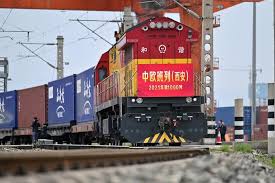
The “Kawa Ningbo vessel, departing from Ningbo-Zhoushan Port, arrived at Wilhelmshaven, Germany in the early hours of Jan. 24, taking only 26 days.

Behind this accelerated delivery lies a strategic integration of sea-rail intermodal transport and the “China-Europe Express” shipping route. The shipment contained furniture manufactured in east China’s Jiangxi province, transported by rail from Ganzhou, Jiangxi to Ningbo-Zhoushan Port’s Chuanshan port area, then directly loaded onto the express line vessel for Germany.

“The China-Europe Express enables direct maritime delivery from our port to Europe, cutting transit time from 38 to 26 days,” explained an representative of the Ningbo-Zhoushan Port. “Through coordinated rail-sea operations, containers can transfer from trains to ships without reloading, which significantly reduces logistics costs.”

In 2024 alone, Ningbo-Zhoushan Port handled over 1.8 million twenty-foot equivalent units (TEUs) through its sea-rail intermodal services, achieving double-digit year-on-year growth.

China’s ongoing optimization of its transportation structure has become a cornerstone for reducing logistics costs while enhancing service quality and operational efficiency. In recent years, the country has witnessed tangible progress in coordinated infrastructure development and systemic innovations.

Key transport corridors like the New International Land-Sea Trade Corridor, the Yangtze River Economic Belt logistics network, and the intermodal transport network in central China have significantly improved regional connectivity. Strategic expansion of dedicated railway lines into industrial hubs, ports, and logistics parks has effectively addressed the critical “first and last-mile” connectivity challenges in rail transport, solidifying the infrastructure framework.

Various organizational models have emerged as innovative solutions – from high-speed rail express and double-stack container trains to multimodal express networks. Streamlined practices like unified documentation systems and standardized container management across transport modes exemplify breakthroughs in regulatory coordination.

In 2024, China’s rail-water intermodal transport volume reached 11.5 million TEUs, up 15 percent year on year.

The integration of next-generation technologies like AI and Internet of Things with modern logistics is unlocking new possibilities for cost-efficient, intelligent supply chains. Digital freight platforms and smart logistics solutions are reshaping China’s transportation sector through data-driven optimization.

Fu Yefei, general manager of a textile company in Shaoxing, east China’s Zhejiang province, illustrated this transformation. Previously, hiring on in-house drivers cost his company 30,000 yuan monthly with frequent empty return trips and low efficiency. After adopting intelligent logistics platforms, AI-powered matching systems have reduced transportation costs by nearly 70 percent while boosting delivery efficiency over 50 percent.

“AI bridges the information gap between shippers and carriers, fundamentally lowering systemic logistics costs,” said Zhang Hao, chief technology officer of Lalamove, a Chinese delivery and logistics company. The company’s platform processed 1.86 million daily orders with a 92 percent successful matching rate in 2024.

According to statistics, China is home to 3,286 digital freight platforms coordinating over 8 million trucks and 7.3 million drivers nationwide. Compared to traditional methods, digital platforms have slashed waiting times from 2-3 days to 8-10 hours while reducing transaction costs by 6-8 percent.

JD Logistics, the logistics arm of e-commerce giant JD.com, demonstrates another dimension of innovation through its nationwide network of 3,600 smart warehouses. By integrating warehousing, transportation, and distribution operations, it provides comprehensive supply chain solutions for more than 100,000 enterprises.

“Previously, relying on a single warehouse caused delays and high costs,” said Zheng Chengjun, founder of a manufacturer of small home appliances. “With JD Logistics’ regional distribution hubs, we’ve cut delivery times by eight hours across platforms and plan to reduce warehouse space for additional savings.”

This year, China’s logistics sector is accelerating its digital transformation, with deepening integration between logistics providers and manufacturers.

“We anticipate reducing national logistics costs by 300 billion yuan in 2025,” said vice minister of transport Li Yang, adding this will provide substantial support for growth in real economy, particularly in manufacturing sector.

Morin Dawa: hometown of field hockey in China

By Wu Yong, People’s Daily

Hasen, an 80-year-old womanof China’sDaur ethnic group, has learned how to use her smartphone to watch live sports events.

As the first Chinese national female fieldhockey coach, Hasenwas filled with pride as she watched the Hero Asian Champions Trophy 2024 unfold in her hometown – Morin Dawa Daur autonomous banner in north China’s Inner Mongolia autonomous region.

This event held a special significance for the Chinese men’sfield hockey team, which fought all the way to a historic silver medal, marking the country’s best-ever performance in this competition. Seven players on the team hailed from Morin Dawa Daur autonomous banner, a region steeped in hockey tradition.

With a population of over 300,000,Morin Dawa Daur autonomous banner is known as the “hometown of field hockey in China”.. The people in the banner carried forward the traditional sporting heritage and made it popular in the whole region.

The journey into this remote banner winds through the southern Greater Khingan Mountains, where the indigenous oak trees stand tall and straight along the way. Drawing on local resources, the children here often create temporary hockey sticks from oak branches to play field hockey onopen ground.

Field hockey became an Olympic sport at the 1908 London Games. After the founding of the People’s Republic of China in 1949, Chinese sports authorities sent an expert team to investigate the development of field hockey across the country.

When the experts arrived in Morin Dawa Daur autonomous banner, they were pleasantly surprised to find that the traditional sport of China’sDaur ethnic group, known as beikuo in the Daur language (which translates to “curved stick”), bears resemblance to field hockey in terms of equipment and competition rules.

This discovery sparked historic development: China’s first men’s field hockey team was founded in the banner in 1976, predominantly composed of players of the Daur ethnic group. Four years later, Hasen – now recognized as a Chinese national-level intangible cultural heritage inheritor of Daur traditional hockey – pioneered China’s first women’s field hockey team, and started coaching the trailblazing squad.

In 1989, the Chinese Hockey Associationofficially designated Morin Dawa Daur autonomous banner as the “hometown of field hockey”. This prestigious title was further acknowledged in September 2024 when Tayyab Ikram, president of the International Hockey Federation, presented the banner with a commemorative plaque and album, recognizing it as a renowned hub for the sport of field hockey.

“Morin Dawa Daur autonomous banner has a huge fan base for the sport, which makes field hockey widely popular here,” said Wang Tong, captain of the Chinese men’s field hockey team.

Over the past almost five decades, athletes from Morin Dawa Daur autonomous banner have played a crucial role in the Chinese national field hockey team and made significantcontributions to China’s field hockey competitions. For example, the Chinese women’s field hockey team wona silver medal at the Paris 2024 Olympics Games, and the Chinese men’s team secured a silver medal at the Asian Games and 11th place at the Olympics.

To date, Morin Dawa Daur autonomous banner has nurtured over 500 athletes and coaches for various Chinese provincial teams, with over 200 athletes and more than 30 coaches being selected for the Chinese national field hockey training camp.

Integration of sports and education

On the sidelines of the Hero Asian Champions Trophy 2024, seven foreign referees visited the Secondary Vocational and Technical School of Morin Dawa Daur Autonomous Banner, providing guidance for field hockey students.

After a training match, Ao Hanze, a second-year student who has spent four yearsin professional field hockey training, was dripping with sweat. When the referees commended his performance, the young boy was struck by a sense of shyness and excitement.

“The international hockey event held in my hometown has illuminated my goals,” said Ao. His dream is to become an outstanding professional field hockey athlete.

“With such excellent training facilities and much better conditions than before, I will redouble my efforts,” he noted.

The school introduced a field hockey program in 2015 and has so far nurtured numerous groups of athletes for Chinese professional teams. In 2025, it collaborated with other Chinese higher education institutions to enroll students with special talent in field hockey.

This collaboration aims to enable student-athletesto pursue vocational education while receiving professional sports training, which means they can advance their academic and athletic careers simultaneously.

In recent years, the banner has been exploring new ways of integrating sports and education to cultivate young talents. Every one of the 40 primary and secondary schools within the banner has launched field hockey courses, and 39 of them have created their own teams for the sport.

“Based on the vibrant hockey-playing environment, we have established a comprehensive educational system to nurture and train students of all educational institutions, from elementary schools to universities. Outstanding players have the opportunity to join Chinese professional teams right away. This approach can contribute to the sound and orderly development of field hockey in China,” said Liu Jinzhu, head of the education and sports bureau of Morin Dawa Daur autonomous banner.

Birdwatching and beyond: booming ecotourism in E China’s Jiangsu

By Yao Xueqing, People’s Daily

Yancheng city, east China’s Jiangsu province, boasts the world’s largest intertidal wetland system and China’s first World Natural Heritage site ofcoastal wetlands. As an important stopover site for migratory birds on the East Asian-Australasian Flyway, this ecological wonderland shelters millions of birds annually as they rest, molt, and overwinter.

In recent years, the city has developed a multifaceted ecotourism model and fostered new consumption scenarios around these winged visitors. Tourists can witness spectacular bird congregations across tidal wetlands, explore museums and creative product shops, and purchase cultural souvenirs like the popular cultural icon “Salt Spoon,” a cartoon character based on the critically endangered spoon-billed sandpiper.

Birdwatching has become the city’s new approach to developing ecotourism, providing tourists and citizens a deeper and more engaging way to appreciate the natural beauty.

“When migratory birds pick their habitats, they primarily focus on abundant food sources and a sound natural environment,” said tour guide Shen Dandan at the research center of the Tiaozini wetland in Dongtai of Yancheng city, where a highlight of every August is the arrival of millions of migratory birds.

She explained the reasons behind bird migration and habitat selection to tourists, showcasing videos and images to introduce bird species often seen in wetlands during winter. Equipped with newfound bird knowledge, the tourists then made their way to an observation deck to kick off their birdwatching adventure.

“The tide is rising! Now it’s the prime time for birdwatching,”exclaimed Shen.

Shen explained that asthe tide went out, migratory birds would hunt for food on the beach; but when the seawater submergedtheir feeding grounds, theywould retreat with the seawater to a “shelter region”within the dyke for a break, creating an ideal opportunity for birdwatchers to spot them from the observation decks.

The “shelter region” used to be the nearest fish pond to the feeding grounds, covering a total area of 720 mu (48 hectares). After micro-topographic transformation, wetland restoration and environmental improvement, the pond was transformed into the current fixed habitat at high tide level, serving as a sanctuary for migratory birds when the tide rises.

Within the habitat, there are four observation decks equipped with 16 high-powered telescopes that reveal intimate details of migratory birds leisurely strolling around, such as geese, ducks, black-faced spoonbills, and Eurasian spoonbills, within a 500-meter range.

After traveling 12 kilometers to the south, the tourists reached a large lake nestled deep within the Tiaozini wetland, which serves as the habitat for big wading birds like red-crowned cranes and flamingos. Dozens of photography enthusiastsstood by, ready to capture pictures.

“It’s truly worth the wait. I recorded a flamingo feeding its chick,” said Qi Xiaoyun, president of the Yancheng Municipal Photographers Association.

Qi said that the photography events organized by the association always attract a full crowd of photography enthusiasts – in spring, they rush to capture spoon-billed sandpipers; in summer, black-headed gulls enter their breeding season; when the autumn comes, the saltwort turns red everywhere; and this winter, more and more flamingos are being photographed.

Chang Wei, deputy director of the management committee of the Coastal Economic Zone of Dongtai, explained how the wetland offers different scenery throughout the year. With birdwatching as a major project, the Tiaozini wetland scenic area offers a variety of ecotourism products designed for different seasons, such as birding festivals, photography camps, and ecological camping, drawing nearly a million visits each year.

Cultural and creative industry

Museums have also become an essential part of localbirdwatching tourism. For instance, the Yellow Sea Wetland Museumpresents the changing landscapes of migratory bird habitats and has become an interactive and immersive encyclopedia of wetland ecology.

The museum, receiving around 260,000 visitors annually, has developed various activities like “World Heritage Education” and “Wetlands and Science Workshops.”It hosts 140 World Heritage Education events each year.

At the store of the museum, cultural and creative products such as T-shirts, cups, notebooks, fridge magnets, and plush toys featuring images of “Salt Spoon” are very popular among tourists.The design team is also creating characters based on the red-crowned crane and milu (commonly known as Pere David’s deer),which are collectively dubbed the “three wetland treasures” in Yancheng, together with spoon-billed sandpiper, prototype of “Salt Spoon.”

“Birdwatching tourism has ignited a wave of cultural creativity, which has in turn boosted consumer spending,” said Jin Longfei, an official from Yancheng Municipal People’s Government.

According to Jin, the sales of cultural and creative products inspired by westland ecotourism in the city have exceeded 30 million yuan ($4.12 million), generating an economic output of tens of millions yuan.

China turns ice, snow economy into new growth driver

By Ji Fang, Wang Liang, People’s Daily

During this winter season, ice and snow tourism has experienced a significant surge in popularity across various regions of China.

In Hebei province, a diverse range of ice and snow events are captivating visitors, while in Jilinprovince, tourists are flocking to witness the beauty of rime and participate in thrilling ice and snow activities. Additionally, in Xinjiang Uygur autonomous region, numerous ski resorts have undergone expansions and upgrades to elevate service standards, thereby enhancing the overall visitor experience.

The growing enthusiasm for winter sports in China, coupled with the rising trend of ice and snow tourism, has not only stimulated consumption growth but also fostered regional development.

On a weekend, a long line was formed by visitors waiting to take cable cars at a ski resort on Changbai Mountain in Jilin province, and Zhang Yao from Beijing, was standing in the line.

Zhang Yao developed a passion for skiing after a 2018 trip to Chongli district, Hebei, known for its thriving winter sports development. Since then, she has been hitting ski resorts every winter, leaving her footprints Beijing, Hebei, Jilin, and other places.

The booming of winter sports has significantly boosted the development of relevant industries. According to statistics, since the 2022 Beijing Winter Olympics, 313 million people across China have engaged in ice and snow sports or related leisure activities, with 264 million participating during the 2023-2024 snow season.

Wang Yuxiong, director of the Sports Economics Research Center at the Central University of Finance and Economics, stated that with the development of social economy and the improvement of living standards, the demand for sports will stimulate consumption enthusiasm, and the ice and snow economy still has great potential.

A report showed that China’s ice and snow consumption exceeded 150 billion yuan ($20.48 billion) in the 2023-2024 snow season, with 72.73 percent of winter sports participants reporting expenditure.

Since December last year, a series of winter sports events have been hosted in China, transforming the attention to the games into consumer spending. The National Ski Jumping Center, nicknamed “Snow Ruyi,” hosted the FIS Ski Jumping Intercontinental Cup and women’s events of the FIS Ski Jumping World Cup, which led to a 250 percent surge in the number of visitors from a year ago.

Nearly 140,000 people visited the Shougang Park in Beijing when it hosted the 2024-2025 FIS Snowboard & Freeski Big Air World Cup. The event led to a significant rise in local dining and accommodation consumption.

In Jilin’s Beidahu Ski Resort, over 20 events have been hosted, sparking widespread enthusiasm for winter sports. In Xinjiang, the Freeride World Tour attracted over 100 top skiers from around the globe, and the hosting of a winter fishing festival and other activities has further consolidated Xinjiang’s status as an ideal destination for skiing enthusiasts.

Data shows that during the 2023-2024 snow season, China recorded 430 million winter leisure and tourism trips, and this figure is expected to reach 520 million in the 2024-2025 season.

Winter tourism is embracing new experiences. Recently, a ski resort in Jilin just tried to fuse traditional Chinese culture into winter sports – skiers were seen gliding down the slopes in Peking Opera costumes.

Zhao Lanjv, the resort’s general manager, noted that since the slopes opened in late November, the resort has seen a surge in visitors, with weekend attendance exceeding 5,000 people.

Traditional Chinese medicine wellness centers, China chic, and opera performances were part of the resort’s efforts to enrich visitor experience and showcase China’s rich cultural heritage to the world through winter sports, Zhao said.

China’s winter sports industry is rapidly growing in southern cities where sustained snowfall is a rarity. Chongqing municipality in the southwest has launched over 150 ice and snow-themed activities and more than 80 winter tourism routes, spurring a wave of winter spending.

Hubei province plans to distribute 100 million yuan in cultural and tourism vouchers, covering key projects like skiing and hot springs. Meanwhile, indoor ski resorts in Guangdong provincebreak seasonal barriers, catering to snow enthusiasts year-round.

Wang believes that as consumer demands become more personalized and diverse, the ice and snow experiences will be further expanded, creating more varied consumption scenarios.

A 2024 report on the development of China’s ice and snow industry revealed that the industry has grown from 270 billion yuan in 2015 to 970 billion yuan in 2024, and will probably surpass 1 trillion yuan by 2025.

“The enthusiasm for winter sports is soaring, and with the support of favorable policies, the ice and snow economy is set to shine,” Wang added, believing that this industry is a source of invaluable assets.

China makes notable progress in intangible cultural heritage protection

By Zou Xiang, People‘s Daily

For Chinese across the world, the Spring Festival is a time for family reunions, festive traditions, holiday shopping and diverse cultural and tourism activities. Shopping events for festival goods centered around Chinese intangible cultural heritage (ICH) are gaining popularity across China in recent years.

During a recent event in north China’s Inner Mongolia autonomous region, ICH inheritors demonstrated a wide range of skills including embroidery, paper-cutting, and lanterns. Local citizens and tourists were also invited to join the hands-on workshops, experiencing the cultural charm of ICH up close. China’s ICH has become part of people’s daily lives, demonstrating the new vitality of Chinese culture.

Compared to the ubiquitous presence of Chinese ICH elements online and offline, some key transformations may trigger people’s reflection on how to protect the cultural heritage.

In Dec. 2024, three Chinese cultural elements, namely traditional Li textile techniques: spinning, dyeing, weaving and embroidering, Qiang New Year festival celebrated in southwest China’s Sichuan province, and traditional design and practices for building Chinese wooden arch bridges, were added by UNESCO to its Representative List of the Intangible Cultural Heritage of Humanity.The three items were included in 2009 in the List of Intangible Cultural Heritage in Need of Urgent Safeguarding.

The main difference between the List of Intangible Cultural Heritage in Need of Urgent Safeguarding and the Representative List of the Intangible Cultural Heritage of Humanity is that the former is about cultural elements that face the risk of disappearing.

When an ICH item sees its sustainability enhanced through protection and development efforts and no longer faces the risk of extinction, it will be “transferred” from the former to the latter.

The successful inscriptionof the three itemsin the Intangible Cultural Heritage of Humanity marks the first transition between the two lists under the framework of UNESCO’s Convention for the Safeguarding of Intangible Cultural Heritage. It demonstrated the international community’s recognition of China’s ICH protection efforts.

Over the past more than two decades since China joined UNESCO’s Convention for the Safeguarding of Intangible Cultural Heritage, the country has made remarkable achievements in preserving and revitalizing ICH, offering Chinese wisdom and solutions to ICH protection and revitalization worldwide.

China now has 44 cultural elements or practices recognized by UNESCO as Intangible Cultural Heritage of Humanity, ranking first in the world. The country has enacted a law on ICH, and provincial-level regions across the country have also issued their local regulations on ICH protection, building a sound legal framework.

Over 90,000 ICH representative inheritors of different levels in China are working to keep the country’s intangible cultural treasures alive. China has over 100,000 ICH items of various levels, including 1,557 featured on the national list.

Preserving cultural essence of ICH

Each ICH item is priceless and embodies a profound historical and cultural legacy that is deeply connected to the customs and emotions of local people.

To preserve ICH, a crucial aspect is to carry forward its aesthetic tastes and cultural essence. For instance, the entire process of the Li brocade tradition includes four steps of spinning, dyeing, weaving and embroidering, which take at least three to four months to complete. The intricate process of back weaving and double-sided weaving takes even longer.

This time-honored brocade craft tests patience and craftsmanship. It is essential to pass down the technique itselfandcarry forward the spirit of diligence, wisdom, innovation, and craftsmanship behind the ancient art.

Integrating ICH into people’s daily lives

ICH is deeply rooted in social practices and people’s daily lives. It is not a static cultural symbol but a dynamic cultural organism.

The Qiang New Year festival is the most significant traditional festival celebrated by China’s Qiang people on the first day of the 10th lunar monthevery year. The Qiang New Year celebrations incorporate cultural elements such as Qiang customs, traditions, dances, and cuisine.

China has established a national Qiang cultural ecological protection zone, prioritizing the preservation of Qiang culture. The systematic protection and holistic preservation have laid a solid natural, cultural and social foundation for preserving the authenticity of the Qiang customs and promoting the inheritance of the Qiang culture.

Through years of efforts, China’s ICH protection and revitalization have yielded fruitful results, painting a vivid picture of the harmonious coexistence of traditional culture and modern life.

For example, Li brocade has become a “brocade of happiness” that creates more job opportunities and drives income growth for local people. The Qiang New Year festival now serves as an “accelerator” for cultural, ecological and rural tourism. Traditional Chinese wooden arch bridges have become “concerto” that showcases China’s achievements in cultural inheritance and natural preservation.

ICH itemsare the crystallization of the wisdom of the Chinese nation and a vivid witness to the continuity of Chinese civilization.

Whether it is the inscription of the three ICT items in the UNESCO Intangible Cultural Heritage of Humanity, the global dissemination of Chinese ICH, or the accelerating integration of ICHinto people’s lives, the ongoing process ensures better inheritance and protection of invaluable heritage.

Flying cars are turning into reality

By Zhang Yangjun

At the 2025 Consumer Electronics Show held in the U.S. city ofLas Vegas, the“Land Aircraft Carrier,” a modular flying car developed by Chinese electric vehicle (EV) maker XPENG, made its first international debut,drawing significant attention worldwide. It is expected to be delivered to customers in 2026.

Flying cars are gradually turning into a reality, presenting endless possibilities for future transportation. Perhaps in 10 years, theyare likely to shorten the commutingtime from 1-2 hours to just 10-20 minutes, relieving the stress of traffic jams for city residents.

Today, people have a more concrete definition of flying cars. In a narrow sense, a flying car refers to a dual-mode vehicle that can both drive on the ground and fly in the air; while in a broad sense, it includes electric vertical takeoff and landing aircraft (eVTOL) used for publictransportation.

In 2024, the China Society of Automotive Engineers released the country’s first research report on flying cars. It observed that the development of smart EVs in the 21st century has laid a solid industrial foundation for smart electric aviation.

According to the report, as a category of flying cars, eVTOLs are expected to become public transportation vehicles,just like cars on the ground, by integrating smart electric technologies and industrial chains of airplanes and cars. The concept of flying cars in a broad sense has been widely accepted by the industry, the report said.

Looking ahead, the era of flying cars is rapidly becoming a reality. According to a Chinese white paper on flying cars, the development of flying cars will go through three stages.

For the first stage, from 2025, flying cars will enter the 1.0 phase of commercialization, during which cargo eVTOLs will be put into commercial operation, while passenger eVTOLs will be demonstrated and applied in specific scenarios.

The second stage comes in around 2035, when flying cars will embrace the 2.0 phase of development, bringing forth more intelligent eVTOLs. These aircraft will be manufactured on a large scale and become a major mode of low-altitudetransportation.

In the third stage, by around 2050, flying cars will enter the 3.0 phase, characterized by mass applications of amphibious flying cars that can drive on the ground and in the air. The low-altitude and ground transportation will be deeply integrated, establishing a three-dimensional intelligent transport system.

Many countries around the world are accelerating the innovation and application of flying cars. There are three main development approaches.

Firstly, some companies are transitioning from traditional mechanical aviation to smart electric aviation. For instance, companies like Joby Aviation in the U.S., European aircraft manufacturer Airbus, and Chinese companies such as AutoFlight and Aerofugia have leveraged their design experience and technological advantages in traditional aviation to develop flying cars.

Secondly, some businesses are venturing beyond smart EVs into smart electric aviation. Around 85 percent of the industrial chain that underpins flying cars is closely linked with smart EVs, providing a robust foundation for flying car technologies. For instance, XPENG and Chinese auto manufacturer GAC Group are intensifying their R&D efforts in flying cars based on their expertise in the smart EVindustry.

Thirdly, other enterprises are moving from multi-rotor drones to smart electric aviation. Multi-rotor droneshave established a foundation in flight control technology for smart electric aviation. For instance, Chinese drone maker EHang Holdings Limited and other companies are marching toward flying cars based on their early experience in multi-rotor drones.

Joby Aviationis set to commercialize eVTOLs in 2025, charting new territory in urban air mobility. Airbus, building on its extensive experience in traditional aviation and strong global presence, has initiated the CityAirbus NextGen project. In 2024, Airbus unveiled its fully electric CityAirbus NextGeneVTOLprototype and successfully conducted the maiden flight, which was a major step in its transition from traditional aviation to smart electric aviation.

China’s world-leading technologies and industrial capabilities in EVs and multi-rotor drones provide a strong foundation for developing and producing flying cars. For example, Chinese automaker Changan Automobile has partnered with drone maker EHang to create an innovative approach – merging automotive and multi-rotor drone technologies, providing new momentum for the development of flying cars.

Low-altitude transportation serves as a primary platform and scenario for the application of new technologies such as new energy, artificial intelligence, big data, and 5G communications. It represents a strategic direction for the development of the low-altitude economy and will reshape the global economic development landscape.

Unmanned aerial vehicles (UAVs) and flying cars are the primary modes of transportation for low-altitude economic activities. Just as bicycles, motorcycles, and cars areimportant for the ground economy, consumer-grade UAVs, industrial-grade UAVs, and transportation-grade flying cars are equally essential in the low-altitude economy.

UAVs play a leading role in the low-altitude economy andhas transitioned from consumer-grade recreational devices to industrial-grade production tools used for activities like power line inspections, and agricultural and forestry protection. Moving forward, the extensive application of flying cars will lead humanity into a new era of three-dimensional transportation, creating a trillion-dollar blue ocean market for the low-altitude economy.

(Zhang Yangjun is a professor with the School of Vehicle and Mobility, Tsinghua University.)