‘Go to China and find green stories across the country’

Erik Solheim in an interview with People’s Daily

By Qu Pei, Chen Xirui, People’s Daily

Erik Solheim, former Under Secretary-General of the United Nations and Executive Director of the UN Environment Programme, currently serves as co-chair of the Europe-Asia Center. 

A longstanding champion of global ecological cooperation, Solheim has both observed and contributed to China’s sustainable development initiatives, maintaining active engagement with the nation’s green transformation efforts.

Q: A growing number of Chinese projects are receiving the UN’s highest environmental honor, the “Champions of the Earth” award. What does this signify?

A: When I first joined the UN, I noticed something surprising: very few Chinese projects had received the Champions of the Earth Award. This was not because China lacked successful cases. Many reviewers were sitting in offices thousands of kilometers away, far from the field, and unable to truly see the green transformation taking place in China and other developing countries. My takeaway was simple: if people are willing to go to China and see it for themselves, they will find green stories across the country.

In a relatively short period, China has achieved remarkable environmental outcomes while significantly improving people’s quality of life. China’s experience offers valuable lessons for many developing countries.

Q: How has China managed to achieve rapid progress in green transformation?

A: President Xi Jinping proposed the concept that “lucid waters and lush mountains are invaluable assets” resonates deeply with me. It sends a clear message: China no longer views economic growth and ecological protection as conflicting priorities. Instead, they advance simultaneously and synergistically.

The key to China’s rapid green transformation lies in its highly stable and continuously advancing ecological governance system.

First, China’s policies show long-term consistency. From the long-range objectives through the year 2035 to the ‘two centenary goals’ looking toward 2049, China is adept at formulating strategic visions that span decades and implementing them steadily through successive Five-Year Plans. This kind of strategic continuity is a unique institutional strength that many countries can learn from.

At the same time, China’s market remains vibrant and competitive. Enterprises continuously drive technological progress, reduce costs and expand capacity. By combining effective government guidance with effective market resource allocation, China’s green transition has accelerated dynamically.

Q: In China’s 15th Five-Year Plan, what aspects are you paying most attention to?

A: I focus most on new quality productive forces and green development. The former encompasses cutting-edge technologies such as AI, big data and advanced manufacturing; the latter drives comprehensive green transformation. These are not separate — they are interdependent and mutually reinforcing.

On the one hand, new technologies are accelerating the green revolution. For example, Huawei uses AI-powered acoustic analysis to track Hainan gibbon, enablingtargeted conservation. Energy companies use intelligent algorithms to coordinate power grids, integrating wind, solar, hydropower, and storage systems.

On the other hand, green energy is the foundation for technological progress. Without low-cost, large-scale clean energy, we cannot sustain the immense power demands of AI data centres. Green energy powers technological development, which in turn advances green development.

Q: Is environmental protection solely an idealistic pursuit?

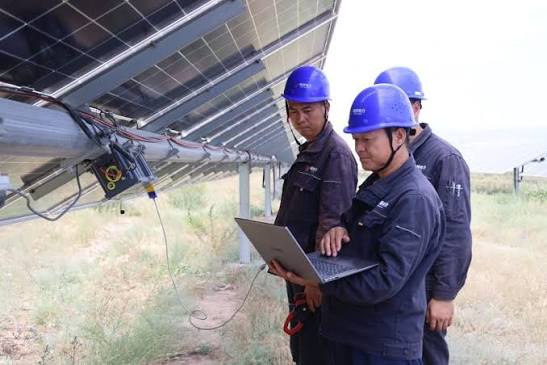
A: If the green transition were  driven only by idealism, it would ack sustainability. It must also demonstrate economic viability. Compared to two decades ago, the price of solar modules has fallen to less than 5 percent of its 2005 level. This 95 percent cost reduction stems from intense market competition and continuous technological progress, with China playing a pivotal role.

In many developing regions, people urgently need to escape poverty and gain reliable electricity, but energy must be affordable. Without China, the global green transition would not cease, but it would be far more expensive and much slower. If some Western countries take a more open approach to global green efforts, including cooperation with China, the outcome could be mutually beneficial. In this context, China can further promote the global green transition through investment, cooperation and technology sharing. 

Q: Some argue that using Chinese green technologies could lead to a loss of energy independence. What is your perspective?

A: Exactly opposite is the case. Every country has natural resources that can be developed. When you import Chinese green technologies, such as solar panels, you are utilizing your own domestic resources — this is very different from importing energy like oil. By basing economic development on solar, wind or hydropower, a country taps into its own resources and can achieve energy independence. In this way, international cooperation can help upgrade local technologies and promote industrial development.

We must recognize that addressing climate change, tackling ecological crises and eliminating poverty are shared global responsibilities. Through cooperation, these challenges are solvable. However, division and confrontation can render even minor problems insurmountable.

Japan’s ‘neo-militarism’ emerges as tangible threat requiring vigilance

By Huan Yuping, People’s Daily

In recent years, Japan’s right-wing factions have intensified efforts to advance a more covert and deceptive form of “neo-militarism.” 

Framed under the guise of “peace” and “defense,” this ideology fundamentally seeks to dismantle Japan’s post-WWII constraints and transform the nation into a military power capable of overseas force projection.

Since Japanese Prime Minister Sanae Takaichi assumed office, this agenda has accelerated markedly. Across political, military, diplomatic and ideological domains, Japan has repeatedly sought to break through the constraints of its pacifist Constitution and the post-war international order, pushing forward ever faster and further with its rearmament.

Evidence confirms that Japan’s “neo-militarism” now constitutes not merely a concerning trend but an actionable threat. Regional neighbors and the international community must heighten awareness and implement measures to counter its proliferation.

Japan’s current “neo-militarism” represents the stubborn resurgence and distorted evolution of militarist ideology in the modern era. While retaining the expansionist genes of traditional militarism, it has developed new, highly deceptive characteristics.

Politically, administrative power has become deeply intertwined with major business conglomerates, enabling the pursuit of military expansion under the cover of democratic procedures.

Militarily, instead of openly advocating aggression, it advances step by step through a “salami-slicing” tactics, attempting to loosen military constraints while maintaining the appearance of “compliance”.

Economically, a symbiotic relationship has emerged between rearmament and major corporate interests, effectively transferring wealth from ordinary citizens to military-industrial interest groups.

Culturally, “neo-militarism” has repackaged itself by incorporating rhetoric such as “freedom,” “democracy” and “human rights” as supposed universal values, while exploiting social media algorithms and opinion manipulation to construct information “echo chambers”.

Diplomatically, Japan continues a geopolitical strategy marked by opportunism and confrontation.

The emergence of Japan’s “neo-militarism” results from interrelated factors: the lingering influence of militarist ideology, the dominance of radical political forces, the distortion of social and economic anxieties, and the active promotion of vested interest groups.

First, Japan never fully eradicated militarism. Unlike Germany’s comprehensive denazification,  Japan’s post-war democratization remained incomplete under U.S. Cold War strategy, allowing remnants of militarism to persist within political structures.

Second, Japan’s political landscape has shifted rightward. Since the end of the Cold War — particularly in recent years — structural changes have taken place in Japan’s political ecology, with right-wing conservative forces occupying the core of state power and gradually transforming far-right ideology into national policy and legislative action.

Third, prolonged economic stagnation has generated strategic anxiety. Under the combined pressures of massive public debt, industrial hollowing-out and demographic decline, Japan’s economy has struggled for decades, with its per capita GDP ranking slipping from the global forefront to the middle-lower tier among developed economies. To divert attention from domestic governance challenges, right-wing politicians have increasingly resorted to exaggerating a so-called “China threat.”

Fourth, vested interest profit from military expansion. As Japan’s defense policy has shifted in a more aggressive direction, defense spending has risen for 14 consecutive years from fiscal 2012 to fiscal 2026. In particular, it doubled within three years after 2022, generating large orders for Japan’s defense industry. Data show that since November 2022, the share price of Mitsubishi Heavy Industries has surged by more than 650 percent, IHI Corporation by over 480 percent, and Kawasaki Heavy Industries by more than 280 percent.

Since the establishment of the government led by Takaichi, the push toward “neo-militarism” has clearly accelerated and entered a dangerous stage of systematic implementation.

Politically and legally, war’s final barriers are being dismantled. Backed by the Liberal Democratic Party of Japan and far-right allies forming what has been described as the most conservative governing coalition since the World War II, the Takaichi administration has strengthened its right-wing power base while laying the groundwork for constitutional revision through persistent “crisis narratives.”

At the level of military strategy, the government seeks to build an independent offensive capability. The fiscal 2026 defense budget has been pushed beyond 9 trillion yen ($56.61 billion), another record high, reaching the target of 2 percent of GDP ahead of schedule. Massive funding targets multiple offensive systems, revealing accelerated expansion ambitions.

Economically, a “new military-industrial complex” rapidly takes shape. The administration elevated military preparedness to national priority, strongly supporting defense-linked interest groups.

Societally, historical revisionism intensifies. Japan’s right-wing forces are doubling down on efforts to remold public memory — whitewashing wartime aggression in school textbooks, promoting a “loyalty to the emperor” education, and systematically replacing self-reflection on past atrocities with a self-serving “victimhood” narrative that seeks to sever ties with history of aggression.

As early as 1994 — one year after she was first elected to Japan’s parliament — Takaichi publicly questioned then Prime Minister Tomiichi Murayama’s acknowledgment of Japan’s wrongful war of aggression.

In 2007, serving in the cabinet of Shinzo Abe, she became the only cabinet minister to visit the Yasukuni Shrine on Aug. 15, the anniversary of Japan’s surrender in World War II, in a move widely seen as catering to right-wing forces. She has also repeatedly denied the Nanjing Massacre and the coercion of “comfort women,” even attempting to portray Japan’s war of aggression as a “war of self-defense.”

In September 2021, she advanced the claim that a “Taiwan contingency” would pose a threat to Japan. In November 2025, while serving as prime minister, she further alleged in parliamentary debate that a “Taiwan contingency” could constitute an “survival-threatening situation” for Japan, and has kept refusing to retract the remarks. More recently, she has openly stated that she is working to create conditions to visit Yasukuni Shrine again.

From early rhetorical probing to today’s systematic political maneuvering, Takaichi has played a key role in promoting this “neo-militarism,” acting as a dangerous accelerator pushing Japan back toward a path of militaristic expansion.

This year marks the 80th anniversary of the opening of the trials of the International Military Tribunal for the Far East. That historic tribunal represented not only a just reckoning with the crimes of Japanese militarism but also an important step toward building a peaceful world.

Today, Japan’s “neo-militarism” poses a serious, tangible threat to regional and global stability. The deep-rooted structural problems in Japan’s political system and the dangerous trajectory of its strategic policies cannot be ignored.

The international community must remain vigilant, jointly safeguard the outcomes of victory in World War II, and build an unbreakable line of justice. The dangerous forces behind Japan’s “neo-militarism” must not be allowed to wreak havoc again, and the sunlight of peace must never again be overshadowed by the clouds of war.

Whole-process people’s democracy makes new contributions to progress of human political civilization

By He Yin, People’s Daily

China’s recently concluded “two sessions,” the annual meetings of the country’s top legislature, the National People’s Congress (NPC), and top political advisory body, the National Committee of the Chinese People’s Political Consultative Conference(CPPCC), have provided an important opportunity for the international community to observe Chinese democracy. 

At the meetings, nearly 3,000 NPC deputies and more than 2,000 members of the CPPCC National Committee fulfilled their duties and brought voices from the grassroots to the country’s highest deliberative platforms. 

The people’s aspirations and expectations have been fully integrated into the top-level design of national development, fully demonstrating the vitality of whole-process people’s democracy.

The draft outline of China’s 15th Five-Year Plan (2026–2030) was a major focus of the international community during this year’s “two sessions.”

The drafting process included online consultations that collected more than 3.113 million suggestions from internet users. Government departments at all levels compiled and categorized proposals on issues of public concern, including easier access to education, better employment, and strengthening elderly care. 

In formulating the plan, China integrated top-level design with extensive public consultation, ensuring that the efforts of the Party and the government align with the aspirations of the people. An international media outlet noted that the extensive social participation in drafting the 15th Five-Year Plan reflects whole-process people’s democracy in practice.

Through the “two sessions,” the world has seen that Chinese people’s willingness for participating in democratic processes continues to grow, while the breadth and depth of participation keep expanding and the channels and forms of engagement become increasingly diverse. 

A journalist from Latin America observed that China’s “two sessions” bring together deputies and members from all ethnic groups and all sectors of society, including education, healthcare and science and technology, ensuring that diverse voices are fully heard. 

The deliberation of draft legislation such as the Ecological and Environmental Code, the Ethnic Unity and Progress Promotion Law, and the National Development Planning Law vividly illustrated the interaction between democracy and the rule of law, as well as the integration of public opinion with the legislative process.

The drafting of the Ecological and Environmental Code, for example, included four rounds of public consultation and received more than 20,000 suggestions from over 7,000 participants, many of which were carefully studied and incorporated into the draft.

A closer look at China’s democratic practice shows that genuine and effective democracy contributes to efficient governance. 

In 2025, departments of the State Council handled 8,754 suggestions submitted by NPC deputies and 4,868 proposals from CPPCC members, all of which were processed on schedule. State Council departments adopted more than 4,900 suggestions put forward by NPC deputies and CPPCC members and introduced over 2,200 related policy measures.

In Linxia, northwest China’s Gansu province, an NPC deputy proposed building an expressway that traverses mountains and valleys to boost farmers’ incomes. In Yinzhou district, Ningbo, east China’s Zhejiang province, a voting system was adopted, where the public proposes, representatives decide, the government implements, and the public evaluates, leading to the construction of a safe path for students on their way to school. These are just two examples of how suggestions from the grassroots are met with responses, oversight, and action, ultimately delivering tangible benefits to the people.

Hong Won-sook, a South Korean expert who has lived and worked in Shanghai for many years and has been invited several times to participate in activities of the Shanghai CPPCC, said that China’s whole-process people’s democracy gives people a place where they can voice their views. When they face difficulties, they can raise them; their voices are heard and their suggestions are implemented, helping make people’s lives better.

China’s whole-process people’s democracy stands in stark contrast to forms of democracy in some countries that have become increasingly “formalistic” or reduced to slogans. It offers the international community food for thought on effective ways to realize democracy. 

Democracy is not an ornament or a decorative label; it is meant to solve problems for the people. A system in which people can only express their wishes but cannot see them realized is not true democracy. China’s democracy is people’s democracy, and the people’s status as masters of the country is its essence and core. 

This form of democracy, which has grown from China’s own soil, is flourishing and has boosted confidence among other developing countries seeking to explore democratic development paths suited to their national conditions. A Brazilian media outlet said that whole-process people’s democracy encourages public participation, promotes social harmony and delivers tangible results.

Democracy is a shared value of humanity and a right of the people of all countries. China will steadfastly advance whole-process people’s democracy and stands ready to strengthen exchanges and mutual learning with other countries. Together, countries can explore ways to realize broad, genuine and effective democracy, making new contributions to progress of human political civilization.

A day in the life of China’s economy 

By People’s Daily reporters

Scene 1: Dawn at Ningbo-Zhoushan Port(5:00 AM) 

As dawn breaks over Ningbo-Zhoushan Port in east China’s Zhejiang province, the sea breeze carries the sounds of industry awakening. “Let’s begin!” directs a foreman. A massive bucket-wheel reclaimer swings into action, processing iron ore recently arrived from Brazil. The ore travels along conveyor belts to a loading terminal, where a ship loader precisely transfers the cargo into an ore carrier’s hold.

Ningbo-Zhoushan Port, the world’s busiest cargo port for 17 consecutive years, handled over 1.4 billion tons last year. Its daily throughput averages approximately 3.9 million tons — equivalent to  moving 45 tons every second. This activity reflects a broader reality: across China, more than 2,900 berths capable of handling vessels over 10,000 tons facilitate a constant flow of goods, linking China’s economy with global markets.

China’s economic engine hums with remarkable momentum. 

Within a single minute: China generates more than 200 million yuan ($29.13) in GDP and over 80 million yuan in goods imports and exports.

Within an hour: more than 2 million garments are produced, and over 30,000 kilograms of crops are harvested by intelligent combine harvesters.

Within a day: China smelts more than 3.9 million tons of steel and manufactures over 90,000 vehicles.

During the 14th Five-Year Plan period (2021-2025), the Chinese economy achieved four consecutive leaps with an average annual growth rate of 5.4 percent, the highest among major global economies.

Scene 2: Innovation Relay in the Yangtze River Delta (2:00 PM) 

A collaborative push in humanoid robotics technology unfolds across the Yangtze River Delta. At Shanghai Jiao Tong University, associate research fellow Yan Weixin from the Institute of Robotics spreads his palm, grips a test tube, draws liquid and gently shakes it. Nearby, a humanoid robotic arm mimics every subtle movement he does.

Two hours away in Suzhou, east China’s Jiangsu province, Li Qian, deputy general manager of Leaderdrive, a manufacturer specializing in precision robotic components, is examining a harmonic reducer used in the elbow joint of a humanoid robot, exploring ways to make it lighter and more efficient.

As the world’s largest producer of robots, China holds more than 190,000 valid patents related to robotics, accounting for roughly 2/3 of the global total.

The rapid development of China’s humanoid robotics industry is driven by the country’s most complete industrial system in the world, its vast application scenarios, and reliable energy supply, according to Qiao Hong, an academician of the Chinese Academy of Sciences.

In a day, China’s space station orbits the Earth 16 times, enabling astronauts to witness 16 magnificent sunrises and sunsets.

In a day, China’s Supercomputing Network processes more than one million API calls.

In a day, thousands of invention patents are granted across the country.

In 2025, China’s R&D investment accounted for 2.8 percent of the country’s GDP, and the country entered the global top 10 in the global innovation index for the first time. This just demonstrates the powerful vitality of China.

Scene 3: Evening Vibrancy – Guangzhou & Shanghai (6:00 PM) 

Along Guangzhou’s Pearl River banks, crowds gather. “Look — the ‘Slim Waist’!” On a sightseeing boat, a foreign visitor named Nazer and his family point excitedly at the brightly lit Canton Tower, one of the iconic landmarks of Guangzhou in south China’s Guangdong province. From savoring Cantonese roasted meats at local eateries to enjoying a cup of aromatic coffee, the Nazer family has woven themselves into daily life in China.

Meanwhile, at a community canteen on Jiangyuan Road in Shanghai, the aroma of freshly prepared dishes fills the air. “Regular customer” Sun Yuhua walks in hand-in-hand with her husband.

“With affordable, home-style cooking, we feel good about our meal, and that reassures our children,” Sun says.

Behind the vibrant glow of city life lies the resilience and potential of China’s economy, demonstrating how the country’s openness brings shared opportunities to the world.

Over the past five years, China has connected every county in formerly impoverished regions with expressways, paved roads reached every village, and telecommunications signals covered every corner. These achievements have solidified poverty eradication gains, proving to the world that poverty is not an insurmountable challenge.

Since the beginning of this year, senior foreign leaders have visited China in succession to explore business opportunities. Meanwhile, foreign tourists have flocked to China to celebrate the Spring Festival, experience traditional customs and witness firsthand a prosperous, open and inclusive nation.

In 2025, China imported 18.48 trillion yuan worth of goods, maintaining its position as the world’s second-largest import market for 17 consecutive years. Cherries from Chile, durians from Malaysia, flour from Kazakhstan, and beauty products from France–the world is sharing the dividends of the growing Chinese market.

In 2025, China received more than 150 million inbound foreign visitors, who spent over $130 billion in the country. China has granted unilateral visa exemption to 50 countries, while transit visa-free arrangements now cover 55 countries. The experience of “becoming Chinese” has become a new global trend, offering people around the world fresh enjoyment and cultural resonance.

During the 14th Five-Year Plan period, China contributed around 30 percent of global economic growth.

“The attractiveness of China to foreign investment lies not only in the enormous size of its market but also in the high quality of that market,” said Jiang Ying, chair of Deloitte China. Increasingly, foreign enterprises are treating China as a source of innovation and research and development, using innovations developed in China to serve global markets.

Every 24 hours of China’s economy injects new momentum into global development.

Looking ahead to the 15th Five-Year Plan period (2026-2030), one conclusion is becoming ever clearer amid the uncertainties of the global landscape: despite a complex international environment, China’s economy will continue moving toward higher quality and new growth drivers, offering the most stable, reliable and positive energy to a world navigating turbulence and changes.

Chinese smart technologies shine at 2026 Mobile World Congress

By Yan Huan, Xu Hailin, People’s Daily

The 2026 Mobile World Congress (MWC) was recently held in Barcelona, Spain. This year marks the 20th anniversary of the world’s premier mobile communications industry event being held in Barcelona. 

Under the theme “The IQ Era,” MWC focused on intelligent infrastructure, AI connectivity and integration, enterprise-level AI applications, AI ecosystem collaboration, inclusive technology, and innovation-driven transformation.

The event brought together around 2,900 exhibitors from more than 200 countries and regions and featured over 100 national, regional and thematic technology pavilions. A China Pavilion was established for the first time this year. 

Leading Chinese technology firms including China Mobile, China Telecom, China Unicom, Huawei, ZTE, Honor, and Xiaomi participated prominently, showcasing their latest technological achievements in mobile communications and AI.

Chinese exhibitors presented a variety of innovative products. At the booth of ZTE, a plush toy named Mashu drew crowds of visitors. With its round, adorable shape and big blinking eyes, the toy has a friendly appeal. Powered by advanced AI technology, Mashu can not only understand human speech and recognize emotions, but also learn continuously through daily interaction, gradually gaining insight into users’ needs and preferences while providing emotional companionship.

Honor unveiled a “robot phone” equipped with a flexible gimbal camera capable of auto-rotation and precise subject tracking. Lenovo’s YOGA concept device demonstrated rapid conversion of 2D images into 3D models, viewable on a glasses-free 3D display, aiding creators in visualizing depth and spatial relationships. 

Alibaba’s Qwen smart glasses integrated real-time translation and bone-conduction audio, highlighting the potential of AI in lightweight wearables. Xiaomi showcased its comprehensive “human-car-home” ecosystem, including a concept supercar, flagship smartphones, and smart home products.

“AI is expanding the boundaries of its applications in everyday life. It is no longer confined to optimizing device functions but has evolved into a key tool for enhancing user experience and coordinating services ,” said Wang Xiang, chief strategy officer of ZTE. 

In the AI-native smartphones launched by the company last year, AI functions as an “intelligent agent,” directly connecting different applications and enabling cross-platform service orchestration. Users simply need to express their intention to travel, and the system can automatically generate a complete itinerary covering transportation, accommodation and dining.

This year’s MWC also highlighted the ongoing evolution towards 6G technologies As of January 2026, 374 operators worldwide had deployed 5G networks. Supported by extensive network coverage, 5G-Advanced applications are accelerating, with a global user base reaching 70 million. 

At the event, numerous companies showcased their visions for future networks from multiple perspectives. Huawei launched a full lineup of indoor and outdoor products for the U6GHz spectrum — the upper segment of the 6-GHz band. Offering ultra-large bandwidth, U6GHz demonstrates high capacity, enhanced user experience and low latency, delivering stable and reliable connectivity for AI applications. Huawei’s U6GHz solutions fully support the transition toward 6G, helping telecom operators prepare early for next-generation infrastructure.

Humanoid robots were increasingly visible across exhibition booths, making “embodied intelligence” another buzzword. An official from the Arab Information and Communication Technologies Organization remarked: “Many of the products displayed by Chinese companies are truly impressive. China prioritizes the development of innovative technologies such as AI, and its vast market and supportive policies keep fueling technological progress.”

“Chinese companies have brought many innovative technologies and products,” said Vivek Badrinath, director general of the GSMA, the event’s organizer. “Driven by the Chinese market scale, as well as the speed and determination with which these technologies are deployed among consumers and enterprises, technological development in China is reshaping how we connect with the world.” 

Badrinath added that the first China Pavilion at the congress for the first time underscored the global recognition and focus on China’s scientific and technological innovation, .

Chinese technology companies are continuously raising the profile and expanding the reach of “Made in China” on the global stage through a combination of hardware innovation, AI empowerment and ecosystem integration. 

Lara Dewar, chief marketing officer of the GSMA, noted that the communications industry has never stood still, and no company or country can progress in isolation. Only international cooperation can truly unlock its potential.

“China has already made important contributions in this regard,” Dewar said. “At the MWC, we often discuss the possibilities of the future. In China, I see the future already taking shape.”

Global focus on China-U.S. trade talks to set tone for economic engagement

By Zhong Sheng, People’s Daily

On March 13, a piece of news quickly made global headlines. China’s Ministry of Commerce announced that the sixth round of China-U.S. economic and trade consultations will soon be held in France.

This will mark a new round of talks under the framework of the China-U.S. economic and trade consultation mechanism, following previous meetings in Geneva, London, Stockholm, Madrid and Kuala Lumpur.

This year is widely viewed as pivotal for China-U.S. relations. Whether bilateral economic and trade ties can continue the stabilizing momentum that the world hopes to see makes this round of consultations particularly significant.

China’s “two sessions,” the annual sessions of the country’s top legislature, the National People’s Congress, and top political advisory body, the Chinese People’s Political Consultative Conference, have just concluded. A key outcome of the “two sessions” this year was the review and approval of a draft outline of the 15th Five-Year Plan(2026-2030). The document charts China’s development blueprint for the next five years and also presents the international community with a new list of opportunities.

The plan outlines China’s commitment to coordinating foreign investment attraction with outbound investment. This aims to cultivate new advantages in international trade and two-way investment cooperation, enhance efforts to attract and utilize foreign investment, and promote international industrial and investment collaboration.

As China enters the 15th Five-Year Plan period, the country will steadily advance high-quality development and remain firmly committed to expanding high-level opening up. In doing so, it will continue to unlock the potential of its enormous market and provide businesses from around the world with new opportunities.

American companies are, naturally, among the partners welcomed by China. This is one reason why the “two sessions” have drawn broad attention across the United States. As a report on the website of CNN noted, a message coming from Beijing is that China’s push for innovation-driven development will benefit the world.

American businesses are eager to seize the new opportunities arising from China-U.S. cooperation. Whether these opportunities can materialize, however, largely depends on how the U.S. government handles its economic and trade relationship with China.

Recently, U.S. trade policy has been undergoing a reset, yet its protectionist tendencies remain unchanged, adding fresh uncertainty to the global economic and trade order. 

Last month, the U.S. Supreme Court ruled that certain tariffs imposed by the United States were unlawful. Since then, citing Section 301 of the U.S. Trade Act of 1974, the U.S. side has launched new investigations into 16 major economies and 60 economies respectively, including China, on the grounds of so-called “overcapacity” and the alleged failure to take action against so-called “forced labor.”

The news has triggered widespread concern, and within the United States itself it has also drawn considerable criticism. The reason is simple: American companies have long borne the brunt of tariff shocks. 

Research by the Federal Reserve Bank of New York indicated that about 90 percent of the “tariff costs” in the United States in 2025 were borne by American consumers and businesses. A report by the JPMorganChase Institute likewise said that mid-sized U.S. companies have been hit particularly hard by tariffs, with their monthly tariff expenditures now tripling previous levels.

Whether to uphold openness and cooperation or resort to protectionism — this question once again confronts the United States. China’s answer remains consistent: the essence of China-U.S. economic and trade relations is mutual benefit and win-win cooperation. The two sides should enable each other’s success and pursue common development, rather than impose artificial constraints or tie their own hands.

The stabilization of China-U.S. economic and trade relations has not come easily, and this momentum should not be undermined lightly. Over the past year, the economic and trade teams of the two countries have held five rounds of consultations. Despite twists and turns, the two sides ultimately returned to the right track of resolving differences through dialogue, sparing the world economy from a potential storm.

Through both friction and dialogue, valuable experience has been gained in managing economic and trade differences. Given the immense scale and scope of China-U.S. economic and trade ties, disagreements and frictions in specific areas are inevitable.

When facing such issues, both sides should uphold the principles of equality, mutual respect and mutual benefit, focus on the big picture, and not exaggerate isolated issues. Both sides should look at the overall interests and take a long-term perspective, ensuring that economic and trade ties continue to serve as a ballast and engine for China-U.S. relations, rather than becoming stumbling blocks or sources of confrontation.

As the new round of consultations approaches, China’s position is clear: China has always been committed to properly resolving differences through consultations on an equal footing and will never compromise its legitimate rights and interests in exchange for concessions. Should any action substantially harm China’s legitimate development interests, China has ample policy tools and response measures at its disposal and will resolutely take countermeasures.

In the long run, China’s development and rejuvenation are not contradictory to the United States’ pursuit of making itself great again. Both China and the United States are major countries; neither  can change the other side, but they can change the way they interact. Upholding mutual respect, safeguarding the bottom line of peaceful coexistence, and striving for a future of win-win cooperation serve the interests of both peoples and meet the expectations of the world. The new round of China-U.S. economic and trade consultations should become the starting point for positive and constructive economic engagement between the two countries in the new year.

(Zhong Sheng is a pen name often used by People’s Daily to express its views on foreign policy and international affairs.) 

China’s NEV industry ascends global value chain

By Wang Zheng, People’s Daily

China’s new energy vehicle (NEV) industry is accelerating its shift from rapid expansion to higher-quality growth, driven by breakthroughs in key technologies such as intelligent driving systems and advanced batteries.

In early March, Chinese companies unveiled a new round of innovations in the core technologies underpinning smart, connected NEVs.

On March 4, Chinese technology giant Huawei launched the world’s first dual-optical-path imaging-grade 896-line LiDAR system under its Qiankun intelligent driving solution. 

Compared with conventional 192-line LiDAR, the new system offers four times the resolution and addresses a long-standing industry challenge — wide-angle sensors that capture the full scene but miss details, and telephoto sensors that capture details but sacrifice field of view. 

This breakthrough enables vehicles traveling at 120 km/h to reliably identify small obstacles, such as 14 cm-high stones, from 120 meters away.

The following day (March 5th), BYD, China’s leading new energy vehicle manufacturer, unveiled the second generation of its Blade Battery. The upgraded battery delivers what the company calls a breakthrough flash-charging experience: under normal temperatures, it can charge from 10 percent to 70 percent in just five minutes and from 10 percent to 97 percent in nine minutes. 

Even at temperatures as low as minus 30 degrees Celsius, the charging process takes only about three minutes longer than under normal conditions. The new battery also increases energy density by five percent and supports a driving range exceeding 1,000 kilometers.

From LiDAR systems for intelligent driving to next-generation power batteries, Chinese companies have achieved fresh breakthroughs in key technologies for smart NEVs in the first quarter of 2026.

How can China’s NEV industry further accelerate its transformation during the 15th Five-Year Plan period (2026-2030)?

China’s 2026 government work report emphasizes building a modernized industrial system and create new forms of smart economy. Automotive experts noted that China’s auto industry is entering a critical stage, shifting from scale expansion toward higher quality and efficiency. Leveraging its industrial chain strengths and economies of scale, the sector is expected to optimize product structures, refine industrial layouts and strengthen brand value.

According to Wang Jianqing, chief master technician at the vehicle assembly plant of Dongfeng Trucks, a subsidiary of Chinese automobile group Dongfeng Motor Corporation, the industry is moving toward greater intelligence, greener technologies and deeper industrial integration.

He stressed the importance of strengthening fundamental research, investing in cutting-edge technologies, and enhancing industry resilience to support this shift.

Vehicles equipped with the Geely’s Qianli Haohan intelligent assisted-driving system have delivered notable performance results. Recent data shows that the system has accumulated over 110 million kilometers of assisted-driving mileage, equivalent to circling the Earth about 2,750 times, while its active collision-avoidance function has prevented 225,000 potential accidents.

“Safety is the core of any intelligent driving system,” said Li Chuanhai, president of the Geely Automobile Research Institute. He said that in 2026, Geely plans to introduce Level-3 high-speed autonomous driving and Level-4 low-speed autonomous functions where regulations permit, while steadily advancing the deployment of Robotaxi vehicles.

China’s push toward higher levels of autonomous driving gained regulatory momentum in late 2025. The Ministry of Industry and Information Technology granted China’s first Level-3 autonomous driving vehicle permits, marking a transition from technological testing to the early stages of large-scale commercial application.

Feng Xingya, chairman of GAC Group, a major Chinese automaker, has urged the establishment of a nationally unified standards and evaluation system for autonomous driving. He proposed opening key testing scenarios such as highways and urban expressways to support testing and commercialization of Level-3 autonomous driving for consumer vehicles, while expanding pilot applications of Level-4 autonomous driving in logistics and mobility services.

Yin Tongyue, chairman of Chery Holding Group, another major Chinese automobile manufacturer, has emphasized the importance of data security in intelligent driving systems. He suggested establishing standardized procedures for data collection, transmission and use, ensuring privacy protection while enabling large-scale Level-3 deployment.

Inside a vehicle assembly plant of mobility technology company Magna International in Graz, Austria, engineering teams from China and Europe are conducting intensive adjustments around production rhythms, process validation and quality inspection. The preparations are aimed at the mid-March rollout of the Aion UT, produced by GAC Aion, an NEV brand of GAC Group.

Following the earlier production of the Aion V, the Aion UT will become the second GAC model to be manufactured locally at the plant.

According to Ma Haiyang, an executive of GAC Group, cooperation with Magna International allows the company to integrate more efficiently with Europe’s mature engineering systems and local supply chains, accelerating the implementation of localized production.

“GAC is steadily advancing local research and development, procurement and manufacturing,” Ma said. “By developing products according to European standards, we aim to better understand and meet the needs of the European market and provide high-quality products and services for local consumers.”

China exported over 7 million units of automobiles in 2025, with NEV exports reaching 2.615 million units, more than doubling year on year and highlighting the industry’s growing international competitiveness.

Despite progress, challenges remain. Limited overseas operational capacity and risks related to global industrial and supply chains continue to test Chinese automakers as they expand abroad.

For Chery Holding Group, globalization means integrating more deeply into local markets. “Our global strategy is to be rooted where we operate and contribute to local development,” said Yin. He noted that Chery’s project in Spain has not only enabled localized vehicle production but also created more than 1,500 local jobs. 

“During the 15th Five-Year Plan period, we hope to replicate this model in more parts of the world,” Yin said. “Our goal is to ensure that our products and pricing are acceptable to local consumers, our business models are welcomed by local governments and societies, and our development approach remains environmentally sustainable.”

China’s opening up delivers growing global benefits

By He Yin, People’s Daily

In today’s world, rising unilateralism and protectionism are severely undermining global development. 

The Global Cooperation Barometer 2026 released by the World Economic Forum warned that the current level of global cooperation remains insufficient to address major economic, security and environmental challenges. 

Amid this landscape, the international community looks to China as a positive force for global development by advancing greater openness, inclusiveness, and shared opportunities.

Over the past year, in the face of mounting headwinds from protectionism, China has stayed committed to expanding opening up. 

Its partnership network has grown increasingly diverse. The country recorded trade growth with more than 190 countries and regions and the number of newly established foreign-invested enterprises rose by 19.1 percent. 

“Made in China” products maintain globally popularity, with high-tech exports increasing by 13.2 percent. Exports of “new trio” products — electric vehicles, lithium-ion batteries, and photovoltaic products — surged by 27.1 percent. 

Knowledge-intensive service trade demonstrated steady growth, while travel service exports expanded rapidly. Inbound tourist visits rose by 17.1 percent, and visa-free facilitation has made “China travel” a global trend. 

Through the efficient flow of commodities, personnel and information, China continues to share its development opportunities with the world.

China’s institutional opening up has steadily enhanced the quality of its engagement. From the launch of island-wide special customs operations at the Hainan Free Trade Port to futher efforts to enhance institutional opening up in pilot free trade zones, a series of measures has effectively fostered a new system for a higher-standard open economy. 

A market-oriented, law-based and internationalized business environment, and a transparent, stable and predictable institutional framework, have become key pillars that underpin the continued confidence of foreign companies and investors in China. A recent report by KPMG shows that 94 percent of multinational corporations intend to keep investing in the Chinese market.

China’s opening up is increasingly generating strong momentum for the world. 

A national exhibition matrix, including the China International Import Expo, the China Import and Export Fair, the China International Fair for Trade in Services and the China International Consumer Products Expo, has taken shape, linking global demand and facilitating international cooperation. 

High-quality Belt and Road cooperation continues to deepen and deliver tangible results: Kenya’s Konza Technopolis, dubbed African Silicon Savannah, is rising rapidly and is expected to accelerate the country’s digital transformation; Luban Workshop, a Chinese vocational workshop program training talents overseas, have seen their teaching standards integrated into Nicaragua’s national vocational education system and promoted across the country. The China-Laos Railway has achieved remarkable progress in cultivating local talent, with local employees accounting for more than 67 percent of the workforce on the Laos section. 

“Hard connectivity,” “soft connectivity” and “people-to-people connectivity” are moving forward in parallel, comprehensively improving the quality and effectiveness of practical cooperation and injecting strong impetus into common development.

With new plans laid out in the opening year of the 15th Five-Year Plan period (2026-2030), China will advance high-level opening up with even richer substance. 

China will continue to expand proactive opening up, stabilize and upgrade foreign trade, expand two-way investment cooperation, and promote high-quality Belt and Road cooperation. 

China is forging stronger bonds of open cooperation. It will further expand trials of opening up in sectors like value-added telecommunications, biotechnology, and wholly foreign-owned hospitals. It will guide enterprises in optimizing global resource allocation and support the sound, orderly, and well-regulated growth of the “cross-border e-commerce plus overseas warehouses” model. It will also advance the Smart Customs cooperation partnership. As these initiatives take deeper root and deliver tangible results, China’s opening up will continue to generate strong momentum.

China remains committed to providing all nations with greater and fairer access to the benefits of development. At a time when hegemonic practices undermine international cooperation and the global openness index continues to decline, China has firmly chosen to uphold multilateralism and open cooperation and to safeguard and develop an open world economy. China will remain an “oasis of certainty” in an uncertain world. 

As the 15th Five-Year Plan period begins, China will promote the negotiation and conclusion of more regional and bilateral trade and investment agreements and work actively toward joining the Comprehensive and Progressive Agreement for Trans-Pacific Partnership (CPTPP) and the Digital Economy Partnership Agreement (DEPA). 

Under the new circumstances, China will firmly uphold the multilateral trading system, participate comprehensively and deeply in the reform of the World Trade Organization, and work with all parties to promote an equal and orderly multipolar world and a universally beneficial and inclusive economic globalization.

Any attempt to channel the waters in the ocean back into isolated lakes and creeks is simply impossible and runs counter to the trend of history. China will always work with other countries to expand the “cake” of economic globalization and share it more equitably. 

Through open development, countries can complement each other’s strengths and share opportunities; and through deeper integration of interests, they can achieve common development and mutual success.

China’s policy stability fosters innovation and a shared future

By He Yin, People’s Daily

During recent China’s “two sessions,” the annual meetings of the country’s top legislature, the National People’s Congress, and top political advisory body, the Chinese People’s Political Consultative Conference, how the country will elevate the quality and level of trade and investment cooperation as it advances high-level opening up has become a major focus of international attention. 

In an increasingly turbulent global landscape marked by economic uncertainty, China’s capacity for long-term stability makes it an increasingly vital destination for international business.

This appeal is reflected in the numbers: more than 70,000 foreign-invested enterprises were established across China in 2025, a year-on-year increase of 19.1 percent. This trend underscores a clear and consistent reality: China remains, and will continue to be, an attractive, secure, and promising market for foreign investment. 

Partnering with China means embracing opportunity. Believing in China reflects optimism about the future. And investing in China is, ultimately, an investment in tomorrow.

Stability breeds long-term confidence. France’s Schneider Electric has been present in the Chinese market for nearly four decades. From an initial team of just 10 employees, the company has grown to establish five R&D centers, an AI innovation laboratory, and 30 factories and logistics centers across the country. It is China’s developmental stability that has enabled such long-term planning and sustained growth. 

Schneider’s experience exemplifies a shared commitment to long-termism. China’s own consistent, long-range development approach increasingly shapes the strategic outlook of foreign enterprises operating there. By aligning with China’s five-year plans, monitoring policy signals, and assessing industrial prospects, many foreign companies are translating the conviction that “investing in China is investing in the future” into concrete action.

Stability also nurtures fertile ground for innovation. China is firmly advancing scientific and technological innovation, while new quality productive forces are taking shape at a faster pace. As a result, more and more foreign enterprises regard China as a “gym” where they can strengthen their innovative capacity and competitiveness. 

Germany’s Volkswagen has accompanied China’s automotive industry through decades of growth. Today, the company works closely with Chinese partners in mutual learning, joint innovation, and collaborative research. The combination of China’s speed and German experience, as well as Chinese wisdom and German craftsmanship, is injecting new momentum into the development of the new-energy vehicles industry.

Stability carries the aspirations of entrepreneurs. China’s expanding opening up continues to attract entrepreneurs from around the world. Statistics show that in Yiwu, east China’s Zhejiang province, more than 30,000 foreign merchants are active every day, and the number of registered foreign-invested market entities has exceeded 11,000. Yiwu, known as the “world’s supermarket,” has also become a vibrant international community marked by diversity and integration. 

Danish entrepreneur Simon Lichtenberg has run a business in Shanghai for more than 30 years. He has also actively participated in consultations organized by grassroots legislative outreach offices, offering suggestions on the draft revision of the Company Law.

His story illustrates how a safe and friendly environment, together with an open, inclusive and harmonious social and cultural atmosphere, further strengthens foreign investors’ confidence in building their future in China.

The growing scale of investment and the upgrading of cooperation models reflect foreign investors’ deepening understanding of the opportunities China offers. From recognizing the enormous potential of China’s market to appreciating the institutional strengths behind its unique appeal, many in the international business community increasingly see China as an irreplaceable partner. 

The draft outline of the 15th Five-Year Plan proposes to coordinate foreign investment attraction and outbound investment to cultivate new strengths in international trade and two-way investment cooperation, make greater efforts to attract and utilize foreign investment, and promote international industrial and investment cooperation. The stability of these policy directions, rooted in practical experience, will continue to unleash new momentum for future development.

Together, China and foreign enterprises have written a story of mutual benefit and win-win cooperation, forming an important chapter in the history of economic globalization. 

As the 15th Five-Year Plan period (2026-2030) begins, China will remain committed to opening up, cooperation, and win-win outcomes. By steadily expanding institutional opening up, China will create an even more enabling environment and broader space for foreign enterprises, while continuing to provide new opportunities for the world through its own development.

Surging power demand reflects China’s robust economic momentum

By People’s Daily reporters

China achieved a significant milestone in 2025, with total electricity consumption exceeding 10 trillion kilowatt-hours for the first time. This figure surpasses the combined electricity use of the United States, Germany, Japan, and India. Power consumption serves as a clear indicator of China’s economic trajectory.

Innovation and Green Transition Drive Manufacturing Power Demand

At present, Dishang Kenny, a garment company in Weihai, east China’s Shandong province, is racing to keep up with a surge in orders. On the factory floor, automated cutting machines slice through fabric with precision, automated guided vehicles shuttle materials across floors, and intelligent hanging systems assist workers with sewing.

“Since resuming work after the Spring Festival holiday, our electricity load has remained high, with power consumption rising about 15 percent year on year,” said Zhu Lihua, chairman of Dishang Group, the parent company of Dishang Kenny. 

According to Zhu, after adopting a digital management system, the company’s production efficiency has improved by more than 30 percent compared with traditional operations.

As traditional industries accelerate their move toward higher quality, emerging industries pursue innovation and the green transition gathers pace, the rapid growth of new quality productive forces is pushing up electricity demand in the industrial sector.

In Wuhu, east China’s Anhui province, industrial robots undergo their final tests before deployment at the manufacturing and delivery center of EFORT Intelligent Robot Co, Ltd. Robots twist, stretch and wave their arms as engineers carry out performance checks.

“Our production in the first quarter is expected to grow by about 30 percent year on year,” said Zhang Wei, the company’s vice president. Data from State Grid Anhui Electric Power Company show that electricity consumption by robot-manufacturing-related enterprises in Anhui rose 26.15 percent year on year in January and February.

According to Xu Lijin, chairman of Wuhu Robot Industry Development Group, the robot industry is rapidly emerging as a major growth driver in high-end equipment manufacturing as intelligent technologies advance and application scenarios expand.

“Six emerging sectors — including integrated circuits, aerospace, biomedicine, low-altitude economy, new energy storage and intelligent robotics — are expected to reach new levels of output by 2030,” he said. “These industries will become key engines driving growth in electricity demand.”

In 2025, electricity consumption by China’s high-tech and equipment manufacturing industries rose 6.4 percent year on year, three percentage points higher than the average growth rate of the manufacturing sector.

E-commerce and Tourism Spark Surging Power Use

As evening fell, the makerspace district in Lizu village of Yiwu, east China’s Zhejiang province glowed with lights. Livestream hosts were selling a range of local specialties including tie-dye products and farm produce in studios via livestream.

While consumers placed orders online, express delivery companies rushed to process shipments. On Feb. 26, Yiwu handled 56.3 million parcels in a single day, setting a new record.

“As consumer preferences become more personalized and quality-oriented, new consumption models such as livestream commerce have expanded rapidly. Here, international trade meets rural tourism, allowing the village to share the benefits of development,” said Fang Haolong, Party head of Lizu village.

During the first week after the Spring Festival holiday, electricity consumption in Zhejiang’s internet and related services sector reached 112 million kilowatt-hours, registering double-digit growth. Power use by the express delivery sector rose 5.2 percent, while electricity consumption in information transmission, software and IT services increased 11.9 percent, remaining at a high level.

“Consumption patterns are changing,” said Liu Cong, chairman of the Jiangsu Federation of Industry and Commerce. “Experiential and scenario-based consumption is gaining popularity. Cultural, tourism, performing arts and catering sectors are integrating more rapidly, while new consumption scenarios continue to emerge, stimulating spending and driving growth in related industries.”

Data, Computing Power and AI Fueling Electricity Boom

In Gui’an New Area in southwest China’s Guizhou province, one of China’s largest clusters of hyperscale data centers, construction of the 500-kilovolt Machang power transmission and transformation project, with a total investment of 510 million yuan (about $73.8 million), is entering its final stage.

Once completed, the project will provide 2 million kilowatts of power supply capacity, meeting the electricity needs of 26 large data centers and nearly 300,000 standard server racks.

“What drives AI is computing power, and what drives computing power is electricity,” said an executive of the China Electricity Council. China has made significant progress in building new infrastructure such as AI systems and 5G network, greatly boosting electricity demand in related sectors.

From 2021 to 2025, electricity consumption in the internet data services sector grew at an average annual rate of 35.9 percent.

Meanwhile, as the number of new energy vehicles continues to rise rapidly, China is accelerating the rollout of charging infrastructure nationwide. This not only addresses vehicle energy needs but also supports new consumption scenarios such as road trips and rural tourism.

By December 2025, China had built more than 20 million electric vehicle charging facilities, with the total expected to reach 28 million by the end of 2027. Investment in charging infrastructure has maintained strong growth, driving nearly 50 percent year-on-year growth in electricity consumption within the charging and battery-swapping sector in 2025.

China’s rise as a global electricity powerhouse has unfolded steadily over the past decade. In 2011, China became the world’s largest electricity producer in terms of installed power generation capacity and output, and its per capita electricity consumption surpassed the global average. 

In 2015, the last group of people without access to electricity in China finally got connected to power use. In 2020, every village in China gained access to power supply for productive use. And in 2025, total electricity consumption across the country exceeded 10 trillion kilowatt-hours for the first time.

China has built the world’s largest clean power supply system, with an average power supply reliability rate exceeding 99.9 percent. Behind this full-strength electricity supply lies the vitality of countless households — and the steady rise of a nation.