Chinese lifestyle captivates global audience

By He Siqi, People’s Daily

Wearing traditional Hanfu clothing, drinking warm water, and enjoying hot pot have become must-do experiences for many travelers to China, while the phrase “becoming Chinese” has turned into a popular online trend. 

In recent months, Chinese lifestyles have gained remarkable popularity abroad, drawing worldwide attention. As the warmth of daily Chinese life travels across seas and mountains, it highlights the vibrant vitality of Chinese culture.

During this year’s Spring Festival, visitors from more than 160 countries and regions traveled to China, exploring over 300 cities nationwide. In 2025, the number of inbound tourist arrivals surpassed 150 million. 

Behind these numbers lies a growing global interest in China. Rather than simply visiting iconic landmarks, many foreign visitors now seek to experience the authentic rhythm of life in China — immersing themselves in local communities and routines. 

At its heart, this enthusiasm reflects a deep appreciation for China’s profound cultural legacy and an emerging appreciation of the Chinese way of life.

China’s cultural appeal manifests through relatable everyday moments: savoring regional cuisine, experiencing the ancient wisdom of Tui Na massage and Baduanjin, or taking a high-speed train ride, these tangible experiences turn a rich culture into something personal.

Through these small windows, a vivid and multidimensional China comes to life: a country where tradition and modernity intertwine, where ancient civilization coexists with contemporary living, where every individual can act as a cultural ambassador, where people from diverse backgrounds can find an emotional connection, and where each experience builds a bridge linking civilizations.

The global popularity of Chinese lifestyles is rooted in the rich heritage of China’s fine traditional culture. The spirit of relentless self-improvement, the virtue of embracing all things with great moral integrity, and the values of trustworthiness and social harmony have been passed down through an unbroken civilization spanning more than 5,000 years. These enduring cultural nutrients have been deeply woven into the fabric of Chinese society and quietly shape everyday wisdom.

Cultural exchange is reciprocal — a meeting of hearts and perspectives. Rooted in its rich cultural heritage, China is engaging with the world more openly than ever. By expanding unilateral visa-free entry and visa-free transit policies, the country has made spontaneous travel to China a reality. These initiatives serve as practical bridges for cross-cultural dialogue, enabling the world to gain a deeper understanding of China, while also providing fertile ground for Chinese culture to flourish globally.

The growing popularity of the idea of “becoming Chinese” reflects China’s growing confidence and openness. As the country embarks on the opening year of the 15th Five-Year Plan period (2026–2030), it is sharing with the world its magnificent landscapes, brilliant culture and long history, as well as the joys of daily Chinese life. 

Through equal dialogue and mutual learning among civilizations, China continues to tell a story of civilization that belongs not only to China, but also to the world. 

Who is undermining guardrails of nuclear arms control?

By Huan Yuping, People’s Daily

In February of this year, the New Strategic Arms Reduction Treaty (New START) moved toward what observers described as a “natural death” after the United States declined to respond to Russia’s proposal to extend the treaty’s core limits.

UN Secretary-General António Guterres warned that the risk of nuclear weapon use is the highest in decades. Yet instead of reflecting on its own responsibilities, certain voices within the United States have chosen to shift blame. They have amplified claims of a so-called “China nuclear threat” and renewed calls for China to join U.S.-Russia nuclear arms control negotiations.

Nuclear arms control is a crucial for global strategic stability. The question then becomes: Who is creating risks, and who is acting as a responsible guardian? Looking closely at the key questions makes the answers increasingly clear.

What Are the Main Concerns Facing Nuclear Arms Control Today?

The answer is clear: the greatest threat to the international nuclear arms control regime today comes from the United States’ policy backsliding.

The collapse of New START effectively signals the dismantling of the nuclear arms control framework between the United States and Russia that has been in place since the Cold War. 

Russia proposed that both sides voluntarily adhere to the treaty’s numerical limits for at least one year following its expiration. The United States, however, offered no formal response. This leaves the international community navigating uncharted territory.

In recent years, the United States has withdrawn from several key arms control and trust-building mechanisms, including the Anti-Ballistic Missile Treaty, the Intermediate-Range Nuclear Forces Treaty, and the Open Skies Treaty, steadily weakening the global security architecture. 

At the same time, Washington has continued to elevate the role of nuclear weapons in its national security strategy. Its fiscal year 2026 budget allocates $98.6 billion for nuclear force development, a record high. 

According to a report by The New York Times, the U.S. government is considering exceeding the numerical limits set by New START in ways that could easily trigger a new arms race.

The United States possesses one of the world’s largest and most advanced nuclear arsenals. It pursues a strategy of exclusive and absolute security, maintains a first-use nuclear policy, and has built a “nuclear alliance” through nuclear sharing and extended deterrence. Notably, it deploys  more nuclear weapons abroad than any other country. 

Washington also plans to develop and deploy the “Golden Dome” missile defense system, while positioning land-based intermediate-range missiles and global missile defense systems near other nuclear-armed states.

These actions seriously undermine the legitimate security interests of other nuclear-weapon states, damage global and regional strategic stability, and increase the risks of nuclear confrontation and conflict.

Why is China Not Joining U.S.-Russia Nuclear Arms Control Talks?

Nuclear arms control negotiations must be based on the principle of parity in scale and parity in responsibility.

The United States and Russia together possess roughly 90 percent of the world’s nuclear weapons. China’s nuclear forces, maintained at the minimum level required for national security, are not comparable in scale and exist within a fundamentally different strategic security environment.

Despite this, the United States persistently demands that China join an arms control framework designed around the strategic realities of Washington and Moscow. This demand runs counter to the fundamental principle that no country’s security should be diminished. It also deviates from the long-standing international consensus that the two major nuclear-weapon states should take the lead in nuclear disarmament. This stance clearly violates international fairness and justice.

For years, the United States has invested heavily in upgrading its nuclear triad and missile defense systems. Simultaneously, it has amplified claims about China’s nuclear expansion while repeatedly pressing China to participate in so-called “strategic stability talks.” The intention is twofold: to create a pretext for adjustments to its own nuclear policy and shift the burden of nuclear disarmament; and to establish a new quota-based framework under its leadership to preserve its nuclear advantage.

Such practices — smearing and constraining other countries in pursuit of absolute security and strategic superiority — do little to advance global nuclear disarmament and severely undermine the credibility of the international nuclear nonproliferation and disarmament regime.

What Role Does China Play in the International Nuclear Arms Control System?

Since acquiring nuclear weapons, China has consistently advocated for the complete prohibition and destruction of nuclear weapons. It has pledged never to be the first to use nuclear weapons under any circumstances, and has made an unconditional commitment not to use or threaten nuclear weapons against non-nuclear-weapon states or nuclear-weapon-free zones.

Among all nuclear-armed states, China’s nuclear policy is widely regarded as the most stable, consistent and predictable.

China was among the earliest countries to sign the Comprehensive Nuclear-Test-Ban Treaty and has conducted the fewest nuclear tests among nuclear-weapon states. It has also shut down nuclear weapons research and production facilities in places such as Chongqing and Qinghai province.

China has exercised extreme restraint regarding the size and development of its nuclear arsenal. It has never competed with other countries in spending, numbers or scale, and has no intention of engaging in a nuclear arms race in the future. 

China firmly upholds the international nuclear nonproliferation regime, with the Treaty on the Non-Proliferation of Nuclear Weapons as its cornerstone, and has played an important role in promoting political and diplomatic solutions to nuclear hotspot issues.

Peace reamains humanity’s enduring aspiration, and nuclear arms control is a critical barrier protecting that peace. Today, the most urgent task is preventing a new round of nuclear competition among major countries who bear special responsibilities.

The United States should focus on fulfilling its primary responsibility for nuclear disarmament, resume strategic stability talks with Russia, and discuss follow-on arrangements to New START–rather than shifting blame in ways that undermine global strategic stability.

China’s green transformation: a global asset

By He Yin, People’s Daily

As China enters the 15th Five-Year Plan period (2026-2030), the world keenly observes how the nation will advance its green transformation and the subsequent impact on global sustainability. 

During this year’s “two sessions,” the annual meetings of China’s top legislature, the National People’s Congress (NPC), and top political advisory body, the Chinese People’s Political Consultative Conference (CPPCC), international attention focused on China’s new blueprint for accelerating the comprehensive green transformation of economic and social development. This renewed focus underscores China’s steadfast commitment to achieving harmony between humanity and nature.

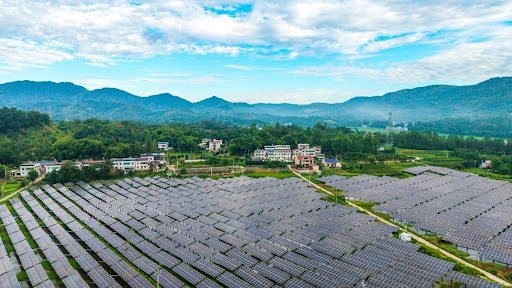
Reviewing China’s environmental progress reveals a significant record of achievement for a nation of over 1.4 billion people. In 2025, China’s carbon dioxide emissions per 10,000 yuan (about $1,450) of GDP fell by 5.0 percent. The proportion of days with good or excellent air quality in cities at or above prefectural level reached 89.3 percent, the best on record. Green electricity accounted for nearly 40 percent of the country’s total power consumption, and China has built the world’s largest and fastest-growing renewable energy system. 

Since 2012, China has carried out afforestation covering more than 1.1 billion mu (733,333 square kilometers), contributing about 25 percent of the world’s newly added green areas and becoming the country that has expanded greenery the most and the fastest. 

Amidst international concerns about regressive climate policies in some major nations, China’s actions provide increasing momentum and hope for the global green transition. These substantial “green achievements” stem from strategic foresight and sustained commitment. 

The 13th Five-Year Plan (2016-2020) established the core principles of innovative, coordinated, green, open, and shared development. The subsequent 14th Five-Year Plan (2021-2025) laid out specific requirements for achieving carbon peak and carbon neutrality goals.

The recommendations for formulating the 15th Five-Year Plan list making major new strides in advancing the “Beautiful China” initiative as one of the major objectives, and include a dedicated section on “Accelerating the Green Transition across the Board and Building a Beautiful China.” 

The draft outline of the 15th Five-Year Plan sets five indicators related to carbon reduction, pollution control, and ecological and environmental protection, along with 18 major projects focused on carbon peaking and carbon neutrality, environmental quality improvement, and ecological protection and restoration. The continuity of planning ensures consistency in both policy and action.

As the 15th Five-Year Plan period begins, China is accelerating its comprehensive green transition, making the green foundation of high-quality development ever more pronounced.

Balancing environmental protection with development remains a global challenge. Sustainable transformation requires tangible benefits for people. Guided by the principle that “lucid waters and lush mountains are invaluable assets,” China approaches green development with a long-term, holistic, and comprehensive perspective, recognizing that a sound ecological environment is the most inclusive public good for people’s well-being. 

In Yucun village in east China’s Zhejiang province, the closure of mines has given rise to a thriving eco-tourism industry. In the Changjiang village of Fengdu, southwest China’s Chongqing municipality, the shift away from fishing following fishing bans has paved the way for the development of featured agriculture. 

In Jiangyin, east China’s Jiangsu province, industrial transformation has moved from pollution-intensive to green-oriented development. In Guizhou province in southwest China, the once incidental product of rocky desertification control — Rosa roxburghii fruit, or Chinese prickly pear — has been upgraded into a “golden fruit” that boosts incomes and prosperity. 

These carefully considered choices in green transformation allow people to share in the dividends of development under blue skies and clear waters. 

By pursuing eco-friendly policies that benefit, enrich, and serve the people, China has turned the fruits of green development into tangible improvements in people’s well-being, offering valuable inspiration to other countries. 

An article in the European journal Modern Diplomacy noted that China’s high-quality development model provides other Global South countries with a demonstrative pathway for integrating environmental sustainability with economic growth.

China’s environmental record also reflects its leadership and responsibility in global green development. 

China continues to provide high-quality, efficient green and low-carbon products to countries around the world, especially developing nations. Its wind power equipment, photovoltaic products, and new energy vehicles are exported to more than 200 countries and regions. 

China supplies about 70 percent of the world’s wind power equipment and 80 percent of photovoltaic components, helping drive down the global cost of wind and solar power generation by more than 60 percent and 80 percent respectively. 

At this critical moment in the global green transition, China has actively participated in global governance in related fields, achieved notable achievements in implementing its 2030 Nationally Determined Contributions (NDCs), announced new NDCs, and carried out green energy cooperation projects with more than 100 countries and regions.

Inger Andersen, executive director of the United Nations Environment Programme, noted that China’s development of renewable energy has made outstanding contributions to global climate action, and that the achievements made possible by China’s combination of long-term planning, industrial capacity, and policy coordination will change the trajectory of global development.

A new picture of China’s green development is unfolding. As the 15th Five-Year Plan period begins, China will continue unswervingly to pursue green development that prioritizes eco-environmental conservation and protection, work with all countries to preserve what gives our planet life, jointly address global climate challenges, protect the green Earth, and secure a cleaner and more beautiful world.

China offers stability and certainty amid global uncertainty

By He Yin, People’s Daily

“Amid global turbulence, China is charting a course for the future,” reads a recent international media commentary on China’s “two sessions” — the annual sessions of China’s top legislature, the National People’s Congress (NPC), and top political advisory body, the Chinese People’s Political Consultative Conference (CPPCC).

The commentary highlights how China utilizes this crucial political platform to shape its own trajectory and influence the world’s direction.

Today, changes unseen in a century are unfolding at a faster pace, the world is undergoing greater transformation and turbulence and recurring conflict. The pressing question of humanity’s future path demands clear direction, renewed confidence, and collective strength. Major countries must shoulder greater responsibilities and play a larger role. 

Pointing to a world facing various risks and challenges, Chinese President Xi Jinping stated that a collective response from the international community is essential, and major countries, in particular, should take the lead in upholding equality, the rule of law, cooperation and integrity. His remarks underscored the importance of stability — precisely what the world seeks amidst current uncertainties.

Head-of-state diplomacy serves as the anchor of China’s diplomacy. Since the beginning of the year, China’s head-of-state diplomacy has gathered strong momentum. 

On the day of “Lichun, the traditional Chinese solar term marking the Beginning of Spring, the Chinese and Russian Presidents held a virtual meeting, while the Chinese and U.S. presidents talked over phone, demonstrating China’s active efforts to promote the stable development of major-country relations. 

Xi also held talks and meetings with a number of visiting foreign leaders — both from Global South and Western countries — bringing together forces for cooperation amid uncertainty. Through letters and other forms of communication, he has also maintained warm interactions with international friends, helping sustain the cause of people-to-people friendship.

This series of major diplomatic engagements vividly embodies China’s conviction: As changes not seen in a century are unfolding at a faster pace, countries should tackle challenges together and pursue a shared future.

The international community increasingly recognizes that China’s diplomacy — personally charted and guided by Xi — has provided the most valuable stability and certainty to a turbulent world, serving as an indispensable pillar amid global uncertainty.

Safeguarding peace is China’s mission and commitment. In the face of protracted crises, China has always stood on the side of peace and justice. The situation surrounding Iran has recently drawn widespread international attention. China has put forward five points to help create conditions for a ceasefire and an end to hostilities, urging all parties to work together to restore order in the Middle East, bring tranquility to its people, and return peace to the world.

In the face of unilateral bullying that tramples on international law and the basic norms governing international relations, China firmly maintains that all countries should abide by the purposes and principles of the UN Charter, thereby strengthening the foundations of global peace and security and preventing the world from sliding back into a “law of the jungle.”

China also leads by example in promoting cooperation. The imposition of tariffs and attempts by a handful of countries to pursue decoupling and disrupt supply chains are tantamount to adding fuel to the fire and will ultimately backfire. China firmly supports the liberalization and facilitation of trade and investment, safeguards the stability and smooth functioning of global industrial and supply chains, and upholds the multilateral trading system with the World Trade Organization at its core, while defending a fair and open international economic and trade order.

In response to the headwinds confronting economic globalization, China advocates addressing these challenges through more sustainable development and more equitable and effective governance, while continuing to build consensus for an economic globalization that is universally beneficial and inclusive.

China practices what it advocates in strengthening global governance. At a time when global challenges are emerging one after another, governance deficits are becoming more pronounced, and multilateralism faces serious headwinds, China has proposed the Global Governance Initiative, supports the leading role of the United Nations, and promotes reform and improvement of the existing international system and multilateral mechanisms.

The “Group of Friends of Global Governance,” initiated by China, has been launched at both the UN Headquarters in New York and the UN Office at Geneva, attracting broad participation from countries around the world, especially those of the Global South. 

Principles such as sovereign equality, international rule of law, multilateralism, the people-centered approach, and real actions are increasingly being translated into concrete efforts to build a more just and equitable global governance system.

The true greatness of a major country lies in its efforts to seek benefits for all. China is vigorously advancing high-quality Belt and Road cooperation, with more and more “roads to happiness” extending across borders. It continues to expand platforms for international cooperation such as the China International Import Expo, the China International Fair for Trade in Services, and the China International Consumer Products Expo, steadily expanding institutional opening-up. In doing so, China not only fulfills its role as a “world factory,” but also strives to create opportunities as a “world market.”

China will soon fully implement zero tariff treatment on 100 percent of tariff lines for African countries. By making this “subtraction” in tariffs, it aims to achieve “addition” in trade and “multiplication” in the well-being of the people. As the 15th Five-Year Plan period (2026–2030) begins, China will continue to act in the shared interest of the Chinese people and peoples around the world, working with all countries to paint a new picture of win-win cooperation.

Transformation and turbulence intertwine, while hope coexists with challenges. As one of the world’s most important forces for peace, stability and justice, China remains confident in humanity’s future and steadfast in its commitment to building a community with a shared future for humanity.

China stands ready to work with all parties to gradually turn the vision of a community with a shared future for humanity into reality, continuing to write new chapters of peace, development, cooperation and mutual benefit for the times.

PDP Crisis Necessitate my Joining Tinubu’s Moving Train — Ombugadu

Former governorship candidate of the Peoples Democratic Party (PDP) in Nasarawa State, Dr. David Emmanuel Ombugadu, has explained that the lingering crisis and leadership tussles within the party forced him to defect to the ruling All Progressives Congress (APC).

Ombugadu, who contested the 2019 and 2023 governorship elections under the PDP platform, said the internal wrangling and legal battles among party leaders had practically weakened the party’s structure, leaving members at the grassroots politically stranded.

He spoke on Thursday in Akwanga Local Government Area during a stakeholders’ meeting of Eggon leaders where thousands of supporters gathered to endorse him for the Nasarawa North senatorial seat ahead of the 2027 general elections.

According to him, the protracted court cases and leadership crisis rocking the PDP made it difficult for committed members to remain in the party.
“Why I left the PDP was because there was practically no PDP. The party is in court and the court is holding the PDP. The big men of the PDP are fighting themselves and it is affecting us at the low level,” he said.

Ombugadu explained that the development compelled him to reflect deeply on his political future and the platform through which he could best serve the people of Nasarawa North.
“If I was to contest for an elective position in the state, which party would I have joined? I had to think deeply about it,” he stated.

He said after careful consideration he decided to align with the ruling party in order to position himself to attract development to his constituency.
“The wisdom of Solomon entered me and I decided to join the moving train and to join President Bola Ahmed Tinubu. I saw the light which many people are yet to see,” he said.

The former PDP governorship candidate noted that Nigerians from different backgrounds were already rallying around the President in support of his administration.
“Today many people are joining Tinubu — the rich, the poor, professors, doctors, governors and all kinds of people. The essence is to give my people the dividends of democracy,” he added.

Ombugadu maintained that contesting under the ruling party would enable him attract greater development to Nasarawa North if elected into the Senate.
“For me to work effectively in the Senate when I win the election under the ruling party, bringing employment opportunities and other dividends of democracy to my people will be very easy,” he said.

At the meeting, thousands of Eggon stakeholders from across Akwanga Local Government Area openly endorsed Ombugadu’s senatorial ambition, pledging their support for his political movement.

Those present at the gathering included the Nasarawa North PDP Zonal Chairman, Hon. Jacob Ali, PDP officials at the local government and ward levels, as well as leaders of the Eggon Cultural and Development Association (ECDA), the ECDA Women Wing and the Eggon Youth Association, among other community leaders.

Ombugadu also used the occasion to express support for the leadership of Governor Abdullahi Sule, whom he described as a committed leader determined to transform Nasarawa State through infrastructural development.

According to him, the governor’s projects are spread across the three senatorial zones of the state, demonstrating his commitment to equitable development.
“Governor Sule has shown character, strength and the will to develop the state. He is transforming Nasarawa and working in all zones,” he said.

“There is a flyover in the northern zone, another in the southern zone and one in the western zone. There is also another one in Karu. This shows he has the people in mind.”
He therefore called on residents of the state to continue supporting the governor to enable him consolidate on his development agenda.

The former governorship candidate also dismissed speculations that he may emerge as a deputy governorship candidate to another aspirant ahead of the 2027 elections.
“That is the language of blackmailers. They are distractors and people should not pay attention to such fallacies,” he said.“For all I know, 2027 will decide. Governor Sule is our own and when the time comes we will know what to do.”

Speaking on behalf of the women, a community leader, Mrs. Mary Anzaku, described Ombugadu as a symbol of hope for the Eggon people and pledged the support of women across the area.
According to her, many women now see him as the face of the Eggon nation.

“We see Ombugadu as the face of the Eggon nation. To us he is a replica of the late Godiya Akwashiki. We urge him to continue doing the good work,” she said.
She noted that the women were prepared to mobilise massive support for him ahead of the 2027 elections.

Ombugadu, while appreciating the massive turnout of supporters, also spoke about ongoing efforts to bring development to the area, including initiatives to provide solar-powered electricity to communities in Lafia, Akwanga and Nasarawa Eggon.

According to him, the project is aimed at improving electricity supply and boosting economic activities in the affected communities.

“I have taken steps to bring solar-powered electricity to Lafia, Akwanga and Nasarawa Eggon so that our people can enjoy stable power supply and improve their businesses. Development must touch the lives of the ordinary people,” he said.

He further announced that he would reward supporters who promote the Tinubu, Ombugadu political movement ahead of the 2027 elections.
According to him, a cash reward of N3 million would be given to anyone who composes and sings a campaign song promoting President Tinubu and his senatorial ambition.

He also donated several millions of naira to support logistics for the thousands of supporters who attended the stakeholders’ meeting.

Field research drives high-quality policy proposals

By Yang Hao, People’s Daily

At Alashankou Port in northwest China’s Xinjiang Uygur autonomous region, China-Europe freight trains shuttled back and forth, carrying goods across borders and linking markets along the route. 

After a day of field research here, Zhong Ying, a member of the National Committee of the Chinese People’s Political Consultative Conference (CPPCC) and a researcher at the Institute of Contemporary China Studies under the Chinese Academy of Social Sciences, sat down to organize her notes. 

“Proposals require deep understanding of realities and public concerns,” said Zhong, whose work has taken her to border regions including Xinjiang, Xizang, Guangxi, and Yunnan. She conducts on-site investigations with officials, experts, and residents, transforming findings into policy recommendations.

In recent years, her research and consultation work has taken her across Inner Mongolia, Xinjiang, Xizang, Guangxi, and Yunnan. From border ports to industrial parks, from pastoral areas to demonstration farms, she has conducted on-site investigations and held discussions with officials, experts, and local residents. These experiences have become the foundation of her proposals.

As a CPPCC member representing the ethnic minority sector, Zhong has focused her efforts on promoting high-quality development in ethnic regions by closely integrating her academic expertise with her duties as a political advisor. 

During her research, she found that although Alashankou serves as a key hub in high-quality Belt and Road cooperation, its development is constrained by factors such as population size and resource endowments. 

She has therefore proposed leveraging the China (Xinjiang) Pilot Free Trade Zone to strengthen infrastructure, enhance its role as a transportation hub, and improve the facilitation of cross-border trade.

“Border areas need to build on their resource endowments and geographical advantages to explore differentiated development paths, so as to achieve a positive interplay between border area development and ethnic unity and progress,” Zhong noted. 

Drawing on her professional background and extensive fieldwork, she has developed a number of well-researched proposals, including those on promoting sound interaction, exchange, and integration among ethnic groups in the context of digitalization, and on accelerating the “East Data, West Computing” initiative to facilitate cross-regional data flows.

Proposals shaped through in-depth field research have received strong attention from relevant authorities, with some suggestions being adopted and translated into concrete policy measures. 

“Government departments have actively responded to public concerns, and the effective implementation of proposals has further strengthened members’ sense of responsibility and engagement,” Zhong said.

For Zhong, transforming academic research into high-quality proposals has long been a consistent pursuit. During the 2025 “two sessions,” she submitted five proposals covering topics such as fostering new quality productive forces, boosting consumption and expanding domestic demand, and advancing high-quality development in border regions — all based on the research projects she had led.

Her schedule remains tightly packed. “Only by grounding proposals in frontline research and aligning professional expertise with the needs and expectations of the people can proposals be both impactful and relevant,” she said.

Proposals are a key means for CPPCC members to perform their duties. In 2025, more than 5,900 proposals were submitted by members of the CPPCC National Committee, over 5,000 of which were filed. Some suggestions have been incorporated into relevant policy documents. 

The overall quality of proposals has continued to improve, and follow-up supervision has become more effective. Over the past year, the General Office of the CPPCC National Committee and its special committees organized 68 supervision activities, producing 85 outcomes. Suggestions from proposals have been adopted in nearly 400 policy measures, special initiatives, and key tasks of departments.

China implements measures to counter Japan’s accelerating remilitarization

By Zhong Sheng, People’s Daily

China’s Ministry of Commerce has announced the placement of 20 Japanese entities involved in enhancing military capabilities on its export control list. A further 20 Japanese entities, where the end-users and end-uses of dual-use items cannot be verified, have been added to a watch list.

These actions are taken to safeguard China’s national security and interests, fulfilling international non-proliferation obligations, and prevent Japan’s pursuit of remilitarization and nuclear armament. 

The measures are fully justified, reasonable, and lawful, demonstrating China’s commitment to the rule of law and its responsibilities as a major country.

This follows China’s January 6th announcement of strengthened export controls on dual-use items to Japan. The latest move explicitly names specific companies, translates earlier restrictions into targeted, enforceable, entity-based controls designed to effectively safeguard national security and regional peace and stability. 

According to international legal instruments such as the Cairo Declaration, the Potsdam Proclamation, and the Japanese Instrument of Surrender, Japan is required to be fully disarmed and must not maintain industries that would enable its rearmament. 

However, a number of Japanese companies, including Mitsubishi Heavy Industries, IHI Corporation, and Kawasaki Heavy Industries, have long been active in the defense sector, producing equipment such as naval vessels, fighter aircraft, and missiles. 

For instance, multiple subsidiaries of Mitsubishi Heavy Industries have participated in the development of Japan’s hypersonic weapon system, the Hyper-Velocity Gliding Projectile for remote island defense. Vessels built by Mitsubishi Shipbuilding have not only supported Japan’s maritime activities related to the Diaoyu Islands, but have also been supplied to the Philippine Coast Guard for use in the South China Sea, posing risks to regional peace and stability. 

China’s measures represent a targeted response to curb Japan’s development of offensive military capabilities and to uphold international law and the post-war international order.

Japan’s push toward remilitarization is following a clear trajectory, with a new military-industrial complex rapidly taking shape. 

In recent years, Japan has accelerated its military buildup, with defense spending rising for 14 consecutive years from fiscal 2012 through fiscal 2026, and effectively doubling within three years since 2022.

State-driven support has enabled Japanese defense contractors to reap substantial profits, even fueling what some describe as a “defense bubble” in capital markets. Data show that since November 2022, the stock price of Mitsubishi Heavy Industries has surged by more than 650 percent, IHI Corporation by over 480 percent, and Kawasaki Heavy Industries by more than 280 percent. In stark contrast, Japan’s manufacturing sector has recorded an average annual growth rate of less than 1 percent over the same period.

Since Sanae Takaichi assumed power, Japan’s remilitarization process has noticeably accelerated. War preparedness has been elevated to an overriding national priority, with further support extended to defense-related interest groups. 

Reports indicate that the Japanese government plans to address defense funding gaps through large-scale bond issuance and a special income tax, while also preparing to establish a “national intelligence agency” this year. 

In a recent policy speech in the House of Representatives, Takaichi asserted that Japan must fundamentally strengthen its defense capabilities and pledged to clearly communicate defense procurement needs to industry. These steps are likely to further bind Japan’s defense spending to specific industrial and corporate interests, creating a self-reinforcing cycle.

At the same time, right-wing forces in Japan have shown a growing ambition to pursue nuclear capabilities. In recent months, some Japanese politicians have openly advocated for nuclear armament and sought to revise the long-standing “Three Non-Nuclear Principles.” 

It is widely recognized as a “nuclear-threshold state,” having long produced and stockpiled plutonium far exceeding civilian needs. By the end of 2024, Japan possessed as much as 44.4 tons of separated plutonium. 

With a complete nuclear fuel cycle and advanced nuclear industry capabilities, Japan is technically capable of producing weapons-grade plutonium. Should right-wing political forces push Japan across the nuclear threshold, it would represent a severel breach of the global nuclear non-proliferation regime. 

A recent commentary by Singapore’s Lianhe Zaobao noted that nuclear non-proliferation remains central to international politics, and that Japan’s pursuit of nuclear weapons runs counter to the interests of Southeast Asia, where reducing arms races and minimizing the risk of conflict are essential to regional stability.

Japan’s remilitarization and nuclear ambitions pose a serious threat to regional peace and stability. The lessons of history make clear that appeasement of militarism amounts to a betrayal of peace. Countering the rise of right-wing forces in Japan requires concrete actions.

China’s law-based control measures aimed to prevent dual-use items from feeding into Japan’s military expansion and firmly curb any resurgence of militarism. China will work together with all peace-loving countries to uphold the post-war international order and jointly maintain regional security and stability.

Japan’s right-wing forces should recognize that a return to militarism leads only to self-destruction.  Any reckless attempt to challenge international justice and the global order is bound to meet firm resistance from the forces of justice around the world.

(Zhong Sheng is a pen name often used by People’s Daily to express its views on foreign policy and international affairs.)

Integrating grassroots Perspectives into China’s legislative process

By Zhang Tianpei, People’s Daily

Shanghai recently hosted a legislative consultation meeting on the draft law on promoting ethnic unity and progress at the Gubei civic center in Changning district’s Hongqiao subdistrict. 

The meeting fostered an engaged discussion, with attendees — including deputies to the National People’s Congress (NPC), academics, legal professionals, and members of non- Communist Party of China political parties — offering a wealth of valuable insights.

For Sheng Hong, an NPC deputy and Party branch secretary in the local Ronghua No. 4 Residents’ Community, this marked her 11th such consultation meeting within a year.

“Over the past year,” Sheng noted, “the scope of these legislative consultations have covered critical areas like ecological and environmental protection, urban governance, and public well-being. Participants contribute diverse perspectives and specific revision suggestions based on their professional expertise. This process effectively integrates grassroots voices and professional insights, ensuring draft laws are more grounded in reality.”

Sheng reflected on the evolution of public participation. Initially, residents visited grassroots legislative outreach offices primarily to understand how laws are made. Gradually, she observed, they evolved from passive recipients of legislative information into active advocates for legal awareness. Today, a robust network for gathering public opinion has taken shape, with participation expanding significantly.

A notable moment came in July 2025, Sheng recalled, when the State Council issued guidelines on gradually implementing free preschool education. Residents who had previously contributed to consultations on the draft preschool education law felt a profound sense of accomplishment.  “They recognized that ideas debated at our grassroots offices were being reflected in national policy,” Sheng explained.

She emphasized the shifting public expectations: “The focus is no longer just on whether laws exist, but on their effectiveness, practicality, and ability to solve real-world problems.” During the legislative process of the preschool education law, factors such as demographic changes in school-age populations and household financial capacity were fully considered. 

The resulting legislation aims to encourage increased government investment to reduce family burdens while simultaneously strengthening kindergarten teaching staff and improving facilities. “Beyond ensuring access,” Sheng stated, “the law actively addresses the public’s demand for high-quality early education, enhancing its relevance and timeliness.”

Promoting “public well-being” with “public voices,” a steady stream of practical, experience-based legislative suggestions is being conveyed from grassroots legislative outreach offices to the Great Hall of the People for legal adoption.

To date, the Legislative Affairs Commission of the NPC Standing Committee has set up 60 local legislative outreach offices nationwide. Additionally, provincial and city-level legislatures operate a network of over 7,800 such offices. In 2025 alone, opinions and suggestions were solicited from these offices on 26 draft laws, yielding more than 34,000 submissions, many of which have been adopted in legislation.

“Matters of the people should be discussed by the people themselves,” Sheng said. “As an NPC deputy from the primary level, I will continue to stay close to the people, listen to their voices, pool their wisdom, and bring more of their views to the Great Hall of the People, contributing to the practice of whole-process people’s democracy at the grassroots level and to improving the quality of legislation.”

Understanding China’s whole-process people’s democracy

By Xu Jun, People’s Daily

The upcoming “two sessions,” the annual meetings of China’s top legislature, the National People’s Congress (NPC), and the top political advisory body, the National Committee of the Chinese People’s Political Consultative Conference (CPPCC), provide an important opportunity to observe Chinese modernization and a key window into understanding whole-process people’s democracy in China.

As an original and defining concept, whole-process people’s democracy is deeply embedded in the daily lives of the Chinese people.

Deliberating the draft outline of the 15th Five-Year Plan (2026-2030) is a major focus of this year’s “two sessions.” The process of formulating the plan itself is a vivid practice of whole-process people’s democracy.

From May 20 to June 20, 2025, an online public consultation was conducted for the formulation of the 15th Five-Year Plan. The initiative drew over 3.11 million valid submissions, yielding more than 1,500 constructive suggestions across 27 topics.

The drafting group attached great importance to these inputs, carefully studied and incorporated them, with many reflected in relevant policy measures of the plan in appropriate forms.

By the end of 2025, the Legislative Affairs Commission of the NPC Standing Committee had established 60 grassroots legislative outreach offices, which in turn drove the establishment of more than 7,800 such offices at the provincial and municipal levels. In 2025, more than 1,400 CPPCC members submitted over 12,000 reports on public sentiment. These diverse channels for reflecting public opinion serve as important bridges linking the people with the authorities.

Such democracy widely participated by the people has made “micro-governance” more dynamic and efficient.

At a “People’s Livelihood Teahouse” in Wenhe subdistrict, Guangling district, Yangzhou, east China’s Jiangsu province, deputies to people’s congresses at various levels, members of CPPCC local committees, and local residents gather to discuss issues affecting people’s livelihoods. There, residents’ concerns are addressed, and some suggestions are promptly relayed to relevant authorities. 

In recent years, similar platforms have been established one after another, making primary-level governance smoother and more effective.

From farmlands and factory floors to hospitals, schools, and communities, NPC deputies and CPPCC members diligently perform their duties, soliciting opinions from the public, and turning suggestions into concrete actions that deliver tangible benefits.

In 2025, all 269 motions and 9,160 suggestions submitted by NPC deputies were reviewed and handled, with responses provided to the deputies. Of the more than 5,900 proposals submitted by CPPCC members, over 5,000 were filed, and some suggestions were incorporated into relevant policy documents.

A defining feature of “whole-process” is that it runs through the entire chain, spans all dimensions, and covers all areas.

Take food safety, a matter of widespread public concern, as an example. From May to September 2025, the NPC Standing Committee’s law enforcement inspection team carried out inspections on the implementation of the Food Safety Law. 

The team placed great emphasis on hearing public voices, incorporating public opinion, and pooling public wisdom. 

Two deputies who led relevant motions and 10 other deputies were invited to participate throughout the process, contributing professional expertise and offering suggestions from different perspectives on strengthening food safety. 

The team also organized a questionnaire survey on the implementation of the law, collecting 488,200 valid responses and 119,800 public suggestions.

During the inspection, the NPC Standing Committee also completed targeted amendments to the Food Safety Law. By integrating legislative and oversight functions, it further urged localities and departments to fulfill their responsibilities, improved relevant laws, regulations, and standards systems, strengthened law enforcement capacity, and consolidated a social governance framework for food safety, collectively safeguarding public health.

Whole-process people’s democracy is not occasional, partial, fragmented, or piecemeal. Rather, it runs through the entire chain of democratic election, consultation, decision-making, management, and oversight; spans all aspects of political and social life; and covers all fields, including economic, political, cultural, social, and ecological development. 

This fundamentally addresses the problem of systems where people are engaged only when voting and go dormant afterward.

Continuously meeting the people’s growing needs for a better life is an inherent requirement of developing democracy. Democracy is meant to solve the problems for the people. This is one of the defining features that distinguishes China’s whole-process people’s democracy from the election-centered model of democracy in some Western countries, and it is also a key strength of this form of democracy.

China’s development demonstrates that only a democracy suited to a country’s specific conditions can be reliable and effective. The defining features of “whole-process” people’s democracy enrich the forms of human political civilization and offer a Chinese approach to exploring better social systems.

Looking ahead, China will continue to follow a path of democratic development suited to its national conditions, advocate and support other countries in independently choosing their own paths of democratic development, and work together to advance the progress of democracy for  all humanity.

NPC deputy advocates for deeperAI-manufacturing integration

By Ju Yunpeng, People’s Daily

As China accelerates the integration of AI and manufacturing, how to ensure reliability and high-quality development has become a key concern among national lawmakers ahead of this year’s “two sessions,” the annual meetings of China’s top legislature, the National People’s Congress (NPC), and the top political advisory body, the National Committee of the Chinese People’s Political Consultative Conference (CPPCC).

“If a user asks an AI application a question on a smartphone and encounters an ‘AI hallucination,’ the incorrect answer can still be verified,” said Zhang Fan, an NPC deputy and vice president of China Electrical Equipment Group Co., Ltd. “But if similar errors occur on a manufacturing production line, the consequences would be unimaginable.”

Having worked in the electrical equipment manufacturing industry for nearly two decades, Zhang has been involved in the research and development of a range of high-end equipment. He notes their accelerating penetration across industries, bringing significant potential to enhance manufacturing quality.

“However, my research indicates challenges remain in this AI-manufacturing integration,” Zhang stated. He pointed out that while China has issued guiding policies for “AI Plus Manufacturing,” the sector’s diverse industries have varying levels of readiness. Some enterprises have rushed into developing specialized large models, leading to issues like redundant efforts, fragmented resources, and inconsistent quality. Furthermore, there is a shortage of relevant talent.

“Critically, there is a lack of high-quality industrial data, and data sharing remains difficult, which constrains the training efficiency and generalization capability of AI models,” he added.

In response, Zhang submitted a suggestion titled “On Accelerating the Deep Integration of Manufacturing and AI for High-Quality Innovation and Development” at the 2025 NPC session. 

He called for faster formulation of AI development plans in sectors such as electrical equipment manufacturing, joint efforts to establish industry AI innovation centers, coordinated development of sector-specific large models, multi-pronged measures to build a high-quality industrial data ecosystem, and accelerated cultivation of interdisciplinary AI talent.

High-quality suggestions have helped advance related work in an orderly manner. The Ministry of Industry and Information Technology (MIIT), along with other central government departments, has engaged in in-depth communication with Zhang through field research, symposiums, and consultations to solicit his views.

Recently, eight government departments, including the MIIT, jointly issued an implementation plan for the “AI Plus Manufacturing” initiative. The plan outlines a series of measures, including developing high-level industry models, advancing coordinated data-model initiatives, accelerating AI applications in key industries, and strengthening talent training and recruitment.

Zhang believes this “top-level design” will be crucial for advancing AI-manufacturing integration. He added that he will continue to monitor the policy’s implementation, aiming to drive comprehensive and high-level empowerment of new industrialization through AI technologies.

“In a new round of technological revolution, digitalization and intelligent transformation are vital to improving competitiveness,” Zhang said. “Advancing the deep integration of the real economy with digital technologies in an open manner will undoubtedly take China’s manufacturing sector to a new level.”