‘Handcraft trend’ showcases creativity of Chinese manufacturing

By Chen Bingxu, People’s Daily

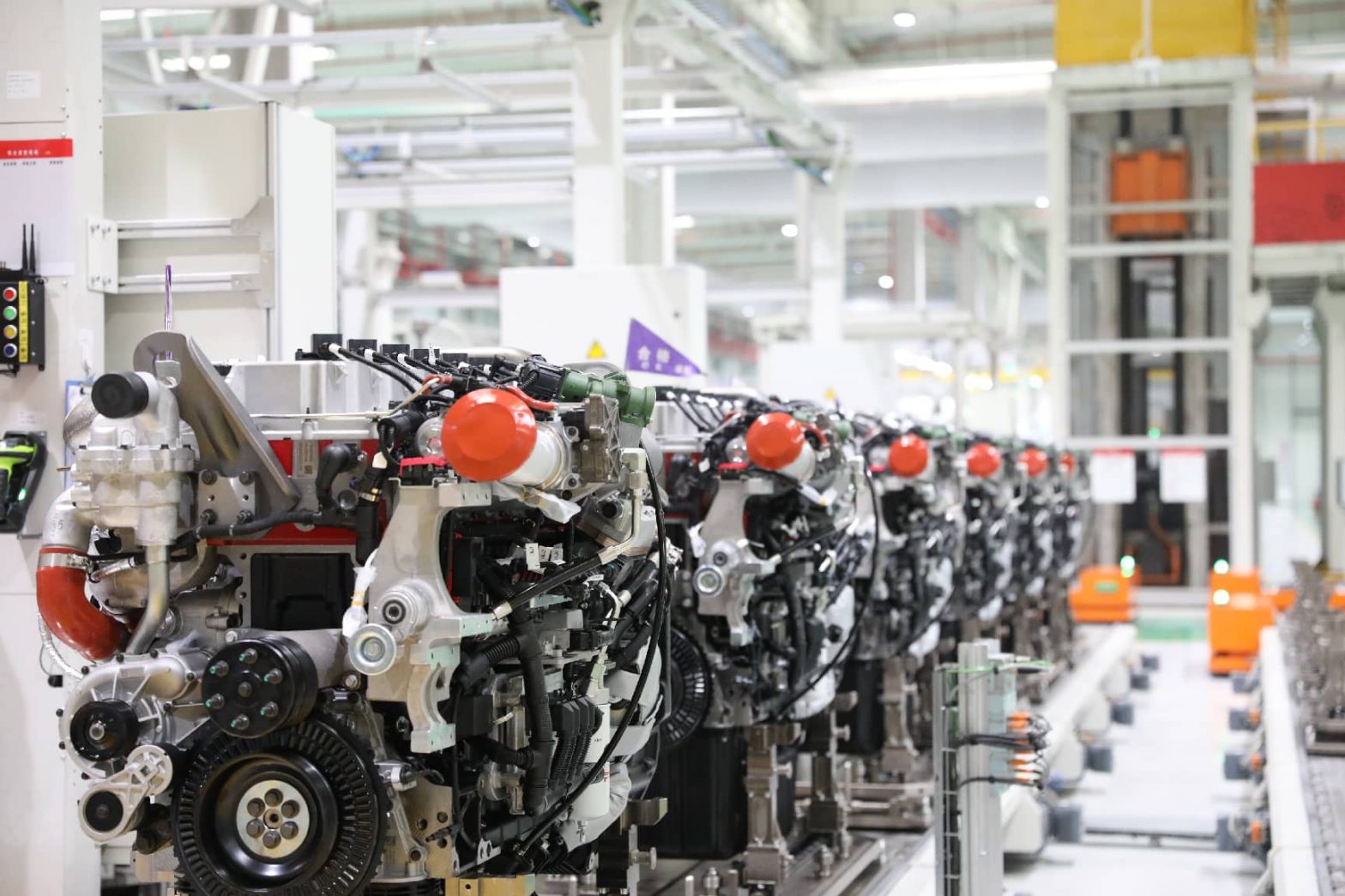
China is witnessing a growing wave of “handcraft” turning ordinary creativity into a testing ground for grassroots innovation. 

Think of a vlogger selling a smart massager built from foam rollers and small motors to customers worldwide; a high school student constructing a 10-kilometer-class rocket in his spare time; and a college student in his early 20s who started with discarded electronics from scrapyards, then designed, 3D-printed, and programmed a smart interactive mechanical suit. These are just a few examples of how hands-on creativity is flourishing across the country. 

At its core, innovation is about meeting social needs and advancing production through creative practice. In this context, “handcraft” does not imply something trivial or makeshift; rather, it refers to turning ideas into reality using one’s own hands, often using simple, accessible tools. 

By shaping, assembling, and refining, people watch how innovation takes form–as individual creativity aligns with real-world demand. As individual creativity intersects with market demands, three enablers accelerate this trend: democratized scientific knowledge, affordable materials, and user-friendly technologies.

Technological evolution demonstrates the movement’s impact. Back in 2009, 19-year old Wang Xingxing could not afford a 3D printer. Instead, he hand-built parts for just 200 yuan ($28.94) to make a walking bipedal robot. Today, his company Unitree Robotics produces humanoid robots performing intricate dance and martial arts routines — proving how modest experiments can yield major breakthroughs. True innovation emerges not exclusively from laboratories, but from persistent curiosity and execution.

This kinds of grassroots innovation is not merely a reflection of individual talent and effort; it also mirrors the broader opportunities of the times. 

Gao Xingyu, a member of Gen-Ze, built high-quality mecha models in his dorm room, gained market recognition, launched his own brand, and later partnered with a listed company. 

Elsewhere, a platform specializing in small-batch customization of electronic components reported nearly 8 billion yuan in revenue and close to 1 billion yuan in net profit in 2024, with strong year-on-year growth. 

In Huaqiangbei, one of China’s largest electronics markets in Shenzhen, Guangdong province, international makers collaborate with local engineers and solution providers, creating a powerful hub for innovation. 

In this way, handcraft culture serves as a bridge, linking different parts of the industrial chain and even bridging domestic and international markets. It also acts as a lever, facilitating the flow of resources and capital, and generating new momentum through the interaction between innovation and market demand.

Turning creative ideas into tangible results depends primarily on individual initiative, but supportive public services also play an important role. Across China, regions are working to unleash creativity by better understanding the needs of grassroots innovators and providing tailored support, . 

For example, Huaqiangbei has established innovation communities that offer full-cycle support for AI entrepreneurs, from idea incubation to market application. In Qingdao, east China’s Shandong province, a “solo entrepreneur + AI” platform integrates computing power, data, and technology resources to create a new model for innovation. 

By building ecosystems, integrating resources, and providing better tools and support, these efforts are helping more ideas take shape and driving both technological progress and industrial development.

Each innovation represents an upward step. By nurturing the seeds of creativity found in everyday life and unlocking the extraordinary potential within ordinary people, China’s manufacturing sector is moving toward a more dynamic and innovative future — one bold idea at a time.

Boao Forum for Asia highlights Asia’s growing role in driving global growth

By People’s Daily reporters

Asia’s economy continues to demonstrate strong resilience and positive momentum, making an important contribution to global growth and sustainable development, according to flagship reports of the Boao Forum for Asia (BFA).

The two reports, titled “The Asian Economic Outlook and Integration Progress Annual Report 2026” and “The Sustainable Development: Asia and the World Annual Report 2026,” respectively, were released at a press conference for the BFA annual conference 2026 held in south China’s Hainan province on March 24.

Attendees emphasized the immense potential of regional cooperation in Asia, calling for stronger confidence and joint efforts to address global challenges and inject greater certainty and positive momentum into an increasingly turbulent world.

“The Sustainable Development: Asia and the World Annual Report 2026” pointed out that Asia plays a key role in promoting global economic growth, advancing economic transformation, and improving global governance. 

Thanks to joint efforts across the region, Asia’s progress toward the United Nations 2030 Agenda for Sustainable Development ranks among the strongest worldwide, with 10 out of 17 goals advancing faster than the global average, further highlighting the region’s resilience.

Yose Rizal Damuri, executive director of the Centre for Strategic and International Studies, Indonesia, projected that Asia’s share of the world’s GDP will rise to 49.7 percent this year. “Asia is a major source of global trade demand and supply, and an important driver of global economic progress,” he said.

Across the region, infrastructure projects such as cross-border power grids and renewable energy initiatives are steadily advancing. Regulatory and standard connectivity is also expanding into emerging areas including digital trade and cross-border payments.

Holger Bingmann, vice chairman of the International Chamber of Commerce, emphasized that the real opportunity lies in restoring confidence in global free trade. “In an era of uncertainty, openness itself is a powerful strength,” he said. “We need to build new bridges to connect different regions and communities.”

Amid a complex and uncertain international landscape, “stability” has emerged as a recurring theme at the forum. Denis Depoux, global managing director of Roland Berger, observed that countries in the Asia-Pacific, including China, are committed to anchoring stability through peace, cooperation, and multilateralism, an approach that is crucial for boosting investor confidence and fostering a stable investment environment.

“The Sustainable Development: Asia and the World Annual Report 2026” highlighted a major shift in the global artificial intelligence (AI) landscape. As the center of AI development increasingly moves toward Asia, regional economies are leveraging their large digital populations, diverse application scenarios, and systematic policy support to transition from followers to leaders, reshaping the global AI innovation ecosystem.

Chen Lan, Managing Partner at Deloitte China Research Center, noted that China has developed a comprehensive framework spanning computing infrastructure, talent cultivation, industrial support, and governance. She called on Asian countries to strengthen talent exchange networks and build cross-border technology cooperation platforms to sustain long-term competitive advantages.

Michele Geraci, former undersecretary of state at Italian Ministry of Economic Development, shared a personal example of regional connectivity: “I can now travel from Laos to China by train, thanks to the China-Laos Railway. With speeds reaching 150 kilometers per hour, travel time has been significantly reduced.” In his view, cooperation in areas such as technology and infrastructure is helping drive shared development across Asia.

Over its 25-year history, the BFA has become a witness to the key milestones in Asia’s development. From the launch of the Regional Comprehensive Economic Partnership (RCEP) to the signing of the China-ASEAN Free Trade Area 3.0 Upgrade Protocol, and from the operation of the China-Laos Railway and the Jakarta-Bandung High-Speed Railway to the ongoing construction of Malaysia’s East Coast Rail Link, regional cooperation continues to gain momentum.

Former President of the Philippines Gloria Macapagal Arroyo described this year’s BFA annual conference as a milestone event. As China’s global influence grows, she said, the forum is playing an increasingly prominent role as a platform for dialogue among political, business, and academic leaders from across Asia and beyond.

“Countries across Asia hope to further advance integrated economic cooperation,” said Kairat Sarybay, Secretary General of the Conference on Interaction and Confidence Building Measures in Asia. He warned that geopolitical tensions, uncertainties in international trade, and rising protectionism pose challenges to global development, and that advancing economic integration in Asia will help boost confidence among all stakeholders.

BFA Secretary General Zhang Jun emphasized that the forum remains rooted in Asia while embracing the world, committed to advancing regional economic integration, strengthening exchanges and cooperation, and deepening mutual understanding and trust.

While acknowledging that the path toward economic integration and sustainable development will inevitably involve challenges, Zhang stressed that with strong confidence, solidarity, and perseverance, Asia can continue to move toward high-quality development and build a new growth paradigm that supports the “Century of Asia.”

Engr. Sule Ahmed Abdul-Aziz Reappointed TCN MD, Earns Nationwide Praise for Power Sector Leadership

The Senior Staff Association of the Transmission Company of Nigeria (TCN) has hailed the reappointment of Engr. Sule Ahmed Abdul-Aziz as Managing Director by President Bola Ahmed Tinubu, emphasizing his transformative impact on Nigeria’s electricity sector and lauding the President for the decision.

Mr. Solomon Kigbo, representing the association, said TCN under Engr. Abdul-Aziz has shown “remarkable dedication to strengthening the backbone of electricity delivery across Nigeria.” He noted that despite the sector’s complex infrastructure demands and growing energy needs, the company has made consistent progress, embracing innovation and resilience.

Kigbo highlighted TCN’s major achievements, including the expansion and modernization of the national grid. “Through strategic investments in transmission lines, substations, and advanced technologies, the company has improved the stability and reliability of power supply nationwide,” he stated. He added that these efforts have reduced system disruptions and enhanced the efficiency of electricity distribution companies relying on TCN’s network.

He further praised the company’s commitment to infrastructure development, citing upgrades to aging equipment and the construction of new transmission corridors as proactive measures to meet Nigeria’s growing energy demands.

Public affairs analyst Alhaji Usman Abdullahi noted TCN’s focus on human capital development. “By investing in staff training, capacity building, and technical expertise, the organization has fostered a workforce capable of meeting modern energy challenges,” he said, adding that professionalism and continuous improvement have translated into better service delivery and operational excellence.

Barrister Abubakar Usman, leader of the Nigeria Youth Patriotic Front, lauded TCN’s adoption of modern technologies and international best practices. Speaking to journalists in Lagos, he said these measures have improved grid management, system monitoring, transparency, and overall performance. He described TCN as a “shining example of commitment and progress within the nation’s power sector” and praised President Tinubu for appointing a “first-class material” to lead the country’s electricity sector.

Meanwhile, Comrade Williams Asukwo, chairman of the Nigerian Project Initiative, called on critics of the reappointment to set aside differences and join efforts in strengthening Nigeria’s power infrastructure. “Yes, there must be opposition, but what is better than cooperation and understanding?” he said, urging all stakeholders to unite for a reliable and robust electricity network.

The reappointment of Engr. Sule Ahmed Abdul-Aziz, combined with widespread praise for his leadership and TCN’s achievements, reflects public confidence in both the Managing Director and President Bola Ahmed Tinubu’s decision to retain a leader capable of advancing a stable and reliable power supply for Nigerians.

Coalition of Civil Society Groups in Nigeria, 360 other groups hail Jimoh Ibrahim’s appointment as super envoy

***Say appointee a true Nigerian, global citizen fit for the role

A coalition of civil society groups in Nigeria, in collaboration with the National Good Governance Advocacy Network (NGGAN) and 360 other organisations, have thrown their weight behind the appointment of Dr. Jimoh Ibrahim as Nigeria’s Permanent Representative to the United Nations.

The groups made the declaration at a world press conference in Abuja, describing the appointee as a true Nigerian and global citizen well-suited for the demanding diplomatic role.

It described Dr. Ibrahim’s selection as a strategic decision that reflects competence and aligns with Nigeria’s aspirations for stronger global engagement.

Dr. Emmanuel Agabi, Convener of the Coalition, stated that the gathering was convened “to affirm our confidence in his capacity to represent our country with distinction.”

He emphasised that the address was “not a rebuttal driven by sentiment, but a statement grounded in facts, perspective, and national interest.”

The Convener added: “The position of Permanent Representative to the United Nations is one of immense responsibility. It demands more than presence. It requires intellect, experience, negotiation skills, and a deep understanding of global systems.”

He noted that in Dr. Jimoh Ibrahim, Nigeria has a figure who embodies these qualities through his blend of enterprise, intellectual depth, and public service.

The statement added: “Dr. Ibrahim has built institutions across various sectors as a businessman, contributing to economic development and creating opportunities for Nigerians. His legislative experience includes serving as Senator representing Ondo South Senatorial District, where he actively participated in national policy discourse.

“He served on key Senate committees such as Appropriations, Finance, Gas, Education, NDDC, Capital Market, Diaspora and NGOs, Trade and Investment, Housing, and Niger Delta.

“Beyond national politics, Dr. Ibrahim served as Nigeria’s Representative in the ECOWAS Parliament and as an Executive Member of the Pan-African Parliament. These roles provided him with direct exposure to regional diplomacy, multilateral engagement, and continental policy coordination.”

The coalition highlighted his academic pursuits and intellectual contributions, describing him as a leader who combines practice with thought and experience with reflection.

The groups stressed that such experience equips Dr. Ibrahim with the insight required to operate effectively within the United Nations system, where diplomacy relies on negotiation, consensus building, and strategic engagement.

They affirmed that Nigeria requires representatives who can engage, interpret, and influence global discourse, and that Dr. Jimoh Ibrahim fits that profile.

Accoding to them, President Bola Ahmed Tinubu’s decision to appoint Dr. Ibrahim reflects a commitment to selecting individuals based on competence, experience, and strategic value.

The coalition noted that the administration has prioritised reforms, institutional strengthening, and global repositioning, objectives that demand capable hands and informed minds.

Dr. Emmanuel Agabi stated: “Leadership is defined not only by policies but by the quality of individuals entrusted with responsibility.”

He added that the appointment “is a decision rooted in judgment. It is informed by an understanding of the demands of global representation. It is aligned with Nigeria’s aspiration to engage more effectively on the international stage.”

The coalition urged Nigerians to avoid premature conclusions that undermine institutional authority and called for a national discourse guided by balance, scrutiny, fairness, and recognition of merit.

It emphasised that strong democracies encourage criticism but also protect fairness and support decisions that serve long-term national interests.

The groups expressed confidence that Dr. Ibrahim’s experience, exposure, and intellectual depth position him to contribute meaningfully in the role.

They called for a culture that supports capable individuals and promotes national progress, while reaffirming the important role of civil society in providing responsible and objective scrutiny.

The civil society coalition urged all stakeholders to support leadership decisions that strengthen Nigeria’s voice in the international community and called on Nigerians to remain focused on unity, progress, and collective national development.

CWAI Commends Federal Fire Service CG Olumode for Strategic Direction, Institutional Reforms

The Citizens Watch Advocacy Initiative (CWAI) has praised the Controller General of the Federal Fire Service (FFS), Olumode Samuel Adeyemi, for his strategic leadership and efforts to consolidate developmental programmes within the agency, describing the result as a viable, accountable, and sustainable institution.

In a press release issued from Kaduna, the Director of Media and Stakeholder Engagement of CWAI, Mahmud Bello, said that since CG Olumode assumed leadership, the Federal Fire Service has recorded milestones never before seen in its history.
These include prompt payment of salaries, emoluments, and allowances; personnel promotions; improved fire policy doctrines and safety measures; enhanced advocacy and awareness campaigns; elevated staff morale and esprit de corps; seamless public-private partnerships with contractors and stakeholders; and robust inter-agency collaboration with sister disaster management agencies.

“The story at the Federal Fire Service has changed for the better — judging by personnel productivity and policy direction,” Bello stated, adding that many civil society organisations, faith-based groups, and stakeholders share this assessment.

CWAI noted that the present management has upgraded the fire academy, built institutional capacity, and carried out wide-ranging reforms. Personnel and officers now attend courses, seminars, and workshops domestically and internationally to improve manpower development skills. Most recently, Course 06 cadet officers passed out from the National Drug Law Enforcement Agency’s (NDLEA) training school.

The service has also launched a novel collaboration with the Nigerian Defence Academy (NDA) to run a Post-Graduate Diploma and Master’s Degree programme in disaster and risk management, described by CWAI as a source of pride for both institutions.

The Federal Fire Service has been building strategic partnerships with organisations including NEXIM Bank, the Economic and Financial Crimes Commission (EFCC), the National Emergency Management Agency (NEMA), the Atomic Energy Commission, and Transcorp PLC, among others. During a courtesy visit to NEXIM Bank, FFS management proposed integrating comprehensive fire safety frameworks into export-driven projects, with a focus on risk assessment, safety compliance, and emergency preparedness.

At the Atomic Energy Commission, the FFS leadership called for a robust, specialised fire and emergency response framework for nuclear-related incidents, to ensure that Nigeria’s growing atomic energy and research infrastructure remains safe.

Transcorp PLC received fire safety certification following successful emergency drills conducted jointly by Transcorp personnel and FFS officers. In engagements with the BUA Group under the Abdul Samad Rabiu Africa (ASR Africa) initiative, the service sought private sector backing to close critical gaps in Nigeria’s fire emergency system. CG Olumode was direct in naming those gaps: inadequate fire station coverage, limited firefighting equipment, and insufficient emergency medical response capacities.

“Improving response time is not optional; it is essential to saving lives. Expanding fire station networks and strengthening emergency medical services must be treated as national priorities,” the CG said. He called for joint operational drills and simulation exercises, structured training programmes for fire personnel, and community-level fire safety sensitisation under a structured partnership with ASR Africa.

CWAI also commended CG Olumode’s immediate response to a major inferno at the Singa Market in Kano State, as well as responses to incidents in other states, describing his approach as a model of proactive national service. On-the-spot assessments carried out across the country were cited as evidence of administrative responsibility and operational diligence.

In its statement, CWAI expressed confidence in CG Adeyemi’s leadership style, open-door policy, discipline, strategic engagement with civil society and the media, and his fight against indiscipline among staff. Acknowledging the paucity of funds allocated to the service, the organisation called on relevant authorities to improve the FFS budgetary allocation, arguing that the present management is doing its utmost to reposition and rebrand the service. “CWAI passes a vote of confidence in the leadership for its consolidation process and anti-corruption stance,” the statement concluded.

Dogara Felicitates Christians at Easter, Calls for Reflection on Unity, Renewal, and National Progress

Rt. Hon. Yakubu Dogara, CFR, former Speaker of the House of Representatives and Chairman of the Board of the National Credit Guarantee Company Limited (NCGC), has extended heartfelt Easter greetings to Christians across Nigeria and the world, urging them to embrace the season’s profound lessons of sacrifice, renewal, and unity.

Dogara described Easter as the most significant celebration in Christendom, commemorating the resurrection of Jesus Christ — the cornerstone of the Christian faith. He noted that the resurrection is not only a triumph of life over death but also a powerful reminder that despair can be overcome by hope, hatred by love, and division by unity.

“Easter teaches us that no matter the trials we face, victory is assured through faith. It is a time to renew our commitment to love, service, and unity,” Dogara stated. He emphasized that the message of Easter is particularly relevant in today’s world, where communities and nations are challenged by divisions, conflicts, and uncertainties.

According to him, Easter is more than a spiritual commemoration; it is a call to action. It challenges believers to embody compassion, forgiveness, and selflessness in their daily lives. “The resurrection of Christ is a call to rise above bitterness and strife, to extend hands of fellowship to one another, and to work together for peace and prosperity,” he said.

Dogara further stressed that the values of Easter — sacrifice, redemption, and renewal — are also the values that build strong societies. He urged Nigerians to draw inspiration from the season to strengthen bonds of brotherhood, promote justice, and ensure that no one is left behind in the pursuit of national progress.

He noted that Nigeria, like many nations, is at a crossroads where unity and collective responsibility are urgently needed. “If we allow the spirit of Easter to guide our actions, we will rise above ethnic, religious, and political divisions. We will build a nation where justice prevails, where peace is sustained, and where prosperity is shared by all,” Dogara remarked.

On behalf of his family and the National Credit Guarantee Company Limited, Rt. Hon. Dogara wished all Christian faithfuls a joyous Easter celebration filled with peace, blessings, and renewed strength. He prayed that the season would inspire believers to live as beacons of hope in their communities and to continue to uphold the virtues of love and service.

Happy Easter!

Political Turmoil in Taraba: Allegations of Tribal and Religious Blackmail Rocks Likely Consensus Candidacy

By Daniel Mtindiga, Jalingo

Mr. Hamidu Bakoji has leveled serious allegations against the likely consensus candidate for the Ardo-Kola, Karim-Lamido, and Lau Federal Constituency, accusing incumbent lawmaker Honorable Mohammad Audu Lauya of exploiting religious and tribal sentiments to manipulate State and party leadership despite alleged incompetence and poor human relations.

Bakoji claims Lauya lacked a solid structure before becoming a Member of the House of Representatives and failed to build one during his three-year stay in the NASS. He warns that re-nominating Lauya would be a mistake, potentially costing the APC the seat. He appointed out that some people close to the leadership are more comfortable with him as a light-weight politician to put off heavyweight like Sani.

The controversy deepens with Bakoji urging the governor to watch and analyze closely the voting patterns come 2027 general elections and observe the tribal and religious voting pattern, predicting the Wurkum-Muslim community may reject the governorship candidate if a Muslim candidate is on the ballot.

“This isn’t democracy,” Bakoji declared, criticizing the imposition of unpopular candidates. Further intrigue surrounds the alleged sidelining of former Acting Governor, Senator Sani Abubakar Danladi, rumored to be eyeing a Senate seat for Taraba North.

Bakoji claims the state and party leadership are using Lauya to block Danladi, a Wurkum Muslim, who is growing desperate. The situation is adding layers of religious and tribal tension to the power struggle.

As tensions rise, observers question whether internal party machinations will backfire, handing victory to opposition forces in the upcoming elections.

Open Letter to His Excellency, Prof. Babagana Umara Zulum

Your Excellency,

Permit me, sir, to first commend your enormous achievements in restoring Borno State from the devastating effects of insurgency. Through your long-term development plans and committed leadership, you have taken the state to greater heights. As your tenure gradually draws to a close in the coming months, your name has already been firmly engraved in history through your impactful projects and leadership.

Your Excellency, it is an undeniable fact that leadership comes with great responsibility. One of the most important tasks of a leader is identifying a worthy successor who will sustain and build upon the legacy you picked from the Vice President, HE Kashim Shettima and yours as well. The people of Borno are eager and hopeful to see who will emerge as your successor. While I believe that consultations are ongoing on this subject matter, I humbly wish to contribute my thoughts for your consideration.

It would be a commendable milestone in your administration to consider a successor from Southern Borno, as a way of promoting inclusivity and giving the region a fair opportunity to occupy the highest office in the state. Secondly to be less ambitious, considering that the Southern Borno has historically held the position of Deputy Governor, I respectfully appeal that you and the APC consider a Christian candidate to fit in that position.

Either of these considerations would further strengthen your legacy as a fair and visionary leader.

It is my sincere prayer that you complete your tenure in good health. May God grant you the wisdom and strength to continue your efforts in restoring peace and ensuring the protection of lives and property across the state.

Long live Borno State.
Long live the Federal Republic of Nigeria.

Yours faithfully,
Wadzani Jabani DAGALA.

Dogara Demands DSS Clampdown on False Facebook Publication Designed to Tarnish His Reputation and Incite Public Disorder

Rt. Honourable Yakubu Dogara, former Speaker of the House of Representatives, has issued a powerful petition to the Department of State Services against Dr. Tsiga, accusing him of fabricating and spreading a malicious statement on Facebook that is capable of igniting hatred, public unrest, and reputational destruction. The petition, prepared by his legal counsel J.J. Usman, SAN & Co., describes the publication as a reckless and dangerous act calculated to mislead Nigerians and drag Dogara’s name into ridicule and odium.

Dogara’s legal team revealed that Dr. Tsiga falsely attributed to him a statement in Hausa which, when translated, reads: “Nigerians must vote for Tinubu, even if it means the country will collapse.” Dogara categorically denied ever making such remarks, branding the publication as a wicked distortion of democratic principles and a deliberate attempt to portray him as an advocate of coercion. He stressed that the falsehood was not an innocent mistake but a malicious fabrication designed to provoke hostility, resentment, and rancor against him in Nigeria’s already volatile political climate.

The petition insists that imputing such undemocratic views to Dogara is a direct assault on his integrity and credibility, exposing him to public antagonism and bitterness. It describes the act as a calculated smear campaign intended to destroy his reputation and mislead the public into believing he supports anti-democratic positions. Dogara’s counsel emphasized that the publication is not only defamatory but also a dangerous weapon of misinformation capable of destabilizing the democratic process and inflaming public sentiment.

Citing the Cybercrimes (Prohibition, Prevention, etc.) Act, 2015, Dogara’s legal team declared that Dr. Tsiga’s actions fall squarely within the ambit of criminal offenses. Section 24(1)(b) criminalizes the intentional transmission of false or offensive messages intended to cause annoyance, insult, or hatred, while Section 24(2)(a) and (c) prohibit knowingly false messages that cause reputational damage or fear. By disseminating the fabricated statement via Facebook, the petition argues, Dr. Tsiga engaged in cyberstalking and the deliberate spread of false information, with clear intent or reckless disregard for the devastating consequences.

Dogara’s petition calls on the DSS to act swiftly and decisively by inviting and interrogating Dr. Tsiga, conducting a thorough investigation into the origin and spread of the false statement, and prosecuting him or taking other appropriate legal measures to serve as a deterrent to others who may attempt similar acts. The petition underscores that this matter transcends personal injury, as such false publications have the potential to destabilize Nigeria’s democratic process by spreading misinformation and inflaming divisions among citizens.

Dogara emphasized that his reputation has been painstakingly built over years of public service, anchored on integrity, responsibility, and respect for democratic values. He described the publication as a vicious and calculated attempt to drag him into disrepute and mislead the public. He urged the DSS to rise to the occasion by safeguarding national security and curbing the spread of false and inflammatory information online, warning that failure to act decisively would embolden others to weaponize social media against respected public figures and institutions.

In conclusion, Dogara expressed confidence in the DSS’s commitment to protecting Nigeria from the dangers of misinformation and cybercrime. He insisted that individuals who deliberately spread falsehoods must face the full weight of the law, not only to protect his personal reputation but also to preserve the integrity of Nigeria’s democratic process. The petition serves as a stark reminder of the growing menace of malicious online propaganda and the urgent need for strong institutional action to ensure that such reckless acts do not go unchecked.

Large flying population reflects high-quality development of civil aviation in China

By Li Xiaojin

The total number of passenger trips across China during the 40-day 2026 Spring Festival travel rush reached 94.39 million, up 4.6 percent year on year, setting a new record high for the same period in history, statistics from the Civil Aviation Administration of China show.

One figure stands out in the growth of passenger travel: by 2025, China’s total flying population had exceeded 500 million, making it the largest in the world.

Flying population is the number of people who have taken at least one flight during the statistical period. It serves as a key barometer of national and regional economic vitality, reflecting a country’s economic activity and the disposable income of its residents.

From a micro perspective, it also benchmarks the quality of civil aviation services, measuring the sector’s ability to meet consumer demands in safety, capacity, and service quality

China’s position at the top of the global flying population rankings is attributed not just to its large population but also to its robust economic growth and the advanced development of its civil aviation sector. 

Thanks to the growing role of consumption as a key driver of economic growth in China, cross-regional business connections, cultural tourism, and other economic activities have thrived, fueling robust demand in the civil aviation market.

Particularly, many third- and fourth-tier cities, along with remote regions, are seeing an influx of tourists facilitated by the civil aviation sector.

During this year’s Spring Festival travel rush, flight bookings for destinations like Altay in northwest China’s Xinjiang Uygur Autonomous Region, Beihai in south China’s Guangxi Zhuang Autonomous Region, and Mangshi in southwest China’s Yunnan province increased by 44 percent, 24 percent, and 22 percent, respectively, according to data from online travel platforms.

Meanwhile, the civil aviation sector has proactively handled passenger traffic by continuously improving flight safety and punctuality, expanding its air route network, and introducing a range of differentiated offerings, such as culture-and-tourism integrated products, air shuttle services, and air-rail intermodal options, better catering to consumers’ personalized and diverse travel demands.

A large flying population positively impacts China’s economic and social development in many ways and helps foster new competitive advantages.

For the aviation industry, steady growth directly benefits aeronautical equipment manufacturing. By the end of 2025, China’s civil aviation fleet included 220 domestically built aircraft in operation, an increase of about 30 from the previous year.

This milestone is driving upgrades across related industrial chains, including aircraft engines, aviation materials, and onboard equipment, accelerating the development of China’s aviation manufacturing sector.

From the perspective of expanding domestic demand, safe, convenient, and cost-effective civil aviation services continue to support business and cultural tourism, foreign trade, and logistics.

For example, during the 2025 Jiangsu Football City League in east China’s Jiangsu province, Nanjing Lukou International Airport in Nanjing, the provincial capital, saw passenger traffic rise by about 29 percent year on year, while Yangzhou Taizhou International Airport in Yangzhou recorded an increase of roughly 21 percent year on year. These figures reflect the civil aviation sector’s notable role in driving consumption.

From the perspective of spillover effects, areas surrounding airports experience relatively rapid economic growth. According to statistics from Civil Aviation University of China, in the first three quarters of 2025, the average GDP growth of cities hosting airports nationwide reached 7.5 percent. This growth is closely linked to airports driving and high-value-added industries in surrounding areas.

Looking ahead, China’s flying population still has considerable room for growth. Young travelers are emerging as a key user group for civil aviation services, with the proportion of teenagers aged 13-18 taking their first flight rising significantly. At the same time, senior travelers is traveling more frequently and covering longer distances. During this year’s Spring Festival holiday (Feb.15-23), first-time flight passengers aged over 60 increased by 20 percent on some major travel platforms.

Despite having one of the world’s largest flying populations, China’s civil aviation sector still has room to improve operational efficiency and profitability compared to global leaders. There is increasing demand for more personalized, diverse, and high-quality services delivered through smart solutions centered on passengers and cargo. Leveraging technologies like artificial intelligence (AI) to empower airlines, airports, and air traffic management, while strengthening airspace resource safeguarding capabilities, will be crucial.

From a long-term perspective, China’s flying population of over 500 million is just the beginning. In the first two months of this year, China’s civil aviation sector welcomed 8.38 million new first-time air passengers, according to statistics from TravelSky, an information technology service provider for China’s civil aviation and travel industry.

With domestic demand expanding rapidly, a more comprehensive industrial system, and a higher level of openness, China is well-equipped to maintain its status as the world’s largest flying population for years to come.

(Li Xiaojin is director of Aviation Economics and Improvement Research Institute at Civil Aviation University of China. This article is based on an interview Li had with People’s Daily reporter Qiu Chaoyi)