China sees intensive, extensive development of opening up in past 10 years

By GuXueming, Zhang Dan

Opening up is a fundamental policy of China, as well as a hallmark of contemporary China. Following the introduction of the reform and opening up policy in 1978, China has fully grasped the opportunities brought about by economic globalization and constantly expanded opening up, making a historic change in its relations with the rest of the world.
Over the past 10 years, China has worked to change its opening up pattern from one based on the flow of products and factors to one based on institutions and rules. A new system for a higher-standard open economy has taken shape.
The country witnessed rapid growth in exports of high-technology, high-quality and high-value-added products. From 2013 to 2021, annual export growth of high-technology products stood averaged 5.1. The comparative advantages of Chinese exports are more and more driven by innovation, rather than factors.
Thanks to the improvement in both the volume and quality of inbound foreign investment, China’s high-tech industry lifted its actual use of foreign capital from 140.9 billion yuan ($20.08 billion) in 2016 to 346.9 billion in 2021, with an average annual growth of 19.7 percent. More and more multinational companies are setting up headquarters, R&D centers and purchasing centers in China.
China has been accelerating the building of a new system for a higher-standard open economy. Since 2013, the country has set up 21 pilot free trade zones (FTZs), and they have seen their successful practice in 278 cases of innovation in institutional reform promoted at the national level.
The number of items on the national and FTZ negative lists has been downsized to 31 and 27, respectively, which effectively activated the energy, impetus and potential of reform and innovation.
The construction of the Hainan Free Trade Port is in steady progress. A tax system that is applicable to high-level free trade ports is being established step by step according to the principles of zero tariff, low tax rate, streamlined tax structure, strengthened law enforcement, and phased implementation, to enhance trade liberalization and facilitation.
In 2020, China ranked 31st among 190 economies in the World Bank’s ease of doing business index, rising from 96thin 2013 and becoming one of the fastest-growing economies in the world.
Over the past 10 years, China has promoted reform, development and innovation through opening up, seeing continuous improvement in the quality of its economic development.
By advancing supply-side structural reform through high-level opening up, optimizing imports and improving the quality of domestic supply by exploiting domestic and foreign innovation factors, China is providing products and services of higher quality to the global market and promoting mutual reinforcement between the domestic and international circulations. China’s efforts further optimized factor allocation in industries, accelerated industrial restructuring and raised the quality of economic development.
The added value of the service sector accounted for 53.3 percent of China’s GDP last year, up from 46.1 percent in 2013, maintaining an important engine driving economic growth. The country’s manufacturing industry also saw a significant rise in its comprehensive capability and international influence. The share of the added value of China’s manufacturing industry in the world increased to nearly 30 percent in 2021 from 22.5 percent in 2012, which has consolidated the fundamentals for China’s economic development.
Over the past 10 years, China has adhered to win-win cooperation and made unswerving efforts to build an open world economy despite the headwinds of de-globalization.
Facing unstable global recovery, rising de-globalization, as well as profound changes and a pandemic both unseen in a century, China has worked to stabilize foreign trade and foreign investment, and improve the management system for foreign investment. It has boosted confidence in global recovery while pushing for the healthy development of its own economy.
Between 2019 and 2021, the average annual growth of China’s actual use of foreign capital stood at 10.8 percent, 9.1 percent higher than the global average. During the same period, the average annual imports growth was 13.7 percent, 5.7 percentage points higher than the global average.
China’s contribution to global economic growth exceeded 30 percent for years, and the country, with a minor rise in its export prices, is alleviating global inflation, serving as an important force driving global recovery.
China follows a principle of extensive consultation, joint contribution and shared benefits and promotes high-quality development of the Belt and Road Initiative, which not only brings win-win benefits to participating countries, but also enhances the wellbeing of their people.
Responding to the international aspiration for more equitable, sustainable, and secure development, China proposed the Global Development Initiative and the Global Security Initiative for building a community with a shared future for mankind. The two initiatives have been warmly responded by over 100 countries.
The development of China in the past 10 years has fully indicated that opening up is the path China must take to achieve prosperity and development. China’s door of opening-up will not be closed and will only open even wider.
Facing the future, China will take advantages of its super large market, drive high-quality development with high-level opening up, and further integrate itself into the world to stabilize global trade and investment, world economy and people’s confidence. With the outcomes ofhigh-level opening up, the country will benefit not only the Chinese people, but also the people ofthe rest of the world.

Bature ya kashe masoyi a Kano

By Joyce Babayeju

Kungiyar ‘Yan Kasuwa a Kano sun yi Allah-wadai da kisan Ummulkulthum Buhari da wani dan kasar waje da ke zaune a Kano ya yi.

Martanin ‘yan kasuwar Kano ya biyo bayan zargin da ake zargin wani dan kasar waje ne ya daba wa masoyinsa wuka har lahira a unguwar Kuntau da ke unguwar Janbulo a cikin birnin Kano.

 Ummulkulthum Buhari, an bayyana shi a matsayin matashiya mai shekaru 23 da ta kammala karatun kimiyyar noma a Jami’ar Kampala, Uganda.

A cikin wata sanarwa da Wakili Kano Mista Mikre Zhan ya sanya wa hannu a madadin ‘yan kasuwa kuma mai taimaka masa, Guang Lei, Zhang ya fitar, ta ce “wannan matakin abin la’akari ne kwata-kwata kuma wani laifi ne da ya kamata hukumomin tsaro su binciki kansa.

Sanarwar ta kara da cewa, ‘yan kasuwa a Kano suna da cikakken goyon bayan dokar da ta bi yadda ya kamata.

‘’Sun kuma yaba da irin karramawar da aka yi wa ‘yan kasuwar nan na Kana kuma za su ci gaba da kasancewa masu bin doka da oda da sada zumunci da bayar da gudunmawa ga ci gaban Kano.

Sanarwar ta kuma yi ta’aziyya ga iyalan marigayiya Ummukhulthum Buhari.

Nigeria Largest Beneficiary Of Chinese Business Interests – Don

Nigeria has benefitted significantly from its trade relations with the Peoples Republic of China and Chinese private sector companies (PSCs).

Dr Olalekan Babatunde, a research fellow of the Institute for Peace and Conflict Resolution and an expert in international trade disclosed this in an exclusive interview with newsmen in Abuja on Monday.

The Don said the 50-year trade relations between both nations have benefited Nigeria in all aspects of human life ranging from infrastructural development, job creation, human capital development and technology transfer.

“Since independence, we have seen the infrastructural gaps in the country. We have seen our relationship with the West. We have seen the inadequacies. The unequal relationship. We have also seen what China is bringing with no strings attached. China has given infrastructural support to Nigeria through trade and investment,” he said.

“You can see the massive infrastructural development across the country in rail, ports, roads, bridges, energy, telecommunications and even in military and cultural exchanges. We have seen both countries forging closer relationships than many other countries in the world.

“We have seen the revitalization of the railway connecting major cities in the country. We have seen the Lagos-Ibadan rail project which was started by the Obasanjo administration from 1999 to 2007. We have seen Abuja-Kaduna, Kaduna-Kano and then Kano to Katsina rail projects. We have also seen plans to connect Lagos to the South-South, then from there to the Northeast. Through these rail projects courtesy of the financial re-established. of the Chinese, people are being connected, trade is being harnessed and relationships are being re-established.4 Movements that used to take a longer time because of bad roads, and bad infrastructure are now taking a shorter time and now more convenient for Nigerians to move from one location to another.”

Dr Olalekan maintained that aside from employing thousands of Nigerians, Chinese companies in the country have contributed significantly to Human Capital Development and technology transfer through the training of Nigerians with relevant skills in construction, mining, rail, solar energy, telecommunications and so on.

“Nigerians are now engaged in the learning of Solar Energy brought into the country by the Chinese. We now have Nigerians becoming specialists in the fabrication and repair of batteries, inverters and other components of solar energy.

“Courtesy of the Chinese, we have lots of Nigerians including ladies driving trains at the railway stations across the nation. You will see lots of Nigerians operating machines in Chinese companies. In irrigation, energy, manufacturing companies, and poultry, the skills transfer is there. They are doing intense in-house training for their Nigerian workers. Nigerians just want to be equipped with this knowledge in a more organized and systematic way.”

The academics advocated for increased investment from China, especially in the areas of security, agriculture, and the setting up of a Lithium battery-making factory in Nigeria.

Recall that the Chinese government had provided $4.084bn for the provision of critical infrastructures in Nigeria. Some of these include the revitalization of the Abuja-Kaduna and Lagos-Ibadan rail projects, Abuja Metro Light Rail, Lekki Free Trade Zones, terminal expansion of federal airports, Zungeru Hydro Power Dam, upgrading of the Abuja–Keffi-Makurdi road project among others.

According to figures from the China Global Investment Tracker, Chinese companies have also invested close to $41bn in the Nigerian economy as of July 2021. They have also employed over 200,000 Nigerians who are trained with relevant skills in ICT, engineering, construction, transportation, and agriculture among others.

N1.084 billion was generated from the rail sector in the second quarter of 2021, according to official figures from the transport ministry.

SCO has succeeded in exploring new path for development of international organizations

By He Yin, People’s Daily

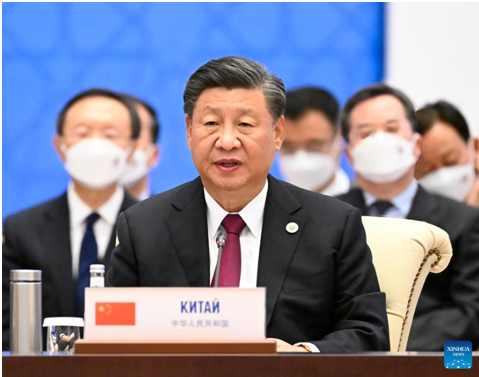
On Sept. 16, local time, Chinese President Xi Jinping delivered a speech at the 22nd meeting of the Council of Heads of State of the Shanghai Cooperation Organization (SCO) in Samarkand, Uzbekistan.

In the speech, he offered strategic views of and guidance on the development of the SCO, and made major proposals for SCO member states to enhance solidarity and promote SCO’s future development.

The Chinese proposals conform to the trend of the times and meet the demands of all parties relevant. They will help the SCO make greater achievements on a new journey and inject more energy in maintaining peace and prosperity in Eurasia and even the world at large.

The SCO Samarkand Summit was one attended by the most state leaders and yielding the most deliverables in the history of the SCO.

Under the joint efforts of Xi and other participating state leaders, the summit adopted more than 40 documents covering such areas as economy, finance, science and technology, culture and people-to-people exchanges, institution building and external interactions.

In addition, the summit also adopted four important joint statements on safeguarding global food security, international energy security, addressing climate change, and maintaining a secure, stable and diversified supply chain under the promotion of China.

These deliverables fully demonstrate the vitality of the SCO and indicate that the organization is an important force maintaining world peace and development.

Global media commented that the SCO has set a good example of mutually beneficial cooperation for the international society.

It has been shown that the Shanghai Spirit is the source of strength for the development of the SCO, and also the fundamental guide the SCO must continue to follow in the years to come, Xi said in his speech. “We owe SCO’s remarkable success to the Shanghai Spirit. And we will continue to follow its guidance as we forge ahead,” he added.

Xi said political trust, win-win cooperation, equality between nations, openness and inclusiveness, and equity and justice are what make the SCO successful. These five points fully embody the Shanghai Spirit, namely, mutual trust, mutual benefit, equality, consultation, respect for diversity of civilizations and pursuit of common development.

The five points answer to the questions of what kind of regional cooperation shall be promoted in the new era and how it should be promoted. They offer important guidance on the construction of the SCO and promoting healthy development of international relations.

The five points will help SCO member states strengthen solidarity and cooperation and build a closer SCO community with a shared future.

The successful experience of the SCO achieved in the past over 20 years fully proves that the five points will better bringing together countries from different regions, at different stages of development, and from different civilizations and traditions, and help foster a stronger force of collectivism, solidarity and cooperation.

The world today is not a peaceful place. Rivalry between two sets of policy choices ”unity or division”, “cooperation or confrontation” is getting more acute. The SCO is facing multiple challenges in maintaining regional peace and security, and its member states are also confronted with mounting challenges in keeping their own security and stability.

In the face of the complex situation, the SCO needs to keep itself on the right course, deepen cooperation in various fields, and continue to foster a favorable environment for the development and rejuvenation of member states.

The five points will help the SCO promote true multilateralism in the global context and give the organization a greater role in building a fairer and more equitable global governance system.

The five points put true multilateralism into practice and are beyond bloc politics. Today, some countries are following fake multilateralism that places their own interests above everything and trying to establish exclusive cliques, which seriously threatens the stability of the international order and the peaceful development of the world.

The SCO remains committed to the purposes and principles of the UN Charter, as well as the principle of equality among all countries regardless of their size. SCO members states respect each other’s core interests and choice of development path, keep to the path of win-win cooperation toward common prosperity, and stand for harmonious coexistence and mutual learning between different countries, nations and cultures, dialogue between civilizations and seeking common ground while shelving differences.

The SCO Samarkand Summit witnessed the largest membership expansion of the SCO, which fully indicates that the organization is bearing a connotation bigger than just regional cooperation.

As long as SCO member states keep carrying forward the Shanghai Spirit and march forward along the new path for the development of international organizations they have explored, they will be able to maintain long-term and stable development of the organization and jointly build their region into a peaceful, stable, prosperous and beautiful home.

China sees rapid development of logistics equipment manufacturing

By LiXinping, People’s Daily

China has ranked at the top of the world in express parcel volume for eight consecutive years since 2014. Its express parcel volume surged 18-fold from 5.7 billion pieces in 2012 to 108.3 billion pieces in 2021.

However, the capacity of express warehouses was often overwhelmed due to the rapid-growing business volume, which remained a serious challenge for the industry.

Since 2009, the industry has been flooded with express parcels during the Double 11 shopping festival, the largest and most popular annual global shopping festival in China that falls on November 11. The parcels were often stranded in transfer centers, terminal service stations and other links of the logistics system, which significantly prolonged the delivery.

To tackle the challenge, market players fell back on technology.

In May 2016, across-belt sorter for express parcels was developed by LiGongyan and his team. In the same month, Li established Wayz Intelligent Manufacturing Technology Co., Ltd. (Wayz Intelligent), a solution provider of intelligent logistics systems, together with a Beijing-based investment company subordinate to the Institute of Microelectronics of the Chinese Academy of Sciences.

“The first step is always the most difficult, but we had a good opportunity,” said Yao Yi, general manager of Wayz Intelligent.

In 2016, electronic shipping bills largely replaced handwritten ones, which laid a solid foundation for achieving automatic sorting of parcels. Besides, consumers’ demand for faster delivery also urged courier companies to make a change.

STO Express, one of China’s top delivery companies, was the first client of Wayz Intelligent. In November 2016, WayzIntelligent’s automatic sorting system was officially put into use in a distribution center of STO Express in Dongguan, south China’s Guangdong province. With the system, the distribution center reducedits staff from 400 to 85, but increasedits daily handling capacity from 400,000 to 500,000 pieces, and the accuracy has also been lifted to 99 percent.

Gradually, more and more intelligent logistics devices have been developed across China, which has accelerated the steps of innovation for the whole logistics industry.

In 2018, Libiao Robotics in east China’s Zhejiang province developed a robot that she light on the automatic sorting of the express delivery industry.

In Libiao Robotics’ design, distribution centers are two-storey structures. Robots in the upper storey automatically identify shipping addresses and then drop parcels in designated sorting areas in the lower storey. The robots, after being unveiled, were soon put into use in STO Express’ distribution centers in Zhejiang, Shandong and Henan provinces.

Ever since, China’s logistics equipment manufacturing industry has entered a period of high-speed development. As of the end of 2019, the automatic production lines of China’s courier industry added up to over 5,000 kilometers, which was equivalent to the total mileage of subways across the country.

According to statistics, the Chinese automatic sorting equipment market was worth around 26 billion yuan ($3.71 billion) last year, with an annualgrowth rate of21.8 percent on average. The top 13 equipment manufacturers reported 14.81 billion yuan in revenue, a 44.2 percent increase year on year.

Code reading is the most important process for automatic sorting. When parcels are moving along sorting belts, their barcodes, which indicatetheir next destinations,shouldbe timely recognized. This cannot be achieved withoutthe intelligent vision system.

So far, Wayz Intelligent has achieved domestic development of the algorithm, structure and key units of its code scanner. The identification accuracy of the company’s independently developed code scanner is 0.5 to 1 percent higher than that of itsforeign rivals, and the scanner is able to recognize tainted, wrinkled, deformed and blurred codes with an accuracy of over 99 percent.

In recent years, courier companies have started cooperation with suppliers for synergetic development.

For instance, another leading express delivery firm in China, YTO Express, has established a joint team with suppliers for closer integration of digital tools and automation equipment. At present, a distribution facility of the company in Chengdu, southwest China’s Sichuan province, is able to handle 190,000 parcels each hour with an accuracy of nearly 99.9 percent.

Besides, Alibaba’sCainiao Smart Logistics Network Limited, one of China’s courier giants, as well as JD.com and SF Express have made great efforts to advance the development and manufacturing of radio-frequency identification, or RFID tags.

RFID tags are as soft as transparent tapes, said Xu Jun from the technology department of Cainiao Smart Logistics Network Limited. According to him, RFID tags call for lower standards of manufacturing techniques than smart phone chips, but have a higher threshold regarding algorithm.

Compared with retailing scenarios, logistics has a more complicated application environment and thus a higher requirement for the accuracy of identification. Therefore, Cainiao Smart Logistics Network Limited optimized the design, reader development and algorithm of RFID and lifted identification accuracy to 99.97 percent.

Besides, the company has joined hands with semiconductor suppliers to develop RFID tags exclusively for logistics scenarios. Thanks to their efforts, the unit price of RFID tags has been lowered to 0.1 to 0.2 yuan, which lays a solid foundation for the massive application of RFID tags in the logistics industry.

Xi’s visit charts new blueprint for all-round China-Uzbekistan cooperation

By He Yin, People’s Daily

Bearing in mind the long-term development of China-Uzbekistan relations and the future welfare of their people, China and Uzbekistan will expand mutually beneficial cooperation, cement their friendship and partnership, and implement the vision of a community with a shared future at the bilateral level, announced Chinese President Xi Jinping and his Uzbek counterpart ShavkatMirziyoyev on Sept. 15.
Xi’s state visit to Uzbekistan, which was paid when the two countries celebrate the 30th anniversary of their diplomatic relations, has achieved fruitful outcomes. It has ushered in a new chapter of bilateral ties between China and Uzbekistan.
China and Uzbekistan’s implementing the vision of a community with a shared future at the bilateral level is a result of the two countries’ mutual respect, good-neighborliness, friendship, mutual assistance, and win-win cooperation over the past 30 years, and mirrors the fact that the giant tree of China-Uzbekistan relationship has taken deeper roots and grown more exuberant.
Over the recent years, Xi and Mirziyoyev have stayed in close contact and forged a good working relationship and deep personal friendship through meetings, phone calls and correspondence.
Under the guidance of the head-of-state diplomacy, China-Uzbekistan relations have embraced rapid development, which not only benefits the two peoples, but also promotes peace and stability, as well as development and prosperity of the region.
Implementing the vision of a community with a shared future at the bilateral level will constantly enrich the connotation of China-Uzbekistan comprehensive strategic partnership and provide strong energy for the two countries to deepen their all-round mutually beneficial cooperation and create a better future.
Xi’s state visit further enhanced China-Uzbekistan political mutual trust. Xi pointed out that as a good friend, a good partner, and a good brother, China firmly supports Uzbekistan in following a development path compatible with its national conditions, supports its efforts to uphold national independence, sovereignty, security, and social stability, and opposes interference by any forces in its internal affairs.
Mirziyoyev said Uzbekistan is firmly and unequivocally committed to the one-China principle, firmly supports China’s position on matters concerning its core interests including those related to Taiwan and Xinjiang, and will always be a good neighbor, a good friend, and a good partner worthy of China’s trust.
Following the official talks, the two heads of state signed and issued the Joint Statement Between the People’s Republic of China and the Republic of Uzbekistan, reiterating that China and Uzbekistan will firmly support each other on issues concerning national sovereignty, security, territorial integrity and other core interests.
Given the growing instability and uncertainty in international situation, the high political mutual trust between China and Uzbekistan is of vital importance for the two countries to jointly achieve development and rejuvenation.
Xi’s state visit charted a new blueprint for all-round cooperation between China and Uzbekistan. To accelerate bilateral cooperation and make it even more fruitful, Xi said the two countries should scale up cooperation on trade and investment, improve the trans-Eurasia transportation corridor, expand energy cooperation, and promote people-to-people exchanges and cooperation in areas including education, culture, tourism, sub-national exchanges, environmental protection and archaeology.
The Chinese side will continue to carry out healthcare, vaccine and pharmaceutical cooperation with Uzbekistan, and the two sides need to enhance cooperation on poverty alleviation, Xi said.
Relevant departments of the two governments signed multiple cooperation documents covering agriculture, digital economy, green development, culture, sub-national cooperation and media. Chinese, Kyrgyz and Uzbek officials signed a trilateral memorandum of understanding concerning cooperation on the China-Kyrgyzstan-Uzbekistan railway (the section in Kyrgyzstan), which laid a solid foundation for implementing the consensus reached by the two heads of state.
The co-construction of the Belt and Road remains a highlight and an overriding theme of China-Uzbekistan cooperation. The two sides agreed to actively push forward the synergy between the Belt and Road Initiative and the development strategy of “New Uzbekistan” for 2022-2026.
Xi’s state visit reflected China and Uzbekistan’s new vision to enhance international coordination. China and Central Asian countries have a shared future and a deep stake in each other’s security and stability. China is ready to work with Uzbekistan to promote the steady and sustained development of the Shanghai Cooperation Organization and will work with Uzbekistan and other regional countries to strengthen the “China Plus Central Asia”meeting mechanism.
Besides, China and Uzbekistan will actively implement the Global Development Initiative and Global Security Initiative, which is an important measure for the two countries to cope with global challenges.
The two sides stressed that they will obey the international order underpinned by the UN Charter and the basic principles of the international law, and stick to multilateralism with the UN at its core. They will exchange views and coordinate positions on major international and regional issues of common concern, and contribute to building a more just and equitable international governance system.
Xi and Mirziyoyev jointly planted an oak tree at the square outside the north entrance of the International Conference Center, Samarkand. As a symbol of longevity, the oak tree signifies that China-Uzbekistan friendship will thrive and endure.
China and Uzbekistan will keep joining hands on the road toward national development and rejuvenation, and make joint efforts to implement the vision of a China-Uzbekistan community with a shared future.

China witnesses remarkable transportation improvement over past 10 years

By Bao Ping, People’s Daily

China has witnessed historic achievements and changes in its transportation development over the past 10 years.
Isolated islands have been connected to cross-sea roads; remote Gobi deserts have been covered by modern transport network; villages deep in the mountains have embraced rapid development due to better logistics.
China has built a prospering transportation system with developed road networks, as well as sea and air routes that reach every corner of the world, which both facilitates people’s traveling and smoothens the flow of commodities.
China’s huge economic development and livelihood improvement couldn’t have been achieved without the rapid development of the transportation sector.
Over the past 10 years, China has built and renovated about 2.53 million kilometers of rural roads, connecting 105,000 administrative villages to hardened roads. The country’s fixed-asset investment in railways in the same periodtotaled 7 trillion yuan (about $1 trillion), stretching China’s railway mileage by another 52,000 kilometers. Besides, 82 civil airports have been built or relocated, bringing the total to 250. The country now has 5,581 air routes.
The continuous improvement of the transportation system is lifting Chinese people’s living standard, and the rapid developing infrastructure is significantly optimizing transport capability, quality and efficiency.
The well-built infrastructure and complete public services are enabling more Chinese people to pursue their dreams.
According to the seventh national census, 493 million Chinese, or 35 percent of China’s total population, do not live in their native provinces. Besides, China’s floating population surged nearly 70 percent in the past 10 years to 376 million.
As of the end of 2021, over 20,000 couples had married through inter-provincial marriage registration, and there were more than 50,000 hospitals nationwide offering cross-provincial settlement services to inpatients. More than 100 million people have obtained digital driver’s licenses.
Inter-provincial government services have practically enhanced people’s sense of fulfillment, happiness and security, playing a vital role in promoting entrepreneurship and innovation and in vitalizing the market.
China is building a unified national market and striving for market connectivity to involve every entity in the national market and present commodities and services across the country to every consumer, which has further released the potential of domestic demand and energized enterprises. As a large country with a huge market and population, China enjoys a strong momentum for future development.
Thanks to the great mobility, stories of innovation and creation are heard every day in China. Recently, a woman from Qingdao, east China’s Shandong province went viral online for livestreaming sea fishing and sharing stories of fishermen. On livestream platforms, she sold local seafood to consumers from all over the country, which helped many fishermen increase their income.
What makes her a success is China’s continuously improving modern logistics system, and there are millions of similar stories across the country.
In 2021, the number of newly-added market entities went up 15.4 percent to top 28.87 million, with 25,000 market entities newly registered per day on average. In the first half of this year, Chinese express delivery companies handled 51.22 billion express parcels. Last year, courier services were available in over 80 percent of Chinese administrative villages and more than 37 billion parcels were shipped to and collected from rural regions.
The fast developing expressway network in north China, the world’s largest three-tower cable-stayed bridge under construction in south China, and the continuously extending Sichuan-Tibet Railway… Since this year, a number of major transport projects have been in full swing.
The diligent and smart Chinese people have infinite capability of innovation, and once this capability is fully released, China will see broader space of development. It is believed that China, with great mobility, will better release the potential of its people and will always be full of vitality.

Chinese scientists discover new mineral from samples retrieved from Moon

By FengHua, People’s Daily

Chinese scientists have discovered a new lunar mineral through research on the samples retrieved from the Moon by China’s Chang’e-5 mission, the China National Space Administration (CNSA) and the China Atomic Energy Authority (CAEA) jointly announced.

This is the sixth new mineral discovered on the Moon by humankind. It also makes China the third country in the world to have discovered a new mineral on the Moon.

The new mineral, which has been named Changesite-(Y), was discovered from an analysis of lunar basalt particles by a research team from the Beijing Research Institute of Uranium Geology (BRIUG), a subsidiary of the China National Nuclear Corporation.

It has been officially approved as a new mineral by the Commission on New Minerals, Nomenclature and Classification of the International Mineralogical Association.

Dong Baotong, deputy director of the CAEA, said the new finding provides more basic data for the study of the Moon’s formation and evolution, and deepens mankind’s understanding of the Moon and the Solar System.

It marked a major scientific achievement made by China in space science, as well as a successful cross-discipline and cross-industry cooperation, Dong said.

However, the discovery of the Changesite-(Y) was by no means an easy process.

On Dec. 17, 2020, the Chang’e-5 mission retrieved samples from the Moon weighing about 1,731 grams, and about half a year later, the BRIUG obtained the first 50 milligrams of lunar samples to conduct mineralogical research.

“The samples were as heavy as three grains of rice and only 20 milligrams of the samples were allowed to be consumed during the study based on agreement,” said HuangZhixin, a BRIUG researcher.

However, a milligram of the samples consisted of over 10,000 particles when observed under microscopes. “Every particle was precious. We were like ‘pinching pennies’ during the study,” Huang told People’s Daily.

“When we picked the samples, no foreign substance was allowed to be introduced, so we had to make the particles stick to our needles with the static electricity generated through the friction between the needles and the particles,” said LiTing, a researcher with the BRIUG.

It was in such a rigorous environment that the research team discovered a particle with a diameter of less than 10 microns, which could possibly be a new mineral.

“Upon analysis, we found that the particle had whole new chemical components that are identical tono known mineral on Earth,” noted Li Ziying, chief engineer of major projects of the BRIUG.

Whether a mineral can be approved as a new mineral depends on not only its chemical components but also its crystal texture.

“This particle stuck to pyroxene. We were not able to get it completely off and failed to obtain ideal structural information,” LiTing told People’s Daily.

The team then applied for the second batch of lunar samples. From more than 140,000 tiny particles, the researchers found some traces of the Changesite-(Y), but there was only one that could possibly be a pure single-crystal particle, and this one fractured into three pieces.

According to LiZiying, the team finally picked out a pure single-crystal particle with a focused ion beam scanning electron microscope and decoded its crystal texture.

After a series of mineral studies, the research team verified that it is a new mineral at the end of 2021.

Studies on lunar samples are going on. So far, the CNSA has distributed 152 lunar samples totaling 53,625.7 milligrams in four batches to 98 applicants from 33 scientific institutions. The fifth batch will be distributed soon.

“As we further our efforts to study the samples, we are expecting newer and greater achievements,” said LiuJizhong, director of the Lunar Exploration and Space Program Center of the CNSA.

Xi’s state visit to Kazakhstan a boost to common development

By He Yin, People’s Daily

China-Kazakhstan relations embraced a new chapter in the charming season of autumn.

Chinese President Xi Jinping paid a state visit to Kazakhstan at the invitation of his Kazak counterpart Kassym-JomartTokayev on Sept. 14.

During the visit, the two heads of state held talks, and signed and issued a joint statement on the 30th anniversary of the establishment of diplomatic relations between the two countries, announcing that China and Kazakhstan will work for the goal and vision of building a community with a shared future defined by lasting friendship, a high degree of mutual trust and sharing weal and woe.

The two presidents jointly charted a new blueprint for China-Kazakhstan all-round cooperation and pointed the direction for the development of bilateral relations, injecting new impetus into the common development of the two countries.

China-Kazakhstan relations have gone through an extraordinary journey and reaped important outcomes since the two countries established diplomatic ties 30 years ago.

The two countries have created many “firsts” in their relations, including the first in settling the boundary question, the first in laying cross-border oil and gas pipelines, the first in conducting international production capacity cooperation and the first in building a permanent comprehensive strategic partnership.

Head-of-state diplomacy plays an indispensible role in the leapfrog development of China-Kazakhstan relations.

Xi said in his talks with Tokayev that China will always be a trustworthy and reliable friend and partner of Kazakhstan. China is ready to work with Kazakhstan in firmly supporting each other’s development and rejuvenation and helping each other achieve development and prosperity.

Tokayev noted Kazakhstan will continue to firmly uphold the one-China policy and be a good partner and good friend that China can always rely on under all circumstances.

The interaction between the two heads of state fully demonstrated the high degree of mutual trust between China and Kazakhstan.

Kazakhstan is where the Silk Road Economic Belt initiative was firstly proposed. Over the past nine years, Belt and Road cooperation between China and Kazakhstan has not only benefited the two peoples, but also set an example for the international society.

At the China-Kazakhstan International Logistics Base in the eastern Chinese port of Lianyungang, products from Kazakhstan, the world’s largest landlocked country, set sail for the Pacific Ocean. The China-Europe freight trains have consolidated the role of Kazakhstan as a transport hub on the Eurasian continent. The Zhanatas wind farm in Zhambyl Region, the largest of its kind in Central Asia, has been put into operation, meeting the electricity demand of about a million households. Besides, Kazak commodities such as wheat flour and dairy products are very popular among Chinese consumers.

Xi stressed during the visit that it is important that the two sides work together for high-quality Belt and Road cooperation, and Tokayev said Kazakhstan will continue to actively support and participate in the Belt and Road Initiative (BRI).

Relevant departments of the two countries have signed multiple bilateral cooperation documents, and the two countries have decided to set up consulates general in China’s Xi’an and Aktobe in Kazakhstan respectively.

Eying on the future, China and Kazakhstan will expand their cooperation in economy and trade, production capacity, connectivity and COVID-19 fight, as well as that in big data, artificial intelligence, digital finance, cross-border e-commerce, green energy and green infrastructure, and foster a closer people-to-people bond. It is sure that the two sides will see increasing wellbeing of the two peoples, and their efforts will contribute to their development and national rejuvenation.

China-Kazakhstan relations have outgrown the bilateral dimension and are of important significance for regional and even world peace and stability.

Just as Xi pointed out, the unbreakable friendship between China and Kazakhstan will contribute to the growth of positive and progressive forces in the world and to the building of a community with a shared future for mankind.

To safeguard the long-term peace in the region, the two sides will enhance cooperation within multilateral frameworks such as the Shanghai Cooperation Organization (SCO), the Conference on Interaction and Confidence Building Measures in Asia (CICA) and China+Central Asia, and jointly support efforts for a successful SCO Samarkand Summit.

To build a more just and equitable global governance system, the two sides will also step up international coordination, exchange views timely on international governance, food security, energy security, industrial and supply chains stability, and regional hotspots, practice true multilateralism, and reject unilateralism and bloc confrontation.

The Kazak side highly agreed with the Global Development Initiative and Global Security Initiative proposed by Xi, saying Kazakhstan stands ready to work with China to implement the two initiatives.

The constantly expanding coordination between China and Kazakhstan under multilateral context will inject positive energy into the world in a period of new turbulence and transformation.

At present, both China and Kazakhstan are at a critical stage of their respective development and rejuvenation. The 20th National Congress of the Communist Party of China will kick off soon. It is a vital meeting to be convened at the critical moment when China is marching toward the second centenary goal of building itself into a great modern socialist country in all respects. At the same time, the construction of a New Kazakhstan has been fully launched, and Kazakhstan is making strides toward the goal of becoming one of the world’s top 30 most developed states.

As long as the two sides work together to implement the consensus reached by the two heads of states, the all-round cooperation between China and Kazakhstan will surely bring more benefits to the two peoples and China-Kazakhstan relations will surely embrace a brighter future.