Border city in NE China builds close China-Russia friendship

By Wang Yuan, Zhou Zhou, People’s Daily

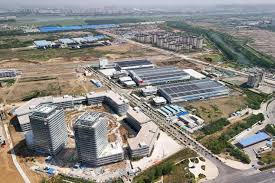
Located in northeast China’s Heilongjiang province, Suifenhe was established in 1903 following the construction of the Chinese Eastern Railway. Dubbed “a train-forged city,” this border town has grown in tandem with the railway and flourished through its port. 

Today, walking through this border city, one encounters a vibrant tapestry of Chinese-Russian culture, storefronts adorned with bilingual signs, candy-colored Russian architecture, clusters of foreign visitors, and local vendors fluent in both Chinese and Russian – painting a vivid picture of close cultural and people-to-people exchanges.

The Chinese Eastern Railway, a branch line of the Trans-Siberian Railway, stretches from Manzhouli in the west to Suifenhe in the east. The railway has breathed new life into the city, promoting cultural and commercial exchanges and making Suifenhe one of the first cities in China’s northeastern border region to gain access to trains, motor vehicles, electricity, and telephone services.

In 1987, Suifenhe and Russia’s Pogranichny launched cross-border trade with a symbolic exchange: 1,000 thermos flasks and 100,000 kilograms of apples for 30,000 kilograms of halibut and 50,000 kilograms of pollock. 

During the 1990s, barter trade flourished among ordinary citizens . Streets buzzed with activity as locals set up stalls, exchanging daily necessities such as snacks and toys for Russian leather goods – a scene that remains etched in the collective memory of Suifenhe’s residents.

As one of China’s pioneering border cities to expand opening-up, Suifenhe boasts both highway and railway ports at the Chinese national level, serving as a vital node in the China-Mongolia-Russia Economic Corridor and an important gateway for the eastern route of the China-Europe freight train service. The city’s railway port now handles over 10 million tons of goods annually, with nearly 900 train trips each year. China-Europe freight trains departing here reach five European countries, while inbound trains serve 25 Chinese cities, cementing this border town’s status as a genuine “international commercial hub.”

Throughout Suifenhe’s urban areas and countryside stand numerous Russian-style buildings. These structures preserve the architectural style of the early 20th century along the railway, serving as a “three-dimensional” testament to Suifenhe’s urban development and the mutual exchange of Eastern and Western civilizations.

Russian social media influencer Artem always commutes between Russia and Suifenhe by train. He loves promoting Suifenhe’s cultural and tourism highlights to Russian audiences on social media, with 220,000 followers. 

“Compared to my first trip here with my family 20 years ago, transportation is much more convenient now – they even opened an airport last year,” he noted. “Many Russian tourists take trains here to explore the food and culture of China’s northeast region, and they always go home happy. The city’s blend of Russian and Chinese charm makes everyone feel right at home.”

In November 2023, Wang Xuehan, a student at Suifenhe No. 1 High School, traveled to Pogranichny to stay with the family of Russian student Lisa. She participated in the “China-Russia student homestay exchange program” launched by the local government in 2006. During her stay, she was welcomed by local fresh fruits, seafood, and handmade gifts like bracelets and dolls crafted by Liza and her sister Alina. “I made Russian blini with my Russian classmates in cooking class. We were covered in flour but laughed non-stop,” Wang recalled.

The following spring, Lisa and Alina visited Wang’s family as promised, their suitcases filled with Russian specialties and heartfelt care. “They brought my favorite Russian candies and fresh shrimp,” Wang recounted.

The trip left vivid memories for the sisters. They participated in a school sports meet, played traditional Chinese games, and experienced paper-cutting. “Every day in Suifenhe felt as warm as home,” Lisa later wrote in Russian. Today, the students continue to stay in touch across borders.

Over the years, more than 400 students have participated in the homestay exchange program. Annual events like the China-Russia international youth art festival and youth sports exchanges provide fertile ground for lasting friendships.

A monument in the central square of Suifenhe recounts another story of the China-Russia friendship. Galia, a Chinese-Russian woman, bravely ventured to a fortress on the Tianchang Mountain to negotiate with Japanese invaders to protect innocent civilian hostages in 1945, on the eve of victory in the Chinese People’s War of Resistance Against Japanese Aggression. Though she never returned – losing her life at the age of 17 – her legacy lives on.

At the nearby Peace Angel Galia memorial hall, artifacts, photos, and videos recount her bravery. “Galia is remembered as a symbol of Russia-China friendship. Her story reminds us of the deep bonds between our peoples – bonds that should be preserved and passed on,” said a visiting Russian tourist.

A cultural symphony in China’s far north

By Zhou Zhou, Guo Xiaolong, Wangyuan, People’s Daily

On June 21, the summer solstice, the northern slopes of the Greater Khingan Mountains are bathed in more than 21 hours of daylight. This is Mohe, China’s northernmost city in Heilongjiang province, located at the country’s geographic extremity.

Dubbed “Northernmost Point of China,” Mohe is known for its unique climate. Summer temperatures barely reach 20 degrees Celsius, while winter lows can plummet to minus 53 degrees Celsius. 

Yet in recent years, this remote frontier town has experienced a cultural renaissance, propelled by an unlikely ambassador: a popular song.

Titled “Mohe Ballroom”, the song tells the story of a solitary dancer, known by the pseudonym Zhang Dequan, who lost his beloved wife in a fire. The haunting melody and poignant lyrics have captivated audiences in China and the world. “The song has become a cultural window open to the world,” said Li Jinbao, manager of the real-life Mohe Ballroom. “It’s brought our once-obscure border town on the global map.” 

As the song went viral, visitors now flock to the ballroom, often queuing for hours during peak seasons. The venue now welcomes hundreds of visitors daily, including many from overseas.

Inside, Li shares videos of international guests dancing together beneath the twinkling lights on his phone. “I remember a group of South African tourists forming a circle and dancing with the locals. It was so lively,” he recalled. “We didn’t speak the same language, but the music did the talking.”

On international social media platforms, Mohe Ballroom has inspired countless renditions across languages including English, Russian, Spanish, and Japanese. A Brazilian netizen shared lyrics on TikTok, marveling: “Such powerful words! What snow-covered land could birth such fervent emotions?”

This global attention has translated into real economic momentum for Mohe. In the past year, inbound tourism has surged, with notable increases from Europe, North America, Japan, and South Korea. For many, the destination is singular: Mohe Ballroom. 

French backpacker Emilie said, “The song’s tale of a distant, heartfelt northern China drew us here. Standing in the real dance hall, imagining that lone dancer who never stops, feels like touching the song’s soul.”

The local government has embraced the moment, introducing themed tourism routes like “Auroras and Melodies,” which weave together aurora-viewing, cultural activities and forest excursions.

Yet Mohe’s cultural significance extends beyond the song. 

About 130 kilometers north of the city lies Beihong village, home to 256 residents, 119 of Russian descent. Strolling along the riverside walkway tracing the Heilongjiang River, visitors encounter Russian matryoshka dolls and European-featured residents speaking Mandarin with the distinct inflection of China’s northeast.

Beihong’s history dates back to the late Qing Dynasty (1644-1911), when a gold rush drew waves of Chinese settlers northward. At the time, the proximity of China and Russia fostered intermarriage, resulting in a lasting blend of customs and architecture.

At the cozy “Russian Bakery,” Zhao Yinhua, 60, pulls warm loaves from the oven. “My mother-in-law was Russian. Every autumn, she’d take me to the mountains to pick wild hops and teach me to bake Russian lieba (a Chinese transliteration of bread in Russian),” she said. Made with all-natural ingredients and no preservatives, Zhao’s bread became so popular that her family opened a bakery.

“Making lieba isn’t easy,” she explained. “You begin fermenting the dough a day early, adding flour every hour or two through the night. Even in Russia, few people still make it this way.” Zhao is committed to preserving the practice. “As someone who carries both Chinese and Russian cultures, preserving this tradition feels like honoring my roots,” she noted.

Further north in Beiji (“North Pole”) village, boutique homestays celebrating cross-cultural heritage have become signature attractions. Just across a river sits Ignashino, a Russia city within view.

Sun Cuirong, a third-generation member of a Chinese-Russian family, runs a guesthouse named “Russian Home.” “We used to rely on winter tourism, but now we’re busy year-round!” she said. Guests are especially fond of the eclectic decor – a blend of cultures – with floral-print linens brought from Russia and family recipes for meat pies, pickled vegetables, and iron-pot stews. “It’s the mix of traditions that makes us special to visitors,” Sun said.

Drawing wisdom, strength from great victory against Japanese aggression

By He Yin, People’s Daily

On June 24, China’s State Council Information Office held a press conference on plans for marking the 80th anniversary of the victory in the Chinese People’s War of Resistance Against Japanese Aggression and the World Anti-Fascist War.

On the morning of Sept. 3, Chinese President Xi Jinping, also general secretary of the Communist Party of China (CPC) Central Committee and chairman of the Central Military Commission, will address a grand gathering held that day to mark the anniversary.

The commemoration events serve as a solemn tribute to the Chinese people’s arduous and heroic resistance against Japanese militarist aggression, reaffirming the Chinese people’s steadfast commitment to the path of peaceful development and to upholding world peace, carrying far-reaching and profound significance.

Remembering the past, honoring sacrifice

Commemoration is an act of remembrance. Eighty years ago, after a grueling 14 years of tenacious resistance, the Chinese people achieved a great victory in the war against Japanese aggression, which also signaled the complete triumph of the global war against fascism.

It is a victory of justice over evil, light over darkness, and progress over reaction, a victory for not only the Chinese people, but also for all people around the world. It stands as an enduring chapter in the history of the Chinese nation and the global pursuit of justice.

Under the theme “Remember History, Honor the Martyrs, Cherish Peace, and Create the Future,” the commemoration aims to honor the Chinese people’s resolute resistance against Japanese militarist aggression, pay tribute to the heroes who gave their lives, and the international solidarity that helped make victory possible. At its core, the remembrance reaffirms China’s commitment to safeguarding the outcomes of World War II and respecting history.

A shared legacy of resistance

Commemoration is also about carrying forward a shared legacy. The victory of Chinese People’s War of Resistance Against Japanese Aggression is the great triumph achieved through the collective efforts of the Chinese people, the anti-fascist alliance and all peoples around the world who opposed fascist aggression. Countless peace-loving and justice-upholding nations, peoples, and international organizations offered invaluable support to China’s efforts.

The Soviet Union provided China with large quantities of weapons and equipment, and the Flying Tigers from the United States created “The Hump” airlift to transport much-needed supplies to China. Humanitarian heroes such as Canadian surgeon Norman Bethune, Indian doctor Dwarkanath S. Kotnis, German businessman John Rabe, and Bernhard Arp Sindberg from Denmark stood up against atrocities, saving countless lives. British journalist Michael Lindsay and international fighter Hans Shippe lent their voices and strength to China’s cause.

On Sept. 3, a grand military parade will be held at Beijing’s Tian’anmen Square to honor the spirit of the resistance against Japanese aggression and to reflect the character of a modern China that remains committed to peace. China will invite foreigners who aided the country’s resistance against Japanese aggression or representatives of their family members to observe the military parade, underscoring international solidarity and commemorating shared sacrifices in pursuit of peace and justice.

Learning from history, defending peace

Commemoration is also a solemn reminder of the costs of war and the value of peace. The painful lessons of World War II must never be forgotten. History should move forward, not backward; and the world should be united, not divided. All peace-loving peoples around the world must remember the history written in blood and sacrifice, resolutely safeguard the outcomes of World War II, uphold true multilateralism, and work together to build a community with a shared future for mankind and a brighter future for humanity.

Amid mounting global uncertainty and instability, China’s solemn commemoration underscores its enduring commitment to safeguarding the victory of World War II, defending international fairness and justice, and advancing the vision of building a community with a shared future for mankind. It also sends a clear message to the international community: in times of turmoil, it is essential to draw on the wisdom of history, to summon the strength and clarity needed to oppose all forms of hegemonism and power politics.

Looking back on history, Taiwan’s return to China is an integral part of the victory of World War II and the post-war international order. Around October 25, China will hold a gathering to commemorate the 80th anniversary of Taiwan’s recovery from Japanese occupation. The gathering will honor the heroic deeds of those who fought for China’s victory, recall the joint resistance of compatriots across the Taiwan Strait against foreign aggression, and reaffirm a clear stance against “Taiwan independence” and external interference. It will also rally collective efforts toward national reunification and the rejuvenation of the Chinese nation.

The emblem of the commemoration features symbolic elements of the Great Wall and olive branches. The Great Wall symbolizes the spirit of the Chinese people uniting together and fighting with courage, representing the decisive role of a national spirit to which patriotism is central in the victory of the war against Japanese aggression. The olive branches demonstrate that after an arduous war of resistance, the Chinese people have won peace with victory, and that the Chinese people unite with people of all other countries to cherish and safeguard peace.

In remembering the past, China looks to the future. Standing with all peace-loving nations and peoples, China will remain a guardian of historical memory, a partner in national development and rejuvenation, and a champion of global fairness and justice. Together, they will strive for a better future for all humanity

Coastal city in N China restores marine ecology with underwater seagrass meadows

By Shi Ziqiang, People’s Daily

Off the coast of Tangshan in north China’s Hebei province, a quiet ecological transformation unfolds beneath the waves of Bohai Bay. Vibrant green expanses are emerging in these coastal waters – fields of seagrass forming “underwater meadows.” 

Once degraded, these vital ecosystems are now being carefully restored through a long-term, systematic effort. Among them, the Caofeidian seagrass bed stands out as the largest continuous single-species seagrass habitat in China, spanning over 4,400 hectares. 

In recent years, Hebei has advanced its efforts to protect and restore marine ecosystems, developing a comprehensive and multi-pronged restoration system for seagrass beds. As a result, vegetation coverage has steadily increased, and the ecological benefits are becoming increasingly evident.

A 30-minute speedboat ride southeast from the central fishing port of Caofeidian brings visitors to a smart offshore monitoring platform. Nearby lies the site of the phase-1 Caofeidian seagrass bed restoration project.

As the tide recedes, the underwater meadow reveals itself. In the shallows, lush green seagrass sways with the waves. This species of eelgrass can grow from several dozen centimeters to over one meter in length and makes up the primary vegetation of the Caofeidian seagrass bed.

Seagrass beds play a crucial role in the marine ecosystem: they stabilize the seabed, prevent sediment erosion, and provide critical habitat for a wide range of marine organisms, thereby supporting biodiversity.

A few years ago, however, the Caofeidian seagrass bed began to show signs of degradation, with some areas becoming sparse or barren. “Frequent fishing activities such as trawling and clam digging damage the seagrass and ecological environment, squeezing out living space and disrupting benthic communities and the broader ecosystem,” explained Shi Zhijun, deputy director of the Caofeidian natural resources and planning bureau.

To reverse this decline, Hebei launched the Caofeidian seagrass bed restoration project in 2019. Measures included clearing abandoned fishing nets and traps, restricting vessel access in restoration zones to minimize disturbance, and improving nearshore water quality. Tangshan also explored technical standards for monitoring wastewater outlets and remediated 283 discharge points in the bay.

Aerial images taken before and after the restoration clearly show that sparse and barren patches are now flourishing with seagrass. “These new growths were all planted by hand,” said Niu Shihao, a senior engineer with the Hebei Hydrogeology and Engineering Geology Exploration Institute.

Successful underwater planting requires precise tidal coordination. “It’s all about knowing the tides – you only get a window of two to three hours each time,” explained Niu. Crews must reach the site about two hours before low tide to prepare, distributing crates of seagrass to designated spots to save time. Once the tide reaches the optimal level, transplanting begins immediately.

“Initial attempts failed when currents displaced seedlings within days,” noted Shi. “We discovered anchoring roots with compact mud blocks ensures plant stability.”

Complementing transplantation, technicians developed a seed-ball method. He Rongda, a villager from Liuzan township who took part in the project, described the process: “Guided by technical staff, we mixed soil to mimic marine sediment, rolled it into ping pong-sized balls, embedded the seeds inside, and used a seeding device to bury them in the seabed. This way, the seeds could sprout without being washed away.”

The project also adopted a differentiated restoration strategy. In areas with strong natural recovery potential, passive restoration combined with routine patrols was sufficient. In more severely degraded zones, more intensive interventions were applied, including sediment remediation, direct seeding, transplanting seedlings, and relocating mature plants.

With growing experience and improved techniques, the restoration of Caofeidian’s seagrass has become more efficient and science-based. The once-degraded ecosystem is gradually returning to life.

After six years of sustained effort, the project has yielded promising results. “Systematic ecological restoration has led to continuous recovery of the seagrass beds, which now serve as vital habitats, migration corridors, and breeding grounds for marine life. The number of large benthic species has increased from 60 to 111, and the biodiversity index has risen by 42.3% year on year,” said Wen Guoyi, an official with the Ministry of Natural Resources.

life of service: Chinese doctor’s heroic sacrifice in Tanzania

By Huang Weixin, Xiao Jiaxin, People’s Daily

“Serving the people knows no borders. As a Chinese doctor, I am proud to let my Tanzanian colleagues feel the strength of our country and our profession,” Zhang Junqiao, the leader of the 27th Chinese medical team in Tanzania, wrote in a final social media post.

Days later, on June 15, these words became his legacy. Witnessing a local woman drowning off the coast of Dar es Salaam, Zhang sprinted into the surf to rescue her. Though the woman survived, the 38-year-old anesthesiologist, overcome by exhaustion, perished in the waves despite desperate resuscitation attempts by his colleagues.

A Zhang had arrived in Dar es Salaam in early 2024, serving at Muhimbili National Hospital where he specialized in anesthesiology and trained local medical staff.

His sudden death left his colleagues heartbroken and deeply moved the local community. At a memorial on June 20, more than 300 Tanzanian medical personnel, residents, and members of the Chinese community gathered in solemn silence, standing side by side to bid farewell to Zhang.

As Tanzania’s top referral facility, Muhimbili National Hospital faces a long-standing shortage of anesthesiologists despite having multiple surgical centers. Zhang took it upon himself to address the gap by organizing targeted training sessions for local healthcare professionals and medical students. To those he trained, Zhang was not only a skilled clinician but also a man of profound compassion, generosity, and sincerity.

“He was truly a hero. We will never forget him,” said Daniel Munubi, acting head of anesthesia at the hospital. “He imparted his expertise generously, never keeping his knowledge to himself. We had hoped for more time with him. Fate decided otherwise.”

“He rarely declined patients seeking help,” said team member Guo Qing. Guo recalled that Zhang was incredibly dedicated, initiating many groundbreaking efforts at the hospital and organizing multiple clinical training sessions. Zhang had hoped to establish a clinical simulation center for anesthesiology and train more local talent to “leave behind a medical team that won’t leave” in Tanzania.

“Dr. Zhang’s actions speak louder than words. His sacrifice embodies pure humanitarianism and will endure in memory,,” said Elic William Mwakaungila, a nurse anaesthetist from Muhimbili National Hospital, who now studies in north China’s Shanxi province. Fighting tears, he added: “I came to China because of him. He urged me to gain knowledge and bring it home. He wasn’t just a colleague. He was my best friend and role model.”

During a free community clinic, the medical team encountered 8-year-old Louis suffering from severe congenital umbilical hernia. With the assistance of the team, his family went to Muhimbili National Hospital for diagnosis and treatment, but could not afford the hospitalization expenses. Zhang and his colleagues pooled their own funds to cover the hospital expenses of little Louis. After successful surgery, the boy’s mother requested a Chinese name from the medical team, who chose “Qilu” – the poetic name for Shandong province.

In China, Zhang worked in the anesthesiology department at the Affiliated Hospital of Shandong Second Medical University. In recent conversations with department head Sun Yingui, Zhang had been exploring ways to deliver critical medical resources to Tanzania and expand training programs, through both virtual and in-person initiatives..

“He had a warm heart and an unwavering passion for public service,” said Sun. “Even when our department was overwhelmed, he was always the first to volunteer for outreach clinics.”

In June 2020, Zhang used personal funds to purchase simulation equipment and set up a CPR teaching booth in a public square in Weifang, Shandong province, offering lifesaving instruction to passersby. He aimed to conduct more than 100 public training sessions each year. “My goal is simple,” he once said. “If just one out of every 100 people pauses to learn, that’s still one more life that might be saved.”

Zhang’s commitment inspired many healthcare workers. With support from his hospital and university, he launched a volunteer campaign called “Heartbeat Action” to raise public awareness about pre-hospital emergency care. By late 2023, the campaign had held more than 400 public events.

Now, Zhang’s colleagues in the “Heartbeat Action” volunteer team are determined to sustain his vision. Anesthesiologist Yao Fuwang has assumed the leadership. “Zhang is gone,” Yao said, “but the ‘heartbeat’ of this mission must go on.”

Low-altitude economy lifts off as Chinese automakers enter the eVTOL era

By Xu Peiyu

What once belonged to the realm of science fiction – zipping above traffic in a personal flying car – is rapidly becoming a tangible reality in China. A 40-kilometer journey that now takes an hour by car could soon be completed in just 20 minutes by air. 

According to the Civil Aviation Administration of China (CAAC), China’s low-altitude market will soar to 3.5 trillion yuan ($487.69) in 2035. Recognizing the potential of this huge market, Chinese automakers are accelerating their push into the skies.

With overlapping industrial chains and shared technological foundations, automakers enjoy a natural advantage in the burgeoning market for electric vertical take-off-and-landing (eVTOL) aircraft. Several major players have already completed prototype development and moved into flight testing.

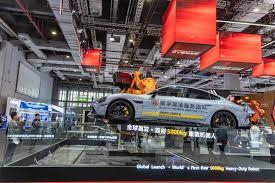
On June 12, Chinese automaker GAC Group unveiled GOVY AirCab, its first mass-produced eVTOL aircraft, now available for pre-orders. The AirCab adopts a modular, dual-body structure: the upper part is the flying module, while the lower half serves as a standard electric car. A single tap transforms the vehicle from ground to air mode, merging the convenience of intelligent driving with the agility of short-range flight.

Other Chinese companies are exploring similar dual-use configurations. For example, XPENG AEROHT, the flying car affiliate of Chinese electric vehicle maker XPENG, unveiled the modular flying car “Land Aircraft Carrier.” Like GAC’s model, it features an airborne unit paired with a terrestrial vehicle base. Both fall under the eVTOL category, the dominant format currently being pursued by aerospace innovators around the world.

Experts say eVTOLs are favored for several reasons. They eliminate the need for long runways, relying instead on compact vertical takeoff pads. Traditional propulsion systems are replaced by batteries, electric motors, and rotors. Many also incorporate advanced technologies such as distributed propulsion with redundant safety systems, autonomous navigation, real-time obstacle detection, and emergency landing capabilities. These innovations not only enhance safety and reliability but also help reduce manufacturing and operational costs.

Potential eVTOL applications span diverse sectors such as tourism, logistics, and emergency rescue. Several Chinese automakers have already advanced to the testing and regulatory approval phase. XPENG AEROHT’s flying module has had its production license application accepted by the CAAC Central and Southern Regional Administration, with full certification expected by the end of this year. XPENG AEROHT’s intelligent manufacturing base is scheduled to be completed in the third quarter this year, with mass production and deliveries targeted for 2026. 

Meanwhile, Aerofugia, a subsidiary of China’s electric vehicle giant Geely Auto, is preparing for manned test flights, aiming to obtain its type certificate by 2026. Chery’s “three-body” composite-wing flying car has successfully completed a test flight, while Changan Automobile has partnered with autonomous aerial vehicle technology platform company EHang to co-develop and commercialize flying cars.

Automakers’ enthusiasm for the low-altitude economy reflects its market potential. A report released by the China Low-Altitude Economy Alliance predicts that once air traffic networks and ground infrastructure are established in Chinese major cities, large-scale commercialization of eVTOLs is expected to drive down costs, making the vehicle more accessible to the public. According to the report, China could potentially see 100,000 eVTOLs serve as family vehicles or air taxis by 2030.

An Tiecheng, chairman of China Automotive Technology and Research Center Co., Ltd., explained that low-altitude new energy aircraft and intelligent, connected new energy vehicles (NEVs) share deep technological and industrial linkages.

Both sectors share common R&D systems,, manufacturing processes, and end-use applications. Technically, NEV electric systems readily adapt to eVTOL propulsion, with approximately 70 percent of eVTOL components. This allows automakers to apply their expertise in large-scale vehicle production to the emerging field of flying cars.

Existing NEV charging stations and energy storage hubs can be adapted for eVTOL operations, including high-voltage rapid charging. Parking garages and logistics centers can be repurposed into take-off, landing and maintenance facilities. Smart transportation systems developed for automobiles can also be integrated with low-altitude airspace management systems, as they share similar technical foundations.

According to a representative from XPENG AEROHT, early operations will be confined to restricted scenarios such as suburbs, tourist destinations, and designated flight zones. From there, services will expand to include intercity travel and last-mile transfers between airports and train stations. The company’s ultimate goal is to achieve fully integrated “3D urban mobility.” Its “Land Aircraft Carrier” has already received over 4,000 pre-orders, and partnerships have been established for more than 200 planned flying camp locations.

Still, challenges remain. As An Tiecheng emphasized, gaps persist in key technologies, product performance, and supporting infrastructure. He called for the accelerated integration of artificial intelligence and next-generation energy solutions to drive progress, particularly in areas such as propulsion and safety certification. “Only through breakthroughs in these core technologies can we truly make the final step toward making commercial low-altitude flight a part of everyday life,” he said.

China expands efforts to boost global e-commerce cooperation

By Liao Ruiling

Products from Southeast Asian dried fruits and African coffee to European black tea are flooding Chinese store – fresher and more affordable than ever – driven by cross-border e-commerce expansion.

As China’s cross-border e-commerce sector grows, its global partnerships strengthen. China has established Silk Road E-commerce collaborations with 35 countries. Cross-border cooperation across e-commerce domains is gaining momentum, with global businesses increasingly viewing the Chinese market as essential for sectoral growth.

What are the unique features and emerging trends of China’s major e-commerce platforms? How can AI empower businesses going global? These were among the topics discussed at the recent Silk Road E-commerce Online Lectures for ASEAN. Real-time subtitles in Chinese, English, Vietnamese, and Thai scrolled across a large screen, while attendees listened attentively, jotting down notes.

Chinese companies and platforms are rapidly internationalizing. Cross-border leaders such as AliExpress, TikTok Shop, and Temu have gained global popularity, drawing a wave of “e-commerce fans” eager to replicate China’s success models.

Husna, a student from Universiti Putra Malaysia, is one of many who came to China to study e-commerce. She recently joined a vocational training program on Chinese language and cross-border e-commerce at Guangxi Economic and Trade Vocational Institute in south China’s Guangxi Zhuang autonomous region. The program offered courses on new media operations, business data analysis, and cross-border store management, while providing hands-on experience in running live-streaming sessions on platforms like TikTok. After a short period of study, Husna successfully began selling designer toys on TikTok.

As a key initiative under the Belt and Road framework, Silk Road E-commerce has become a new platform for bilateral and multilateral economic cooperation. Among its flagship programs, the Silk Road E-commerce Online Lectures series has hosted 108 sessions since its launch in 2020, benefiting more than 80 countries. Themed sessions tailored for Central and Eastern Europe, Latin America, Africa, and ASEAN have helped train a growing pool of e-commerce talent through both online and offline sessions.

For many traditional exporters, joining Chinese cross-border e-commerce platforms and embracing digital transformation is becoming a viable way to access global markets.

“Direct business with UK or Belgian customers seemed unimaginable before,” said Eugene, an Uzbek entrepreneur. Initially skeptical of digital platforms, Eugene’s company joined global business-to-business e-commerce platform Alibaba.com in April last year. The company’s products were soon listed in English, Russian, and Arabic. In the very first month, Eugene received a $1,200 trial order from a UK buyer. A Belgian supermarket chain also placed a $9,000 order and quickly followed up with a second one double the size. “Now we’re receiving orders every day from countries like the UK, Hungary, and Russia. Orders from Europe alone make up 65% of our business,” Eugene said.

China’s e-commerce sector, known for its innovation, diverse business models, and massive market size, is playing an increasingly active role in promoting global cooperation. So far, China has established Silk Road E-commerce partnerships with 35 countries, developed a range of cooperation brands, built 120 online and offline national pavilions, and set up 65 direct sourcing bases in 19 countries. Over 100 sessions of the Silk Road E-commerce Online Lectures series have been held to support skills development and knowledge sharing.

This year, China’s Ministry of Commerce has launched an e-commerce campaign, in which 18 provincial regions and 8 major e-commerce platforms rolled out 40 collaborative initiatives. Partner countries are invited to choose from a “menu” of projects tailored to their needs, enabling targeted and efficient cooperation.

This “menu-based” approach allows China to offer a catalog of potential collaboration projects, with partner countries selecting those best fit their development needs and implementing them accordingly.

The results have been significant. The Silk Road E-commerce Online Lectures for ASEAN held in Guangxi featured the first overseas in-person training and hands-on practice sessions, receiving praise from over a thousand ASEAN participants. The Quality African Products Online Shopping Festival has helped create more than 200 bestsellers. Qingdao, Guangxi, and Hunan province are also helping Silk Road E-commerce partner countries from Shanghai Cooperation Organization, ASEAN, and Africa to establish new online and offline national pavilions.

“The essence lies in using e-commerce as a tool focused on inclusivity and mutual benefit, and our aim is to serve global partners,” said He Yongqian, spokesperson for the Ministry of Commerce. “Next, we will further expand imports of high-quality, specialty products and work together to build a shared global e-commerce marketplace.”

Yunnan coffee adds new note to global coffee map

By Cui Yin, People’s Daily
Each cup of coffee carries the essence of its birthplace – Brazil’s bold richness, Jamaica’s vibrant
brightness, and Ethiopia’s delicate freshness. Now, Yunnan, in southwest China, is adding a new
chapter to this global narrative, offering a distinctly Chinese flavor that is gaining recognition on
the world stage.
This evolution was on full display at the 2025 First Gems of Yunnan Green Coffee Competition
(Yunnan CoE Pilot Program). Held in Yunnan’s Baoshan, the competition marked a milestone: for
the first time, a CoE-related competition was hosted in Yunnan. Out of 144 entries, 19 coffee
samples received scores above 87 points – qualifying them as world-class – following rigorous
blind tasting by international judges.
The top-scoring beans, grown in Yunnan’s Lincang, fetched a record 13,000 yuan ($1,813.65) per
kilogram at auction, setting a new benchmark for Chinese coffee sales. More importantly, the
competition placed the province into the purview of one of the world’s most authoritative coffee
evaluation systems, signaling its transformation from a raw material supplier into a standard-setter
in the global coffee sector.
Founded in Brazil in 1999, the CoE has reshaped the coffee industry by combining competition
with transparent auction mechanisms. Information about bean variety, processing methods,
pricing, and producers is made publicly available, setting new benchmarks for traceability and
quality.
During the competition, each carefully selected coffee underwent an rigorous evaluation: roasting,
grinding, weighing, and on-site brewing, followed by multiple cupping sessions. A panel of over a
dozen professional judges evaluated each sample on cleanliness, sweetness, acidity, mouthfeel,
and flavor complexity. A Brazilian farmer named Oliveira, whose beans scored an impressive 90
points, could barely contain his excitement.
Over the past two decades, CoE competitions have been hosted in more than ten countries,
spotlighting emerging producers in Honduras and Costa Rica. This has expanded the global map
of valued coffee-producing regions, raising both quality standards and farmer incomes.
Producing high-quality coffee requires a combination of ideal natural conditions and painstaking
cultivation. The best coffee regions are typically mountainous at elevations above 1,000 meters,
with marked differences between day and night temperatures and clearly defined wet and dry
seasons – conditions that also pose greater challenges and management costs.
Yunnan, located in the global golden belt for coffee cultivation, boasts a coffee-growing history of
over a century and now produces 98 percent of China’s total coffee output. Recent advancements
in variety improvement, standardized farming practices, and processing technologies have
propelled Yunnan forward: the proportion of specialty-grade beans rose from 40 percent in 2022 to
70 percent in 2024, while deep processing rates jumped from 60 percent to 85 percent. These traits
have helped turn Yunnan coffee into a byword for premium quality.
Coffee, as a global commodity, embodies the convergence of civilizations across continents. In
China, its popularity has surged in recent years. Shanghai has overtaken New York and London to
become a city with the highest number of coffee shops in the world. Among younger generations,
coffee drinking has become both a social ritual and a lifestyle symbol. This cultural adaptation
reflects a broader ethos in Chinese civilization: the principle of harmony without uniformity, an
openness to global influences, seamlessly woven into a distinctively Chinese context.

China-Central Asia relations demonstrate strong stability amid global uncertainty

By He Yin, People’s Daily

On the afternoon of June 17 local time, the second China-Central Asia Summit was held in Astana, Kazakhstan. Chinese President Xi Jinping attended the summit and delivered a keynote speech, where he proposed for the first time a China-Central Asia Spirit. He also outlined a comprehensive vision for advancing China-Central Asia cooperation. His remarks injected fresh momentum into the joint endeavor of building an even closer China-Central Asia community with a shared future.
The most prominent highlight of this summit is Xi’s announcement of the China-Central Asia Spirit of “mutual respect, mutual trust, mutual benefit, and mutual assistance for the joint pursuit of modernization through high-quality development.” The spirit distills the successful experience of China-Central Asia relations and encapsulates the shared principles and aspirations that underpin their cooperation. It is an important guideline for China and Central Asia to carry forward friendship and offer mutual support in times of need.
The principles of equality and shared aspirations embedded in this spirit explain the robust momentum of China-Central Asia cooperation. During the summit, the six heads of state jointly signed the Astana Declaration of the second China-Central Asia Summit, which stresses the importance to fully carry forward this spirit as a basis for developing friendship and mutually beneficial cooperation under the China-Central Asia mechanism.
China consistently takes Central Asia as a priority in its neighborhood diplomacy. The successful development of China-Central Asia relations fully demonstrates the vitality of the principles of amity, sincerity, mutual benefit and inclusiveness.
Steeped in history, driven by broad actual needs, and built on solid popular support, the China-Central Asia mechanism has emerged as an effective platform for advancing China-Central Asia cooperation in a changing global landscape.
At a time when major countries are establishing dialogue mechanisms with Central Asian countries, the China-Central Asia mechanism has been widely recognized across the region for its efficiency, pragmatism, and tangible outcomes, becoming a model of regional cooperation.
Building on the full implementation of the outcomes from the first China-Central Asia Summit held in Xi’an, China, this second summit drew a comprehensive blueprint for the future of China-Central Asia cooperation.
The systematic approach to cooperation proposed by Xi will encourage both sides to engage with greater determination and pragmatism, thereby enhancing their capacity to jointly tackle risks and challenges while accelerating their drive toward modernization.
The Astana Declaration reaffirmed major political consensus among the six countries and a treaty on eternal good-neighborliness, friendship and cooperation was signed to enshrine the principle of everlasting friendship in the form of law. In the face of global uncertainties, China-Central Asia relations offer a strong sense of direction and stability.
Today, unprecedented changes are unfolding at a faster pace across the globe, thrusting the world into a new state of heightened turbulence and volatility. The strategic importance of unity and cooperation between China and the five Central Asian countries has become ever more evident.
History should move forward, not backward; and the world should be united, not divided. Humanity must not regress to the law of the jungle. Instead, the world should build a community with a shared future for mankind. The China-Central Asia cooperation stands as a powerful example of solidarity among Global South countries. It is not only central to their respective development and revitalization, but also essential to regional and global stability and prosperity.
At the summit, all participating countries expressed strong support for Xi’s vision of building a community with a shared future for mankind and the three global initiatives – the Global Development Initiative, the Global Security Initiative and the Global Civilizations Initiative. They voiced their commitment to enhancing coordination with China, upholding free trade and the multilateral trading system, and safeguarding international equity and justice. The growing consensus and alignment between China and Central Asia will contribute more positive energy to world peace and development.
A strong belief in fairness and justice and an unyielding commitment to mutual benefit and win-win cooperation are the only way to maintain world peace and achieve common development. China-Central Asia cooperation serves the interests of all six countries and reflects the trend of the times and the direction of history. As long as the six countries continue to work together, uphold the China-Central Asia Spirit, and stay focused on building a community with a shared future, they are bound to create a brighter future together.

From Abbottabad to Beijing: A witness to enduring China-Pakistan friendship

By Salman Bashir

I spent my childhood in Abbottabad, a picturesque town nestled among the mountains in
northwest Pakistan. As early as the 1950s, a Chinese shoe shop stood prominently at the center of
the town – a local landmark. My father often praised the exceptional craftsmanship of the Chinese
shoemakers, whose leather shoes were considered the finest in town.
Throughout my teenage years, though no one in my family had ever visited China, it remained
vivid in our imaginations. My grandmother often told me stories about the country: beyond the
towering mountains north of Abbottabad lies another land, one with breathtaking landscapes and
kind-hearted people.
Time passed, and the Karakoram Highway came into being – carved through rugged passed,to link
Abbottabad closely with China. While that old Chinese shoe shop may have faded into history, a
growing number of Chinese companies have since taken root in this region. As cooperation
between Pakistan and China continues to deepen across various sectors, the friendship between
our two peoples has grown more profound with time.
My connection with China has evolved from secondhand stories to lived experience. In 1980, I
became a diplomat at the Permanent Mission of Pakistan to the United Nations in Geneva. The
Cold War loomed large over the international landscape, but the Chinese delegation has always
been our trusted partner at the United Nations. We often exchanged views on global affairs and
our conversations were often followed by generous invitations to Chinese dinners. The warm
hospitality of our Chinese colleagues made every visit feel like coming home. I was able to share
my thoughts freely with dependable Chinese friends whose understanding and support were a
constant source of reassurance.
Over the course of my 40-year diplomatic career, my time serving in China stands out as one of
the most rewarding and enjoyable periods. In 2005, I was appointed Pakistan’s ambassador to
China, and my family shared my excitement. We spent three and a half wonderful years in the
country.
During my tenure, I traveled extensively across China – from Kashgar in the far northwest to
Dalian in the northeast and Guangzhou on the southern coast. The vitality and dynamism of this
ancient land were truly awe-inspiring. The brilliance of Chinese civilization left me marveling
time and again. Never before in human history, I believe, has a nation achieved such huge
progress in such a short span of time. To witness and experience the great rejuvenation of the
Chinese nation was one of the greatest privileges of my life.
When I first arrived in Beijing, the city was bustling with preparations for the 2008 Beijing
Olympic Games. The capital was transforming at an astonishing pace. The grandeur of the Beijing
Olympics opening ceremony, attended by political dignitaries from more than 80 countries and
regions, remains vivid in my memory. When the Pakistani delegation entered China’s National
Stadium, or the Bird’s Nest, the crowd erupted in applause. The moment was electrifying, moving
not only Pakistani officials present at the stadium but also countless Pakistanis watching at home.
Another unforgettable moment was in 2005, when a powerful earthquake struck northern Pakistan.
China was among the first to respond, dispatching an international rescue team that was one of the
earliest to reach the hardest-hit areas. Over the following month, China sent 10 shipments of
emergency supplies – over 1,900 tons in total – delivered on 24 flights. These supplies brought
crucial aid and comfort to affected communities.
When the Chinese rescue team completed their mission and returned home, I went to the airport to

see them off. There, I heard deeply touching stories: many survivors, despite losing everything,
still shared their remaining supplies with the rescue workers. Many of the team members were
brought to tears by such selfless gestures. It was a moment of profound reciprocity, a moving
reminder of the compassion that transcends borders.
That sense of solidarity has never faded. In 2008, when a devastating earthquake struck Wenchuan
in China’s Sichuan province, I had already returned to Islamabad for official duties, but my wife
and children were still in Beijing. My son and daughter held up the Pakistani flag as they stood
with the Chinese people in mourning. It was more than a symbolic gesture – it was a heartfelt
expression of our family’s sorrow and unwavering support. I firmly believe that no matter how the
global landscape may change, the people of Pakistan and China will always stand together. Ours is
a friendship as solid as rock and as enduring as time.
My love for China began over half a century ago in that little town of Abbottabad. It has followed
me throughout my life, shaping and enriching my journey. And now, that connection is being
passed down: my granddaughter, only two months old, will one day hear stories about China from
her grandparents and her father, who is studying at Peking University. I have no doubt that the
next generation of our family will also witness the unfolding of China’s remarkable legends – and
watch the Pakistan-China friendship bloom ever more brilliantly in this new era.
(Salman Bashir is the former foreign secretary of Pakistan and former Pakistani ambassador to
China.)