Booming private sector, testament to China’s economic potential

By He Yin, People’s Daily

On Feb. 17, Chinese President Xi Jinping attended a symposium on private enterprises and delivered an important speech. He stressed that on the new journey of the new era, the private economy enjoys broad development prospects and immense potential, and it is the perfect time for private companies and entrepreneurs to fully demonstrate their prowess.

The international community closely followed the symposium, interpreting it as a strong signal of China’s firm commitment to promoting the healthy and high-quality development of the private sector, further boosting the confidence of global investors in China’s economic outlook.

Against the backdrop of an international landscape fraught with instability and uncertainty, international markets are filled with concerns. The world is looking to China, expecting it to continue playing its role as a major engine of world economic growth and providing much-needed stability to the international community.

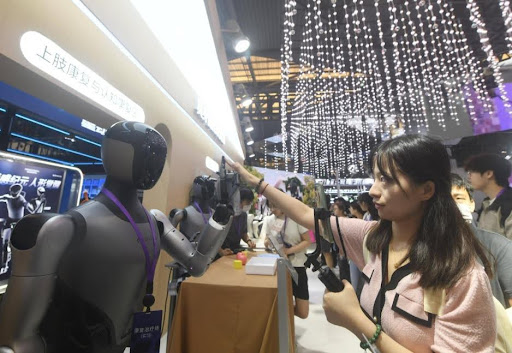
China’s performance has lived up to the world’s expectations. From record-breaking box office revenue during the 2025 Spring Festival holiday to the global buzz surrounding Chinese AI models and humanoid robots, the international community has not only observed the strong momentum of China’s private sector but also the bright prospects of the Chinese economy.

It was stressed at the symposium that the basic principles and policies regarding the development of the private sector cannot and will not be changed, highlighting the “stability” of China’s economic policies.

The Chinese government has placed great emphasis on the development of private enterprises and the private economy. China’sprivate sector boasts a considerable scale and carries heavy weight, laying a solid foundation for advancing the high-quality development of the private sector. By the end of September 2024, private enterprises accounted for a steady 92.3 percent of total enterprises registered in China.

China has been steadily introducing measures such as formulating a private sector promotion law and setting up dedicated institutions to support the private sector’s development, ensuring that private enterprises are empowered to thrive on an even broader stage.

The private enterprises participating in this symposium spanned a wide range of industries, from strategic emerging sectors to traditional manufacturing and agriculture. These sectors represent new quality productive forces, highlighting the “innovation”driving China’s economic growth.

Companies like BYD, which has contributed to China’s new energy vehicle sector development through its R&D and innovation, and New Hope Group, a long-standing player in agriculture and animal husbandry that continues to revitalize the traditional industry through innovation, exemplify the ingenuity of Chinese private enterprises – an ingenuity that has captured the world’s attention.

As the Chinese economy shifts to a stage of high-quality development, private enterprises will play an even greater role in technological innovation, green development, and the digital economy.

As The Australian Financial Reviewreported, China has no shortage of eager venture capitalists and smart young entrepreneurs, and the sense of optimism, excitement and energy that characterized earlier periods of China’s economic reforms is still widespread.

Chinese private enterprises have flourished along withChina’s grand journey of reform and opening up, nurturing a spirit of open cooperation in the country’s open and inclusive environment.

These businesses are actively expanding their global presence, forging international partnerships in fields ranging from AI and cross-border e-commerce to high-end manufacturing and clean energy. They have not only provided consumers around the world with a broader range of options, but also strengthened their international competitiveness in a globalized market, expanded their growth potential, and climbed higher in the global industrial and value chains.

International analysts described the new generation of Chinese private entrepreneurs as “born global entrepreneurs,”highlighting their ability to leverage the vast Chinese domestic market to quickly achieve economies of scale before shifting focus to global expansion and securing a foothold in international markets.

The dynamism of China’s private sector is a testament to the resilience and potential of the Chinese economy. On the new journey of the new era, China’s productive forces will make new strides, people’sliving standards will improvesteadily, and reform and openingup will be further deepenedin an all-around way. These advantages will create abundant new opportunities and greater headroom for the growth of the private sector, and China’s high-quality development will also provide the world with greater confidence in the future.

Chinese robotics giant vows to make robots dependable household assistants

By Yang Junfeng

At China Central Television Station’s 2025 Spring Festival Gala, 16 humanoid robots named “Fuxi”from Unitree Roboticsperformed Yangko folk dance on the stage, dressed in northeastern Chinese style floral cotton-padded jackets and twirling handkerchiefs. They soon went viral on social media.

This innovative performance, titled YangBOT, seamlessly blended traditional folk culture with cutting-edge technology, offering a vivid snapshot of China’s rapid advancements in the robotics industry.

The performance was a dazzling display of the technological prowess of Chinese robotics company Unitree. Since its establishment in 2016, Unitree has distinguished itself in the robotics industry by adopting an innovative “motor-driven” approach and emphasizing “low cost and high performance.” In less than a decade, the company has made remarkable progress towards its goal of introducing robots as dependable household assistants.

The secret behind the mesmerizing performance of “Fuxi,” or H1, at the Spring Festival Gala lies in their AI-driven full-body motion control technology. Equipped with 360-degree panoramic depth sensing, the robots can accurately perceive their surroundings. Through advanced AI algorithms, they can also “understand” music and accordingly adjust their movements in real time based on the rhythm.

These breakthroughs are the result of years of dedicated research in AI and motion control. In terms of core technology, Unitree has abandoned traditional hydraulic systems in favor of self-developed high-performance direct-drive motors.

By implementing a specifically designed algorithm, the company has achieved precise force control while reducing costs by over 80 percent.

In dynamic balancing and AI algorithms, the H1 humanoid robot utilizes joint motors in combination with reinforcement learning algorithms and multi-agent collaborative planning, significantly minimizing movement errors.

Moreover, the company has made remarkable progress in domestic production of key components. Over 90 percent of critical parts, including motors, reducers, controllers, encoders, and LiDAR sensors, are domestically manufactured.

Tang Shuyuan, deputy director of the digital business research center at Sanda University in Shanghai, said the robots featured in YangBOT changed the stereotype of humanoid robots being overly mechanical.

According to him, behind their lifelike movements were advancements in motion control, multi-robot coordination, and vision perception. These breakthroughs mark that Chinese robotics firms are at the forefront of advancements in the development of humanoid robots, Tang said.

Unitree’s product development follows a clear trajectory, evolving from quadruped robots to humanoid models.

In the initial phase, the company pioneered quadruped robots for civilian applications.

In 2017, Unitree introduced its first quadruped robot, Laikago, featuring a modular design for rapid iteration. By 2023, the company launched the industrial-grade B2 robot, capable of carrying up to 120 kilograms and operating for four to six hours on a single charge.

Today, Unitree’s quadruped robots are widely used in education, inspection, and rescue missions, with cumulative sales exceeding 10,000 units. The company holds 60 percent global market share in this segment.

In the second phase, it redefined the standards for massively produced humanoid robots.

In August 2023, Unitree unveiled its full-sized humanoid robot, H1, which can sprint at a top speed of 3.3 meters per second, perform backflips, and maintain dynamic balance using reinforcement learning algorithms. The robot has already been deployed in the automotive factories of Chinese electric vehicle maker NIO for material handling.

In May 2024, Unitree introduced the G1 humanoid robot featuring three-finger force control dexterous hands, which is sold at a price of just 99,000 yuan (about $13,544). This model has made humanoid robotics more accessible across various industries.

In the third phase, Unitree developed an open-source ecosystem to lower industry barriers

In 2024, Unitree launched an open-source reinforcement learning library, attracting over 10,000 developers worldwide. By providing a full reinforcement learning toolkit – from training and simulation to real-world implementation – Unitree has significantly reduced development costs. Additionally, the company also open-sourced data collection tools and training datasets to facilitate humanoid robot data acquisition.

Through continuous technological breakthroughs, ecosystem development, and application-driven innovation, Unitree has not only achieved remarkable growth but also played a pivotal role in elevating China’s robotics industry.

Currently, Unitree is driving industry-wide collaborative innovation throughdeep integration with upstream and downstream partners. This approach strengthens China’s robotics supply chain and enhance its global competitiveness.

Unitree’s development exemplifies three significant trends in China’s robotics industry: moving from a focus on “cost advantage” to prioritizing “technological leadership,” transitioning from the use of robotics for single applications to integrating them across entire systems, and evolving from simply replacing tools to actively creating value through robotics technology.

From research labs to production lines, from industrial automation to consumer applications, robotics is driving the emergence of new business forms. Driven by innovation, backed by a robust supply chain, and guided by real-world applications, Chinese robotics companies like Unitree are writing a new chapter in the global wave of intelligent manufacturing .

Making giant panda conservation accessible: Chengdu’s science education team in action

By You Yi, People’s Daily

“What do you think giant pandas eat?”

At the Chengdu Research Base of Giant Panda Breeding (hereafter referred to as “the giant panda base”) in Chengdu, southwest China’s Sichuan province, an engaging science educational session led by the base’s science education team was underway. Visitors gathered around, eager to participate.

“Definitely bamboo!”

“They must also eat fruitsfor vitamins.”

“But bamboo is so tough. Can giant pandas even digest it?”

The crowd buzzed with excitement. Seeing their enthusiasm, Xiang Bo, a member of the science education team, decided it was time to reveal the answer. He shared the details of giant pandas’ eating habits, explaining everything from their appetite to the variety of foods they eat.

Founded in 2000, the science education team is dedicated to raising public awareness about biodiversity conservation, with a particular focus on giant pandas.

Over the past decade, the team has organized more than 3,000 educational activities, published 22 popular science books, and produced 22 science-related films across 61 episodes, reaching over one billion people.

In 2020, the team launched live, interactive educational sessions at the giant panda base. “We post monthly schedules, usually with 15 sessions, on our official WeChat account,” Xiang explained.

Unlike traditional lectures, these interactive sessions allow visitors to learn about endangered species conservation while exploring the giant panda base.

In a workshop, children eagerly participated in a hands-on activity. They mixed cornmeal, soybeans, oats, and nutrients into a bowl, kneaded the dough, shaped it with molds, and soon, panda-friendly steamed buns were ready. This wasn’t just a cooking session – it was an educational program where young “panda nutritionists” got a taste of what it is like to prepare food for pandas.

“Panda conservation education should start early, and experiential learning is a great way to spark children’s curiosity,” said Tang Yafei, a team member.

Since 2016, the team has developed nine themed programs, like the “panda nutritionist” activity. Each month, the giant panda base organizes different educational activities to foster a deeper understanding of biodiversity conservation values in the public.

At the Chengdu Giant Panda Museum, visitors are often surprised to meet “Xiao Chuan,” a lifelike bionic panda robot that can blink, respond to questions, and even show emotions. Equipped with eye-tracking technology, the AI-powered robotcan interact with visitors, seamlessly incorporating panda-related knowledge into fun, interactive conversations.

A common question that team members receive is about the various sounds made by giant pandas. To answer this, the museum offers interactive sound experience, where visitors can listen to over ten different vocalizations that giant pandas use to express emotions. Each sound is explained, helping visitors decode the panda “language.”The curiosity-driven design often leads to long lines as visitors eagerly try to decipher the meanings behind each sound.

Since its opening in March 2021, the museum has become the world’s first panda-themed interactive museum. Through interactive experiences, recreated habitats, and hands-on activities, it offers visitors a deeper understanding of giant panda conservation and environmental protection.

Do giant pandas hibernate? How do they communicate? These questions – and more – are answered in The Giant Panda You Don’t Know, a beautifully illustrated book created by the science education team. With its engaging language and charming artwork, the book presents findings from scientific research, educational activities and conservationideas related to giant pandas, quickly becoming popular since its release.

Beyond books, the team has built a variety of science educational platforms. They have hosted online science programs and produced educational videos and films. They have also developed 28 panda-themed cultural and creative products, ranging from stickers and postcards to eco-friendly tableware and storage bags. These products are given out during science educational activities to enhance visitors’ experiences and promote sustainability.

Starting with just two members, the team has grown to a team of 31, with an average age of 28. Today, it conducts over 300 events annually, reaching schools and communities to spread awareness about wildlife protection.

“Our goal is for every visitor to not only seegiant pandas but also learn about them – and hopefully feel inspired to contribute to conservation efforts. We’re committed to finding new and creative ways to share stories of giant pandas with the world,” said Xiang.

To answer three key questions about world multipolarity

By Huan Yuping, People’s Daily

At the recently held 61st Munich Security Conference (MSC), multipolarity became the focus of discussion.

Is today’s world truly moving toward a multipolar order? Will multipolarity lead to greater disorder and governance failures in the international system? How can the world ensure a healthy and stable transition to multipolarity?

The answer to these three critical questions concerns the stability of the international order and world peace and development.

            I.

A multipolar world is both a historical inevitability and a reality. The Munich Security Report 2025, themed “Multipolarization,” states that today’s world is characterized by “multipolarization.” This assessment aligns with the prevailing consensus in the international community.

In international relations, “pole” refers to key influential political and economic forces in the global system. At its core, multipolarity is a global power and governance system featuring extensive consultation and joint contribution for shared benefit.

Since the Cold War ended in the early 1990s, the world has rapidly transitioned toward multipolarity. All countries and regions have increasingly sought a more independent and autonomous position in international affairs.

Today, multipolarity is a direct reflection of the changing global power dynamics. According to the International Monetary Fund, emerging markets and developing economies contributed 58.9 percent to the global economy in 2023. The Munich Security Report 2025 highlights that BRICS nations account for about 40 percent of global trade and 40 percent of crude oil production and exports.

This is not just about economic development – it is a basis for structural change in global order.

The MSC, traditionally dominated by Europe and the United States, saw 30 percent of its speakers this year representing the Global South, a testament to the world’s multipolar trajectory. Global South countries are asserting greater independence in global affairs. They have actively promoted greater democracy in international relations through platforms such as BRICS and the Shanghai Cooperation Organization, injecting vital momentum into the world multipolarization process.

The report notes that multipolarization is not only evident in the diffusion of material power but also in the fact that the world has become more polarized ideologically. The once-dominant “end of history” narrative has been thoroughly debunked. Developing nations have grown more self-assured in exploring the path to development independently. Together, the Global South is advocating for equal exchanges, inclusiveness and mutual learning among civilizations.

While multipolarity is the direction of historical development, its progress will not be overnight. Skepticism and resistance persist, with some still clinging to outdated notions of unipolar or bipolar structures at the conference. Still and all, from a long-term historical perspective, multipolarization is bound to gain steady strength through tortuous development.

II.

In today’s international landscape fraught with instability, unilateralism and protectionism are on the rise, posing risks of a return to the law of the jungle. Some argue that multipolarization inherently leads to fragmentation, chaos, and conflict.

However, blaming global instability on multipolarity is a classic misdiagnosis of cause and effect. Multipolarity is not the source of today’s global challenges. On the contrary, it is the resistance to multipolarity – the reluctance of certain countries to abandon unilateralist tendencies – that has fueled disorder.

Policies such as “decoupling and breaking chains” and “small yard, high fence” disrupt global economic cooperation. Unilateral withdrawals from multilateral agreements and coercive policies undermine international cooperation. These actions stem from an attachment to unipolar hegemony and zero-sum thinking, and a reluctance to embrace the evolving multipolar order.

The claim that multipolarity leads to chaos reflects an anxiety about power redistribution. Some nations that once dominated the global order are struggling to adjust to the rapid development of multipolarization. They romanticize the past, painting a picture of an idealized global order under hegemonic stability, or insisting on restoring so-called “liberal order” dominance. These arguments ignore the systemic inequalities and historical trauma faced by the Global South.

The report provides valuable insights: for people in the countries of the Global South, “the past was not as good as we (in the West) tend to think, and the future is not as bad as we fear.” When surveyed on the future of a multipolar world, BRICS respondents expressed significantly greater optimism than those from the G7 countries.

A multipolar world better reflects the international community’s aspirations for justice, fairness, and win-win cooperation. It aligns more closely with the realistic need for peace and development, and is more conducive to the reform of the global governance system.

Increasing representation and voice of developing countries in global governance does not signify the “decline of the West.” Rather, it fosters a more balanced and cooperative international system and helps maintain the vitality of multilateralism in a multipolar world. Just as UN Secretary-General Antonio Guterres suggested, multipolarity promises to be “a way to fix multilateralism.”

III.

To prevent disorder and conflict during the transitional period in the international order, the key lies in working for an equal and orderly multipolar world. The international community should jointly advocate equal treatment, respect the international rule of law, practice true multilateralism, and pursue openness and mutual benefit. It should be a factor of certainty in the multipolar system, and strive to be steadfast constructive forces in a changing world.

To build an equal and orderly multipolar world, rules must be followed. The purposes and principles of the UN Charter provide fundamental guidance for handling international relations, and an important cornerstone of a multipolar world.

Josep Borrell, former High Representative for Foreign Affairs and Security Policy of the European Union, stated that “when the number of participants in a game increases, the natural response should be to strengthen the rules governing the game.”

German President Frank-Walter Steinmeier cautioned at the MSC that a lack of rules must not become the model for a reorganization of the world.

These insights underscore a common view that multipolarization must not descend into a power struggle where “might makes right.” Great powers must lead by example, uphold credibility and law, and reject double standards. Only when power diffusion is accompanied by shared responsibility can a civilized order replace power struggles.

To build an equal and orderly multipolar world, views on cooperation must be updated with the times. One prominent concern about multipolarity is that it may lead to an inadequate supply of global public goods. To prevent this, nations must strike a balance between national and collective interests, and embrace a correct view of cooperation.

Brazilian President Luiz Inacio Lula da Silva noted it is impossible to “de-globalize.” In other words, as all countries share a common future, none can thrive in isolation. The only path forward is to pursue cooperation, mutual benefit, and a positive-sum relationship.

By practicing true multilateralism, promoting extensive consultation and joint contribution for shared benefit, and advancing a universally beneficial and inclusive economic globalization, all parties can strengthen their ability to tackle challenges and pursue development with solid steps. The international community should seize this historic moment to shape an equal and orderly

GOCMEJ Applauds NSCDC’s Advancements Under Dr. Abubakar Audi

A Civil Society, Non- Governmental Organisation(NGO), foremost anti-corruption, pro- democracy and pressure group, the Guild of Civil Societies and Media Executives for Equity, Justice and Transparency in Nigeria (GOCMEJ), has applauded the transformation and performance indices engineered by the Commandant-General of the Nigeria Security and Civil Defence Corps (NSCDC), Dr. Abubakar Ahmed Audi.

The CSO notes the internal processes for optimal performances; high morale of staff; enhanced surveillance on critical assets; prompt payment of allowances; discipline, and the good chain of command structure within the hierarchy of leadership. It also notes the transparency in procurement processes, including the bold initiatives and innovations that have bolstered the NSCDC into a 21st century paramilitary organisation.

The CSO’s Country Representative, President and Senior Research Fellow, Omoba Kenneth Aigbegbele, made the commendation in Lagos recently, when he attended a strategic round-table Town Hall with other leaders in South-west zone, according to a press statement he personally signed.

The statement alluded to the salient milestones and achievements of the present leadership of the NSCDC in the delivery of good corporate governance and professionalism to drive the changes that are glaring.

According to Aigbegbele, never before have those improvements been seen in the history of the Agency despite the enormous challenges confronting it

The statement emphasises that issues such as the reduction of the incessant herders and farmers’ clashes, cattle rustling, the deployment of undercover officers to schools, the reduction of criminal vandals on national assets across the country and the robust inter-agency relationships, cooperation and partnerships with sister agencies such as the Navy, Army, Customs, Immigration, NNPC, etc, most of which have become a thing of the past.

In furtherance of the present efforts, the continued fight against cyber-crimes, child abuse, flushing out of illegal private guard companies, the arrest of smugglers, vandals and pipeline, oil thieves in the Niger Delta region has become a herculean task that must be nipped in the bud. And the present management is working assiduously round the clock to deal decisively with these challenges once and for all.

According to the statement, Dr. Audi has given marching orders to the State Commandants and also read riot acts to them reminding them that President Bola Ahmed Tinubu has zero-tolerance for corruption and theft and as such directed the commandants to do all they can in line with the presidential order to rid the nation’s oil sector of economic saboteurs, vandals on critical national assets, oil thieves, and other criminal activities inimical to the growth of the sector and Nigeria at large.

The statement also emphasised the efforts and challenges of the mining marshals and agro- rangers’ initiatives to boost food security in order to make food available and allow farmers to go about their businesses in their respective farmlands with the full support of the rangers.

GOCMEJ, of course, agrees that the mining sector is a vital component of the economy as the mining marshals are doing everything within their power to curb the excesses of illegal miners across the length and breadth of the country which pose a threat to national security.

Accordingly, the Corps has been very formidable in dislodging illegal miners by conducting surveillance 24/7 hours and arresting illegality and hence promoting economic growth and saving the country massive revenue loss.

The creation of the Special Mining Marshals by the Audi-led management is indeed a major boost to the fight against illegal miners in the country and has been applauded by well-meaning Nigerians for their selfless efforts in combating the menace head-on which has reduced their activities thereby increasing the revenue base of the country and as well as, improving investors’ confidence in the mineral sector.

Also, with the establishment of the Special Female Squad (SFS) under the present leadership, targeted at boosting the fight against insecurity and kidnapping in our schools, the location of the Squad in all the Commands across the country has enhanced the safe school response coordination and the protection of schools in remote areas and communities, which is done in collaboration with sister agencies as part of the Safe School Initiative (SSI).

In view of the foregoing, GOCMEJ hereby calls on the Federal Government to adequately fund these initiatives through training and retraining of officers, the building and enhancement of capacity development of the Agro- rangers, Mining Marshals and Special Female Squad, so as to boost their productivity, self-esteem and manpower development for the collective good of all. Therefore, GOCMEJ further advocates for a renewed vigour as it urges the increment of the national budget allocations to the NSCDC, in view of the pivotal role it plays in the protection of critical national assets in addition to reducing kidnapping in schools. If these initiatives are properly funded, it will give the NSCDC the impetus to do more for the nation and its work force.

GOCMEJ reiterates that it is encouraged by the public procurement process, contract approvals and payments, the espirit-de-corps of the NSCDC officers and men, including the promotion of officers never before seen in its annals of history which figures stood at about 21,385 personnel to new ranks, the commissioning of fleets of operational vehicles to enhance patrol and surveillance around critical national assets is also a welcome development.

The Guild again applauds the transformation presently on-going and change narrative including strategic alliances with various ivory towers across the country to upgrade the service institutions to meet with what is attainable globally.

The release will, accordingly, amply captures that henceforth “GOCMEJ will continue to support the corps in its efforts to tackle bandits, herders, vandals, illegal miners and promote a safe and secured environment for all”.

The organisation further adds that “the efforts of the NSCDC in playing critical role in securing the mining sector, school environment from kidnappers and protection of farmlands and agro- allied investments are in line with the vision of the President Bola Ahmed Tinubu administration’s Renew Hope Agenda, which is aimed at diversifying the economy, promoting growth and securing the nation for investors”.

GOCMEJ, therefore, has no hesitation in passing a Vote of Confidence on the Dr. Abubakar Audi- led management and calls on the international community and well-meaning Nigerians to continually support the proactive and change leadership to enable it further its commitment to securing the nation, safeguarding our schools and deliver its mandate to Nigerians.

Anambra 2025: Umeoji defeats Soludo, others in opinion poll – AOP

Ahead of the November 8, 2025, governorship election in Anambra State, an opinion poll conducted by 12 independent research organizations has projected Chukwuma Umeoji, a former lawmaker representing Aguata Federal Constituency and a member of the All Progressives Congress (APC), as the leading candidate for the state’s top position.

Addressing the media under the banner of Anambra Opinion Polls (AOP) on Saturday in Abuja, Tabuko Kennedy, Director General of the Nigeria Democratic Research Institute (NDRI), highlighted the survey results, which placed Umeoji significantly ahead of other contenders.

“This poll was carried out using scientific polling methodologies, including structured questionnaires, face-to-face and telephone interviews, and online sampling, ensuring representation from all 21 local government areas of the state. The findings reflect the true aspirations of Ndi Anambra, as gathered from a diverse cross-section of the population, including youths, professionals, traders, artisans, and traditional institutions,” Kennedy stated.

According to the group, after an extensive survey conducted over Six weeks, the results are as follows:

“RT HON CHUKWUMA UMEOJI (54.6%) The clear frontrunner receiving majority support across different demographics due to his perceived competence, grassroots appeal, and commitment to infrastructural development and social welfare.

“GOVERNOR CHUKWUMA SOLUDO (22.3%) – The incumbent governor, who retains significant support but faces challenges due to governance concerns, policy controversies, and shifting voter sentiments.

SEN. TONY NWOYE (15.8%) – A formidable contender with notable youth and grassroots support but struggling to consolidate broad-based appeal.
“SIR PAUL CHUKWUMA (4.5%) – Having served as a former Auditor in the main opposition party in the state, he has gained traction among certain political circles but has yet to establish widespread acceptability,” among others.

The AOP further analysed the strength of aspirants contesting for the number one position in Anambra based on the results from the poll.

“Rt. Hon. Chukwuma Umeoji (54.6%)
“Rt. Hon. Chukwuma Umeoji’s dominance in this poll is attributed to his grassroots connection, strategic political positioning, and reputation for pragmatic leadership. His extensive political career, including his tenure in the National Assembly, has earned him credibility among different voter demographics. His key support base includes traders, the youth, and local political structures that view him as a candidate capable of driving economic transformation in Anambra.

“His acceptance is further reinforced by his focus on people-oriented policies, particularly in areas of security, infrastructure, and job creation. His overwhelming lead in this poll suggests that, if elections were held today, he would likely emerge victorious.

“Governor Chukwuma Soludo (22.3%)
Governor Soludo, despite being the incumbent, has seen a decline in public approval. While his administration has implemented reforms, issues such as economic hardship, policy dissatisfaction, and governance concerns have affected his re-election chances. His support base remains relatively strong among technocrats, elites, and civil service personnel, but he is struggling to maintain a firm grip on the grassroots. Many respondents in this poll expressed concerns about the impact of his economic policies on small businesses and traders, which has led to a shift in voter sentiment. While he is still a strong contender, his re-election is uncertain unless significant political adjustments are made.

“Sen. Tony Nwoye (15.8%)
Senator Tony Nwoye, a former student activist and a politician with a history of strong grassroots mobilization, has a formidable youth support base. His experience in the Senate and previous gubernatorial runs have earned him recognition, particularly among students, young professionals, and those seeking an alternative leadership option. However, his campaign faces challenges in expanding beyond his core support base, as he has not fully consolidated the broader political structures required for victory. His growing numbers in this poll indicate potential for an upset if he intensifies his outreach efforts.”

On the poll credibility, the AOP emphasized the credibility of the 12 research organizations involved, noting their integrity, methodological rigor, and commitment to non-partisan electoral research.

“These organizations have a proven track record of conducting accurate, independent, and non-partisan research in Nigeria and beyond. These institutions specialize in political polling, electoral research, governance, analysis, and voter awareness initiatives,” the group stated.

Benue: Purported Removal Of Chief Judge, Unconstitutional, Says Idoma Lawyers

The Association of Idoma lawyers, has condemned in the strongest terms, the purported removal of the Benue State Chief Judge, by the State House of Assembly.

The association described the action of the lawmakers as a gross constitutional breach to destabilize the State Judiciary.

In a statement on Thursday, by Chief Godwin Obla (SAN) Leader, and Joshua Musa, (SAN), President, Association of Idoma Lawyers, the group submitted that they are stakeholders in the affairs of the Benue State Judiciary, and therefore, “will not be silent in the face of the uncivilized attack on this dignified arm of government popularly referred to as the “hope of the common man”.

The Idoma Lawyers insisted that any action done contrary to the sacred provisions of the Constitution is void adding that “the purported removal of the Chief Judge of Benue State, Hon. Justice Maurice Ikpambese is a nullity ab initio”.

While noting that the Members of the State House of Assembly swore to preserve, protect and defend the Constitution of Nigeria, however, the group said “this arm of government has brazenly violated the Constitutional oath the members took”.

It was the contention of Idoma Lawyers that Section 292(1)(a)(ii) of the Constitution was not complied with in the purported removal of the Benue State Chief Judge.

“Thirteen out of the Thirty-Two members of the House of Assembly came out to show clearly that the Governor did not act on an address supported by two-thirds majority of the House of Assembly of the State.

“Unfortunately, news have it that this Thirteen Honourable Members have been suspended from their legislative functions for three months for choosing to honour the oath they took to preserve, protect and defend the Constitution.

“The process of removing a Chief Judge of a State was clearly outlined by the apex Court in the case of HON. JUSTICE RALIAT ELELU-HABEEB & ANOR. v. ATTORNEY GENERAL OF THE FEDERATION & ORS. (2012) 13 NWLR (Pt. 1318) 423 at 494 – 495 paras. D – G”.

According to Obla and Musa, “the above Supreme Court authority puts to rest the insistence by the Majority Leader of the Benue State House of Assembly in his Press Conference in Makurdi on Thursday, the 20th of February, 2025, that the Chief Judge of the State stands removed from office.

“The role of interpretation of the Constitution is that of the Judiciary and not the Legislature.

“No amount of desperation to remove the Chief Judge can be justified under the present circumstance and the stand of the House of Assembly as voiced by Hon. Saater Tiseer, the Majority Leader, is an affront to the Constitution and the Rule of Law and a demonstration of crass ignorance of the Law and understanding of the Constitution” the Idoma Lawyers stated.

The Association posited that Benue State Judiciary has come a long way and has produced eminent Jurists, stressing that “the threat to the Judiciary in the State raises the question whether the Judiciary is being adequately funded”.

“The members of the House of Assembly were voted by their various Constituencies to effectively represent them and make Laws for the good governance of the State.

“This lame attempt to remove the Chief Judge of Benue State is embarrassing and regrettable.

“We commend the National Judicial Council, the Nigerian Bar Association, the Nigerian Labour Congress and all other organizations and persons for their timely intervention.

“We also commend the Benue State Judiciary for the unity displayed at this trying time and the laudable resistance put up against tyranny and abuse of the Constitution.

“The Legislative arm of government in Benue State must learn to function within the province of the Constitution of the Federal Republic of Nigeria, 1999, as amended, the group warned.

Chinese researchers delve into 3D-printed earthquake-resistant buildings

By Kang Pu

At a sci-tech park of the Institute of Engineering Mechanics (IEM) under China Earthquake Administration in Sanhe city, north China’s Hebei province, a team of Chinese experts in intelligent construction, structural engineering, and earthquake resistance conducted an intense “destructive” experiment for a 3D-printed house model.

This 3D-printed concrete house model was brought in for testing by associate professor Sun Xiaoyan’s team from the College of Civil Engineering and Architecture at Zhejiang University.

“Are 3D-printed houses sturdy?” This is the most common question received by Sun.

The sturdiness is primarily determined by how well they can resist earthquakes. Sun had collaborated with Hangzhou Lingdong Technology Co., Ltd., an enterprise specializing in digital construction and 3D printing design based in Hangzhou, east China’s Zhejiang province, to precisely calculate the structure’s earthquake-proof performance using a 3D digital model.

Theoretical analysis suggested excellent earthquake resistance, but to confirm these findings, Sun and a team of experts from different areas decided to conduct a shaking table test.

A shaking table is a device that simulates earthquakes. The one being used for this test was a state-of-the-art six-degree-of-freedom shaking table capable of generating horizontal and vertical vibrations as well as rotational movements.

To match the dimensions of the shaking table, Sun commissioned a factory to produce a scaled-down 3D house model measuring five meters in length and just over one meter in width, which is also the maximum dimensions allowed for testing.

The experiment included six different seismic conditions, with seven tests conducted for each situation. “The goal is to keep shaking it until it breaks down – to see how strong an earthquake it can endure,” Sun said cheerfully.

“Start!”

Following the command, a buzzing sound filled the air, and the hydraulic actuators of the shaking table jolted violently – a simulated earthquake began.

After the shaking subsided, researchers quickly stepped onto the platform, meticulously inspecting every corner of the house model and marking every visible crack.

Visual inspection, however, was only part of the assessment. The model was equipped with acceleration sensors, displacement sensors, strain gauges, and an advanced optical tracking system empowered by video recognition. Additionally, four ultra-high-speed cameras positioned on either side of the structure could capture the slightest changes during the simulated earthquake.

“These ultra-high-speed cameras can capture 3,000 frames and produce 6GB of image data per second – no structural movement goes unnoticed,” said Zhu Liangying, a technician with Hefei Zhongke Junda Vision Technology Co. Ltd., the manufacturer of the cameras.

Sources say that the IEM has made significant strides in fields such as strong-motion observation and application, earthquake-resistant building engineering, earthquake risk assessment and mitigation, earthquake engineering testing technologies, and earthquake and engineering vibration measurementtechnologies.

In 2024, the institute spearheaded the development of a next-generation high-speed railway earthquake early warning and monitoring system, which has been deployed along more than 1,500 kilometers of railway in China and exported for use in Jakarta-Bandung High-Speed Railway in Indonesia.

As the experiment progressed, the simulated earthquake became more intensified, followed by a louder buzzing sound, and cracks started appearing on the house model.

By the time the test reached the sixth condition, even the floor beneath the observers trembled noticeably as the hydraulic actuators roared.

In real earthquakes, most casualties are caused bythe collapse of buildings. According to He Huanan, associate professor with the School of Infrastructure Engineering, Dalian University of Technology, China has established three principles for earthquake-resistant construction to ensure building safety: structures should remain undamaged in minor earthquakes, sustain repairable damage in moderate earthquakes, and avoid collapse in major earthquakes.

To be specific, a minor earthquakerefers to a common seismic event with a 63 percent probability of occurring within a 50-year design lifespan, where buildings should remain undamaged. A moderate earthquakecorresponds to the expected seismic intensity, with a 10 percent probability of being exceeded in 50 years – some damage is acceptable, but buildings should remain functional after repairs. A major earthquakeis a rare event, with only a two to three percent chance of occurring within a building’s lifespan, where the primary goal is to prevent collapse and ensure people’s life safety.

After a full day of testing, the 3D-printed house model withstood an earthquake with a magnitude of 6.0 without any structural damage. When magnitudes reached 7.0 and 8.0, cracks appeared but did not extend to the structural framework, maintaining overall stability. Even after an earthquake at a magnitude of 9.0 that caused complete cracking, the core structure remained intact without collapse or severe damage. The model successfully passed the test.

Sun explainedthat 3D-printed concrete buildings boast many advantages. First, they allow for rapid and precise construction through digital design, additive manufacturing, and prefabrication, and can accommodatea range of architectural forms. Second, their hollow-wall design can incorporate reinforced steel frameworks, creating a robust concrete structure with excellent anti-seismic performance and long-term durability.

“The future of 3D-printed houses is promising,” Sun said.

However, as a novel construction method, 3D-printed concrete houses still require further professional certification and practical testing. The outstanding earthquake resilience of this scaled-down housemodel has brought confidence in future research and wider technological adoption.

“Sky school bus” ensures safer trip to school for students in mountainous village

By Sheng Yulei, Ye Chuanzeng, People’s Daily

In just less than three minutes, an elevator transported nine students from the valley floor of Nizhu River Grand Canyon to a cableway platform 268 meters above. After stepping out, the students boarded a cable car and reached their mountaintop school – the Guanzhai Village Primary School – within five to six minutes.

What was once a perilous three- to four-hour trek now takes merely half an hour, thanks to a “sky school bus” that soars through the clouds.

Located atop the Nizhu River Grand Canyon in Puli township, Xuanwei, southwest China’s Yunnan province, the Guanzhai Village Primary School sits at an elevation of 1,650 meters. Nizhu River village, a natural village under the administration of the Guanzhai Village Committee, lies at the bottom of the canyon at 1,100 meters above sea level.

For generations, to reach their classrooms, children from Nizhu River Village had to trek up the gorge along a perilous “sky road,” scaling cliffs and wading through rivers – a journey that took three to four hours on foot.

In October 2022, a 268-meter-high elevator and an aerial cableway spanning nearly 200 meters in elevation officially went into operation, providing the children with a direct “sky bus” to school. Their journey to class is now not only much safer but also comes with a touch of sci-fi wonder, as if they are gliding through the clouds. What once felt “tough” has now turned into something “cool.”

This uplifting story echoes the progress of the times, reflects the resilience of the human spirit, and embodies a shift in mindset.

It is a path of unyielding perseverance.

The canyon’s abyss and cliffs were not just physical barriers but walls that stifled education and opportunity. Grandparents of the children carved crude footholds into stone; fathers of them built stair-like cliffside paths. Each generation labored to keep knowledge flowing through these mountains, breaking cycles of poverty.

Today, modern infrastructure carries their legacy forward, propelling young dreams toward horizons once unimaginable.

It is a path of boundless potential.

How does a secluded village bridge centuries of isolation? The answer lies in reimagining development. By embracing eco-tourism, the area has birthed cafes, bars, and local cuisine hubs, empowering over 1,600 residents from 300 households to thrive without leaving home.

Where “barren hills and treacherous waters” once defined hardship, lush landscapes now draw visitors, proving that “lush mountains and lucid waters” are invaluable assets.

It is a path of unconventional modernization.

To drive development, local authorities introduced tourism projects, leading to the construction of the cliffside elevator and cableway as supporting infrastructure. To serve the people, the canyon scenic area set up a green channel, allowing villagers and students to ride for free with priority access.

Development and well-being intertwine. This path – once a road out of poverty – has now become a road to prosperity, vividly demonstrating the principle of ensuring and improving people’s well-being through development. It showcases the virtuous cycle between economic growth and better living standards, highlighting the boundless potential of Chinese modernization.

Nizhu River Village is not an isolated case—thousands of mountain villages across China have been transformed. Guided by forward-thinking ideas and supported by policies and resources, once-barren lands are now full of opportunities, carrying the dreams of many. Through hard work and determination, people are reshaping their destinies and riding the waves of progress to build a better life.

NCDC : Former Nasarawa Speaker Balarabe hails President Tinubu, National Assembly, Sponsors of the bill on giant stride.

“… says the region will forever remain grateful for the present administration, lauds senate on resolving relocation of headquarters agitation for united North Central Region…”

The Immediate Past Speaker of the Nasarawa State House of Assembly, Rt. Hon. Ibrahim Balarabe Abdullahi, has commended President Bola Ahmed Tinubu for signing into law the bill establishing North Central Development Commission (NCDC)

This, he said the President has again demonstrated his leadership qualities and the concern he has for sustain peace, unity and enhance equitable development across the Country.

Balarabe Abdullahi, who is the Chairman, Governing Council, Federal Polytechnic, Damaturu, Yobe State gave the commendation while speaking with newsmen in Lafia, the Nasarawa State capital.

He said that the commission would address the emerging challenges facing the people of the North Central Region.

” First, I want to commend and appreciate His Excellency, President Bola Ahmed Tinubu for signing the North Central Development Commission (NCDC) bill into law.

“This is a milestone achievement that would drive sustainable development in the North Central region, it is a great achievement of the present administration for the entire people of the geo-political zone that we will for ever remain grateful for President Tinubu”

“The commission if become operational, it will improve on the standard of living of our people and bring speedy development to our region and our people will be better for it” he said.

According to him, the commission apart from creating jobs for the people of North Central region, it will boost the socio-economic activities.

“This is one of the many milestones of the present administration, this singular, no doubt has further demonstrated the leadership qualities and zeal of Mr President to ensure equitable development across the country and we from the zone will forever remain grateful for the gesture”

The former Speaker also commended the great effort of the National Assembly in ensuring quick passage of the bill just as he hailed Sen. Abba Moro (Benue South) and Reps Jeremiah Umaru (Akwanga/Nassarawa Eggon/Wamba) federal constituency for initiating and sponsoring the bill.

” I want to thank Sen. Abba Moroa of Benue State and Hon. J J Umaru, House of representatives member from Nasarawa State for sponsoring the bill.

” Their efforts deserves commendation, it will not go in vain and I pray God to bless them accordingly”

“I also want to appreciate all members of the National Assembly and other stakeholders in the country for their positive inputs towards the realization of the NCDC” he said.

Balarabe Abdullahi also appreciated Gov. Abdullahi Sule and other Governors and stakeholders of the North Central region for their efforts in ensuring that the bill became a reality.

“I also want to thank Gov. Abdullahi Sule, the Chairman, North Central Governor’s Forum for his efforts in bringing together his colleagues in unity and togetherness towards ensuring full support in realization of this great achievement” he said.

The former Speaker equally thanked the Senate for quick response and resolving the agitation on the issue of relocating the headquarters of NCDC particularly the Senate President Godswill Akpabio and Senator Ahmed Aliyu Wadada, Nasarawa West who championed the resolution.

“This agitation was no doubt, an ill wind which would have devastated the geopolitical zone” He added.

He called for support and collaboration for the success of the commission to achieve its mandates and objectives in the region rather than divided tendencies.

The former Speaker further called on the people of the region to continue to pray and support President Tinubu’s administration to succeed.