Hubei’s inland shipping industry strives for green, smart development

By Yu Weiliang, Fan Haotian, People’s Daily

At a dedicated dock of shipbuilder China Star Shipping in Yichang, central China’s Hubei province, a bulk carrier named Gezhouba, nearly 130 meters long with a maximum deadweight of 13,740 tons, is undergoing outfitting and is scheduled for delivery in March 2026.

“This 10,000-ton-class all-electric bulk carrier integrates breakthroughs in new-energy propulsion with intelligent navigation and control,” said Yan Xinping, an academician of the Chinese Academy of Engineering and a professor at Wuhan University of Technology. 

According to him, Gezhouba is the first large inland vessel equipped with an intelligent navigation and control system, which enables remote operation, autonomous obstacle avoidance, and automatic berthing and unberthing.

Hubei province leverages its extensive waterways, transportation networks, and industrial expertise to transition inland shipping toward green and intelligent solutions. The province is home to 29 shipbuilding enterprises above designated size, or those with annual main business revenue of 20 million yuan ($2.85 million) or more. Its annual shipbuilding capacity stands at 5.31 million deadweight tons. 

At the China State Shipbuilding Corporation (CSSC) 712 Institute in Wuhan, technicians conduct integrated shore-based testing of battery, motor, and control systems — components that power over half of China’s new energy marine propulsion systems.

“This year, we have released a range of second-generation green and intelligent equipment, including high-safety containerized marine power supplies, actively balanced battery packs, and smart ship bridge systems,” said Li Mingyong, deputy director of CSSC 712 Institute.

Hubei is working to optimize the supply system of its inland shipping industry by prioritizing greener vessel propulsion, making breakthroughs in autonomous navigation technologies, accelerating the development of standardized ship models tailored to ports, waterways, and cargo types, strengthening high-end shipbuilding capabilities, and actively expanding into international markets. Its efforts center on five key directions: green development, intelligence, standardization, high-end development, and internationalization.

A series of demonstration new energy vessels have been launched in the province, including the world’s largest-capacity all-electric cruise ship, China’s first hydrogen fuel-powered vessel, and the country’s first 10,000-ton-class inland bulk carrier powered by a methanol dual-fuel electric propulsion system.

“Behind these achievements is the growing strength of Hubei’s collaborative innovation system that integrates enterprises, research institutions, and universities,” said Li Jinkun, an official with the Hubei provincial office of science, technology and industry for national defense. 

The province has built a high-level innovation ecosystem, which is supported by national key laboratories such as the State Key Laboratory of Maritime Technology and Safety and the Hubei Donghu Laboratory, and joined by Huazhong University of Science and Technology, Wuhan University of Technology, Naval University of Engineering, CSSC 712 Institute and CSSC 719 Institute, as well as the Wuhan branch of the China Classification Society and its Wuhan Rules and Research Institute.

At the Yichang Shipbuilding Industrial Park in Zhijiang, Hubei province, a batch of new energy vessels are under construction. In late November, a 130-type LNG (liquefied natural gas) single-fuel river-sea direct multipurpose vessel was delivered. Benefiting from the Yangtze River shipbuilding supply chain platform, which integrates research and development, design, construction, and finance, the vessel was delivered one month ahead of schedule, with overall costs reduced by 4 percent.

Hubei has encouraged financial institutions to develop innovative green credit, financial leasing, and guarantee products. It has also established specialized supply chain platforms to provide companies with one-stop services covering information sharing, logistics and trade, and technological support.

The province has taken the lead in introducing an administrative filing system for the shipbuilding industry and easing market access requirements. At the same time, it has focused on key sectors such as freight transport and cultural tourism to develop representative application scenarios.

By strengthening coordination among the industrial, innovation, talent, capital, and service chains, Hubei continues to improve the ecosystem for its inland shipping industry.

In the first three quarters of this year, Hubei’s shipbuilding industry generated an output value of 72.71 billion yuan, up 17.3 percent year on year. Newly secured ship repair and construction orders totaled 289 vessels, with green and intelligent ships accounting for 75.8 percent of the total.

Three ’30-million’ milestones in auto sector highlight China’s economic potential

By Ren Ping, People’s Daily

Recent milestones in China’s automotive industry, marked by three significant “30-million” achievements, have garnered widespread attention and offer valuable insights into the nation’s economic potential.

In late October 2025, Chinese-German joint venture FAW-Volkswagen celebrated the production of its 30 millionth car in China. Over the course of 34 years of operation, FAW-Volkswagen has demonstrated resilience by not only adopting advanced technologies but also prioritizing independent innovation. This commitment has led to a transition to high-end, intelligent manufacturing, highlighting the immense potential of China’s open, mutually beneficial market.

On December 10, 2025, Chinese Changan Automobile Group Co., Ltd. saw its 30 millionth vehicle roll off the production line. It took the company 30 years to produce its first 10-million vehicles, another seven years to reach 20 million, and just over four years to reach the 30-millionth milestone. This progress reflects the success of ongoing efforts to enhance product quality, efficiency, and innovation within the Chinese automotive industry.

On December 11, 2025, according to data from the China Association of Automobile Manufacturers, in the first 11 months of 2025, China’s auto output and sales have both exceeded 31 million units. This marks a pivotal moment for China, which has become the world’s largest exporter of complete vehicles, with new energy vehicles accounting for more than half of new car sales. The rapid acceleration of the automobile industry underscores the country’s competitive advantages, particularly its vast domestic market and comprehensive industrial ecosystem.

Transforming traditional and emerging sectors

The transition from traditional internal combustion engine vehicles to new energy vehicles, combined with advancements in electrification and intelligent mobility, has driven remarkable growth in the automotive sector. Companies like Changan Automobile, BYD, and Leapmotor have made significant strides in new energy vehicle technology, with Changan Automobile having established over 200 laboratories, fostering innovation and strengthening industrial independence. The integration of the innovation chain with the industrial chain continues to forge new market advantages, positioning China’s automotive sector for sustained growth.

Beyond the automotive industry, China is witnessing the rise of the low-altitude economy, the application of artificial intelligence, and advancements in pharmaceuticals, all of which contribute to the expanding scope of economic potential.

In the first 11 months of 2025, sales revenues in high-tech industries nationwide increased 14.7 percent year on year, signaling the economy’s continued transformation and the flourishing of new sectors.

By capitalizing on the opportunities presented by a new round of technological revolution and industrial transformation, and coordinating the upgrading of traditional industries, the expansion of emerging industries, and the development of future industries, China is developing new quality productive forces in line with local conditions, unlocking boundless possibilities for its economy.

Urban-rural integration and regional development

A key area of economic growth is the integration of urban and rural development. Over the past five years, sales of new energy vehicles in rural areas have reached approximately 15 million units, while the distribution of goods to villages has soared, with more than 10 billion parcels handled by China Post in the past three years. These figures reflect the significant potential for industrial growth, consumption upgrading, and infrastructure development in lower-tier and rural markets.

Imbalances and inadequacies represent both developmental challenges and untapped potential. By advancing the high-quality development of county-level economies and strengthening coordinated growth among key city clusters, China is promoting urban-rural integration and regional connectivity, thereby expanding market opportunities and driving new sources of economic growth.

Investment in people and infrastructure

Investment in both physical infrastructure and human capital is a crucial element of China’s growth strategy. The country’s ice-and-snow economy, valued at around 1 trillion yuan ($142.03 billion), exemplifies the successful application of such investment. Moreover, the implementation of continuing education programs for migrant workers is equipping industrial workers with the skills necessary for modern economic demands.

By prioritizing people’s expectations, addressing their needs, and promoting their development, China is leveraging the multiplier effect created by the close combination of investments in physical assets and human capital. Improving the quality and efficiency of human capital boosts total factor productivity, stimulates demand, unleashes significant consumption potential, and generates a win-win outcome for both economic growth and improved livelihoods.

Policy support and reform-driven Innovation

Turning economic potential into sustainable growth requires policy support and continuous reform-driven innovation. The Central Economic Work Conference noted that there are still long-standing and new challenges in China’s economic development, and the impact of changes in the external environment has deepened while risks and hidden dangers persist in some key areas. These issues, arising in the course of development and transformation, can be resolved through efforts.

The automobile sector serves as an illustrative example. Intense “rat-race” competition once led to a significant decline in profit margins, with the industry’s overall profit dipping to 3.9 percent in the first quarter of 2025, below the average for manufacturing. However, the timely intervention of the “visible hand” has offered much-needed guidance, helping the industry gradually recover and return to a healthier trajectory. China introduced targeted campaigns to address online disruptions in the automotive sector and implemented regulations to curb destructive price wars. As a result, profits in the automobile industry increased by 4.4 percent year on year in the first 10 months of the year.

In March this year, The Washington Post published an article titled “How China pulled ahead to become the world leader in electric vehicles” on its website, attributing the success of Chinese electric vehicles to industrial planning. The effective application of value-driven policies and strategic guidance by institutions plays a crucial role in unlocking economic potential.

China is advancing reform and the rule of law as “dual engines” by issuing guidelines for building a unified national market, promulgating regulations for fair competition, and implementing laws to promote the private economy. These efforts continue to foster a stable, fair, transparent, and predictable business environment, enabling market vitality to thrive.

By aligning with broader development trends and strengthening confidence, China is  focusing on effective governance to transform its vast economic potential into dynamic momentum for high-quality device

Chinese automakers strengthen capabilities in powertrain development

By Kang Pu, Li Fangyi

The powertrain — comprising the engine, transmission, and electric motor — is the core of any vehicle, directly influencing power output, energy efficiency, and overall reliability. 

Following decades of dedicated research and sustained investment, Chinese automakers have made substantial progress across powertrain technologies, advancing from a phase of catching up to one of leading innovation. This shift is now a driving force behind the continued growth and modernization of China’s automotive industry.

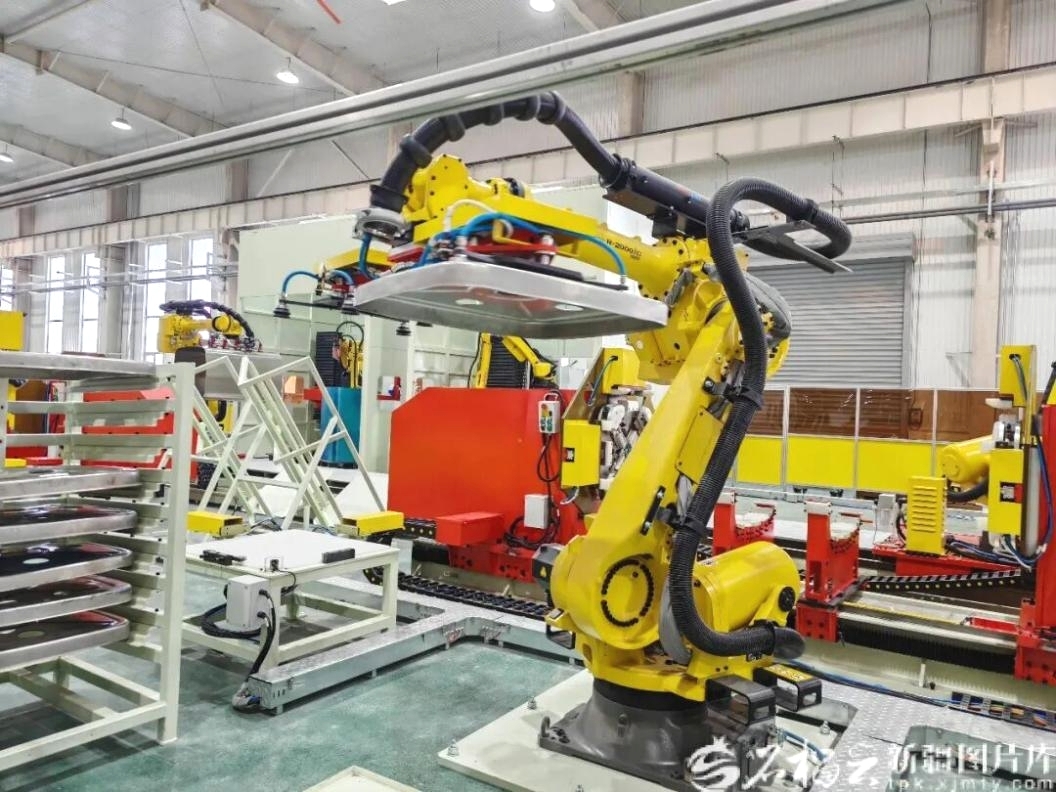
At an engine plant of Chinese carmaker Great Wall Motors (GWM) in Baoding, north China’s Hebei province, robotic arms move with precision while technicians carry out final calibrations on newly assembled engines. Once considered a weak link in China’s automotive sector, engines have become a focal point of domestic innovation.

In the 1980s and 1990s, Chinese automakers primarily relied on imported or reverse-engineered engine models. That began to change in 2000, when GWM established its internal combustion engine division, becoming one of the earliest Chinese companies to develop core powertrain technologies independently. By 2015, GWM had built a comprehensive portfolio of engine platforms ranging from 1.5L to 3.0T, not only powering its own models but also supplying other brands.

The development of large-displacement engines has long been regarded as a hallmark of industrial capability. At Auto Shanghai 2025, GWM debuted its 4.0T V8 engine. “Developing a V8 engine requires far more than adding cylinders. It involves major breakthroughs in hardware design, control systems, manufacturing, and key components,” explained Wang Chao, deputy general manager at GWM’s Research and Development Center.

Some have questioned the relevance of investing in internal combustion engines amid the rapid growth of new energy vehicles (NEVs). Wang, however, sees hybridization as the long-term optimal solution. He argues that varying regulatory environments, infrastructure disparities, and fuel availability across global markets necessitate a diversified powertrain strategy. “A globally competitive brand must meet a wide range of user needs,” he added.

Hybrid technologies, combining combustion engines with electric motors, have become a mainstream solution, offering improved efficiency, reduced emissions, and alleviating range anxiety.

According to an executive of Chinese automotive giant Geely, the Starray hybrid-dedicated engine released in 2024 incorporates advanced features such as a steeply angled ‘duckbill’ intake port, Mask-type airflow guidance, and airflow-profiling piston crowns. These innovations enable precise in-cylinder flow control, optimizing the coordination between battery, motor, and engine. The engine initially achieved a thermal efficiency of 46.5 percent. By 2025, with the application of Geely’s full-stack AI technologies, thermal efficiency in mass production rose to 47.26 percent in 2025, placing it among the most advanced hybrid engines globally.

For new-energy vehicles, the electric motor serves as the core power component, replacing the traditional engine. “In 2010, we were already a ‘hidden champion’ in the global sewing machine motor market, holding around 80 percent of the market share,” said Niu Mingkui, president of the new energy drive division at Zhejiang Founder Motor Co., Ltd. (FDM), a leading motor supplier based in east China’s Zhejiang province. 

“However, with limited growth prospects in that sector, we decided to pivot toward the rapidly expanding market for NEV motors,” Niu added.

During the early stages of its transition to the automotive sector, FDM faced a significant talent gap. “We established a research and development institute in Shanghai, where the automotive industry chain is more mature, and built a specialized research team to close the gap,” Niu recalled.

Since 2020, FDM has become a supplier to major passenger-vehicle manufacturers, delivering 470,000 drive motors for NEVs that year.

Beyond battery capacity, motor efficiency is a key determinant of range in electric vehicles. “We examined every component from electromagnetic design to material applications to drive performance gains,” Niu said. “We raised motor efficiency from 93 percent to 98 percent. That five-percentage-point improvement can save thousands of yuan per vehicle for automakers and deliver a noticeably better experience for consumers.”

China’s NEV industry continues to surge. In October 2025, NEV sales reached nearly 1.72 million units, accounting for 51.6 percent of all new car sales. 

“Technology iterations are moving extremely fast, and research and development must accelerate accordingly,” said Niu. “For automobiles, a major consumer product, quality must be uncompromising to earn lasting consumer trust.”

Enhancement of the automobile supply chain in the Greater Bay Area

By Li Gang, People’s Daily

For automakers, the strength of local supporting industries is crucial to optimizing production efficiency. At the Zhaoqing facility of Chinese automaker XPeng Motors in south China’s Guangdong province, the presence of a well-developed supply network is playing a significant role in accelerating the company’s growth.

Bojun, a key supplier of automotive body components for XPeng, is situated less than two kilometers from the plant. In March 2023, when XPeng planned to launch production of a new model at the Zhaoqing plant, Bojun responded rapidly by investing in a nearby facility. According to Liu Yongjie, XPeng’s vice president of supply chain, the facility achieved mass production and began stable deliveries within six months.

So far, Bojun has supplied more than 200,000 sets of body components for this model alone. “When production lines experience urgent demand, parts can be delivered within half an hour. Even deliveries to XPeng’s manufacturing base in Guangzhou, capital of Guangdong province, take approximately 1.5 hours,” Liu added.

The proximity to the factory also benefits other suppliers. “Being close to the factory allows us to respond to demand in real time, and deliveries are typically completed the same day,” said Xin Yonghua, a representative of a headlamp supplier of XPeng.

Today, the Zhaoqing Hi-tech Industrial Development Zone, which houses XPeng’s plant, is home to more than 100 new energy vehicle (NEV) and automotive parts companies. The zone is rapidly developing a diversified industrial landscape encompassing vehicle manufacturing, key components, automotive electronics, safety systems, lightweight materials, charging infrastructure, and after-sales services. An expansive NEV industrial cluster, with a projected output of 100 billion yuan ($14.23 billion), is beginning to take shape.

For the NEV sector, electrification represents the “first half” of development, while intelligent connectivity defines the “second half.” As the industry transitions into the era of smart driving, supply chains are shifting focus from traditional hardware components toward software, artificial intelligence, and broader innovation ecosystems.

In August 2025, XPeng Tech Park officially opened in Tianhe Smart City, a central area in Guangzhou’s technology district. The park brings together 59 companies involved in intelligent connected vehicles and NEVs, with supply-chain partners strategically located across various floors, forming an integrated and cohesive supply chain within the park itself.

“Following our relocation to Tianhe Smart City, our testing equipment and analytical software are now deeply integrated into the entire NEV research and development process,” said Hu Jian, executive vice president of Guangzhou Zhiyuan Electronics Co., Ltd., a software supplier of XPeng. “This closer integration has facilitated stronger collaboration throughout the full development cycle.”

The Guangdong-Hong Kong-Macao Greater Bay Area, with its robust industrial clustering, advanced charging infrastructure, and forward-looking policy support, has cultivated a highly competitive automotive ecosystem. As an international hub for finance, trade, and shipping, Hong Kong plays an important role in providing high-end services and advancing the industry’s global integration.

According to an official with the Department of Industry and Information Technology of Guangdong Province, Guangdong is now home to not only leading automakers such as BYD, GAC, and XPeng, but also a growing number of key component and technology companies, including Huawei, CanSemi, and Inpai Battery. The province has developed strong capabilities in batteries, electric motors, electronic control systems, intelligent cabinets, and autonomous driving solutions. 

A complete industrial chain, covering vehicle manufacturing, battery, motor, electronic control systems, intelligent driving, and charging infrastructure, with the province’s capacity for independent and sustainable development continuing to strengthen, the official said.

OpenHarmony builds digital foundation for multiple industries

By Gu Yekai, People’s Daily

As a new-generation open-source operating system independently developed in China, OpenAtom OpenHarmony, or OpenHarmony, is steadily extending from consumer applications to a wide range of industrial and public-service scenarios. 

By integrating software with real-world needs, it is laying a solid digital foundation for industrial upgrading and the improvement of people’s livelihoods.

At the command and dispatch center of the Chengde branch of Hebei Expressway Group Limited in Chengde, north China’s Hebei province, an on-duty engineer tapped on a screen, and the operating status of ventilation fans, lighting systems and signal lights inside a tunnel several kilometers away instantly came into view. 

“Based on OpenHarmony, we have developed the ‘JiHong’ smart tunnel solution, which has significantly enhanced the linkage capability of electromechanical systems, improved accident response efficiency, and strengthened tunnel traffic safety,” said Zhang Xiaolei, director of the electromechanical management center of the Chengde branch.

Since it was officially open-sourced in 2020, OpenHarmony has seen its codebase expand from 7 million lines to 130 million lines, attracting nearly 10,000 contributors. It has fostered a vast ecosystem spanning finance, education, health care, industry, transportation and other sectors, energizing the development of China’s basic software industry and opening up new possibilities for both production and daily life.

During a physical education class at Yali Lugu Middle School in Changsha, central China’s Hunan province, students worked up a sweat on the sports field while the teacher monitored their heart rates and physical performance in real time on a tablet. 

“If a student shows abnormal heart rate readings or other issues, I receive an alert immediately,” a teacher said. Leveraging the low-latency data transmission capabilities of OpenHarmony, tablets are seamlessly connected with students’ wearable devices such as fitness bands, which offers a more intelligent way to ensure their healthy development.

In the wards of the People’s Hospital of Chongqing Liangjiang New Area, southwest China’s Chongqing municipality, patients can adjust lighting, draw curtains and view real-time vital signs with a simple touch on an interactive bedside screen. An intelligent infusion monitoring system synchronizes infusion progress across beds, while millimeter-wave radar and wearable devices simultaneously track heart rates and respiration. 

Smart ward solutions built on OpenHarmony have already been deployed in more than 20 hospitals, further enhancing patient-centered care.

From early exploration to a flourishing ecosystem, OpenHarmony is bringing technology closer to everyday life, optimizing user experiences in education, health care and other fields, and adding a human touch to technological innovation.

Shaanxi Coal and Chemical Industry Group in northwest China’s Shaanxi province has developed a mining system based on OpenHarmony, which balances production safety with operational efficiency, significantly boosting coal mining productivity.

At China Southern Power Grid, an Internet of Things operating system empowered by OpenHarmony has freed on-site maintenance personnel from carrying multiple terminals; equipped with only a mobile phone and basic tools, they can now manage operations across entire regions through a single system.

Represented by OpenHarmony, China’s domestically developed root technologies are embracing open-source and open collaboration. 

By breaking down barriers caused by heterogeneous devices and fragmented data, they are building a foundational platform for the digital and intelligent transformation of industries. 

Enterprises benefit from lower maintenance costs and higher efficiency, while unified technical standards are promoting coordinated upgrading across industrial chains.

Scientific and technological innovation must be firmly grounded in real-world needs while also positioning itself for future frontiers. 

The Dalian-1 Lianli satellite, designed and developed by Dalian University of Technology in northeast China’s Liaoning province, is the province’s first satellite. By integrating the HarmonyOS with domestically produced hardware, the project has achieved a high degree of synergy between software and hardware in satellite development. 

This has created a new solution for spacecraft operating systems, lowered innovation thresholds, and driven coordinated upgrading across the entire industrial chain from core components to complete satellite manufacturing, significantly improving system performance and reliability. 

So far, multiple satellites have adopted this technological framework, and a vibrant ecosystem of independently developed aerospace software is beginning to take shape.

The transition from digitalization to intelligent digitalization reflects the deep integration of data and intelligent technology. As a new round of scientific and technological revolution and industrial transformation accelerates, independently controllable foundations featuring intelligent digitalization are expected to provide the underlying logic for an intelligent world — one that combines security with compatibility.

Rivers: APC Support Groups Fault Wike’s Comments, Demand Immediate Sack

A coalition of leaders within the All Progressives Congress (APC), operating under the banners of the APC Leaders Forum (ALF) and the Tinubu/Shettima Solidarity Movement (TSSM), has called on President Bola Ahmed Tinubu to remove the Minister of the Federal Capital Territory, Barr. Nyesom Wike, from office, citing alleged insubordination, anti-party conduct, and actions that threaten national cohesion.

In an open letter dated January 7, 2026, addressed to the President through the APC National Chairman, Prof. Nentawe Goshwe Yilwatda, the groups accused Wike of persistently undermining the leadership of the ruling party and challenging the authority of the President.

The coalition staged peaceful rallies at the APC National Secretariat in Abuja, with a pledge to extend the demonstrations across the country until their demand is met.

According to the statement, the call for Wike’s removal was prompted by what the group described as a pattern of confrontational remarks and political interference. They cited his recent comments during a political tour in Oyigbo Local Government Area of Rivers State, where he allegedly accused APC National Secretary, Senator Ajibola Basiru, of meddling in state politics for personal gain.

The leaders said the minister’s warning that those who interfere in Rivers affairs would “get their fingers burnt” amounted to intimidation and an affront to the authority of the party’s National Working Committee.

The group further accused Wike of waging a sustained campaign against Rivers State Governor, Siminalayi Fubara, whom they described as the duly elected APC governor. They alleged that the minister had publicly ridiculed the governor’s leadership and worked to undermine his administration, actions they said constitute anti-party activity.

“These actions, coming from a serving minister in an APC-led government, undermine party unity and weaken the party’s political standing in Rivers State,” the statement said.

Raising concerns over national security, the coalition also criticised what it described as Wike’s inflammatory rhetoric, particularly a reported statement that “nobody can enter Rivers State.” The group said such comments challenge the authority of the Federal Government and could inflame tensions in the Niger Delta region.

Describing Wike’s continued stay in the cabinet as a “political liability,” the leaders argued that his alleged admission of exercising influence over more than one political party while serving in an APC government represents a serious conflict of interest.

They warned that failure to address the situation could deepen internal divisions within the APC and negatively affect the party’s prospects ahead of the 2027 general elections.

“We will continue to mobilise our members nationwide in defence of the party, the President’s leadership, and the unity of the country until this matter is decisively resolved,” the statement said.

The open letter was jointly signed by Chief Dr. Emeka Okoro, South-East State Elder and APC chieftain; Dr. Adekunle Balogun, National Coordinator of the Tinubu/Shettima Solidarity Movement; Alhaji Ibrahim Yusuf, National Youth Vanguard Leader; and Mallam Abdulkareem Isiaka, spokesperson for the coalition.

The Statement reads:
As steadfast supporters of your administration and the Renewed Hope Agenda, we have stood by you through thick and thin, mobilizing grassroots support for the APC’s successes in the 2023 elections and beyond. However, we can no longer remain silent in the face of egregious misconduct by one of your appointees, Mr. Nyesom Wike, the Minister of the Federal Capital Territory. Wike’s actions represent a brazen assault on the APC’s leadership, a direct threat to your authority as President, and a dangerous incitement that could destabilize Rivers State and the entire Niger Delta region. We demand his immediate sack to preserve party unity, protect our elected officials, and safeguard national peace.

Let us outline the litany of offenses that compel this urgent action:
A) Insults and Attacks on APC National Leadership: Wike, who is not even a registered member of the APC despite serving in your cabinet, has launched vicious, unprovoked attacks on our National Secretary, Senator Ajibola Basiru. During his so-called “thank-you tour” in Oyigbo Local Government Area of Rivers State on January 5, 2026, Wike accused Basiru of meddling in Rivers politics solely for personal gain, insinuating that Basiru is eyeing the state’s purported N600 billion resources. He went further to issue veiled threats, warning that anyone interfering in Rivers would “get their fingers burnt.” This is not only an insult to Basiru’s integrity but a direct affront to the entire APC National Working Committee, including our National Chairman, Prof. Nentawe Goshwe Yilwatda, whose leadership Wike has indirectly undermined by attempting to dictate party affairs in Rivers State as if he were its godfather. Such arrogance from a non-member is intolerable and erodes the party’s discipline.

B) Relentless Attacks on the APC Governor of Rivers State: Wike’s ongoing vendetta against Governor Siminalayi Fubara, our duly elected APC Governor in Rivers State, is nothing short of political sabotage. He has repeatedly mocked Fubara’s leadership, called his emergence a “mistake” to be corrected in 2027, and accused him of betrayal and incompetence. These attacks have escalated in recent weeks, with Wike touring local governments to incite division and undermine Fubara’s administration. As a serving minister in an APC-led government, Wike’s actions amount to anti-party activities that weaken our hold on Rivers State—a key battleground for the APC’s future electoral success. How can we trust a man who actively works against our own governor while enjoying the privileges of your administration?

C) Direct Threat to Your Excellency and National Security: Perhaps most alarmingly, Wike’s inflammatory statement that “nobody can enter Rivers State” is a thinly veiled threat to your authority as Commander-in-Chief. Declaring Rivers a “no-go area” for perceived opponents, including APC leaders, implies a blockade against federal intervention and challenges the sovereignty of the Nigerian state. This is not mere rhetoric; it is a dangerous provocation that could incite violence, reminiscent of past Niger Delta crises. As President, you have the right—and duty—to access any part of Nigeria without hindrance. Wike’s words are a direct attack on your presidency, suggesting he views himself above the law and the APC’s hierarchy. We cannot allow such impunity to fester, as it risks emboldening separatist elements and destabilizing the region.

Your Excellency, Wike’s presence in your cabinet is a liability that the APC can no longer afford. He has openly admitted to controlling “two political parties” while serving in an APC government, a clear conflict of interest that mocks our party’s constitution. His obsession with Rivers politics has distracted from his ministerial duties, and his threats have drawn battle lines within the party. We echo the calls from our National Secretary and other leaders: Wike must go, or he will drag the APC into unnecessary turmoil ahead of 2027 cost us victory at the General elections (God forbid).

Be informed that we shall proceed with this rally not only at the National Secretariat but across the length and breadth of this country—state by state, local government by local government—until Nyesom Wike is relieved of his appointment as Minister of the Federal Capital Territory. This is a solemn commitment we make in defence of the party, your leadership, and the unity of Nigeria. We shall not relent until justice is served and the voice of the people is respected.

Today we are gathering in solidarity with you, Governor Fubara, Senator Basiru, and Chairman Yilwatda to reaffirm our commitment to the APC’s unity and your re-election bid. We urge you to act swiftly—sack Wike immediately to send a clear message that no individual is bigger than the party or the nation.

We remain your loyal supporters, ready to mobilize for the Renewed Hope Agenda.

CSOs Urge Tinubu to Ignore APC Scribe, Hail Wike’s Performance Ahead of 2027

A coalition of civil society organisations has urged President Bola Ahmed Tinubu to disregard what it described as divisive comments attributed to the National Scribe of the All Progressives Congress (APC), Senator Bashiru Ajibola, over the political relevance of the Minister of the Federal Capital Territory (FCT), Barrister Nyesom Wike.
The coalition, operating under the banner of the Coalition of Civil Society Groups for Peace, Security, Good Governance, Equity and Justice, said the remarks were ill-timed and capable of weakening internal cohesion within the ruling party as political alignments ahead of the 2027 general elections begin to take shape.

The position was contained in a statement jointly signed by Comrade James Okoronkwo, Dr Chinemerem Iwuanyanwu, Comrade Aisha Mohammed, Barrister Samuel Eze, and Mr. Ibrahim Abdullahi, on behalf of member organisations of the coalition.

According to the statement, Wike’s tenure as FCT Minister has been marked by visible and measurable infrastructural development across the Federal Capital Territory, including extensive road construction and rehabilitation, renewed attention to public housing, urban renewal initiatives, and the restoration of administrative order in key districts of Abuja.

The coalition noted that the pace and scale of project delivery under Wike’s leadership have significantly transformed the outlook of the nation’s capital, enhancing public confidence in governance and service delivery.
Beyond infrastructure, the CSOs said Wike’s deep grassroots network in Rivers State and his growing political influence within the FCT remain strategic assets in President Tinubu’s re-election considerations.

The group also drew attention to governance developments in Rivers State, arguing that the current administration has struggled to replicate the level of cohesion, momentum, and visible impact associated with Wike’s leadership.

While cautioning against internal party disagreements, the coalition urged President Tinubu to prioritise performance, competence, and national interest over internal dissent.

“The President should remain focused on proven performers who have demonstrated capacity, loyalty, and broad-based public appeal,” the statement said, adding that internal party distractions should not derail governance or electoral strategy.

The coalition concluded by stressing that as Nigeria moves closer to the 2027 elections, unity, results-driven leadership, and strategic political alliances will be crucial to sustaining the administration’s Renewed Hope agenda.

Controversies Erupt Over Governor Alia’s Comments on Catholic Sacrament of Confession

Controversy has erupted following remarks by the Governor of Benue State, Reverend Father Hyacinth Alia, who revealed that some individuals who have confessed to him as an ordained Catholic priest for over 36 years are now his political rivals.

The Catholic Sacrament of Confession, also known as Reconciliation or Penance, is a sacred practice in which a person confesses sins to a priest and receives absolution. The inviolable nature of this sacrament is a cornerstone of Catholic faith, and priests are strictly prohibited from disclosing confessions.

However, some Catholic leaders have accused Governor Alia of violating this sacred principle, warning that his disclosure undermines the sanctity of the sacrament. There are claims that prominent figures, including Secretary to the Government of the Federation, Senator George Akume, had previously sought confession from Father Alia.

The governor’s statement has raised serious concerns within the Benue Catholic Diocese. Sources indicate that his comments may have eroded trust in the sacrament, as many faithful now fear that their confessions could be exposed or politicized.

“This is a grievous offense to the Church,” said one source. “The seal of confession is absolute. Priests are forbidden from speaking about confessions for any reason, including political commentary.”

Governor Alia’s interview, which highlighted his long history of hearing confessions from individuals who are now political opponents, has sparked alarm among both clergy and laypersons. The incident underscores the tension between the governor’s dual roles as a political leader and an ordained priest, and it has ignited debate on the boundaries of religious and political responsibilities.

Catholic faithful and church authorities have called for strict adherence to sacramental secrecy to protect the integrity of the faith and preserve the trust between confessor and priest.

2027: Ortom, Wife, G-14, Benue PDP/APC Leaders, Stakeholders Visit Aondoakaa, Strengthen Strategic Partnership

Former Benue State Governor, Dr. Samuel Ortom, alongside his wife, members of the G-14 group, leaders of the Peoples Democratic Party (PDP) and the All Progressives Congress (APC), as well as other stakeholders, have paid a courtesy visit to Chief Michael Kaase Aondoakaa, SAN, in what observers described as a move to strengthen strategic partnerships ahead of 2027.

Welcoming the delegation, Chief Aondoakaa said the gathering was an opportunity to reflect on events of 2025 and to reinforce peace, unity and development in Benue State and Nigeria at large.

He expressed appreciation to Dr. Ortom for the leadership role he continues to play in Benue politics, as well as for his support to the Secretary to the Government of the Federation (SGF), Senator George Akume.

Chief Aondoakaa appealed to the former governor to continue serving as a peace ambassador, stressing the importance of unity, collaboration and strategic partnerships among leaders for the overall progress of Benue State.

He pledged his unwavering loyalty and commitment to work with Senator Akume and Dr. Ortom, noting that such cooperation was not driven by personal interest but by the desire to advance the Tiv Nation and the development of Benue State as a whole.

Goodwill messages were delivered by Hon. John Uke on behalf of the Aondoakaa political family; the Benue State APC Publicity Secretary, Dan Morgan Ihomon; Amb. Chive Kaave for Zone A; Hon. Charles Torbunde for Zone B; and Chief Mrs. Monica Ugela, representing the Spring Bloom Women Multipurpose Cooperative Society. Dr. Laha Dzever delivered the vote of thanks.

Meanwhile, political analysts noted that the cross-party convergence reflects a growing sense of unity among Benue’s political elite and signals a message of continuity, integrity and collective stewardship as the state looks toward 2026 and beyond.

International community must jointly thwart Japan’s nuclear ambitions

By Zhong Sheng, People’s Daily

Recent pro-nuclear remarks by senior Japanese officials have drawn intense international attention. 

A senior official at the Prime Minister’s Office of Japan first claimed that Japan should possess nuclear weapons. This was followed by the Japanese Chief Cabinet Secretary’s refusal to clarify the statement, while the Defense Minister publicly stated that revising the Three Non-Nuclear Principles was not off the table. 

Such pro-nuclear rhetoric constitutes an open provocation against the postwar international order and the nuclear non-proliferation regime, once again exposing Japan’s accelerated “re-militarization” and posing a threat to regional and international peace and stability.

What do nuclear weapons mean for Japan? 

As the only country to have suffered nuclear attacks, Japan carries profound lessons about the catastrophic consequences of nuclear weapons. This historical experience should instill a unique understanding of their devastating impact.

The Three Non-Nuclear Principles, not possessing, not producing, and not allowing introduction of nuclear weapons into Japanese territory, were formally adopted by the Japanese Diet as national policy in 1971. 

For decades, adherence to these principles has served as a critical measure of Japan’s genuine commitment to peaceful development in the eyes of the international community.

Paradoxically, certain right-wing politicians now view Three Non-Nuclear Principles as obstacles. While actively promoting Japan’s identity as a “peace-loving nation” and advocating for global nuclear disarmament through narratives of nuclear victimhood, they simultaneously test international boundaries by seeking to abandon these very principles.

Since the formation of the Sanae Takaichi-led government, the pro-nuclear trend has become increasingly explicit: hints of abandoning the Three Non-Nuclear Principles, media reports of plans to revise the principle of not allowing the introduction of nuclear weapons, and now open clamor from figures close to the prime minister that Japan should possess nuclear weapons. 

Such fallacies by Japanese officials are clearly at odds with the peace-oriented ideals Japan proclaims to the outside world, once again laying bare Japan’s hypocritical stance on nuclear non-proliferation and nuclear disarmament.

The pro-nuclear remarks by Japanese officials also exposed their disregard for obligations under international law. According to internationally binding documents such as the Cairo Declaration, the Potsdam Proclamation, and the Japanese Instrument of Surrender, Japan is required to “be completely disarmed” and must not “maintain industries that would enable it to rearm.”

As a non-nuclear-weapon state party to the Treaty on the Non-Proliferation of Nuclear Weapons (NPT), Japan must strictly abide by the provisions prohibiting the acceptance, manufacture, possession, and proliferation of nuclear weapons. Any pro-nuclear statements by Japanese officials constitute a challenge to the international nuclear non-proliferation regime.

These pro-nuclear remarks are not isolated incidents. In recent years, Japan has taken a series of steps to adjust its security policy, including loosening restrictions on the exercise of “collective self-defense,” expanding the scope of activities of the Self-Defense Forces, developing medium- and long-range offensive weapons, increasing troop deployments, and restructuring command systems. 

Since taking office, the Takaichi administration has hyped up so-called “survival-threatening situation” and peddled security anxiety to accelerate military expansion and force buildup, and achieve two years ahead of schedule the target of spending 2 percent of GDP on defense. 

It has also claimed that the introduction of nuclear-powered submarines is not ruled out, while taking frequent actions such as relaxing restrictions on arms exports, strengthening “extended deterrence,” advancing revisions to the three national security documents including the National Security Strategy, and discussing changes to the Three Non-Nuclear Principles. 

Taken together with the recent nuclear-related remarks, these developments indicate that Japan’s right-wing forces — deeply dissatisfied with the postwar international arrangements — are eager to break free from existing constraints and return to the old and misguided path of military expansion.

Japan is widely regarded by experts as a “threshold nuclear state,” having already mastered key technologies and materials required to manufacture nuclear weapons, and having long produced and stockpiled plutonium far in excess of civilian nuclear energy needs. 

Precisely for this reason, any loosening of Japan’s nuclear policy would have a severe impact on the regional security landscape and would also create serious security dilemmas for Japan itself. 

Recently, many rational voices in Japan have stressed the need for the country to uphold the Three Non-Nuclear Principles. Former Japanese Prime Minister Shigeru Ishiba stated that possessing nuclear weapons would by no means be beneficial for Japan, and Former Prime Minister Yoshihiko Noda called for the swift replacement of officials who advocate Japan’s possession of nuclear weapons. The Hiroshima Prefectural Assembly unanimously adopted a statement urging the Japanese government to adhere to the Three Non-Nuclear Principles.

The international nuclear non-proliferation regime is an important pillar of the postwar international order. Firmly safeguarding this regime is tantamount to protecting the hard-won outcomes of victory in World War II. China will work with all peace-loving countries to remain highly vigilant against Japan’s dangerous moves on the nuclear issue and resolutely prevent the resurgence of militarism in Japan.

(Zhong Sheng is a pen name often used by People’s Daily to express its views on foreign policy and international affairs.)