China sets example for African countries to achieve prosperity: Gabonese politician

By Yang Yi, People’s Daily

“The Gabonese Democratic Party (GDP) has a friendship with the Communist Party of China (CPC) lasting over 40 years. Every leader of the Gabonese party has paid visits to China to learn governance experience from the CPC. They witnessed the huge changes in China’s development and deeply felt the institutional advantages of socialism with Chinese characteristics,” said Michel Philippe NZE, Second Deputy Secretary General of the GDP, in a recent interview with People’s Daily.

China is the world’s second largest economy, the largest industrial country, the largest goods trading country and the holder of the largest foreign exchange reserves. Philippe admires such developments made by the Chinese people under the leadership of the CPC and speaks highly of the governance philosophy of the Chinese political party.

“The CPC adheres to a people-centered approach and always puts people’s interests in the first place,” said Philippe, adding that is what guarantees China’s constant progress.

In the fall three years ago, Philippe visited China together with a GDP delegation. The delegation visited tech firms and cultural organizations in a number of Chinese cities, such as Beijing, Guangzhou and Shenzhen. They also joined symposiums attended by local citizens and professionals from various industries, from which they saw the development of China.

“I was deeply impressed by the Beijing Planning Exhibition Hall. It comprehensively showcases the history, status quo and future of the Chinese capital’s urban planning and construction. There, I learned that Beijing keeps its ancient appearances while adopting modern development approaches and methods,” Philippe told People’s Daily.

He also felt the prosperous green development of China on the streets of Beijing, where he saw shared bikes and other green transport methods. “The citizens are taking concrete actions to put green development into practice,” he said.

China and Gabon have achieved common development through the Belt and Road Initiative. In June last year, China handed over the renovated parliament building of Gabon to the Gabonese government. Five months later, a school constructed by Chinese companies in the African country was completed, which can accommodate over 5,000 students.

Philippe speaks highly of the vision of building a community with a shared future for mankind and the Global Development Initiative, both proposed by China.

“Chinese schemes have been recognized and responded by a number of developing countries including Gabon, and our people have also received tangible benefits from such schemes,” he noted.

In March last year, Gabon received the first batch of COVID-19 vaccines donated by China. “We immediately launched nationwide vaccinations. The Gabonese President and his wife were vaccinated at the earliest time possible,” Philippe recalled.

According to the man, the pandemic has been put under control in his country, and there has been a significant drop in both the affections and the death rate.

“We and China offered mutual assistance amid the pandemic. It would have been very hard for us if our Chinese friends had not helped us,” he said.

China and Gabon have witnessed constantly deepening cultural exchanges over recent years. It was announced last November that the French version of the Chinese drama series Minning Town, which spotlights a real-life poverty alleviation project in northwest China, would be aired in Gabon and other African countries.

“These Chinese poverty alleviation stories can strike a chord with African people. They bring the Chinese people closer to Africans and set an example for African countries to achieve prosperity,” Philippe said.

Philippe believes that China’s poverty reduction miracle – lifting hundreds of millions of people out of poverty in the past some 40 years – will go down in history.

“More importantly, it brings hope to African countries that are still bothered by poverty today,” he noted.

In March this year, Philippe attended a virtual meeting held by the International Department of the CPC Central Committee, which was themed on the exploration and practice of Chinese and African political parties to seek modernization paths suiting national conditions.

Philippe shared his opinions on the development of political party-led media outlets and journals in the new era. He said relevant parties need to enhance exchanges and cooperation to build a clean cyberspace and a sound environment for public opinion in today’s world that is highly informationized.

The 20th National Congress of the CPC will kick off next month. Philippe extended his congratulations to the Chinese people for their achievements made under the leadership of the CPC. He said he hopes China can continue working with other developing countries to create a brighter future.

China celebrates fifth Chinese farmers’ harvest festival

By Zhu Jun, People’s Daily

Sept. 23 this year marked the fifth Chinese farmers’ harvest festival. Celebration activities were held in Chengdu, southwest China’s Sichuan province and Changping district, Beijing, to share the joy of harvest.

“I had another bumper harvest this year from my nearly 7,000 mu (467 hectares) of rice,” said Cheng Liankun from Xiaozhujia village, Ning’an, northeast China’s Heilongjiang province, who is now selling his rice through livestreaming.

According to statistics released by the National Bureau of Statistics, China’s summer grain output increased 1 percent year on year to 147.4 billion kilograms. The total output of early rice was around 28.1 billion kilograms, up 105 million kilograms from that in 2021.

At present, autumn grains are in good growth in most parts of the country, which lays a solid foundation for autumn harvest.

The firm basis of agriculture, as well as the sound development of issues related to agriculture, rural areas and farmers, offer firm support for China in stabilizing the macro economy and keeping major economic indicators within an appropriate range. As a result, China is confident in coping with domestic and international challenges.

China is a major agricultural nation that enjoys a long history of farming culture. It always regards agriculture as a basis for national stability and people’s happiness.

In recent years, the country has constantly improved its policy system supporting the development of agriculture, rural areas and farmers.

It implements the rural vitalization strategy, puts agriculture and rural areas first in development, and has fostered an atmosphere in the whole society where agriculture, rural areas and farmers are cared for.

More attention was paid to, more investment was made and more parties engaged in the development of agriculture, rural areas and farmers. China has achieved historic progress in its agricultural and rural development.

At present, the contribution rate of agricultural technology progress to economic growth in China has reached over 61 percent, and the coverage rate of improved crop varieties has exceeded 96 percent.

Besides, 72 percent of crops in China are comprehensively planted and reaped by machines, and over 900 million mu of high-standard farmland has been built across the country.

China’s agriculture, empowered by new machines and models, as well as new industries and businesses, is embracing high-quality development. Agricultural technologies have become a powerful engine and fundamental force in maintaining food security and the supply of important agricultural products.

The Chinese farmers’ harvest festival is a day for not only the farmers, but also all Chinese people.

A featured promotion activity was held in Beijing that day to introduce citizens to agricultural brands. An exhibition was held in Chengdu to demonstrate the outcomes of China’s agricultural modernization. In Heilongjiang province, farmers attended a grand outdoor party to celebrate the festival, where farmers sing, paint and read poetry to celebrate the harvest.

These activities made people realize that national stability and food security are of vital importance and increased care for agriculture, rural areas and farmers. The festival is an opportunity for the countryside to demonstrate its featured products, beautiful scenery and great traditional cultures, and to bring in market economy thoughts, suitable technologies and modern production factors. China will achieve better progress in rural vitalization and make the countryside richer, happier and more beautiful.

Guangdong, Hong Kong and Macao see fruitful results in educational cooperation

By Zhang Shuo, People’s Daily

The Guangzhou campus of the Hong Kong University of Science and Technology (HKUST), officially known as the HKUST (Guangzhou), opened its new semester this September.

The new campus, sharing resources and complementary advantages with the HKUST, has upgraded the Hong Kong university to a new level.

Located in Nansha district of Guangzhou, the campus is the first legally-independent university co-established by the Chinese mainland and the Hong Kong Special Administrative Region (HKSAR) since the Outline Development Plan for the Guangdong-Hong Kong-Macao Greater Bay Area (GBA) was unveiled in 2019.

It is expected to foster innovative talents with international visions and better serve the construction of the GBA.

The Outline Development Plan for the GBA encourages the area to promote cooperation and development in education. It supports higher education institutions from Guangdong, Hong Kong and Macao in jointly operating schools, and encourages the joint development of academic programs, laboratories and research centers in fields where they have a competitive edge.

Over the past three years, educational cooperation in the GBA has made intensive and extensive progress. At present, a batch of cooperative programs between Hong Kong and Guangdong province are well underway, such as the Dongguan campus of the City University of Hong Kong, the Zhaoqing campus of the Hong Kong Metropolitan University and the Shenzhen branch of the University of Hong Kong.

The cooperation will help the three regions further share educational resources. The GBA has a strong economy and sees abundant innovation elements. As an internationalized region, it is home to a large number of higher education institutions.

Colleges and universities in Guangdong are engaged in a wide range of academic disciplines. They enjoy reliable student resources and sound local industrial development on their way to build first-class institutions.

Hong Kong is a hub of renowned and internationalized universities that enjoy strong research capabilities, while Macao boasts a batch of high-level and featured disciplines such as traditional Chinese medicine and tourism.

The three regions see the advantages of geographical proximity and cultural ties, which have laid a solid foundation for cooperation and development.

Enhancing the educational cooperation will help universities in Hong Kong and Macao tackle a series of challenges, such as a low level of industry-university-research institute collaboration, and a limited size of campuses. It will also help these universities better translate their scientific outcomes.

Besides, universities in the Chinese mainland can learn from the advanced experiences in school running, so as to nurture more world-class universities and disciplines.

Higher education is an important indicator of a country’s development and potential, as well as a powerful engine driving regional economic and social development. The high-quality construction of the GBA cannot be advanced without constant talent supply, which requires the GBA to further educational cooperation and build itself into a hub of education and talents.

In 2020, a development plan was issued on promoting educational cooperation in the GBA. The plan aims to build a synergetic development system of higher education in the GBA, and enhance collaborative innovation in scientific research for universities in the area.

According to the plan, the GBA will nurture a batch of world-class universities and strategic scientists by 2035. A number of original scientific achievements that can have a significant impact on the world’s technological development and the progress of human civilization will be created by then.

With those developments, the 11-city cluster will become a role model for the world’s cooperative and innovative development of higher education.

The Guangdong-Hong Kong-Macao cooperation in education will also help enhance the sense of patriotism of Hong Kong and Macao compatriots.

The Outline Development Plan for the GBA encourages students from Hong Kong and Macao to study in mainland universities. It also promotes cooperation in recruitment and employment, educational exchanges and skill competition among vocational schools in the three regions, and enhances cooperation on basic education.

The young people are the most vital and creative group in the society, as well as an emerging force driving innovative development. In recent years, educational exchanges between the Chinese mainland and Hong Kong and Macao have been prospering, and students from the two special administrative regions are seeing expanded channels of studying in the mainland.

Thanks to a series of major projects launched, more young people from Hong Kong and Macao have started businesses in the GBA and realized their dreams.

Innovations made to upgrade the models of educational cooperation between the mainland and the two special administrative regions help foster youth exchanges and enhance the sense of patriotism of the young people participating in national construction.

Today, Guangdong, Hong Kong and Macao are constantly enhancing the alignment of rules and mechanisms.

New measures have been unveiled to support employment and entrepreneurship among the young people from Hong Kong and Macao in the GBA. More and more professionals from the two special administrative regions have obtained professional certificates in the mainland. The GBA’s capability in sci-tech innovation has been brought to a new level.

It is believed that as Guangdong, Hong Kong and Macao keep expanding their cooperation in education, the GBA will definitely grow into a great model of comprehensive educational cooperation between the mainland and the two special administrative regions, and build a world-leading higher education system and an international demonstration zone of education.

ICAO, Qatar to Partner Nigeria on Aviation University

The President of the International Civil Aviation Organization (ICAO) Council, Salvatore Siacchitano has restated the commitment of the organisation to partner with Nigeria in the establishment, provision of funding and faculty of the African Aviation and Aerospace University (AAAU) in Abuja.

The ICAO President gave the assurance when Nigeria’s Minister of Aviation Hadi Sirika led the country’s delegation to the 41st General Assembly of the organisation to his office at the ICAO headquarters in Montreal Canada.

According to him, ICAO would always be part of every effort geared towards addressing the manpower needs of member-nations in order to service and manage the ever-expanding Aviation industry, asserting that Nigeria’s decision to establish the university was a welcome development. This was contained in a press statement Friday by the Special Assistant (Public Affairs) to the Minister, Dr. James Odaudu.

The University, he said, would represent a new channel for the training of professional managers for the industry, especially within the African region, being the first of its kind in the continent.

He therefore promised to personally visit the site for the University during the forthcoming ICAO Air Negotiation event (ICAN) being hosted by Nigeria in December. The visit, according to him, will give him a clearer picture of the immediate needs and the level of participation of the organisation.

Siacchitano also used the visit to express ICAO’s appreciation to the government of Nigeria for its commitment to the ideals of the organisation at all times, saying that the acceptance to host the ICAN event was a clear demonstration of the said commitment.

Responding, Sirika expressed Nigeria’s gratitude to the ICAO Council President for his reassurance of the Council’s earlier pledge to be involved in the University project, informing him that all the necessary regulatory requirements have been met and approved by the National Universities Commission (NUC).

He assured that the forthcoming ICAN event holding in Nigeria will be a resounding success just like the earlier ICAO events hosted by the country.

In a similar development, the government of Qatar has also expressed its readiness to participate in the establishment and running of the African Aviation and Aerospace University located in Abuja.

The Qatari Minister of Transport, Jassim Saif Ahmed Al-Sulaiti disclosed this in a meeting with the Minister of Aviation at the sidelines of the Assembly.

According to the Minister, the government of Qatar is excited to partner with Nigeria through providing some funding and training of its manpower in the university, noting that it will be a better option for his country.

Sirika thanked the Qatari Minister for believing in the university project and said that the involvement of the country will further deepen the relationship between the two countries.

The two Ministers agreed to meet further to develop modalities for partnership in the project, given the interests being shown by some ICAO members and the organisation itself.

China playing prominent role in coping with global challenges

By Carlos Aquino

Under the leadership of the Communist Party of China (CPC), China has made remarkable achievements, becoming the world’s second largest economy, the largest trading nation, as well as a major trading partner for over 120 countries and regions. It is an important engine driving global growth. Its success is inspiring many developing countries.
Over the recent years, Chinese President Xi Jinping has made important remarks on common prosperity for multiple times, stressing common prosperity is an essential requirement for socialism with Chinese characteristics.
Since the country began the reform and opening-up in 1978, it has maintained long-term economic growth. It has won the battle against extreme poverty and built a moderately prosperous society in all respects as scheduled the last year. These achievements all laid a solid foundation for the country to realize common prosperity for all.
In a 2019 visit to southwest China’s Yunnan province, I saw how the people there were living and working in peace and contentment. I was deeply impressed by the paired assistance mechanism adopted by primary-level CPC members there, which connected impoverished families to better educational, employment and medical resources. They were making concrete efforts to improve the wellbeing of the people.
China’s endeavors to promote common prosperity are shedding light on every country. At present, the world is seeing huge income gaps. Polarization between the rich and the poor has triggered social divide, economic polarization and rising populism in some countries. What’s more, low-income groups have been seriously impacted by the COVID-19 pandemic. Under such a background, every country needs to work for common prosperity and realize social harmony. In the global context, we must narrow the development gap between developed countries and developing countries and strive for fairer and more sustainable development.
China is playing a prominent role in coping with global challenges. The country has lifted more than 700 million impoverished rural people out of poverty, setting a good example for many developing countries in terms of fighting poverty. Through technology transfer to other developing countries, China is actively contributing to common development, which fully demonstrates the country’s sense of responsibility.
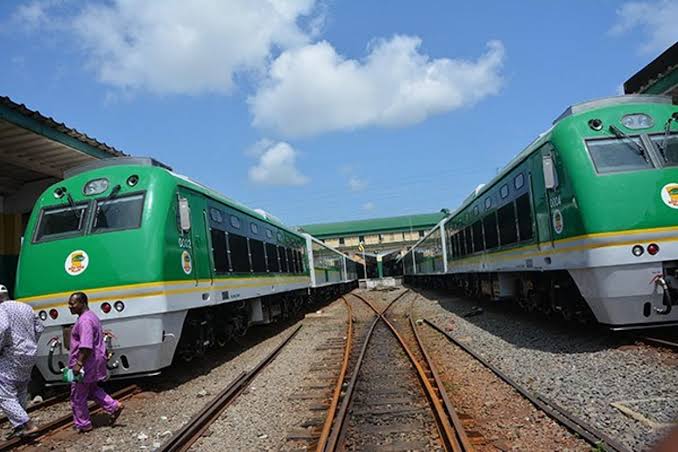
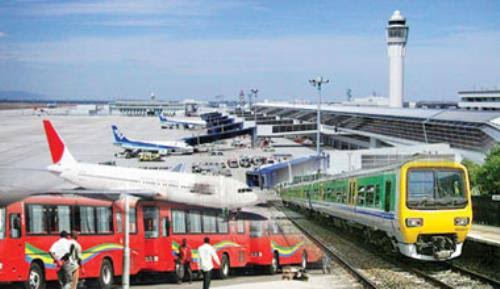
The Belt and Road Initiative (BRI) proposed by President Xi has built a platform of win-win cooperation and common development for all participating countries. By building modern railways, ports, airports and other infrastructure facilities, China has significantly facilitated the flow of commodities and personnel, and enhanced its economic competitiveness. Every country should learn from this experience.
Many developing countries see an urgent need to upgrade infrastructure. They enjoy huge a potential in cooperating with China.
So far, China has signed over 200 Belt and Road cooperation documents with more than 140 countries and 30 international organizations, which fully mirrors the attraction of the BRI.
Peru and China signed a memorandum of understanding on Belt and Road cooperation in April 2019. The two countries enjoy economic complementarity and a huge potential in connectivity cooperation. They have constantly enhanced cooperation under the BRI framework.
Peru is the second largest investment destination of China in Latin America. China’s investment has forcefully driven Peru’s economic and social development, bringing tangible benefits to Peruvians.
At present, Chinese companies such as COSCO Shipping Ports are constructing the Chancay terminal to the north of Peru’s capital Lima. This major terminal is expected to become an important transport and logistics hub on the coast of the South Pacific and largely facilitate Peru’s foreign trade.
China not only drives global growth, but also promotes global governance. It is playing an increasingly important role in international affairs. Under the current international circumstances, the world needs China to keep reviving the global economy and play the role of a major country in maintaining multilateralism, as well as opposing unilateralism and hegemonism.

China joins hands with rest of world to advance international process of firearms control

By Zhong Sheng, People’s Daily

China has decided to launch its domestic procedure to ratify the UN Firearms Protocol, announced the country at the generaldebate of the 77th session of the UN General Assembly on Sept. 24.

The UN Firearms Protocol is one of the important protocols of the UN Convention against Transnational Organized Crime, as well as an important international legal document regarding the control of small arms and light weapons.

China’s decision fully indicated the country’s firm determination to implement the Global Security Initiative and safeguard international and regional peace, and mirrored the country’s sense of responsibility in safeguarding true multilateralism and commitment to enhancing global security governance.

The abuse of guns is becoming an increasingly serious problem across the world. Illegal manufacturing and smuggling of firearms has not only killed massive civilians, but also encouraged armed conflicts, terrorism and transnational organized crime. It directly concerns the social stability and safety of all countries.

African and Latin American countries, long troubled with the abuse of guns, are calling for the international community to enhance gun control.

UN Secretary-General Antonio Guterres once said disarmament of conventional weapons could “save lives,” and a substantial reduction inillicit financial arms flows is taken as a benchmark in the UN 2030 Agenda for Sustainable Development.

With a high sense of mission and responsibility, China has always put guns and explosives under strict control and has been cracking down on related crimes. The Chinese government addresses both the symptoms and root causes and implements multifaceted measures. It adopts a “zero tolerance” attitude toward crimes related to guns and explosives. Besides, the Chinese people also play an important role in eliminating the threats from guns and explosives.

Thanks to the country’s ceaseless efforts, China has made remarkable achievements in gun control, becoming one of the safest countries in the world that sees the lowest rate of gun-related crimes.

China firmly opposes the illegal manufacturing and trafficking of guns and actively supports the multilateral process of the control of small arms and light weapons. The country always acts responsibly in arms exports. It fulfills international obligations and never sells its arms to non-state actors.

China faithfully follows the UN Program of Action to Prevent, Combat and Eradicate the Illicit Trade in Small Arms and Light Weapons in All Its Aspects and the International Instrument to Enable States to Identify and Trace, in a Timely and Reliable Manner, Illicit Small Arms and Light Weapons.

It takes an active part in the activities combating illegal trafficking of guns launched by the World Customs Organization and the International Criminal Police Organization, and is providing assistance to the best of its capacity for Africa regarding the latter’s “Silencing the Guns” initiative.

At present, the abuse of guns is still a serious problem troubling the world, and firearms control is in a critical “rise-or-fall” stage. Every country should clarify responsibilities, enhance domestic gun control and expand international coordination and cooperation.

For a long time, the U.S. has maintained the world’s largest holder of privately owned firearms and been deeply troubled by domestic gun violence. It is also one of the largest sources of gun trafficking. The country refuses to join the UN Firearms Protocol or other international documents of firearms control and has withdrawn from the Arms Trade Treaty, which has seriously impacted the multilateral efforts made by the international society to control conventional weapons.

Due to the poor performance of the U.S. in gun control, numerous U.S.-made guns have been exported illegally and have triggered serious social problems in the neighboring countries of the U.S. International society is looking forward to responsible measures of the U.S. on gun control.

The dream of building a peaceful and safe world free from gun violence is shared by people around the world. As a permanent member of the UN Security Council and a responsible memberof the international society, China would like to use its domestic procedure to ratify the UN Firearms Protocol as an opportunityto work with other countriesto achieve positive outcomes in international firearms control.

Countries that are hugely influential in global security should show their political will and take concrete actions, so as to make positive contributions to eliminating the abuse of guns.

British young man aspires to become envoy of UK-China friendship

By XingXue, People’s Daily

Cameron Patterson, a young man from the UK, had just joined the Confucius Institute at Lancaster University when he receivedthis interview from People’s Daily.
“Affirmed and encouraged by President Xi Jinping, I have always been working hard at my Chinese studies and actively participating inthe UK-China cooperation on culture, people-to-people exchanges and education,” Patterson told People’s Daily in affluent Chinese.
The man, who names himself “Kang Ke” in Chinese, said he hopes to serve as a bridge between the British and the Chinese people.
Oct. 22, 2015, is an unforgettable day for Patterson, who was a 20-year-old then.
On that day, Chinese President XiJinping, on his state visit to the UK, attended the opening ceremony of the UK Confucius Institutes and Confucius Classrooms Annual Conference.
At the opening ceremony, Patterson, as the European Champion inthe 2015 Chinese Bridge language competition for foreign college students, recited a poem authored by the Chinese President in 1990 in memory of Jiao Yulu, a long-deceased revolutionary icon of China.
Today, the British young man still remembers every detail of the scenes seven years ago – the fully packed conference hall and the excitement of attending students and faculty.
“I was very excited and too nervous to even raise my head and look at President Xi when I recited, but I somehow felt he was watching me with a smile on his face,” Patterson recalled.
“Ten thousand miles away, your soul has flown; the rivers, mountains and land yearn for your return. The people mourn the loss of a caring official, tears flooding under the empress trees you planted,” Patterson recited emotionally with clear pronunciation and great intonation, and left the stage to prolonged applause.
Xi praised Patterson, “His Mandarin is very good, better than many in my delegation, and he recites the poem better than I could.”
Encouraged by the Chinese President, Patterson noted down Xi’s comments and posted them on the microblogging site Weibo. He wrote in Chinese, “My recitation today went well. I was very happy to hear President Xi’s praise.”
At the opening ceremony, President Xi stressed that language is the key to understanding a nation and that Confucius Institutes serve as an important platform to help the world understandChina, Patterson remembered. Xi also pointed out that the way of thinking and lifestyles in China and the UK were experiencing wonderful “chemistry” triggered by the interaction between the essences of the two cultures.
“President Xi’s remarks inspired me so much. As a former student and a teacher today of the Confucius Institute, I’m extremely honored to be able to contribute to UK-China cultural and people-to-people exchanges,” Patterson said.
Patterson has a special bond with China. He came to China at the age of nine with his parents and didn’t goback home until he finished middle school In China’s Shanxi, Shandong, Jiangsu and Guangdong provinces, he went to the same schools asChinese children, where he gained a profound understanding of Chinese society through a number of touching stories aboutthe endeavors of the Chinese people.
“When I was in middle school in China, my classmates and I were assigned a task by our teacher that required us to learn the stories of Jiao Yulu. I consulted many materials about him and was deeply touched by his love for the people, his hard work, his truth-seeking spirit, and his selfless dedication,” Patterson noted.
He said he had a deeper understanding of Xi’scarefor the people when he recited the Chinese President’s poem about the revolutionary icon at the opening ceremony. “Only those who always bear in mind the people can write a poem like that,” Patterson told People’s Daily.
Civilizations have become richer and more colorful throughexchanges and mutual learning. Patterson said that Xi would always stress the significance of people-to-people exchanges and mutual learning between civilizations when he visits other countries. Only with exchanges, can people-to-people bonds be established and civilizations learn from each other for common development.
“I was told by many British beginners in learning Chinese that they had a great feeling of being close to China when they recited the poem of Saying Good-bye to Cambridge Again in Chinese for the first time, when they wrote their Chinese names with an ink brush for the first time, and when they talked to their friends in Chinese for the first time,” Patterson said.
“I will present the profound Chinese culture and its aesthetic conception to more British students and introduce China’s development to more people inthe classes of the Confucius Institute, and become an envoy of the friendship between the UK and China.” he said.

Breaking: Court of Appeal gives nod to NFF’s election, suspends restraining order

The Court of Appeal sitting in Abuja has on 29th September, 2022 stayed the execution of the Interim Order restraining the Nigerian Footbal Federation (NFF) from conducting its election.

Recall that on 15th September 2022, the Federal High Court sitting in Abuja presided by Justice Inyang Ekwo has ordered parties to maintain status ante pending final order of the court thereby suspending the NFF planned election scheduled for 30th September 2022 in Benin Edo State.

Dissatisfied with the said Order, the NFF through its Counsel J.J Usman SAN approached the Court of Appeal to stay the execution of the Order and to pave way for NFF to conduct its election.

The Court of Appeal while agreeing with Usman SAN ordered a stay of execution of the Interim Order thereby giving nod to the NFF to proceed with its election while the matter was adjourned to 5th October 2022 for ruling on the competence of the appeal.

New growth drivers gain steam amid China’s innovation push

After constant efforts to push forward innovation-driven development, China has made visible progress in industrial upgrading, with new growth drivers emerging and new business forms flourishing, a recent report showed.

In 2021, the industrial output of major high-tech manufacturers made up 15.1 percent of the total value-added industrial output, 5.7 percentage points higher than that in 2012, according to a new report released by the National Bureau of Statistics.

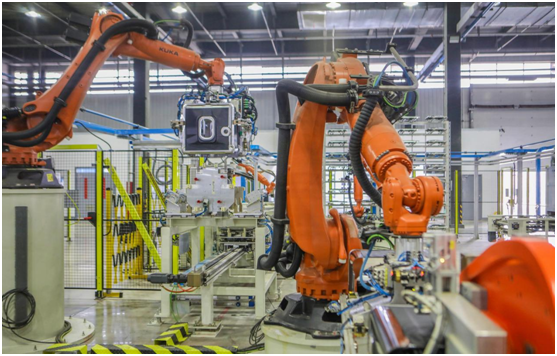
The output of new energy vehicles last year was 28.2 times higher than that of 2014, while industrial robot output was 12.5 times higher than the 2014 figure, the report said.

China’s services sector has an improving structure. In 2021, the added value of information transmission, software and information technology services accounted for 7.2 percent of the added value of the services sector, up 2.5 percentage points from 2012.

INNOVATION-DRIVEN EFFORTS

What is behind these stellar figures is China’s perseverance in promoting scientific and technological innovation.

In 2021, China invested 2.8 trillion yuan (about 393.2 billion U.S. dollars) in research and development (R&D), up by 1.7 times from 2012. The share of R&D expenditure in GDP stood at 2.44 percent, nearing the average level of Organization for Economic Cooperation and Development countries.

At the end of 2021, the country had a total of 330,000 high-tech enterprises and 4,762 “little giant” companies, representatives of China’s small and medium-sized enterprises that specialize in niche markets and are endowed with cutting-edge technologies and great potential.

The number of authorized patents registered an average annual growth of 15.5 percent during the past 10 years.

The government has also pooled efforts to optimize mechanisms to smoothen the financing channels for technology firms. The country launched the sci-tech innovation board in 2019 and the Beijing Stock Exchange in 2021, tilting financing more in favor of innovation-powered firms.

Official data showed that 46 of the around 2,200 Chinese listed firms in emerging industries are valued at over 100 billion yuan each, up from zero 10 years ago.

BURGEONING NEW ECONOMY

Changes in the Chinese economy gained momentum after the country switched gear to new growth drivers.

Over the last decade, China has been promoting deep integration between the digital economy and the real economy. As a result, cashless transactions have become ubiquitous in daily life.

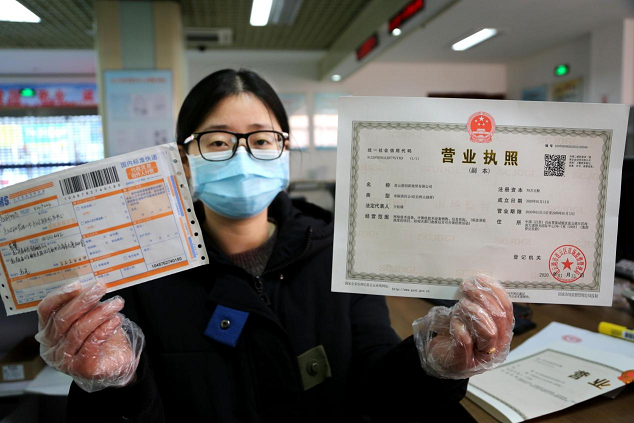
Online shopping has become a bright spot in China’s consumer market, as the online retail sales of physical goods exceeded 10.8 trillion yuan in 2021, accounting for 24.5 percent of the total retail sales of consumer goods, said the report.

Driven by the record-setting sales volume of online retail, China’s courier sector handled 108.3 billion parcels in 2021, surging by 18 times in the 2012-2021 period, reinforcing China’s top status in the world in terms of express delivery volume.

The report also highlighted the booming digital economy. The added value of core industries in the digital economy accounted for 7.8 percent of GDP in 2020 and the size of China’s digital economy ranked second globally.

World’s first cloned arctic wolf meets public in Harbin

Maya, the world first cloned arctic wolf, meets the public in Harbin Polarland, Northeast China’s Heilongjiang Province, Sept. 28, 2022, along with two other Arctic wolves.
Maya, the world first cloned arctic wolf, meets the public in Harbin Polarland, Northeast China’s Heilongjiang Province, Sept. 28, 2022, along with the wolf’s surrogate mother, a beagle.
Maya, the world first cloned arctic wolf and surrogate mother, a beagle, eat together in Harbin Polarland, Northeast China’s Heilongjiang Province, Sept. 28, 2022, along with the wolf’s surrogate mother, a beagle.
Visitors view Maya, the world first cloned arctic wolf in Harbin Polarland in Harbin Polarland, Northeast China’s Heilongjiang Province, Sept. 28, 2022.