By Zhou Zhou, People’s Daily
In the office of Ahmed Bahaa El-Din Shaaban, secretary-general of the Egyptian Socialist Party (ESP), a porcelain vase dotted with peach blossoms and carps was quite eye-catching.
“This was a gift I received from the comrades of the Communist Party of China (CPC) when I firstly visited China in 2017. I cherish it very much. The porcelain vase, which carries strong Chinese cultural features, reminds me of the good time I spent in China,” Shaaban told People’s Daily.
He said CPC cadres are very professional, open and inclusive, which left a deep impression on him.
Shaaban has long been interested in China. He has many books introducing China in Arabic at home, including those about Mao Zedong Thought, the development of the People’s Republic of China and the CPC, and Chinese culture. Through these books, Shaaban has obtained massive information about China’s development.
“I always observe China’s development with admiration. China has a long history and has paved a development path that suits itself through reform and opening up,” he said, adding that the country has proved with concrete actions that a country must make a development path that suits its national conditions in order to drive social progress and achieve prosperity.
The ESP secretary-general noted China has achieved glorious accomplishments in economic, social and livelihood development, and he is proud of China’s prosperity and progress.
He said the simple, safe and wonderful Winter Olympics hosted in Beijing earlier this year amid COVID-19 demonstrated China’s remarkable strength.
“Under the strong leadership of the CPC Central Committee with Comrade Xi Jinping at the core, China is marching forward confidently,” Shaaban told People’s Daily.
He attributed China’s stable and healthy economic and social development, and the changes of people’s life to the active practices of the CPC.
In the fight against COVID-19, the CPC takes a people-centered approach to protect people’s lives and health to the fullest extent, he said.
Xi Jinping, general secretaryof the CPC Central Committee, always bearing in mind the impoverished regions and the people there, has taken poverty reduction as an important task of national governance, he said, adding Xi has led the CPC to fulfill its commitment of eradicating absolute poverty as scheduled.
“China’s progress is the world’s progress,” Shaaban remarked. He said Xi has provided a series of global public goods and cooperation platforms, including the vision of building a community with a shared future for mankind, the Global Development Initiative and the Global Security Initiative, to promote global solidarity and win-win cooperation.
China sincerely shares its development experiences with the rest of the world and its development benefits the rest of the world, Shaaban said.
In 2017, he attended the CPC in Dialogue with World Political Parties High-Level Meeting hosted by the International Department of the CPC Central Committee in China, where he listened to a keynote speech delivered by Xi.
“Xi, humble and always caring for the people, is a leader with great visions and noble characters,” Shaaban said.
He told People’s Daily that Xi’s remarks made at the meeting, such as “Political parties play an important role in the political life of our countries and progress of human civilization,” are still inspiring for him today.
In July 2021, the ESP attended the CPC and World Political Parties Summit via video link. When Xi was delivering a keynote speech, Shaaban took pages of notes.
“What impressed me the most was that Xi associated political parties’ responsibilities with ensuring the people’s wellbeing and pursuing the progress of mankind, advocated building a community with a shared future for mankind and stressed promoting coordination and cooperation among countries. This reflected the CPC’s courage to shoulder historical responsibilities and make development fruits shared by more people in a fairer way,” Shaaban remarked.
Shaaban said the CPC carries a mission to seek happiness for the Chinese people and seek progress for humanity, and has contributed important plans to coping with global challenges, which sets a good example for global political parties in joining national construction and development.
“We will keep deepening our solidarity and cooperation with the CPC, to jointly oppose hegemonism and power politics, carry forward the common values of humanity, safeguard international peace and justice, and promote common development,” Shaaban noted.
Wuyishan National Park strikes balance between ecological conservation, local development
By Wang Yinxin, People’s Daily
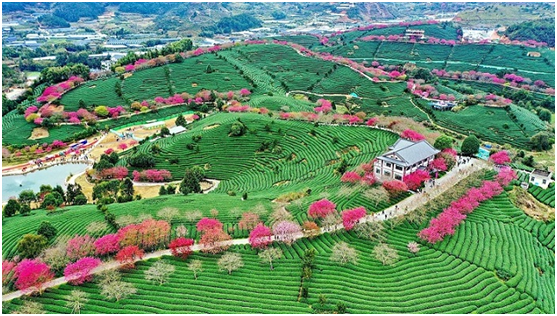
Tea is a symbol of Wuyishan Mountain, which sits at the border of east China’s Jiangxi province and southeast China’s Fujian province. Tea planting and making has long been a tradition in the local community.
In October 2021, Wuyishan National Park was set up, and the construction and management of tea plantations became one of the most important parts of the park’s ecological conservation efforts.
Liao Hong, director of the Root Biology Center of Fujian Agriculture and Forestry University, still remembers the picturesque view she saw and the tea aroma she smelled when she came to Wuyishan Mountain for the first time in 2001.
However, on her second trip to the mountain in 2015, she found that the local ecology haddeteriorated and the quality of local tea products had declined.
This was a result of the local tea industry’s excessive pursuit of output.
“Under traditional tea planting models, expanding planting areas and utilizing fertilizers is the major way to increase tea output. Therefore, over-reclamation and overuse of fertilizers were common, resulting in ecological damage and a decrease in the quality of tea products,” Liao explained.
In 2016, a pilot project of the national park system was implemented in Wuyishan mountain.
Over3000hectares of tea plantations on the mountain were included in the protected area of the national park, which made protection and development even more contradictory against each other, said Liao Chuanping, head of the ecological conservation department of the management bureau of Wuyishan National Park.
“Tea planting is the primary source of income for local people, but what come with the national park are strict ecological protection measures,” Liao Chuanping told People’s Daily.
The choice between ecological conservation and the development of the tea industry soon became a headache for local authorities.
Therefore, Liao Hong, as an expert in this field, started working to make an innovative model that both addresses ecological issues and increases tea production.
She had investigations in multiple major tea-producing areas in Fujian province, leaving her footprints on every corner of Wuyishan Mountain.
In 2015, she met tea maker He Shi’an. They soon hit it off on an eco-friendly tea planting. In the following year, Liao Hong carried out a series of experiments at the invitation of He, in an attempt to make tea plantations safer and more efficient.
“We planted oilseed rape in winter and soybean in summer. With organic fertilizers specifically developed for tea plants, both the quality and production of tea increased significantly,” Liao Hong said, adding that tea plantations looked healthier and the taste of tea products was also improved.
In 2018, with the support of the local government, Liao Hong brought this new eco-friendly model to Wuyishan National Park, and it was warmly welcomed by local tea farmers.
Since March 2018, the management bureau of Wuyishan National Park has been planting precious seedlings in tea plantations to improve the ecology. According to Liao Chuanping, oriental cherries have been planted in 20 hectares of tea plantations over the past year.
So far, the new eco-friendly model has been comprehensively promoted in the national park.
Fang Zhou, a local tea farmer whose eco-friendly tea garden is in Xingcun township, told People’s Daily that good ecology has brought good quality to tea products, which means a higher market price.
Fang said many tea farmers have planted native deciduous trees in tea plantations over the past year, as the higher market price of tea products made them realize the importance of ecological conservation.
The construction of eco-friendly tea plantations also drives the development of relevant industries. “The oriental cherries planted in the plantations not only improved ecology but also the scenery of plantations, which makes tea-themed tourism possible,” Fang said.
Fang’s dream, he said, is to turn tea plantations into a park, and now this dream is coming true.
2,400-year-old chime bells glows with new vigor in modern world
By Li Xia, People’s Daily
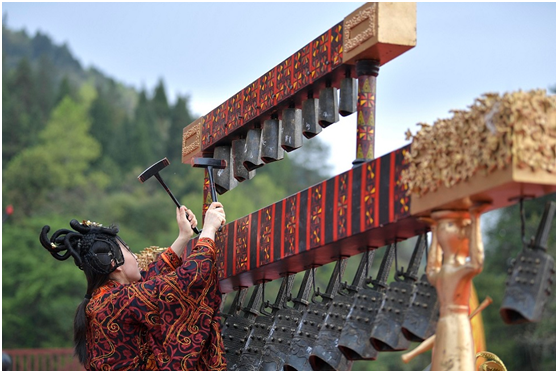
Zenghouyi chime bells, an ancient Chinese musical instrument with a history of more than 2,400 years, has gained new vigor and enjoys great popularity in the modern world, thanks to the country’s burgeoning digital technologies and cultural and creative industry.
Excavated in 1978 from the tomb of Zenghouyi, or Marquis Yi, a ruler of the Zeng State during the Zhou Dynasty (1046-256 B.C.), in Suizhou city, central China’s Hubei province, the ancient Chinese musical instrument represents the pinnacle of bronze musical instruments-making in the Warring States Period (475-221 B.C.) of China.
It is by far the largest, heaviest, best-preserved, and finest set of chime bells ever unearthed in China and has the most complete temperament and range among all chime bells unearthed in the country.
More importantly, the racks and bells of the instrument bear inscriptions consisting of a total of 3,755 Chinese characters, which contain rich and complete knowledge of music.
The chime bells is nowthe most precious treasure of the Hubei Provincial Museum in Wuhan City, the capital of Hubei province.
Today, in addition to watching and learning about the ancient percussion instrumentat the museum, people can also buy cultural and creative products featuring the chime bells, “play”it with the help of digital technologies including holographic projection, and enjoy chime bell performances given by the Hubei Provincial Museum Chime Bell Orchestra.
“Zenghouyi chime bellsis a symbol of China’s rites and music culture and has been the most valuable piece of intellectual property,which has facilitated our efforts to build cultural and creative brands,” said Wang Liang, director of the museum’s marketing department and deputy head of the orchestra.
According to Wang, the museum began to develop chime bell-themed creative and cultural products in the 1990s.At first, it made full-size replicas and miniature versions of the chime bells, which werevery popularin both the domestic and overseas markets. Then, the museum rolled out stationery and daily necessities featuring the ancient musical instrument, which have also been well received.
The application of digital technologies has “brought the chime bells to life”. In the experience zone of the museum’s comprehensive exhibition hall, the chime bells is projected holographicallyso that visitors can “play” it with their hands. With the help of a virtual reality (VR) headset and hand shank, visitors can “perform” on chime bells according to the prompts of the digital system, immersing themselves in the charm of the cultural relic.
On the eve of the 2022 Chinese Lunar New Year, the Hubei Provincial Museum, China Media Group, as well as other organizations, jointly launched a new media-based interactive project that allows people to “strike” the Zenghouyi chime bells remotely using their mobile phones.
In 1978, when the chime bells was unearthed, a concert was held in Suizhou to test its musical function. The original Zenghouyi chime bells was used to play a famous music composition, and the performance impressed the world. Since then, the original cultural relic has been put under protection. Only its replicas have been used for performances.
In 1983, a completereplica of the chime bells unearthed was made andthe Hubei Provincial Museum set up a team to perform on it, which later became the Hubei Provincial Museum Chime Bell Orchestra. Over the past more than 30 years, the orchestra has received more than 10 million visitors from home and abroad.
Music is a very good way to connect with the audience, said Wang Xianfu, deputy curator of the museum and head of the orchestra. As musicians perform on replicas of the Zenghouyi chime bells, the ancient musical instrument is “revived”, he noted.
Xiang Zhang, curator of Suizhou Museum, disclosed that cultural heritage institutions and museums in Suizhou have worked with related institutions and bell-making craftspeople to reproduce bronze chime bells and pass on the traditional craft for making them, which was listed as a representative item of China’s national intangible cultural heritage in 2021.
In an effort to better introduce chime bells to more people, the Hubei Provincial Museum Chime Bell Orchestra has made active efforts to integrate chime bells with different types of other musical instruments, such as the saxophone, piano, and the guqin, a plucked seven-stringed Chinese musical instrument.
In June this year, the Hubei Provincial Museum and the Wuhan Qintai Piano Museum jointly held a concert, during which chime bells and pianos were played together.
In September 2022, the Hubei Provincial Museum held an online concert in cooperation with the Chongqing China Three Gorges Museum in southwest China’s Chongqing Municipality, wowing netizens with an innovative combination of chime bells and guqin
Catholic Priest renovates classrooms, other facilities at alma mater to mark his 40th birthday + Photos
*Decries rate of out-of-School children
*Seeks subsidised school fees, collaborative efforts to tackle menace
By Francesca Iwambe, Abuja
A Roman Catholic Priest of the Archdiocese of Abuja and Parish Priest, St Monica’s Sauka, Rev Fr James Adakole Ali, has donated renovated classrooms and other infrastructure to St Jude and Simon Minor Seminary, Kuje Abuja.
Father Ali, an alumnus of the institution, who made the donation as part of the activities to mark his 40th birthday anniversary, noted that the essence is to enhance education for the students of the school.
The Catholic cleric, who lamented that nothing much has changed since he graduated from the school years ago, said his choice of celebrating his birthday with the students was a way of remembering his root where he began his vocational training.
He said, “The motive behind celebrating my birthday here is because I decided to remember my root where I began my vocational training to the Priesthood. This was where I decided to become a priest.
“Looking at the infrastructures here, I realised that not much has changed. This is my own little way of giving back. If every old student in Nigeria can help to develop their respective schools, Nigeria education will be better”.
On the growing rate of out-of-school children in the country, Fr Ali called on the federal government to subsidise fees as well as support low-cost private schools.
“What must be done going forward is for [federal] government to have a policy that will support low-cost private schools because it’s been seen as a solution.
“Education is expensive, ignorance is even more expensive. The best thing to do to reduce the number of out-of-school children is to subside school fees. Private schools are very expensive because government schools have failed. Strike, poor infrastructures, lack of experience teachers.
“You realise that parents cannot afford to pay the school fees. This all boils down to the issue of bad governance. On the part of the church, we are doing out best by giving scholarship to some students who are less privileged . On my part also as a priest, the little I can do is pay school fees to one or two parishioners depending on my straight”, Fr Ali added.
Calling on Nigerians to vote rightly in the forthcoming general elections, Fr Ali said it is only when we have leaders that can make good changes in the country that we will be able to see the desired changes in the education sector.
“There is need for Nigerians to vote rightly in the forthcoming general elections. If we vote in leaders that will be able to make changes in our country, we will begin to experience changes in our education sector and every other sector in Nigeria.
“Our leaders have failed us. Its because they do not know what to do but because they are not directly affected, they have decided to ignore that aspect. I hope the coming election will pave way for Nigeria to be a better place with good and successful leaders that will leave behind legacies that we can hold onto”, Fr Ali added.
Responding, the Rector of the Seminary, Rev Fr Dr Justin Eke commended Fr Ali for the kind gesture.
He also called on other graduates of the school to key in, adding that there is still much that is needed to be done in the school.
80 percent of Nigerians expose to one form of trauma, stress – Fr Ehusani
A Roman Catholic priest and the Executive Director, of the Lux Terra Leadership Foundation, Rev. Fr. George Ehusani, has said that about 80 per cent of Nigerians have been exposed to one form of trauma stress or the other in the cause of their lives.
Fr. Ehusani made this disclosure during the 2022 National Scientific Conference of the Nigerian Association of Industrial and Organisational Psychologists in Abuja.
Fr Ehusani lamented that a major part of the 62 years of Nigeria’s independence, has been characterised by suffering, pain, distress, and outrightly traumatising experiences for individuals, families, and communities.
He said: “No wonder we hear the expression these days, that “Nigeria has happened to him!” or “Nigeria has happened to her!” To pick up our history of trauma from post-independence times, is not to ignore the brutal and ignominious legacy of the trans-Atlantic and trans-Sahara slave trade, which lasted for over four hundred years, and was sustained by the greed, the wickedness.
“And the callousness of our local leaders, (the Chiefs, Obas, Obis, and the Sarkis), who conspired with the unscrupulous foreign merchants to prosecute the reprehensible trade in human cargo, until the Whiteman changed his method of exploitation from slave trade and slave labour in the Americas, to colonialism, and then compelled our autochthonous conquerors to toe the line.
“Thus, the present generation of Nigerians are descendants of the perpetrators as well as the survivors of that most callous and notorious shade of man’s inhumanity against man, by which fellow human beings were raided, sold into slavery, and shipped across the Atlantic Ocean to a land of no return, or they and generations of their descendants were condemned to a dehumanising life of servitude within the country.
“Following closely after the four hundred years of slave trade was another one hundred years of colonial exploitation, which has left behind devastating consequences on the individual and corporate psyche of Nigerians, as indeed is the experience with people of other colonised African countries. With the short time available for this presentation, I resolved to limit myself to post-independence Nigeria, and the series of traumatising events that have turned us into such a wounded and hurting group of people, that are constantly acting out our individual and intergenerational traumas in wounding and hurting our fellow sufferers.
Explaining further how the trauma was dated years back, the Catholic Cleric said; “The Operation Wetie of Western Nigeria that started in 1962, to the 1966 Coup and the infamous pogrom against Igbos that followed in the North, which all culminated in the unfortunate civil war of 1967 to 1970, an event that unleashed unprecedented horror on individuals, families and communities, the same civil war that was the excuse for the Asaba Massacre of October 7, 1967, when callous or vengeful officers of the 2nd Division of the Nigerian Army ordered the execution in cold blood, of over 700 unarmed men and boys, who assembled in one location to welcome the Federal troops upon the liberation of the Midwest from the Biafran Army”.
He added that hundreds of others were rounded up from their homes, their farms or their hiding places and executed. It is reported that the massacre was so comprehensive, so total, that there were no men left to bury the dead. While many of the victims were buried in mass graves, some courageous women and girls dragged the corpses of their fathers and husbands, and uncles and brothers, from where they were executed to their homes, where they used hoes to dig shallow graves for the dead.
“There is the story of a particular boy who witnessed the soldiers asking a young man to dig his own grave, and thereafter callously pushing him into the grave with a torrent of bullets! There is hardly any family in Asaba that did not lose three or four male members – fathers, sons”, he explained.
Fr Ehusani who further lamented that Nigerians are all victims of the ongoing trauma stressed the need to create more awareness in addressing the growing menace.
“After creating public awareness and inspiring some measure of sensitivity to the reality of intergenerational, communal, and personal trauma in the Nigerian society, the next challenge before the professionals in the psychological sciences will be that of spearheading the transformation of our families, communities, organisations and institutions, including religious organisations, corporate organisations, schools and college, government offices, legislative houses, police stations and courtrooms as well as hospitals and correctional centres, etc, into trauma informed organisations and institutions.
“The process will involve a workplace culture that takes into critical account available knowledge about trauma, about trauma prevalence, about the possible impact of trauma, and how people recover from trauma. Public Officers and Legislators, Corporate and Human Resource Managers, Judicial and Police officers and School Administrators, Teachers and Counsellors, Pastors and Imams, and young people preparing for marriage, etc., should be made to undergo some basic training in psycho-trauma awareness.
“For a saner society to emerge, perhaps every adult in the workplace and at home, should be introduced to the now well-known SAMHSA’s Six Principles of Trauma Informed Care which are also an imperative for Trauma Informed Leadership, and Trauma Informed Human Resource management”, Fr Ehusani added.
Gulf countries see rapid development in digital payment

By Guan Kejiang, People’s Daily
Electronic payments in the retail sector of Saudi Arabia reached 57 percent of total transactions conducted in the country in 2021, up from 36 percent two years ago, according to a recent survey by the country’s central bank.
In 2021, over 5.5 billion payments were executed through point of sale (PoS) in Saudi Arabia, which represented 243 percent growth from 2019. Among them, 95 percent were conducted through contactless payment methods.
Digital payment is developing rapidly in Gulf countries. According to a survey by Mastercard, 88 percent of residents in the United Arab Emirates (UAE) used one or more emerging payment methods. Mobile payment was the most popular one, followed by BNPL (Buy Now, Pay Later). Most respondents said they used digital payment because it was safe and convenient.
McKinsey & Company said the transaction volume of digital payment in the UAE had kept increasing nine percent or more each year between 2014 and 2019, higher than the average in Europe which stood at four percent to five percent. According to the management consulting firm, the UAE is expected to become completely cashless by 2030.
Since January this year, Oman has made digital payment mandatory at shopping centers, restaurants and supermarkets. Digital payment transactions in Kuwait surged 46 percent year on year in 2021.
Bahrain is the first among all Gulf countries to launch digital payment services. According to statistics released by the country’s central bank, digital payment of the country grew 13.1 percent year on year in July this year.
On Aug. 30 this year, Qatar’s central bank issued the first license for digital payments to two fintech firms, allowing them to offer relevant services.
Analysts believe that the prospering e-commerce sector is an important force driving the rapid development of digital payment in Gulf countries. These countries are latecomers in e-commerce, but boast high penetration of internet and high per capita income. They enjoy huge development potential in this regard. Amid COVID-19, Gulf countries saw further development of e-commerce, and the market is expected to hit $50 billion in 2025, from $24 billion in 2020.
Gulf countries generally adopt policies that encourage digital payment. J.K. Khalil, Mastercard’s Cluster General Manager of MENA (Middle East and North Africa) East, said Gulf countries’ passion for digital payment is inspiring.
Saudi Arabia’s “Saudi Vision 2030” plan takes digital transformation as an important goal, aiming to digitalize 70 percent of the country’s total transactions.
The UAE established a “Cashless Dubai Working Group” that aims to shift all payment transactions in Dubai to secure and easy-to-use cashless platforms across sectors.
Gulf countries have carried out active international cooperation on digital payment. The common digital currency project“Aber” jointly launched by Saudi Arabia and the UAE, the Buna multi-currency payment platform established by the Arab Monetary Fund for its member countries, as well as the joint regional payments platform AFAQ that links real-time gross settlement systems for each Gulf Cooperation Council country, all support cross-border digital payment.
China has played an important role in accelerating the development of digital payment in Gulf countries, and the two sides are constantly enhancing their digital cooperation. Chinese tech firms are actively joining the digital development of Gulf countries to build a digital Silk Road.
Zhong Hong, deputy dean of the Academy of Bank of China, told People’s Daily that digital payment creates a safe, effective and low-cost transaction environment, makes financial services accessible to more people and enhances people’s wellbeing in Gulf countries.
She said digital payment, employing big data, artificial intelligence and other technologies, will contribute to the digital transformation of Gulf countries and create new impetus for their economic development.
China, Arab states deepen cooperation on water conservation in agriculture

By Zhou Zhou, People’s Daily
The Egyptian government recently piloted a digital precision irrigation system among hundreds of farmers.
The system samples data with its sensors buried in the soil and tells farmers when they should water the crops and how much water is needed. Through a mobile application, farmers can obtain information about their crops, including the soil moisture content. They can start the irrigation remotely with just a few clicks on the screen of their mobile phones. The system cuts farmers’ water consumption in irrigation by around 20 percent.
Apart from Egypt, Saudi Arabia is trying to grow crops with sea water, and the United Arab Emirates (UAE) is building greenhouses and water-conserving farms in desert.
The Middle East and North Africa region is home to five percent of the global population, but it owns only one percent of the world’s renewable water resources.
In recent years, some Arab states have rolled out relevant policies and plans to tackle drought, agricultural water scarcity, and other challenges, developing and introducing digital technologies and artificial intelligence to vigorously develop water-saving agriculture.
China and Arab states have constantly deepened cooperation under the frameworks of the Belt and Road Initiative (BRI) and the China-Arab States Expo, implementing a series of water-conserving projects. China has offered many new solutions for Arab states to alleviate the shortage of irrigation water.
China’s Ningxia University and Egypt’s Ain Shams University have jointly established an intelligent water-conserving irrigation laboratory in Cairo, the capital of Egypt, as well as two bases for irrigation experiments that cover a total area of 21.3 hectares.
It is learned that the irrigation system can send water to the roots of crops, which is greener and more efficient than traditional irrigation methods. It can be controlled remotely by farmers with their mobile phones.
So far, the system has been used on over 2000 hectares of land.
With the soil improvement technologies offered by a Chinese biotech company, date palms are growing exuberantly on a China-Africa demonstration farm of salt water agriculture in the Sahara Desert in southeast Morocco. The water consumption per date palm each year has been reduced from 600 litersto 200 liters.
In the UAE, a research team from China’s Chongqing Jiaotong University launched cooperation with local enterprises to carry out experiments to “turn sand into soil” on a piece of barren land stretching 10 square kilometers in Abu Dhabi.
“China has made surprising achievements in agriculture and water resource management, which are worth learning for countries in the Middle East and North Africa region,” said Sinan Bacha, director of the National Center for Cartography and Remote Sensing, Tunisia. He said he was deeply impressed by China’s advanced technologies employed in water conservation during a field trip to the country.
“A path of modern agricultural development must be followed to achieve high-quality agricultural development. During my stay in China, I saw many modern technologies applied in traditional agriculture, desert agriculture, and desertification prevention and control,” said Jordanian Ambassador to China Hussam Al Husseini, adding that he expects Jordan and China to carry out more cooperation in agriculture
CPC has strong organizing and mobilizing capability: head of Myanmar’s National Unity Party

By Li Bingxin, People’s Daily
“The Communist Party of China (CPC) always puts people in the first place and is currently leading the Chinese people on a new journey toward realizing the second centenary goal,” said U Han Shwe, Chairman of Executive of the National Unity Party of Myanmar, during an exclusive interview with People’s Daily.
“We highly agree with China’s people-centered development philosophy, which is reflected in every aspect of China’s development,” he added.
U Han Shwe said China has lifted over 700 million people out of poverty over the past four decades and made contributions to global poverty alleviation, which is admirable.
The 81-year-old politician has his own opinions on the development achievements made by China.
“I once visited Kunming, southwest China’s Yunnan province, where I was deeply impressed by the rapid development there. After landing in the city, I saw a modern airport, wide and flat roads as well as flourishing flowers on the sides of them, and modern buildings. The city was more beautiful and prosperous than what I had seen in books,” U Han Shwe noted.
U Han Shwe gradually realized that the development direction and plans made by the CPC based on local conditions were key to China’s economic and social progress.
Poverty alleviation is a common task faced by developing countries. U Han Shwe said some regions in Myanmar are still bothered by poverty, and there’s an urgent need to improve people’s living standards.
He said Myanmar can learn from China’s experience to drive common prosperity with coordinated regional development.
The National Unity Party of Myanmar is the successor to the Burma Socialist Programme Party. It has maintained frequent exchanges with the CPC since a delegation paid its first visit to China in 2013 at the invitation of the International Department of the CPC Central Committee.
“The CPC values inter-party communication very much. We cherish our exchanges and friendship with the CPC and hope to learn from its governance experience,” U Han Shwe noted.
He said the book “Xi Jinping: The Governance of China” has inspired him a lot.
“The CPC always puts people and their lives first, and the National Unity Party also pays close attention to the interests of workers and farmers,” he said, adding that China’s COVID-19 response exactly mirrors the CPC placing the Chinese people and their lives in the first place.
“The CPC has a strong organizing and mobilizing capability. China, being the first country to put COVID-19 under control, has provided large numbers of anti-pandemic supplies to other countries and made its COVID-19 vaccines a global public good, which reflects the sense of responsibility of the major country,” U Han Shwe told People’s Daily.
He noted China’s assistance for Myanmar amid the pandemic is very important, and the two countries have offered each other support since the pandemic broke out.
“When China was troubled by the sudden outbreak, Myanmar donated rice and other materials to Wuhan, China. At the critical moment of Myanmar’s fight against COVID-19, China offered us large batches of medical supplies and dispatched medical experts to Myanmar,” U Han Shwe said.
According to him, a China-Myanmar joint factory in Myanmar officially started producing COVID-19 vaccines in late March this year. Since May, the first batch of one million doses of vaccines has been administered to local people.
“Xi Jinping, general secretary of the CPC Central Committee, pointed out that development is meaningful only when it is for the people’s interest, and can sustain only when it is motivated by the people. Both domestic and global governance shall be participated by the people and benefit the people. The CPC has set a great example for other political parties around the world in this regard,” U Han Shwe said.
He told People’s Daily that he agrees with Xi’s remarks on diplomacy. People in all countries have the right to democracy, which is not a patent held by a few countries. There are many ways to realize democracy. It is impossible to apply one single script to all scenarios.
“This has inspired us. A country, when promoting democracy, must start from its reality,” U Han Shwe noted.
He commended China’s active participation in global governance, saying China’s Global Development Initiative (GDI) helps developing countries achieve prosperity and is an effective solution to improving global governance.
Taking Myanmar as an example, he said the China-Myanmar Economic Corridor has brought huge opportunities to Myanmar’s comprehensive development. The country will share the dividends of China’s development.
“We hope that by participating in the Belt and Road Initiative and implementing the GDI, we can achieve common development together with China and other neighboring countries,” U Han Shwe said.
China sets example for global poverty reduction: Bolivian politician
By Peng Min, People’s Daily
Profound changes have taken place in China’s economic and social development under the leadership of the Communist Party of China (CPC), said Gerardo Garcia, vice president of the Bolivian political party Movement for Socialism – Political Instrument for the Sovereignty of the Peoples (MAS-IPSP).
Last year, the country declared a victory in the fight against poverty, and it was the first to achieve economic recovery amid COVID-19, which mirrored the governance capability of the CPC, said Garcia during a recent interview with People’s Daily.
He noted that China, while embracing high-quality development, always adheres to its people-centered development philosophy, which sets a good example for other countries.
“I’m eager to learn from more Chinese practices and experiences, deepen Bolivia-China cooperation, and push for common progress,” he said.
Garcia visited China twice, during which he witnessed the country’s development achievements through investigation tours to factories, enterprises, and free trade areas.
“I found that the rural areas in China have established a sound communication channel with the outside world, which helps boost their development,” Garcia said.
China has lifted 770 million rural people out of poverty over the past 40-plus years of reform and opening up, which accounted for over 70 percent of the world population that escaped poverty during that span.He noted that this achievement sets a good example for global poverty reduction and sheds light on and is inspiring for developing countries, including Bolivia.
In March 2019, Garcia led a delegation to visit the China Executive Leadership Academy, Jinggangshan, in east China’s Jiangxi province, at the invitation of the International Department of the CPC Central Committee.
Listening to speeches and joining symposiums, he learned the history of the CPC and the significance of Xi Jinping Thought on Socialism with Chinese Characteristics for a New Era for the innovative development of China’s economy and society.
“I also visited Chinese factories manufacturing aircraft and trucks and processing meat products, where I was deeply impressed by their advanced technologies and automation,” Garcia said.
He told People’s Daily that Bolivia boasts rich raw materials but lacks processing technologies and human resources.
“Therefore, it’s difficult for our products to gain highvalue-added or an advantageous position in the global industrial chain. I hope we can draw more inspiration from China’s experience in this regard,” he said.
After visiting China, the Bolivian politician has been actively introducing China’s experiences in reform and opening up and development to his country. As a result, Chinese philosophies, such as the harmony between man and nature, have received high attention from the Bolivian side.
“Chinese President Xi Jinping said a good ecological environment is the fairest public product and provides inclusive wellbeing for the people. It has inspired us a lot,” Garcia noted, adding that China’s ideas and practices in coordinating economic development and ecological conservation have set a good example for developing countries, including Bolivia.
“If every Bolivian can join the afforestation efforts, we will have tens of millions of trees. The great vision of ‘Lucid waters and lush mountains are invaluable assets’ will tackle environmental and ecological crises from the root,” Garcia remarked.
The CPC always upholds the people’s mastery of their country and leads the people to pursue, develop, and realize democracy. It remains committed to the principle that development should serve the people, depend on the people, with its benefits shared by the people.
China upholds the vision of building a community with a shared future for mankind, is actively engaged in international cooperation in the fight against COVID-19, and has made important contributions to the development of global public health, receiving high recognition from the international community, Garcia said, adding that China has provided vaccine assistance for many countries, including Bolivia.
As China is boldlyadvancing toward its second centenary goal, the Bolivian politician is paying close attention to the new philosophies, ideas, and strategies raised by the CPC for better global governance.
He believes China’s peaceful development is in line with the common interests of humanity. He said the China-proposed vision of building a community with a shared future for mankind, Belt and Road Initiative, Global Development Initiative, and Global Security Initiative have provided Chinese solutions to maintaining global peace and stability, improving mutual understanding among different countries, and better solving global issues, adding that these initiatives are of important practical significance for improving global governance and enhancing the wellbeing of people around the world.
China safeguards climate justice, boosts global confidence in climate governance at COP27

By He Yin, People’s Daily
The 27th Conference of the Parties to the United Nations Framework Convention on Climate Change (COP27) recently concluded in the Egyptian coastal city of Sharm el-Sheikh.
The meeting passed tens of resolutions on the implementation of the United Nations Framework Convention on Climate Change, the Kyoto Protocol and the Paris Agreement. It reached a historic agreement to provide “loss and damage” funding to vulnerable countries most affected by global climate change.
The meeting released a positive signal in adhering to multilateralism and coping with climate change with solidarity.
The Chinese delegation joined consultation on nearly 100 topics and firmly safeguarded the common interests of developing countries, making important contribution to the package of positive outcomes the conference achieved.
The theme of conference “Together for Implementation”mirrored the world’s ambition and vision to achieve climate justice.
At present, global efforts on climate change are facing severe challenges, with the developing world remaining the largest victim of climate change issues.
Developed countries had once enjoyed the development dividend brought about by long-term disorderly carbon emission, and their total per capita carbon emission is way more than that of developing countries.
However, developed countries have failed to fulfill their promise made in 2009 to provide $100 billion per year for developing countries to tackle climate damage by 2020, and have never set any credible roadmap for doubling the adaptation finance. It constitutes a “capital bottleneck” for the global response to climate change.
At the COP27, developed countries still didn’t face up to their historical responsibility and were reluctant to provide financial or technical support for developing countries.
The Foreign Affairs magazine said in an article that “the West must be honest and serious about its development-aid and climate-finance commitments.”
China has always been taking earnest actions in climate governance. Having over-shot the climate action goals of 2020 ahead of schedule, China announced the vision of carbon peaking and carbon neutrality, and published the “1+N” policy framework for implementing carbon peaking and carbon neutrality goals.
Between 2012 and 2021, China’s energy consumption expanded 3 percent annually on average, but its economy was growing an average speed of 6.6 percent each year. During the same period, China’s CO2 emissions per unit of GDP dropped 34.4 percent, and its energy intensity fell by 26.4 percent..
In July 2021, China’s national carbon emissions trading market commenced. It is the largest of its kind in the world and covers about 4.5 billion ton of CO2 emissions each year.
At the COP27, China formally submitted a report on the progress in implementing its targets of tackling climate change.
Named “Progress on the Implementation of China’s Nationally Determined Contributions (NDC),” the report introduces the progress made by China in implementing its NDC targets and mirrors China’s determination and efforts to promote green development and tackle climate change.
Egypt’s Minister of Environment Yasmine Fouad has expressed appreciation for the “dual carbon” goals raised by China and the country’s efforts to realize them, saying China’s concept of “Lucid waters and lush mountains are invaluable assets” is inspiring.
As a developing country and a responsible major country, China has always been a staunch supporter and active practitioner for South-South climate cooperation.
At the Session 1 of 17th summit of the Group of 20 (G20) recently held in Bali, Indonesia, Chinese President Xi Jinping said that in tackling climate change and transitioning toward green and low-carbon development, the principle of common but differentiated responsibilities must be upheld. It is also important to provide funding, technology and capacity-building support for developing countries and promote cooperation on green finance, he added.
So far, China has signed 45 climate change cooperation documents with 38 developing countries, constructed three low-carbon demonstration areas, carried out 42 climate change mitigation and adaptation projects, held 45 offline and seven online training courses in China, and trained 2,000 officials and technicians in the field of climate changefor more than 120 developing nations.
Executive Secretary of the United Nations Framework Convention on Climate Change Simon Stiell noted that China has made substantial progress in coping with climate change, playing an important role in advancing the global climate governance.
Everyone living on Earth is part of a big family and humanity is one community. Climate change is a common challenge to all, and humanity must come together to rise to that challenge. China will keep working with all parties relevant to build a fair, equitable and win-win global climate governance system, and to contribute Chinese wisdom, solutions and strength to tackling climate change.