Internet thinking gives a boost to rice business in northeast China

By HaoYingcan, People’s Daily

“Over ten thousand years ago, the volcano erupted, and a volcanic plateau was thus formed. Being weathered, the plateau was then covered by a thick layer of nutritious humus soil and then evolved into a unique type of field called ‘shiban,’ which literally means a rock board.”

In Shangguandi village, Bohaitownship, Ning’an, northeast China’s Heilongjiang province, Chen Yujia, sales manager of a local rice cooperative, introduced the history of shiban rice to online audiences on a livestream platform.

Thanks to the unique natural environment and traditional cultivation methods, shiban rice is both tasty and nutritious.

The cooperative that Chen works for was established in 2008 by Shangguandi village for better development of the village’s rice business. However, it failed to increase villagers’ income because little innovation was made to renew planting techniques or to expand sales channels.

In 2016, Chen returned to the village and volunteered to serve as the sales manager of the cooperative. She has successfully helped her fellow villagers increase income by optimizing rice growing, processing and sales with internet thinking.

Chen, who was 27 then, together with other two young employees of the cooperative, presented the cultivation of shiban rice to consumers via short videos and livestreaming,sharing with the latter the stories of the crop and authentic rural lifestyles. Besides, they also opened online shops to expand the sales channels of the rice. Gradually, they gained many followers online and received more and more orders.

In the meantime, the cooperative also worked to improve the quality of shiban rice, “greening” every procedure from seed selection to farming and processing.

Besides, Chen constantly upgraded the sales models to bring the consumers better experiences. For instance, the cooperative launched an innovative activity that allows customers to “adopt” rice fields in the spring and reap the yield in the autumn. It would also invite the “adopters” to join rice transplanting and harvesting in the village.

“All the 200 mu (13.3 hectares) of organic rice field had been booked before the transplanting started, and we received earnest payment of nearly 4 million yuan ($526,113),” Chen said.

What’s more, customers can preserve their rice in a barn in the village with thermostats and hygrostats, and get the rice back whenever they want. The cooperative has also established an agricultural internet of things, with which the customers can see how the rice is produced by only scanning a QR code.

It is learned that currently, around 1/3 of the cooperative’s turnover is from online channels.

Xu believes that the internet has become a powerful engine driving rural vitalization. “On one hand, we should advance the branding of agricultural products through the internet. On the other hand, we must have the courage to employ new methods to further expand the market,” Chen said.

Huzhou of Zhejiang province builds low-carbon communities

By Li Zhongwen, Dou Hanyang, People’s Daily

Li Xiaoping, 62, opened a smart telemedicine program at a community health service center under the guidance of a health instructor, 20 seconds later, she was connected to a doctor on the other side of the screen and started the online consultation.

Li, who suffers from high blood pressure, used to take a long time back and forth to hospitals whenever she felt uncomfortable. The online medical service brought her a whole new experience.

“I never thought that I could see a doctor on the screen, which took me only five minutes,” Li said.

Apart from the telemedicine program, an unattended gym and a home-based nursing center have also been put into use in Li’s community, which lies in Nanxun district, Huzhou, east China’s Zhejiang province.

Li’s experience is a miniature of the low-carbon lifestyles that are being widely promoted in Ditang community these days, and also a new exploration of Huzhou to make people’s life greener.

In March 2019, the provincial government of Zhejiang issued a pilot plan to build “communities of the future” that are harmonious, green and intelligent, in an effort to forge a green and low-carbon living environment.

Zheng Zhifeng, operation manager of the “communities of the future” program in Ditang community, told People’s Daily that as one of the first batch of communities where the program was piloted, Ditang has adopted low-carbon and environment-friendly approaches at the very beginning of construction.

According to him, kitchen waste can be fermented at garbage classification stations in the community, each of which is able to dispose of more than 100 kilograms of kitchen waste on a daily basis. No exhaust gas or water is generated during the process, and the disposed waste can be used as fertilizer for landscaping in the community, he added.

“We want to build a carbon-neutral community, so we used as many low-carbon materials as possible for the construction work,” Zheng introduced.

According to him, a neighborhood center of Ditang community is about to be completed, and it is able to save 54.4 percent of energy consumption in general, of which the energy-saving rate of buildings reaches 39.1%.

The community has built a renewable energy supply system that includes photovoltaic power generation and water source heat pumps, as well as a smart transport system that includes intelligent parking and logistics, Zheng said.

Ditang is not the only effort made in Huzhou that advocates green and low-carbon lifestyles.

For instance, Wuxing district has set up a smart carbon-control platform that records the real-time energy consumption of local industrial enterprises. Anji county has made the once-useless moso bamboos valuable by advancing carbon sink reform.

In Changxing county, a computer is able to control a mine thanks to the development of digital green manufacturing. And in Nantaihu New Area, over 90 percent of enterprises above designated size have built green factories.

Today, green and low-carbon lifestyles are seen everywhere in Huzhou. Since 2022, the city has expanded the area of its green construction by 16 million square meters and all of the newly constructed buildings are built in accordance with green standards.

Forty-two “communities of the future” programs have been launched in the city, and more than 470,000 families are implementing waste sorting based on regular schedules, with 94.6 percent of public participation and 98.8 percent of support.

Besides, the 2022 China Green Low-Carbon Innovation Conference was recently held in Huzhou, offering green Chinese schemes for the sustainable development of the world.

China improves pedestrian, bicycle systems for better, greener urban transport

By Qi Zhiming, People’s Daily

Walking on a tree-lined sidewalk embellished with flower beds is definitely a pleasant experience that soothes your mood.

Today, green and low-carbon modes of transport have become a choice for more and more Chinese people as they see the convenience of urban pedestrian and bicycle systems.

To build sound pedestrian and bicycle systems, footpaths and bike lanes should be taken as an important part of urban transport. Science-based improvement of the systems can raise the class of a city, meet people’s diversified demand for transportation, improve transport efficiency and lower vehicle exhaust emissions. It is beneficial for both social and economic development.

Green and low-carbon modes of transport have been largely promoted in China over recent years. For instance, between 2016 and 2020, Beijing has renovated 3,200 kilometers of non-motorized vehicle lanes and built its first bike-only path that stretches 6.5 kilometers. Last year, green transport made up 78 percent of the traffic in downtown Guangzhou, south China’s Guangdong province.

Pedestrian and bicycle systems represent a low-carbon way of transport, and they also make public space better and more human-centered.

According to statistics released by the Chinese Cycling Association, cycling is joined by nearly 10 million people in China. To better meet people’s demand for transportation, the country still needs to make more efforts to advance the construction of urban pedestrian and bicycle systems.

If trunk roads and public transport systems are an artery, then pedestrian and bicycle systems are capillaries. The two parts must work in close collaboration to make urban transport efficient.

More room shall be left for pedestrians and cyclists when urban plans are made, and public resources of different types shall be coordinated for better utilization of transport modes. Besides, footpaths and bike lanes must be designated in a science-based manner and connected to hospitals, schools, metro stations and other key areas.

Relevant facilities should be built to improve the safety of cyclists, such as reflective markers and high-friction surfacing. Traffic at crossroads should be maintained well, and more bike parking space should be offered. The right of way of cyclists and pedestrians must be ensured, and more shade trees should be planted to make pedestrian and bicycle systems more attractive and environmental-friendly.

Faster development of pedestrian and bicycle systems makes transportation greener and people’s lives better. China should further prioritize pedestrian and bicycle systems, public transport and green transport, build “slow transport” networks that are friendly to both travelers and tourists, build a sound environment for pedestrians and cyclists, and make footpaths and bike lanes safe, convenient, comfortable and accessible to people of all ages, so as to contribute to the “dual carbon” goals and make urban life better.

China unswervingly follows path of peaceful development

By He Yin, People’s Daily

TheKnottedGun statue in front of the UN headquarters provokes the world’s reflection on war and peace. Over the past century or so, the world has gone through both bloody “hot wars” and the silent Cold War. To make the world a peaceful place free of war and in pursuit of development is an aspiration of generations of people.

A country or a nation must follow the trend of history and the times on its way to vitalization.

“What is the trend of today’s world? The answer is unequivocal. It is the trend of peace, development, cooperation and win-win progress,” said Chinese President Xi Jinping.

China, following a path of peaceful development, has explored a new way of vitalization that’s different from what has been taken by other major countries. It pursues development in the context of world development and forges ahead by actively engaging all countries for mutual benefit, so as to safeguard its own national interests and promote global development simultaneously.

China’s path of peaceful development derives from the legacy of Chinese civilization, the country’s clear understanding of its own goals and conditions, and its deep understanding of global trends favoring peace, development, cooperation and mutual benefit.

The pursuit of peace, amity, and harmony is an integral part of the Chinese character which runs deep in the blood of the Chinese people, who believe that “the strong should not oppress the weak and the rich should not bully the poor,” and that “though a country is now strong, bellicosity will lead to its ruin.” They refuse to do to others what they would not want for themselves, and would like to replace weapons of war with gifts of jade and silk.

Since the beginning of modern times, the Chinese people had been bullied, insulted and pillaged by imperialist powers for over 100 years. However, what they have gained from it is not the gangster logic that the strong prey on the weak, but a firmer determination to safeguard peace.

For 70-plus years since the founding of the People’s Republic, China has never provoked a conflict, occupied one inch of foreign soil, started a proxy war, or joined any military bloc. China has the best peace record among the world’s major countries.

China’s following the path of peaceful development contributes to the common development of the world.

China actively promotes South-South cooperation and North-South dialogue to help other developing countries strengthen their capability of independent development. It offers sincere and selfless assistance to other developing countries, providing the latter with a huge amount of material, technical, personnel and intellectual assistance. China called for the establishment of multilateral financial organizations such as the Asian Infrastructure Investment Bank and the New Development Bank to increase the representation and voice of developing countries in international affairs.

Constantly sharing its development opportunities with the rest of the world, China has made important contributions to the peace, stability, development and prosperity of the world.

It puts forward the Global Development Initiative and advocates the building of a global community of development with a share future, demonstrating the global vision of China as a responsible major country to synergize its own development with the common development of the world.

A foreign political dignitary pointed out that China always adheres to multilateralism, which has made important contributions to promoting world peace and development.

China’s following the path of peaceful development contributes to international and regional security. China pursues a national defense policy that is defensive in nature and has codified its commitment to peaceful development into its Constitution. It firmly safeguards the international system with the UN at its core and the international order underpinned by international law, and always represents positive energy in peaceful development.

China explicitly undertakes not to be the first to use nuclear weapons at any time and under any circumstances, and unconditionally commits itself not to use or threaten to use nuclear weapons against non-nuclear-weapon states or nuclear-weapon-free-zones. Besides, it is actively advancing the international progress of arms control and non-proliferation.

China is the second largest funding contributor to the UN peacekeeping operations, and the top contributor of peacekeeping personnel among the permanent members of the UN Security Council. It plays a constructive role in international and regional hotspot issues.

As the world has entered a new period of turbulence and transformation, China proposed the Global Security Initiative, calling on the world to build on the vision of common, comprehensive, cooperative and sustainable security, build a balanced, effective and sustainable security architecture, and demonstrate the great potential of a new type of security that features dialogue, partnership and win-win instead of confrontation, alliance and a zero-sum approach. The country thus offers a new approach to eradicating the root causes of international conflicts and achieving durable stability and security in the world.

The international society generally believes that China is a peaceful force that the world needs today.

China firmly safeguards its core interests on the path of peaceful development. Any practice that undermines China’s sovereignty, security, development interests and national dignity will be met with forceful fight back.

Only by being brave and adept in carrying out struggle can China maintain peaceful development when confronted with hegemonism and power politics. Only by firmly safeguarding the path and system chosen by the Chinese people, upholding China’s sovereignty, security and development interests, defeating external forces that interfere in China’s domestic affairs and hurt China’s legitimate interests, fighting back the so-called unilateral sanctions and long-arm jurisdiction, and safeguarding China’s dignity and the legitimate rights and interests enjoyed by the Chinese people, can China finally succeed on its path of peaceful development.

With a firm determination, concrete actions and forceful measures, China has built a solid line of defense for its national sovereignty, security, development interests and national dignity, which not only shapes a sound external environment for national development and rejuvenation, and creates favorable conditions for the peaceful development of the world.

Peace and development are an eternal aspiration of mankind and a common pursuit of all countries. Every country in the world should take up the baton of history and forge ahead on the marathon track toward peace and development.

No matter how the global situation might have changed, China has always remained committed to world peace, global development and international order. The country will keep working with the rest of the world to pursue, protect and enjoy peace, and make relentless efforts to build a community with a shared future for mankind.

Xi always bears Chinese people in mind

By YueLinwei, People’s Daily

“My father always keeps the letter from President Xi Jinping,” said Hiroaki Tsukamoto, president of Japanese company Tokai Lease Co., Ltd., during a recent interview with People’s Daily, showing a photo in his mobile phone in which his father Yukishi Tsukamoto is holding the letter.

The letter was sent from the Chinese president on May 10, 2019. In the letter, Xi said he often recalled his visit to the Tsukamoto family in Japan. Xi expressed his appreciation for the decades-long efforts made by the Japanese businessman to promote China-Japan friendship. He said he was looking forward to meeting Yukishi Tsukamoto again.

“Though my father is getting on in years and has not visited China since 2008, he always hopes to go to China again and meet President Xi,” Hiroaki Tsukamoto told People’s Daily.

Yukishi Tsukamoto is the founding president of Tokai Lease Co., Ltd. In 1988, the man, in his sixties, expanded his business and set up a company in Fuzhou, southeast China’s Fujian province.

In May, 1991, Xi, who then served as the secretary of the Communist Party of China’s (CPC)Fuzhou municipal committee, visited Japan and went to the Tsukamoto family.

“The Chinese guest was amiable and polite. He showed his wisdom and long-term vision in the conversations, and soon hit it off with my family,” Hiroaki Tsukamoto recalled.

“My mother told me that I should learn from Xi.Though he was just a few years older than me,Xi has such a visionary view,” Hiroaki Tsukamoto noted, who still has a vivid memory of the visit though it’s been more than 30 years.

Hiroaki Tsukamoto has visited Fujian multiple times with his father, and called on Xi who was then working in the province.

“He was kind and easy-going. In our conversations, he not only mentioned the industrial cooperation between China and Japan, but also introduced to us the economic development of Fujian, as well as the improvement in the livelihood of the local people,” Hiroaki Tsukamoto said.

At that moment, the Japanese businessman realized that Xi always bears the Chinese people in mind and saw the noble mission of the CPC to seek happiness for the Chinese people.

Yukishi Tsukamoto has been honored for times in China due to his important contributions to China-Japan economic cooperation and exchanges.

In April, 1996, he received honorary citizenship of Fuzhou city, and a year later, he was awarded the Friendship Award from the Chinese government. In October, 2001, he became an honorary citizen of Fujian province and attended the awarding ceremony with his three-generation family.

With the steps of China’s opening up, the business of the Tsukamoto family in China has further expanded. Hiroaki Tsukamoto said that China’s development and changes since the 18th CPC National Congress are obvious to all, and the CPC’s anti-corruption efforts have created a clean social environment.

“My father always says that the CPC’s anti-corruption fight suggests that the CPC is a political party that is courageous enough to carry out self-reform,” Hiroaki Tsukamoto said.

Since the 18th CPC National Congress in 2012, the CPC Central Committee with Comrade Xi Jinping at the core has lifted hundreds of millions of Chinese people out of poverty, put an end to absolute poverty, and implemented the rural vitalization strategy.

Hiroaki Tsukamoto has paid multiple visits to rural Fujian for business, where he was quite impressed by the historic achievements and changes in China’s agriculture and rural affairs.

“When we built factories in Fujian a few decades ago, the factories were surrounded by barren land, but now they have been developed into central districts, which are completely different from what I saw earlier,” Hiroaki Tsukamoto said, adding that the transport today is well connected, the rural environment is more beautiful and the infrastructure is more complete.

Hiroaki Tsukamoto always shares what he sees nowadays in China with his parents, who were full of praise every time they learned about the country’s rapid development achieved under the leadership of Xi.

All three generations in the Tsukamoto family share a close bond with China. Hiroaki Tsukamoto’s child went to China for study this September.

“It’s a pity for me and my father that we can’t speak Chinese, so I hope my child can learn to speak the language. We will keep working generation after generation to carry forward our friendship with China,” Hiroaki Tsukamoto said.

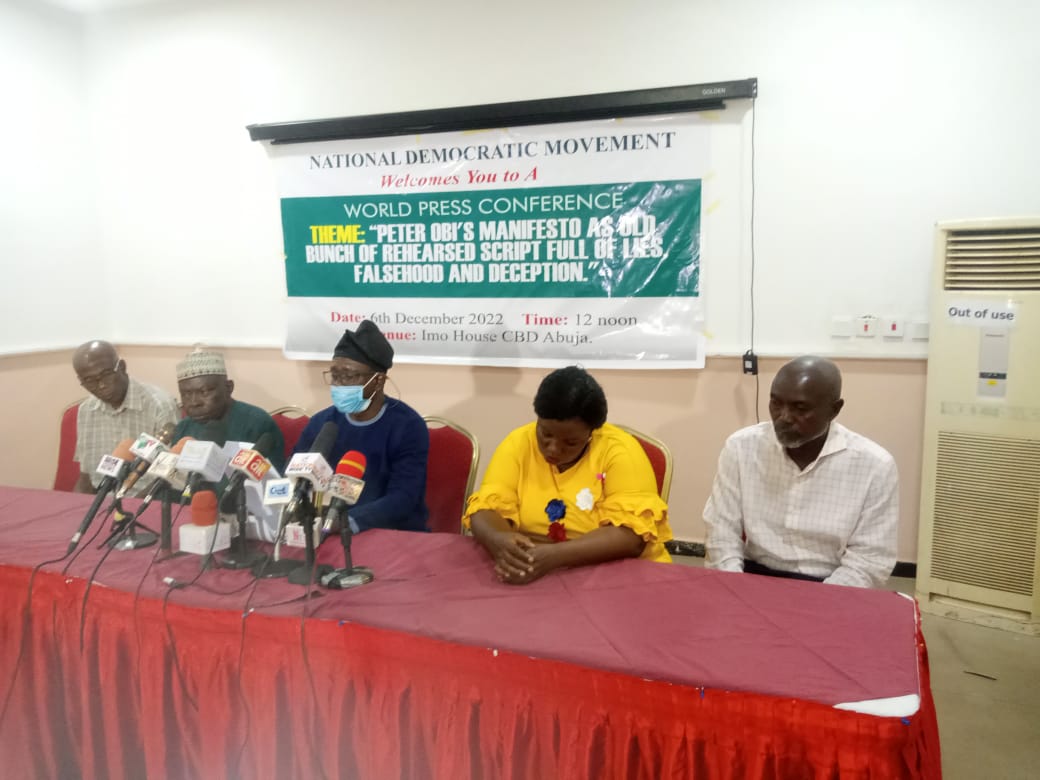
Abuja-Kaduna train service to resume, FG denies paying ransom for released victims

Minister of Transportation, Mua’zu Sambo, has disclosed that with the release of the entire victims of the Kaduna train attack, the ministry will begin the process of opening the Abuja-Kaduna train service.

The Minister who disclosed this while briefing journalists in Abuja on Friday added that although diplomacy was involved in their release, no kobo was paid.

Recall that on March 28, 2022, terrorists planted explosive devices on the rail track, forcing the train headed for Kaduna to derail.

At least nine  persons lost their lives while releases were secured at various intervals till 5th October, 2022, when the last batch of 23 victims were released.

Commenting on the development, the minister said, “On 11th August, the President Federal Republic of Nigeria received at the Presidential Villa relatives of the victims and further assurances was given to the fact that Government was working assiduously to secure the release of the remaining hostages.

“Before this visit, I have also in my capacity as the Minister of Transportation, having just resumed duty a few weeks, met and addressed the relatives of the kidnapped victims where I asked them to cooperate with security operatives if the need arises and assured them that their loved ones that has been kidnapped will be released as it is paramount to Government,” he said.

He said with their release, “this day will therefore remain memorable in the annals of the country and every person who contributed in any way to the release of the victims has every reason to be happy for contributing to the Nation’s glory.”

He noted that the FG suspended Commercial train services on that route since March.

“It is now six months and 7 days that the commercial train service on the route had been suspended and it is imperative to also let you know that the reconstruction and repairs of the damaged rail line was carried out by indigenous Engineers of the Nigerian Railway Corporation” he noted.

He however noted that before the train service will resume, appropriate security measures will be out in place for the security of train service users.

He said in the next three months, a sustainable security architecture would have been put in place for the trains to resume.
The minister also indicated that the victims are receiving treatment and rehabilitation with government’s support.

China to keep working with rest of world to build community with shared future for mankind

By He Yin, People’s Daily

“Some say it is a wild crop; some say it is a lifeline. Oh, it is an amazing crop. It is food, medicine and hope…”
So goes a Lesotho’s folk song about Juncao, literally meaning “fungus grass” in Chinese, which was developed by Chinese scientists after decades of research and cultivation.
The Juncao technology has been shared by China with over 100 countries, becoming a “grass of happiness” that benefits the people in developing countries. It is a miniature of China’s joining hands with other countries to pursue common development in the new era, and it mirrors China’s sincerity and ceaseless efforts to build a community with a shared future for mankind.
The vision of building a community with a shared future for mankind has constantly gained new connotations, and the paths to it have become increasingly clearer. It is a correct approach with practical nature and well suits today’s world, serving as a great banner pointing the way forward for our times and humanity.
Building a community with a shared future for mankind conforms to the trend of history and the times. It responds to the universal aspiration of all countries for development and progress, and captures the greatest common denominator among the people of all nations in aspiring to a better world.
The vision has been incorporated in multiple bilateral and multilateral documents as well as UN resolutions, building broad consensus around the world and demonstrating strong vitality and appeal.
Many international personages said that the Communist Party of China can always catch the signal of the evolution of the times, and some said the vision of building a community with a shared future for mankind mirrors a worldview going beyond national ideologies and builds a new path to world peace and development.
The vision of building a community with a shared future for mankind, taking building a new type of international relations as a premise, has blazed a new trail of international relations.
While promoting the vision, Chinese President Xi Jinping has called on the world to forge a new type of international relations featuring mutual respect, fairness, justice and win-win cooperation. China holds that all countries and all peoples should enjoy dignity and security and share development fruits.
On national governance, China has proposed to build a community of shared future in cyberspace, a community of common health for mankind, a community of life for man and nature and a maritime community with a shared future.
At the bilateral level, China is working with a number of countries to build a community with a shared future, including Pakistan, Cambodia, Laos, Kazakhstan, and Uzbekistan.
At the regional level, China is committed to building a community with a shared future with neighbors, an Asia-Pacific community with a shared future, a China-ASEAN community with a shared future, a Shanghai Cooperation Organization community with a shared future, a China-Africa community with a shared future, a China-Arab community with a shared future and a China-Latin American and Caribbean community with a shared future.
The vision of building a community with a shared future for mankind is to continuously build global consensus in safeguarding and practicing multilateralism, and enhancing global governance. UN Secretary-General Antonio Guterres once said that the goal of practicing multilateralism is to build a community with a shared future for mankind.
The vision of building a community with a shared future for mankind is an inevitable choice for the world to cope with global challenges. It has paved a broad path for all people in the world to pursue a better life.
A leader of a foreign political party noted that the vision aims at the common interests of mankind and draws a blueprint for human development in the future. What he said revealed the profound significance of the vision.
To build a community with a shared future for mankind, China has proposed the Belt and Road Initiative, the world’s broadest-based and largest platform for international cooperation. The country has launched the most intensive and wide-ranging emergency humanitarian operation since the founding of the People’s Republic of China in 1949, injecting constant strength into the global fight against COVID-19.
China proposed the Global Development Initiative (GDI), which has been responded by over 100 countries and multiple international organizations, including the UN. More than 60 countries have joined the Group of Friends of the GDI. Besides, the China-proposed Global Security Initiative is also widely welcomed around the world.
The Chinese actions to build a community with a shared future for mankind fully demonstrated the country’s sense of responsibility and have turned people’s aspiration for a better life into reality. Guided by the vision, employees working in the Chinese-invested Sihanoukville Special Economic Zone, Cambodia are embracing a better life; millions of Pakistani families are connected to a safe and stable power supply; the Smederevo steel plant, Serbia is revitalized; and modern rail services are brought to the people in Kenya and Ethiopia.
Building a community with a shared future for mankind is a beautiful goal that calls for efforts to be made by generations. China will keep working with relevant parties to jointly pursue this goal and build an open, inclusive, clean and beautiful world that enjoys lasting peace, universal security, and common prosperity.

China sees further rise in international influence, ability to inspire, power to shape

By He Yin, People’s Daily

China today is more than the country itself; it is very much a part of the world.
Since the 18th National Congress of the Communist Party of China (CPC) in 2012, socialism with Chinese characteristics has crossed the threshold into a new era.
Under the guidance of Xi Jinping Thought on Diplomacy, China has overcome many obstacles and challenges, accomplished a great number of big, important undertakings, and scored ground-breaking historic achievements on all fronts.
With a further rise in international influence, ability to inspire, and power to shape, China has written a splendid chapter of major-country diplomacy with Chinese characteristics.
Today, the international balance of power is undergoing profound adjustments, unilateralism, protectionism, hegemonism, and power politics are posing greater threats to world peace and development, and the anti-globalization trend is growing. The world has entered a new period of turbulence and transformation.
Facing complex and severe international situations and unprecedented external challenges, the CPC Central Committee with Comrade Xi Jinping at its core has implemented the national rejuvenation strategy within the wider context of once-in-a-century changes taking place in the world.
It is holding high the banner of building a community with a shared future for mankind, and focusing on the central task of serving national rejuvenation and promoting the human progress, to advance major-country diplomacy with Chinese characteristics.
China in the new era follows a path of peaceful development, promotes the building of a new type of international relations, and injects positive energy into the healthy development of international relations.
With a broad vision for the future of the world, China has proposed to build a community with a shared future for mankind, which marks the deep interaction and close relation between China and the rest of the world.
China advocates forging a new type of international relations featuring mutual respect, equity, justice and win-win cooperation, and embarks on a new path of state-to-state relations with the preference of dialogue over confrontation and partnership over alliance.
China has actively explored and facilitated the building of a framework of major-country relations that is generally stable and balanced, The country adheres to the policy of building friendship and partnership with neighboring countries and follows the principles of amity, sincerity, mutual benefit and inclusiveness in conducting neighborhood diplomacy, and stays committed to the principles of sincerity, real results, amity and good faith and the approach of pursuing the greater good and shared interests in cooperation with other developing countries.
It has forged partnerships with over 110 countries and regional organizations in various forms, building a comprehensive, multilevel, and multifaceted network of global partnerships. The constantly expanding “circle of friends” mirrors the unprecedented frequency of China’s interaction with the rest of the world.
China in the new era remains committed to a win-win strategy of opening-up, injecting new strength into the common development of the world.
Major-country diplomacy with Chinese characteristics has made important contributions to building a world of common prosperity by promoting open cooperation.
For instance, the major decision to launch the Free Trade Area of the Asia Pacific process was made at the 22nd APEC Economic Leaders’ Meeting, drawing a new blueprint for Asia-Pacific connectivity.
A total of 28 specific outcome documents were issued during the G20 Hangzhou Summit, including the first time to give priority to development in global macro policy framework, the first time to draft an action plan for the implementation of the UN 2030 Agenda for Sustainable Development and the first time to take collective actions to aid the industrialization of Africa and least developed countries, setting up a new “global benchmark” to the international community.
Besides, China has held four consecutive sessions of the China International Import Expo, during which a series of new measures of opening up were announced.
Over the past 10 years, China has been working actively to promote the high-quality development of the Belt and Road Initiative. It has established the Asian Infrastructure Investment Bank, the New Development Bank, and the Silk Road Fund and pushed for the high-quality implementation of the Regional Comprehensive Economic Partnership.
It is believed globally that China, by promoting common development with other countries, is creating a brighter future for global development.
China in the new era holds high the banner of true multilateralism and actively joins the reform of the global governance system.
As the world’s largest developing country and a permanent member of the UN Security Council, China firmly safeguards the basic norms governing international relations, promotes democracy in international relations, opposes hegemonism and power politics, and safeguards international equity and justice.
China proposed to build a community of common health for mankind, providing a basis for safeguarding the lives and health of mankind.
With unprecedented ambition and actions to cope with climate change and protect biodiversity, the country charts the course for global ecological civilization and builds a community of life for man and nature.
By proposing and implementing the Global Development Initiative, and the vision of building a global community of development with a shared future, China is steering global development toward a new stage of balanced, coordinated and inclusive growth.
The country has put forward the Global Security Initiative, and is joining hands with all relevant parties to tackle governance issues. The initiative is a vivid practice of the concept of the community with a shared future for mankind in the security area.
UN Secretary-General Antonio Guterres appreciates China’s key role in supporting multilateralism and promoting international cooperation and sustainable development. He said the UN’s partnership with China is an important pillar supporting the organization and multilateralism.
“Boundless is the ocean where we sail with the wind.” Chinese ideas, commitments, responsibilities and wisdom help the world cope with present challenges and eye on the building of a better future.
China will always adhere to the path of peaceful, open, cooperative, win-win and inclusive development, and work with the rest of the world to make new contributions to safeguarding world peace and promoting common progress.

U.S. exports inflation, slows global recovery

By Zhong Sheng, People’s Daily

The Federal Reserve recently raised its benchmark interest rate by another 75 basis points, which marked the fifth time for the U.S. monetary policy decision maker to make interest rate hikes. These back-to-back increases are the biggest since early 1980s.
The radical interest rate hikes have triggered widespread concerns of the international society. As the world is still bothered by COVID-19 resurgences and slow economic pickup, the U.S., passing the pressure and risks of inflation to the rest of the world, will only encumber global recovery.
For some time, the U.S. has seen increasingly severe inflation, which has even reached a new 40-year high. It mirrors the country’s structural problem in economy and failing policies.
Over the recent years, the U.S. has followed trade protectionism and arbitrarily increased tariffs, leading to a rise in the price of imported commodities and services. However, the cost is shouldered by American enterprises and consumers.
To cope with the impacts from COVID-19, the U.S. government launched a large number of fiscal policies and ultra-easy monetary policies, which led to overheated economy and supply-demand imbalance. As a result, the recovery of production lagged behind that of consumption.
As in the 1970s, persistent and repeated negative supply shocks will combine with loose monetary, fiscal, and credit policies to produce stagflation, said Nouriel Roubini, Professor Emeritus of Economics at New York University.
Besides, since the Ukraine crisis, the unilateral sanctions launched by the U.S. against Russia have caused huge impacts on global energy, finance and food sectors, which further disordered supply and industrial chains and exacerbated inflation.
The U.S. needs to adopt problem-oriented strategies to address the inflation issue. However, the Federal Reserve is wishing to ease overheated economy and inflation by boosting interest rates. What the U.S. has done is only casting a shadow over its economic growth.
The back-to-back interest rate hikes have driven up the cost of borrowing, thus containing enterprises’ investment expansion and consumption, impacting the labor market and bringing huge downward pressure to the U.S. economy.
Spanish newspaper Rebelion said in an article that the Federal Reserve is curbing inflation at the sacrifice of the entire economy, which will lower economic growth, accelerate recession and trigger debt crisis. Besides, the U.S. practice cannot stop the rising prices caused by the impacted supply chain.
Countries in the world are interdependent in the era of economic globalization. However, the U.S. cares about only its own short-term interests when making monetary and fiscal policies, which may take the world to an even bigger crisis.
CNN called the interest rate hikes “dollar smile,” but the smile only chills the world. U.S. dollars often appreciates when the U.S. economy is very strong or very weak, and the appreciation makes capital flow back to the U.S., which causes hyperinflation and capital flight for other countries. Emerging markets and developing countries have been the biggest victim every time the U.S. raised interest rate since the Latin American debt crisis.
Undoubtedly, the new interest rate hike will bring capital back to the U.S., and developing countries will face a number of challenges such as stock market fluctuation, depreciation of domestic currency, interest rise in their debts in U.S. dollars, as well as surging cost of raw material imports.
James Morrison, associate professor at London School of Economics and Political Science, noted that the interest rate hikes will definitely place negative impacts on the world and worsen the financial distress of developing countries, as the U.S. dollars is in the center of the international financial system.
The interest rate hikes made by the Federal Reserve also burdened Europe, Japan and other developed economies. French newspaper Les Echos said on its website that the raised benchmark interest rate will force other central banks to follow, which will depreciate euro and exacerbate inflation. As a result, the European economy, already impacted by the Ukraine crisis, will shoulder greater pressure.
As the world’s largest economy, the U.S. should adopt responsible economic andfinancialpolicies and control their spillover effect, so as to avoid exporting inflation and recession risks to the rest of the world.
Facing the economic hegemony of the U.S., emerging markets and developing countries should adopt a long-term perspective, improve the system and rules of international economic governance, and make global governance fairer and more equitable.

Why Our Roofing Tiles Are the Most Sought-after in Nigeria – Sinoma Fabcom Ltd


Leading roofing sheet manufacturer SINOMA FABCOM Structural Limited says its stone-coated steel roofing tiles are the most sought-after by Nigerian builders because of their quality, thickness, durability and comparative affordability.
Qiuhuai Lei, Sales Manager of the Chinese company made this know while speaking to newsmen on the sidelines of the 2022 ARCHIBUILT EXPO organized by the Nigerian Institute of Architects (NIA) at the Shehu Musa Yaradua Center in Abuja on Thursday.
The sales manager stated that the company’s coloured stone-coated steel roofing tiles and coloured steel long-span roofing sheets have a life span of forty years because they are produced with the best raw materials in the industry.
He said, “SINOMA is the first company to manufacture Stone Coated Roofing Tiles in Nigeria. We have two factories, one in Abuja and the other in Ogun state with a total capacity to produce three million square metres annually. We hope to increase our production capacity to five million annually after completing our production line. 
“We offer our customers a forty-year warranty. Our products are manufactured exclusively in Nigeria with the best quality materials compared to our competitors in the industry. The thickness, durability and affordability of our products make our roofing sheets the most patronized in the country at the moment.
“Our sheets can be used for any kind of building such as homes, plazas, hospitals, banking halls, schools and so on.”
Affiliated to Sinoma International Engineering Material Group Company Limited, FABCOM Structural Limited was established in 2014. It specializes in the manufacture of high-quality Coloured Stone Coated Steel Roofing Tilles and Colored Steel Long Span Roofing Sheets.
Through constantly providing customers with high-quality products and one-stop service, FABCOM has rapidly grown into a well-known enterprise and industry leader which integrates design and research, manufacturing, installation and construction and international trade in Africa.