N-Power: Beneficiaries takes ‘Thank You Rally’ to Aso Villa

… task Minister to sustain Buhari, masses’ confidence in her stewardship

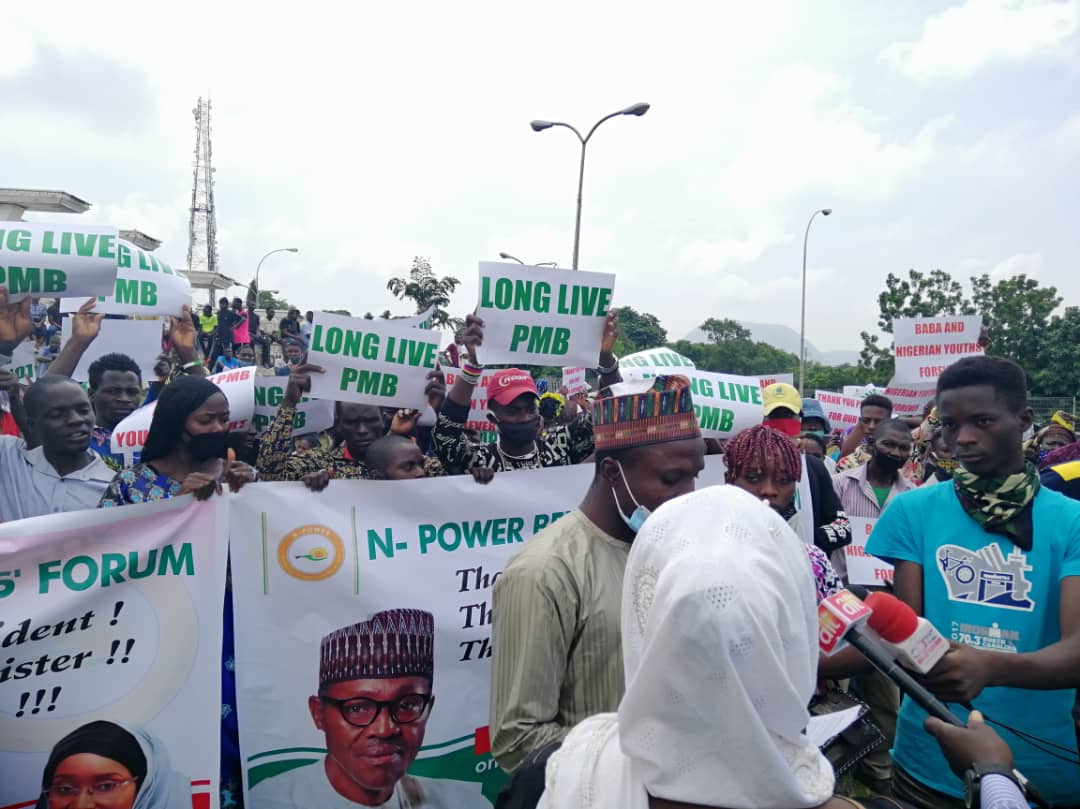
No fewer than 2,000 Nigerians, on Wednesday, held a ‘Thank You Rally’ to the Presidential Villa over the success of the N-Power scheme and other Social Intervention Programmes in the country. 

Led by the Concerned Citizens/ N- Power Forum with participants drawn across the 36 states of the federation and the FCT, they expressed gratitude to President Muhammadu Buhari and Minister of Humanitarian Affairs, Disaster Management and Social Development, Hajiya Sadiya Farouq, for the numerous interventions “targeted at the vulnerable and less privileged groupings in the country”. 

In his address, president of Concerned Citizens, Ibrahim Kabiru Dallah, extolled President Buhari as a leader with the interest of the people at heart who has displayed ” an unalloyed commitment to the entrenchment of sustainable growth and development”. 

Dallah recalled how the National Home Grown School Feeding Programme (NHGSFP), National Cash Transfer Programme (NCTP), Government Enterprise and Empowerment Programme (GEEP) and N-Power, in particular, have affected the common Nigerian. 

According to the groups, the feat recorded has been made possible by the commitment, dedication and transparency of Hajiya Farouq. 

The Concerned Citizens and N-Power Forum, however, advised the minister not to relent in her service to the country, sustaining the trust of Mr President to ensure total implementation of the various SIPs. 

While thanking President Buhari for the N-Power Batch A, B and incoming C, the groups pleaded that the number of intended intakes is increased from 400,000 to one million. 

The groups further assured the president and minister of their total support.

Read the full statement below:

I bring warm greetings to everyone here on behalf of the Concerned Citizens/N-Power Forum on this exceptional day and occasion that has seen to the converging of like minds in appreciation to God for the gift of President Muhammadu Buhari to Nigeria. 

Our joy knows no bounds. Words alone are not sufficient to express our gratitude to a man that has distinguished himself as a leader of repute in service to the country through the introduction of the various social intervention programmes targeted at the vulnerable and less privileged groupings in the country. 

The Concerned Citizens/N-Power Forum is not oblivious of these numerous interventions that has indeed brought about the much-needed relief in the lives of these group of individuals that dots the nook and cranny of Nigeria.  

Mr President, to say you haven’t done well would be a sin against God because in all sincerity, your passion towards uplifting the plight of the masses has been well articulated and this indeed gave birth to the various National Social Investment programmes suited to overcome the failings of the past and to enshrine the values and vision of the current administration for graduating its citizens from poverty through capacity building, investment and direct support.

Mr President, the Job Creation and Youth Employment (N-Power), National Home Grown School Feeding Programme (NHGSFP), National Cash Transfer Programme (NCTP), and Government Enterprise and Empowerment Programme (GEEP) have all proven to be invaluable in the lives of our citizens in the sense that the testimonies from these social interventions from the various states in the country are not in short supply.  

Mr President, we have come here to inform you that the National Home Grown School Feeding Programme is feeding over 9 million pupils in 24 states in Nigeria. It has also engaged and empowered over 100,000 cooks across the country.

We wish to state that this is indeed phenomenal when we considered the multiplier effect the National Home Grown School Feeding Programme has had on the ecosystem in Nigeria. This is indeed strategic and a manifestation of foresight displayed by you in steering the ship of Nigeria to greatness.  

Mr President, the implementation of the National Cash Transfer Programme (NCTP) has been a huge success with the payment of beneficiaries in 20 States, to 297,973 caregivers; being trained by 2,495 Community Facilitators. This is also aside from the conditional cash transfer of N20, 000 to the vulnerable households during the COVID 19 Pandemic lockdown. 

Mr President, the joy that radiates in our hearts can be felt in all parts of the country because you have proven yourself as a leader with the interest of the people at heart. You have displayed an unalloyed commitment to the entrenchment of sustainable growth and development, you have also matched your words with actions, and the generality of Nigerians are better for it.

Mr President, the N-Power scheme is another way you have touched the lives of many citizens of Nigeria. This suffices to mention that the Batch A and Batch B streams accommodated 516,600 beneficiaries from various parts of the country. These individuals have benefitted immensely as evident in the contributions they have made towards the success of the programme as well as the skills and knowledge they have gathered throughout the duration of their enlistment in the programme. 

We cannot thank you enough for this significant intervention that has catered for the needs of a large chunk of the youthful population in Nigeria. This is also strategic and a display of sound leadership acumen to understand the critical role of the youths in the socio-economic development of Nigeria. 

Mr President, while we are still thanking you for the Batch A and B streams, the introduction of the Batch C stream is indeed soul-lifting for the members of the Concerned Citizens/N-Power Forum. This is so because of the enormous impact the commencement of the Batch C stream would have in the polity.

Mr President, as a father and a leader, we cannot be afraid or shy to ask for favours from you. Consequently, we are using the occasion of this rally to extend our endorsement of the Batch C stream of the N-Power Programme and also to plead that the number of intended intakes is increased from 400,000 to one million to be able to accommodate more youths and touch more lives in the country.

Mr President, this plea is with the best of intents because as a group, we are witness to the enormous impact the N-Power initiative has had on the lives of the youths in the country. We are not by any stretch of the imagination in denial that if the number of intake for the Batch C stream is increased to the one million marks, the youths of Nigeria would be eternally grateful to you and other members of your administration that have made the N-Power initiative a huge success.

Mr President, in as much as we are gathered here to thank you immensely, we must not fail to bring to your notice that the success of the various Social Intervention Programmes of your administration has been made possible by the commitment, dedication and transparency of some of your lieutenants in the person of the Honorable Minister of Humanitarian Affairs, Disaster Management and Social Development, Hajia Sadiya Umar Farouq.    

The Honorable Minister has been outstanding in the discharge of her duties, and her level of transparency and accountability has seen to the display of confidence in the various social intervention programmes of your administration. 

The Concerned Citizens and N-Power Forum wishes to encourage her not to relent in her service to the country as the supervisory minister of the various Social Intervention Programmes and to continue to uphold the confidence and trust of Mr President to ensure that there is 100% implementation of the various Social Intervention Programmes in the country. 

Mr President, We thank you once again. It is our earnest prayers that God in His infinite mercies would continue to grant you the grace and the wisdom to lead Nigeria in the right path towards attaining sustainable growth and development.

Mr President, you can always count on the support of the Concerned Citizens/N-Power Forum at all times as we march towards greatness in Nigeria.

Thank You, Mr President and God Bless.  
Group uncovers plot to unseat Malami, efforts to petition Buhari

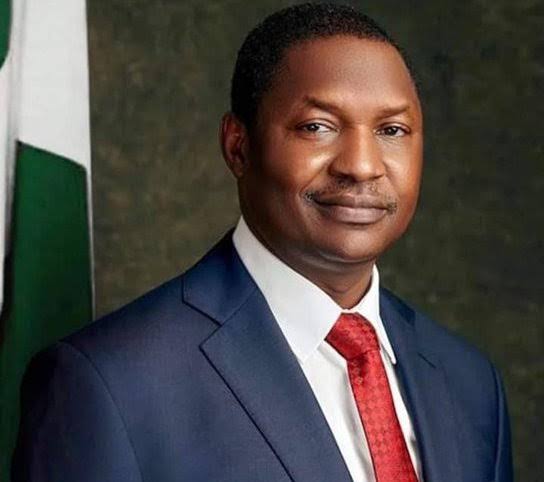
A leaked document and email from one Olarewaju Suraju who claimed to be the Chairman of a Civil Society Against Corruption indicates a desperate move to cast aspersions against the Honourable Attorney General of the Federation and Minister of Justice, Abubakar Malami, SAN.

The Chairman of Integrity Group Against Corruption, Mr Bello Gambo Iliya showed the leaked email to reporters in Kano on Tuesday.

The leaked email titled “Complaint Against Malami” was dated Monday 27th July 2020 and signed by one Lanre. The email was intended to garner support from civil society organisations.

The letter reads” Dear Colleagues, Iam checking to know if you and your organisation will be interested in jointly signing this document and any other Comrades you know. Please kindly revert ASAP

Thanks

Lanre”.

The writer of the email (Lanre) was demanding support to petition President Muhammadu Buhari against the Attorney-General of the Federation and Minister of Justice Abubakar Malami, SAN.

It could be recalled that Olaruwanju Surajo, claimed to be the Chair of Human and Environment Development Agenda in 2018 when he addressed a press conference on relevant matter and now he chairs Anti-corruption NGO.

Recall that for days, it appears their efforts to get people to own the document failed as he resorted to emailing some NGOs to achieve their sinister motive.

It was clearly verified that the said man was busy struggling to get support from civil society organisations against the Attorney General of the Federation and Minister of Justice.

Mr Bello, therefore, appealed to Malami to remain resolute in the fight against corruption, adding that “peoples like Lanre are survivalists trying to revive themselves through sponsorship against authorities fighting corruption in the country”.

Insecurity: Yoruba group accuses Falana of double speak

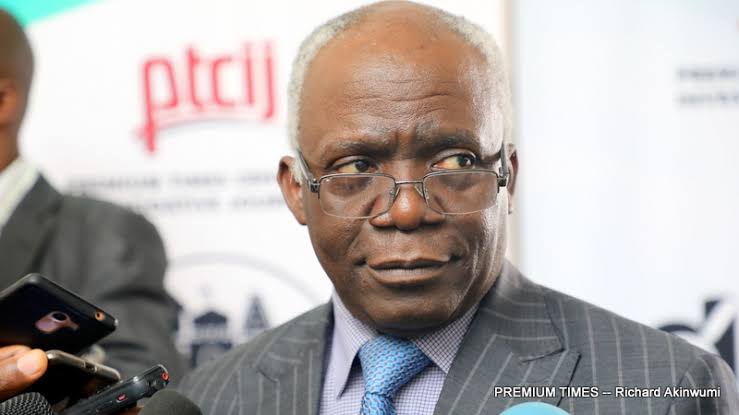
The Progressive Yoruba Youths, a cicvil society group has in strong terms condemns in its totality a statement credited to the Alliance for Surviving COVID-19 and Beyond (ASCAB), suggesting that the federal government has shown lack of capacity to deal with the violence in the north.
The new coalition, which was launched ahead of May 1, which is Workers Day named human rights lawyer, Femi Falana (SAN), as its interim chairman.

The group had claimed that authorities in Nigeria had failed to link the spread of the pandemic to failure of an effective public health system, the absence of social security and health insurance for the masses, while governments had no preference for provision of the essentials of life like housing and food security.

Reacting to the development, the Yoruba group said Falana does not have the moral standard to lead or speak for any group as he speaks from both sides of his moth and protects the interest of the Boko Haram sect.
The Progressive Yoruba Youths, in a statement by its President, Kola Salau, therefore, asked Femi Falana to put his acts together and face his legal practice, rather than being the jack of all trades, and the master of none.
The statement reads below.
“The Progressive Yoruba Youths is aware that Femi Falana is as ignoble as the group he presides over, and it is naturally expected that Nigeria should view any statement signed by Femi Falana with a pinch of salt. It is no longer news that his stock in trade is to seek attention by issuing press statements that are in most cases, a gimmick to curry patronage from clients.
“The Progressive Yoruba Youths wishes to inform members of the general public that Femi Falana speaks from both sides of his mouth and in most instances, his ultimate goal is for the attainment of his monetary gains.
“We also wish to state that if the above is not the case, there is no moral justification for Femi Falana to attempt to discredit the efforts of the federal government in addressing the security issues in Northern Nigeria, when the same Femi Falana has been rendering legal services to militant groups in Northern Nigeria such as the Islamic Movement of Nigeria (IMN).
“The pecuniary gains attained by Femi Falana for representing IMN in court are indeed a lucrative one such that his sense of reasoning was blinded when he described the proscription of IMN as immoral and illegal.
“The Progressive Yoruba Youths wishes to advise members of the general public to be cautious whenever Femi Falana contributes to issues of national concern as most times it is not in the best interest of the country.
“Femi Falana must come to terms to the reality that the unity of Nigeria is non-negotiable. As such he must be guided in his utterances and public outings so as not to jeopardize the efforts of government in dealing with the threats posed by the Boko Haram and other militant groups that he has been representing.
“Femi Falana has continued to protect the Boko Haram group through his public statements and appearances in court, yet, behind the curtain, he would ask the federal government to kill them. This act is indeed dishonourable, and he must desist from such moving forward.
“The Progressive Yoruba Youths wishes to use this medium to caution Femi Falana to be guided with his utterances and desist from playing the devil’s advocate in this critical point of our existence.
“It is expected that at this stage, Femi Falana must display decorum in his conduct and postulations of government policies and other areas of national concern. This is also not the time to play to the gallery.
“The Progressive Yoruba Youths wishes to educate Femi Falana that indeed unguarded statements such as his, has the potential of leading to a round of national crises that may threaten the fabric of democracy in the country.
“The era of attempting to hide under cover of being a lawyer to constitute a nuisance to the country must stop. The era of delving unnecessarily into issues outside his knowledge must also end because such disposition is an indication of ineptitude in the thought process which ultimately results in discordant tunes.
“Even though we are aware that such display is a marketing strategy for his law firm, however, given the effect of the Coronavirus pandemic in the country, Femi Falana should know better that this is not the time for outright insinuations and illogical conclusions. That is also premised on whether the group he is promoting “The Alliance for Surviving COVID-19 and Beyond (ASCAB) does not only exist in his head and nowhere else.”

Nigeria’s counter-terrorism campaign and the role of its citizens in diaspora

By David Onmeje

Email address: daonmeje@outlook.com
Abstract:
This paper is an attempt to explore the various roles that Nigerians based abroad can play in the counter-terrorism campaign as the country grapples with the Boko Haram insurgency. The paper examines how the intellectual, professional and financial resources of the greater number of Nigerians in diaspora can be harnessed to give impetus to the fight against terrorism. The paper concludes that the Nigerian Diaspora have a vital role to play in the counter-terrorism effort of the country and that given the platform, coordination and motivation can have a significant impact on the country’s effort to overcome terrorism.
INTRODUCTION
In 2019, the conflict in North-eastern Nigeria entered its eleventh year. Since 2009, the Boko Haram insurgency has resulted in the death of tens of thousands of civilians and displaced millions across the Lake Chad region, which straddles Cameroon, Chad, Niger, and Nigeria. Although major military campaigns in 2015–2016 succeeded in degrading the group’s territorial control, Boko Haram has proven remarkably adaptable in its guerrilla tactics.
Since the early years of the crisis, Nigeria’s international partners have cautioned that Boko Haram is unlikely to be defeated on the battlefield alone. They have stressed the need for a multidimensional response/approach that tackles the drivers of insecurity in the region, including chronic weaknesses in service delivery, corrupt governance and environmental degradation. However, the perception of limited leverage over Nigerian counterparts, restricted access to the country’s Northeast, and a response to the crisis shaped by the U.S.-led Global War on Terror limited donors’ focus on these governance dimensions on the ground.
In practice, international assistance came late, and donors struggled to identify viable national counterparts for stabilization programs. As a result, their efforts centred on supporting regional military efforts and responding to the large-scale humanitarian crisis.
Since early 2017, military gains and improved security in parts of north-eastern Nigeria have spurred a greater focus on conflict stabilization measures. At the international level, key donors set up the Oslo Consultative Group on the Prevention and Stabilization in the Lake Chad Region to coordinate their response activities. The Lake Chad Basin Commission and the African Union Commission have adopted a regional stabilization strategy, which highlights short-to-medium and long-term stabilization, resilience, and recovery needs.
In parallel, donors have also begun expanding bottom-up stabilization programs aimed at addressing the drivers of insecurity at the local level. These efforts have generally fallen into three main categories: programs aimed at strengthening local conflict prevention and mitigation systems, programs aimed at restoring local governance and essential services, and programs aimed at fostering social cohesion and ensuring the reintegration of former combatants.
However, one area that has not been given much attention is bringing the considerable personnel and skills of Nigerians in the Diaspora in the current counter-terrorism measures in Nigeria. This paper will explore the possible role this important stakeholder can play in Nigeria’s counter-terrorism efforts.
HISTORY OF TERRORISM IN NIGERIA
Boko Haram is a militant organization based in North-eastern Nigeria and also active in Chad, Niger and northern Cameroon. The group was founded in 2002 by Mohammed Yusuf upon the principles of the Khawaarij advocating Sharia law.
It turned into a violent extremist group in 2009 and has been responsible for the loss of lives in many parts of Northern Nigeria. Boko Haram previously existed as Jamā’at Ahl as-Sunnah lid-Da’wah wa’l-Jihād. One of the goals of the Boko Haram group is to champion for the establishment of an Islamic State, ruled by strict sharia law primarily in the Northern part of Nigeria where the majority of the populations are Muslims.
Boko Haram believes that democracy is too lenient and violates Islam. It also opposes the Westernization of Nigerian society and also the concentration of the wealth of the country among members of small political elite, mainly in the Christian south of the country. The roots of Boko Haram lie in the Islamic history of northern Nigeria, in which for some 800 years powerful sultanates centred on the Hausa cities close to Kano and the sultanate of Borno (roughly the region of the states of Borno and Yobe together with parts of Chad) constituted high Muslim civilizations.
These sultanates were challenged by the jihad of Shehu Usuman Dan Fodio (that lasted from 1802 to 1812), who created a unified caliphate stretching across northern Nigeria into the neighbouring countries. Dan Fodio’s legacy of jihad is one that is seen as normative by most northern Nigerian Muslims.
The caliphate still ruled by his descendants (together with numerous smaller sultanates), however, was conquered by the British in 1905, and in 1960 Muslim northern Nigeria was federated with mostly Christian southern Nigeria. The Muslim response to the Christian political ascendency was the move during the period of 2000-2003 to impose Sharia in 12 of the northern states in which they predominated. For the most part, the imposition of Sharia brought the previously feuding Muslim groups together, and there was no further use of takfiri (accusations of being non-Muslim).
While the imposition of Sharia did satisfy the official manifestations of Islam in the north (both Sufi and Salafi), it is clear that radicals who were takfiris doctrinally such as members of Boko Haram were left outside. There is no doubt that the suppression operation of 2009, and the killing of Muhammad Yusuf by Nigerian security forces in July of that year, was a turning point for Boko Haram.
The group was frequently said at this time to be defunct. In September 2010 (coinciding with Ramadan), however, Boko Haram carried out a prison break (said to have released some 700 prisoners). After that, the group began operations again. The targeted assassinations are the most revealing, involving political figures, such as Abba Anas bin `Umar (killed in May 2011), the brother of the Shehu of Borno, and secular opposition figures (Modu Fannami Godio, killed in January 2011), but also prominent clerics such as Bashir Kasahara, a well-known Wahhabi figure (killed in October 2010), Ibrahim Ahmad Abdullahi, a non-violent preacher (killed in March 2011), and Ibrahim Birkuti, a well-known famous preacher who challenged Boko Haram (killed in June 2011).
The shootings of these prominent clerics seem to be in accord with Boko Haram’s purification agenda concerning Islam. Boko Haram related violence has mostly been confined to Nigeria’s Northeast, in Adamawa, Borno and Yobe states. It has been most heavily concentrated in Borno, with the brunt of the violence borne by Maiduguri, Gwoza, and Kukawa.
Violence has also become common south and east of Maiduguri, along the border with Cameroon’s Far North Region, and around Lake Chad. There have been sporadic incidents in places such as Nigeria’s Middle Belt and the capital of Abuja that have been attributed to Boko Haram.
Boko Haram has adopted suicide attacks as an essential tactic in its struggle against government authority. Over the past seven years, Boko Haram has demonstrated flexibility. It remains a formidable threat to the Nigerian state despite losing much of its territory. Though the group is undoubtedly less potent than it was in 2015, there is no sign that the government will defeat it in the foreseeable future without bringing on-board inputs from various quarters such as the Nigerians in the Diaspora.
UNDERSTANDING TERRORISM
Understanding Insurgency and Terrorism have become one of the most security challenges for many countries in the world. Due to the threat terrorism poses to international peace and security, it has attracted much attention globally. Although there are international instruments which condemn terrorism and call for its suppression and elimination, there remains the primary challenge of a lack of a universally accepted legal definition for terrorism. The lack of specificity in definition has continued to pose the risk of non-standardized, insufficient or incorrect application and implementation of counter-terrorism measures.
There is a long-standing consensus in the academic community over the disagreement surrounding the conceptual and operational definition of terrorism. Both the theoretical conceptualization and the empirical manifestation of terrorism are highly contested based on state, national, political, geopolitical, religious and even ideological constellations, giving rise to not one but many manifestations of terrorism, differing from one region to another, one sub-region to another and one country to another.
However, even though there is still a lack of agreement on what terrorism is, attempts at arriving at a definition have been made. At the 1999 Convention on the Prevention and Combating of Terrorism, the Organization of African Unity (OAU) defined an act of terrorism as “any act which is a violation of the criminal laws of a State Party and which may endanger the life, physical integrity or freedom of, or cause serious injury or death to, any person, any number or group of persons or causes or may cause damage to public or private property, natural resources, environmental or cultural heritage”.
Similarly, the 2015 Global Terrorism Index (GTI) report defines terrorism as “the threatened or actual use of illegal force and violence by non-state actors to attain a political, economic, religious or social goal through fear, coercion or intimidation”.
Also, Forest and Giroux, defined terrorism as a tactic that uses violence or threat of violence as a coercive strategy to cause fear and political intimidation. Insurgency, on the other hand, is a strategy adopted by groups which cannot attain their political objectives through conventional means or by a quick seizure of power.
Insurgency could also be defined as any kind of armed uprising against an incumbent government.
It is characterized by protracted, asymmetric violence, ambiguity, the use of complex terrain (jungles, mountains, and urban areas), psychological warfare, and political mobilization which are all designed to protect the insurgents and eventually alter the balance of power in their favour. In his book titled ‘Globalization and Insurgency’,
Mackinlay defined insurgency as the actions of a minority group within a state who are intent on forcing political change utilizing a mixture of subversion, propaganda and military pressure, aiming to persuade or intimidate the broad mass of people to achieve their aim. Insurgency could start as a social protest, from a given group of people, who feel continuously marginalized in the affairs of government. From the preceding, terrorism and insurgency generally arise from similar causal conditions, terrorism often being employed as a tactic within a broad framework of an insurgent campaign. For example, groups like Al-Shabaab in Somalia and Boko Haram in Nigeria are known to employ a mix of insurgent and terrorist tactics. It is also clear that terrorism can stand alone, as in the case of known terrorist groups such as Al-Qaeda and Islamic States (IS). 
CHALLENGES OF COUNTER-INSURGENCY/COUNTER-TERRORISM IN THE SAHEL
Faced with the complex and sophisticated terrorist attacks, stakeholders in the Sahel region have responded by deploying troops aimed at combating terrorism. Given the level of terrorist activities, it comes as no surprise that the region as a whole has undergone a process of securitization in recent years, which has resulted in a multitude of forces on the ground.
The current deployment in the Sahel includes G5 Sahel Joint Force, Operation Barkhane, Multi-National Joint Task Force (MNJTF) and United Nations Multidimensional Integrated Stabilization Mission in Mali (MINUSMA) and well as the national armies of the respective countries. The trends in terrorist activities and counter-terrorism efforts observed in the Sahel is somewhat not encouraging. Counter-terrorism response has been fraught with a lot of difficulties and challenges leading to the worsening and deterioration of the security situation in most countries of the Sahel.
This has the potential of spreading to other neighbouring countries. Some shortcomings could be cited. Undermining the success of the counter-terrorism efforts, is the discontent among troops, as exemplified by instances of military personnel refusing to take part in operations or abandoning their posts.
This is further compounded by the mistrust among troop-contributing countries with some troops always in a hurry to announce victory without crediting the entire force. This has often led to disagreements among countries contributing troops to the counter-terrorism efforts, thereby derailing the progress of the force.
Counter-terrorism operations require specific training, equipment, intelligence, logistics, capabilities and specialized military preparation. It would seem unrealistic to expect any significant improvement on this front in the short and medium terms, partly because of funding constraints and delays in deployment for some of the missions, such as G5 Sahel Joint Force.
Lack of financial capability of troop-contributing countries to adequately resource personnel has resulted in logistical constraints of deployed troops. Corruption within government and state security apparatus has also contributed to the logistical constraints of the troops as there have been cases of politicians and senior military personnel misapplying funds meant of equipment and retooling of troops.
Lack of coordination, cooperation, and collaboration among the many deployed troops in the Sahel is a significant setback confronting the fight against terrorism. There have been cases of some deployments refusing to share intelligence with other contingents operating in the same theatre, thereby undermining their military capability to curtail the scourge of terrorism. The delay in the response of some non-national contingents to distress calls from national authorities of the member states in which they are deployed is also another challenge.
Besides, it has become apparent that the ever-growing focus on counter-terrorism, underscored by significant international (Western) efforts, seeks to abandon the implementation of peace accords and agreements such as the 2015 Algiers Peace Accord in Mali, which is crucial not only for a security solution but also for a political resolution of the conflict.
In some cases also, the security situation has made it difficult for governments to implement reforms needed to address root causes fuelling the spread of terrorism. Similarly, the influx of foreign support and resources to address security challenges such as terrorism and human trafficking appears to fail to address much-needed reforms in state behaviour, governance and justice, which are significant factors in driving violence and radicalization.
AN ALL-INCLUSIVE APPROACH TO COUNTERING TERRORISM
In order to organize themselves, and to plan and carry out attacks, terrorists need recruits and supporters, funds, weapons, the ability to travel unimpeded, other forms of material support (e.g., means of communicating, places to hide), and access to vulnerable targets. Therefore, effectively countering acts of terrorism requires a comprehensive and strategic approach, relying on a broad range of policies and measures.
An all-inclusive approach to counter-terrorism often encompasses several objectives, addressing different chronological stages in the occurrence of terrorism. These objectives can be broadly categorized as:
• Preventing men and women from becoming terrorists;
• Providing opportunities and support to individuals on a path to, or involved in, VERLT to disengage;
• Denying terrorism suspects the support, resources and means to organize themselves or to plan and carry out attacks;
• Preparing for, and protecting against, terrorist attacks, in order to decrease the vulnerability of potential targets, in particular, critical infrastructure;
• Pursuing terrorist suspects to apprehend them and bring them to justice; and
• Responding to terrorist attacks through proportionate measures to mitigate the impact of such attacks and to assist victims.
Countries have an obligation to protect against acts of terrorism, and this requires that they put particular emphasis on preventing terrorism. This is reflected in their international legal obligations and political commitments.
The UN Global Counter-Terrorism Strategy notably defines a holistic approach to counter-terrorism that includes:
• Measures to address conditions that are conducive to the spread of terrorism;
• Measures to prevent and combat terrorism; and
• Measures to ensure respect for human rights for all and the rule of law as the fundamental basis of the fight against terrorism.
UN Security Council resolution 1373 (2001) imposes a legally binding obligation on all states to establish appropriate legislative, regulatory and institutional frameworks, including, to:
• Refrain from providing any form of support, active or passive, to entities or individuals involved in terrorist acts;
• Prevent and suppress the financing of terrorism;
• Suppress the recruitment of members of terrorist groups;
• Eliminate the supply of weapons to terrorists;
• Prevent the movement of terrorists or terrorist groups;
• Deny safe havens to those who finance, plan, support or commit terrorist acts, or provide safe havens;
• Ensure that any person who participates in the financing, planning, preparation or perpetration of terrorist acts or in supporting terrorist acts is brought to justice; and
• Afford each other the most significant measure of mutual legal assistance in connection with criminal matters related to terrorism.
UN Security Council resolution 1456 (2003) and subsequent resolutions oblige states to ensure that any measure taken to combat terrorism complies with international law, in particular international human rights law, refugee law and humanitarian law.
DIASPORA AND COUNTER-TERRORISM STRATEGY
Counter-terrorism requires a multi-faceted approach that is all-inclusive and addresses not only the manifestation of terror-related activities but also its underlining causes while also carrying everybody along. The Nigerian Diaspora community can be beneficial in every stage and facet of the strategy to counter insurgency and bring about the much-needed peace to the Northeast of the country.
One of the most effective counter-terrorism measures which can address the problem from its root cause is education. Education does not only help this potential terrorist a chance to get out of poverty but also help in reshaping perception. Nigerian Diasporans can help to mobilize and provide both human resources and educational material needed to help educate the children in this region that are prone to the insurgency.
Counter-terrorism has a significant international dimension and it’s impossible for a country to go it all alone. Significant pressure and lobby is needed to draw support of countries with the expertise and resources to help as well as other international partners. The Nigerian Diaspora community can play a role in lobbying and pressuring international organizations and the big countries to provide much-needed assistance.
Rehabilitation of victims of terror activities is an essential area in counter-terrorism. This required a lot of human resources and resources as the insurgency has displaced more than a million people. The Diaspora community can get actively involved in the rehabilitation effort using their connection to mobilize resources from charity organization all over the world and providing their expertise in rehabilitation and counselling.
The Nigerian diaspora community are significant players all over the world in the area of information and communication technology. They can help the counter-terrorism campaign in the area of gathering information and analyzing them. Getting the right information will help in proffering the correct solution to the problem of terrorism.
Technology can help give significant efficiency and effectiveness to both military and civilian operations in the counter-terrorism campaign. The Nigerian diaspora community can involve Nigerian inventors all over the world to help in providing proprietary technologies and other technological solution that will give precision to both military and political solution to the insurgency in Nigeria.
The counter-terrorism campaign can also draw many volunteers from Nigerians in the diaspora. Volunteers with diverse skill sets and professional background can be drawn from all over the world, which will have a significant effect on the fight against terrorism.
CONCLUSION
There is no doubt that the counter-terrorism campaign has not been effective enough to have a significant impact. There is a great room for improvement in every front, either in terms of finance, people, technology, ideas, and collaboration. The Diaspora community can help to bridge the gaps in this area significantly. The Diaspora community should be given the platform to bring in their significant resources, professional experience, inventions and exclusive contacts to help in giving the much-needed impetus to the counter-terrorism campaign. Nigeria has professionals in different field of endeavour all over the world; it will be astute to draw on the knowledge to bring terrorism to an end.
RECOMMENDATIONS
The Diaspora community should explore the possibility of bringing inventors, especially those in the military industry to help in the modernization of the Nigerian army. Israel leans significantly on its diaspora population in strengthening its security forces against insurgency in that country.
The Diaspora community should become a vanguard for countering fake news against the country’s military with facts that are available on government website.
The Diaspora community should maximize the significant population of Nigerians all over the world to draw attention and support to the fight against terrorism. The state of Israel actively engaged their citizens abroad to lobby for both financial and political support for its fight against insurgency and terrorism.
The Diaspora community in international media circles just like nationals of other countries do should use their mediums to promote efforts by the Federal Government and its military.
 The Diaspora community should begin the process of mobilizing volunteers from abroad for much needed humanitarian effort as part of the counter-terrorism effort.
Indian has used the ICT knowledge of it Diaspora in the gathering of information in gathering information in its fight against insurgency. Nigeria can do the same by taping on Nigerians ICT experts abroad.
The Diaspora community using its proximity to the International Criminal Court should form pressure groups that will ensure that sponsors and promoters of terrorist groups in Nigeria are arrested and prosecuted.
REFERENCES

  1. Adepoju, A., 2003, ‘Continuity and Changing Configurations of Migration to and from the RepublicofSouthAfrica.
  2. Kenneth Omeje 2007, The Diaspora and Domestic Insurgencies in Africa.
  3. Bonn International Center for Conversion Diasporas and Peace, A Comparative Assessment of Somali and Ethiopian Communities in Europe, (2010).
  4. Maxim Worcester: Combating Terrorism in Africa.
  5. Akanji, O. O., 2019. Sub-regional Security Challenge: ECOWAS and the War on Terrorism in West Africa.
  6. Banunle, A. & Apau, R., 2018. Analysis of Boko Haram Terrorism as an Emerging Security Threat in Western Sahel; Nigeria in Focus.
  7. Organization of African Unity (1999). 1999 OAU Convention on the Prevention and Combating of Terrorism.
  8. Forest, J.J. & Giroux, J., 2011. Terrorism and political violence in Africa: Contemporary trends in a shifting terrain. 

Coalition Storms EFCC, Wants Tinubu, Fashola Probed Over Alleged Graft

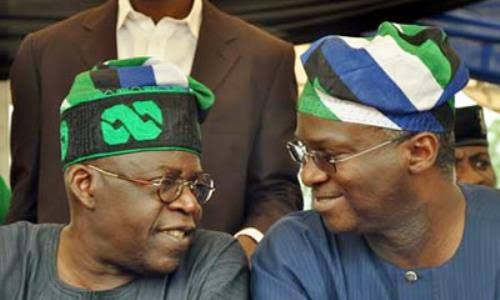
The Economic and Financial Crimes Commission (EFCC) has been asked to probe the administration of Asiwaju Bola Ahmed Tinubu and the Minister of Works, Babtunde Raji Fashola, SAN, as governors of Lagos state.

Asiwaju Tinubu was governor of the state between 1999 to 2007 while Fashola also governed the state between 2007 to 2015.

The petitioner, Coalition Against Corruption and Impunity in the petition to the commission and signed by John Olufemi and Mohammed Sanni, Co-ordinator and Secretary, respectively, asked the anti-graft agency to look into the activities of the two former governors between 1999 to 2015 when they governed the state.

The petition, dated July 24, 2020, was copied to the Attorney General of the Federation, Abubakar Malami and the Inspector General of Police, Mohammed Adamu.

According to the organisation, over the years, the law enforcement agencies appear uninterested and unwilling to probe the many allegations of infractions allegedly committed in Lagos under Bola Ahmed Tinubu and Babatunde Fashola as governors.

The coalition asked the anticorruption agency to undertake a holistic investigation of the two former governors especially in the areas of land administration, tax collections and other areas.

Parts of allegations the coalition is asking the commission to look into are the development of 1,000 hectares of land for golf course and housing estate by Asset and Resource Management Limited at N75billion located at Lakowe near Ibeju Lekki Government given to Lekki Concession Company (LCC) partly owned by Tinubu and Fashola.

Another area is alleged operation of eight foreign bank accounts while in office as Executive Governor of Lagos State in contravention of Section 7 of the Code of Conduct Bureau and Tribunal Act, Cap 56 LFN, 1990.

Details of the accounts, according to the petition are:
i. First heritage Bank, Country Club Hill, lIIinouse, USA, Bola Tinunu, 26226700.
ii. City Bank NA, New York, USA and Compass Finance and Investment Company Limited, 39483134, 39483396, 4650279566, 00400220, l9936383.
iii. City Bank International, New York, Bola Tinubu
iv. HSBC, 177 Great Portland Street, london WIWGOJ, Senator Bola Tinubu, 7125367040-03-15 (Sort Code).
v. HSBC, 177 Great Portland Street, london WIWGOJ, Senator Bola Oluremi Tinubu, 712361040-03-15 (Sort Code).
vi. HBSC~ 177 Grea~ Portland Street, london WIWGOJ, Senator Bola Tinubu – Money Market, 04320002DN
vii. HBSC, 177 Great Portland Street, london WIWGOJ, Mrs. Tinubu Zainab Ablsola ( 172447600)
viii. HBSC, 117 Great Portland Street, London’ WIWGOJ, Tinubu Oluremi Shade, 41421522.

Other allegations the coalition is asking the commission to probe are the N250 hectare of land valued at N35billion strategically located at Ajah Junction on Lekki Road originally meant for the construction of General Hospital for Eti-Osa Local Government, handed over to Trojan Estate Limited; transferring of the annex of Lagos State Guest House in Asokoro Abuja, purchased by the Lagos State Government in 2006 for N450million to protect the main building from security breach and a 14-hectare Parkview Ikoyi estate foreshore land reclaimed by Lagos State Government.

The commission was also asked to probe the Payment of 70 percent up front to contractor cronies for awarded contract yet to be executed in contravention of section 120 (4) of the 1999 constitution.

The coalition said, ”It is in this light that we write to request that you use your good offices to allow for thorough and detailed investigations into the activities of the Lagos State Government, especially between the period 1999 to 2015. As citizens we are alarmed by mind-boggling wrongdoing perpetrated during this period and we are even more perplexed that the Law Enforcement and Anti-Corruption Agencies have over the years appear uninterested and unwilling to probe the many allegations of infractions allegedly committed in Lagos state.

”We believe the fight against corruption should be absolute and total with no sacred cows allowed. No territory or individual under the Federal Republic of Nigeria should be beyond investigation of the anti-corruption agencies. Inaction on matters like this is a huge dent to the government’s claim to fight against corruption”.

Breaking: Secondary Schools to reopen next week


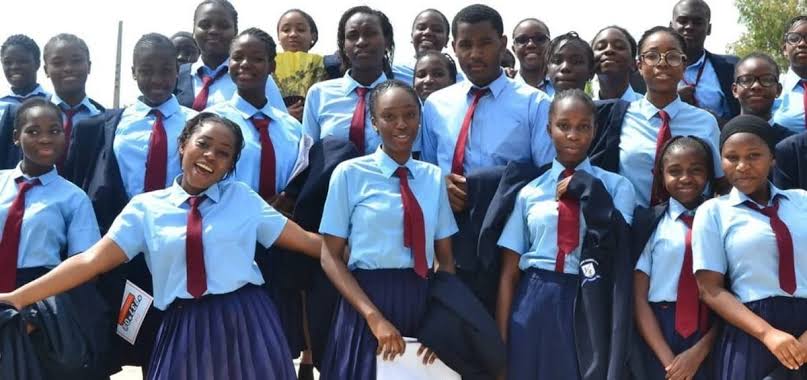
The Federal Government has ordered the reopening of secondary schools on August 4th for students in exit classes.

This is to enable the students sit for the WAEC examinations which are scheduled to start on August 17th.

A statement from the Federal Ministry of Education signed by the Director of Press Ben Bem Goong stated that the students will have only two weeks to prepare for their examinations.

The statement explained that the decision was taken after a virtual meeting of stakeholders including the Federal Ministry of Education, State Commissioners of Education, Proprietors of private schools, Parent/Teachers Associations.

It further stated that discussions would be held with authorities of the National Examinations Council (NECO), National Board for Technical Education and other examination bodies to agree on dates for their respective examinations

Adeniyi: Yoruba Summit Group accused of instigating mutiny, calumny against Army

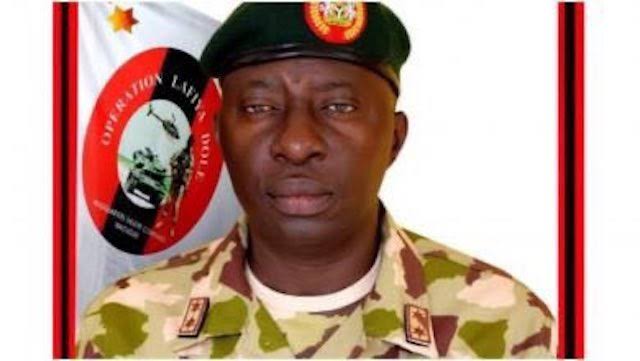
Some Southwest leaders, under the aegis of Yoruba Summit Group (YSG), have been accused of instigating mutiny and campaign of calumny against the Nigerian Army over claims bothering on ex-Theatre Commander of Operation Lafiya Dole, Major General Olusegun Adeniyi.

According to People’s Forum, a group of Nigerians, the assertion that Major Gen. Adeniyi has been court marshalled is “despicable and an affront to our sensibilities as a people”. 

In a statement signed by its Director of Strategy and Communication, Dr. Ifure Ataifure, on Monday, the People’s Forum said the motive is designed to “score cheap political points” ahead of the next elections. 

The group recalled that the highest-ranking officer in the Armed Forces, the second most senior ranking officer in the Army as well as other top military personnel are all Yorubas.   

The People’s Forum, however, warned that an impending mutiny could be on the cards in the Army should the Yoruba Summit Group carry on its campaign. 

It further alerted members of the general public to hold the Yoruba Summit Group responsible if there is uprising in any part of the country against the constituted authorities.

Read full statement below:

The recent statement by the Yoruba Summit group, a conglomeration of leaders of socio-political organizations in South West Nigeria indicating that the former Theatre Commander of Operation Lafiya Dole, Major General Olusegun Adeniyi has been court marshalled by the Nigerian Army authorities is despicable and an affront to our sensibilities as a people.  

We wish to state the reference and usage of Yoruba Nation in their treatise is an indication that the gathering under the Yoruba Summit group was designed to score cheap political points rather than face the facts.

Unfortunately, these groups of individuals have failed to let us know that the principal reason for their gathering was the fine-tuning of political permutations for the 2023 general elections. One of such permutations is to begin the ethnic persecution campaign against the Nigerian Army.

In their assertion that “We the Yorùbá condemn in strong terms, the cherry-picking of our fighters, soldiers, officers as either cannon fodders easy-targets, operational fall-guys and being used for experimental disciplinary measures, while the real culprits, go free!” is most uncharitable and an indication that there is more than meets the eyes. 

The People’s Forum wishes to state that it is most unfortunate at the attempt to deceive the general public of the existence of ethnic persecution in the Nigerian Army without recourse to the sensibilities of others and the fact that the highest-ranking officer in the Nigerian Armed Forces is from Ekiti-South West Nigeria. The second most senior ranking officer in the Nigerian Army and a Lieutenant General by rank is also from South-West Nigeria.  

This is aside the fact that the immediate past Commandant of the Nigerian Defense Academy and a Major General was also from the South West region, as well as others too numerous to mention across the Armed Forces of the Federal Republic of Nigeria.  It consequently holds that the ethnic categorization by the Yoruba Summit Group is borne out of ignorance and to score cheap political points. 

It is also a puerile thought for the supposed big wigs at the meeting to advance causes that would further disunite the country; instead, they elected to be petty all in the bid to give a dog a bad name to hang it. They cannot claim to be in the knowledge of the rules and regulations for members of the Armed Forces with regards to punishment and rewards.

We consequently wish to state that it is outside the purview of the Yoruba Summit Group to delve into purely military matters. By their actions, they have indicated that they are calling for mutiny in the Nigerian Armed Forces to truncate our nascent democracy.  

This fact is corroborated in their statement “We the Yorùbá Nation, therefore, reject the holding of a future general election before Restructuring Nigeria fiscally and structurally. We consequently wish to inform the members of the general public that in the event of a coup against our democracy, the Yoruba Summit Group should be held responsible. 

The People’s Forum also wishes to inform members of the general public that should there be an uprising in any part of the country against the constituted authorities in the country; the Yoruba Summit Group should be held responsible through its statement “The emerging resolve of the Yoruba not to be part of the vassal state that Nigeria has become, is better managed with due accommodation before any further degeneration and obvious consequences. 

Our quest shall henceforth be to mobilize the masses of our peoples not to participate in any further elections until the goal of Restructuring or Self-determination is attained.”

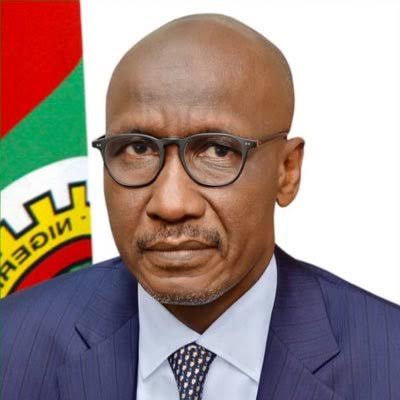
$2.5bn stolen crude: Frank wants Kyari sacked over allegation

Former Deputy National Publicity Secretary of the All Progressives Congress (APC), Comrade Timi Frank, has called for the immediate sack of the Group Managing Director (GMD) of the Nigerian National Petroleum Corporation (NNPC), Engr. Mele Kyari, over his complicity in the alleged $2.5billion stolen crude oil sold in China.

An online news platform recently revealed that about 48 million barrels of Nigeria’s Bonny Light Crude, valued at $2.5 billion was stolen, sold in China and the proceed was allegedly shared by some top officials of the present administration.

Frank had in a statement following the revelation last week, called for the immediate arrest, investigation and prosecution of all those involved in the sale and diversion of the proceeds of the crude oil.

The political activist in a statement in Abuja on Monday specifically called for the sack and prosecution of Kyari following new evidence concerning his central role in the diversion of the nation’s common wealth as published by the same online portal.

Frank insisted that the new damning facts, laced with documentary evidence, only goes to show that the corruption level in the APC-led federal government, stinks to the skies with the President, General Muhammadu Buhari, being silent and unfortunately giving the impression of his complicity.

He expressed total disgust with the General Buhari-led government and accused it of being determined to cover up the theft of the $2.5 billion crude “despite the expose’ of this wicked and criminal act against Nigeria and Nigerians which has opened the country to international ridicule and shame.”

He urged the Government of the United States and all well-meaning nations to immediately call and impress it on General Buhari that the perpetrators of this dastardly act of criminality concerning the stolen $2.5 billion crude oil sold in China should be immediately arrested and prosecuted.

He described it as absurd for the perpetrators to have carried out the heist under the watchful eyes of General Buhari who doubles as the Minister of Petroleum Resources and also carries the toga of Africa’s No. 1 Anti-Corruption Crusader.

He noted that based on the attempt by the Buhari-led government to suppress the “exposed”, the online platform has further released more damning evidence about the sleaze which comprised of the letters and messages exchanged between the NNPC, officials the federal government and the legal representative of the whistleblower, SAMANO SA DE CV.

He insisted that Kyari should not be allowed to spend another 24 hours as GMD of NNPC, following the release of a throve of such damning evidence that are currently in public domain.

“The NNPC GMD has so many explanations to give to Nigerians as to the whereabouts or otherwise of the purported stolen $2.5billion crude oil sold in China.

“Kyari has to provide answers to this weighty allegations and Buhari’s refusal to order for an immediate investigation, which should trigger a suspension or sack of the NNPC GMD, by remaining silent can only mean acquiescence and complicity in the $2.5billion crude theft,” Frank said.

The new evidence as released, disclosed how the whistleblower wrote to the NNPC GMD on the crude theft and his request for the payment of his compensation for having blown the lid on the illegal sale of the 48million barrels of stolen crude oil in line with the whistleblower policy of the Federal Government.

“Nigerians must stand up now to ask questions as it concerns the theft and sale of the stolen crude oil and the whereabouts of the $2.5 billion proceeds,” Frank declared.

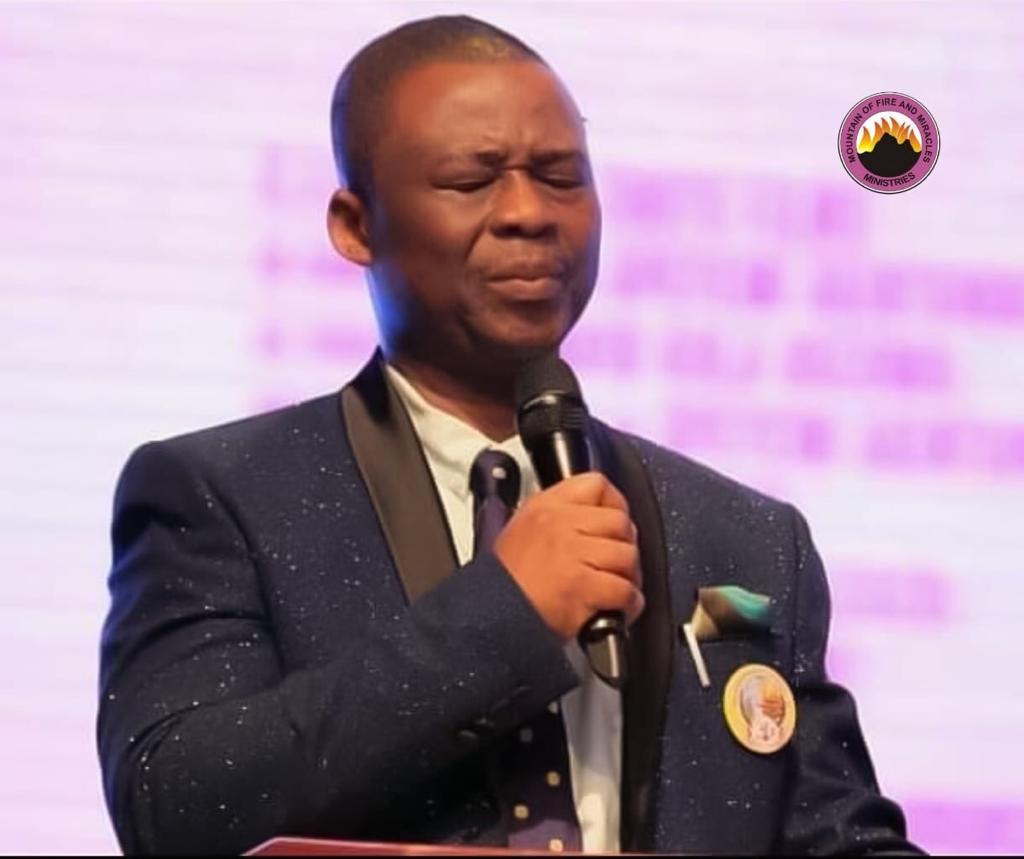
MFM cautions against mischievious attacks on General Overseer

The Mountain of Fire and Miracles Ministries (MFM) on Sunday advised media houses to stop what it called vicious attacks on its general overseer, Dr. Daniel Olukoya, and warned that publications that shunned its advice run the risk of being dragged to court for libel.
The warning, which was contained in a statement by Collins Edomaruse, media aide to Dr. Olukoya, is sequel to one of such attacks by an online news medium, https://IK.phx.ninja/Nkup, on July 19, 2020.

*See the full details of the statement…
STOP THIS MISGUIDED AND VICIOUS ATTACK ON MFM GO,  DR. D. K. OLUKOYA
Our attention has been drawn to an on-line story titled: SCANDAL! General Overseer, Mountain of Fire And Miracles Ministries, In Big Mess in US published under the thread: https://Ik.phx.ninja/Nkup dated July 19, 2020. We would ordinarily have ignored this misguided and vicious attack on the person of our General Overseer but for the need to appropriately inform the discerning public and expose the malicious falsehood in this unmerited attack against one of God’s Generals.
To begin with, what the publisher of this falsehood is attempting to portray as recent events are actually the feeble defence of some renegade pastors presented in 2017 to a Court Case commenced in 2017 at the Circuit Court for Prince George’s County of Maryland, USA by Mountain of Fire & Miracles Ministries against Pastors Lawrence Adetunji, Ronke Adetunji, eleven former members of Mountain of Fire and Miracles Ministries, Bowie, Maryland USA and Christ The Truth Ministry to recover possession of property and monies belonging to MFM international which those renegade Pastors and the eleven (11) conniving members had sought to snatch upon breaking out from the MFM Fold to form a Christ the Truth Ministries.
It is pertinent to note the following:

  1. That the Circuit Court for Prince George’s County of Maryland delivered judgment in that case in 2019 in which it:
     
    a. disbelieved the lies of the Defendants, and
     
    b. granted MFM’s claims in their entirety
  2. That the false publication of those very same stories by Sahara Reporters in 2017 has earned it two suits for Libel – one in the United States of America and the other here in in the High Court of Akwa Ibom State, Uyo, Nigeria.
  3. Also, that a similar publication by ThisDay newspaper of the same false stories citing Sahara Reporters as its source, as has been done in this present instance, has also earned the publishers of that newspaper a civil suit to recover N500bn as aggravated damages for libel. The matter is currently at trial stage in the High Court of Rivers State, Port Harcourt.
    In essence, the publishers of this present falsehood have not only opened themselves to a suit in Libel but have, by commenting on a matter which has been judicially determined by a court of competent jurisdiction in the United States of America, and aspects of which are still sub-judice in live Libel suits before a court in the US and two courts in Nigeria, committed the offence of contempt of each of those courts.
    It is definitely in very bad taste and a crass breach of all known journalistic ethics for a publisher to pull up falsehoods which were uttered in 2017 and judicially determined as false in 2019 and republish them in July 2020 as a fresh story. The malice behind such action is very clear and palpable and will be addressed in due course.

Edo Guber election: PDP, Wike importing thugs, APC alleges

The All Progressives Congress (APC) has accused the opposition Peoples Democratic Party (PDP) and it’s Rivers state governor Nyesom Wike, of importing thugs into Edo state to cause violence ahead of the forthcoming governorship election.

The APC, however, condemned reports of the destruction of property and violence allegedly meted on hapless victims during Saturday’s campaign of the PDP Edo state governorship candidate, Godwin Obaseki in Benin City.

In a statement signed by its deputy national publicity secretary, Yekini Nabena, Sunday in Abuja, APC said “to imagine that the PDP chose to desecrate the Palace of the Oba of Benin, Oba Ewuare II is despicable, unheard of and a new low even by PDP’s ignoble standards.”

The statement wondered the need for the show of force on the citizens PDP wish to govern.

“The disturbing images and reports of the destruction of property and violence meted on hapless victims during Saturday’s campaign of the Peoples Democratic Party (PDP) Edo State governorship candidate, Godwin Obaseki in Benin City, the state capital is a glimpse into the “do or die” plot the PDP plans to unleash in the lead up to the September 19 Governorship Election.

“The PDP in Edo state is not campaigning for votes but relying on brute force, violence and intimidation ahead of the governorship election. The Governor of River state, Nyesom Wike promised on Saturday to “make sure that everything needed is done” to foist the PDP governorship candidate on the good people of Edo state.

“Wike is bent on importing to Edo state his Rivers state model of violence and intimidation. He will not succeed! We definately will not watch helplessly and allow the PDP and Wike turn Edo state into a killing field in their attempt to foist an unpopular candidate.

“The All Progressives Congress (APC) strongly condemns the violence and calls on our security services to fish out the perpetrators and their sponsors.”

While rejecting all forms of political violence during the electioneering campaigns in Edo state, Nabena said the Saturday’s experience was allegedly unleashed by the “Obaseki boys.”

“During the entire Edo state governoship electioneering process, we stand with the good people of state in rejecting all forms of political violence as was unleashed on Saturday by the so called “Obaseki Boys” and PDP supporters on hapless victims.

“The APC reiterates its stand that the people’s will and votes will determine the Edo State governorship election, not voter intimidation and election violence.”